
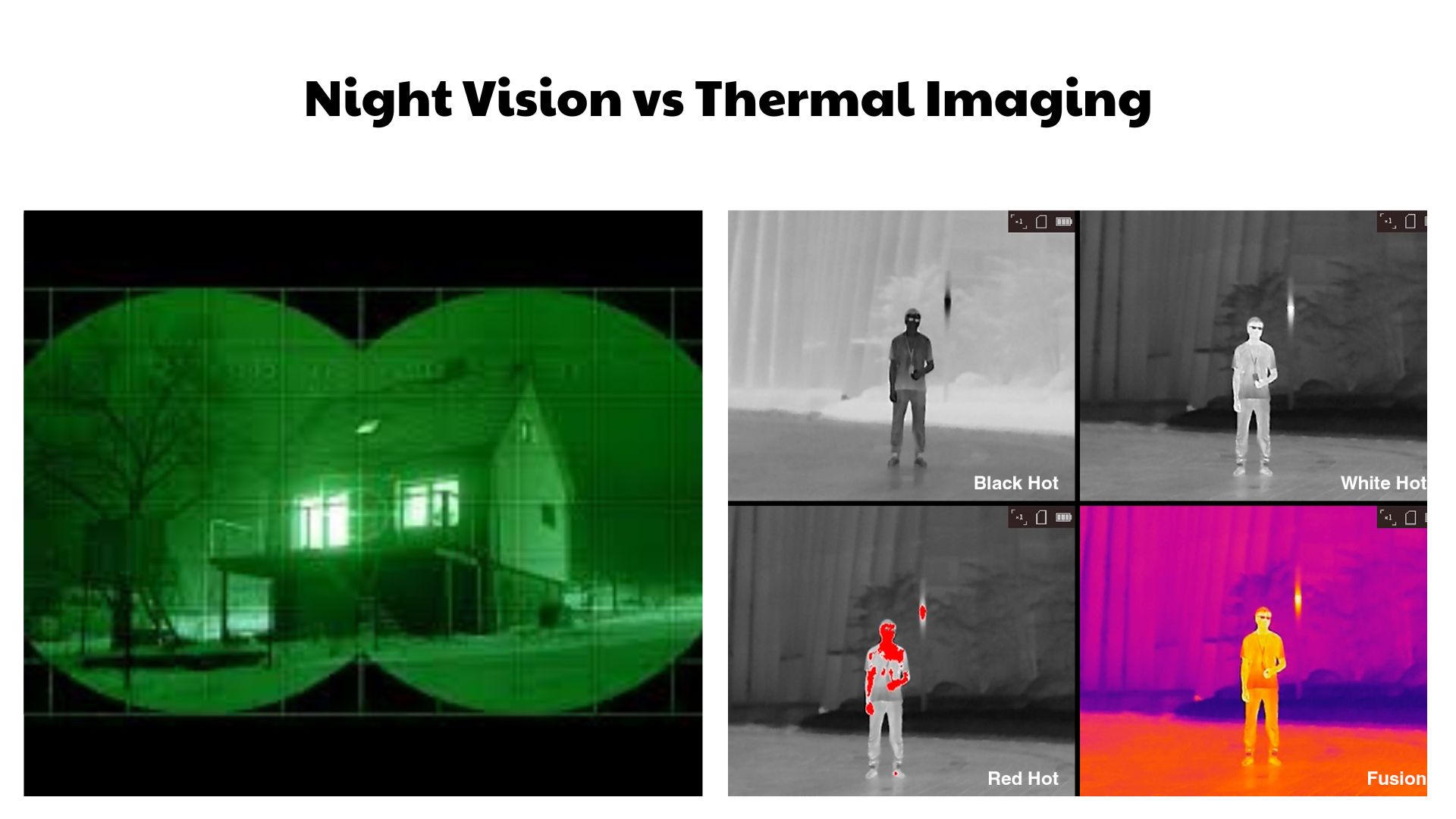

Night vision and thermal imaging technologies have gained significant popularity in hunting, security, surveillance, and tactical operations. As modern optics continue to evolve, these systems are increasingly used by both professionals and civilian users who require enhanced visibility in low-light or no-light environments.
Despite their growing use, many users often confuse night vision and thermal imaging because both are designed for low-light conditions. However, they operate on fundamentally different principles and deliver very different types of visual information.
Understanding how each system works is essential before choosing the right device. Selecting the wrong technology for a specific application can significantly impact performance, target detection, and overall effectiveness in the field.
This guide compares both systems across key factors including detection method, image quality, effective range, cost, and real-world applications to help users make an informed decision.
What Is Night Vision?
Definition and Core Concept
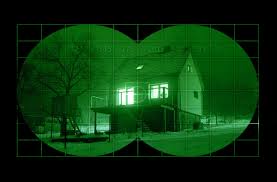
Night vision technology works by amplifying existing light sources such as moonlight, starlight, or infrared illumination. Instead of creating its own image, it enhances available ambient light to produce a visible picture in low-light conditions.
This process is typically achieved through image intensifier tubes in traditional devices or digital sensors in modern night vision systems. Both approaches aim to increase visibility in environments where the human eye cannot clearly see.
How Night Vision Works
Night vision devices collect minimal ambient light from the environment and amplify it thousands of times to create a visible image. This allows users to see shapes, movement, and terrain features in dark conditions.
The output image is commonly displayed in green or white phosphor tones, which help enhance contrast and reduce eye strain during prolonged use. The green color has historically been used because the human eye is most sensitive to it.
However, night vision systems require at least some light source to function effectively. In complete darkness, they often rely on an infrared (IR) illuminator to provide artificial light for image generation.
Key Features
Night vision systems are known for their ability to deliver high detail recognition, allowing users to identify shapes, terrain, and targets with relatively clear visual definition. This makes them particularly useful for navigation and situational awareness.
They also produce a more natural-looking image compared to thermal systems, making it easier for users to interpret their surroundings in a familiar visual format.
Night vision performs best in low-light environments where some ambient light is available. While IR illumination can extend functionality, performance is still dependent on environmental lighting conditions.
Limitations
One of the main limitations of night vision is its dependence on ambient light or infrared illumination. Without these, the system cannot function effectively.
Performance can also degrade significantly in challenging environmental conditions such as fog, smoke, or complete darkness without IR support, where image clarity is reduced.
Additionally, night vision has limited capability in detecting heat signatures, meaning it cannot easily distinguish warm objects from their surroundings the way thermal imaging systems can.
What Is Thermal Imaging?
Definition and Core Concept
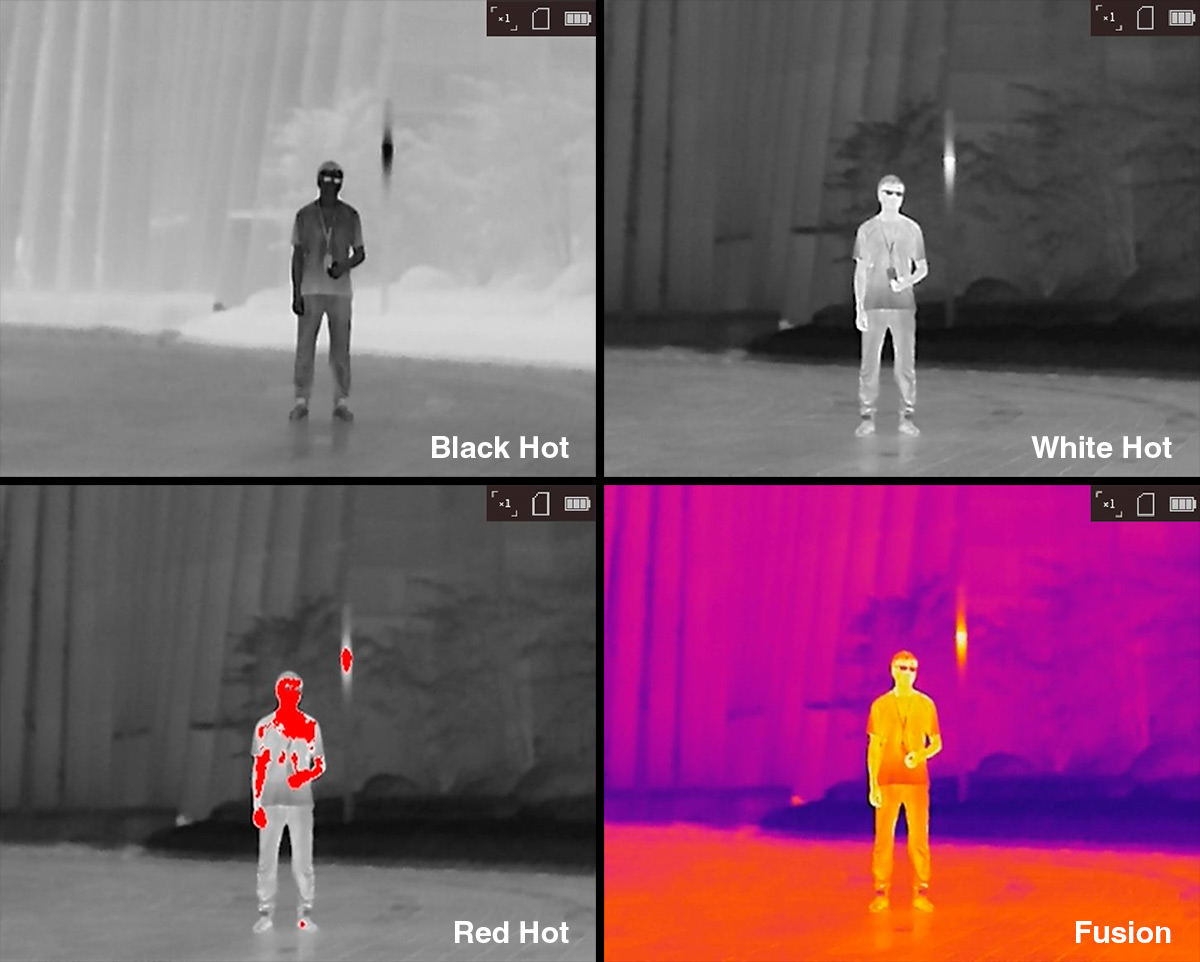
Thermal imaging is a technology that detects infrared radiation (heat signatures) emitted by objects, animals, and humans. Unlike night vision, it does not depend on visible light to create an image. Instead, it reads temperature differences in the environment and converts them into a visible display.
Because all objects emit some level of heat energy, thermal imaging can function in complete darkness and is not limited by lighting conditions. This makes it highly effective in environments where visibility is extremely low or nonexistent.
How Thermal Imaging Works
Thermal imaging systems work by capturing infrared radiation and converting heat variations into a visual representation. Warmer objects appear differently from cooler backgrounds, creating a clear contrast that allows users to detect living beings or heat sources.
The resulting image displays temperature differences rather than natural light reflection. This means the system highlights heat patterns instead of visual detail, allowing users to identify targets based on thermal contrast.
One of the key advantages of thermal imaging is that it works in complete darkness without requiring any external light source or infrared illumination.
Key Features
Thermal imaging is highly effective at detecting living beings through their heat signatures, making it especially useful in hunting, search and rescue, and security applications. It allows users to quickly identify warm objects even when they are partially hidden.
It performs consistently in all lighting conditions, including full daylight, nighttime, and zero-visibility environments, offering true 24/7 functionality.
Thermal systems can also detect objects through environmental obstructions such as smoke, fog, and light vegetation, where traditional optical systems may struggle.
Limitations
Despite its advantages, thermal imaging typically offers lower detail recognition compared to night vision. It excels at detection but is less effective for identifying fine visual details such as facial features or text.
Thermal devices are also generally more expensive than night vision systems, making them a higher investment option for users.
Additionally, because thermal imaging focuses on heat contrast rather than visual clarity, it can be more difficult to interpret complex scenes where fine identification is required.
Night Vision vs Thermal Imaging – Key Differences
Detection Method
Night vision works by amplifying existing light sources such as moonlight or infrared illumination. In contrast, thermal imaging detects infrared radiation (heat) emitted by objects, making it independent of visible light.
Image Type and Clarity
Night vision produces a detailed and realistic image that closely resembles natural human vision, often displayed in green or white phosphor tones. This makes it easier to recognize shapes and terrain.
Thermal imaging, on the other hand, produces an abstract heat-based image where objects are represented by temperature differences rather than visual details. This enhances detection but reduces fine detail clarity.
Performance in Darkness
Night vision requires at least some ambient light or infrared assistance to function effectively. In complete darkness, performance depends on external IR illumination.
Thermal imaging performs independently of light conditions and works effectively in total darkness, making it more reliable in zero-visibility environments.
Environmental Performance
Night vision can struggle in challenging conditions such as fog, smoke, or heavy rain, where light amplification becomes less effective.
Thermal imaging performs significantly better in obscured environments, as heat signatures can still be detected even when visibility is reduced.
Target Identification vs Detection
Night vision is generally better suited for identifying details such as shapes, movement, and object features, making it useful for navigation and recognition tasks.
Thermal imaging is superior for detecting the presence of targets, especially when they are hidden, camouflaged, or moving in low-visibility conditions.
Advantages of Night Vision
- High image detail and clarity: Night vision provides a more natural and detailed visual output, making it easier to recognize shapes, terrain, and objects in low-light environments.
- Better for navigation and target identification: Because it closely resembles normal vision, night vision is highly effective for moving through terrain and identifying specific targets or objects.
- More affordable than thermal systems: In general, night vision devices are more budget-friendly, making them accessible to a wider range of users including hunters and recreational shooters.
- Natural visual representation: The image produced by night vision appears closer to what the human eye sees, which helps users interpret their surroundings more intuitively.
Disadvantages of Night Vision
- Requires ambient light or IR illumination: Night vision depends on available light sources such as moonlight or infrared illuminators to function effectively.
- Reduced performance in complete darkness: Without any light or IR assistance, image quality and usability can drop significantly.
- Limited ability to detect heat signatures: Night vision cannot distinguish objects based on temperature, making it less effective for detecting hidden or camouflaged targets.
- Struggles in fog, smoke, and dense environments: Light-based amplification can be disrupted in poor visibility conditions, reducing overall performance.
Advantages of Thermal Imaging
- Works in complete darkness: Thermal imaging does not rely on visible light, allowing it to function effectively in total darkness.
- Detects heat signatures through obstacles: It can identify warm objects even through smoke, fog, light vegetation, and other visual obstructions.
- Excellent for long-range detection: Thermal systems are highly effective at detecting targets at extended distances based on heat contrast.
- Effective for locating hidden targets: Because it detects heat rather than light, thermal imaging is ideal for finding concealed or camouflaged subjects.
Disadvantages of Thermal Imaging
- Lower image detail and recognition: Thermal imaging prioritizes heat contrast over visual detail, making it harder to identify fine features.
- Higher cost compared to night vision: Thermal devices are generally more expensive due to advanced sensor technology.
- Difficult to interpret complex scenes: Heat-based images can be abstract, requiring more experience to interpret accurately.
- Less effective for reading signs or facial features: Fine details such as text or facial recognition are often unclear in thermal imaging.
Night Vision vs Thermal – Real-World Use Cases
Hunting Applications
In hunting scenarios, thermal imaging is often preferred for quickly spotting animals, especially in dense terrain or at long distances where heat signatures stand out clearly. It allows hunters to detect movement and presence even when animals are hidden.
Night vision, on the other hand, is more effective for identifying target details such as species recognition, environment navigation, and shot placement, making it valuable once a target has already been detected.
Tactical and Security Use
Thermal imaging provides a strong advantage in surveillance and detection tasks, allowing users to locate individuals even in complete darkness or partially concealed environments.
Night vision is more suitable for navigation and identification during tactical movement, where understanding surroundings in greater visual detail is important.
Search and Rescue
Thermal imaging is highly effective in search and rescue operations because it can quickly locate human heat signatures in darkness, debris, or challenging terrain.
Night vision is often used alongside thermal systems to assist rescuers in safely navigating environments once a target has been detected.
Law Enforcement Use
Law enforcement agencies frequently use thermal imaging for suspect detection, perimeter monitoring, and surveillance in low-visibility conditions.
Night vision is typically used for tactical movement, coordination, and close-range identification where visual clarity and situational awareness are critical.
Can Night Vision and Thermal Be Used Together?
Yes, night vision and thermal imaging can be used together through advanced fusion systems that combine both technologies into a single device or integrated platform. These systems are designed to merge the strengths of each technology into one unified view.
Fusion systems typically overlay thermal detection with night vision imagery, allowing users to see both heat signatures and detailed visual information at the same time. This combination significantly improves situational awareness in complex environments.
The main advantage of this hybrid approach is the ability to combine detection and identification. Thermal imaging quickly identifies the presence and location of heat sources, while night vision provides the clarity needed to recognize shapes, terrain, and fine details.
These systems are commonly used in military-grade equipment and high-end civilian optics, where performance requirements justify the increased complexity and cost.
However, fusion systems also come with trade-offs. They are significantly more expensive than standalone devices, and they tend to be heavier and more complex to operate. Power consumption is also higher, which can affect battery life during extended use.
Cost Comparison – Night Vision vs Thermal
When comparing costs, night vision systems are generally more affordable and accessible to a wider range of users. Entry-level and mid-range devices are widely available for hunting, recreational shooting, and basic tactical use.
Thermal imaging systems, on the other hand, are significantly more expensive due to the advanced sensor technology required to detect infrared radiation and convert it into usable images. This higher cost reflects their enhanced detection capabilities and all-weather performance.
Fusion devices that combine both night vision and thermal imaging represent the highest cost category. These systems integrate two advanced technologies into a single platform, which increases manufacturing complexity and price.
Ultimately, pricing depends heavily on sensor quality, resolution, detection range, and overall system performance. Higher-end models with better clarity, longer range, and advanced features will always come at a premium regardless of technology type.
Common Mistakes When Choosing Between Them
- Choosing based only on price: Many users make the mistake of selecting night vision or thermal devices based purely on cost. While budget is important, it should not be the primary factor. Lower-cost options may not meet performance needs, and overpaying for advanced features that are not required can also be inefficient.
- Ignoring real use case (hunting vs security vs tactical): One of the most common errors is failing to match the technology to the actual application. Night vision and thermal imaging excel in different environments, so choosing without considering the intended use often leads to poor performance in the field.
- Expecting night vision to work in total darkness: Night vision requires some level of ambient light or infrared illumination. Assuming it will function effectively in complete darkness without IR support leads to unrealistic expectations and operational limitations.
- Assuming thermal provides detailed visual clarity: While thermal imaging is excellent for detection, it does not provide the same level of fine visual detail as night vision. Users expecting clear facial recognition or text readability may be disappointed.
Expert Insight Summary
Night vision technology is best understood as a tool for detail, navigation, and target identification. It provides a more natural visual representation, making it useful for interpreting surroundings and moving through environments with low light.
Thermal imaging, on the other hand, is primarily focused on detection, heat tracking, and all-condition performance. It excels at identifying the presence of living beings or heat sources, even in complete darkness or through visual obstructions.
Each system is optimized for different mission roles, and neither is universally superior. Their effectiveness depends heavily on the context in which they are used.
In many real-world applications, the best results come from understanding how these technologies complement each other rather than treating them as direct replacements.
Conclusion
Night vision and thermal imaging are two distinct technologies designed for different operational purposes. While both improve visibility in low-light conditions, they function in fundamentally different ways and deliver different types of information.
Neither system is universally better, as each has strengths and limitations depending on the environment and mission requirements.
The right choice depends on factors such as operating conditions, budget, and intended use case, whether for hunting, security, tactical operations, or search and rescue.
The final recommendation is to select a system based on real-world application and performance needs rather than assumptions, marketing claims, or general popularity.
Frequently Asked Questions (FAQ) – Night Vision vs Thermal Imaging
1. What is the main difference between night vision and thermal imaging?
The main difference is how each technology creates an image. Night vision amplifies existing light sources such as moonlight or infrared illumination to produce a visible image. Thermal imaging, on the other hand, detects heat (infrared radiation) emitted by objects and converts temperature differences into a visual display. One relies on light, the other on heat.
2. Which is better: night vision or thermal imaging?
Neither is universally better. Night vision is better for identifying details, navigation, and recognizing targets in low light. Thermal imaging is better for detecting living beings, tracking movement, and working in complete darkness or obstructed environments. The best choice depends on your specific use case.
3. Can thermal imaging see through walls?
No, thermal imaging cannot see through solid walls. It detects heat signatures on surfaces, so it may show temperature differences on walls, but it cannot provide an image of what is behind them. It can, however, detect heat sources close to or affecting a surface.
4. Can night vision work in complete darkness?
Standard night vision requires some level of ambient light such as moonlight or starlight. In complete darkness, it typically requires an infrared (IR) illuminator to function effectively. Without any light source, performance is severely limited.
5. Why is thermal imaging more expensive than night vision?
Thermal imaging is more expensive because it uses advanced infrared sensor technology that detects heat differences at a very fine level. Manufacturing these sensors is complex and costly, especially for high-resolution and long-range devices.
6. Is night vision good for hunting?
Yes, night vision can be useful for hunting, especially for navigation and identifying targets in low-light conditions. However, it is less effective than thermal imaging for spotting animals that are hidden or camouflaged in dense environments.
7. Is thermal imaging good for hunting?
Yes, thermal imaging is extremely effective for hunting because it allows users to detect animals based on heat signatures, even in darkness, fog, or dense vegetation. It is widely used for spotting game quickly and efficiently.
8. Can thermal imaging identify animals clearly?
Thermal imaging is excellent for detecting animals but less effective for detailed identification. It shows heat patterns rather than fine visual details, so while you can see the presence and shape of an animal, identifying species may require additional visual confirmation.
9. Does night vision work in fog or smoke?
Night vision can struggle in fog, smoke, or heavy dust because it relies on light amplification. These conditions scatter light and reduce image clarity, making it harder to see clearly compared to thermal imaging.
10. Does thermal imaging work in fog or smoke?
Yes, thermal imaging performs well in fog, smoke, and other obscured environments because it detects heat rather than light. Heat signatures remain visible even when visual conditions are poor.
11. Which is better for search and rescue?
Thermal imaging is generally better for search and rescue because it can quickly locate human heat signatures in darkness, debris, or dense terrain. Night vision is often used as a secondary tool for navigation once a subject is located.
12. Can thermal imaging see people through trees?
Thermal imaging can sometimes detect heat signatures through light vegetation or partial obstruction, but dense trees and thick cover will significantly reduce its effectiveness.
13. Is night vision or thermal better for security?
Thermal imaging is often better for detection and perimeter monitoring, while night vision is better for identification and movement. Many security systems use both technologies together for maximum effectiveness.
14. What is fusion night vision and thermal?
Fusion systems combine both night vision and thermal imaging into a single display. This allows users to see detailed visual information from night vision alongside heat detection from thermal imaging, improving situational awareness.
15. Are fusion systems worth it?
Fusion systems are highly effective but expensive. They are typically used in military, law enforcement, or high-end civilian applications where both detection and identification are critical.
16. Which has better image quality?
Night vision generally provides better image quality because it produces a more natural and detailed visual representation of the environment. Thermal imaging prioritizes heat contrast over visual detail.
17. Which works better in total darkness?
Thermal imaging works better in total darkness because it does not rely on light. It detects heat signatures, allowing it to function in complete absence of visible illumination.
18. Can night vision detect heat?
No, night vision cannot detect heat. It only amplifies light to create a visible image. Heat detection is exclusive to thermal imaging technology.
19. What is more beginner-friendly?
Night vision is generally more beginner-friendly because it provides a more natural visual experience and is easier to interpret. Thermal imaging may require more practice to understand heat-based imagery.
20. Is thermal imaging legal for civilians?
In most countries, thermal imaging devices are legal for civilian use, but regulations may vary depending on application, especially in hunting or wildlife management contexts.
21. Is night vision legal for civilians?
Yes, night vision devices are generally legal for civilian use in most regions, although specific restrictions may apply depending on local laws and usage scenarios.
22. Which is better for tactical use?
Thermal imaging is better for detection, while night vision is better for movement and identification. Tactical professionals often use both depending on mission requirements.
23. Can thermal imaging see in daylight?
Yes, thermal imaging works in daylight because it detects heat, not light. However, heat contrast may be reduced in very hot environments.
24. Can night vision be used during the day?
Most night vision devices are not designed for daytime use because strong light can damage image intensifier tubes. Some digital night vision systems may support daylight use.
25. Which has longer range?
Thermal imaging often has an advantage in long-range detection because heat signatures can be detected at greater distances than visible detail in night vision systems.
26. Can thermal imaging replace night vision?
Thermal imaging cannot fully replace night vision because it lacks detail and visual clarity. Both technologies serve different roles and are often complementary.
27. Can night vision replace thermal imaging?
No, night vision cannot replace thermal imaging because it cannot detect heat signatures or work effectively in total darkness without illumination.
28. What is the biggest advantage of night vision?
The biggest advantage of night vision is its ability to provide detailed, natural-looking images that help with navigation and target identification in low-light environments.
29. What is the biggest advantage of thermal imaging?
The biggest advantage of thermal imaging is its ability to detect heat signatures in complete darkness and through environmental obstructions like smoke and fog.
30. Which is better for urban environments?
Night vision is often better in urban environments where identification and navigation are important, while thermal is useful for detecting hidden threats or movement.
31. Which is better for rural or wilderness use?
Thermal imaging is often better in rural or wilderness environments due to its ability to detect animals and humans across long distances and through vegetation.
32. Do animals show up clearly on thermal imaging?
Yes, animals typically show up clearly on thermal imaging due to their body heat, making them stand out against cooler backgrounds.
33. Can thermal imaging detect cold objects?
Thermal imaging detects temperature differences, so it can display both warm and cold objects relative to their surroundings, though warm objects are usually more visible.
34. Does weather affect night vision?
Yes, weather conditions such as fog, rain, and smoke can reduce night vision performance by scattering light and reducing clarity.
35. Does weather affect thermal imaging?
Thermal imaging is less affected by weather, although extreme conditions like heavy rain can slightly reduce performance by masking heat signatures.
36. Which is more durable?
Durability depends on build quality, but both technologies can be highly durable when designed for tactical or field use.
37. Are thermal scopes good for beginners?
Thermal scopes can be challenging for beginners due to their abstract imaging style, but they are effective once users become familiar with interpreting heat signatures.
38. What is IR illumination in night vision?
IR illumination is an invisible light source used to enhance night vision performance in extremely low-light or dark environments.
39. Can night vision see animals in the dark?
Yes, night vision can see animals in low-light conditions, but identifying them clearly may be harder compared to thermal imaging.
40. Which is better for tracking movement?
Thermal imaging is better for tracking movement because heat signatures remain visible even when objects are partially hidden or moving quickly.
41. Can thermal imaging see footprints?
Thermal imaging may detect residual heat footprints for a short time after contact, but this effect is temporary and limited.
42. What is the learning curve for each system?
Night vision has a lower learning curve due to its natural visual output, while thermal imaging requires more practice to interpret heat-based imagery correctly.
43. Which is better for law enforcement?
Law enforcement often uses both: thermal for detection and surveillance, and night vision for tactical movement and identification.
44. Which is better for military use?
Military operations often use both systems in combination, depending on mission requirements, environment, and engagement type.
45. Can thermal imaging be used during the day?
Yes, thermal imaging works during the day because it detects heat rather than light, making it effective in all lighting conditions.
46. Is night vision outdated compared to thermal?
No, night vision is not outdated. It remains highly valuable for identification, navigation, and detailed observation where thermal imaging lacks clarity.
47. Which is more energy efficient?
Night vision is generally more energy efficient than thermal imaging, although this depends on device type and sensor technology.
48. What is the best overall choice?
There is no single best choice. The optimal system depends on whether the priority is detection (thermal) or identification and clarity (night vision).
49. Can both systems be used at the same time?
Yes, fusion systems allow both technologies to be used simultaneously, combining their strengths into a single viewing system.
50. What is the key takeaway about night vision vs thermal?
The key takeaway is that night vision and thermal imaging are not direct competitors but complementary technologies. Each serves different roles, and the best choice depends entirely on the user’s environment, goals, and operational needs.
Read more: