
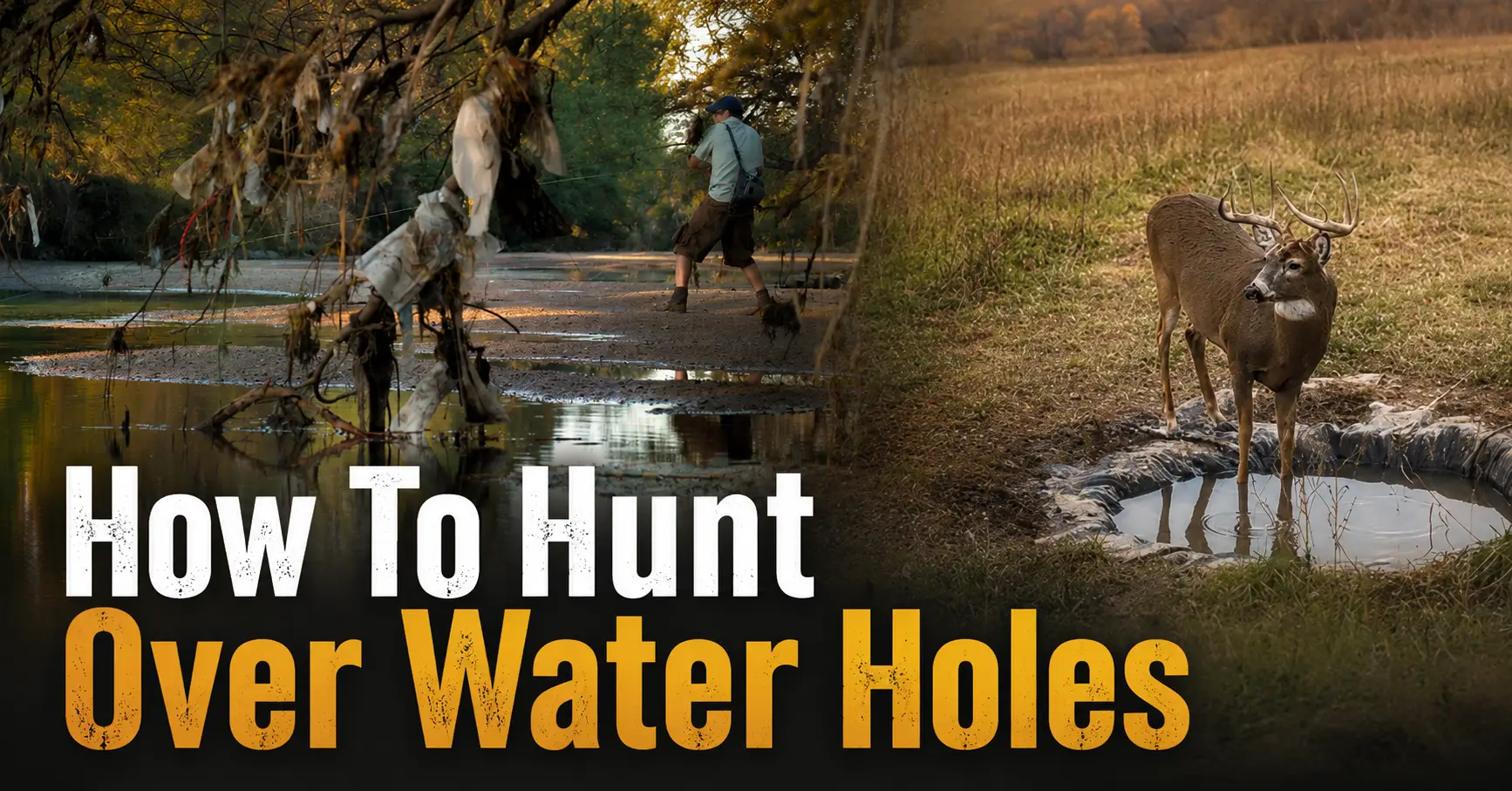

Learning how to hunt over water holes is less about sitting beside the nearest pond and more about understanding why, when, and how game animals use water. A good setup begins with current regulations, careful scouting, a stable wind, a safe background, and respect for wildlife, livestock, landowners, and other hunters.
This guide is written for beginners hunting legal game near natural springs, stock tanks, guzzlers, ponds, seeps, creek crossings, or other reliable water sources. It does not promise success. Animal movement changes with season, temperature, forage, hunting pressure, available water, and local habitat. The goal is to make sound decisions and avoid disturbing a resource that many animals may depend on.
Quick Answer
To hunt over a water hole responsibly, first verify that the species, season, method, land access, and water-source rules are legal. Scout from a distance, identify the freshest approach trails, and select a setup that keeps your scent away from expected movement while preserving a safe earthen backstop. Enter quietly, avoid blocking the shoreline, and take only a clearly legal opportunity within your practiced ability. Patience and restraint matter more than sitting as close to the water as possible.
Important Legal and Safety Notice Before You Hunt
Hunting rules vary by country, state, province, tribal jurisdiction, county, management unit, species, season, weapon, and land type. A method that is lawful on one property may be prohibited on nearby public land. Before hunting, consult the official wildlife agency and the specific land manager for the area.
- Confirm your hunting license, permits, tags, species eligibility, and hunter-education requirements.
- Verify season dates, legal hunting hours, bag limits, sex or antler restrictions, and harvest-reporting deadlines.
- Confirm legal weapons, ammunition, archery equipment, and any restrictions involving bait, minerals, salt, artificial water, cameras, blinds, or tree stands.
- Verify public access, private-land permission, parking, motorized access, closed zones, refuge rules, and property boundaries.
- Check visibility-clothing requirements and wear more high-visibility clothing when conditions or hunter density justify it.
- Treat every firearm as loaded, keep the muzzle in a safe direction, keep your finger outside the trigger guard until ready, and identify the target and everything in front of and beyond it.
- Never fire at a flat water surface. A projectile can skip or ricochet, and the far bank may hide people, livestock, roads, or buildings.
- For archery equipment, use a quiver, handle broadheads carefully, and hunt only within the effective range you have demonstrated in practice.
- Carry navigation, communication, first-aid, hydration, and weather equipment appropriate to the terrain.
Beginners should complete an approved hunter-education course and hunt with an experienced, ethical mentor whenever possible.
Why Water Holes Can Concentrate Animal Movement
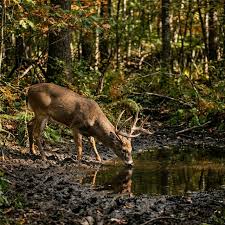
Water is one part of an animal’s daily habitat needs, along with food, cover, security, and suitable travel routes. In dry country, a dependable spring, pond, or wildlife drinker may become an important destination. In wetter country, the same animal may pass several smaller sources and never develop a predictable pattern around one pond.
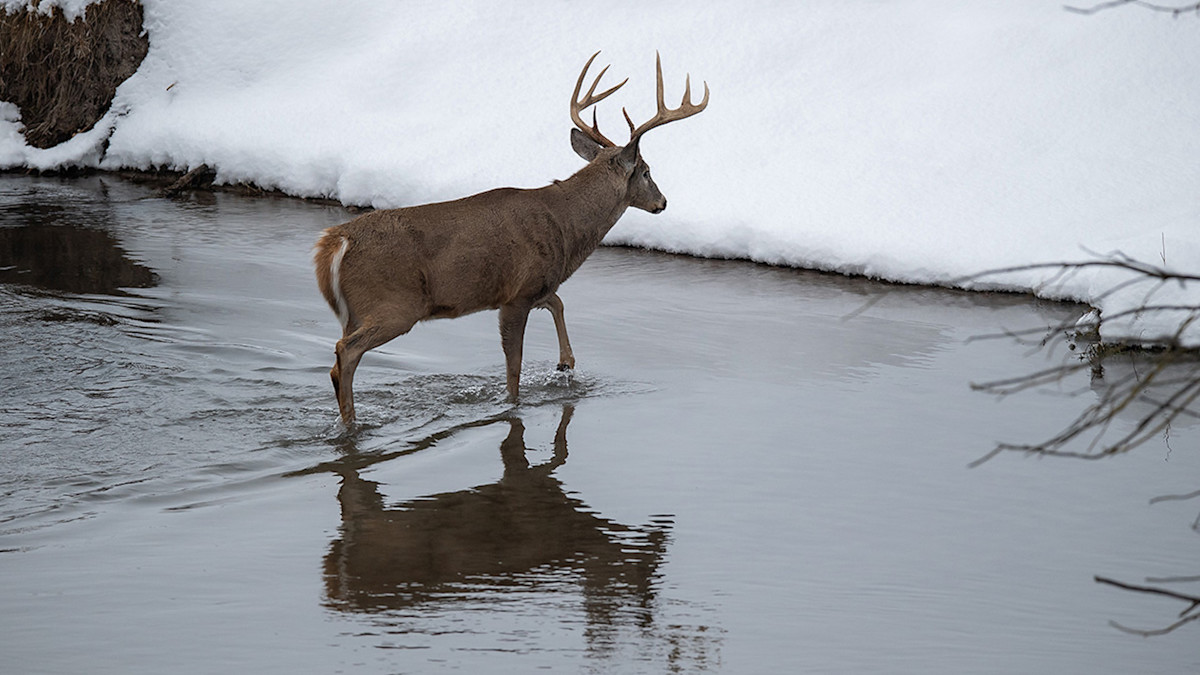
Game does not always walk straight to the shoreline. Deer may stage in cover before approaching. Elk can use wallows, shaded seeps, or transition routes. Pronghorn may circle in open terrain and watch for danger. Turkeys and other species may visit briefly and leave along a different trail. Hunting pressure can shift all of these movements later, farther from the water, or entirely to another source.
Natural and Developed Water Sources
| Water Source | What to Evaluate | Special Caution |
|---|---|---|
| Spring or seep | Fresh tracks, shaded cover, narrow approach routes, seasonal reliability | Fragile soil and vegetation can be damaged easily; do not contaminate or alter the spring. |
| Stock tank or trough | Livestock schedule, fencing, overflow, nearby game trails, landowner instructions | Never interfere with gates, floats, pipes, pumps, fences, or livestock access. |
| Wildlife guzzler or drinker | Legal access, maintenance area, established trails, agency signs | Site-specific restrictions may apply; do not block or modify the installation. |
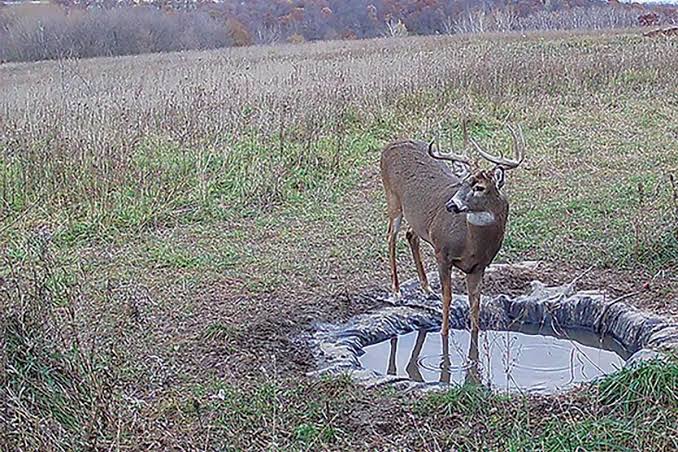
| Pond or reservoir edge | Multiple coves, muddy crossings, safe backstops, human recreation, alternate water | A broad water surface often creates unsafe shooting backgrounds and hidden users. |
| Creek crossing | Tracks entering and leaving, travel corridor, bank shape, upstream and downstream use | Never assume the channel is empty; trails, anglers, livestock, or homes may be out of sight. |
| Temporary puddle or rain catch | Recent weather, freshness of tracks, duration, nearby cover | Use may disappear quickly as the source dries or other water becomes available. |
How to Evaluate a Water Hole Before Hunting It
Look for Repeatable Use, Not Just One Track
A single track proves that an animal passed through, not that it will return during legal hours. Stronger evidence includes several fresh approach trails, tracks of different sizes, repeated layers of sign after weather changes, and lawful camera or observation records showing consistent use.
Identify Approach and Exit Trails
Walk the outer area first. Look for trails that connect the water to bedding cover, feeding areas, saddles, shaded slopes, creek bottoms, or open travel lanes. Avoid walking every trail to the edge. Your scouting route can leave scent exactly where you hope animals will travel.
Study Security Cover
A small water source beside thick cover may receive earlier use than an exposed pond, but thick vegetation can also hide the background and reduce target certainty. Mark places where animals may pause before entering the open. A setup slightly off the water may cover that staging movement with less pressure on the shoreline.
Check for Competing Water
Satellite maps, topographic maps, local knowledge, recent rainfall, and field scouting can reveal seeps, cattle tanks, creek pools, irrigation, or rainwater that reduce dependence on the obvious source. Recheck after storms and seasonal changes.
Confirm a Safe Background
A productive water source is not automatically a huntable one. Reject any location where likely shot directions point toward water, skyline, roads, trails, buildings, vehicles, camps, livestock, or unknown ground. A defined earthen bank or rising hillside can be safer, but it must remain clear when the animal arrives.
What You Need Before You Start
Expensive equipment is not required, but every item should support legality, safety, observation, quiet access, or responsible recovery.
- Valid license, permits, tags, printed or saved regulations, and land-access documentation
- A legal hunting firearm, bow, or other approved method, transported and handled according to law and manufacturer instructions
- Binoculars for identifying animals without pointing a weapon
- Wind indicator, such as lightweight powder or a simple visual indicator allowed in the area
- Paper map and compass, GPS, or offline mapping application with current boundaries
- Required blaze orange or other visibility clothing
- Quiet, weather-appropriate clothing and boots suitable for mud, cactus, rock, or steep banks
- Water, electrolytes when appropriate, food, sun protection, and an insulating or rain layer
- First-aid kit, emergency communication, whistle, headlamp, and spare batteries
- Full-body safety harness for any elevated stand
- Gloves, game bags, cooler plan, clean tools, and other legal recovery and meat-care supplies
How to Hunt Over Water Holes: Step-by-Step Guide
Step 1: Check Current Laws and Site Rules
Start with the official wildlife agency, then review the rules for the exact property. Confirm that the water source is open to hunting and that your blind, stand, camera, access route, vehicle, and hunting method are permitted. Pay special attention to restrictions involving developed wildlife water, camping near water, baiting, artificial attractants, and equipment left unattended.
Step 2: Identify the Legal Game and Likely Water Needs
Know which species your tag covers and learn its basic local movement. A deer trail, elk trail, livestock trail, and recreation trail can overlap. Tracks at water may also belong to protected wildlife. Use binoculars and field guides, and never make a decision based on vague movement or a partial view.
Step 3: Scout from the Outside In
Begin at a distance and study terrain, cover, trails, access points, prevailing wind, and human use. Glass the water from a ridge or shaded observation point when possible. Move closer only when you need to verify sign, and avoid repeated shoreline visits.
Step 4: Rank the Approach Trails
Compare track freshness, trail width, direction of travel, cover, and how each route connects to feeding or bedding areas. Mark more than one likely route. Animals often approach from the side that provides security, not the side that is easiest for the hunter to access.
Step 5: Choose a Wind-Specific Setup
Select a location where the expected wind carries your scent away from the most likely approach and staging cover. In hilly terrain, warm air often rises and cooling air often falls, but local thermals can be irregular around water, rock, shade, and vegetation. Test the wind at the setup, along the access route, and again after temperature changes.
Step 6: Build a Safe Shooting Plan
Before hunting, identify the only directions in which a shot could be safe. Confirm solid earth behind those lanes and note every road, trail, building, campsite, fence, livestock area, and public access point. If an animal stands where the background is water or unknown terrain, do not shoot.
Step 7: Plan a Quiet Entry and Exit
Enter without crossing the freshest trails or walking along the bank. Use terrain, existing paths, and cover rather than cutting new vegetation. Your exit route should avoid pushing animals away from bedding cover or across another hunter’s setup. Stop and back out if animals are already at the source.
Step 8: Position the Blind or Stand Without Blocking Water
Set back from the shoreline and leave clear access for wildlife and livestock. Blend a blind with existing cover only where vegetation rules allow. For a tree stand, inspect the tree and equipment, use a full-body harness from the ground up, and use a haul line for unloaded equipment rather than climbing with it in hand.
Step 9: Settle In and Observe
Keep movements slow and limited. Use binoculars before raising a weapon. Watch approach trails, downwind cover, and the opposite bank rather than staring only at the water. Listen for other hunters, hikers, vehicles, livestock, and changing weather.
Step 10: Verify the Animal and the Entire Scene
Confirm species, legal sex or antler class, tag eligibility, and whether another animal is directly behind it. Check the backstop again from the exact angle. Water-hole encounters can be brief, but urgency is not a reason to skip identification.
Step 11: Take Only a Controlled, Ethical Opportunity
Act only when the animal is calm enough for a responsible decision, the angle is within your practiced ability, and the path and background are clear. Keep your finger away from the trigger until the decision is complete. Pass if the animal is in water, crowded by other animals, partly hidden, beyond your range, or near an unsafe background.
Step 12: Recover, Tag, Report, and Care for the Harvest
After the shot, follow your hunter-education training and local recovery rules. Mark the last known location, maintain safe weapon handling, and do not cross private property without permission. Complete tagging and reporting as required, use clean tools and gloves, cool edible meat promptly, and keep waste away from the water source.
Designing a Safe, Low-Impact Water-Hole Setup
| Setup Factor | Better Choice | Risky Choice |
|---|---|---|
| Distance | Set back enough to preserve access and stay within your proven range. | Place a blind on the bank where it blocks trails or dominates the only opening. |
| Wind | Use a downwind or crosswind position with a clean access route. | Rely on scent spray while your wind blows into bedding or approach cover. |
| Backstop | Restrict opportunities to angles backed by clear, rising earth. | Shoot toward open water, a flat far bank, skyline, road, or unknown vegetation. |
| Concealment | Use existing shade and cover without damaging the site. | Cut excessive vegetation, dig, nail into trees, or modify public infrastructure. |
| Entry | Approach from outside the travel pattern and avoid fresh trails. | Walk around the entire shoreline immediately before the hunt. |
| Public-land etiquette | Have backup sites and yield when another hunter is present. | Claim exclusive control because you left a camera, blind, chair, or sign. |
Field Rule: The Water Is Not the Backstop
Plan the setup so that the safest possible opportunity occurs before the animal reaches the water or after it leaves along a known trail. Even then, identify the target and background at the moment of the shot. Terrain, livestock, recreation, and other hunters can change after scouting.
Best Time, Place, and Conditions for Hunting Near Water
Dry Periods
Long dry periods can concentrate use at dependable water, especially where alternatives are scarce. They can also make the site more important to wildlife and livestock, so avoid monopolizing it or disturbing it continuously. Heat raises dehydration risk for the hunter as well.
After Rain
Fresh puddles, flowing washes, and refilled seeps may disperse animal movement. A water hole that was productive last week may become secondary overnight. Scout again and look for new track patterns.
Morning and Evening Transitions
Many game animals move around cooler periods, but hunting pressure can alter that pattern. Morning access may risk bumping animals that arrived before legal light. Evening hunts require a safe exit plan that does not push animals or create a navigation problem after dark.
Wind and Thermals
A steady, predictable crosswind is often easier to manage than light, variable air. In basins and draws, thermals may switch as shade reaches the slope. Leave when the wind begins carrying scent toward the most important trail.
Hunting Pressure
Heavily hunted water can become a nighttime destination. Look for staging cover, secondary trails, smaller hidden sources, and routes between food, bedding, and water. Do not crowd another hunter or move close enough to affect that person’s safe zone.
Public Land and Private Land Considerations
On Public Land
- Verify ownership, legal access, seasonal closures, refuge or agency rules, and whether a developed water source has special restrictions.
- Use legal parking and motorized routes. Do not cross private land merely because a map shows public ground beyond it.
- Assume other hunters and recreationists may approach from any direction.
- Follow first-come etiquette. A stand, blind, camera, or note does not automatically create exclusive rights.
- Do not camp so close that wildlife or livestock avoid the only practical water source; check the exact local distance rule.
- Remove equipment and natural-material blind additions as required.
On Private Land
- Get clear permission for hunting, access routes, vehicle use, guests, cameras, stands, and recovery.
- Ask how to handle gates, livestock, irrigation, pumps, tanks, fences, and fire risk.
- Confirm property boundaries and neighboring residences before choosing any shooting direction.
- Do not create, deepen, line, fill, salt, or otherwise modify water without written authorization and any required permits.
- Share your plan with the landowner and report damage or maintenance problems promptly.
Helpful Tips for Better Results
- Maintain backup locations. A second or third legal setup lets you respond to wind, pressure, livestock, or another hunter without forcing a bad situation.
- Glass before entering. Observe the source and surrounding cover from a distance whenever terrain allows.
- Practice the real position. Bowhunters and firearm hunters should practice from the seated, kneeling, blind, or elevated position they expect to use.
- Control the access route first. A perfect blind cannot undo scent left across the main trail.
- Let the scene settle. Arrive with enough time to stop moving, cool down, and inspect the background.
- Watch the staging cover. Animals may pause outside the opening before approaching water.
- Limit scouting pressure. More tracks do not require more visits. Record what you learn and leave the area quiet.
- Protect the resource. Keep waste, chemicals, meat-care activity, and unnecessary foot traffic away from the water.
- Leave on a bad wind. Discipline now can preserve the location for a better day.
Common Beginner Mistakes to Avoid
- Assuming all hunting over water is legal because the general season is open
- Failing to read land-manager rules for artificial drinkers, blinds, cameras, camping, or vehicles
- Sitting directly on the shoreline and blocking the main approach
- Walking every trail and leaving scent throughout the area
- Choosing the blind first and considering the wind later
- Failing to identify a safe earthen background before the hunt
- Pointing a firearm at movement instead of using binoculars for identification
- Firing toward water, skyline, thick unknown vegetation, roads, or livestock
- Remaining in a setup after the wind begins to swirl
- Believing a camera or blind reserves a public site
- Arguing with another hunter at a location where firearms are present
- Ignoring heat, dehydration, storms, mud, flash-flood risk, or night navigation
- Failing to plan legal recovery, tagging, reporting, and meat cooling
- Leaving trash, cord, blind material, food, or equipment behind
Troubleshooting Common Problems
| Problem | Possible Cause | What to Do |
|---|---|---|
| No animals appear | Old sign, new water elsewhere, nighttime use, pressure, or poor timing | Re-scout after weather changes, compare nearby sources, and observe from a distance before returning. |
| Animals stop short of the water | They detected scent, movement, blind outline, or recent disturbance | Back the setup away, improve the access route, reduce movement, and hunt only a stable wind. |
| Wind changes near sunset | Cooling thermals or terrain-driven air movement | Leave before scent reaches the trail or switch to a pre-scouted setup designed for that wind. |
| Another hunter is present | Shared public access | Wave, back out, and use another location. Do not argue or attempt to squeeze into the same safe zone. |
| Livestock arrive | Normal grazing or watering schedule | Unload or secure the weapon as appropriate, give livestock space, and move if the background or access becomes unsafe. |
| Shot background is water | The animal approached from an unsafe side | Pass. Wait for a safe earthen backstop or let the animal leave without taking a shot. |
| Tracks are hard to age | Hard ground, repeated use, wind, dust, or no recent weather marker | Use repeated observations, track overlap, lawful camera data, and weather events instead of guessing an exact age. |
| A boundary is unclear | Outdated map, poor signal, missing fence, or conflicting layers | Do not enter or shoot across it. Confirm with the landowner, agency map, or local officer before hunting. |
| The source is damaged or dry | Equipment failure, drought, livestock damage, or seasonal change | Do not repair or alter it without authorization. Report the condition to the landowner or managing agency. |
| You feel rushed when game appears | Limited experience or an overly close setup | Slow down, keep the muzzle safe, verify each legal and safety condition, and pass when the decision is not clear. |
Ethical Hunting and Conservation Around Water
A water source can serve game animals, nongame wildlife, livestock, pollinators, and people. Responsible hunting protects that shared resource rather than treating it as a private ambush point.
- Respect seasons, limits, closures, landowners, agency staff, other hunters, and all non-hunting visitors.
- Yield a public site when another hunter arrived first and avoid confrontation.
- Do not block the only practical water access or occupy it continuously where animals or livestock need time to drink.
- Never contaminate water with waste, fuel, chemicals, food, carcass material, or cleaning products.
- Practice enough to know your effective range and pass on uncertain, crowded, obstructed, or unsafe opportunities.
- Use the harvest responsibly, follow reporting rules, and avoid waste.
- Pack out every item and leave the bank, vegetation, fencing, and water infrastructure undamaged.
- Support conservation through licenses, habitat programs, volunteer work, and respectful participation.
When to Get More Training or Professional Guidance
Seek direct instruction before hunting alone when you have not completed hunter education, have limited firearm or bow experience, cannot confidently identify safe shooting zones, or are unfamiliar with local property rules. Additional help is also wise for remote terrain, extreme heat, tree stands, difficult navigation, or complex recovery and meat-care requirements.
Good sources include official wildlife agencies, certified hunter-education instructors, conservation organizations, experienced ethical mentors, and reputable local hunting clubs. Ask a wildlife officer when a regulation is unclear rather than relying on a social-media comment.
After the Hunt: Follow-Up, Gear Care, and Learning
- Complete required tagging, validation, harvest reporting, and transport documentation.
- Clean, unload, secure, and store firearms or archery equipment according to law and manufacturer instructions.
- Dry and inspect blinds, harnesses, optics, clothing, boots, batteries, and first-aid supplies.
- Remove all property from public land by the required deadline.
- Record date, temperature, wind, rainfall, fresh sign, approach route, livestock activity, and human pressure.
- Note which entry and exit routes caused the least disturbance.
- Report damaged public water infrastructure to the managing agency instead of attempting unauthorized repairs.
- Review every safety decision, including opportunities you correctly chose to pass.
Recommended Hunting Gear and Tools to Consider
You do not need premium gear to hunt responsibly. Choose tools based on your local laws, hunting method, terrain, weather, physical ability, and budget.
- Legal, well-maintained hunting equipment appropriate to the species
- Binoculars and lens protection
- Wind indicator
- Offline map, compass, GPS, and spare power
- Quiet seat, legal portable blind, or approved stand and full-body harness
- Required visibility clothing
- Weather protection, sun protection, water, and first aid
- Headlamp, backup light, and emergency signaling device
- Clean gloves, game bags, and a reliable cooling plan
Final Thoughts
The best approach to how to hunt over water holes begins long before legal shooting time. Confirm the rules, scout without overpressuring the source, understand approach trails, choose a stable wind, preserve a safe earthen background, and keep wildlife access open. A responsible hunter is willing to move, wait, share the site, or pass entirely when the legal, safety, or ethical conditions are not right.
Water can improve your understanding of animal movement, but it is never a guarantee. Preparation, field awareness, patience, and respect for the resource are what make the method useful and sustainable.
Frequently Asked Questions: Numbered Q&A
1. Is it legal to hunt over a water hole?
It may be legal in some places and restricted in others. Rules can differ by species, season, land manager, weapon, baiting definition, and whether the water source is natural or artificial. Check the current regulations and any unit- or property-specific rules before setting up.
2. What species can be hunted near water sources?
Depending on local seasons and regulations, hunters may encounter deer, elk, pronghorn, wild pigs, turkeys, upland birds, or other legal game near water. Always identify the species, sex, age class, and any tag requirements before considering a shot.
3. What is the best time of day to hunt a water hole?
Early morning and late afternoon are common movement periods, but local pressure, heat, moonlight, forage, and security cover can shift use to midday or after dark. Scout actual sign and recent activity rather than relying only on a general time rule.
4. Are water holes better during hot weather?
Heat and dry conditions can make reliable water more important, but they do not guarantee daylight visits. Animals may change routes, use shaded seeps, drink at night, or avoid exposed water when hunting pressure is high.
5. Should I sit directly beside the water?
Usually not. A setup set back from the bank can improve concealment, reduce disturbance, preserve wildlife access, and create a safer shooting angle. The correct distance depends on the weapon, terrain, cover, wind, and your practiced effective range.
6. How far should a blind or stand be from a water hole?
Place it far enough away to avoid dominating the shoreline and close enough for a legal, ethical opportunity within your proven range. There is no universal distance. Confirm local rules and choose a position with a safe backstop and a low-impact entry route.
7. How do I choose the downwind side of a water hole?
Use the expected animal approach routes, prevailing wind, and local thermals together. Choose a setup where your scent moves away from likely travel corridors and bedding cover. Recheck the wind frequently because bowls, draws, and evening cooling can cause it to swirl.
8. What if the wind swirls around the water?
Leave or move to a backup setup before animals arrive. Trying to force a poor wind often educates game and can create rushed decisions. Multiple pre-scouted locations are more useful than relying on one blind for every condition.
9. Can I use a trail camera at a water source?
Only where cameras are legal and allowed by the land manager. Some jurisdictions restrict placement dates, transmission, use during the season, or attachment methods. Position cameras without blocking trails or disturbing the bank, and follow removal rules.
10. What signs show that a water hole is active?
Look for fresh tracks, multiple approach trails, recently disturbed mud, droppings, rubbed vegetation, hair on crossings, and tracks layered over older sign. Compare several visits so you can separate occasional use from a repeatable pattern.
11. How can I tell when animals are visiting?
Fresh sign, lawful camera data, distant observation, and tracks in soft soil can help. Aging tracks is imprecise, so combine clues with weather, recent rain, dust, and repeated observations rather than assigning an exact time to one track.
12. Should I hunt the only water source in an area all day?
That may be unethical or unlawful in some places, especially where wildlife or livestock have few alternatives. Do not camp on, block, monopolize, or contaminate critical water. Follow land-manager rules and leave periods when animals and livestock can drink undisturbed.
13. What should I do if another hunter is already there?
Back out calmly and use another location. On public land, a blind, stand, camera, or sign usually does not create exclusive ownership. Avoid confrontation, never handle a firearm during a disagreement, and follow local first-come customs and regulations.
14. Can I reserve a public water hole by leaving a blind?
Do not assume so. Public-land equipment rules vary, and unattended property may not reserve a site or may need to be removed daily. Check the land manager’s rules and be prepared to use a different setup if another hunter is present.
15. Is a ground blind better than a tree stand?
A ground blind works where trees are absent or unsuitable and may be easier for beginners, but it must be positioned safely and allowed time to blend in when possible. A tree stand can improve visibility but adds fall risk and requires a full-body harness and safe climbing practices.
16. Can I set up a blind on the same day I hunt?
Sometimes, but a new blind close to a small water source can alarm animals. When legal, set it farther back, brush it naturally without cutting prohibited vegetation, or use existing cover. Never block the most-used access trail.
17. What is the safest firearm angle near water?
Choose an angle with solid earth behind the target and no people, livestock, roads, buildings, trails, vehicles, or water in the line of fire. Never shoot at a flat water surface or other hard, shallow angle because projectiles can ricochet.
18. Can I bowhunt over a water hole?
Yes where legal, but practice from the same seated, kneeling, blind, or elevated position you will use. Know your effective range, handle broadheads carefully, avoid steep or obstructed angles beyond your skill, and take only a clearly legal, controlled opportunity.
19. How do I avoid contaminating the water?
Keep fuel, chemicals, human waste, food scraps, and cleaning products well away. Do not wash gear or process game in the water. Pack out all trash and avoid trampling fragile banks, springs, pipes, tanks, floats, or wildlife drinkers.
20. Should I build or modify a water hole?
Only with the landowner’s or managing agency’s authorization and any required permits. Unauthorized digging, liners, tanks, dams, salt, minerals, or vegetation work can violate habitat, baiting, water, or public-land rules.
21. Is an artificial wildlife drinker legal to hunt?
Legality varies. A guzzler, tank, trough, or developed spring may have special access or camping restrictions, and hunting nearby may be regulated differently from hunting near natural water. Check both hunting regulations and site-specific land rules.
22. Does rain ruin a water-hole hunting plan?
Rain can create temporary puddles and spread animals across the landscape, reducing use of the main source. It can also erase tracks and make access noisy or muddy. Re-scout after a meaningful weather change rather than assuming the old pattern remains.
23. Why did animals stop visiting in daylight?
Common causes include hunting pressure, human scent, noisy access, changing wind, new temporary water, altered forage, predators, livestock activity, or a visible blind. Reduce intrusion, verify fresh sign, and consider a lower-impact setup away from the shoreline.
24. How long should I wait before changing locations?
Base the decision on fresh sign, wind stability, visibility, legal hours, weather, and known movement rather than a fixed number of hours. If the wind becomes unsafe or your access is disturbing the source, leave even if you planned a long sit.
25. What gear is essential for a water-hole setup?
Carry current licenses and tags, the legal hunting method, binoculars, wind indicator, navigation tools, water, first aid, communication, weather protection, required visibility clothing, and recovery and meat-care supplies appropriate to the hunt.
26. Do scent-control products replace wind planning?
No. Clean clothing and careful hygiene may reduce odor, but wind direction and access route remain the primary controls. Treat scent products as secondary and never use them to justify hunting a setup with a poor or unstable wind.
27. How do I enter without spooking animals?
Approach from the side opposite likely bedding and travel routes, use terrain and vegetation to hide movement, avoid crossing fresh trails, arrive with enough time to settle, and stop if animals are already present. Plan a quiet exit as carefully as the entry.
28. What if livestock are using the water?
Do not interfere with livestock, gates, pumps, tanks, or fencing. Follow landowner and grazing rules, keep a safe distance, and choose another setup if your presence prevents animals from drinking or creates an unsafe shot background.
29. Can I shoot an animal standing in the water?
Do not take the shot unless it is legal, the target and all surroundings are clearly identified, and there is a safe earthen backstop. In many water-hole situations, the water and shallow bank create a poor or unsafe background, so passing is often the responsible choice.
30. What should I do after a successful harvest?
Follow tagging and reporting rules immediately, recover the animal legally and carefully, obtain permission before entering private land, keep tools clean, cool edible meat promptly, transport it according to local rules, and leave the site clean.
31. How do I recover an animal near private property?
Mark the last known location, stop before crossing the boundary, and contact the landowner or the appropriate wildlife officer as local law requires. A hunting license does not authorize trespass, even during recovery.
32. Can beginners hunt a water hole alone?
A beginner should first complete hunter education and practice safe weapon handling. Hunting with an experienced, ethical mentor is strongly recommended, especially where navigation, heat, livestock, public-land pressure, or recovery may be challenging.
33. How do water-hole tactics differ on public and private land?
Public land often requires more backup locations, stronger etiquette, and careful review of equipment and access rules. Private land requires clear permission and respect for landowner instructions. Neither setting allows unsafe shots, blocked water access, or trespass.
34. How can I reduce pressure on a productive water source?
Observe from a distance, limit camera and scouting visits, use clean entry routes, avoid checking sign immediately before prime movement, rotate setups, and leave the water undisturbed when conditions are wrong. More sitting is not always better.
35. Does hunting over water guarantee success?
No. Water use changes with weather, forage, season, pressure, security cover, and available alternatives. A careful setup can improve observation opportunities, but legal preparation, scouting, patience, and restraint remain more important than any single location.