
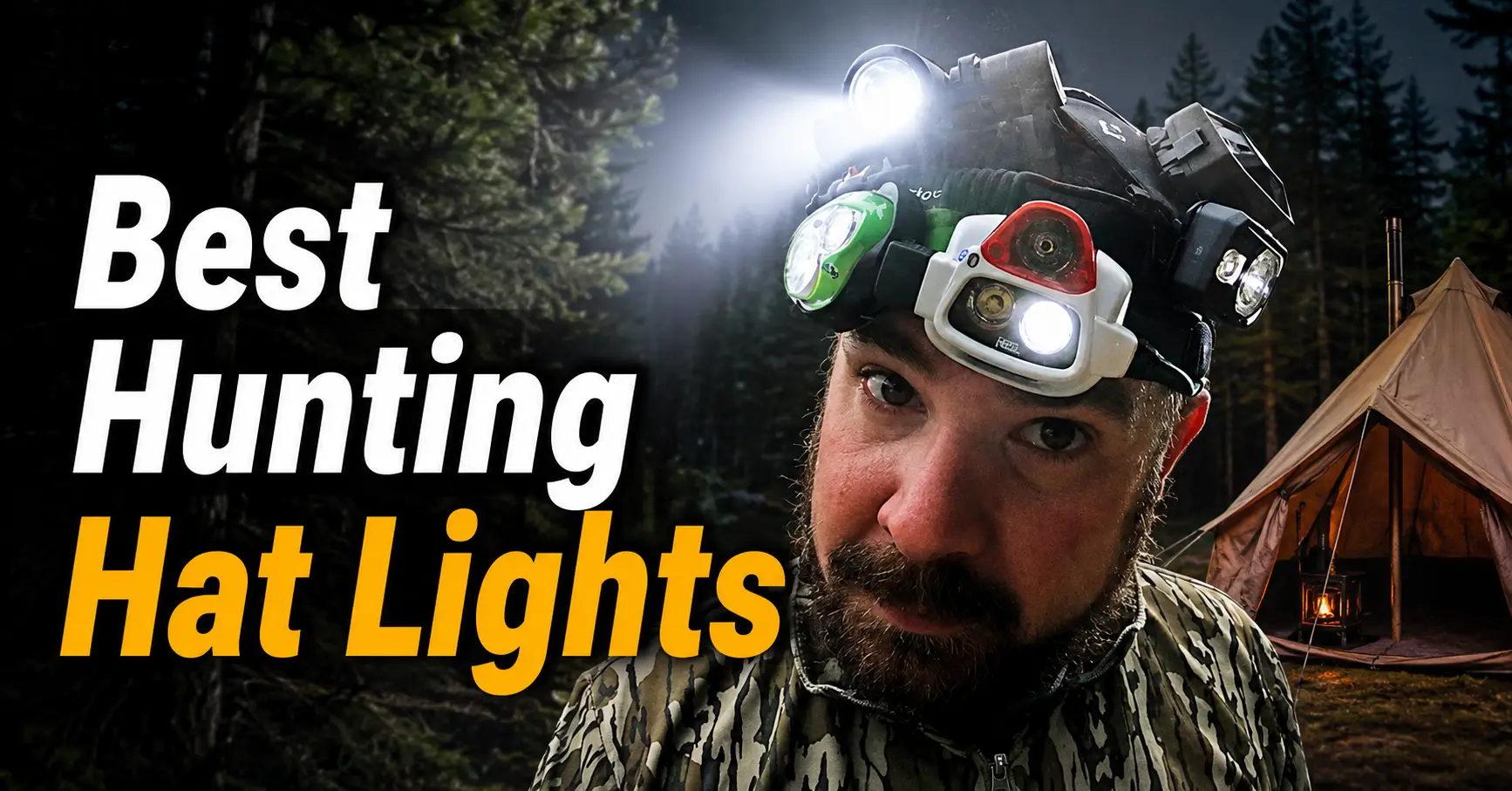

The best hunting hat lights help hunters move safely before dawn, organize equipment without occupying both hands, read maps or tags, and exit after legal shooting hours. The most useful light is not always the brightest. Fit, beam shape, low modes, runtime, weather resistance, control layout, battery availability, and an independent backup matter more than a dramatic lumen claim.
This comparison includes one dedicated hat-bill clip light and four headlamps supplied for review. That distinction matters: a compact cap light is convenient for close tasks, while a strap-mounted headlamp normally provides greater stability, battery capacity, and coverage.
Important Safety and Legal Notice
- Artificial-light and night-hunting laws vary by species, location, property, and hunting method. Check current wildlife regulations before use.
- Never use a firearm scope to identify unknown movement. Use binoculars or a handheld observation tool while maintaining safe muzzle control.
- A light does not replace navigation skill, hunter education, target identification, a known backstop, landowner permission, or an emergency plan.
- Carry a second independent light and protected backup power.
- Follow battery, charging, water-resistance, helmet, tree-stand, firearm, archery, and manufacturer instructions.
Specification note: Product features below are based on accessible Amazon listing information and reputable retailer descriptions. Exact offers, sellers, colors, batteries, included parts, prices, and specifications can change. Where current data was incomplete or inconsistent, the review says so instead of guessing.
Quick Picks
- Best Overall True Hat-Bill Light: Bushnell TRKR 85L Hat Light
- Best Value Two-Pack: LHKNL Rechargeable Headlamp 2-Pack
- Best Multi-Color Feature Set: OMALIGHT White/Red/UV Rechargeable Headlamp
- Best Separate-Battery Design: Hunting Friends Separation-Style Rechargeable Headlamp
- Best Simple Rechargeable Alternative: Vanvale Superbright Rechargeable Headlamp
Product Comparison Table
| Product | Best For | Type | Key Features and Important Notes | Check Details |
|---|---|---|---|---|
| Bushnell TRKR 85L | Best Overall True Hat-Bill Light | Clip-on hat-bill light | 85-lumen white output; red and TRKR modes; 1 AAA battery; IPX4 weather resistance; 2-meter impact resistance; clips to most hat bills. | Check Details |
| LHKNL 2-Pack | Best Value Two-Pack | Lightweight rechargeable headlamp | Two rechargeable headlamps; white and red light; motion-sensor control; eight modes; 60-degree pivot; listed 1.87-ounce weight; IPX4; listed 4–10-hour runtime. | Check Details |
| OMALIGHT Multi-Color | Best Multi-Color Feature Set | Rechargeable multi-color headlamp with hat clips | White, red, and UV sources; 16 listed modes; 1080-lumen listing claim; 60-degree tilt; digital battery display; USB-C charging; included hat clips; listed IPX6; listed weight 10.4 ounces. | Check Details |
| Hunting Friends Separation-Style | Best Separate-Battery Design | Rechargeable headlamp with separated battery pack | Rechargeable separation-style design; adjustable lamp direction; waterproof or weather-resistant wording in listings; selected Amazon link may offer white or yellow-light variants. | Check Details |
| Vanvale Rechargeable Headlamp | Best Simple Rechargeable Alternative | Rechargeable headlamp | The supplied Amazon listing describes the model as superbright, waterproof, rechargeable, and lightweight. Exact current lumen, runtime, battery, and water-resistance specifications were not reliably available during research. | Check Details |
Best Hunting Hat Lights Reviews
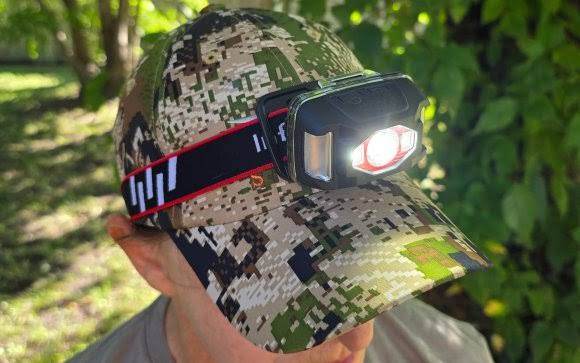
1. Bushnell TRKR 85L Hat Light
Type: Clip-on hat-bill light
85-lumen white output; red and TRKR modes; 1 AAA battery; IPX4 weather resistance; 2-meter impact resistance; clips to most hat bills.
Key Features
- True cap-bill clip design for hands-free use
- White, red, and TRKR lighting modes
- Listed 85-lumen white output and 40-meter beam distance
- Uses one AAA battery
- Listed IPX4 weather resistance and 2-meter impact resistance
Pros
- Compact and easy to keep in a pocket or pack
- Red mode can reduce glare during close-range tasks
- Simple battery replacement in the field
- A better literal match for a hunting hat light than a full headlamp
Cons
- Listed white-mode runtime is only about 45 minutes
- Lower output and narrower use case than larger headlamps
- TRKR mode does not replace tracking knowledge, legal recovery practices, or a backup light
Field Notes
The compact clip-on design is the closest match to the target category. Its lower output and short listed white-mode runtime make it better for close tasks, walking, and gear setup than for replacing a full-size navigation headlamp.
Safety and Specification Notes
Confirm the live Amazon listing, selected variant, battery instructions, charging method, water-resistance limits, included components, and seller before use. A light is a navigation and task tool; it is not a substitute for target identification, hunter education, a trip plan, or an independent backup light.
Best For
Hunters who want a compact cap-bill light for walking to a stand, reading tags, organizing gear, or handling close tasks.
Availability note: Check the current Amazon offer and selected seller before ordering.
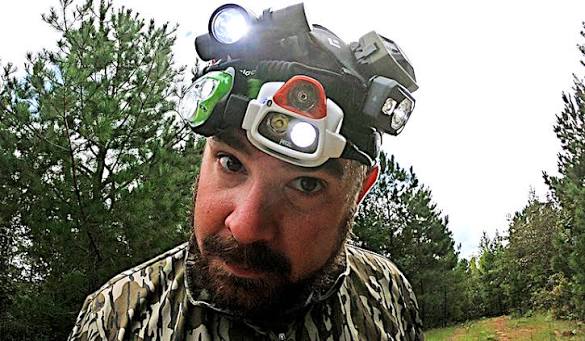
2. LHKNL Rechargeable Headlamp 2-Pack
Type: Lightweight rechargeable headlamp
Two rechargeable headlamps; white and red light; motion-sensor control; eight modes; 60-degree pivot; listed 1.87-ounce weight; IPX4; listed 4–10-hour runtime.
Key Features
- Two headlamps in the selected package
- White and red light options with eight listed modes
- Motion-sensor switching and long-press shutoff
- 60-degree adjustable lamp angle
- Listed IPX4 splash resistance and 4–10-hour runtime
Pros
- Two-light package supports a practical backup plan
- Very light listed weight for a headband model
- Red mode and low settings suit close tasks
- Rechargeable design reduces routine disposable-battery use
Cons
- Not a true hat-bill clip light
- Motion control may activate unintentionally around brush, straps, or hands
- IPX4 indicates splash resistance, not submersion protection
Field Notes
This is a headband light rather than a cap-bill clip. The two-pack format is practical for keeping a backup in camp, a vehicle, or a hunting pack.
Safety and Specification Notes
Confirm the live Amazon listing, selected variant, battery instructions, charging method, water-resistance limits, included components, and seller before use. A light is a navigation and task tool; it is not a substitute for target identification, hunter education, a trip plan, or an independent backup light.
Best For
Budget-minded hunters, hunting partners, families, or anyone who wants a primary light plus a matching backup.
Availability note: Amazon showed an in-stock offer during research, but price and stock can change.
3. OMALIGHT White/Red/UV Rechargeable Headlamp
Type: Rechargeable multi-color headlamp with hat clips
White, red, and UV sources; 16 listed modes; 1080-lumen listing claim; 60-degree tilt; digital battery display; USB-C charging; included hat clips; listed IPX6; listed weight 10.4 ounces.
Key Features
- White, red, and UV light sources
- Sixteen listed settings across flood, spot, warning, and colored-light modes
- Digital battery percentage display and USB-C charging
- 60-degree adjustable head and included hat clips
- Listing claims IPX6 resistance and a 10.4-ounce item weight
Pros
- Broadest color and mode selection in this comparison
- Battery display helps with pre-hunt power checks
- Spot and flood options improve task flexibility
- Hat clips add mounting options beyond the elastic strap
Cons
- Heavier and bulkier than a dedicated cap light
- Many modes can be slower to manage with gloves or in darkness
- UV is a specialty function and is not necessary for most hunting navigation
- Verify current Amazon availability because a featured offer was not consistently shown
Field Notes
The broad feature set suits users who need several beam colors and a battery display. It is substantially heavier and more complex than a small cap light, and Amazon showed no featured offer during part of the research.
Safety and Specification Notes
Confirm the live Amazon listing, selected variant, battery instructions, charging method, water-resistance limits, included components, and seller before use. A light is a navigation and task tool; it is not a substitute for target identification, hunter education, a trip plan, or an independent backup light.
Best For
Gear buyers who prioritize multiple light colors, a battery display, adjustable beam style, and flexible mounting over minimum weight.
Availability note: Verify the current offer, seller, included parts, and warranty terms before purchase.
4. Hunting Friends Separation-Style Rechargeable Headlamp
Type: Rechargeable headlamp with separated battery pack
Rechargeable separation-style design; adjustable lamp direction; waterproof or weather-resistant wording in listings; selected Amazon link may offer white or yellow-light variants.
Key Features
- Separated lamp and battery-pack layout
- Rechargeable power system
- Adjustable beam angle
- Variant listings may include white or yellow output
- Designed for extended outdoor and work-light use
Pros
- Rear battery layout may feel more balanced for some users
- Large lamp body can provide a focused beam style
- Rechargeable system suits repeated use
- Yellow-light variants may reduce harsh backscatter in some misty or dusty conditions
Cons
- Bulkier than a cap light or lightweight headlamp
- Cable and battery pack can catch on straps or clothing
- Published specifications differ among variants and retailers
- Not ideal for buyers seeking a simple, lightweight hat-bill light
Field Notes
The separated battery can distribute weight differently from front-heavy lamps, but the cable and rear pack add bulk. Retailer descriptions for brightness, runtime, and included batteries vary, so the exact Amazon variant should be checked carefully.
Safety and Specification Notes
Confirm the live Amazon listing, selected variant, battery instructions, charging method, water-resistance limits, included components, and seller before use. A light is a navigation and task tool; it is not a substitute for target identification, hunter education, a trip plan, or an independent backup light.
Best For
Users who prefer a separated battery pack and are willing to verify the exact beam color, battery configuration, runtime, and included charger.
Availability note: Check the selected Amazon variant and current seller details; do not assume every color or package has identical specifications.
5. Vanvale Superbright Rechargeable Headlamp
Type: Rechargeable headlamp
The supplied Amazon listing describes the model as superbright, waterproof, rechargeable, and lightweight. Exact current lumen, runtime, battery, and water-resistance specifications were not reliably available during research.
Key Features
- Rechargeable design
- Listing emphasizes lightweight construction
- Listing uses waterproof or weather-resistant positioning
- Hands-free head-mounted format
- Intended for outdoor low-light use
Pros
- Simple product concept without a large mode list
- Rechargeable power may be convenient for regular use
- Head-mounted design leaves both hands available
- May work as a general camp, trail, or emergency light
Cons
- Exact current specifications could not be independently confirmed
- Not a verified true hat-bill clip light
- Buyers must confirm battery, charger, runtime, beam color, and water rating
Field Notes
This model may suit buyers who want a straightforward rechargeable headlamp, but the current product page should be checked for exact specifications and availability. It is not presented as a verified cap-bill clip light.
Safety and Specification Notes
Confirm the live Amazon listing, selected variant, battery instructions, charging method, water-resistance limits, included components, and seller before use. A light is a navigation and task tool; it is not a substitute for target identification, hunter education, a trip plan, or an independent backup light.
Best For
Shoppers who prefer a basic rechargeable headlamp and are prepared to verify the live listing before ordering.
Availability note: Confirm the current Amazon offer and full specification table before purchase.
How to Choose the Best Hunting Hat Lights
Choose a Hat Light or Headlamp
A clip-on hat light is compact and useful for close tasks. A headlamp distributes weight through a strap and is usually more stable for long walks, rough ground, and prolonged work.
Match the Beam to the Task
Flood beams show nearby footing and work areas. Spot beams reach farther. A light with both, or a balanced general beam, is more versatile than output alone suggests.
Prioritize Useful Brightness Levels
Low mode supports maps and gear. Medium mode handles most walking. High mode is valuable for short checks or emergencies but consumes power and can cause glare.
Check Red and Specialty Colors
Red can preserve dark adaptation and reduce close glare. UV and specialized tracking colors are secondary tools and should never replace safe, legal recovery practices.
Compare Runtime Honestly
Runtime depends on the mode, battery age, temperature, charging quality, and whether the lamp steps down. Plan around the highest mode you realistically expect to use.
Choose Rechargeable or Replaceable Power
Rechargeable lights are convenient for routine use. Replaceable-cell lights are easy to restore in the field. A mixed backup system reduces dependence on one charging method.
Check Weight and Balance
A few ounces can affect comfort over several hours. Front-heavy lights may bounce; separate battery packs may balance better but add cables and bulk.
Understand Water Ratings
IPX4 is generally splash resistant; IPX6 generally withstands stronger water jets. Neither rating automatically permits submersion, and damaged port covers reduce protection.
Test Controls With Gloves
Large buttons and long-press shutoff can be easier in cold conditions. Motion sensors are convenient but should have a predictable way to disable them.
Verify Hat and Helmet Compatibility
Cap-bill thickness, helmet clips, headband range, beanies, glasses, and hearing protection affect fit. Test the complete clothing system before the hunt.
Buy for the Whole Safety Plan
The light should complement offline navigation, communication, first aid, water, weather protection, spare power, and a trip plan—not replace them.
Confirm the Live Product Variant
Amazon listings may combine colors, batteries, packages, and generations. Match the ASIN, selected option, included charger, and specification table before checkout.
Important Hunting, Outdoor, and Firearm Safety Tips Before You Buy
- Check hunting seasons, licenses, tags, legal equipment, artificial-light restrictions, blaze-orange rules, public-land rules, and private permission.
- Carry a backup light, navigation, first aid, water, weather protection, communication, and a shared trip plan.
- Use binoculars—not a firearm-mounted optic—to identify distant or uncertain movement.
- Keep every firearm pointed in a safe direction, treat it as loaded, keep the finger off the trigger until ready, and know the target and what lies beyond it.
- Do not shine high-output lights at other hunters, drivers, homes, aircraft, or livestock.
- Use a full-body safety harness and lifeline for elevated stands, and follow legal-light and climbing rules.
- Inspect lithium batteries for swelling, damage, heat, leakage, or odor; stop using a damaged battery immediately.
- Do not charge a wet light or use an unknown charger.
- Practice every control in darkness before relying on the light in the field.
- Outdoor lighting is not a substitute for judgment, training, legal compliance, or emergency services.
Common Mistakes to Avoid
- Buying only by lumen claims: beam shape, runtime, comfort, controls, and honesty of specifications matter more.
- Confusing headlamps with cap lights: decide whether minimal size or stable long-duration use is the priority.
- Skipping a low mode: excessive output wastes power and creates glare.
- Ignoring the selected Amazon variant: color, battery, package, and specifications may change within one page.
- Trusting “waterproof” without an IP rating: check the actual limit and protect charging ports.
- Relying on one rechargeable light: electronics and batteries can fail.
- Testing for the first time at the trailhead: charge, fit, and operate the light at home.
- Assuming red light makes movement undetectable: scent, noise, silhouette, and animal behavior still matter.
- Using a scope for observation: this violates basic firearm safety.
- Ignoring night-hunting and recovery laws: artificial-light rules are not universal.
Troubleshooting Common Problems
| Problem | Possible Cause | What to Do |
|---|---|---|
| Runtime is much shorter than expected | High mode, cold battery, aging cell, incomplete charge, or overstated listing | Test runtime at home, use lower modes, warm protected spares, and contact the seller if performance is abnormal. |
| Light turns on inside the pack | Exposed button or active motion sensor | Use control lockout if available, disable sensor mode, or protect the switch during storage. |
| Beam bounces while walking | Loose strap, front-heavy lamp, soft hat, or poor clip fit | Readjust the strap, change headwear, reduce attached weight, or choose a better-balanced design. |
| Clip slips from the hat bill | Bill is too thick, too thin, curved, wet, or incompatible | Stop using that combination and choose a compatible cap or headband light. |
| Light flickers | Low battery, dirty contact, damaged cable, loose cap, or internal fault | Clean and inspect according to the manual; discontinue use if wiring, heat, or odor is abnormal. |
| Charging port became wet | Open or damaged cover | Turn the light off, allow it to dry fully, inspect for corrosion, and follow manufacturer guidance before charging. |
| Red mode is too dim for walking | Red output is intended for close tasks | Use a safe low or medium white mode when terrain requires clearer visibility. |
| Too many modes are confusing | Complex interface or unfamiliar controls | Practice the sequence and choose a simpler light if rapid operation remains difficult. |
| Battery swells or becomes unusually hot | Battery damage or charging failure | Stop use and charging immediately, isolate it from combustibles, and contact the manufacturer for safe disposal guidance. |
| Product specifications conflict online | Variant mixing, listing update, third-party errors, or model revision | Verify the ASIN and selected option, then ask the manufacturer or seller for written confirmation. |
When to Get Professional Help
Contact the manufacturer or seller when a light overheats, swells, leaks, flickers repeatedly, allows water inside, arrives with a damaged cable, or does not match the selected listing. Ask the wildlife agency or conservation officer about artificial-light, night-hunting, public-land, recovery, or tracking rules. Seek a qualified firearms or hunter-education instructor when low-light weapon handling or safe field procedures are uncertain. Contact emergency services for injury, exposure, disorientation, fire, or a hazardous battery event.
Maintenance and Care Tips
- Charge and test the light before each trip; do not depend only on a battery icon.
- Wipe away mud, dust, and moisture without immersing the unit beyond its rating.
- Dry straps separately when permitted and inspect elastic, clips, cables, and buckles.
- Keep charging ports clean, dry, and closed during field use.
- Store spare cells in a protective case away from loose metal objects.
- Do not store lithium batteries in a hot vehicle or next to combustible materials.
- Remove disposable batteries for long storage when the manual recommends it.
- Cycle and recharge stored rechargeable lights at the manufacturer’s recommended interval.
- Retire any light with cracked housing, damaged wiring, failed seals, swollen batteries, or unreliable controls.
- Keep a small independent backup light in a separate pocket or kit.
Final Verdict
For a true cap-bill solution, the Bushnell TRKR 85L is the most direct match among these five best hunting hat lights. The LHKNL two-pack offers the strongest value and backup potential, while the OMALIGHT provides the widest color and control feature set. The Hunting Friends and Vanvale models may suit buyers seeking larger rechargeable headlamps, but their exact live variants deserve careful verification.
Choose according to the real task: compact close work, long walks, colored modes, replaceable power, or extended runtime. Test the light, carry an independent backup, protect batteries, comply with artificial-light laws, and never allow a lighting product to replace safe firearm handling, target identification, navigation, or good judgment.
Frequently Asked Questions
1. What is the best hunting hat light for most hunters?
The Bushnell TRKR 85L is the strongest literal match because it clips directly to a hat bill and provides white, red, and TRKR modes. A full headlamp may be better when longer runtime, wider coverage, or more output is required.
2. What is the difference between a hat light and a headlamp?
A hat light clips to a cap bill, while a headlamp normally uses an elastic strap around the head. Hat lights are usually smaller; headlamps often offer more power, runtime, and stability.
3. Are all five products true hat lights?
No. The Bushnell is a true cap-bill light. The LHKNL, OMALIGHT, Hunting Friends, and Vanvale products are primarily headlamps, although the OMALIGHT listing includes hat clips.
4. Which product is the best value?
The LHKNL two-pack is the value-oriented choice because it supplies two rechargeable lights, allowing one to serve as a backup.
5. Which product has the most light colors?
The OMALIGHT listing includes white, red, and UV light sources. Most hunters will use white and red far more often than UV.
6. Which light is easiest to carry as a backup?
The compact Bushnell hat light is the easiest option to place in a small pocket, repair kit, or emergency pouch.
7. Which product is best for two hunters?
The LHKNL two-pack is the simplest shared option, provided both users test and charge the lights before entering the field.
8. Which product is best for a separate battery pack?
The Hunting Friends separation-style model is designed around a front lamp and separate battery pack.
9. Which product has a battery display?
The OMALIGHT listing includes a digital battery-percentage display.
10. Do red hunting lights make hunters invisible to deer?
No. Red light may reduce glare and help preserve human night vision, but it does not make a hunter invisible or eliminate scent, noise, movement, or legal restrictions.
11. Is green light better than red light for hunting?
Neither color is universally best. Color choice depends on the task, visibility needs, local regulations, and the specific product. A low white setting may be safer for difficult footing.
12. What is TRKR mode on the Bushnell light?
TRKR is a specialized Bushnell light mode marketed to improve contrast during game recovery. It does not replace tracking knowledge, legal recovery rules, a bright backup light, or professional assistance.
13. Can a hat light replace a full headlamp?
A compact hat light can handle close tasks and short walks, but it may not provide the runtime, stability, or beam coverage needed for remote navigation or prolonged recovery.
14. How many lumens do I need for a hunting hat light?
Use lower output for reading, organizing gear, and preserving night vision, and more output for difficult navigation. Beam shape, runtime, terrain, and safe footing matter as much as the lumen number.
15. Is the brightest light always the best?
No. Excess brightness can create glare, drain batteries quickly, reflect from fog, and disturb other hunters. Multiple useful brightness levels are usually more practical.
16. What beam type is best for walking to a stand?
A moderate flood beam helps show roots, rocks, and the path ahead. A spot beam is useful for distance checks but can reduce peripheral awareness.
17. What beam is best for close gear tasks?
A low flood beam or red task light is usually easier on the eyes and less reflective than a high-output spot beam.
18. How important is a low mode?
Very important. Low mode saves power, reduces glare, and is often sufficient for maps, knots, zippers, tags, and gear organization.
19. How important is a red mode?
Red mode can help preserve dark adaptation and reduce close-range glare. It should not be used when a brighter white beam is needed for safe footing or emergency work.
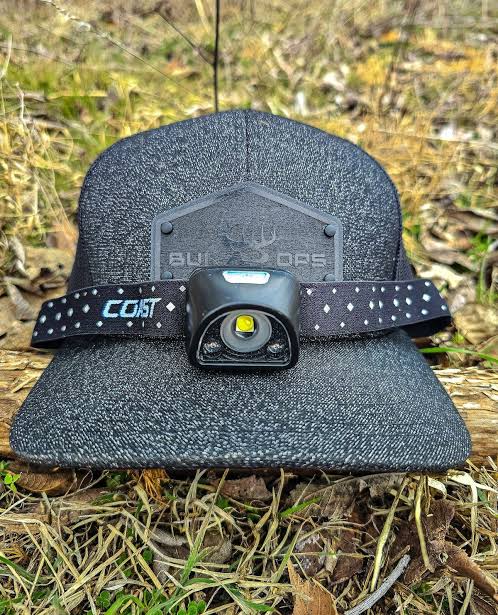
20. Is UV light useful for hunting?
UV is a specialty inspection feature rather than a core hunting-navigation need. Do not rely on UV alone for tracking, safety, or target identification.
21. Are motion-sensor headlamps useful?
They can be convenient with gloves or dirty hands, but brush, straps, or nearby movement may trigger them accidentally. Practice switching the sensor off when needed.
22. What does IPX4 mean?
IPX4 generally indicates resistance to water splashes from multiple directions. It does not mean the light can be submerged.
23. What does IPX6 mean?
IPX6 generally indicates resistance to powerful water jets. It still does not automatically mean the product is suitable for submersion.
24. Can I use a hunting light in heavy rain?
Only within the manufacturer’s water-resistance limits. Protect charging ports, inspect seals, carry a backup, and do not assume marketing words such as waterproof mean unlimited exposure.
25. How does cold weather affect batteries?
Cold can reduce available battery capacity and runtime. Keep a backup battery or light protected near the body when practical and follow the battery manufacturer’s storage guidance.
26. Are rechargeable lights better than AAA lights?
Rechargeable lights reduce routine battery purchases, while AAA-powered lights can be restored quickly with spare cells. Many hunters use one of each for redundancy.
27. Should I carry a backup light?
Yes. A second independent light is a basic safety item for pre-dawn access, evening exits, emergencies, and game recovery.
28. How should I carry spare batteries?
Use a protective case that prevents terminals from contacting metal objects. Keep batteries dry, inspect them for damage, and follow airline and transport rules.
29. Can I charge a headlamp from a power bank?
Only when the product supports the power bank’s voltage and connector. Use sound cables and avoid charging wet, damaged, swollen, or unusually hot batteries.
30. How long should a hunting light run?
It should cover the planned trip with a generous reserve. Manufacturer runtime often changes by mode, temperature, battery age, and output regulation.
31. Why does my light dim before the battery is empty?
Possible causes include battery protection, cold temperature, heat management, aging cells, dirty contacts, or a high-output mode that steps down automatically.
32. Why does my headlamp turn on by itself?
Motion-sensor mode, pressure in a pack, exposed buttons, or a faulty switch may cause activation. Lock the controls when supported and store the light so buttons are protected.
33. Why does my light flicker?
Check battery charge, terminals, cables, charging-port covers, and the headband connection. Stop using the light if it overheats, smells unusual, or has damaged wiring.
34. How should a headlamp fit?
It should remain stable without causing pressure points. Adjust the strap over the hat or headwear you will actually use in the field.
35. Will a hat light fit every cap bill?
No. Bill thickness, shape, material, and clip tension vary. Test the clip before the hunt and use a retaining method only if the manufacturer allows it.
36. Can a headlamp be worn over a beanie?
Usually, but the strap must remain secure and the lamp should not tilt or slide. Test the fit with cold-weather layers before the trip.
37. Which option is best for glasses wearers?
A light that tilts downward and does not reflect strongly from lenses is helpful. Test beam angle, hat brim position, and glasses coatings in darkness.
38. Can children use hunting hat lights?
Only with adult supervision, correct fit, battery safety, and an age-appropriate outdoor plan. Lights are not toys and do not replace direct supervision.
39. Are these lights suitable for women?
Light performance is not gender-specific. Strap range, hair, hat style, pressure points, and total weight determine comfort.
40. Can I use a hunting light for camping?
Yes. These lights can support tent setup, cooking-area tasks, repairs, and emergency use, provided fire safety, battery safety, and courtesy around others are observed.
41. Can I use one for fishing?
Yes, within the product’s water-resistance limits. Avoid dropping it in water, protect charging ports, and follow boating and PFD rules.
42. Can I use a hat light in a tree stand?
Yes for safe climbing preparation and gear tasks, but follow legal-light rules, use a full-body harness and lifeline, and never climb with an unsafe weapon setup.
43. Should I use a light while carrying a firearm?
Keep the firearm pointed safely, finger outside the trigger guard, and action handled according to law and hunter education. A light must never be used to justify pointing a firearm at an unidentified object.
44. Can I use a riflescope instead of a light or binoculars?
No. Never use a firearm-mounted optic to identify unknown movement. Use a handheld light and binoculars while maintaining safe firearm control.
45. Can I hunt at night with these lights?
Night-hunting laws vary by species, jurisdiction, land, and method. Verify current wildlife regulations and property rules before using any artificial light for hunting.
46. Can I use a light to recover game after legal shooting hours?
Recovery rules vary. Follow tagging, weapon, access, tracking-dog, and artificial-light laws, and obtain permission before crossing property boundaries.
47. Will a bright light scare game?
It may alter animal behavior, and excessive light can disturb other hunters or landowners. Use only the amount needed for safe, legal movement and tasks.
48. How do I avoid blinding a hunting partner?
Use low or red mode for close conversation, aim the lamp downward, and turn your head away before changing to high output.
49. How should I clean a hunting headlamp?
Wipe dirt with a damp cloth, clean contacts as directed, dry the strap separately when allowed, and never immerse the unit unless the manufacturer explicitly permits it.
50. How should I store a rechargeable headlamp?
Store it cool, dry, and away from direct heat. Recharge it at the interval recommended by the manufacturer and inspect the battery for swelling or leakage.
51. Should I remove disposable batteries during storage?
For long storage, removing disposable batteries can reduce leakage risk. Follow the product manual and store cells separately in a protective case.
52. When should I replace a headlamp?
Replace it when the housing cracks, seals fail, wiring is damaged, batteries swell, switches become unreliable, or runtime is no longer adequate for safe use.
53. What should I test before hunting season?
Test every mode, runtime, charging cable, spare battery, strap, clip, beam angle, water-port cover, and compatibility with hats, gloves, glasses, and cold-weather layers.
54. What is the most common buying mistake?
Buying from the lumen headline alone. Fit, useful modes, runtime, beam shape, water rating, controls, battery availability, and a backup plan matter more.
55. When should I contact the manufacturer?
Contact the manufacturer for conflicting specifications, charging problems, missing parts, battery swelling, overheating, water intrusion, warranty questions, or repeated switch failure.