
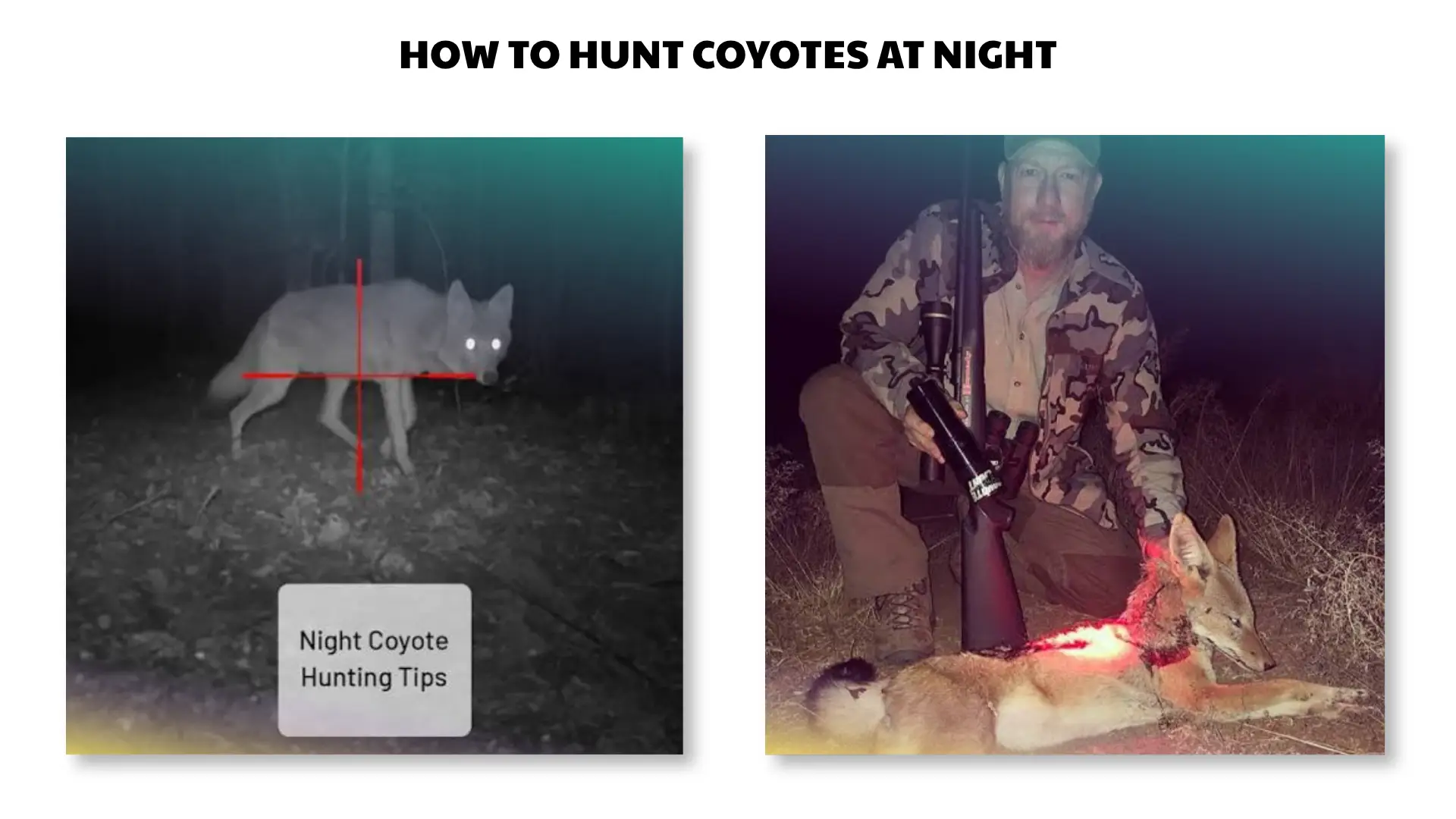

Quick Answer
To learn how to hunt coyotes at night, first verify that night hunting, lights, optics, calls, weapons, land access, and legal hours are allowed where you hunt. Then scout coyote travel routes, choose a safe setup with a clear background, plan for wind direction, and use legal calls or observation methods with patience. Never shoot at sound, movement, or eyeshine alone; identify the target and what is beyond it before any shot. With practice and careful scouting, beginners can improve their chances while staying legal, safe, and ethical.
Important Legal and Safety Notice Before You Hunt
Hunting regulations vary by country, state, province, county, season, land type, species classification, weapon type, artificial light rules, thermal or night vision rules, and local access restrictions. Always check your official wildlife agency before hunting. This article provides general education, not a substitute for current law.
- Confirm hunting license and permit requirements.
- Check tags, harvest reporting, transport, and disposal rules.
- Verify legal season dates and legal hunting hours.
- Confirm legal weapons, ammunition, callers, lights, thermal optics, and night vision devices.
- Know public land boundaries and obtain private land permission in writing when possible.
- Follow required clothing or visibility rules.
- Practice safe firearm or bow handling before the hunt.
- Plan for weather, navigation, emergency communication, and safe return after dark.
Understanding the Game Species and Its Habitat
Coyotes are adaptable predators and scavengers found in many habitats, including farms, grasslands, brushy draws, deserts, timber edges, wetlands, and suburban fringe areas where hunting is legal and safe. They often travel along edges: field borders, creek bottoms, fence lines, two-track roads, drainage ditches, and transitions between cover and open ground.
At night, coyotes may move more confidently because human activity is lower. They may hunt small mammals, investigate carrion, follow livestock or prey activity, and communicate through howls, barks, and yips. Beginners should learn to recognize tracks, scat, travel corridors, denning or bedding cover, and repeated movement patterns rather than relying only on calling.
Coyote behavior changes with weather, breeding season, food availability, human pressure, and local habitat. In heavily hunted areas, coyotes may circle far downwind, respond silently, hang up outside visible range, or avoid common calling locations.
What You Need Before You Start
- Valid hunting license, permits, tags if required, and current regulation knowledge.
- Legal hunting weapon or method allowed in your area.
- Legal light, night vision, or thermal optic only if permitted by current law.
- Electronic caller, mouth call, or other calling method if legal.
- Weather-appropriate quiet clothing, boots, gloves, and hat.
- Required visibility clothing if applicable.
- Navigation tools such as paper map, compass, GPS, or hunting app.
- First aid kit, water, snacks, emergency communication, and backup batteries.
- Binoculars or optics for observation where useful and legal.
- Gloves, game bags or transport supplies, and cleaning tools if you harvest an animal.
How to Hunt Coyotes at Night: Step-by-Step Guide
Step 1: Check Local Hunting Laws First
Before planning any night hunt, confirm whether coyote hunting at night is legal in your location. Check license requirements, season dates, legal hours, public land restrictions, private land permission, weapons, ammunition, artificial lights, electronic calls, suppressors, thermal optics, night vision, vehicle rules, and reporting requirements. If a rule is unclear, contact a wildlife officer or official agency representative before hunting.
Step 2: Learn the Animal’s Patterns
Study where coyotes travel, feed, and rest in your area. Look for field edges, creek crossings, brush lines, livestock pastures, small-game habitat, and places where prey animals are active. Coyotes often use cover and wind to approach cautiously, especially where they have heard callers before.
Step 3: Choose a Legal Hunting Area
Use official maps, land ownership tools, posted signs, and agency resources to confirm access. On public land, check night access, parking, closures, weapon zones, and shared-use trails. On private land, get permission, respect gates and livestock, ask about property boundaries, and leave the land cleaner than you found it.
Step 4: Scout Before the Hunt
Scout during daylight when possible. Look for tracks, scat, trails, fence crossings, open-field edges, denser cover, prey sign, and safe setup locations. Mark entry routes and exits so you do not wander in the dark. Scouting reduces guessing and helps you avoid unsafe shooting directions.
Step 5: Prepare Your Gear Safely
Check your firearm or bow according to manufacturer instructions and official hunter education guidance. Confirm your zero or practice range before the hunt, pack legal ammunition, test batteries, inspect lights or optics, and organize gear so you can move quietly. Do not modify firearms, ammunition, or safety features.
Step 6: Plan for Wind, Weather, and Entry Route
Wind direction can make or break a coyote setup. Plan to keep your scent away from the route you expect coyotes to use. Avoid noisy ground when possible, watch for storms, fog, ice, or dangerous cold, and choose an entry route that does not cross the area you want to call into.
Step 7: Set Up Carefully
Select a position with cover behind you, a clear view, and a safe backstop. Avoid shooting toward roads, homes, livestock, vehicles, trails, or property lines. If using a caller, place it only where legal and where it encourages coyotes to approach a safe observation area rather than drawing them across unsafe directions.
Step 8: Stay Patient and Observe
After calling, limit movement and listen carefully. Coyotes may approach silently, stop at the edge of cover, or circle downwind. Use legal observation tools and do not rush. Many beginner mistakes happen because the hunter moves too soon or assumes nothing is nearby.
Step 9: Take Only a Safe, Legal, and Ethical Shot Opportunity
Only act when the animal is clearly identified as a legal target, the background is safe, the range is within your practiced ability, and no people, homes, roads, livestock, vehicles, or protected species are at risk. If there is doubt, pass the shot. Ethical restraint is part of responsible hunting.
Step 10: Follow Legal Recovery and Reporting Rules
After a shot, keep safety first. Follow local recovery rules, property boundaries, and reporting requirements. Do not trespass during recovery. If you need help, contact the landowner, an experienced mentor, or the wildlife agency as appropriate.
Step 11: Handle the Game Responsibly
Use gloves, clean tools, and follow local transport or disposal rules. If the animal will be used, cool and handle it responsibly. Avoid waste, respect the animal, and document any required harvest information.
Best Time, Place, and Conditions for This Hunt
The best night coyote hunting conditions depend on local law and local coyote behavior. Coyotes may move during early night, late night, or near dawn where legal hours allow. Food availability, breeding season, weather changes, hunting pressure, and moonlight can influence movement.
Productive places often include field edges, creek bottoms, brushy travel corridors, livestock areas with permission, and transitions between cover and open ground. Wind direction matters more than a perfect-looking field. A beautiful setup can fail if your scent blows into the approach route.
Public land can offer access but may have more pressure and stricter rules. Private land may offer better control of entry routes, but only with clear permission and respect for the landowner. Always choose safety and legality over convenience.
Helpful Tips for Better Results
- Scout in daylight before your first night setup.
- Check regulations every season, not just once.
- Use the wind to your advantage and expect coyotes to circle downwind.
- Keep calling realistic and avoid excessive volume in pressured areas.
- Choose setups with a safe backstop before thinking about calling success.
- Carry backup lights, batteries, navigation, and emergency communication.
- Hunt with an experienced mentor until you are confident in night safety and target identification.
Common Mistakes to Avoid
Beginners often focus on calls and gear while overlooking safety, wind, access, and legal details. Avoid these common problems:
- Hunting without checking current night hunting regulations.
- Using lights, thermal optics, callers, weapons, or methods that are not legal locally.
- Entering private land without permission.
- Ignoring wind direction and allowing scent to blow into the approach area.
- Moving too much after calling.
- Shooting at eyeshine, sound, or movement without full identification.
- Setting up with roads, buildings, livestock, or trails beyond the target area.
- Failing to carry navigation, first aid, warm clothing, and communication.
- Calling the same pressured spot too often.
- Not planning recovery, reporting, and responsible handling.
Troubleshooting Common Problems
| Problem | Possible Cause | What to Do |
|---|---|---|
| You are not seeing coyotes | Poor scouting, wrong timing, heavy pressure, wind issues, or weak habitat | Scout more sign, adjust setup, check wind, and try different legal access points. |
| Coyotes answer but do not approach | They may be cautious, downwind, pressured, or blocked by terrain | Stay patient, reduce volume, change stand location next time, and improve wind setup. |
| Animals detect you | Scent, movement, noise, skyline, or poor entry route | Enter quietly, use cover, plan wind, and avoid crossing the approach area. |
| Too much hunting pressure | Popular access points or repeated calling | Hunt less obvious areas where legal and give spots time to rest. |
| Unclear property boundaries | Poor maps or uncertain permission | Stop and verify before entering. Contact the landowner or agency if needed. |
| Bad weather reduces safety | Fog, ice, storms, wind, or extreme cold | Postpone the hunt if safe navigation or identification is compromised. |
| Gear failure | Dead batteries, poor organization, or lack of testing | Test gear at home, carry backups, and keep essentials easy to reach. |
| Poor visibility | Low light, fog, brush, or illegal/weak lighting tools | Do not shoot. Reposition legally or wait for clear identification. |
| Uncertain legal rules | Confusing regulation language | Contact the official wildlife agency before hunting. |
| Beginner nervousness | Low experience after dark | Hunt with a mentor, rehearse gear use, and choose simple, safe setups. |
Ethical Hunting and Conservation
Ethical coyote hunting means obeying seasons and rules, respecting wildlife, protecting non-target animals, and passing on unsafe or uncertain opportunities. Responsible hunters identify the target clearly, avoid waste, respect landowners, support conservation through licenses and habitat work, and leave the land cleaner than they found it.
Coyotes are part of functioning ecosystems. Where hunting is legal, hunters still have a duty to act with restraint, avoid cruelty, and follow agency guidance. Conservation-minded hunting is not about guaranteed harvest; it is about lawful participation, safety, learning, and respect.
When to Get More Training or Professional Guidance
Get more training before night coyote hunting if you have never handled a firearm or bow, have not completed hunter education, are unsure about local laws, do not understand land boundaries, are not confident in safe shooting, or are hunting unfamiliar terrain after dark.
Good learning sources include official hunter education courses, state or provincial wildlife agencies, certified instructors, experienced ethical mentors, local conservation groups, and reputable hunting clubs.
After the Hunt: Follow-Up, Gear Care, and Learning
After every hunt, unload and store firearms safely according to law and manufacturer instructions. Clean and dry gear, charge batteries, inspect boots and clothing, and update your notes. Record weather, wind, location, access route, sounds used, animal responses, and safety observations.
If you harvested a coyote, complete any legal reporting or transport requirements. Handle tools and the animal responsibly, use gloves, and follow local rules for disposal or use. Review what worked and what did not so your next hunt is safer and more informed.
Recommended Hunting Gear and Tools to Consider
You do not always need expensive gear to hunt responsibly. Choose gear based on your local laws, hunting method, species, terrain, weather, safety needs, skill level, and budget.
- Legal hunting weapon or method allowed in your area.
- Legal light, night vision, or thermal optic if permitted.
- Electronic caller or mouth calls where legal.
- Quality boots for terrain and weather.
- Quiet, weather-appropriate clothing and required visibility gear.
- Binoculars or optics for safe observation.
- Navigation tools such as a map, compass, GPS, or hunting app.
- First aid kit, emergency communication, backup light, and extra batteries.
- Gloves and legal transport or handling supplies.
Final Thoughts
Learning how to hunt coyotes at night starts with law, safety, and preparation. Check your regulations, scout in daylight, choose safe setups, respect wind direction, use legal calling methods, and take only clear, ethical opportunities. Night hunting can teach patience and field awareness, but it also demands extra caution. Choose methods and gear based on your local laws, terrain, skill level, and conservation responsibilities.
FAQs
1. How long does it take to learn how to hunt coyotes at night?
Most beginners need several trips to understand calling, wind, safe setup, and local coyote movement. Focus first on legal knowledge, firearm safety, and learning how coyotes use cover after dark.
2. Is night coyote hunting legal everywhere?
No. Night hunting laws vary widely by state, province, county, land type, season, weapon, light, thermal, and suppressor rules. Always verify current regulations with the official wildlife agency before hunting.
3. Do I need a hunting license for coyotes?
In many places, a hunting license is required even when coyotes are classified differently from big game. Some areas may also require permits, land access documents, or harvest reporting.
4. Are tags required for coyotes?
Tags are not universal for coyotes, but some regions may have reporting, permit, or special rule requirements. Check your current regulation book before planning a hunt.
5. What is the best time of night to hunt coyotes?
Coyotes can move throughout the night, especially around food sources, travel corridors, and low-disturbance areas. The best time depends on local pressure, weather, season, and legal hunting hours.
6. Where should a beginner set up at night?
Choose a safe location with a clear view, a safe backstop, legal access, favorable wind, and no roads, homes, livestock, trails, or people beyond the shooting direction.
7. Can I hunt coyotes on public land at night?
Only where public land rules allow it. Verify night access, parking, weapon rules, electronic caller rules, lights, thermal devices, and any closures before entering.
8. Can I hunt coyotes on private land?
Yes, if the landowner gives clear permission and local law allows the method. Written permission is best, and you should understand boundaries, gates, livestock, and buildings.
9. What gear do I need for night coyote hunting?
You need legal licenses, a legal hunting method, safe light or optic if allowed, navigation tools, first aid, weather clothing, communication, and a reliable way to identify targets clearly.
10. Do I need an electronic caller?
An electronic caller can help place sound away from the hunter, but it must be legal where you hunt. Mouth calls can also work with practice.
11. What sounds work for coyotes at night?
Common legal calling categories include distress sounds, howls, and pup sounds. Use reasonable volume and avoid calling too much in pressured areas.
12. How important is wind direction?
Wind is critical because coyotes often circle downwind to check scent. Set up so your scent does not blow into the area you expect coyotes to use.
13. Should I use a blind for night coyote hunting?
A blind can help hide movement, but natural cover may be enough. The setup must still provide safe visibility, legal access, and a safe shooting direction.
14. Are tree stands useful for coyotes?
Tree stands are not usually required, but elevated setups may help in some terrain. Use a full-body harness and follow tree stand safety rules if you use one.
15. What clothing should I wear?
Wear quiet, weather-appropriate clothing and any visibility clothing required by law. At night, warmth, moisture control, and safe identification matter more than looking impressive.
16. Can coyotes see well at night?
Coyotes are adapted to low-light movement and can notice shape, sound, and movement. Move slowly and keep your outline broken up by cover.
17. Can coyotes smell hunters at night?
Yes. Their sense of smell is strong, so wind direction and entry route are more important than scent sprays or gimmicks.
18. How far should I walk from the truck?
Walk far enough to reduce vehicle disturbance and reach a safe setup, but do not enter unfamiliar terrain without navigation, communication, and an exit plan.
19. How long should I stay on one stand?
Many hunters wait long enough to give nearby coyotes time to respond, then move if nothing happens. Exact timing depends on terrain, pressure, sound travel, and local behavior.
20. How loud should I call?
Start with moderate volume and adjust for wind, terrain, and distance. Excessive volume can educate pressured coyotes or make the setup sound unnatural.
21. Should I call continuously?
Not usually. Many hunters use calling sequences with pauses so they can listen and watch carefully. Overcalling can make animals cautious.
22. What should I do if coyotes answer but do not come in?
Stay patient, reduce movement, check wind, and consider softer sounds or a different setup next time. They may have detected you or chosen a safer route.
23. Why am I not seeing coyotes?
Common reasons include poor scouting, wrong wind, too much pressure, unsafe or noisy entry, weak habitat, or hunting where coyotes are not currently active.
24. What signs show coyotes use an area?
Look for tracks, scat, travel corridors, field edges, creek crossings, livestock or prey activity, and trail camera evidence where legal.
25. Are trail cameras useful?
Trail cameras can help confirm timing and travel routes where they are legal. Follow public land camera rules and respect privacy and property boundaries.
26. What weather is best for night coyote hunting?
Stable conditions, manageable wind, and safe visibility can help. Severe weather, fog, ice, and dangerous cold can make night hunting unsafe.
27. Does moon phase matter?
Moonlight can affect visibility and coyote caution, but it is only one factor. Wind, pressure, food, terrain, and legal methods usually matter more.
28. Can I hunt coyotes after rain or snow?
Fresh snow or soft ground can reveal tracks, but weather can also create travel hazards. Plan carefully and avoid unsafe roads or exposure.
29. How do I identify a coyote at night?
Use only legal lighting or optics and wait until you are certain of the animal, background, and nearby risks. Never shoot at eyeshine, sound, or movement alone.
30. How do I avoid mistaking a dog or wolf for a coyote?
Study local wildlife, know protected species, identify body shape and movement clearly, and pass the shot if there is any doubt.
31. What is a safe shot opportunity?
A safe shot requires clear target identification, a safe backstop, no people or property in the background, legal range, and confidence within your practiced ability.
32. Should beginners hunt alone at night?
A beginner is safer with an experienced, ethical mentor. Night hunting adds navigation, visibility, and communication challenges.
33. What firearm safety rules matter most?
Keep the muzzle pointed safely, keep your finger off the trigger until ready, keep the firearm unloaded until appropriate, and know your target and what is beyond it.
34. Can I shoot toward a road or house if the coyote is close?
No. Do not shoot toward roads, homes, livestock, vehicles, trails, buildings, people, or unclear backgrounds.
35. Can I hunt from a vehicle?
Vehicle hunting and road hunting laws vary and are often restricted. Follow local law and never handle firearms in an unsafe or illegal manner.
36. Are lights legal for hunting coyotes at night?
Some places allow certain lights and others restrict them. Verify color, power, mounted light, handheld light, and public land rules before using any light.
37. Are thermal or night vision optics legal?
Rules vary widely. Some jurisdictions allow them for coyotes, some restrict them, and some limit use by land type or season.
38. Can I use bait for coyotes?
Baiting laws vary and may be restricted or prohibited. Do not use bait unless current regulations clearly allow it.
39. How do I choose a safe entry route?
Use maps, avoid skylining yourself, keep wind in mind, reduce noise, and make sure you can exit safely in darkness.
40. How do I avoid trespassing?
Use official maps, property data, posted signs, and written permission. Do not cross private land without permission even to reach public land.
41. How much does night coyote hunting cost?
Costs vary by license, legal gear, clothing, travel, and optics. Beginners should prioritize safety, legal compliance, and practice over expensive equipment.
42. Do I need camouflage?
Camouflage can help break up your outline, but movement, wind, sound, and safe setup are usually more important.
43. Can I use dogs for coyote hunting?
Dog use is regulated differently by location and season. Verify legality and prioritize safety for dogs, livestock, people, and wildlife.
44. What should I do after a successful harvest?
Follow tagging, reporting, transport, and disposal rules. Handle the animal respectfully and avoid waste where local rules or personal use apply.
45. Is coyote meat commonly used?
Coyote meat use varies by culture and personal practice. Follow local disposal, disease precaution, and transport rules, and handle all game with gloves and clean tools.
46. Do coyotes carry diseases?
Coyotes can carry parasites or diseases, so use gloves, avoid contact with sick animals, and follow official wildlife or public health guidance.
47. What if I wound a coyote?
Follow local recovery rules and make a careful, safe effort without trespassing or creating unsafe shooting situations. Ask an experienced mentor or wildlife officer for guidance if needed.
48. How do I keep records after a hunt?
Record date, weather, wind, location, calls used, animal response, legal reports, and what you learned. Notes help you improve responsibly.
49. Can hunting pressure change coyote behavior?
Yes. Pressured coyotes may avoid obvious access points, circle farther downwind, respond silently, or become less responsive to common sounds.
50. How can I improve without taking risky shots?
Practice marksmanship, scout more, learn wind, study tracks, hunt with a mentor, and pass on any uncertain or unsafe opportunity.
51. Should I tell someone where I am hunting?
Yes. Share your location, plan, return time, and emergency contact details with someone reliable before night hunting.
52. What emergency gear should I carry?
Carry a first aid kit, headlamp, backup light, extra batteries, water, weather layers, navigation tools, and a charged communication device.
53. What should I do if I hear other hunters nearby?
Stop calling or shooting, make your presence known safely if needed, and relocate without conflict. Never assume a sound in the dark is an animal.
54. When should I get more training?
Get more training if you are new to firearms, unsure about laws, unfamiliar with night navigation, or not confident in target identification and safe shooting.
55. How does coyote hunting relate to conservation?
Legal hunting can be part of wildlife management where agencies allow it, but hunters must respect regulations, landowners, non-target wildlife, and ethical limits.
56. What is the biggest beginner mistake in night coyote hunting?
The biggest mistake is rushing into the field without confirming laws, safe target identification, land access, wind, and emergency planning.