
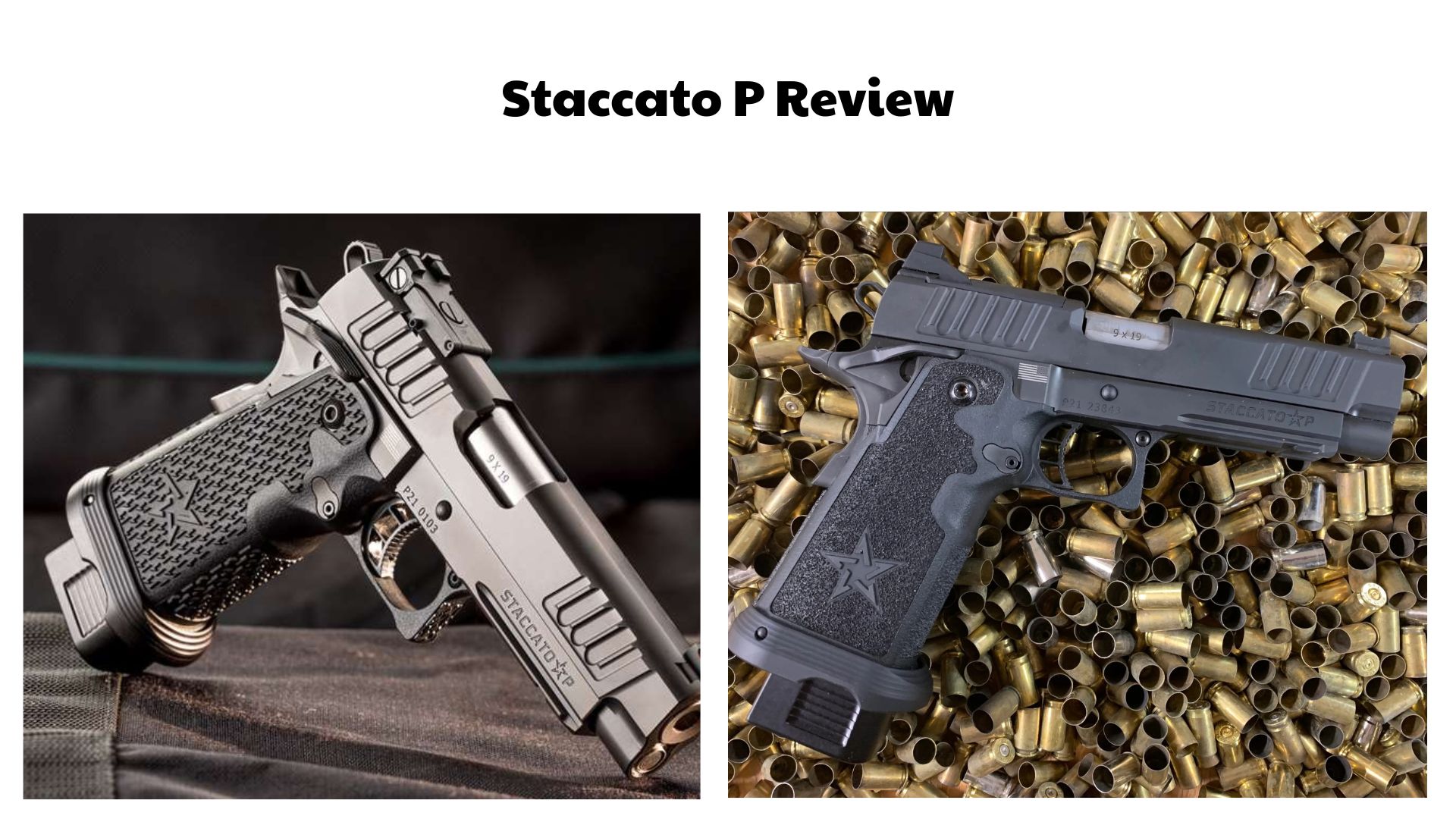

The Staccato P is a full-size, double-stack 2011-style pistol designed to bridge the gap between classic competition-grade 1911 platforms and modern duty handguns. It represents one of the most significant evolutions in the “2011” category, combining high-end performance with real-world defensive usability.
Originally engineered for serious shooters, law enforcement professionals, and concealed carry users who demand premium performance, the Staccato P has gained strong traction in U.S. law enforcement adoption due to its reliability and shootability under pressure.
Its core reputation is often summarized as “a premium, soft-shooting duty pistol with competition DNA,” reflecting its unique position between tactical service firearms and high-performance competition guns.
History and Development of the Staccato P Platform
From STI to Staccato – Evolution of the 2011
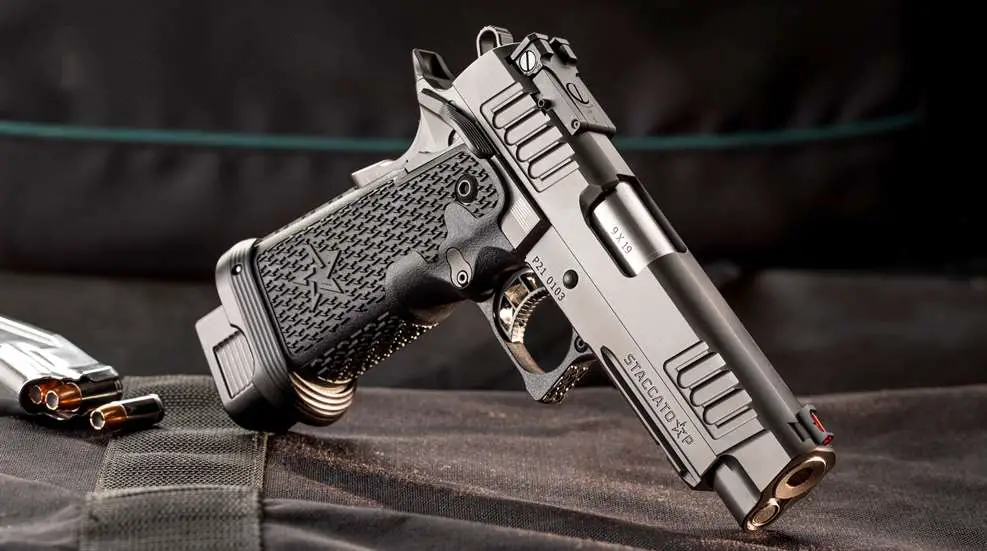
The Staccato P originates from the STI International legacy, a brand long known for producing competition-focused 1911-style pistols. Over time, STI rebranded into Staccato to reflect a major shift in design philosophy.
This transition marked a move away from pure competition pistols toward duty-grade firearms designed for law enforcement and defensive use. Reliability, durability, and consistency became primary engineering goals.
As a result, the modern Staccato platform is significantly more refined for real-world operational environments compared to earlier race-oriented STI designs.
Duty-Grade Design Philosophy
The Staccato P was engineered specifically for real-world defensive and service conditions where reliability under stress is critical. Every aspect of its design emphasizes consistent performance in high-pressure scenarios.
Key priorities include reliability, fast and controllable shooting, and repeatable mechanical accuracy. Unlike traditional polymer duty pistols, the Staccato P is designed to maximize shooter performance through superior trigger control and recoil management.
Its overall goal is to outperform conventional duty pistols in controllability, especially during rapid fire and extended shooting sessions.
Staccato P Design Overview – What Makes It a “Duty 2011”
Frame, Slide, and Materials
The Staccato P uses a lightweight aluminum frame combined with a precision-machined steel slide. This hybrid construction allows it to maintain strength while reducing overall weight compared to traditional steel 1911 platforms.
A key component of its design is the bull barrel system, which contributes to improved accuracy and recoil stability by reducing movement during firing.
Tight manufacturing tolerances ensure consistent lock-up between the barrel and slide, enhancing shot-to-shot repeatability and overall precision.
2011 Platform Architecture
The Staccato P is built on the 2011 platform, which is essentially a modernized double-stack evolution of the classic 1911 design. This allows it to maintain the ergonomics and trigger characteristics of a 1911 while significantly increasing magazine capacity.
It operates as a single-action-only, hammer-fired system, delivering a crisp and consistent trigger pull that is highly valued by experienced shooters.
The 4.4-inch bull barrel plays a major role in improving stability and reducing muzzle rise, contributing to its reputation as an extremely flat-shooting duty pistol.
Duty vs Competition Balance
While the Staccato P is rooted in competition firearm design, it has been specifically tuned for duty and defensive reliability rather than pure race-gun performance.
The engineering focus is on maintaining controllability under stress, ensuring that shooters can perform consistently in defensive or tactical situations.
This balance between competition-level performance and duty-grade reliability is one of the defining characteristics of the Staccato P platform.
Shooting Performance and Range Experience
Recoil and Shootability
The Staccato P is widely regarded as an extremely flat-shooting 9mm platform. Its weight distribution, steel slide, and bull barrel system work together to minimize muzzle rise and keep the pistol stable during rapid fire.
In long-term testing and real-world use, recoil is frequently described as exceptionally smooth and “soft like ice cream,” especially for a duty-oriented handgun. This makes it noticeably more controllable than most polymer-framed service pistols.
The heavier frame and recoil management system significantly reduce muzzle flip, allowing shooters to stay on target more easily during fast strings of fire. This also improves sight tracking and follow-up shot speed.
Accuracy Performance
The Staccato P delivers exceptional mechanical accuracy for a duty pistol. In controlled testing, it is capable of producing sub-2-inch groups at 25 yards when paired with quality ammunition and a skilled shooter.
Its bull barrel design and tight slide-to-frame fit contribute heavily to this level of consistency, reducing mechanical variance between shots.
Compared to typical striker-fired service pistols, the Staccato P significantly outperforms in precision, making it suitable for both defensive use and performance shooting environments.
Trigger Performance
One of the most defining features of the Staccato P is its single-action trigger system, typically set around a 4 to 4.5 lb pull weight. This provides a clean and predictable break that is highly valued by experienced shooters.
The trigger reset is short and tactile, allowing for extremely fast follow-up shots with minimal disruption to sight alignment.
Many users consider the trigger system one of the strongest advantages of the platform, as it directly enhances speed, precision, and overall shooting confidence under pressure.
Reliability and Long-Term Testing Results
Real-World Round Count Performance
The Staccato P has been subjected to extensive long-term testing across thousands of rounds in both controlled environments and real-world use. Across multiple reviews, it has demonstrated consistent performance with both defensive and training ammunition.
Most reports highlight extremely low malfunction rates, with some duty-oriented users experiencing zero stoppages when proper maintenance and quality ammunition are used.
This level of consistency has helped establish the platform as a credible option for serious defensive and professional applications.
Duty Use Validation
The Staccato P has been adopted by multiple law enforcement agencies across the United States, reinforcing its reputation as a viable duty firearm rather than just a competition-derived pistol.
It has seen use in patrol environments, SWAT operations, and tactical deployments where reliability under stress is critical.
Its performance in these roles has helped validate its design philosophy, proving that a 2011-based platform can function effectively in real-world duty conditions.
Maintenance Considerations
Due to its tight tolerances and precision engineering, the Staccato P requires proper lubrication and regular maintenance to maintain optimal performance.
Compared to looser-tolerance polymer pistols like Glock, it is slightly more sensitive to dirt buildup and neglect, meaning consistent care is important for best results.
When properly maintained, however, it delivers excellent long-term reliability and continues to perform at a very high level even under heavy use.
Staccato P Variants and Configurations
Standard Staccato P
The standard Staccato P is the full-size duty configuration and serves as the foundation of the entire lineup. It is designed to balance recoil control, magazine capacity, and mechanical accuracy in a single platform.
This version is also the most widely adopted by law enforcement agencies, making it the benchmark configuration for duty and defensive use within the 2011 ecosystem.
Optics-Ready (DPO) Version
The DPO (Direct Optic Ready) version of the Staccato P is designed to support red dot optics mounting, making it more adaptable to modern shooting preferences.
This configuration has become increasingly popular for both duty and defensive applications due to its improved target acquisition speed and enhanced performance in low-light or high-stress environments.
By integrating optics capability, shooters can significantly improve transition speed between targets and overall shooting efficiency.
Threaded / Upgraded Models
Threaded and upgraded variants of the Staccato P are designed for tactical and specialized use cases, including suppressor compatibility.
These models often feature enhanced grip textures, modern accessory integration, and expanded customization options to suit advanced users.
They are typically favored by professionals and enthusiasts who require additional modularity and tactical flexibility from their platform.
Staccato P Pros and Cons
Key Advantages
The Staccato P is widely praised for its exceptional mechanical accuracy and precision engineering. It consistently delivers tight groupings and predictable performance under various shooting conditions.
Its recoil impulse is extremely flat, allowing shooters to maintain faster sight recovery and improved follow-up shot speed compared to most duty pistols.
The premium single-action trigger system is another major advantage, offering a clean break and short reset that enhances overall shooting performance.
Additionally, it provides high reliability under duty conditions and excellent ergonomics, making it comfortable and controllable during extended use.
Main Drawbacks
One of the biggest drawbacks of the Staccato P is its high price point, typically ranging from around $2,000 to $2,500 or more depending on configuration.
It also requires more consistent maintenance than polymer-framed pistols due to its tighter tolerances and precision design.
Compared to mainstream platforms like Glock or SIG, it has a more limited magazine ecosystem and aftermarket support.
Finally, its weight is higher than most striker-fired competitors, which may affect carry comfort for some users.
Real-World User Opinions and Long-Term Feedback
In real-world usage, the Staccato P is consistently praised for its shootability and outstanding recoil control. Many users report a noticeable improvement in follow-up shot speed compared to traditional duty pistols.
Its performance often leads shooters to describe it as a platform that significantly enhances confidence and efficiency during rapid fire sequences.
However, some criticism exists regarding its cost versus performance ratio, especially when compared to more affordable polymer alternatives.
There are also mixed opinions about long-term durability when compared to simpler, more forgiving platforms that require less maintenance.
Overall, it has built a strong reputation as a “premium duty pistol that shoots like a competition gun,” blending two traditionally separate categories into one platform.
Staccato P vs Competitors
vs Glock 17 / Glock 19
Glock pistols are known for being lighter, simpler, more affordable, and extremely reliable even under neglect or harsh conditions.
In contrast, the Staccato P offers significantly better trigger performance, superior mechanical accuracy, and far more refined recoil control, making it a higher-performance but less utilitarian option.
vs SIG Sauer P320
The SIG P320 platform is modular, striker-fired, and widely adopted in modern military and law enforcement use due to its flexibility and simplicity.
The Staccato P, however, provides a more refined shooting experience with better trigger feel and enhanced recoil management, appealing more to performance-focused shooters.
vs CZ Shadow 2
The CZ Shadow 2 is primarily a competition-oriented pistol known for exceptional accuracy and target shooting performance.
The Staccato P offers a better balance between competition-level shooting performance and real-world duty reliability, making it more versatile across defensive and professional roles.
Who Should Buy the Staccato P?
The Staccato P is best suited for law enforcement officers seeking premium duty performance with superior recoil control and shooting precision.
It is also an excellent choice for experienced shooters who prioritize top-tier handling, trigger quality, and accuracy in a defensive platform.
Competitive shooters who want a duty-capable pistol with high performance characteristics will also find it appealing.
However, it is not ideal for budget-conscious buyers or users who prefer low-maintenance, high-tolerance polymer pistols.
Final Verdict – Is the Staccato P Worth It in 2026?
The Staccato P remains one of the best-shooting duty pistols ever produced, successfully combining 1911-derived accuracy with modern double-stack capacity and real-world usability.
It stands out for its outstanding recoil control, exceptional trigger performance, and premium engineering quality that translates directly into real shooting performance.
However, its high cost and more demanding maintenance requirements limit its accessibility compared to mainstream duty pistols.
The final takeaway is clear: it is “a luxury duty pistol that performs like a race gun in disguise,” offering elite performance for those willing to invest in it.
Staccato P FAQ – 50+ Detailed Questions and Answers
1. What is the Staccato P designed for?
The Staccato P is designed as a premium duty and defensive handgun built on the 2011 platform. It blends competition-level performance with real-world reliability for law enforcement, concealed carry professionals, and experienced civilian shooters.
2. Is the Staccato P a duty pistol or competition pistol?
It is technically a duty pistol inspired by competition 1911/2011 designs. While it performs like a competition gun in terms of recoil and accuracy, it is engineered and tested for defensive and law enforcement use.
3. Why is the Staccato P so expensive?
Its high cost comes from precision machining, aluminum frame construction, tight tolerances, and hand-fitted components. It is also built in the USA with premium materials and strict quality control standards.
4. Is the Staccato P reliable?
Yes, it is considered highly reliable when properly maintained. Many long-term tests and duty users report thousands of rounds with very low malfunction rates under normal conditions.
5. How accurate is the Staccato P?
It is extremely accurate for a duty pistol, capable of sub-2 inch groups at 25 yards in skilled hands. Its bull barrel and tight fit contribute significantly to this performance.
6. What makes the Staccato P different from Glock?
Glock pistols are simpler, lighter, and more tolerant of neglect. The Staccato P offers a superior trigger, better accuracy, and flatter recoil, but requires more maintenance and costs significantly more.
7. Is the Staccato P good for concealed carry?
It can be used for concealed carry, but it is large and heavy compared to typical carry pistols. Many users prefer smaller 2011 models or striker-fired pistols for daily concealment.
8. What caliber is the Staccato P?
The Staccato P is primarily chambered in 9×19mm, which provides a balance of recoil control, capacity, and terminal performance suitable for duty use.
9. What is the magazine capacity?
Magazine capacity typically ranges around 17 to 20 rounds depending on configuration and magazine type used. This gives it high capacity for a 1911-style platform.
10. Does the Staccato P have a good trigger?
Yes, it is widely considered one of the best triggers in a duty handgun. It has a clean break, short reset, and consistent single-action pull that enhances shooting precision.
11. What is a 2011 pistol?
A 2011 is a modernized double-stack version of the 1911 platform. It retains the single-action trigger system but increases magazine capacity and improves modularity for modern use.
12. Is the Staccato P used by police?
Yes, several law enforcement agencies in the United States have adopted Staccato pistols for duty use due to their accuracy and performance advantages.
13. Is the Staccato P good for beginners?
It is not ideal for absolute beginners due to its high cost, maintenance needs, and single-action trigger system. It is better suited for trained or experienced shooters.
14. How does recoil compare to Glock?
The Staccato P has noticeably flatter recoil than Glock pistols. Its weight and bull barrel system reduce muzzle rise, making rapid shooting easier and more controlled.
15. Does the Staccato P require a break-in period?
Some users recommend a break-in period of a few hundred rounds to allow the tight tolerances to smooth out, although it is typically reliable out of the box.
16. Is the Staccato P durable?
Yes, it is highly durable, especially for a precision firearm. However, it requires more maintenance discipline than polymer pistols due to its tighter mechanical fit.
17. Can the Staccato P run dirty or neglected?
It is less forgiving than Glock-style pistols. While it can handle moderate fouling, optimal performance requires regular cleaning and lubrication.
18. Is the Staccato P good for home defense?
Yes, it is an excellent home defense pistol due to its accuracy, capacity, and controllability, making it easy to use under stress.
19. Does the Staccato P have optics-ready models?
Yes, optics-ready (DPO) versions are available, allowing users to mount red dot sights for faster target acquisition and improved accuracy.
20. Is the Staccato P better than SIG P320?
It depends on priorities. The P320 is more modular and simpler, while the Staccato P offers superior trigger quality and shooting performance.
21. What are the main disadvantages of the Staccato P?
The main drawbacks include high cost, heavier weight, more maintenance requirements, and a smaller aftermarket ecosystem compared to Glock or SIG platforms.
22. Why does the Staccato P shoot so flat?
Its weight distribution, steel slide, bull barrel, and recoil system all work together to reduce muzzle rise and keep the pistol stable during rapid fire.
23. Is the Staccato P worth it in 2026?
It is worth it for shooters who prioritize performance, accuracy, and recoil control. However, casual users may find it too expensive for the benefits offered.
24. How long does a Staccato P last?
With proper maintenance, it can last tens of thousands of rounds while maintaining high performance due to its robust construction.
25. Does the Staccato P rust?
It is resistant to corrosion due to quality finishes, but like all firearms, it should be cleaned and protected from moisture.
26. Is the Staccato P better than the CZ Shadow 2 for duty use?
The CZ Shadow 2 is primarily built as a competition pistol, while the Staccato P is engineered for duty and defensive applications. The Shadow 2 may offer slightly better out-of-the-box competition accuracy and a refined double-action/single-action trigger feel, but it lacks the same duty-focused durability standards and holster-ready design of the Staccato P. For professional use, the Staccato P is generally the more practical and balanced option.
27. Can the Staccato P be carried appendix (AIWB)?
Yes, the Staccato P can be carried appendix inside-the-waistband, but it requires a high-quality holster and proper belt setup due to its weight and full-size frame. Many users find it comfortable with the right setup, but it is less forgiving than lighter polymer pistols for daily concealed carry.
28. What holsters work with the Staccato P?
The Staccato P requires holsters specifically designed for 2011 platforms. Kydex holsters from duty-focused brands are most common, especially those supporting optics-ready and weapon-mounted light configurations. Because of its popularity, holster availability is good but not as widespread as Glock-compatible options.
29. Is the Staccato P too heavy for concealed carry?
It is heavier than most polymer carry pistols, which can make all-day concealed carry more demanding. However, some experienced users still carry it comfortably using proper belts, holsters, and clothing choices. It is generally considered a “heavy but manageable” concealed carry option rather than an ideal lightweight choice.
30. How often should the Staccato P be cleaned?
For optimal performance, the Staccato P should be cleaned and lubricated regularly, especially after extended shooting sessions. Due to its tight tolerances, it benefits from more consistent maintenance than looser polymer pistols like Glock.
31. Is the Staccato P good for tactical training?
Yes, it performs extremely well in tactical training environments. Its flat recoil, fast reset trigger, and high accuracy make it ideal for drills involving rapid target transitions and defensive shooting scenarios.
32. What makes 2011 pistols special?
2011 pistols combine the single-action trigger system and ergonomics of the 1911 with a double-stack magazine design. This results in higher capacity while maintaining excellent trigger performance and shooting precision.
33. Is the Staccato P good for competition shooting?
Yes, although it is designed for duty use, it performs very well in competition-style shooting due to its flat recoil impulse and crisp trigger. However, pure competition pistols may still have an edge in customization and weight tuning.
34. Does the Staccato P have a manual safety?
Yes, like most 1911-based platforms, the Staccato P includes a manual thumb safety that must be disengaged before firing. This is part of its single-action operating system design.
35. How reliable is the Staccato P under stress?
The Staccato P is considered highly reliable under stress conditions when properly maintained. It has been tested in law enforcement and defensive environments with strong performance across thousands of rounds.
36. Is the Staccato P better than a 1911?
Yes, in most practical aspects. It retains the 1911 trigger feel but improves capacity, ergonomics, and durability through its 2011 double-stack design, making it more suitable for modern duty use.
37. What ammunition works best in the Staccato P?
The Staccato P performs best with high-quality factory 9mm ammunition. It is generally compatible with a wide range of defensive and training loads, though premium defensive ammo is recommended for duty or carry use.
38. Can the Staccato P handle +P ammunition?
Yes, it can handle +P 9mm ammunition when used within manufacturer guidelines. However, consistent use of +P rounds may increase wear over time, as with most semi-automatic pistols.
39. Is the Staccato P legal in all states?
Legality depends on local firearm laws, magazine capacity restrictions, and handgun regulations. In some states, magazine limits may affect standard capacity use.
40. What does recoil feel like on the Staccato P?
Recoil is described as very soft and flat, with minimal muzzle rise. Many shooters report it feels smoother than most duty pistols, allowing faster and more controlled follow-up shots.
41. Is the Staccato P good for women shooters?
Yes, many women shooters appreciate its low recoil and ergonomic grip design. However, its weight and size may require more consideration for concealed carry comfort.
42. Why do law enforcement agencies adopt the Staccato P?
Agencies adopt it because of its superior accuracy, fast follow-up shot capability, and proven reliability in duty testing. It enhances shooter performance under stress compared to traditional duty pistols.
43. Is the Staccato P a “race gun”?
No, although it has competition DNA, it is specifically tuned for duty use. It prioritizes reliability and consistency over pure race gun optimization.
44. Does the Staccato P require special tools for maintenance?
No special tools are required beyond standard firearm cleaning equipment. However, careful reassembly is important due to its tighter tolerances compared to simpler platforms.
45. What is the lifespan of the barrel and slide?
With proper maintenance, the barrel and slide can last tens of thousands of rounds. Regular inspection ensures consistent performance over long-term use.
46. Is the Staccato P worth the price compared to Glock?
It depends on priorities. Glock offers affordability and simplicity, while the Staccato P offers significantly better trigger performance, accuracy, and recoil control at a much higher price.
47. Can the Staccato P be dry fired safely?
Yes, it can be dry fired safely in most cases. However, using snap caps is often recommended for extended dry fire training to reduce wear on components.
48. What is the best grip technique for the Staccato P?
A high, firm grip is recommended to maximize recoil control and leverage its flat-shooting characteristics. Proper grip significantly enhances its already excellent performance.
49. Is the Staccato P beginner friendly with training?
With proper instruction, beginners can learn it, but it is better suited for intermediate or advanced shooters due to its trigger system and performance-focused design.
50. Why is the Staccato P considered a premium duty pistol?
It is considered premium due to its precision engineering, high-quality materials, superior trigger system, and exceptional shooting performance that exceeds most standard duty pistols.
51. Does the Staccato P improve shooting speed?
Yes, many users report faster follow-up shots due to its flat recoil and short trigger reset, which reduces time between accurate shots.
52. Is the Staccato P good for long training sessions?
Yes, but it requires proper lubrication and maintenance. Its shootability makes long training sessions comfortable and effective for skill development.
53. Does the Staccato P have aftermarket support?
It has some aftermarket support, but it is more limited compared to Glock or SIG platforms. Most upgrades focus on grips, sights, and holsters.
54. Is the Staccato P outdated in 2026?
No, it is still considered a high-performance duty pistol. While newer polymer platforms offer more modularity, the Staccato P remains competitive in shooting performance.
55. What is the final takeaway on the Staccato P?
The Staccato P is best understood as a high-end duty pistol that delivers competition-level shooting performance in a defensive platform, making it one of the most capable but premium-priced handguns available.
Read more: