
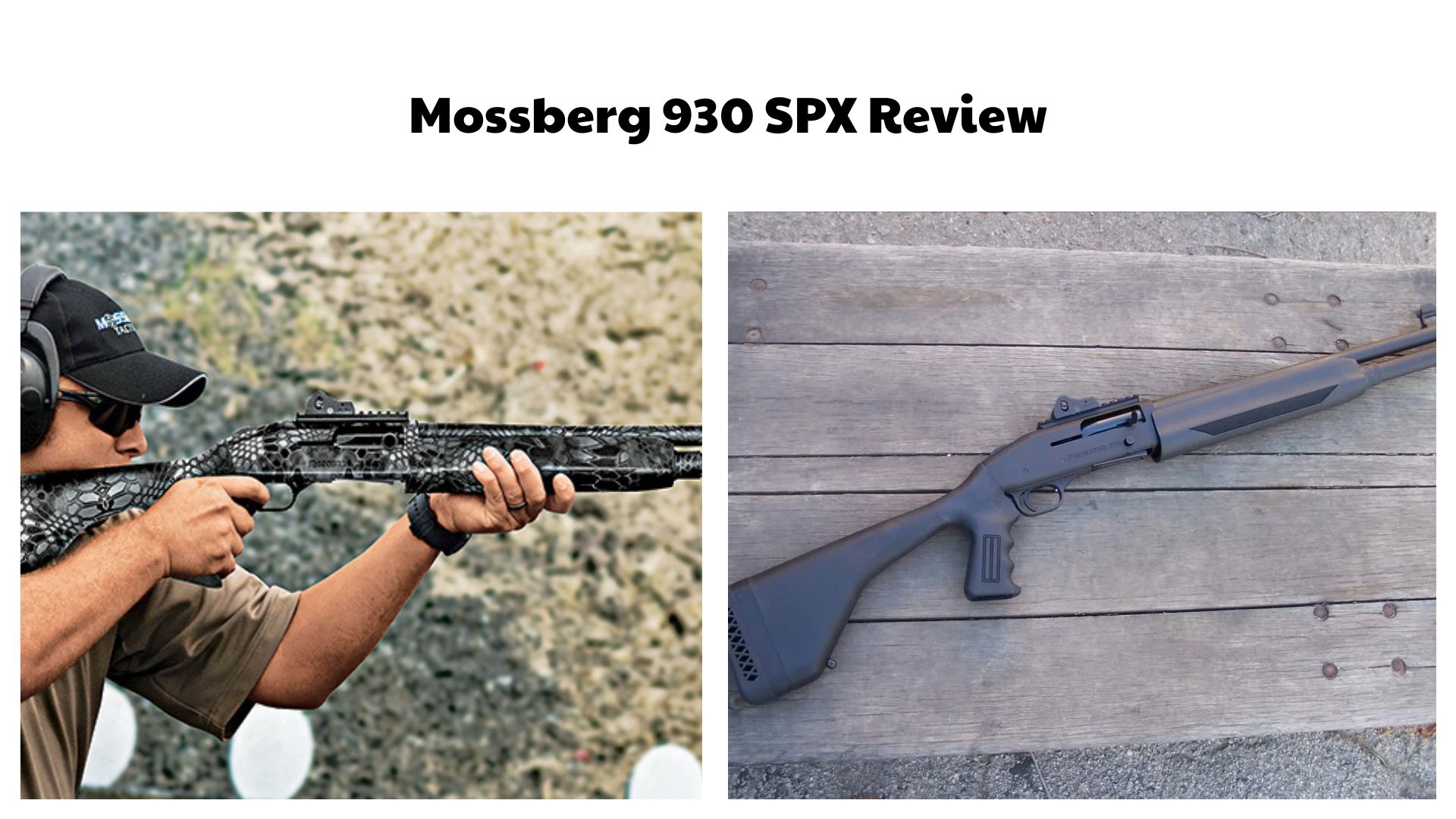

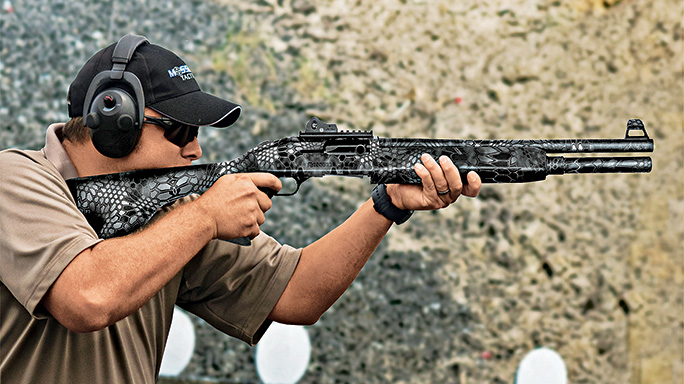
The Mossberg 930 SPX is a semi-automatic tactical shotgun designed for home defense, law enforcement, and practical shooting applications. Built on Mossberg’s gas-operated 930 platform, it delivers faster follow-up shots and reduced recoil compared to traditional pump-action shotguns, making it a practical choice for defensive use.
Positioned as an affordable alternative to high-end tactical semi-autos, the 930 SPX sits in an important middle ground between budget pump shotguns and premium competition-grade or military-inspired platforms. It offers a factory-ready defensive configuration that includes ghost ring sights, an extended magazine tube, and a short tactical barrel, eliminating the need for extensive aftermarket upgrades.
Over time, the Mossberg 930 SPX has earned a reputation for improved reliability compared to earlier Mossberg semi-auto systems, along with strong capacity and practical ergonomics. This review takes a detailed look at its design, performance, reliability, ergonomics, pros and cons, and real-world defensive usability to help determine whether it remains a worthwhile tactical shotgun today.
Mossberg 930 SPX Overview and History
Development of the Mossberg 930 Platform
The Mossberg 930 platform was developed as part of Mossberg’s effort to improve its semi-automatic shotgun lineup by introducing a more reliable gas-operated cycling system. Earlier Mossberg semi-auto designs had mixed performance in terms of cycling consistency and ammunition sensitivity, which limited their adoption compared to pump-action models.
With the 930 series, Mossberg focused on refining gas operation to achieve smoother cycling, better recoil management, and improved reliability across a wider range of conditions. The result was a more modern semi-auto shotgun that could compete in both civilian and tactical markets.
The platform was designed to balance affordability with functionality, making semi-auto shotgun performance more accessible without requiring the premium pricing of European competitors.
What Makes the SPX Tactical Variant Different
The SPX Tactical variant of the Mossberg 930 is purpose-built for defensive use. Unlike standard field models, it comes factory-equipped with tactical features that reduce the need for aftermarket modification.
Key features include a shorter barrel for improved maneuverability in close quarters, ghost ring sights for faster target acquisition, and an extended magazine tube for increased capacity. These features make it immediately suitable for home defense or law enforcement roles.
Ergonomically, the SPX variant is also improved for tactical handling, offering better control interfaces and a more practical layout compared to basic sporting versions of the 930 platform.
Why the Mossberg 930 SPX Became Popular
The Mossberg 930 SPX gained popularity primarily because it offered a relatively affordable entry point into semi-automatic tactical shotguns. Many users appreciated that it delivered semi-auto performance without the high cost associated with premium European brands.
Another major factor in its success was its factory-ready configuration. Instead of requiring upgrades to become defensive-ready, the SPX already includes essential tactical features out of the box, making it highly practical for new and experienced shooters alike.
Its balance of cost, features, and performance helped establish it as one of the more accessible tactical semi-auto shotguns in its category.
Design and Build Quality
Tactical Semi-Auto Construction
The Mossberg 930 SPX is built with an aluminum receiver paired with steel internal components, creating a balance between weight reduction and structural durability. This combination allows the shotgun to remain manageable while still handling repeated firing stress.
The synthetic stock and forend contribute to durability and environmental resistance, making the shotgun suitable for defensive use where exposure to moisture, dust, or rough handling is likely.
Overall, the design emphasizes ruggedness while maintaining a relatively lightweight profile for a semi-automatic tactical shotgun.
Weight, Balance, and Handling Characteristics
Compared to pump-action shotguns, the Mossberg 930 SPX is noticeably heavier, but this additional weight plays an important role in reducing felt recoil during firing. The gas-operated system combined with the mass of the platform helps stabilize shooting behavior.
The shotgun features a forward-balanced tactical feel, which contributes to better muzzle control during rapid fire. This balance makes it easier to maintain target tracking during follow-up shots.
In practical use, the added weight is often seen as a trade-off for improved shooting comfort and stability in defensive situations.
Finish and SPX Tactical Features
The Mossberg 930 SPX typically features a matte black tactical finish that reduces glare and supports a low-profile defensive appearance. This finish also helps maintain durability under regular use.
One of its most recognizable features is the ghost ring sight system, which includes a protected rear aperture designed for fast and intuitive target acquisition in close to mid-range scenarios.
Additionally, the extended magazine tube increases capacity, while factory rail options allow users to mount accessories such as optics or lights, enhancing its defensive versatility.
Gas Operating System Explained
How the Mossberg 930 Gas System Works
The Mossberg 930 SPX operates using a gas-driven semi-automatic cycling system. When a round is fired, gas pressure is diverted from the barrel to drive a piston mechanism, which cycles the action automatically.
This system reduces the amount of recoil transferred directly to the shooter compared to pump-action shotguns, resulting in smoother and faster follow-up shots.
The gas system is designed to balance reliability and recoil control, making it suitable for defensive shooting applications where speed and consistency matter.
Reliability Characteristics of the Gas System
One of the key advantages of the gas system is improved recoil control compared to manual pump-action shotguns. This makes the 930 SPX easier to shoot during rapid engagement scenarios.
However, gas systems require more maintenance than pump-action designs. Carbon buildup can affect cycling performance if the shotgun is not cleaned regularly.
Additionally, the system can be more sensitive to ammunition quality, meaning that inconsistent or low-powered shells may not cycle as reliably as full-power loads.
Ammunition Compatibility
The Mossberg 930 SPX performs best with 2¾-inch and 3-inch full-power shotgun shells. These loads provide sufficient gas pressure to ensure consistent cycling of the semi-automatic action.
During the initial break-in period, the shotgun may struggle with lighter target loads, which is common in gas-operated systems.
After a proper break-in phase, cycling consistency typically improves, allowing for more reliable performance across a broader range of ammunition types, though full-power loads remain the most dependable choice.
Performance and Real-World Testing
Cycling Speed and Semi-Auto Advantage
The Mossberg 930 SPX delivers a clear performance advantage over pump-action shotguns thanks to its semi-automatic gas-operated system. The ability to cycle automatically after each shot allows for significantly faster follow-up shots, especially in defensive scenarios where speed matters.
During practical shooting drills, the shotgun demonstrates smooth and relatively consistent cycling when properly maintained and paired with appropriate ammunition. This helps reduce delays between shots and supports more efficient engagement sequences.
In tactical contexts, this semi-auto advantage provides a noticeable improvement in shot cadence, particularly in close-range or high-stress environments where manual cycling would slow response time.
Recoil Management
One of the most noticeable benefits of the Mossberg 930 SPX is its reduced recoil compared to pump-action shotguns. The gas system absorbs a portion of the energy generated during firing, resulting in a softer shooting experience.
This reduction in recoil makes the shotgun more comfortable to shoot over extended training sessions and allows users to maintain better control during rapid firing.
It also improves target reacquisition speed, as the shooter is less disrupted by recoil movement between shots compared to traditional manual-action platforms.
Accuracy and Target Engagement
The Mossberg 930 SPX is equipped with ghost ring sights that significantly enhance close to mid-range accuracy. These sights allow for quicker alignment compared to traditional bead sights, especially in defensive scenarios.
When using slugs, the shotgun demonstrates consistent performance within typical defensive distances, offering reliable point-of-impact control.
In close-quarters combat-style environments, the combination of semi-auto cycling and improved sighting system enables fast target transitions and efficient engagement of multiple targets.
Controls and Ergonomics
Tactical Controls Layout
The Mossberg 930 SPX features an ergonomic control layout designed for stress-friendly operation. Oversized bolt handles and bolt release controls allow easier manipulation, even under pressure or while wearing gloves.
The safety placement follows a familiar Mossberg design philosophy, making it intuitive for users who have experience with Mossberg pump-action shotguns.
Overall, the control layout is designed to minimize confusion and support quick operation in defensive scenarios.
Loading Port and Magazine System
The extended magazine tube increases overall capacity, which is one of the key advantages of the SPX tactical configuration. This allows the user to fire more rounds before needing to reload.
The loading port is functional and relatively smooth, but it is not designed to match competition-grade speed-loading shotguns. As a result, reload efficiency depends heavily on user skill and familiarity.
While not optimized for competitive speed loading, it remains effective for defensive and tactical use cases where absolute reload speed is less critical than reliability and capacity.
Stock Design and Handling Comfort
The Mossberg 930 SPX uses a synthetic stock with an integrated recoil pad designed to improve shooting comfort and reduce felt recoil. This helps make repeated firing more manageable.
The stock offers a tactical grip feel that improves control during rapid fire, helping the shooter maintain stability and manage muzzle rise more effectively.
However, compared to modern modular shotgun systems, adjustability is somewhat limited, meaning users have fewer options for fine-tuning fit and ergonomics.
Mossberg 930 SPX vs Competitors
930 SPX vs Mossberg 500 Tactical
The Mossberg 930 SPX and Mossberg 500 Tactical represent two different philosophies. The 930 SPX is a semi-automatic shotgun that offers faster follow-up shots and reduced recoil through its gas system.
In contrast, the Mossberg 500 Tactical relies on a pump-action system that is simpler, mechanically more forgiving, and generally less expensive.
The 930 SPX favors speed and shooting comfort, while the 500 Tactical prioritizes simplicity and long-term mechanical reliability.
930 SPX vs Benelli M2
When compared to the Benelli M2, the Mossberg 930 SPX is positioned as a more affordable alternative within the semi-automatic shotgun category.
The Benelli M2 uses a more refined inertia-driven system that is widely praised for long-term durability and reduced maintenance requirements.
While the M2 generally outperforms the 930 SPX in terms of longevity and refinement, the Mossberg option provides a strong value proposition for budget-conscious users.
930 SPX vs Beretta 1301 Tactical
The Beretta 1301 Tactical represents a more modern and higher-performing platform compared to the Mossberg 930 SPX. It offers faster cycling speeds and improved ergonomics.
The 930 SPX, however, remains significantly more affordable, making it an accessible entry point into semi-automatic tactical shotguns.
In high-end performance comparisons, the Beretta typically leads, but the Mossberg 930 SPX still holds value in the budget and mid-tier defensive market.
Ideal Use Cases for the Mossberg 930 SPX
Home Defense Applications
The Mossberg 930 SPX is well-suited for home defense due to its fast follow-up shot capability and reduced recoil, which improve control under stress.
Its factory tactical configuration ensures it is ready for defensive use without requiring additional modifications.
These characteristics make it a practical choice for close-quarters defensive scenarios.
Law Enforcement and Tactical Training
The 930 SPX can serve as a budget-friendly patrol shotgun option for law enforcement agencies or training environments.
It performs adequately in structured training scenarios, although it requires disciplined maintenance to ensure consistent reliability.
For departments or users seeking semi-auto capability at a lower cost, it can be a viable option.
Recreational and Range Use
For recreational shooting, the Mossberg 930 SPX provides an enjoyable semi-automatic experience that reduces fatigue compared to pump-action shotguns.
The reduced recoil and smooth cycling make it well-suited for extended range sessions.
It also serves as a useful platform for practicing defensive shotgun skills in a controlled environment.
Accessories and Upgrades
Optics and Sight Systems
The Mossberg 930 SPX comes standard with ghost ring sights, which improve accuracy and target acquisition speed in defensive shooting scenarios.
Many variants also support red dot optics via rail systems, further enhancing low-light and rapid engagement capabilities.
These options allow users to tailor the shotgun to specific defensive or training needs.
Tactical Enhancements
Common tactical upgrades include weapon-mounted lights, sling attachments, and extended magazine tubes where legally permitted.
Side saddle shell carriers are also popular additions, increasing onboard ammunition capacity for extended engagements.
These enhancements improve the shotgun’s usability in defensive and tactical roles.
Aftermarket Improvements
The Mossberg 930 SPX supports various aftermarket upgrades such as improved charging handles, enhanced stocks, and recoil pads.
Some users also modify internal components to improve cycling smoothness and overall performance.
These upgrades can help optimize the platform for specific use cases, especially in defensive or training environments.
Reliability and Maintenance
Cleaning and Gas System Maintenance
Because the Mossberg 930 SPX uses a gas-operated system, it requires regular cleaning to prevent carbon buildup from affecting performance.
Fortunately, the shotgun is designed for relatively easy field stripping, allowing users to access key components for routine maintenance.
Proper lubrication and cleaning significantly improve long-term cycling consistency and reliability.
Long-Term Durability
The Mossberg 930 SPX has demonstrated solid durability in defensive and training environments when properly maintained.
It performs reliably under repeated use, although its longevity is closely tied to maintenance habits due to the nature of its gas system.
With consistent care, it remains a dependable semi-automatic shotgun over time.
Pros and Cons of the Mossberg 930 SPX
Pros
The Mossberg 930 SPX offers an affordable entry into semi-automatic tactical shotguns while still delivering reduced recoil and fast cycling performance.
Its factory-ready defensive configuration and solid magazine capacity make it practical for home defense and tactical use.
It also supports a variety of accessories, improving its versatility for different applications.
Cons
The platform requires regular maintenance due to gas system fouling, which may be a drawback for low-maintenance users.
It is also more sensitive to ammunition quality compared to pump-action shotguns and tends to be heavier than newer competitors.
Additionally, its design is less refined than higher-end semi-auto tactical shotguns available on the market today.
Price and Value Analysis
Why It Is More Affordable Than Premium Shotguns
The Mossberg 930 SPX is more affordable than premium semi-automatic shotguns due to its simplified gas system design and cost-efficient manufacturing approach.
This allows Mossberg to offer a tactical semi-auto platform at a lower price point while still maintaining functional reliability for defensive use.
Its positioning as an entry-level tactical shotgun makes it accessible to a wider range of users.
Is It Worth It?
The Mossberg 930 SPX provides strong value for budget-conscious defensive users who want semi-automatic performance without premium pricing.
It serves as a good entry point into tactical semi-auto platforms, especially for users transitioning from pump-action shotguns.
However, it is less suited for high-end competition or heavy-duty professional use where more refined systems may perform better.
Final Verdict
Overall, the Mossberg 930 SPX is a solid budget-friendly tactical semi-automatic shotgun with proven defensive capability. It combines affordability, reduced recoil, and fast cycling into a practical defensive package.
Its main weaknesses include maintenance requirements, added weight compared to newer designs, and sensitivity to ammunition quality.
Despite these limitations, it remains a dependable option for home defense users, beginners transitioning into semi-automatics, and budget-focused tactical shooters who need reliable performance without premium cost.
Mossberg 930 SPX FAQ (55 Questions with Detailed Answers)
1. What is the Mossberg 930 SPX designed for?
The Mossberg 930 SPX is designed primarily as a tactical semi-automatic shotgun for home defense, law enforcement, and practical shooting. It focuses on providing faster follow-up shots, reduced recoil, and higher capacity compared to pump-action shotguns. The factory configuration includes defensive features like ghost ring sights and an extended magazine tube, making it ready for use without major modifications.
2. Is the Mossberg 930 SPX good for home defense?
Yes, the 930 SPX is widely considered suitable for home defense due to its semi-automatic action, which allows quick follow-up shots in high-stress situations. The gas system helps reduce recoil, making it easier to stay on target. However, users must ensure proper maintenance to maintain reliability, as gas-operated systems require regular cleaning.
3. How reliable is the Mossberg 930 SPX?
The 930 SPX is generally reliable when properly maintained and used with appropriate ammunition. It performs best with full-power loads and may struggle with light target shells during the break-in period. Long-term reliability depends heavily on cleaning the gas system regularly to prevent carbon buildup.
4. What type of action does the 930 SPX use?
The Mossberg 930 SPX uses a gas-operated semi-automatic action. This means gas from each fired shell is redirected to cycle the bolt automatically, ejecting the spent shell and chambering a new one. This system reduces recoil and increases shooting speed compared to pump-action shotguns.
5. Does the Mossberg 930 SPX have a lot of recoil?
No, the recoil is noticeably reduced compared to pump-action shotguns. The gas system absorbs part of the energy, making it more comfortable for extended shooting sessions. However, it still produces more recoil than lightweight sporting shotguns or smaller calibers.
6. What ammunition works best in the 930 SPX?
The shotgun performs best with 2¾-inch and 3-inch full-power defensive or field loads. Buckshot and slugs are the most reliable choices. Light target loads may not cycle consistently, especially during the break-in period.
7. Does the Mossberg 930 SPX require a break-in period?
Yes, many users report a break-in period where the shotgun may not cycle lighter loads reliably. After several hundred rounds of full-power ammunition, cycling performance typically improves and becomes more consistent.
8. How often should the 930 SPX be cleaned?
Because it is a gas-operated shotgun, it should be cleaned regularly, especially after heavy use. Carbon buildup in the gas system can affect cycling reliability, so routine maintenance is essential for long-term performance.
9. Is the Mossberg 930 SPX good for beginners?
It can be suitable for beginners, but it requires some understanding of semi-automatic shotgun maintenance. Beginners transitioning from pump-action shotguns may find it easier to use once they learn its cleaning and ammunition requirements.
10. How does the 930 SPX compare to pump-action shotguns?
The main difference is speed and recoil management. The 930 SPX offers faster follow-up shots and reduced recoil due to its gas system. Pump-action shotguns are simpler, more reliable with all ammo types, and require less maintenance.
11. Is the Mossberg 930 SPX military grade?
No, it is not officially military-grade, but it is designed with tactical and defensive use in mind. It shares some features with law enforcement shotguns, such as ghost ring sights and extended magazine capacity.
12. What is the magazine capacity of the 930 SPX?
The standard capacity is typically 7+1 rounds, depending on configuration and local regulations. The extended magazine tube is one of the key tactical features of the SPX model.
13. Can the magazine capacity be increased?
In some configurations and jurisdictions, extended magazine tubes or aftermarket extensions can be used. However, legal restrictions may apply depending on location.
14. Does the 930 SPX accept slugs?
Yes, it performs well with slugs, especially within defensive distances. The ghost ring sights help improve accuracy when using slug ammunition.
15. Is the Mossberg 930 SPX good for hunting?
It is not primarily designed for hunting, but it can be used for certain applications like deer hunting with slugs. However, it is more optimized for tactical and defensive use.
16. How heavy is the Mossberg 930 SPX?
It is heavier than pump-action shotguns due to its gas system and tactical components. The added weight helps reduce recoil and improve stability during rapid fire.
17. Does the 930 SPX jam easily?
It does not jam easily when properly maintained and used with appropriate ammunition. Most issues are related to dirty gas systems or low-powered shells.
18. What is the barrel length of the 930 SPX?
The SPX model typically features a shorter tactical barrel, usually around 18.5 inches, designed for close-quarters maneuverability.
19. Is the 930 SPX good for law enforcement?
It has been used in law enforcement contexts as a budget-friendly semi-automatic shotgun, but it requires more maintenance than premium duty-grade platforms.
20. How accurate is the Mossberg 930 SPX?
It is accurate for typical shotgun engagement distances. Ghost ring sights improve precision, especially with slugs at mid-range defensive distances.
21. Can optics be mounted on the 930 SPX?
Yes, some versions include rail sections that allow mounting red dot optics, which can improve target acquisition speed in low-light or defensive scenarios.
22. Is the 930 SPX good for competition shooting?
It is not designed for high-level competition shooting, but it can be used for casual or entry-level practical shotgun sports.
23. How does the gas system affect performance?
The gas system reduces recoil and allows faster follow-up shots, but it requires cleaning and may be sensitive to ammunition variations.
24. Is the 930 SPX better than the Mossberg 500?
The 930 SPX is faster due to semi-auto operation, while the Mossberg 500 is more reliable with all ammunition and easier to maintain.
25. Does the 930 SPX need lubrication?
Yes, proper lubrication of moving parts is important to ensure smooth cycling and reduce wear over time.
26. What is the main disadvantage of the 930 SPX?
The biggest drawbacks are maintenance requirements, ammunition sensitivity, and heavier weight compared to modern semi-autos.
27. Can it handle magnum shells?
Yes, it can handle 3-inch magnum shells, but consistent performance depends on proper maintenance and break-in.
28. Is the 930 SPX suitable for tactical training?
Yes, it is commonly used for defensive shotgun training due to its semi-auto speed and realistic handling characteristics.
29. How durable is the Mossberg 930 SPX?
It is durable under normal defensive and training use, especially when maintained properly. Long-term reliability depends on cleaning habits.
30. Does it work with light birdshot?
It may cycle light birdshot inconsistently, especially before break-in. Full-power loads are recommended for reliability.
31. What makes the SPX version special?
The SPX variant includes tactical upgrades like ghost ring sights, extended magazine capacity, and a shorter barrel for defensive use.
32. Is the trigger good on the 930 SPX?
The trigger is functional but not premium. It is designed for defensive use rather than precision competition shooting.
33. Can it be upgraded?
Yes, it supports accessories like lights, optics, upgraded stocks, and shell carriers.
34. Is it good for CQB (close quarters battle)?
Yes, its compact tactical design and semi-auto cycling make it effective in close-quarters environments.
35. Does it require professional maintenance?
No, but users should be comfortable with basic firearm cleaning, especially gas system maintenance.
36. How does it compare to the Benelli M4?
The Benelli M4 is more refined and durable, while the 930 SPX is more affordable but requires more maintenance.
37. Is the 930 SPX still worth buying today?
Yes, it remains a strong budget-friendly tactical semi-auto option, though newer platforms may offer improved refinement.
38. Can it be used for sporting clays?
It is not optimized for sporting clays but can be used recreationally with appropriate loads.
39. Does it have a safety issue?
No inherent safety issues, but users must follow proper firearm handling rules as with any shotgun.
40. How does temperature affect performance?
Extreme conditions may affect lubrication and cycling, but it generally performs reliably in normal environments.
41. Is it ambidextrous?
Yes, the safety design is user-friendly for both left- and right-handed shooters.
42. What makes it different from older Mossberg semi-autos?
The 930 SPX uses a more reliable gas system with improved cycling consistency and better tactical features.
43. Can it be used for security work?
Yes, it is sometimes used in private security roles where semi-auto shotguns are permitted.
44. Does it require special tools for maintenance?
No, basic tools are sufficient for disassembly and cleaning.
45. How long does it last?
With proper maintenance, it can last for many years of regular defensive or training use.
46. Is it beginner-friendly?
It is moderately beginner-friendly but requires learning proper maintenance for gas systems.
47. Does it support accessories easily?
Yes, it supports rails, lights, slings, and other tactical accessories.
48. What is the main selling point?
The main selling point is its balance of affordability, semi-auto speed, and factory tactical readiness.
49. Is it loud compared to other shotguns?
All shotguns are loud, and the 930 SPX is no exception, requiring proper hearing protection.
50. Does it have a good resale value?
It holds moderate resale value, depending on condition and market demand.
51. Is it good for defensive drills?
Yes, it performs well in defensive shooting drills due to its semi-auto cycling speed.
52. Can it be used in competitions?
It can be used in some entry-level or informal competitions but is not a top-tier competition shotgun.
53. What is the main limitation?
The main limitation is its maintenance requirement and sensitivity to ammunition quality.
54. Is it better than pump shotguns overall?
It is faster and smoother, but pump shotguns are more reliable across all ammunition types and easier to maintain.
55. What is the final takeaway?
The Mossberg 930 SPX is a practical, budget-friendly tactical semi-auto shotgun that balances performance and affordability, making it a solid defensive choice with proper care.
Read more: