
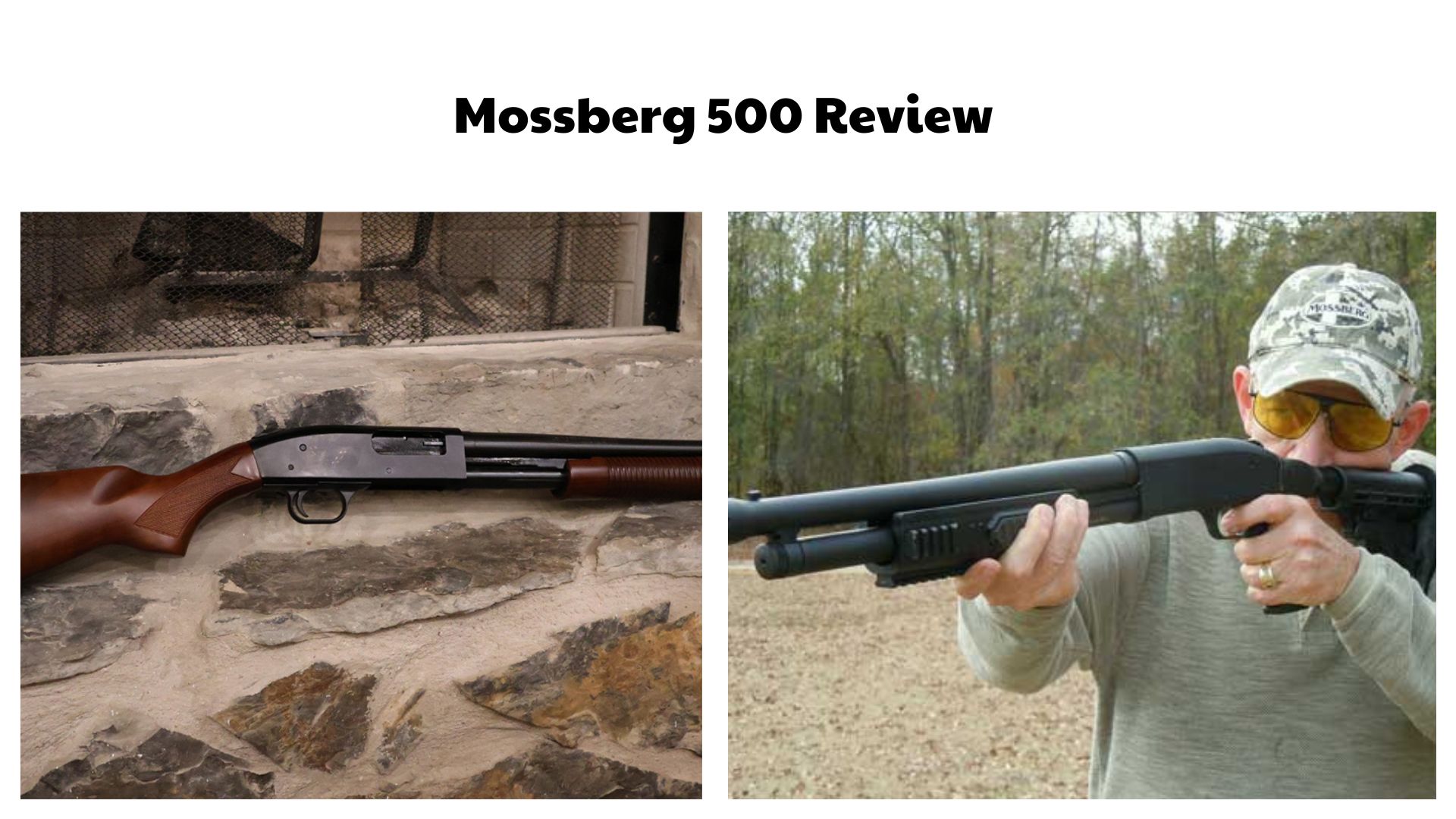

The Mossberg 500 is one of the most iconic and widely used pump-action shotguns in the world, known for its long-standing reputation for reliability, simplicity, and affordability. It has become a trusted platform across hunting, home defense, law enforcement, and recreational shooting, making it one of the most versatile shotguns ever produced.
With decades of proven field performance, the Mossberg 500 has built a legacy supported by its military counterpart influence, particularly through the Mossberg 590 series used in more tactical applications. Its design has remained remarkably consistent over the years, reinforcing its reputation as a dependable and practical firearm.
One of its biggest strengths is versatility. The platform supports interchangeable barrels and a wide range of configurations, allowing users to tailor it for hunting, sport shooting, or defensive use. This review explores its design, performance, reliability, ergonomics, pros and cons, and real-world applications in detail.
Mossberg 500 Overview and History
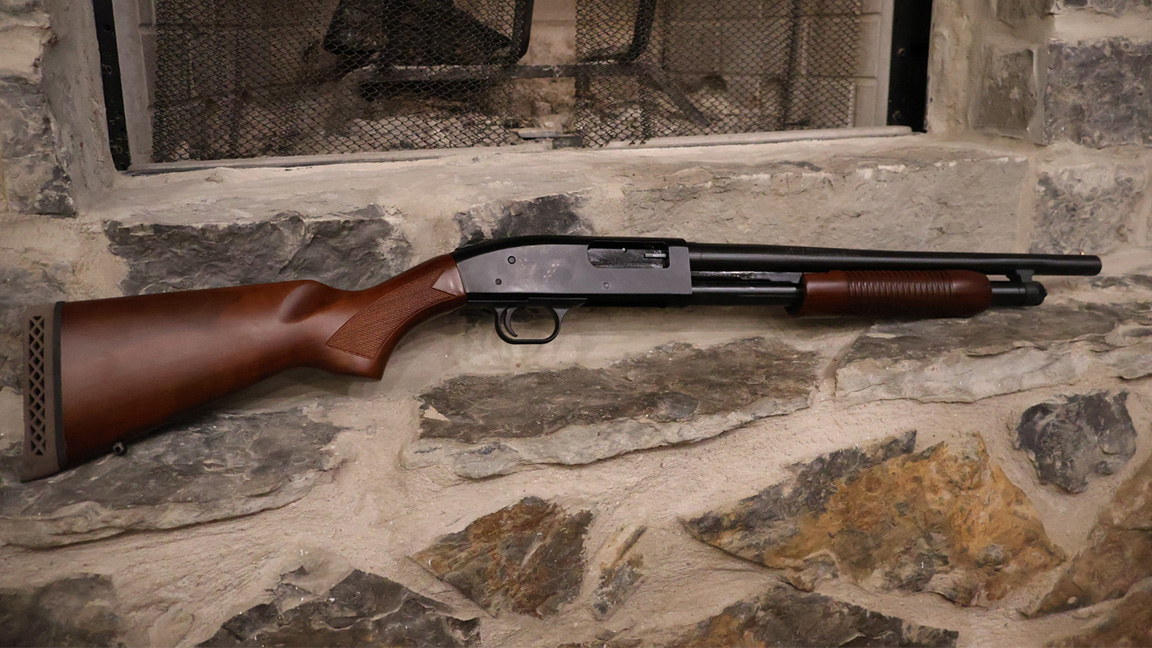
Origins and Development
The Mossberg 500 was developed in the 1960s by O.F. Mossberg & Sons as a cost-effective alternative to higher-priced pump-action shotguns. The goal was to create a reliable, durable platform that could be manufactured efficiently without sacrificing performance.
From the beginning, the design emphasized simplicity and adaptability. The shotgun was engineered to serve both civilian and professional markets, making it one of the most accessible pump-action platforms of its time.
Its modular nature allowed it to evolve into one of the most widely used shotgun families in the United States and beyond.
Adoption in Military and Law Enforcement
The Mossberg 500 and its related platforms have seen widespread adoption by military and law enforcement agencies. Its reliability in harsh conditions has made it a dependable choice for duty use where performance cannot fail.
It also played an important role in shaping tactical variants such as the Mossberg 590 and 590A1, which were designed for more demanding military environments.
This real-world use has reinforced its reputation as a rugged and trustworthy shotgun platform capable of handling extreme operational stress.
Why the Mossberg 500 Became a Classic
The Mossberg 500 has remained in continuous production for decades with relatively few fundamental design changes. This consistency has helped it build a reputation for long-term reliability and familiarity among users.
Its simplicity also contributes to its success, as fewer moving parts reduce the likelihood of mechanical issues under stress or heavy use.
Additionally, strong aftermarket support and widely available parts have helped maintain its relevance in both civilian and professional markets.
Design and Build Quality
Pump-Action Construction
The Mossberg 500 uses a dual action bar system that ensures smooth and stable pump cycling. This design helps reduce binding during operation and contributes to consistent mechanical performance over time.
It features an aluminum receiver, which keeps the overall weight relatively low compared to steel-heavy designs. This makes the shotgun easier to carry and handle during extended use.
The barrel and internal components are made from steel, providing durability where it matters most under repeated firing conditions.
Durability and Materials
Despite its relatively affordable price point, the Mossberg 500 is known for military-grade durability in practical field conditions. It is designed to withstand exposure to dirt, moisture, and rough handling without significant performance degradation.
The simple mechanical structure also means fewer components that can fail, which is a major advantage in demanding environments.
Its corrosion resistance and rugged construction make it suitable for long-term use in both hunting and defensive applications.
Barrel Interchangeability System
One of the standout features of the Mossberg 500 is its interchangeable barrel system. Users can quickly swap barrels to adapt the shotgun for different purposes such as hunting, home defense, or sport shooting.
Barrel lengths typically range from short defensive configurations around 18.5 inches to longer hunting barrels exceeding 28 inches.
This flexibility allows the platform to function as a true multi-purpose shotgun, capable of adapting to different shooting environments with minimal effort.
Mossberg 500 Variants and Configurations
Field Models
Field models of the Mossberg 500 are primarily designed for hunting and sport shooting. These configurations typically feature longer barrels that improve swing dynamics and pattern control.
They are often paired with traditional stocks that provide a familiar shooting feel for hunters and recreational shooters.
These models prioritize smooth handling and accuracy over tactical features, making them well-suited for outdoor use.
Tactical Models
Tactical variants of the Mossberg 500 are designed for home defense and law enforcement use. They typically feature shorter barrels for improved maneuverability in confined spaces.
Many configurations include extended magazine tubes, ghost ring sights, and accessory rails for lights or optics.
These features enhance usability in defensive scenarios where speed and accessibility are critical.
Combo and Special Editions
Combo packages offer interchangeable barrel systems that allow users to switch between field and tactical setups using a single firearm. This makes them cost-effective and highly versatile.
These editions are especially popular among new shooters who want a single shotgun capable of handling multiple roles.
They represent one of the most practical entry points into the Mossberg 500 platform.
Performance and Real-World Testing
Reliability Under Stress
The Mossberg 500 has a strong reputation for reliability under stressful and adverse conditions. It is known to cycle consistently even in environments involving dirt, mud, and moisture.
Its simple mechanical design allows it to function with a wide variety of shotgun shell types, reducing dependency on specific ammunition performance.
When properly maintained, it demonstrates a low malfunction rate, which is one of its defining strengths.
Recoil and Shooting Comfort
As a 12-gauge pump-action shotgun, the Mossberg 500 produces noticeable recoil, especially when using heavier loads. However, recoil can be managed effectively with proper stance and stock fit.
The perceived recoil will vary depending on configuration, with lighter field setups feeling slightly more comfortable than short tactical builds.
Overall, it remains manageable for most shooters with basic training and familiarity.
Accuracy and Practical Range
The Mossberg 500 performs effectively at close to mid-range distances, which is typical for shotgun platforms. Its real strength lies in consistent patterning with buckshot and reliable slug performance.
It offers practical point-and-shoot usability, making it effective in defensive and hunting situations where rapid target engagement is required.
While not designed for long-range precision, it excels in its intended engagement envelope.
Controls and Ergonomics
Top-Mounted Safety System
One of the most recognizable features of the Mossberg 500 is its top-mounted tang safety. This design places the safety control on the top rear of the receiver, making it fully ambidextrous and easy to access for both right- and left-handed shooters.
In practical use, the tang safety allows quick engagement and disengagement under stress, which is especially important in defensive scenarios where instinctive control matters. Unlike side-mounted safeties, it does not favor one shooting hand over the other.
This feature is widely considered one of the defining ergonomic advantages of the Mossberg platform and contributes significantly to its popularity.
Pump Operation and Loading
The Mossberg 500 utilizes a dual-action bar system that improves pump stability and reduces the likelihood of binding during cycling. This design ensures smoother and more consistent operation compared to simpler single-bar systems.
The loading port is designed for practical use, allowing relatively fast reloads once the user becomes familiar with the manual of arms. While not as fast as modern tactical reload systems, it remains efficient for a traditional pump shotgun.
Overall, the operation is straightforward and user-friendly, making it suitable for both beginners and experienced shooters.
Stock and Grip Options
The Mossberg 500 is available in a wide variety of stock configurations, including traditional wood stocks, modern synthetic builds, and tactical-style polymer setups.
Users can also choose pistol grip configurations or adjustable stocks depending on intended use. These options allow customization for comfort, control, and recoil management.
Modern variants often include improved ergonomics such as better recoil pads and adjustable fittings, enhancing comfort during extended shooting sessions.
Mossberg 500 vs Competitors
Mossberg 500 vs Remington 870
The Mossberg 500 and Remington 870 are two of the most iconic pump-action shotguns in history. The Mossberg 500 is known for its ambidextrous tang safety and lighter aluminum receiver, making it easier to handle for a wide range of users.
The Remington 870, on the other hand, is often praised for its smoother steel receiver feel and slightly more robust build, although it tends to be heavier overall.
Both platforms are considered top-tier pump-action shotguns, and the choice between them often comes down to personal preference in ergonomics and handling feel.
Mossberg 500 vs Benelli Nova
When compared to the Benelli Nova, the Mossberg 500 offers a simpler and more affordable platform that has been proven over decades of use.
The Benelli Nova features a modern polymer construction and is often praised for its recoil control and durability, offering a more contemporary design approach.
Choosing between the two generally depends on budget and whether the user prefers traditional simplicity or modern materials and design features.
Mossberg 500 vs Mossberg 590
The Mossberg 500 and 590 share a similar foundation but are designed for different roles. The Mossberg 500 is more civilian-oriented and typically features a lighter build and broader configuration options.
The Mossberg 590, in contrast, is built with military-grade enhancements, including a more robust magazine system and heavier-duty components.
This makes the 590 more suitable for tactical and extreme-duty applications, while the 500 remains a more versatile general-purpose platform.
Ideal Use Cases for Mossberg 500
Home Defense
The Mossberg 500 is widely used for home defense due to its reliable pump-action operation and adaptability to short-barrel configurations. It performs well under stress and does not rely on complex mechanical systems.
Users can equip it with weapon lights and defensive ammunition to enhance its effectiveness in low-light indoor environments.
Its strong stopping power and simple manual operation make it a dependable defensive firearm.
Hunting Applications
The Mossberg 500 is also highly effective in hunting roles, including bird hunting, deer hunting with slug barrels, and small game hunting. Its versatility is one of its strongest advantages.
Longer barrel configurations improve swing dynamics and accuracy, making it well-suited for field environments where precision and follow-through are important.
This adaptability allows it to function across multiple hunting seasons and game types.
Recreational and Training Use
As a recreational platform, the Mossberg 500 is widely appreciated for its affordability and ease of use. It is an excellent choice for learning pump-action fundamentals and developing shooting discipline.
Its low-cost ammunition compatibility makes it practical for frequent training sessions without excessive expense.
This makes it a popular entry-level shotgun for new shooters as well as a reliable practice tool for experienced users.
Accessories and Customization
Optics and Sight Options
The Mossberg 500 supports a variety of sighting systems depending on configuration. Tactical models often include ghost ring sights for improved target acquisition in defensive scenarios.
Some variants also support red dot optics, enhancing speed and accuracy in close-range engagements.
Field models typically use bead sights, which are simple and effective for hunting applications.
Tactical Upgrades
A wide range of tactical upgrades is available for the Mossberg 500, including weapon-mounted lights, slings, and side saddle shell carriers.
Extended magazine tubes can increase capacity in jurisdictions where legal, improving sustained defensive capability.
Additional accessories such as heat shields and rail systems further enhance its adaptability for tactical use.
Aftermarket Support
The Mossberg 500 benefits from one of the strongest aftermarket ecosystems in the shotgun market. Replacement parts, upgrades, and customization options are widely available.
Users can modify stocks, triggers, barrels, and grips to tailor the shotgun to specific needs.
This extensive support ensures long-term usability and customization flexibility.
Reliability and Maintenance
Cleaning and Field Stripping
The Mossberg 500 is designed for simple maintenance, with an easy disassembly process that allows quick access to internal components such as the bolt and receiver.
This simplicity makes routine cleaning straightforward, even for users with limited firearm maintenance experience.
Overall, it is considered a low-maintenance platform compared to more complex shotgun systems.
Long-Term Durability
The Mossberg 500 has a long-standing reputation for durability, with decades of proven field performance in both civilian and professional environments.
It is resistant to heavy environmental exposure, including dirt, moisture, and rough handling conditions.
With proper care, it demonstrates minimal wear and remains functional over extended service life.
Pros and Cons of Mossberg 500
Pros
The Mossberg 500 offers exceptional reliability as a pump-action shotgun, making it dependable in a wide range of conditions. Its affordability and wide availability make it accessible to many users.
Its modular design allows extensive customization, and its long history of military and civilian use reinforces its credibility.
It is also relatively lightweight and easy to handle, making it suitable for diverse applications.
Cons
Despite its strengths, the Mossberg 500 does produce noticeable recoil, especially in 12-gauge configurations with heavier loads.
Entry-level models may have basic ergonomics and less refined factory finishes compared to premium modern shotguns.
Additionally, finish quality can vary depending on the specific configuration and production run.
Price and Value Analysis
Why It Is Affordable
One of the key reasons the Mossberg 500 remains so popular is its affordability. The design focuses on simplified manufacturing, which reduces production complexity and keeps costs relatively low without sacrificing essential performance.
Mass production efficiency also plays a major role in pricing. With decades of continuous production, Mossberg has refined its manufacturing processes to maintain consistent quality at scale while keeping costs accessible for a wide range of users.
In addition, the long-standing production infrastructure behind the platform helps stabilize pricing and ensures parts availability, which further enhances its overall value proposition.
Is It Worth It?
The Mossberg 500 is widely regarded as an excellent value option for both beginners and experienced shooters. Its combination of reliability, versatility, and affordability makes it one of the most practical pump-action shotguns on the market.
It is often considered one of the best budget-friendly shotgun platforms, especially for users who want a dependable firearm without investing in premium-priced tactical models.
Its long-term durability also makes it a strong investment, as it can remain functional for decades with basic maintenance and proper care.
Final Verdict
The Mossberg 500 stands out as one of the most proven and trusted pump-action shotguns ever made. Its strengths include outstanding reliability, broad versatility across use cases, strong aftermarket support, and accessible pricing.
However, it does have some limitations, including noticeable recoil in 12-gauge configurations, basic factory ergonomics on entry-level models, and some variability in finish quality depending on configuration.
Despite these drawbacks, its long track record of performance and widespread adoption make it a benchmark in the pump-action shotgun category. It continues to be a top recommendation for home defense users, hunters, beginners, and even law enforcement applications due to its consistent and dependable performance.
Mossberg 500 Review – 55 Frequently Asked Questions (FAQ)
1. What is the Mossberg 500 best known for?
The Mossberg 500 is best known for its reliability, simplicity, and versatility. It has been widely used in hunting, home defense, and law enforcement for decades, earning a reputation as one of the most dependable pump-action shotguns ever produced.
2. Is the Mossberg 500 a good shotgun for beginners?
Yes, the Mossberg 500 is considered one of the best beginner-friendly shotguns. Its simple pump-action system, straightforward controls, and affordable price make it easy for new shooters to learn safe handling and basic shooting fundamentals.
3. How reliable is the Mossberg 500?
The Mossberg 500 is extremely reliable due to its simple mechanical design and dual-action bar system. It functions well under harsh conditions such as dirt, moisture, and heavy use, making it a trusted choice for defensive and field applications.
4. What makes the Mossberg 500 different from other pump shotguns?
Its top-mounted tang safety, aluminum receiver, and dual-action bar system distinguish it from competitors. These features improve ambidextrous usability, reduce weight, and enhance cycling stability.
5. Is the Mossberg 500 good for home defense?
Yes, it is widely used for home defense due to its reliability, ease of use, and ability to be configured with short barrels and tactical accessories like lights and slings.
6. Can the Mossberg 500 be used for hunting?
Absolutely. The Mossberg 500 is highly versatile and can be configured with longer barrels for bird hunting, deer hunting with slugs, and small game hunting.
7. What gauge is the Mossberg 500 available in?
It is commonly available in 12 gauge and 20 gauge, with 12 gauge being the most popular for both defensive and hunting applications due to its power and versatility.
8. How much does a Mossberg 500 cost?
The price varies depending on configuration, but it is generally considered one of the most affordable pump-action shotguns on the market, making it accessible to most shooters.
9. Is the Mossberg 500 better than the Remington 870?
Both are excellent shotguns. The Mossberg 500 is often preferred for its ambidextrous safety and lighter weight, while the Remington 870 is known for its smooth action and steel receiver feel.
10. How durable is the Mossberg 500?
It is highly durable and designed to withstand heavy use in field and tactical environments. Its simple construction reduces the number of potential failure points.
11. Does the Mossberg 500 rust easily?
While metal components require standard care, the shotgun is generally resistant to corrosion when properly maintained and cleaned after exposure to moisture.
12. What is the effective range of the Mossberg 500?
Effective range depends on ammunition type, but it typically performs well within close to mid-range distances, which is standard for shotgun platforms.
13. Can the Mossberg 500 shoot slugs?
Yes, it can shoot slugs effectively, especially when equipped with appropriate barrel types designed for slug accuracy.
14. Is the Mossberg 500 good for self-defense?
Yes, it is a widely used self-defense shotgun due to its reliability, stopping power, and ability to be quickly configured for home defense scenarios.
15. How heavy is the Mossberg 500?
It is relatively lightweight compared to many other shotguns due to its aluminum receiver, making it easier to handle and carry for extended periods.
16. What makes the safety system unique?
The Mossberg 500 uses a top-mounted tang safety, which is fully ambidextrous and allows easy access regardless of shooting hand dominance.
17. Is the Mossberg 500 pump smooth?
Yes, the dual-action bar system helps ensure smooth cycling and reduces binding during pump operation.
18. Can I customize the Mossberg 500?
Yes, it has one of the largest aftermarket ecosystems in the shotgun market, allowing customization of stocks, barrels, sights, and tactical accessories.
19. Is the Mossberg 500 good for law enforcement?
Yes, it has been widely used by law enforcement agencies due to its reliability and adaptability for tactical configurations.
20. What is the difference between Mossberg 500 and 590?
The 500 is more civilian-focused and lighter, while the 590 is built for military and tactical durability with heavier-duty components.
21. How easy is it to clean?
It is very easy to clean due to its simple design and straightforward field stripping process.
22. Does it require special maintenance?
No special maintenance is required beyond regular cleaning, lubrication, and basic inspection of moving parts.
23. Can beginners use it safely?
Yes, with proper training and safety instruction, beginners can safely and effectively use the Mossberg 500.
24. What type of recoil does it have?
It produces noticeable recoil in 12 gauge, especially with heavy loads, but it is manageable with proper stance and technique.
25. Is recoil worse than semi-automatic shotguns?
Yes, pump-action shotguns like the Mossberg 500 generally have more felt recoil than gas-operated semi-automatics.
26. Can it be used for sport shooting?
Yes, it can be used for recreational and sport shooting, although it is not specialized for competitive shotgun sports.
27. Does it come with interchangeable barrels?
Many configurations support interchangeable barrels, allowing users to switch between field and tactical setups.
28. Is it good for long-term use?
Yes, it is designed for long-term durability and can last decades with proper maintenance.
29. How many shells does it hold?
Capacity varies by configuration, typically ranging from 5+1 to extended magazine setups depending on model and regulations.
30. Can it use aftermarket parts?
Yes, it supports a very large aftermarket, including stocks, barrels, grips, and tactical upgrades.
31. Is it ambidextrous?
Yes, the safety system is fully ambidextrous, making it suitable for both left- and right-handed users.
32. How does it compare to Benelli Nova?
The Mossberg 500 is simpler and more affordable, while the Benelli Nova offers modern polymer construction and strong recoil management.
33. Is it suitable for tactical use?
Yes, especially tactical variants designed with short barrels and accessory rails for defensive applications.
34. Does it have a pistol grip option?
Yes, some configurations include pistol grip stocks for improved control in tactical scenarios.
35. Is it good for deer hunting?
Yes, when equipped with slug barrels, it is effective for deer hunting at appropriate ranges.
36. What kind of barrel options exist?
Barrel lengths typically range from short tactical barrels to longer hunting barrels over 28 inches.
37. Does it jam often?
No, it has a reputation for low malfunction rates when properly maintained and used with quality ammunition.
38. Is it good in bad weather?
Yes, it performs well in adverse conditions including rain, mud, and cold environments.
39. Can it be used for training?
Yes, it is commonly used for firearms training due to its affordability and simple operation.
40. Is it better than semi-auto shotguns?
It depends on use case. It is more reliable mechanically but slower in follow-up shots compared to semi-autos.
41. What is its biggest advantage?
Its biggest advantage is its balance of reliability, affordability, and versatility across multiple shooting applications.
42. What is its biggest disadvantage?
Its main disadvantage is noticeable recoil and less refined ergonomics in basic configurations.
43. Is it good for beginners in hunting?
Yes, it is often recommended for new hunters due to its simplicity and adaptability.
44. Can it be used for home defense with lights?
Yes, it supports weapon-mounted lights and other defensive accessories for low-light conditions.
45. Does it have good resale value?
Yes, it generally maintains strong resale value due to high demand and long-standing reputation.
46. Is it heavy compared to other shotguns?
It is relatively lightweight due to its aluminum receiver, making it easier to handle than many steel-frame alternatives.
47. Does it require a break-in period?
No significant break-in period is required; it performs reliably out of the box with proper lubrication.
48. Is it used by military forces?
While the 590 series is more commonly used in military applications, the 500 shares the same design foundation and has influenced service variants.
49. Can it handle high-volume shooting?
Yes, it can handle regular training and high-volume shooting with proper maintenance.
50. Is it good for older shooters?
Yes, especially lighter configurations in 20 gauge, which reduce recoil and improve handling comfort.
51. Is it legal in most states?
In most regions, yes, but local firearm regulations may affect barrel length and capacity configurations.
52. Can it be stored easily?
Yes, especially in shorter configurations, it is relatively easy to store compared to longer firearms.
53. Does it require expensive ammunition?
No, it functions well with a wide range of affordable shotgun ammunition.
54. Is it still relevant today?
Yes, despite its age, it remains highly relevant due to its reliability and modular design.
55. What is the final verdict on the Mossberg 500?
The Mossberg 500 is one of the most trusted pump-action shotguns ever made, offering an outstanding balance of reliability, affordability, and versatility. It remains a top choice for home defense, hunting, training, and professional use due to its proven long-term performance and wide adaptability.
Read more: