
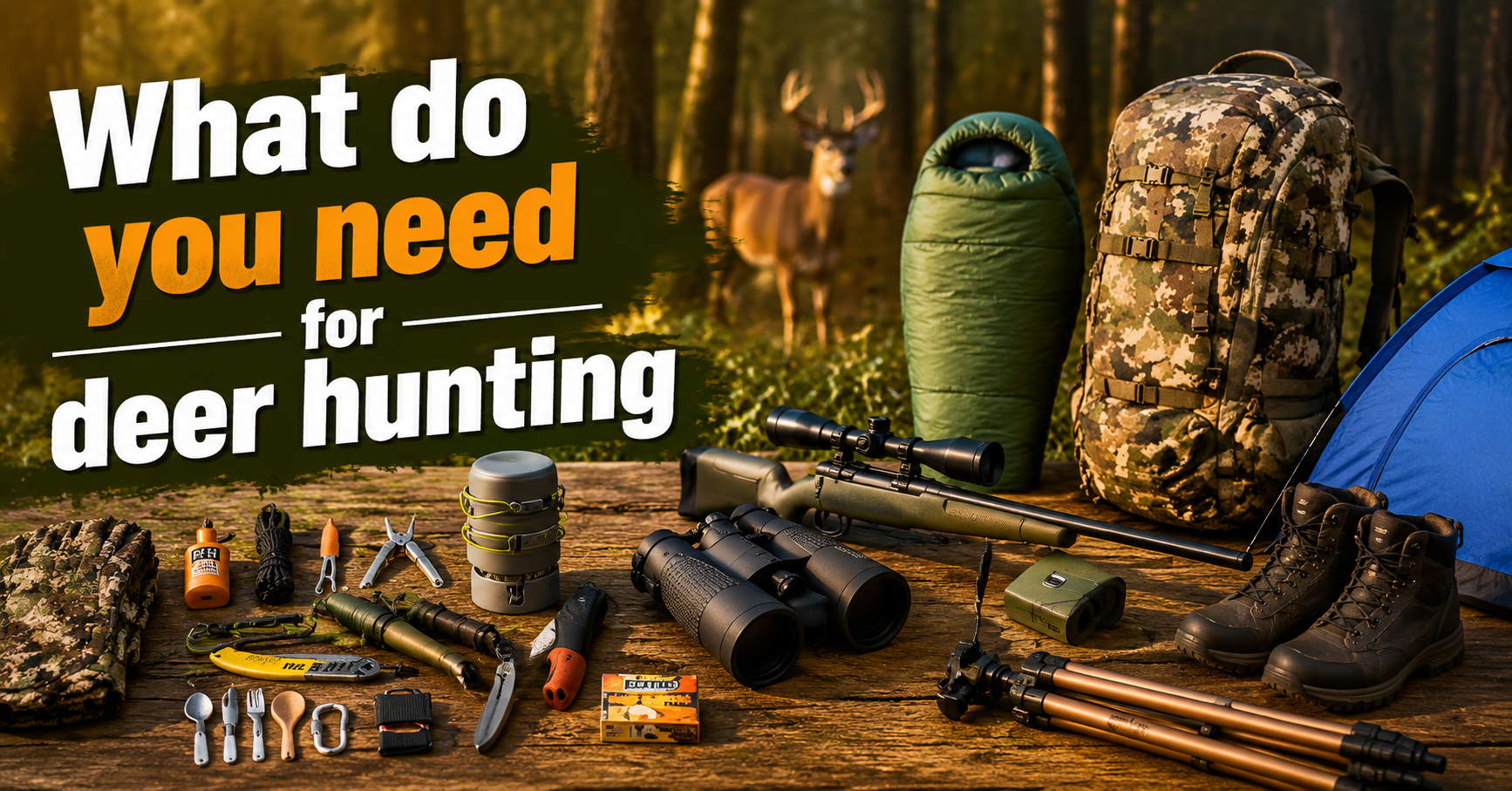

What do you need for deer hunting? At minimum, you need the required hunter education, a valid hunting license and deer tag, legal access to the property, a legal and properly fitted firearm or bow, compatible ammunition or arrows, required visibility clothing, weather-appropriate clothing, navigation and communication tools, and equipment for safely recovering and caring for a harvested deer.
The exact requirements depend on your state or country, deer species, hunting unit, season, weapon, land type, and age. A rifle that is legal in one county may be prohibited in another, and hunter-orange requirements can change by season. Always read the current official regulations for the location you will actually hunt.
Quick Answer
A beginner deer hunter needs legal documentation, an approved hunting weapon, compatible ammunition or archery equipment, safety gear, suitable clothing and boots, basic optics, navigation, emergency supplies, and tools for tracking and game care. Hunters using an elevated stand also need a properly fitted full-body fall-arrest system, lifeline, and haul line. Calls, scents, camouflage, rangefinders, trail cameras, and premium optics can be useful, but they are not substitutes for hunter education, accurate shooting, safe judgment, and legal access.
Deer Hunting Essentials at a Glance
| Category | What You May Need | Priority |
|---|---|---|
| Legal documents | Hunter education certificate, hunting license, deer tag, permits, land permission | Required where applicable |
| Hunting equipment | Legal firearm, muzzleloader, bow, or crossbow with compatible projectiles | Essential |
| Visibility and safety | Required fluorescent orange or pink, eye and hearing protection, first-aid kit | Essential or legally required |
| Clothing | Base layers, insulation, weatherproof shell, gloves, hat, suitable boots | Essential |
| Navigation | Map, compass, GPS or offline map, charged phone, spare power | Essential |
| Optics | Binoculars; rangefinder when useful | Binoculars strongly recommended |
| Elevated hunting | Full-body fall-arrest system, lifeline, suspension-relief strap, haul line | Essential for elevated stands |
| Game recovery | Headlamp, tracking markers, knife, gloves, drag rope or cart | Essential if harvesting a deer |
| Meat care | Clean bags or containers, cooling plan, CWD testing information | Essential |
| Optional equipment | Calls, legal scents, trail cameras, seat cushion, shooting sticks | Optional |
1. Hunter Education and Legal Documents
Equipment should not be the first purchase. Begin by learning what is legally required and obtaining authorization to hunt.
Hunter Education Certification
Many jurisdictions require hunter education based on the hunter’s age, birth date, or previous certification. A hunter education course teaches firearm or archery safety, hunting laws, ethics, wildlife identification, conservation, and outdoor responsibility.
Use the International Hunter Education Association-USA course finder or your state wildlife agency to locate an approved course. An unapproved online course may not satisfy local certification requirements.
Hunting License and Deer Tag
A hunter education certificate is not a hunting license. Depending on the location, a deer hunter may need:
- A current hunting license
- A species-specific deer tag or permit
- A firearm, muzzleloader, archery, or crossbow privilege
- A wildlife-management-unit permit
- A public-land permit
- A special-draw or lottery permit
- Additional documentation for nonresidents or youth hunters
Confirm whether documents must be carried physically, displayed electronically, validated before moving the deer, or reported after harvest.
Legal Property Access
For private land, obtain clear permission from the landowner and understand the property boundaries. For public land, check access dates, designated parking, weapon restrictions, camping rules, motor-vehicle limitations, and any area-specific permits.
A mapping application can help, but electronic property lines may contain errors. Signs, fences, survey information, agency maps, and landowner instructions should also be respected.
2. A Legal and Suitable Deer Hunting Weapon
Deer may be hunted with rifles, shotguns, muzzleloaders, handguns, bows, or crossbows where permitted. No single option is legal or appropriate everywhere.
Firearms
A deer-hunting firearm should:
- Be legal for the season and hunting unit
- Fit the shooter properly
- Use manufacturer-approved ammunition
- Produce recoil the hunter can manage safely
- Be reliable and maintained according to its manual
- Allow the hunter to shoot accurately within a demonstrated range
Do not assume that a common deer caliber, cartridge, shotgun load, or firearm type is legal in every location. Some jurisdictions regulate cartridge design, projectile type, magazine capacity, shotgun zones, lead ammunition, or minimum equipment specifications.
Archery Equipment
Bowhunters may need:
- A legal compound, recurve, longbow, or crossbow
- Properly matched arrows or bolts
- Legal, sharp broadheads compatible with the equipment
- A secure quiver that covers the broadheads
- A release aid when appropriate
- A legal and manufacturer-approved crossbow cocking method
- Bow-specific practice and tuning
Never dry-fire a bow or crossbow. Follow the manufacturer’s instructions and verify local requirements for draw weight, broadhead design, crossbow use, and transport.
Compatible Ammunition or Arrows
Carry only ammunition marked as compatible with the firearm. Similar-looking cartridges and shotgun shells are not necessarily interchangeable. Inspect ammunition, arrows, broadheads, and bowstrings before the hunt and remove damaged equipment from service.
Bring enough ammunition for the hunt and a safe sight-in confirmation, but avoid carrying loose ammunition where it can become damaged or confused with another load.
3. Firearm and Archery Safety Equipment
The Four Primary Firearm Safety Rules
- Treat every firearm as if it is loaded.
- Keep the muzzle pointed in a safe direction.
- Keep your finger outside the trigger guard until ready to shoot.
- Be certain of the target and what is in front of and beyond it.
A mechanical safety does not replace these rules.
Eye and Hearing Protection
Use appropriate eye and hearing protection during practice and whenever conditions allow during the hunt. Electronic hearing protection may help hunters maintain environmental awareness while reducing damaging firearm noise, but it should not interfere with safe handling or local rules.
Firearm or Bow Case
A suitable case protects equipment and may be legally required during transport. Transportation laws differ regarding loaded status, vehicle compartments, cases, locks, and accessibility. Check both the hunting regulations and firearm transport laws for the route and destination.
4. Required Visibility Clothing
Many jurisdictions require deer hunters to wear a specified amount or type of fluorescent orange or fluorescent pink during firearm seasons. Requirements may also apply to companions, ground blinds, or people tracking a deer.
Do not copy another state’s rule. Verify:
- The required color
- The minimum visible area
- Whether a hat is required
- Whether the material must be solid or may be patterned
- Whether it must be visible from all directions
- Which seasons and hunting methods trigger the requirement
- Whether companions must also wear it
Even when not legally required, high-visibility clothing can help other hunters recognize you as a person. Do not rely on camouflage alone in areas shared with firearm hunters.
5. Weather-Appropriate Deer Hunting Clothing
Good hunting clothing keeps the hunter dry, mobile, visible where required, and able to remain still without becoming dangerously cold or overheated.
Base Layer
Choose a moisture-managing base layer suited to the temperature and activity level. Clothing that stays wet can become uncomfortable and contribute to heat loss in cold conditions.
Insulating Layer
Fleece, wool, or another suitable insulating layer can retain warmth during long periods of sitting. Carry enough insulation for the coldest expected part of the hunt rather than only the temperature at departure.
Outer Layer
A wind-resistant or waterproof shell may be necessary in exposed, wet, or snowy conditions. The outer layer should allow safe movement and should not interfere with the firearm, bowstring, harness, or access to required equipment.
Boots and Socks
Select boots according to temperature, moisture, terrain, walking distance, and required traction. They should be broken in before the hunt. Carry dry socks when wet conditions are possible.
Gloves, Hat, and Face Protection
Gloves must provide warmth without preventing trigger discipline or safe equipment control. Bulky gloves should be tested during dry practice with an unloaded firearm or safe archery setup.
6. Backpack and Basic Field Supplies
A small daypack can carry essential equipment without becoming unnecessarily heavy. Keep emergency items accessible rather than buried underneath optional gear.
| Item | Purpose | Notes |
|---|---|---|
| Water | Hydration | Carry enough for the weather, distance, and duration. |
| Food | Energy | Choose compact food that remains usable in expected temperatures. |
| First-aid kit | Immediate care | Know how to use every item carried. |
| Headlamp and backup light | Navigation and recovery | Carry spare batteries or another independent light. |
| Map and compass | Navigation backup | Do not rely solely on phone reception. |
| Phone or communication device | Communication | Protect it from water and conserve battery life. |
| Power bank | Electronic backup | Keep it warm and dry in cold weather. |
| Emergency whistle | Signaling | Carry it on your person. |
| Fire-starting equipment | Emergency warmth | Follow land restrictions and fire-safety rules. |
| Emergency shelter | Weather protection | A compact shelter or blanket may help during an unexpected delay. |
| Knife or multitool | General field tasks | Use the correct tool rather than the knife as a substitute for everything. |
| Flagging or electronic waypoints | Tracking reference | Remove physical markers where required and avoid littering. |
7. Navigation and Communication
Before leaving, download official maps and offline navigation data. Mark parking areas, legal access points, property boundaries, stand locations, major terrain features, and an emergency exit route.
Carry a compass and know how to use it. A phone can fail because of water, impact, cold, battery loss, or poor reception. In remote areas, consider an appropriate satellite communication device and know its limitations.
Leave a hunt plan with a reliable person that includes:
- Your hunting area
- Parking location
- Expected route
- Who is with you
- Vehicle description
- Expected return time
- When the person should seek help if you do not return
8. Optics and Shooting Support
Binoculars
Binoculars help identify deer without pointing a firearm at an unknown object. They can also help determine whether an animal meets legal sex, antler, or age-class restrictions.
Never use a rifle scope as a general observation tool.
Rifle Scope or Bow Sight
Optics must be compatible with the hunting equipment, mounted securely, and confirmed before the season. A scope does not increase the hunter’s ethical range beyond demonstrated accuracy.
Rangefinder
A rangefinder can help hunters judge distance, particularly in archery hunting or open terrain. It remains optional, and its readings must not be used to justify shots beyond the hunter’s practiced ability.
Shooting Sticks or Rest
A stable rest can improve control when terrain and local rules allow. Practice setting it up quietly and safely before hunting.
9. Tree-Stand and Elevated Hunting Equipment
Hunters using a tree stand or hunting saddle need more than the platform itself. The IHEA-USA hunter education standards emphasize elevated-stand inspection and fall-arrest equipment.
Essential equipment includes:
- A properly fitted full-body fall-arrest system
- A lifeline or approved connection system that keeps the hunter attached during ascent and descent
- A suspension-relief strap
- A haul line for raising and lowering an unloaded firearm, bow, or pack
- Manufacturer-approved climbing equipment
- A stand inspected for damage, corrosion, missing parts, or worn straps
- A communication and rescue plan
Remain connected according to the equipment instructions from the time your feet leave the ground until you return. Never climb with a loaded firearm or uncovered broadheads.
10. Ground Hunting Equipment
A ground hunter may use a natural setup, portable seat, or legal ground blind. Useful items include:
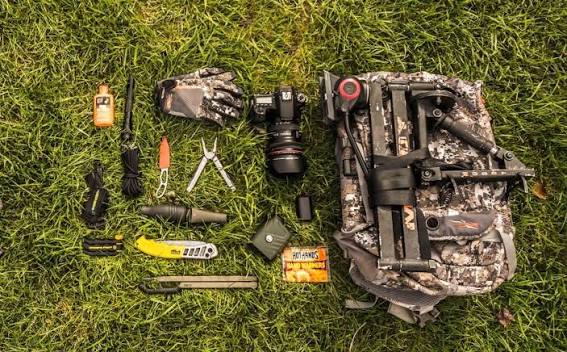
- A quiet seat or cushion
- Required high-visibility material
- Shooting sticks where useful
- Weather protection
- A safe, clearly identified shooting lane
- A headlamp for entering and leaving
Check whether ground blinds must display fluorescent material during firearm seasons. Never create a shooting position toward a road, trail, building, livestock area, or uncertain backstop.
11. Game Recovery Equipment
Before hunting, plan how you will track, tag, move, cool, and process a deer. Waiting until after a harvest can result in poor decisions and delayed meat care.
Useful recovery equipment includes:
- A bright headlamp and backup light
- A sharp field knife in a protective sheath
- Disposable nitrile or rubber gloves
- Clean game bags or food-safe containers
- A drag rope, sled, cart, or sufficient help
- Tracking markers or waypoint capability
- A pen or tool needed to validate a physical tag
- Water and cleaning supplies kept separate from drinking water
- A cooler and adequate ice or another effective cooling plan
Do not begin a recovery that requires trespassing. Contact the landowner or appropriate authority and follow local recovery rules.
12. Field Dressing and Venison Safety
Wear gloves while field dressing and avoid contaminating meat with digestive contents, dirt, hair, fuel, or dirty equipment. Use clean tools and begin cooling the carcass or meat promptly according to weather conditions and local guidance.
The CDC’s current chronic wasting disease guidance for hunters advises hunters not to shoot, handle, or eat deer that appear sick or behave strangely. When field dressing, wear rubber or latex gloves, minimize contact with the brain and spinal tissues, and avoid using household kitchen knives.
In areas where chronic wasting disease is present:
- Check current testing recommendations or requirements.
- Follow carcass-transport restrictions.
- Have the deer tested when the wildlife agency recommends it.
- Consider waiting for test results before eating the meat.
- Do not eat meat from an animal that tests positive.
Cooking does not replace CWD testing or official disease guidance.
13. Optional Deer Hunting Gear
You do not need the most expensive equipment to hunt responsibly. Choose gear based on terrain, weather, local regulations, fit, safety, reliability, and your actual hunting method.
Deer Calls
Grunt tubes, bleat calls, and rattling equipment may be useful in certain situations, but deer responses vary with season, sex, age, hunting pressure, and individual behavior. Poor timing or excessive calling may alert deer.
Scents and Scent Control
Wind awareness is generally more important than buying numerous scent products. Natural deer-urine products may be restricted or discouraged in some areas because of CWD concerns. Check current regulations and disease-management guidance.
Trail Cameras
Trail cameras can support scouting where legal, but public-land placement, transmission capability, timing, identification labels, and retrieval rules vary. A camera does not guarantee that deer will appear during legal shooting hours.
Decoys
Deer decoys may be legal in some jurisdictions and prohibited or restricted in others. They can also create mistaken-identity risks. Check local rules and use high-visibility precautions when transporting a decoy.
Hand Warmers and Seat Cushions
Small comfort items may help a hunter remain still and attentive. Use heating products according to their warnings and avoid direct contact that could cause burns.
What You Need Before Leaving Home
- Verify the current season, unit, legal hours, weapon rules, and bag limits.
- Confirm that your license, tag, permits, and access permission are valid.
- Check the weather and revise the plan if conditions are unsafe.
- Inspect the firearm, bow, ammunition, arrows, optics, and safety equipment.
- Confirm your zero or archery setup at a safe range before the hunt.
- Download maps and charge all electronic equipment.
- Leave a hunt plan with a reliable person.
- Prepare a recovery, tagging, transport, and cooling plan.
- Review CWD testing and carcass-movement rules.
- Pack essential equipment using a written checklist.
Common Beginner Mistakes
- Buying gear before checking regulations: Confirm legal weapons and equipment first.
- Carrying too much: Prioritize safety, weather protection, navigation, water, and recovery equipment.
- Ignoring firearm or bow fit: Poorly fitted equipment can reduce control and accuracy.
- Skipping realistic practice: Practice from safe positions you may actually use while hunting.
- Using the rifle scope as binoculars: Observe unknown objects with binoculars instead.
- Forgetting a recovery plan: Know how you will track, move, cool, and process a deer.
- Depending entirely on a phone: Carry navigation and lighting backups.
- Entering a stand without continuous fall protection: Follow the harness and stand instructions every time.
- Assuming camouflage is required: Safety, visibility rules, movement control, and wind often matter more.
- Taking an uncertain shot: Pass whenever identification, backstop, distance, or shot angle is questionable.
What Not to Do
- Do not hunt without the required license, tag, permit, or land permission.
- Do not carry a loaded firearm in a vehicle or other prohibited location.
- Do not shoot at sound, movement, color, or an unidentified shape.
- Do not point a firearm toward another person while observing wildlife.
- Do not take shots without a safe backstop.
- Do not exceed your proven shooting ability.
- Do not climb with a loaded firearm or exposed broadheads.
- Do not trespass to hunt or recover a deer.
- Do not move a deer before completing required tagging or validation.
- Do not eat a deer that appears sick, tests positive for CWD, or was handled improperly.
- Do not continue hunting when weather, visibility, health, or terrain becomes unsafe.
Final Deer Hunting Checklist
Documents and Legal Access
- Hunter education certificate where required
- Hunting license
- Deer tag and applicable permits
- Official current regulations
- Landowner permission or public-land authorization
- Emergency contact and hunt plan
Hunting Equipment
- Legal firearm, muzzleloader, bow, or crossbow
- Compatible ammunition, arrows, or bolts
- Protected broadheads and appropriate accessories
- Firearm or bow case
- Binoculars
- Optional rangefinder or shooting support
Safety and Clothing
- Required fluorescent clothing
- Eye and hearing protection
- First-aid kit
- Base, insulating, and outer layers
- Suitable boots and dry socks
- Gloves and hat
- Tree-stand fall-arrest equipment when applicable
Navigation and Emergency Supplies
- Map and compass
- GPS or offline maps
- Charged phone or communication device
- Backup power
- Headlamp and backup light
- Whistle
- Water and food
- Emergency shelter and fire-starting equipment where appropriate
Recovery and Meat Care
- Sharp sheathed knife
- Disposable gloves
- Tracking markers or waypoints
- Drag rope, cart, sled, or planned assistance
- Clean game bags or food-safe containers
- Cooler and cooling supplies
- Tag-validation and harvest-reporting tools
- CWD testing and carcass-transport information
Final Answer
What do you need for deer hunting? You need legal authorization, safe and lawful hunting equipment, required visibility clothing, appropriate outdoor clothing, navigation and emergency supplies, and a complete plan for recovering and caring for a deer. Elevated hunters also need continuous fall protection. Optional products can improve comfort or scouting, but hunter education, current regulation checks, accurate shooting, positive target identification, and responsible judgment remain more important than expensive gear.
FAQs
1. What is the minimum equipment needed for deer hunting?
The minimum practical list includes required documents, a legal and suitable weapon, compatible projectiles, required visibility clothing, weather protection, navigation, communication, water, first aid, lighting, and game-recovery equipment.
2. Do you need hunter education to hunt deer?
Many jurisdictions require it based on age, birth date, or license history. Verify the exact requirement through the wildlife agency where you plan to hunt.
3. Do you need a hunting license and a deer tag?
Usually, but license and tagging systems differ. Some permits are included with a license, while others require a separate application, purchase, or drawing.
4. What firearm do you need for deer hunting?
Use a firearm that is legal for the season and unit, fits you properly, uses compatible hunting ammunition, and can be fired accurately within your demonstrated range.
5. What caliber do you need for deer hunting?
There is no universally legal or best deer caliber. Local law, firearm type, recoil tolerance, projectile construction, expected distance, and shooter accuracy all matter.
6. How much ammunition should you carry?
Carry a reasonable amount of compatible ammunition in good condition. You rarely need large quantities in the field, but bring enough for lawful hunting and an unexpected need to confirm equipment at a safe range.
7. Do you need a scope for deer hunting?
No. Some hunters use iron sights, while others benefit from a suitable scope. The sighting system must be legal, securely mounted, correctly adjusted, and practiced with before hunting.
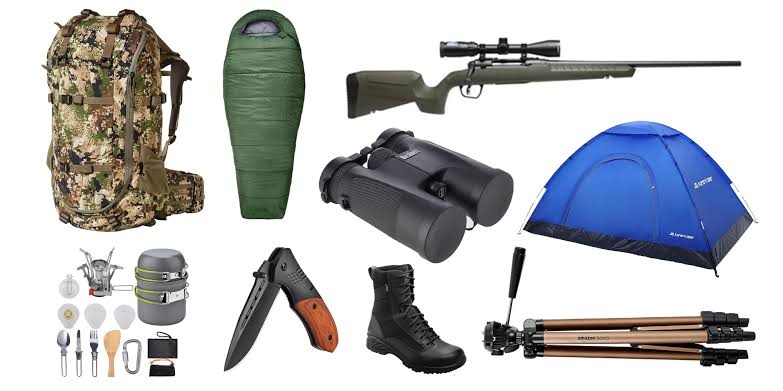
8. Do you need binoculars?
Binoculars are strongly recommended because they allow observation and identification without pointing a firearm at an unknown object.
9. Do you need a rangefinder?
A rangefinder is optional but useful for archery and open-terrain hunting. It does not make a distant or unsafe shot ethical.
10. Do you have to wear hunter orange?
Requirements vary by jurisdiction, season, hunting method, and role. Check the current official rule for the exact hunt.
11. Do you need camouflage to hunt deer?
No. Camouflage may help in some setups, but legal visibility clothing, stillness, wind awareness, noise control, and safe positioning are more important.
12. What boots are best for deer hunting?
Choose boots based on temperature, water, terrain, traction, walking distance, and fit. Break them in before the hunt and test them with the socks you intend to wear.
13. What clothing should a deer hunter wear?
Use layers suited to the weather: a moisture-managing base, appropriate insulation, and a protective outer layer. Add required fluorescent clothing and suitable gloves, headwear, socks, and boots.
14. What should be in a deer hunting backpack?
Carry water, food, first aid, navigation, communication, lighting, weather protection, emergency signaling, legal documents, and recovery supplies. Add optional items only when they serve the actual hunt.
15. Do you need a first-aid kit?
Yes. Carry a compact kit appropriate to the group and location, and obtain enough training to use it correctly.
16. Do you need a tree-stand harness?
A properly fitted full-body fall-arrest system and appropriate connection equipment are essential whenever using an elevated stand or saddle.
17. Do you need a tree stand to hunt deer?
No. Deer can be hunted legally from the ground, a blind, or an elevated position depending on local rules and terrain.
18. Do you need a ground blind?
No. A ground blind can provide concealment and weather protection, but it may need fluorescent material or other markings during certain seasons.
19. What knife do you need for deer hunting?
Choose a manageable, sharp field knife with a secure handle and protective sheath. A large blade is not necessarily safer or more effective.
20. Do you need gloves to field dress a deer?
Disposable rubber or nitrile gloves are recommended to reduce contact with blood, internal tissues, and possible contaminants.
21. Do you need to field dress a deer immediately?
Begin legal recovery and cooling without unnecessary delay. Timing depends on temperature, shot outcome, terrain, and local rules, but preventing spoilage should be part of the plan.
22. How do you move a deer after harvest?
Possible methods include a drag rope, sled, cart, vehicle where legally allowed, or help from other people. Consider terrain, distance, temperature, and physical ability before hunting.
23. Do you need a headlamp?
Yes, if you may enter, leave, or recover a deer in low light. Carry an independent backup light and spare power.
24. Is a phone enough for navigation?
No. Phones can lose power, signal, or function. Carry offline maps and a compass or another suitable backup, and know how to use them.
25. How much food and water should you carry?
The amount depends on temperature, exertion, duration, body needs, and remoteness. Carry more than you expect to consume if an unexpected delay is possible.
26. Do you need a deer call?
No. Calls are optional and do not guarantee a response. Their effectiveness varies with season, pressure, animal behavior, and technique.
27. Do you need scent-control products?
No. Managing wind and minimizing avoidable odor may be more important than purchasing many products. Check whether natural urine-based scents are restricted.
28. Do you need a deer decoy?
No. Decoys are specialized optional tools and may create safety or legal concerns. Verify local rules before using one.
29. Do you need trail cameras?
No. Trail cameras can help with scouting where legal, but they are not necessary and do not guarantee deer activity during a hunt.
30. What size backpack do you need?
Choose a pack large enough for essential safety, clothing, water, and recovery items without encouraging excessive weight. Day hunts and remote hunts require different capacity.
31. How much should a beginner spend on deer hunting gear?
There is no required budget. Prioritize legal equipment, safe fit, weather protection, navigation, first aid, and meat care. Borrowing appropriate nonregulated gear or hunting with a mentor can reduce costs.
32. Should a beginner deer hunter hunt alone?
A responsible mentor can help a beginner apply safety, regulations, recovery, and field skills. If hunting alone is legal, the hunter should still be competent, prepared, and equipped with a detailed communication plan.
33. What do you need to track a wounded deer?
Use good lighting, navigation, tracking markers, patience, and legal access. Mark the point of impact and last known location, avoid trampling sign, and seek experienced tracking help where legal.
34. Do you need to test deer for CWD?
Testing may be required or strongly recommended in some areas. Check the current wildlife-agency guidance for the harvest location.
35. Can you eat venison before receiving a CWD result?
In CWD areas, public-health and wildlife agencies may recommend waiting for a result. Do not eat meat from a deer that tests positive.
36. What identification should you carry?
Carry whatever personal identification, license, permit, certification, and tag documentation local rules require. Physical and electronic proof policies vary.
37. What do you need to hunt deer on public land?
In addition to ordinary licenses and equipment, you may need an area permit, parking authorization, unit map, or special registration. Check the land manager’s current rules.
38. What do you need to hunt deer on private land?
Obtain permission, confirm boundaries, discuss access and vehicle use, and understand whether local licensing or tagging exemptions apply. Never assume landowner permission replaces hunting regulations.
39. Should you carry eye and hearing protection?
Yes. Use appropriate protection during practice and whenever practical during the hunt without compromising environmental awareness or safe handling.
40. How should you prepare your firearm or bow before deer season?
Inspect it according to the manufacturer’s instructions, confirm legal configuration, verify the sighting system, and practice safely until you can produce consistent accuracy from realistic positions.
Read more: