
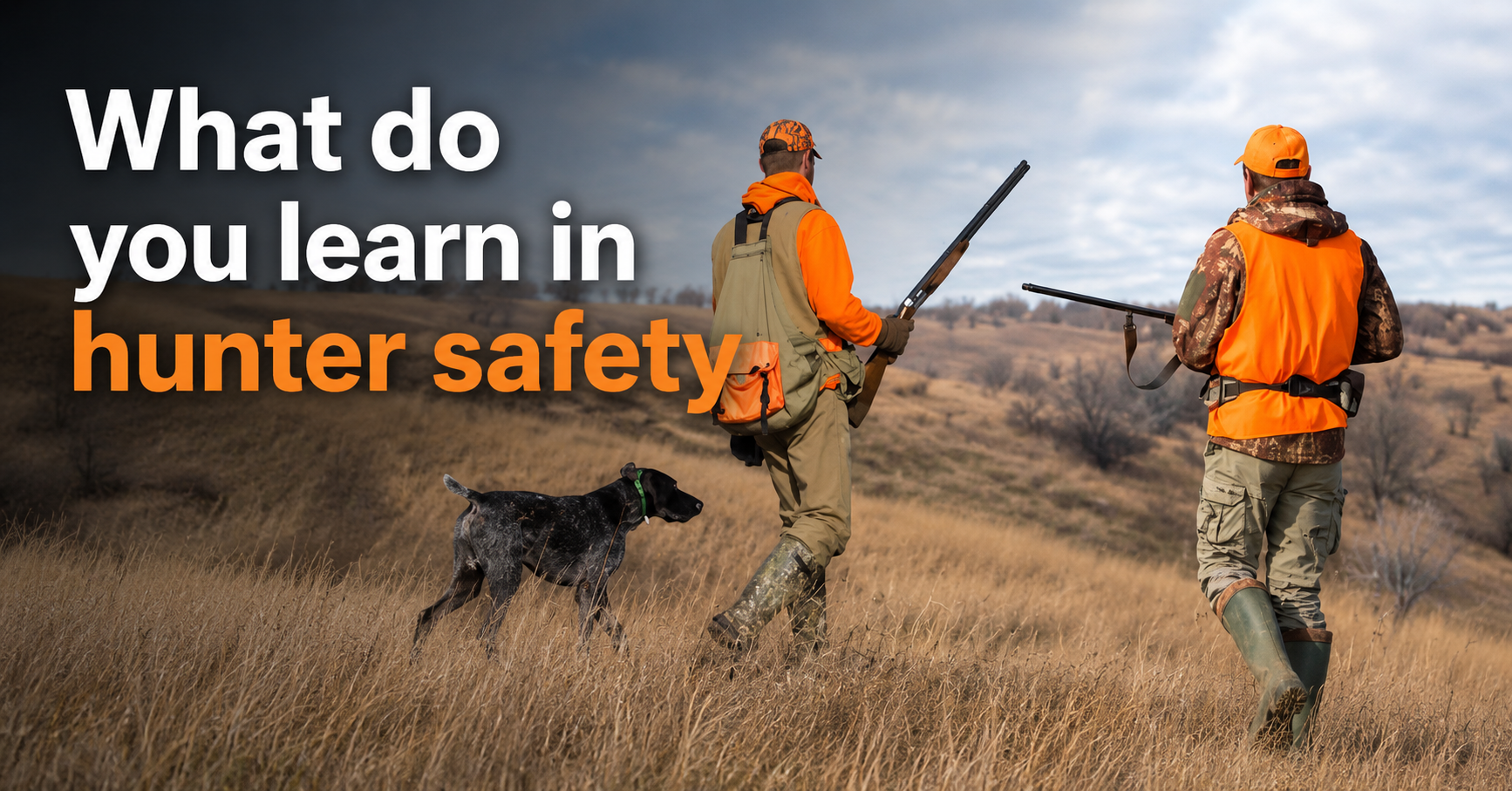

What do you learn in hunter safety? A typical hunter education course teaches safe firearm handling, field safety, hunting laws, wildlife identification, conservation, ethical decision-making, outdoor preparedness, and personal responsibility.
The goal is not simply to help students pass an exam. Hunter safety training is designed to help new hunters recognize hazards, follow regulations, respect wildlife and property, and make responsible decisions before, during, and after a hunt.
Course content, age requirements, field-day rules, fees, tests, and certification requirements vary by state or country. Always confirm the current requirements through the wildlife agency where you plan to hunt.
Quick Answer
Hunter safety courses teach students how to handle firearms responsibly, identify safe and unsafe shots, understand hunting regulations, recognize wildlife, prepare for outdoor emergencies, and act ethically in the field. Students commonly learn the four primary firearm safety rules, safe loading and unloading, zones of fire, ammunition basics, conservation principles, landowner responsibility, and game recovery. Some courses also include hands-on firearm handling, a field exercise, live fire, first aid, survival, tree-stand safety, or bowhunting topics. The exact curriculum and certification process depend on the jurisdiction.
Hunter Safety Course Topics at a Glance
| Course Topic | What Students Learn | Why It Matters |
|---|---|---|
| Firearm safety | Muzzle control, trigger discipline, chamber awareness, and target identification | Helps prevent negligent discharges and hunting incidents |
| Firearms and ammunition | Basic firearm actions, ammunition compatibility, and mechanical operation | Reduces handling errors and equipment misuse |
| Field safety | Safe carries, zones of fire, obstacle crossing, and group communication | Helps hunters manage changing conditions around other people |
| Hunting regulations | Licenses, tags, seasons, legal methods, boundaries, and reporting | Supports legal and responsible hunting |
| Wildlife identification | Species, sex, age-class, and protected-animal recognition | Supports positive target identification |
| Ethics and responsibility | Fair chase, shot decisions, game recovery, and respect for others | Promotes humane and responsible conduct |
| Conservation | Habitat, wildlife management, carrying capacity, and the hunter’s role | Explains how regulated hunting relates to wildlife stewardship |
| Outdoor safety | Weather, navigation, trip planning, first aid, and emergency response | Helps hunters avoid and manage non-firearm emergencies |
What Do You Learn in Hunter Safety About Firearms?
Safe firearm handling is one of the central parts of most hunter education programs. Students learn that safe behavior must continue from the moment a firearm is removed from storage until it is unloaded, checked, secured, and stored again.
The Four Primary Firearm Safety Rules
The exact wording may differ among programs, but the core principles are:
- Treat every firearm as if it is loaded.
- Keep the muzzle pointed in a safe direction.
- Keep your finger outside the trigger guard until you are ready to shoot.
- Be certain of your target and what is in front of and beyond it.
These rules work together. Following only three of them is not enough. A mechanical safety is a useful device, but it never replaces muzzle control, trigger discipline, or careful target identification.
Firearm Actions and Basic Operation
Students may learn the basic differences among common firearm actions, such as bolt, lever, pump, break, and semiautomatic actions. Instruction generally focuses on how to recognize whether an action is open, how to confirm chamber status, and why every firearm must be handled according to its manufacturer’s manual.
A course introduces general principles rather than providing complete operating instructions for every firearm model. Hunters should receive supervised instruction before using an unfamiliar firearm.
Safe Loading and Unloading
Hunter safety training explains when firearms should remain unloaded and how to maintain control during loading and unloading. Common principles include keeping the muzzle in a safe direction, keeping the finger away from the trigger, opening the action, and visually checking the chamber and magazine area.
Students also learn that unloading requirements may apply when entering vehicles, crossing certain areas, returning to camp, or using specific public lands. Local rules must always be checked.
Ammunition Compatibility
Courses teach students to use only ammunition that matches the markings and specifications for the firearm. Similar-looking cartridges or shotgun shells are not automatically interchangeable.
Students may also learn basic ammunition terminology, shotgun gauges, cartridge components, and safe ammunition storage. The firearm manual and ammunition manufacturer’s information remain the controlling references for compatibility.
Safe Storage and Transport
Hunter education commonly discusses preventing unauthorized access, especially by children or other household members. Firearms should be unloaded and secured using storage methods appropriate to the household, firearm, and local law. Ammunition should also be stored responsibly.
Transport requirements vary considerably. A hunter safety certificate does not override vehicle, airline, public-land, or state firearm transportation laws.
Safe Firearm Handling in the Field
Handling a firearm at a bench is different from carrying one through brush, climbing over obstacles, or hunting with companions. Hunter education applies the basic safety rules to realistic field situations.
Zones of Fire
A zone of fire is the direction in which a hunter may safely observe and potentially shoot without swinging across companions, roads, buildings, livestock, or other unsafe areas. Hunters must know where every member of the group is located and update their safe zones as the group moves.
If the target leaves the safe zone, the shot should not be taken.
Safe Carries
Students may practice or discuss several firearm-carrying positions. No carrying method is safe in every situation. The correct choice depends on muzzle direction, terrain, obstacles, companions, and the hunter’s ability to control the firearm.
A hunter should change the carry when conditions change rather than continue using a position that points the muzzle toward another person.
Crossing Obstacles
Hunter safety courses explain why a hunter should not climb a fence, jump a ditch, or negotiate a difficult obstacle while casually holding a loaded firearm. The safe method depends on the situation, equipment, companions, and course guidance.
The general principle is to unload the firearm, maintain control of the muzzle, and prevent anything from entering the barrel. Never pull a firearm toward yourself by its muzzle.
Hunting With Companions
Students learn to communicate before moving, shooting, crossing obstacles, approaching downed game, or changing positions. Every hunter remains personally responsible for confirming a safe shot; another person saying “shoot” does not transfer that responsibility.
Positive Target Identification and Safe Shot Decisions
Hunter education emphasizes that movement, color, sound, or an assumed location is not enough to identify a target. A hunter must positively identify the legal species and confirm any required sex or age classification before considering a shot.
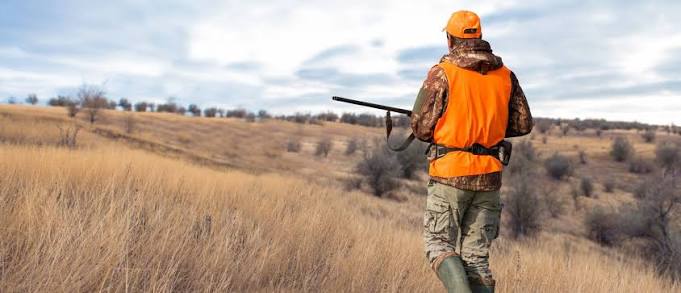
Students are also taught to evaluate:
- What is immediately in front of the animal
- What lies behind and beyond the animal
- Whether the projectile has a safe backstop
- Whether another hunter, hiker, road, building, vehicle, or livestock may be nearby
- Whether the angle offers a reasonable opportunity for a humane shot
- Whether the distance is within the hunter’s demonstrated ability
- Whether local law permits the shot and equipment
No animal is worth taking an unsafe, uncertain, illegal, or low-percentage shot.
Hunting Laws and Regulations
Hunter education introduces the types of rules hunters must check, but it does not permanently teach every current regulation. Regulations can change between seasons and differ by species, hunting unit, weapon, land type, residency, and permit.
Topics may include:
- Who must complete hunter education
- Hunting licenses, tags, permits, and stamps
- Season dates and legal shooting hours
- Bag and possession limits
- Legal firearms, archery equipment, ammunition, and methods
- Hunter-orange or visibility requirements
- Baiting, feeding, calling, and electronic-equipment rules
- Public-land and private-land requirements
- Landowner permission and property boundaries
- Tagging, validation, reporting, and transportation of game
- Protected species and mistaken-identity prevention
A certificate from hunter education is not the same as a hunting license. Before every hunt, consult the current official regulation booklet and emergency orders for the exact location, species, date, and hunting method.
Wildlife Identification and Conservation
Hunter safety courses teach more than firearm handling. The IHEA-USA hunter education standards include wildlife identification, wildlife-management principles, conservation, laws, safe field practices, and personal responsibility.
Wildlife Identification
Students may learn how to distinguish game animals from protected or non-target species. Depending on the program, identification may involve body shape, markings, behavior, tracks, habitat, calls, sex, or age-class characteristics.
A course cannot prepare a student for every species in every region. Hunters must continue studying the animals they intend to hunt and remain willing to pass on uncertain identification.
Wildlife Management
Hunter education may introduce habitat, carrying capacity, population monitoring, harvest management, disease concerns, and the role of wildlife agencies. Students learn that legal seasons and bag limits are management tools rather than arbitrary restrictions.
The Hunter’s Role in Conservation
Responsible hunters support conservation by following harvest rules, purchasing required licenses and permits, reporting information accurately, avoiding waste, respecting habitat, and cooperating with wildlife professionals.
Conservation also means leaving natural areas in good condition and avoiding unnecessary disturbance to wildlife and other land users.
Hunting Ethics and Fair Chase
A legal action is not always an ethical choice. Hunter education encourages students to consider whether their decisions are safe, humane, respectful, and consistent with fair-chase principles.
Ethical topics commonly include:
- Respecting wildlife and avoiding waste
- Taking only shots with a high probability of a humane outcome
- Making every reasonable legal effort to recover wounded game
- Following property boundaries and obtaining permission
- Respecting landowners, other hunters, and non-hunting recreationists
- Keeping hunting areas clean
- Reporting harvests honestly
- Avoiding behavior that damages public trust in hunting
- Using technology within legal and ethical limits
- Following both the letter and purpose of wildlife regulations
Fair chase generally means giving wildlife a reasonable opportunity to avoid the hunter while following legal and ethical hunting practices. Specific fair-chase standards and technology rules can differ by jurisdiction and hunting organization.
Outdoor Survival and Emergency Preparedness
Firearms are not the only source of risk during a hunt. Weather, falls, cold water, heat, navigation errors, medical problems, and remote terrain can create emergencies.
Depending on the course, students may learn about:
- Creating a hunt plan and leaving it with a reliable person
- Checking weather and recognizing changing conditions
- Carrying basic navigation and communication equipment
- Avoiding hypothermia, heat illness, and dehydration
- Basic first aid and bleeding control
- What to do when lost
- Emergency signaling
- Appropriate clothing and layering
- Fire safety and shelter basics
- Knowing when to stop or turn back
Hunter education introduces preparedness, but it does not replace a complete wilderness first-aid, navigation, or survival course. Backcountry hunters should pursue additional training appropriate to their terrain and remoteness.
Tree-Stand, Boat, and Specialized Hunting Safety
Some programs include additional instruction based on common regional hunting methods.
Tree-Stand Safety
Students may learn to use an appropriate full-body fall-arrest system, inspect equipment, maintain three points of contact, use a lifeline, and haul unloaded equipment separately instead of climbing with it.
Always follow the stand and harness manufacturer’s current weight limits, inspection procedures, and installation instructions.
Boat and Waterfowl Safety
Waterfowl-focused instruction may cover personal flotation devices, boat capacity, cold-water hazards, changing weather, dogs in boats, firearm handling, and the dangers of unstable or overloaded boats.
Archery and Crossbow Safety
General hunter education may introduce bows or crossbows, but some locations require or offer separate bowhunter training. Topics may include safe shooting lanes, arrow and broadhead handling, equipment inspection, tree-stand safety, and the danger of dry-firing.
Game Recovery and Care
Hunter education may cover what to do after a shot, including watching the animal’s reaction, marking the last known location, approaching carefully, confirming that the animal is dead, tagging it correctly, and making a legal recovery effort.
Students may also receive basic instruction in:
- Tracking and interpreting signs cautiously
- Avoiding unnecessary contamination of a trail
- Requesting help from an experienced or licensed tracker where permitted
- Following rules for crossing property boundaries
- Field dressing and keeping game meat clean
- Cooling meat promptly
- Following local disease-testing and carcass-transport rules
A basic course does not make someone an expert tracker or wild-game processor. Mentored field experience and additional food-safety education remain valuable.
What Happens During a Hunter Safety Course?
Hunter education may be offered in a classroom, online, through a hybrid program, or as an online course followed by an in-person skills session. Available formats depend on the student’s age and local wildlife-agency requirements.
A course may include:
- Reading, video, or instructor-led lessons
- Chapter reviews or quizzes
- A written final exam
- Hands-on firearm handling with unloaded training equipment
- A hunting-skills trail or simulated field situations
- A field day
- Live-fire training
- A practical skills evaluation
Live fire and field exercises are not included in every jurisdiction. Use the IHEA-USA course finder or your wildlife agency’s website to locate an approved program and confirm its requirements.
What Hunter Safety Does Not Teach Completely
Passing hunter education is a foundation, not proof that a person is ready for every hunting situation. A basic course may not provide enough training in:
- Accurate shooting from realistic field positions
- Species-specific hunting techniques
- Advanced navigation or wilderness medicine
- Long-range shooting
- Backcountry trip planning
- Detailed game processing
- Using every firearm, bow, or crossbow model
- Current regulations for every state or hunting unit
- Advanced tracking and recovery
New hunters should practice with their equipment under qualified supervision and, when possible, hunt with an experienced and responsible mentor.
Important Safety and Legal Notice
Hunter education requirements vary by state, province, country, birth date, age, license type, and hunting method. An online course accepted in one jurisdiction may not satisfy another jurisdiction’s field-day or certification requirement.
Before registering, verify:
- Whether the provider is approved by the relevant wildlife agency
- Whether your age affects available course formats
- Whether an in-person field day is required
- Whether a practical test or live-fire exercise is required
- Whether the certificate will be accepted where you intend to hunt
- Whether you must carry physical or electronic proof of certification
Official regulations and agency instructions override general online guidance.
Common Beginner Mistakes After Hunter Education
Assuming Certification Is a Hunting License
A hunter education certificate may help satisfy a licensing requirement, but it does not automatically authorize hunting. The hunter may still need a current license, species tag, permit, stamp, or land-access authorization.
Relying on an Old Regulation Booklet
Regulations can change. Check the current season booklet and any emergency orders shortly before hunting.
Handling an Unfamiliar Firearm Without Help
Basic course knowledge does not replace the manual or supervised instruction for a specific firearm. Ask a qualified instructor or experienced responsible mentor for assistance.
Practicing Only From a Bench
Hunters should build accuracy from stable, realistic field positions while staying within range rules. A hunter’s ethical distance is limited by demonstrated ability under current conditions.
Rushing Into a Difficult Hunt
A new hunter does not need to begin with remote terrain, severe weather, or complicated equipment. Start with manageable conditions and build skills gradually.
What Not to Do
- Do not point a firearm at anything you are unwilling to damage.
- Do not place your finger on the trigger before making a safe, deliberate shot.
- Do not shoot at sound, color, brush movement, or an unidentified shape.
- Do not depend solely on a mechanical safety.
- Do not take a shot without knowing what is beyond the target.
- Do not hunt without checking current licenses, seasons, boundaries, and equipment rules.
- Do not trespass while hunting or recovering game.
- Do not take shots beyond your proven ability.
- Do not climb with a loaded firearm.
- Do not continue when weather, visibility, physical condition, or terrain becomes unsafe.
- Do not treat certification as the end of your training.
What Should You Do After Passing Hunter Safety?
- Save your certificate: Keep secure physical and digital records where permitted.
- Check licensing requirements: Confirm the license, tags, permits, and stamps needed for the intended hunt.
- Read current regulations: Review species, season, unit, weapon, land-access, and reporting rules.
- Learn your equipment: Read the manufacturer’s manual and practice under qualified supervision.
- Build shooting proficiency: Practice safe, accurate shooting from positions you may use in the field.
- Find a mentor: Hunt with someone who consistently demonstrates safe, legal, and ethical behavior.
- Create a hunt plan: Prepare for weather, navigation, communication, first aid, and game recovery.
- Continue learning: Consider first-aid, bowhunter, tree-stand, boating, shooting, tracking, or species-specific training.
Final Answer
What do you learn in hunter safety? You learn how to handle firearms responsibly, recognize safe shots, follow hunting regulations, identify wildlife, prepare for outdoor hazards, support conservation, and behave ethically in the field. The course establishes essential knowledge, but certification does not replace current regulation checks, equipment-specific instruction, shooting practice, or mentored experience. A responsible hunter continues learning long after passing the final exam.
FAQs
1. What is a hunter safety course?
A hunter safety course is an approved education program that teaches safe, legal, responsible, and ethical hunting practices. It may also be called hunter education or hunter ed.
2. Is hunter safety the same as hunter education?
The terms are commonly used interchangeably. “Hunter education” better reflects the broader curriculum, which includes conservation, regulations, ethics, wildlife, and outdoor responsibility in addition to safety.
3. Who is required to take hunter safety?
Requirements vary by jurisdiction and may depend on birth date, age, license type, residency, or hunting method. Check the wildlife agency where you plan to hunt.
4. Is there a minimum age for hunter safety?
Minimum ages and available course formats vary. Some jurisdictions allow young students to attend but restrict certification, online options, or unsupervised hunting until a certain age.
5. Can adults take hunter safety?
Yes. Adults can take hunter education whether it is legally required or simply desired for safety and preparation. Many courses serve both youth and adult students.
6. Can hunter safety be completed online?
Many jurisdictions offer online study, but some require an in-person field day, skills evaluation, or live-fire component. Confirm that the online provider is officially approved.
7. How long does hunter safety take?
Course length varies according to jurisdiction, format, student age, and field requirements. Consult the course listing rather than assuming one national duration.
8. Is there a test at the end?
Many programs include a written exam, online assessment, practical evaluation, or combination of these. Passing standards and retake policies vary.
9. Is the hunter safety test difficult?
The test is generally designed to confirm understanding of the course’s safety, legal, and ethical principles. Students who complete the lessons carefully and ask questions should be prepared for the required assessment.
10. What happens if you fail the hunter safety test?
Retake and re-enrollment policies depend on the agency and course provider. Ask the instructor or official program what steps are available.
11. Do you need your own firearm for hunter safety?
Usually not, but course instructions vary. Do not bring a firearm or ammunition unless the official course organizer specifically instructs you to do so.
12. Does hunter safety include live fire?
Some courses include live fire, while others use simulated exercises or inert training equipment. Live-fire requirements are determined by the local program.
13. Does hunter safety teach you how to shoot?
It may introduce marksmanship fundamentals, but a basic course does not usually provide enough practice to develop full shooting proficiency. Additional supervised range training is valuable.
14. Do you learn about bows and crossbows?
General courses may introduce archery safety, but some jurisdictions offer or require a separate bowhunter course. Check the requirements for the weapon and location you intend to hunt.
15. Do you learn first aid in hunter safety?
Some programs introduce basic first aid and emergency response. This limited instruction does not replace a dedicated first-aid or wilderness medicine course.
16. Does hunter safety cover survival skills?
Many courses discuss trip planning, weather, navigation, signaling, shelter, and what to do when lost. The depth varies, so backcountry hunters may need additional training.
17. Does hunter safety teach wildlife identification?
Yes, wildlife identification is a common topic. Students learn why positive identification matters and may review important regional game and protected species.
18. Does hunter safety explain hunting laws?
Yes, but the course cannot replace current regulation checks. Hunters must review the latest official rules before each season and trip.
19. Does hunter safety teach ethical hunting?
Yes. Courses commonly address fair chase, humane shot decisions, game recovery, respect for landowners, wildlife conservation, and responsible public behavior.
20. Does a hunter safety certificate expire?
Many jurisdictions treat certification as permanent, but policies and proof requirements vary. Confirm the status of your certificate with the issuing agency.
21. Is a hunter safety certificate the same as a hunting license?
No. Certification proves course completion. A hunting license and any required tags, permits, or stamps must be obtained separately.
22. Is hunter safety certification valid in another state?
Many jurisdictions recognize approved certificates from elsewhere, but reciprocity is not universal for every course or hunting method. Verify acceptance before traveling.
23. What should I bring to an in-person hunter safety course?
Follow the organizer’s instructions. Common items may include identification, registration documents, writing materials, suitable clothing, water, and food. Never bring a firearm or ammunition unless specifically directed.
24. Can an experienced hunter benefit from the course?
Yes. Experienced hunters can use the course as a safety refresher and review current thinking about ethics, conservation, equipment, and regulations.
25. Where can I find an approved hunter safety course?
Use your state or provincial wildlife agency’s website or the IHEA-USA course finder. Confirm that the course satisfies the requirements where you plan to hunt.
26. Do I need separate hunter education for every species?
Usually a general certificate is not species-specific, but additional training, permits, stamps, or orientation may be required for particular hunts or locations.
27. Does hunter safety teach field dressing?
Some courses provide a basic overview of game care, but detailed field-dressing instruction may require a workshop, mentor, or species-specific course.
28. Does completing hunter safety make someone ready to hunt alone?
Not necessarily. Readiness also depends on judgment, firearm or bow proficiency, knowledge of local rules, navigation, emergency planning, and game-recovery skills. New hunters often benefit from a responsible mentor.
Read more: