
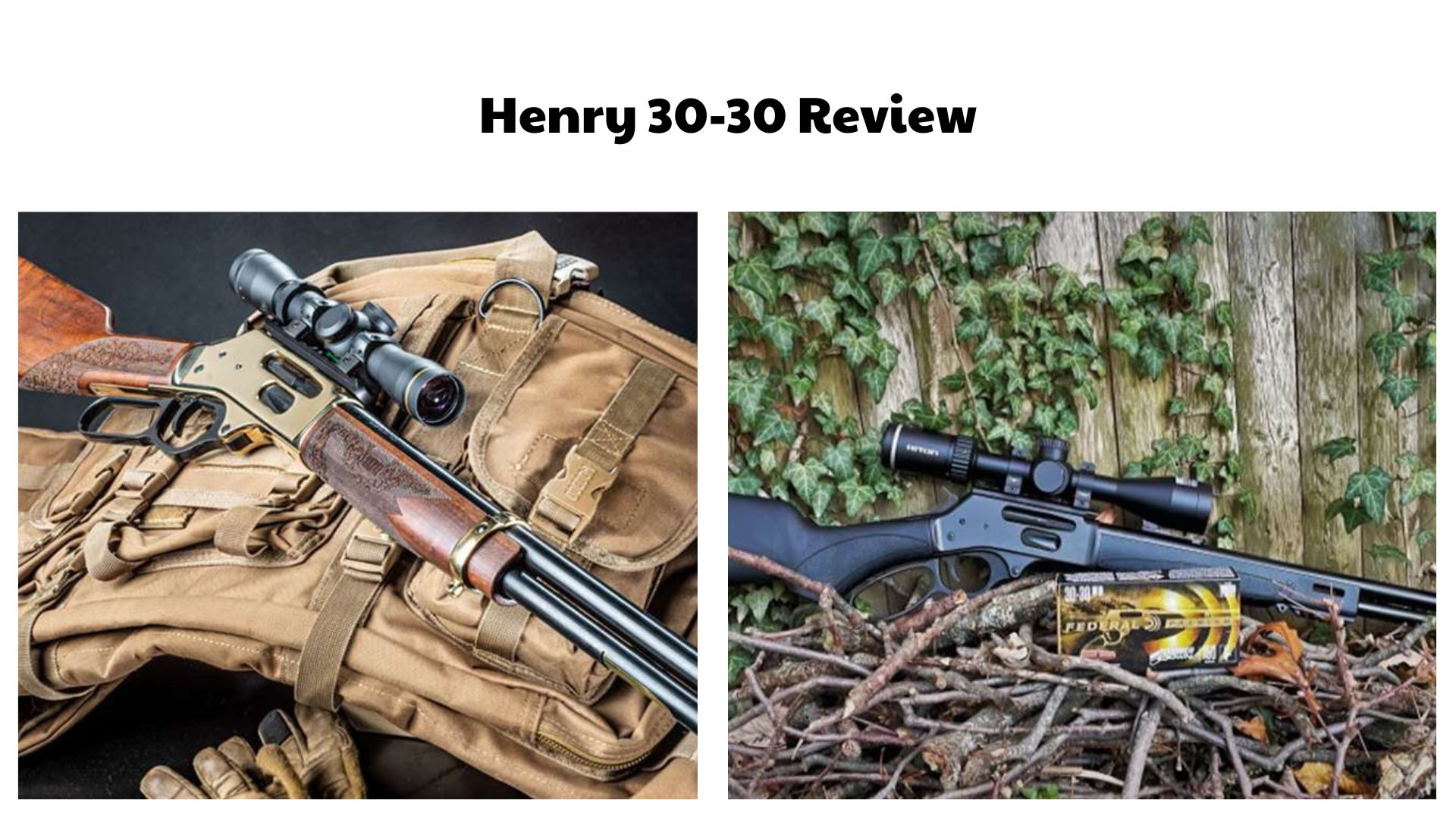

The Henry 30-30 lever-action rifle represents one of the most iconic interpretations of a classic American hunting firearm. Built on a long-standing tradition of lever-action design, it has earned a strong reputation among deer hunters and outdoor enthusiasts for its reliability, craftsmanship, and timeless aesthetic.
What makes the Henry 30-30 particularly appealing is its blend of heritage and modern refinement. While it preserves the traditional lever-action feel that defines American hunting culture, it also introduces practical updates such as side gate loading, improved fit and finish, and enhanced usability in the field.
What Is the Henry 30-30?
Overview of the .30-30 Winchester Cartridge
The .30-30 Winchester is one of the most historically significant hunting cartridges in North America. Known for its moderate recoil and effective performance at short to medium ranges, it has been a staple for deer hunting for over a century. The Henry 30-30 is chambered specifically for this cartridge, making it a practical choice for traditional hunting applications.
Henry Repeating Arms and Lever-Action Heritage
Henry Repeating Arms is widely recognized for producing high-quality lever-action rifles that emphasize durability and craftsmanship. The company continues the legacy of classic American firearms design while incorporating modern manufacturing techniques to improve consistency and reliability.
Side Gate vs Tube Loading System
One of the key modern updates in many Henry 30-30 models is the addition of a side loading gate. Traditionally, lever-action rifles were loaded through a tubular magazine at the front. The side gate allows shooters to reload cartridges more efficiently without fully unloading the magazine, improving practicality in hunting situations.
Role of the Henry 30-30 in Modern Hunting
Today, the Henry 30-30 remains a highly relevant hunting rifle, especially for deer hunting in wooded or brush-heavy environments. Its balance of power, manageable recoil, and quick handling makes it ideal for short to medium-range hunting scenarios.
Design and Build Quality
American Walnut Stock and Finish Options
Many Henry 30-30 rifles feature premium American walnut stocks that provide both durability and classic visual appeal. The wood finish enhances grip comfort while maintaining a traditional hunting rifle aesthetic that many shooters value.
Brass vs Steel Receiver Models
Henry offers variations with both brass and steel receivers. Brass models are often chosen for their classic appearance and collector appeal, while steel receiver versions tend to be more practical and lightweight for field use.
Barrel Construction and Sight Setup
The barrel on the Henry 30-30 is designed for consistent accuracy at typical hunting distances. It usually comes equipped with iron sights, including a front bead sight and adjustable rear sight, allowing reliable target acquisition without optics.
Fit, Finish, and Overall Craftsmanship
Henry rifles are known for their smooth fit and high-quality finish. The 30-30 model continues this tradition with tight tolerances, clean machining, and a polished appearance that reflects its premium craftsmanship in the lever-action category.
Key Specifications of Henry 30-30
Caliber and Chambering (.30-30 Winchester)
The rifle is chambered in .30-30 Winchester, a proven hunting cartridge known for its effectiveness on medium-sized game such as whitetail deer within reasonable distances.
Barrel Length and Twist Rate
Most Henry 30-30 rifles feature barrel lengths typically around 20 inches, optimized for a balance between velocity, accuracy, and maneuverability in wooded terrain.
Weight and Overall Length
The rifle maintains a moderate weight that supports stability while remaining light enough for extended field carry. Its overall length is designed for easy handling in tight hunting environments.
Magazine Capacity and Loading System
The Henry 30-30 uses a tubular magazine system that typically holds multiple rounds depending on cartridge length. Combined with side gate loading on newer models, it provides flexible and practical reloading options.
Sight System and Optics Compatibility
While iron sights are standard, many Henry 30-30 rifles are also compatible with scope mounts, allowing users to upgrade for improved accuracy at extended hunting ranges.
Action and Performance
Lever-Action Mechanism Explained
The lever-action system cycles rounds by manually operating a lever beneath the receiver. This action ejects spent cartridges and chambers fresh rounds efficiently, enabling relatively fast follow-up shots compared to bolt-action rifles.
Smoothness of Cycling and Trigger Feel
Henry lever actions are known for their smooth cycling motion. The trigger pull is generally crisp and predictable, contributing to consistent shooting performance in the field.
Reliability in Field Conditions
The Henry 30-30 is widely regarded as highly reliable under hunting conditions, performing well in rain, cold weather, and rugged terrain with proper maintenance.
Performance with Different Ammunition Types
The rifle performs best with soft-point and hunting-specific .30-30 ammunition, which are designed for controlled expansion and effective terminal performance on game animals.
Accuracy and Effective Range
Typical Accuracy at 50–150 Yards
The Henry 30-30 delivers consistent accuracy within 50 to 150 yards, which aligns well with typical deer hunting distances in forested environments.
Hunting Range Limitations of .30-30 Winchester
While effective at short to medium range, the .30-30 cartridge is not designed for long-range shooting, and performance drops significantly beyond 150–200 yards.
Iron Sights vs Optics Performance
Iron sights are sufficient for traditional hunting ranges, but adding a scope can improve precision, especially in low-light conditions or at extended distances.
Real-World Deer Hunting Effectiveness
In real-world hunting scenarios, the Henry 30-30 is highly effective for deer hunting, offering sufficient stopping power, manageable recoil, and fast target reacquisition in dense terrain.
Recoil and Shooting Experience
Felt Recoil Compared to Other Hunting Rifles
The Henry 30-30 produces a moderate and manageable level of recoil that is generally considered comfortable for most shooters. Compared to modern bolt-action rifles chambered in .308 Winchester, the recoil is noticeably lighter. However, it is slightly more pronounced than smaller calibers like .223 Remington. This balance makes it well-suited for hunters who want sufficient stopping power without excessive shoulder fatigue.
Comfort During Extended Shooting Sessions
During extended range sessions, the Henry 30-30 remains relatively comfortable due to its smooth stock design and balanced weight distribution. The recoil impulse is straight-back rather than sharp, allowing shooters to maintain control and reduce fatigue over time. This makes it a practical choice for both practice shooting and hunting preparation.
Suitability for Beginners and Experienced Shooters
The rifle is suitable for both beginners and experienced shooters. Beginners benefit from its mild recoil and intuitive lever-action operation, while experienced hunters appreciate its reliability and fast follow-up shot capability. The learning curve is minimal, making it one of the more accessible traditional hunting rifles.
Magazine System and Reloading
Side Gate Loading Convenience
The side gate loading system allows shooters to reload individual cartridges without unloading the tubular magazine. This feature significantly improves practicality in the field, especially during hunting situations where partial reloads are often necessary.
Traditional Tube Loading Method
In addition to the side gate, the rifle still supports traditional front tube loading. This method involves inserting cartridges directly into the magazine tube from the front, offering a simple and reliable loading process that has been used for generations.
Speed and Practical Field Reloading
While not as fast as detachable magazine systems, the Henry 30-30 provides efficient field reloading for a lever-action rifle. The combination of side gate and tube loading gives shooters flexibility depending on the situation, whether at the range or in hunting environments.
Safety Considerations for Lever-Action Loading
Safety is an important consideration when loading tubular magazines. Many modern .30-30 cartridges use flat or soft polymer tips to prevent accidental primer contact. Users must also ensure the action is open and the firearm is pointed in a safe direction during loading and unloading.
Ergonomics and Handling
Stock Design and Length of Pull
The Henry 30-30 features a well-designed stock with a traditional length of pull that fits most shooters comfortably. The American walnut stock enhances grip stability while maintaining a classic hunting rifle aesthetic.
Lever Operation and Grip Comfort
The lever mechanism is smooth and ergonomically shaped, allowing for quick cycling without excessive hand strain. The loop design is comfortable for most hand sizes, enabling efficient operation even when wearing gloves.
Balance and Weight Distribution
The rifle is well-balanced, with weight distributed evenly along the barrel and receiver. This balance improves stability when aiming and reduces fatigue during long periods of carrying in the field.
Field Carry and Maneuverability
Thanks to its compact lever-action design, the Henry 30-30 is highly maneuverable in dense woods and brush-heavy environments. It is easy to carry over long distances and quick to bring into shooting position when needed.
Ammunition Compatibility and Ballistics
Recommended Bullet Types (Soft Point, FTX, Hollow Point)
The Henry 30-30 performs best with hunting-specific ammunition such as soft point and Hornady FTX rounds. These bullets are designed for controlled expansion, ensuring effective energy transfer and ethical harvesting of game animals.
Deer Hunting Loads vs Target Loads
Deer hunting loads prioritize expansion and penetration, while target loads focus on consistency and cost efficiency. For field use, hunters typically prefer premium hunting loads that offer better terminal performance.
Energy Retention and Drop Characteristics
The .30-30 Winchester cartridge maintains effective energy at short to medium ranges but experiences noticeable bullet drop beyond 150–200 yards. This ballistic profile makes it ideal for forest and brush hunting rather than long-range shooting.
Steel Case vs Brass Case Considerations
Brass-cased ammunition is generally preferred for hunting due to better consistency and reliability. Steel-cased rounds are less common in .30-30 and are typically used for practice rather than hunting applications.
Reliability and Durability
Long-Term Build Quality and Materials
The Henry 30-30 is built with durable materials including steel receivers and high-quality walnut stocks. This construction ensures long-term reliability when properly maintained.
Performance in Harsh Weather Conditions
The rifle performs well in a variety of environmental conditions, including rain, humidity, and cold temperatures. Proper lubrication and maintenance help ensure consistent operation in harsh weather.
Maintenance and Cleaning Requirements
Regular cleaning is recommended to maintain smooth lever operation and prevent residue buildup. The simple mechanical design makes the rifle relatively easy to maintain compared to more complex firearm systems.
Common User Feedback on Reliability
User feedback consistently highlights the Henry 30-30 as a highly reliable firearm with few mechanical issues. Most reported problems are related to improper maintenance rather than design flaws.
Henry 30-30 vs Competing Lever Actions
Henry vs Winchester 94
The Winchester 94 is a legendary lever-action rifle with deep historical roots, but modern Henry rifles often surpass it in terms of manufacturing consistency, smoothness, and out-of-the-box fit and finish.
Henry vs Marlin 336
The Marlin 336 is known for its strong action and scope-friendly design. Henry competes closely by offering smoother cycling and superior aesthetic craftsmanship, while Marlin often appeals to users prioritizing rugged utility.
Henry vs Rossi Lever Rifles
Rossi lever rifles are typically more budget-oriented, making them more affordable but often less refined in terms of fit and finish. Henry generally offers higher build quality and smoother operation.
Value, Quality, and Longevity Comparison
Overall, Henry rifles are positioned in a mid-to-premium category, offering strong long-term value through durability, craftsmanship, and reliable performance. While competitors may offer lower prices or niche advantages, Henry maintains a strong balance of quality and heritage appeal.
Pros and Cons of Henry 30-30
Advantages of the Platform
The Henry 30-30 stands out for its exceptional build quality, smooth lever-action cycling, and classic American craftsmanship. One of its biggest advantages is its reliability in real-world hunting conditions, where simplicity and mechanical dependability matter most. The rifle also offers excellent handling in dense terrain, making it ideal for quick target acquisition.
Another key advantage is its balanced recoil and user-friendly design. The .30-30 Winchester cartridge provides enough power for deer hunting while remaining manageable for most shooters. Combined with Henry’s smooth action and strong fit and finish, it delivers a premium lever-gun experience.
Drawbacks and Limitations
Despite its strengths, the Henry 30-30 does have limitations. Its effective range is relatively short compared to modern bolt-action rifles, typically maxing out around 150–200 yards for ethical hunting. It also lacks modern tactical features such as detachable magazines or advanced optics mounting systems in some configurations.
Additionally, tubular magazine capacity and slower reload speeds compared to modern rifles may be a disadvantage in certain competitive or tactical scenarios.
Who It Is Best Suited For
The Henry 30-30 is best suited for traditional hunters, especially those who hunt deer in wooded or brush-heavy environments. It is also ideal for shooters who value simplicity, heritage design, and reliable mechanical operation over long-range precision or tactical features.
Customization and Accessories
Scope Mounting Options
While traditionally used with iron sights, many Henry 30-30 rifles can be fitted with scope mounts. These allow users to install low- to mid-power optics, improving accuracy in low-light conditions or at extended hunting distances.
Sling Attachments and Swivel Studs
Sling swivel studs are commonly used on the Henry 30-30 to improve carry comfort during long hunts. A properly fitted sling helps distribute weight and allows for hands-free movement in the field.
Lever Wraps, Stock Accessories, and Upgrades
Many shooters add lever wraps to improve grip comfort during cycling, especially in cold or wet conditions. Stock accessories such as recoil pads and cheek risers can also improve shooting comfort and consistency.
Aftermarket Support and Compatibility
Aftermarket support for the Henry 30-30 is moderate, focusing mainly on optics mounts, slings, and basic ergonomic upgrades. While not as extensive as AR platforms, it is sufficient for most hunting-oriented customization needs.
Hunting Applications
Whitetail Deer Hunting Performance
The Henry 30-30 is widely regarded as an excellent whitetail deer hunting rifle. Its combination of moderate recoil, effective stopping power, and quick handling makes it especially effective in wooded environments where shots are typically taken at shorter ranges.
Short to Mid-Range Ethical Limits
Ethically, the .30-30 Winchester cartridge is best suited for short to mid-range hunting, generally within 150 yards. Beyond this range, bullet drop and energy loss make precise shot placement more difficult.
Brush Hunting and Dense Terrain Use
One of the strongest applications of the Henry 30-30 is brush hunting. Its lever-action design, compact handling, and fast follow-up shots make it ideal for dense forests where visibility and shooting lanes are limited.
Suitability for Other Game Animals
In addition to deer, the Henry 30-30 can be used for similar-sized game such as hogs and black bear at appropriate ranges. Its effectiveness depends on shot placement and proper ammunition selection.
Who Should Buy the Henry 30-30?
Traditional Hunters and Lever-Action Enthusiasts
This rifle is an excellent choice for hunters who appreciate traditional firearm designs and want a dependable lever-action platform. It delivers both nostalgia and practical field performance.
Beginner Rifle Owners
Beginners benefit from its simple operation, mild recoil, and intuitive handling. The Henry 30-30 provides an easy learning curve while still being a capable hunting rifle.
Collectors and Heritage Firearm Fans
Collectors and enthusiasts of American firearm history will appreciate the Henry 30-30 for its classic design and connection to traditional lever-action heritage.
Not Ideal for Long-Range Shooters
Shooters focused on long-range precision or tactical applications may find the Henry 30-30 limiting due to its ballistic range and lack of modern long-range features.
Final Verdict on Henry 30-30 Review
The Henry 30-30 stands as a refined and modern interpretation of a legendary American lever-action rifle. It successfully combines traditional craftsmanship with practical upgrades like improved fit and finish and modern loading options, making it highly relevant for today’s hunters.
While it is not designed for long-range shooting or tactical applications, its strengths lie in reliability, handling, and proven effectiveness in real hunting environments. The rifle delivers consistent performance where it matters most—short to mid-range hunting in dense terrain.
Overall, the Henry 30-30 strikes an excellent balance between tradition and functionality. It remains one of the most respected lever-action rifles on the market, offering lasting value for hunters, collectors, and enthusiasts who appreciate classic American firearm design.
Henry 30-30 Review FAQ
1. What is the Henry 30-30?
The Henry 30-30 is a lever-action hunting rifle chambered in .30-30 Winchester. It is designed for short to medium-range hunting, especially deer hunting in wooded and brush-heavy environments. Known for its smooth lever action and classic American design, it blends traditional aesthetics with modern manufacturing quality.
2. Is the Henry 30-30 good for deer hunting?
Yes, the Henry 30-30 is widely considered one of the best deer hunting rifles for short to mid-range shots. The .30-30 cartridge delivers sufficient energy for ethical deer harvests within typical hunting distances, usually under 150 yards. Its quick handling also makes it ideal in dense forests where fast target acquisition is important.
3. What caliber does the Henry 30-30 use?
The rifle uses the .30-30 Winchester cartridge, one of the oldest and most proven hunting rounds in North America. It is known for moderate recoil, reliable terminal performance, and effectiveness on medium-sized game like whitetail deer and wild hogs at reasonable distances.
4. How far can a Henry 30-30 shoot accurately?
The Henry 30-30 is typically accurate and effective between 50 and 150 yards. While experienced shooters may extend this slightly, the cartridge’s ballistic drop and energy loss make it less suitable for consistent accuracy beyond 200 yards in real hunting conditions.
5. Is the Henry 30-30 a good beginner rifle?
Yes, it is considered beginner-friendly due to its simple manual operation, manageable recoil, and straightforward iron sight system. However, beginners should practice safe lever-action handling and become familiar with tubular magazine safety considerations.
6. How much recoil does the Henry 30-30 have?
The recoil is moderate and generally comfortable for most shooters. It is stronger than a .223 rifle but significantly lighter than larger calibers like .308 Winchester. The recoil impulse is smooth and straight-back, making it easy to control during follow-up shots.
7. Is the Henry 30-30 accurate?
The Henry 30-30 is reasonably accurate for a hunting lever-action rifle. Most rifles can achieve consistent grouping within 2–3 MOA at typical hunting distances, which is more than adequate for deer hunting in real-world field conditions.
8. What is the effective range of .30-30 Winchester?
The .30-30 Winchester is most effective within 150 yards. Beyond this range, bullet drop becomes more significant and energy decreases rapidly. It is designed for brush and woodland hunting rather than long-range shooting.
9. Is Henry better than Winchester 30-30 rifles?
Modern Henry rifles often offer smoother action and better fit and finish compared to older Winchester models. However, Winchester rifles have a strong historical legacy. In terms of modern production quality, Henry is often considered more consistent today.
10. Is Henry 30-30 better than Marlin 336?
Both are excellent lever-action rifles. The Marlin 336 is known for its robust design and scope-friendly receiver, while the Henry 30-30 is praised for smoother cycling and premium craftsmanship. The choice depends on user preference between tradition and refinement.
11. What type of ammo is best for Henry 30-30?
Soft point and Hornady FTX ammunition are commonly recommended for hunting. These bullets expand reliably upon impact, delivering effective terminal performance for deer and similar-sized game animals.
12. Can you use steel case ammo in .30-30?
Steel-case ammo is uncommon in .30-30 Winchester and generally not recommended for hunting. Brass-cased ammunition is preferred due to better consistency, reliability, and terminal performance.
13. Does Henry 30-30 have a scope mount?
Yes, many Henry 30-30 models support scope mounting through drilled and tapped receivers or aftermarket mounts. This allows users to add optics for improved accuracy in low-light or extended-range hunting situations.
14. Is iron sight shooting enough for hunting?
Iron sights are sufficient for most hunting scenarios within 100–150 yards. Many experienced hunters prefer them for quick target acquisition in dense woods, though scopes can improve precision.
15. How many rounds does Henry 30-30 hold?
Most Henry 30-30 rifles hold multiple rounds in a tubular magazine, typically around 6–7 rounds depending on cartridge type and model configuration.
16. What is a side gate loading system?
A side gate allows shooters to load cartridges directly into the magazine tube without removing existing rounds. This improves reload convenience in the field compared to traditional front tube loading systems.
17. Is the Henry 30-30 reliable?
Yes, it is widely regarded as very reliable. Its simple mechanical design and high-quality manufacturing reduce the likelihood of malfunctions when properly maintained.
18. Is lever-action better than bolt-action for hunting?
Lever-action rifles like the Henry 30-30 are faster for follow-up shots and better suited for brush hunting. Bolt-action rifles generally offer better long-range accuracy. The choice depends on hunting environment and distance.
19. What animals can you hunt with a Henry 30-30?
It is commonly used for deer, wild hogs, and black bear at appropriate distances. It is best suited for medium-sized game within short to medium ranges.
20. Is Henry 30-30 good for brush hunting?
Yes, it is one of the best rifles for brush hunting due to its compact design, fast handling, and effective short-range ballistics.
21. How heavy is the Henry 30-30?
It has a moderate weight that balances stability and portability. It is light enough for extended field carry but heavy enough to reduce recoil and improve shooting stability.
22. Does Henry 30-30 kick hard?
No, the recoil is manageable. It is considered comfortable for most adult shooters and even younger hunters under supervision.
23. Is Henry 30-30 good for long-range shooting?
No, it is not designed for long-range shooting. Its ballistic profile limits effective use beyond 150–200 yards.
24. Can you hunt at night with Henry 30-30?
Hunting at night depends on local laws. However, optics or fiber optic sights can improve low-light performance if hunting during legal twilight hours.
25. Is Henry 30-30 good for survival use?
Yes, it can be a good survival rifle due to its reliability, simple mechanics, and ability to harvest medium-sized game efficiently.
26. How often should you clean Henry 30-30?
Regular cleaning after each hunting trip or extended shooting session is recommended to maintain smooth cycling and prevent residue buildup.
27. Is lever-action safe to carry loaded?
Yes, but proper safety procedures must be followed. Many modern .30-30 rounds are designed to be safe in tubular magazines.
28. Does Henry 30-30 jam often?
No, jams are rare when using quality ammunition and proper maintenance. Most issues are related to user handling or poor ammo quality.
29. Can beginners use lever-action rifles safely?
Yes, with proper training. Beginners should learn safe loading, unloading, and lever operation before field use.
30. What is the best shooting range for the Henry 30-30?
The Henry 30-30 performs best within 50 to 150 yards. This range aligns with the ballistic characteristics of the .30-30 Winchester cartridge, where it maintains sufficient energy and manageable bullet drop for ethical hunting shots, especially on deer-sized game.
31. Is the Henry 30-30 good for home defense?
While it can be used for home defense in emergencies, the Henry 30-30 is primarily designed for hunting. Its long barrel and tubular magazine make it less practical in tight indoor environments compared to shotguns or compact carbines.
32. Can you mount a scope on the Henry 30-30?
Yes, many Henry 30-30 rifles can be fitted with scope mounts or drilled-and-tapped receivers. Adding a low-power scope can significantly improve accuracy, especially at dusk or at longer hunting distances.
33. Is iron sight shooting enough for hunting?
Yes, iron sights are generally sufficient for typical hunting distances. Many hunters prefer them in dense woods because they allow faster target acquisition and fewer mechanical dependencies in the field.
34. What is the difference between brass and steel receiver models?
Brass receiver models are often chosen for their traditional appearance and collector appeal, while steel receiver models tend to be more practical for field use due to lighter weight and rugged durability.
35. Does weather affect the Henry 30-30?
The rifle performs reliably in most weather conditions, including rain, snow, and humidity. However, proper cleaning and lubrication are essential to prevent corrosion and maintain smooth lever operation.
36. Is the Henry 30-30 expensive?
It is generally considered a mid-range to premium lever-action rifle. The price reflects its craftsmanship, materials, and overall build quality compared to budget lever-action alternatives.
37. Is lever-action faster than bolt-action?
Yes, lever-action rifles like the Henry 30-30 typically allow faster follow-up shots than bolt-action rifles because the shooter does not need to remove their hand from the trigger area to cycle the action.
38. How fast can you reload a Henry 30-30?
Reload speed is moderate. While not as fast as detachable magazine systems, the side gate loading feature allows for relatively efficient topping off of ammunition in the field without fully unloading the rifle.
39. Is the Henry 30-30 good for youth hunters?
Yes, it is a good option for youth hunters due to its manageable recoil, simple operation, and overall ease of handling. Proper supervision and training are still essential for safe use.
40. Does the Henry 30-30 require special ammunition?
No special ammunition is required. Standard .30-30 Winchester rounds are used, although hunting-specific soft point or polymer-tipped bullets are recommended for optimal performance.
41. What makes Henry rifles different from others?
Henry rifles are known for their smooth lever action, high-quality materials, and strong attention to craftsmanship. Many users appreciate their fit and finish compared to other lever-action brands.
42. Is the Henry 30-30 better than modern rifles?
It depends on the use case. It is not designed to compete with modern long-range or tactical rifles, but it excels in traditional hunting environments where simplicity and reliability are more important.
43. Can it be used in thick woods?
Yes, it is one of the best rifles for dense woodland hunting. Its compact lever-action design makes it easy to maneuver through tight spaces and quickly acquire targets.
44. How durable is the Henry 30-30 long term?
With proper maintenance, the Henry 30-30 is extremely durable and capable of lasting for decades. Its simple mechanical design reduces the likelihood of major failures.
45. Does the lever wear out over time?
Under normal use, lever wear is minimal. Regular cleaning and lubrication help maintain smooth operation and prevent unnecessary mechanical wear.
46. Is the Henry 30-30 worth buying today?
Yes, it remains a strong choice for hunters who value traditional design, reliability, and effective performance at short to medium ranges.
47. Is it easy to maintain?
Yes, it is relatively easy to maintain due to its simple mechanical system. Routine cleaning after use is typically sufficient to keep it in good condition.
48. Can it be used for sport shooting?
Yes, it can be used for recreational shooting and lever-action competitions, although it is primarily designed as a hunting rifle.
49. What is its biggest strength?
Its biggest strength is its balance of reliability, simplicity, and effective performance in real-world hunting conditions.
50. What is its biggest weakness?
Its primary limitation is its relatively short effective range compared to modern bolt-action rifles and AR-platform firearms.
51. Is it a good value for money?
Yes, it offers strong value considering its durability, craftsmanship, and long-term reliability in hunting applications.
52. Who should avoid the Henry 30-30?
It may not be suitable for shooters who require long-range precision, tactical features, or high-capacity magazine systems.
53. Does it hold resale value?
Yes, well-maintained Henry rifles generally retain good resale value due to their reputation and demand in the lever-action market.
54. Is it loud compared to other rifles?
It produces standard rifle report levels for its caliber and is not significantly louder than comparable hunting rifles.
55. What is the final takeaway for the Henry 30-30?
The Henry 30-30 remains a timeless lever-action rifle that combines tradition, reliability, and practical hunting performance. While it lacks modern tactical features and long-range capability, it excels in real-world hunting environments where simplicity and effectiveness matter most.
Read more: