
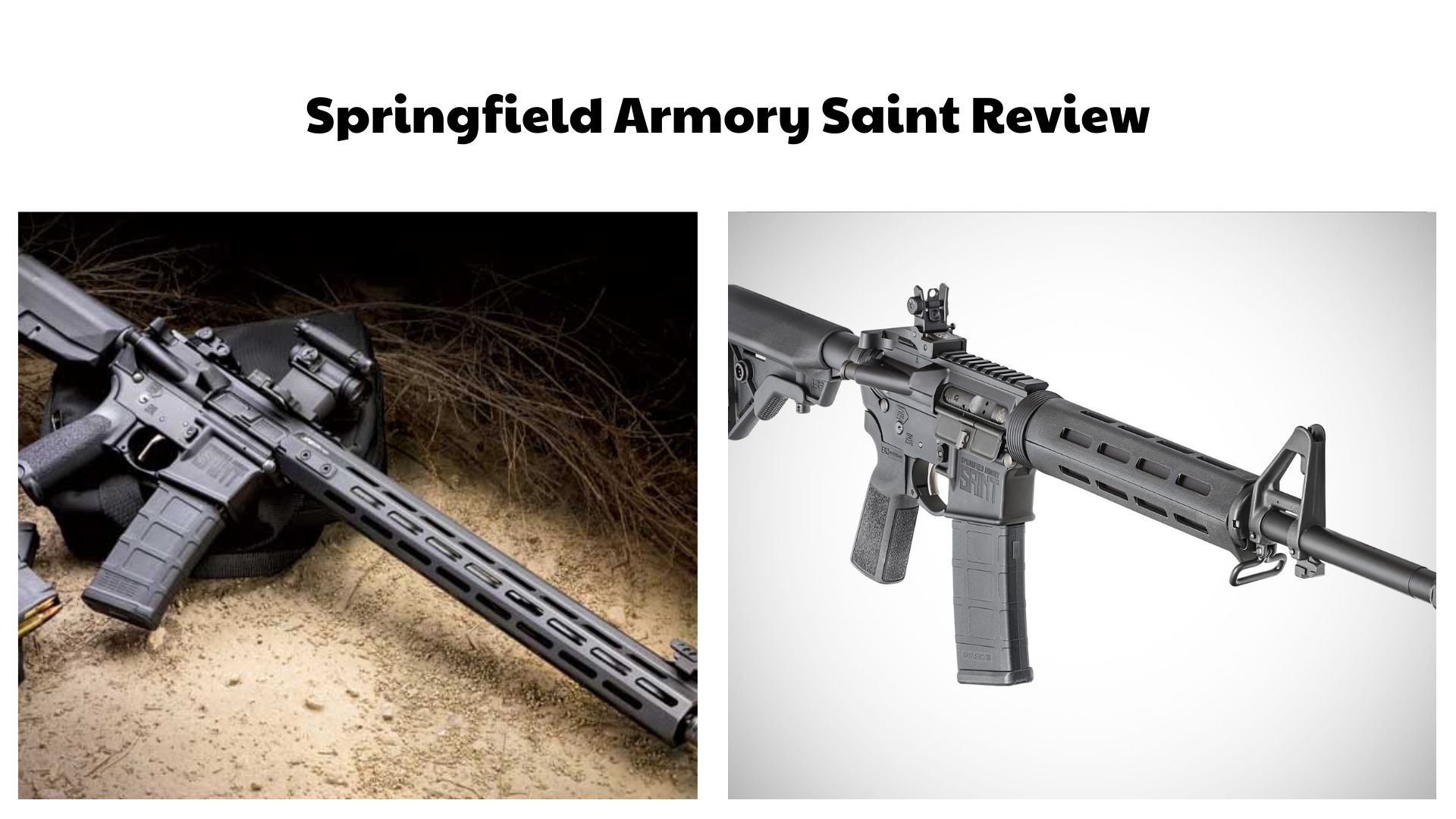

The Springfield Armory Saint series from Springfield Armory is widely regarded as a high-value AR-15 platform that sits comfortably in the mid-tier rifle market, where manufacturers must carefully balance cost, reliability, and out-of-the-box performance. Unlike entry-level rifles that often require immediate upgrades or premium rifles that significantly increase cost, the Saint is designed to deliver a refined and complete shooting experience straight from the factory.
Its design philosophy focuses on providing a dependable, duty-capable AR-15 that remains accessible to first-time buyers while still offering enough performance and features to satisfy experienced shooters. Over time, it has become one of the most popular choices in its category in the United States due to its consistent build quality, practical feature set, and strong overall value proposition.
What Is the Springfield Armory Saint?
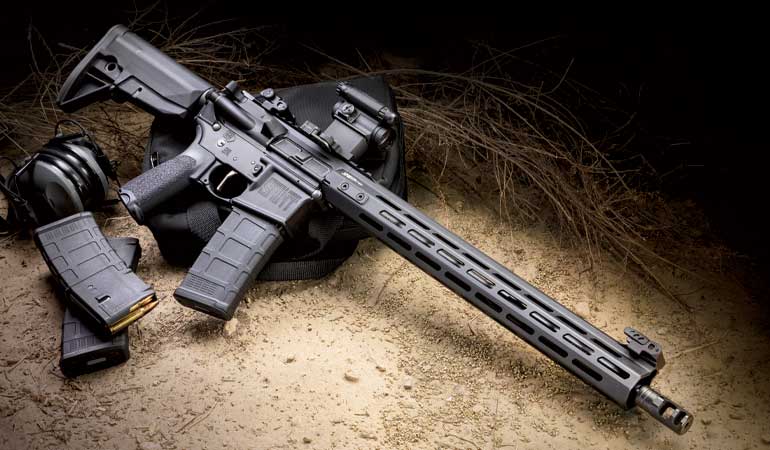
Overview of the Saint AR-15 Platform
The Springfield Armory Saint is a modern AR-15 platform that maintains full compatibility with standard AR components while incorporating factory upgrades intended to improve usability, accuracy, and reliability. It is built as a ready-to-use rifle system that reduces the need for immediate aftermarket modifications, making it especially appealing to new AR-15 owners.
Springfield Armory’s Entry Into the AR-15 Market
When Springfield Armory entered the AR-15 market, the goal was to deliver a rifle that addressed common weaknesses found in budget rifles, such as inconsistent triggers, basic furniture, and variable quality control. Instead of reinventing the platform, Springfield focused on refining it by integrating upgraded components into a factory-assembled system that feels more complete and polished.
Purpose and Target Users of the Saint Series
The Saint series is designed for a wide range of users, including first-time AR-15 buyers, recreational shooters, and home defense users who want a reliable firearm that performs well without requiring extensive customization. It also appeals to experienced shooters looking for a dependable secondary rifle or training platform that offers strong performance relative to its price point.
Springfield Saint Key Specifications
Caliber Options (.223/5.56 NATO and 9mm variants)
The Saint is primarily chambered in .223 Remington and 5.56 NATO, providing excellent versatility in terms of availability, recoil management, and ballistic performance. In addition to rifle-caliber models, Springfield also produces 9mm variants that are optimized for close-quarters use, reduced recoil, and lower-cost training sessions.
Barrel Length Configurations (16”, 10.3”, PDW variants)
Barrel configurations vary across the lineup, including standard 16-inch barrels for general-purpose use, shorter 10.3 to 10.5-inch barrels for compact tactical applications, and PDW-style configurations in pistol-caliber models designed for maximum maneuverability in tight spaces.
Gas System and Operating Mechanism
Most Saint rifles utilize a direct impingement gas system, which is consistent with traditional AR-15 design. This system helps maintain a lighter overall rifle weight while ensuring reliable cycling when properly maintained and paired with quality ammunition.
Muzzle Device and Barrel Profile
Factory muzzle devices typically include flash hiders or compensators that help reduce muzzle rise and improve control during rapid fire. Barrel profiles vary by model, with standard versions focusing on balance and durability, while upgraded variants may feature lighter or performance-oriented profiles for enhanced handling.
Weight and Overall Dimensions
Overall weight and dimensions remain within standard AR-15 expectations, allowing for easy handling, accessory compatibility, and comfortable use during extended shooting sessions without excessive fatigue.
Saint Model Variants Breakdown
Springfield Saint Standard Model Review
The standard Saint model serves as the entry point into the lineup and provides a solid foundation with upgraded factory components compared to many budget AR-15 rifles. It is designed for users who want a reliable, ready-to-use rifle without stepping into higher price tiers.
Springfield Saint Victor Upgrade Model
The Saint Victor represents a meaningful upgrade over the base model, often including free-float handguards, improved barrels, and enhanced internal components that contribute to better accuracy potential and increased durability under sustained use.
Springfield Saint Edge Performance Model
The Saint Edge is positioned as a performance-focused variant, typically emphasizing reduced weight, improved handling speed, and enhanced components designed for users who prioritize responsiveness and precision in dynamic shooting environments.
Springfield Saint 9mm PDW (Saint Victor 9mm)
The 9mm PDW variant offers a compact, low-recoil platform designed for close-range use and training efficiency. It typically operates using a blowback system and utilizes pistol magazines, making it well-suited for home defense and short-range tactical applications.
Design and Build Quality
Forged Receiver Construction and Materials
The Saint series uses forged aluminum receivers, which provide a strong yet lightweight foundation that can withstand repeated use and high round counts while maintaining structural integrity over time.
Fit, Finish, and Manufacturing Quality
Fit and finish across the Saint lineup are generally consistent and well-executed, reflecting controlled manufacturing processes and attention to detail that help ensure smooth operation and reliable performance.
Furniture (Stock, Grip, Handguard)
Most models feature modern AR furniture such as adjustable stocks, ergonomic pistol grips, and M-LOK handguards, allowing for both improved comfort and extensive customization options depending on user preference.
Overall Durability and Field Readiness
The Saint is designed for long-term durability under regular training and defensive use, offering a level of reliability that places it firmly within the duty-capable AR-15 category when properly maintained.
Trigger Performance and Controls
Factory Trigger Feel and Break Characteristics
The factory trigger is generally smoother and more refined than many entry-level AR-15 triggers, offering a clean break and predictable reset that supports improved shooting accuracy and control.
Trigger Improvements in Higher-End Saint Models
Higher-end variants such as the Victor and Edge feature upgraded trigger systems with lighter pull weights and improved reset speed, which enhance performance during rapid and precision shooting scenarios.
Safety Selector and Control Layout
The Saint maintains a standard AR-15 control layout, ensuring intuitive operation for users familiar with the platform while also providing optional ambidextrous features on select models.
Charging Handle and Ergonomics
The charging handle is designed for smooth manipulation, and the overall ergonomic layout of the rifle supports efficient handling during reloads, malfunction clearing, and general operation under field conditions.
Accuracy and Shooting Performance
100-Yard Accuracy Expectations (MOA Performance)
In typical use, the Saint is capable of producing approximately 1.5 to 3 MOA accuracy at 100 yards, depending on ammunition quality, barrel length, and shooter skill, making it suitable for both defensive and recreational shooting.
Barrel Quality and Rifling Performance
The barrels used in the Saint series are engineered to provide consistent rifling and stable projectile flight, which contributes significantly to repeatable accuracy and predictable ballistic performance.
Ammunition Sensitivity and Grouping Consistency
While the Saint can function with a wide range of ammunition types, it generally performs best with high-quality brass-cased rounds, which improve consistency and tighten groupings compared to lower-cost alternatives.
Real-World Range Performance
On the range, the Saint demonstrates stable recoil control, predictable handling, and consistent shot placement, making it a practical and user-friendly platform for both beginners and experienced shooters engaged in regular training.
Reliability and Function Testing
Performance with Brass and Steel-Cased Ammo
In real-world testing and user reports, the Springfield Saint from Springfield Armory demonstrates generally strong reliability with both brass-cased and steel-cased 5.56 NATO ammunition, although performance is typically more consistent with higher-quality brass loads that provide cleaner burning and more uniform pressure curves. Steel-cased ammunition is often used by shooters for cost efficiency, and while the Saint is capable of cycling it without major issues, long-term use may result in increased fouling and slightly higher maintenance requirements compared to premium ammunition.
Long-Term Reliability and Round Count Durability
Over extended round counts, the Saint platform has shown itself to be a durable and dependable AR-15 system that can withstand regular training schedules, high-volume range sessions, and defensive readiness use without significant degradation in performance when properly maintained. The forged receiver construction, quality barrel assembly, and factory quality control contribute to a service life that aligns well with other reputable mid-tier AR-15 platforms, making it suitable for users who expect consistent function over thousands of rounds.
Common Issues Reported by Users
While the Saint is generally well-regarded, some users report minor issues such as break-in sensitivity during the first few hundred rounds, occasional preference for specific ammunition types, or variability in trigger feel depending on model generation. These issues are typically not systemic failures but rather typical AR-platform behavior that can be influenced by lubrication practices, magazine quality, and ammunition selection.
Saint Victor Reliability Improvements
The Saint Victor variant introduces several refinements that enhance overall reliability, including upgraded internal components, improved barrel treatments, and enhanced handguard designs that contribute to better heat management and structural rigidity. These improvements make the Victor line more resilient under sustained fire and better suited for users who require increased durability and consistent cycling performance under demanding conditions.
Recoil and Shooting Experience
Felt Recoil in 5.56 NATO Configurations
In standard 5.56 NATO configurations, the Saint exhibits very manageable recoil that is typical of modern AR-15 platforms, with a soft and linear impulse that allows for quick target reacquisition and minimal muzzle rise, especially when paired with the factory muzzle device designed to reduce felt recoil and improve stability during rapid fire sequences.
Recoil in Saint 9mm PDW Variants
The 9mm PDW variants of the Saint deliver an even softer recoil impulse due to the nature of the 9mm cartridge and blowback operating system, resulting in extremely flat shooting characteristics that make it especially suitable for close-quarters engagements, training drills, and shooters who prioritize minimal recoil and fast follow-up shots.
Gas System Influence on Shootability
The direct impingement gas system used in most Saint rifles plays a significant role in maintaining a lightweight platform while delivering predictable recoil behavior, although it can introduce slightly more felt gas impulse compared to piston-driven systems. When properly tuned, however, it contributes to a balanced and controllable shooting experience.
Follow-Up Shot Control and Stability
Across both standard and upgraded models, the Saint provides excellent stability for follow-up shots due to its balanced weight distribution, effective recoil mitigation, and ergonomic design, allowing shooters to maintain tight shot grouping during both slow precision fire and faster defensive shooting scenarios.
Ergonomics and Handling
AR-15 Standard Controls Familiarity
One of the strongest advantages of the Saint platform is its adherence to standard AR-15 controls, which ensures that users already familiar with the AR ecosystem can operate the rifle instinctively without requiring additional training or adaptation, thereby reducing the learning curve significantly.
Grip Angle and Stock Comfort
The grip angle and stock design on the Saint are engineered to provide a natural shooting posture that reduces wrist strain and enhances comfort during extended use, with adjustable stocks allowing users to fine-tune length of pull based on body type and shooting style.
Balance and Weight Distribution
The Saint is generally well-balanced, with weight distribution optimized to prevent front-heavy handling while still maintaining enough mass to stabilize recoil, resulting in a rifle that feels controlled and responsive whether shooting from standing, kneeling, or supported positions.
One-Point vs Two-Point Shooting Stability
When used with a sling, the Saint performs effectively with both one-point and two-point configurations, although most users prefer a two-point sling for improved stability during movement and transitional shooting, as it provides better control over rifle positioning and reduces fatigue during extended use.
Saint vs Other AR-15 Rifles
Springfield Saint vs Smith & Wesson M&P15
Compared to the Smith & Wesson M&P15, the Saint often comes with more upgraded factory features such as improved triggers and enhanced furniture, while both rifles remain similarly reliable in basic AR-15 function, making the Saint slightly more value-oriented in terms of out-of-the-box performance.
Springfield Saint vs Ruger AR-556
Against the Ruger AR-556, the Saint generally offers a more refined factory setup with better ergonomics and upgraded components, whereas the Ruger tends to focus more on affordability and simplicity, making the choice largely dependent on whether the user prioritizes upgrades or initial cost savings.
Springfield Saint vs PSA AR-15 Builds
When compared to PSA AR-15 builds from Palmetto State Armory, the Saint typically provides more consistent factory assembly and higher-quality control, while PSA offers greater customization potential and lower entry pricing, creating a trade-off between factory refinement and budget flexibility.
Value Comparison and Market Position
Overall, the Saint occupies a strong mid-tier position in the AR-15 market, offering a balance between affordability and performance that places it above basic entry-level rifles while remaining more accessible than premium duty-grade platforms.
Customization and Upgrade Potential
Compatibility with AR-15 Parts Ecosystem
The Saint maintains broad compatibility with the AR-15 parts ecosystem, allowing users to upgrade triggers, grips, stocks, and internal components with ease, making it highly adaptable for both casual users and advanced enthusiasts.
Optics Mounting and Rail Systems
Most Saint models feature modern rail systems that support a wide range of optics, including red dots, holographic sights, and magnified scopes, ensuring flexibility for different shooting applications and environments.
Trigger, Stock, and Handguard Upgrades
Users can significantly enhance performance through aftermarket upgrades such as improved triggers, adjustable stocks, and free-float handguards, which can further improve accuracy, ergonomics, and overall shooting comfort.
Suppressor Compatibility
The Saint is generally suppressor-ready depending on configuration, although users may need to adjust gas settings or buffer weights to optimize cycling performance when running suppressed setups.
Springfield Saint 9mm PDW Overview
Blowback vs DI System Differences
The 9mm PDW variant of the Saint typically uses a blowback operating system rather than the direct impingement system found in 5.56 models, resulting in a simpler mechanical design with fewer moving parts and different recoil characteristics.
Magazine Compatibility (Glock-Style Mags)
Many Saint 9mm configurations are designed to use Glock-style magazines, which are widely available and reliable, making ammunition feeding both convenient and cost-effective for training and defensive use.
Intended Use for Home Defense and CQB
The compact size, reduced recoil, and maneuverability of the 9mm PDW make it particularly well-suited for home defense and close-quarters scenarios where speed and control are more important than long-range accuracy.
Advantages and Limitations of 9mm Platform
While the 9mm platform offers low recoil, reduced cost, and high capacity, it sacrifices long-range performance and terminal ballistics compared to rifle-caliber versions, making it best suited for short-range applications.
Pros and Cons of Springfield Armory Saint
Advantages of the Platform
The Saint offers a strong combination of factory upgrades, reliable AR-15 function, and excellent ergonomics, making it a well-rounded rifle that performs reliably across a wide range of applications without requiring immediate modifications.
Disadvantages and Limitations
Some limitations include higher pricing compared to entry-level AR-15s and less customization freedom compared to fully built custom rifles, along with minor variability in performance depending on ammunition and configuration.
Best Use Cases for Different Models
Standard models are ideal for beginners and general use, Victor models suit performance-focused shooters, and 9mm PDW variants are best suited for home defense and close-range tactical applications.
Who Should Buy the Springfield Saint?
First-Time AR-15 Buyers
First-time buyers benefit from the Saint’s factory upgrades and ease of use, which reduce the need for immediate modifications and provide a reliable entry point into the AR-15 platform.
Budget-to-Midrange Enthusiasts
Shooters looking for a balance between affordability and performance will find the Saint appealing due to its strong out-of-the-box capability and reasonable price-to-feature ratio.
Tactical and Home Defense Users
The Saint’s reliability, ergonomics, and accessory compatibility make it suitable for home defense and tactical applications where dependable performance is essential.
Competitive and Training Shooters
While not a dedicated competition rifle, the Saint performs well in training environments and recreational competition settings where consistency and usability are key factors.
Final Verdict on Springfield Armory Saint Review
The Springfield Armory Saint stands as a well-balanced AR-15 platform that successfully bridges the gap between entry-level affordability and mid-tier performance, offering users a factory-refined rifle that performs reliably across a wide range of applications.
Its strengths lie in its upgraded components, strong ergonomics, and consistent reliability, while its limitations are mostly related to cost positioning and the inherent constraints of a semi-custom factory platform compared to fully bespoke builds.
Overall, the Saint remains one of the most compelling choices in the modern AR-15 market, delivering strong value, dependable performance, and broad usability that continues to make it a popular option among both new and experienced shooters.
Springfield Armory Saint Review – 50+ FAQ
1. What is the Springfield Armory Saint?
The Springfield Armory Saint is a modern AR-15 platform designed to provide a factory-upgraded rifle experience that balances reliability, ergonomics, and value, making it suitable for both new and experienced shooters.
2. Is the Springfield Saint a good AR-15?
Yes, the Saint is widely considered a strong AR-15 option in the mid-tier category because it offers upgraded components out of the box, consistent build quality, and dependable performance without requiring immediate modifications.
3. What caliber does the Springfield Saint use?
Most Springfield Saint rifles are chambered in .223 Remington and 5.56 NATO, which are among the most common and versatile AR-15 calibers, while select models are also available in 9mm for close-range and training purposes.
4. Is the Saint available in 5.56 NATO?
Yes, the standard configuration of the Saint is typically chambered in 5.56 NATO, allowing it to safely fire both 5.56 and .223 ammunition depending on availability and shooting preference.
5. Does Springfield make a 9mm Saint model?
Yes, Springfield offers 9mm variants of the Saint, often in PDW-style configurations, which are designed for compact handling, reduced recoil, and cost-effective training or home defense use.
6. What is the Saint Victor model?
The Saint Victor is an upgraded version of the base Saint rifle, featuring enhanced components such as free-float handguards, improved barrels, and better internal parts designed to increase performance and durability.
7. How is the Saint different from Saint Victor?
The main difference is that the Saint Victor includes upgraded performance components such as improved handguards and barrels, while the standard Saint focuses on affordability with essential factory features.
8. What is the Saint Edge?
The Saint Edge is a higher-performance variant that emphasizes lightweight construction, improved ergonomics, and upgraded components designed for shooters who want faster handling and improved precision.
9. Is the Saint good for beginners?
Yes, the Saint is considered very beginner-friendly because it is easy to operate, requires minimal upgrades out of the box, and follows standard AR-15 controls that are intuitive and widely taught.
10. How accurate is the Springfield Saint?
The Springfield Saint typically delivers around 1.5 to 3 MOA accuracy at 100 yards depending on ammunition quality and shooter skill, making it suitable for defensive and recreational shooting.
11. What is the MOA of the Saint rifle?
Most Saint rifles fall within a 1.5 to 3 MOA range at 100 yards, with higher-end models and better ammunition often achieving tighter groupings.
12. Is the Saint more accurate than budget AR-15s?
In many cases, yes, because the Saint includes upgraded barrels and improved quality control compared to many entry-level AR-15 rifles.
13. What barrel lengths are available?
The Saint is available in multiple barrel lengths including 16-inch standard rifles and shorter 10.3 to 10.5-inch configurations for compact or tactical use.
14. Does barrel length affect performance?
Yes, longer barrels generally provide higher velocity and better accuracy potential, while shorter barrels offer improved maneuverability at the cost of reduced ballistic performance.
15. What gas system does the Saint use?
Most Saint rifles use a direct impingement gas system, which is standard for AR-15 platforms and helps keep the rifle lightweight and mechanically simple.
16. Is the Saint piston or direct impingement?
The Saint is primarily a direct impingement system rather than a piston system, aligning with traditional AR-15 design principles.
17. How reliable is the Springfield Saint?
The Saint is generally very reliable when properly maintained, with strong performance across thousands of rounds in both recreational and defensive use cases.
18. Does the Saint run steel-case ammo?
Yes, the Saint can run steel-case ammunition, although brass-cased ammo typically provides smoother cycling and cleaner operation.
19. Is the Saint good for home defense?
Yes, it is commonly used for home defense due to its reliability, controllable recoil, and compatibility with optics and accessories.
20. Is the Saint good for hunting?
It can be used for certain types of hunting where .223/5.56 is legal and appropriate, particularly for small to medium game at moderate distances.
21. What makes the Saint different from other AR-15s?
The Saint differentiates itself by including factory upgrades such as improved triggers, better furniture, and enhanced barrels compared to many entry-level AR-15 rifles.
22. Is the Saint better than M&P15?
The Saint often offers more factory upgrades, while the M&P15 is known for simplicity and reliability, making the better choice dependent on user preference.
23. Is the Saint better than Ruger AR-556?
The Saint is generally considered more feature-rich out of the box, while the Ruger AR-556 focuses on affordability and basic functionality.
24. What is the trigger quality?
The trigger in the Saint is smoother and more refined than many budget AR-15 rifles, providing a cleaner break and more predictable reset.
25. Can the trigger be upgraded?
Yes, like most AR-15 rifles, the Saint supports aftermarket trigger upgrades for improved performance and customization.
26. What is the weight of the Saint?
The Saint typically falls within a standard AR-15 weight range, balancing durability and handling without being overly heavy.
27. Is the Saint lightweight?
It is moderately lightweight, with some variants such as the Edge being specifically designed for reduced weight and faster handling.
28. What furniture does it include?
Most models include adjustable stocks, ergonomic grips, and M-LOK handguards that support accessory mounting and improved handling.
29. Is the Saint ambidextrous?
Some variants include ambidextrous controls, while others follow standard AR-15 layouts depending on the model tier.
30. Does it support optics?
Yes, the Saint includes Picatinny rail systems or M-LOK handguards that support a wide range of optics including red dots and magnified scopes.
31. Is the Saint suppressor-ready?
Yes, many configurations can support suppressors, though tuning may be needed depending on gas system setup.
32. What is recoil like?
Recoil is very manageable in 5.56 configurations, making it suitable for rapid follow-up shots and beginner-friendly shooting.
33. Is recoil easy for beginners?
Yes, the recoil is mild enough that most beginners can handle it comfortably with proper stance and training.
34. How durable is the Saint?
It is built for long-term durability with forged receivers and quality components that withstand heavy use.
35. Is the Saint good for training?
Yes, it is widely used for training due to its reliability and standard AR-15 controls.
36. What magazines does it use?
It uses standard AR-15 magazines chambered for 5.56 NATO or .223 Remington.
37. Is it mil-spec?
It is generally based on mil-spec AR-15 design standards but includes upgraded factory components.
38. What upgrades does Victor include?
The Victor includes improved barrels, handguards, and internal components for enhanced performance and durability.
39. Is the Saint worth the price?
Yes, many users consider it a strong value because it includes upgrades that would otherwise require aftermarket spending.
40. Why is it a “value AR-15”?
It is considered a value AR-15 because it delivers upgraded features at a mid-tier price point.
41. What problems are common?
Minor issues may include break-in sensitivity or ammunition preferences, but serious problems are uncommon.
42. Does it overheat?
Like all AR-15 rifles, it can heat up under sustained fire, but it is designed to handle typical training use.
43. Is it good for tactical use?
Yes, it is suitable for tactical applications due to its reliability and modularity.
44. Difference from custom AR builds?
Custom AR builds offer more personalization, while the Saint provides a ready-to-use factory solution.
45. Is it better than PSA AR-15?
It often offers more consistent factory refinement, while PSA rifles may provide better budget customization.
46. How does it perform at 100 yards?
It performs consistently at 100 yards with good grouping depending on ammunition quality.
47. Can it handle high round counts?
Yes, it is designed to withstand extended training and defensive usage with proper maintenance.
48. Is it good for competition?
It can be used in entry-level competition settings but is not specifically a competition rifle.
49. What is the best model?
The Saint Victor is often considered the best balance of performance and value.
50. Does it need break-in?
Some users observe a short break-in period, but most rifles function well immediately out of the box.
51. Is it reliable out of the box?
Yes, it is generally reliable immediately after purchase when properly lubricated.
52. Who should avoid it?
Users seeking ultra-budget rifles or highly specialized competition platforms may prefer alternatives.
53. Is it good for range use?
Yes, it is excellent for range use due to its reliability and comfortable shooting characteristics.
54. Can it handle heavy use?
Yes, it is built to handle frequent shooting sessions with proper maintenance.
55. What is the final verdict?
The Springfield Armory Saint is a well-balanced AR-15 platform that offers strong value, reliable performance, and upgraded factory features, making it one of the most practical mid-tier rifles available today.
Read more: