
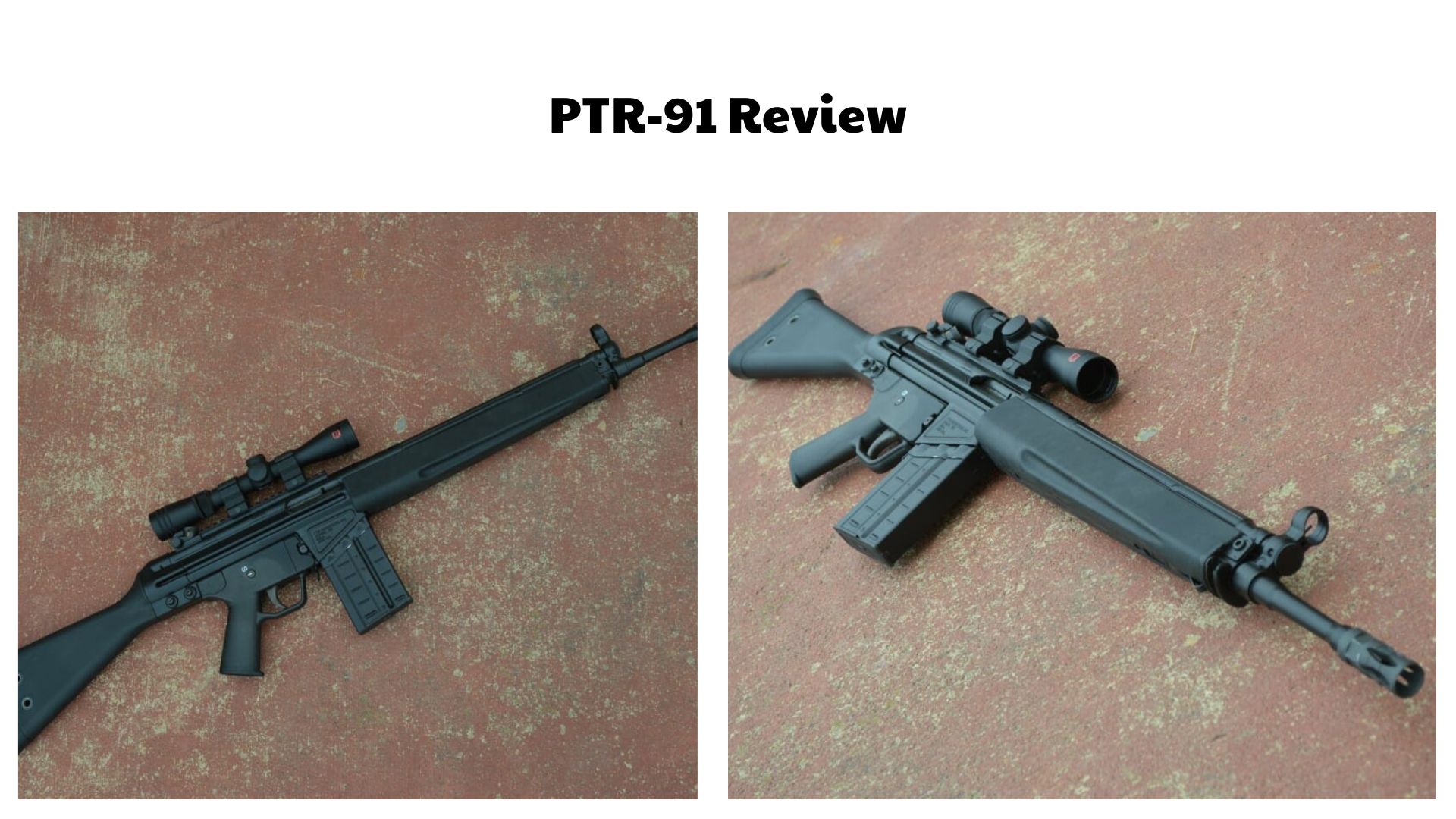

The PTR-91 is a semi-automatic rifle built around the legendary Heckler & Koch G3 roller-delayed blowback operating system and chambered in the powerful .308 Winchester / 7.62 NATO cartridge, making it part of the well-known “battle rifle” category that prioritizes power, durability, and reliability over lightweight handling. As a modern American-made continuation of the HK91/G3 legacy, the PTR-91 brings the same military-proven mechanical foundation into a civilian-friendly production environment, where manufacturing efficiency and cost control make it significantly more accessible than original German HK rifles. This platform has gained strong attention among collectors, long-range shooters, and enthusiasts who value robust engineering and historical firearm lineage combined with practical affordability in a full-power rifle system.
What Is the PTR-91?
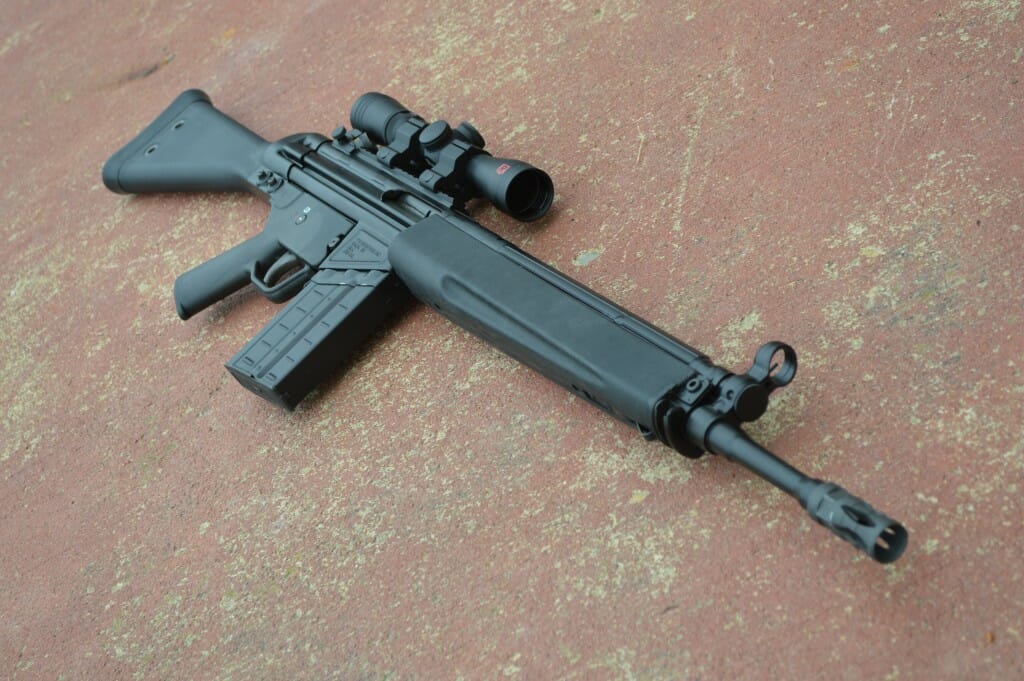
Origins from the HK G3 / HK91 Rifle System
The PTR-91 traces its direct lineage back to the Heckler & Koch G3 battle rifle, which was widely adopted by military forces around the world due to its simple yet extremely durable roller-delayed blowback mechanism. The civilian HK91 variant introduced this system to the commercial market, and the PTR-91 continues this legacy by replicating the same core operating principles while modernizing manufacturing methods and compliance requirements for the U.S. market.
PTR Industries and American Manufacturing Approach
PTR Industries manufactures the PTR-91 in the United States, focusing on producing a faithful interpretation of the G3 platform while incorporating modern CNC machining, updated barrel manufacturing techniques, and improved quality control standards that help reduce inconsistencies often found in older surplus rifles. This American production approach allows the rifle to remain accessible, serviceable, and legally compliant while preserving the mechanical identity of the original design.
Purpose of the Modern PTR-91 Platform in Today’s Market
In today’s firearm market, the PTR-91 serves as a bridge between Cold War-era battle rifle design and modern civilian shooting needs, offering shooters a .308 platform that is significantly more rugged and mechanically distinctive than AR-style rifles. It is primarily intended for enthusiasts who want a historically significant firearm with proven battlefield heritage, while also appealing to shooters who prioritize durability and function over ergonomic refinement or modularity.
Design and Build Quality
Roller-Delayed Blowback Operating System Explained
The PTR-91 uses a roller-delayed blowback system in which two steel rollers delay bolt opening until chamber pressure drops to safe levels, allowing the rifle to operate without a traditional gas system. This mechanical simplicity reduces fouling in the action area and contributes to the rifle’s reputation for reliability under harsh conditions, although it also produces a distinctive recoil impulse that differs from gas-operated rifles.
Stamped Receiver vs Modern Manufacturing Improvements
The receiver design is based on a stamped steel construction similar to the original G3, which provides exceptional structural strength while keeping production costs relatively efficient. Modern PTR manufacturing improves upon the original military designs by using tighter machining tolerances and updated materials, which enhances consistency between individual rifles and reduces the variability often associated with older surplus platforms.
Barrel Options (Standard, Heavy Barrel, Match Variants)
PTR-91 rifles are available in multiple barrel configurations, including standard profile barrels for general use, heavy barrel variants designed for improved heat resistance during sustained fire, and match-grade barrels intended for shooters who prioritize accuracy at extended distances. Each configuration balances weight, durability, and precision differently depending on intended use.
Fit, Finish, and PTR Production Quality Control
Modern PTR rifles generally exhibit improved fit and finish compared to older surplus HK builds, with more consistent surface treatment, better alignment of components, and improved trigger pack fitting. While still retaining a utilitarian military aesthetic, the overall production quality is more uniform, making the platform more predictable for end users in terms of performance and reliability.
Key Specifications of the PTR-91
Caliber Overview (.308 Winchester / 7.62 NATO Performance)
Chambered in .308 Winchester / 7.62 NATO, the PTR-91 delivers full-power rifle performance suitable for medium to long-range shooting applications, offering significantly more energy and range capability than intermediate cartridges like 5.56 NATO. This makes it effective for hunting, target shooting, and general-purpose use where terminal performance is a priority.
Barrel Length Options (16”, 18”, and Target Configurations)
The PTR-91 is typically offered in 16-inch carbines for compact handling, 18-inch variants for improved ballistic efficiency, and longer target-oriented barrels designed to maximize accuracy potential. These options allow users to select a configuration that best matches their intended shooting environment and performance expectations.
Magazine Compatibility (G3 / HK91 Steel Magazines)
One of the major advantages of the PTR-91 platform is its compatibility with widely available G3 and HK91 steel magazines, which are known for their durability and low cost due to surplus availability. These magazines are robust, reliable, and capable of enduring harsh field conditions without significant performance degradation.
Weight, Length, and Overall Handling Characteristics
The PTR-91 is a relatively heavy rifle compared to modern polymer-based platforms, with weight distribution that reflects its steel construction and full-power cartridge design. While this weight enhances stability during firing, it also makes the rifle less convenient for extended carry or dynamic movement compared to lighter AR-10 systems.
Sights, Optics Mounting, and Rail Configurations
Depending on configuration, the PTR-91 may include traditional iron sights or modern rail systems that allow for optics mounting through claw mounts or integrated Picatinny rails. While historically designed for iron sights, modern adaptations make it fully compatible with red dots, low-power optics, and long-range scopes.
Reliability and Performance
Roller-Delayed System Reliability in Harsh Conditions
The roller-delayed blowback system is widely regarded for its reliability in adverse environments, as it avoids direct gas fouling into the action and relies instead on mechanical delay principles. This allows the PTR-91 to function effectively in dirty, dusty, or wet conditions with minimal risk of system failure when properly maintained.
Performance with Steel-Cased and Brass .308 Ammunition
The PTR-91 generally performs well with both steel-cased and brass .308 ammunition, although brass cases tend to provide more consistent extraction and cleaner long-term operation. The system’s robust extraction process, combined with fluted chamber design, helps ensure reliable cycling even with lower-cost ammunition.
Extraction Sensitivity and Fluted Chamber Function
A defining feature of the PTR-91 system is its fluted chamber, which allows gas to flow around the cartridge case during extraction, reducing adhesion and ensuring smooth case removal under high pressure. This engineering solution is critical to the reliability of the roller-delayed system and is one of its most distinctive mechanical characteristics.
Long-Term Durability and High Round Count Testing
In extended use scenarios, the PTR-91 demonstrates strong durability due to its heavy steel construction and simple mechanical operation, with many rifles capable of sustaining high round counts with minimal degradation. Routine maintenance and occasional replacement of wear components ensure long service life even under frequent shooting schedules.
Accuracy and Shooting Performance
Typical Accuracy (1.5–3 MOA Practical Range)
In practical use, most PTR-91 rifles deliver accuracy in the range of approximately 1.5 to 3 MOA depending on barrel quality, ammunition selection, and shooter skill, which is consistent with traditional battle rifle expectations. While not designed as a precision rifle, it is more than capable of effective hits at medium to long distances.
Barrel Quality and Harmonics in .308 Platform
Barrel harmonics in the PTR-91 are influenced by the heavy steel construction and roller-delayed system dynamics, which can affect consistency depending on barrel profile and heat conditions. Match-grade barrels significantly improve grouping potential, especially when paired with quality ammunition.
Match Ammunition vs Ball Ammunition Performance
The use of match-grade ammunition typically yields noticeably tighter groupings and more consistent point of impact, while standard ball ammunition is generally sufficient for general-purpose shooting but less consistent at extended distances. Ammunition selection plays a major role in maximizing the rifle’s inherent accuracy potential.
Comparison with AR-10 Platform Accuracy
Compared to modern AR-10 rifles, the PTR-91 is generally less precise in terms of raw accuracy potential, as AR-10 platforms benefit from free-floating barrels and more refined trigger systems. However, the PTR-91 compensates with mechanical durability and reliability, making it a different category of performance rather than a direct competitor in precision shooting.
Recoil and Shooting Experience
Felt Recoil of Roller-Delayed .308 System
The PTR-91 produces a recoil impulse that is noticeably different from both traditional gas-operated rifles and bolt-action .308 platforms, as the roller-delayed blowback system creates a sharp but very fast recoil cycle that feels more like a quick mechanical push rather than a long, smooth rearward movement. While the recoil energy is still consistent with the .308 Winchester cartridge, the way it is delivered makes the rifle feel more “snappy” and mechanical, which experienced shooters often learn to manage effectively with proper stance and grip.
Muzzle Rise and Shooting Stability
Muzzle rise in the PTR-91 is moderate but manageable due to the rifle’s weight and straight-line stock design, which helps keep the recoil path relatively controlled even during rapid firing strings. However, compared to modern AR-10 platforms with advanced muzzle brakes and buffer systems, the PTR-91 can feel slightly less forgiving, requiring more deliberate shooter control to maintain tight shot placement during sustained fire.
Follow-Up Shot Speed Compared to AR-10 and Bolt Guns
Follow-up shot speed in the PTR-91 is generally faster than bolt-action rifles due to its semi-automatic cycling, but slightly slower in practical control compared to well-tuned AR-10 rifles, which benefit from softer recoil impulses and more ergonomic controls. The PTR-91’s recoil characteristics require a more disciplined shooting rhythm, especially when attempting rapid target transitions at medium range.
Shooter Fatigue During Extended Range Sessions
During extended range sessions, shooter fatigue can become more noticeable with the PTR-91 due to its weight, recoil impulse, and less ergonomic control layout compared to modern sporting rifles. While the rifle is extremely durable and reliable, its traditional battle rifle design prioritizes function and robustness over comfort, meaning shooters may experience greater shoulder and wrist fatigue during high-volume shooting.
Ergonomics and Handling
Classic G3 Controls and Manual of Arms
The PTR-91 retains the classic G3-style manual of arms, which includes a unique control layout that differs significantly from modern AR platforms, requiring shooters to adapt to its charging handle placement, safety selector design, and magazine insertion method. While initially less intuitive for new users, these controls become efficient with practice and are valued by enthusiasts who appreciate traditional military rifle handling.
Charging Handle, “HK Slap,” and Bolt Operation Feel
One of the most iconic features of the platform is the charging handle operation, which allows the user to lock the bolt to the rear and release it with a forceful forward motion often referred to as the “HK slap.” This mechanical action not only serves a functional purpose but has also become a defining characteristic of the platform’s identity, contributing to its appeal among enthusiasts of Cold War-era firearms.
Magazine Changes (Rock-In Steel Magazine System)
Magazine changes on the PTR-91 use a rock-and-lock system similar to other battle rifles, requiring the front of the magazine to be inserted first before pivoting the rear into place, which can be slower than straight-insertion AR-style magazines. However, once mastered, the system is highly reliable and extremely secure, especially when using steel G3-pattern magazines designed for durability under harsh conditions.
Weight Distribution and Field Handling Characteristics
The PTR-91 has a forward-heavy weight distribution due to its steel receiver and barrel assembly, which contributes to stability when firing but reduces maneuverability during extended carry or dynamic movement. This design is optimized for controlled shooting and durability rather than lightweight tactical handling, making it more suitable for deliberate field use than fast-paced close-quarters scenarios.
PTR-91 vs HK91 / G3 Rifles
Differences Between PTR Manufacturing and Original HK Production
While the PTR-91 is directly based on the HK91 and G3 platform, modern PTR manufacturing incorporates updated production methods, including CNC machining and improved quality control processes that aim to reduce the inconsistencies found in older surplus military rifles. The result is a firearm that maintains the original design philosophy while offering more consistent civilian production standards.
Quality Control and Modern Parts Improvements
Modern PTR rifles often benefit from improved barrel manufacturing, tighter tolerances in critical components, and updated materials in certain parts of the action, which can lead to more predictable performance over time. These improvements help bridge the gap between historical military surplus weapons and modern commercial firearms expectations.
Collector Value vs Practical Shooter Value
Original HK91 and G3 rifles typically hold higher collector value due to their historical significance and limited availability, while the PTR-91 is generally positioned as a practical shooter’s rifle that delivers similar mechanical performance at a significantly lower cost. This makes the PTR-91 more attractive for users who prioritize function over collectible investment value.
Cost Comparison and Availability
In terms of cost and availability, the PTR-91 is substantially more accessible than original HK rifles, which are often expensive and difficult to obtain in many markets. The PTR platform provides a practical entry point into the roller-delayed .308 system without the premium pricing associated with original German-manufactured firearms.
PTR-91 vs AR-10 Platform
Accuracy Comparison Between Systems
When compared to AR-10 platforms, the PTR-91 generally offers slightly lower practical accuracy potential due to its non-free-floated barrel design and roller-delayed operating system dynamics. AR-10 rifles typically achieve tighter groupings thanks to more modern precision-oriented design features, making them more suitable for dedicated long-range shooting applications.
Recoil Impulse Differences (Gas vs Roller-Delayed)
The recoil impulse between the two systems is distinctly different, with AR-10 rifles offering a smoother and more linear recoil due to gas operation and buffer systems, while the PTR-91 delivers a sharper, more mechanical recoil characteristic inherent to roller-delayed blowback operation. Both systems are manageable, but the subjective shooting experience varies significantly.
Ergonomics and Modern Modularity
AR-10 platforms clearly outperform the PTR-91 in terms of ergonomics and modularity, offering ambidextrous controls, adjustable stocks, and extensive accessory compatibility. In contrast, the PTR-91 retains a more traditional battle rifle layout that prioritizes durability and mechanical simplicity over user customization and ergonomic refinement.
Maintenance and Cleaning Requirements
The PTR-91 requires a different maintenance approach compared to AR-10 rifles, with its roller-delayed system demanding attention to chamber fluting and bolt components, while AR-10 platforms typically require more gas system cleaning but offer easier overall disassembly. Both systems are reliable when properly maintained, but their servicing routines reflect their fundamentally different engineering philosophies.
Magazine System and Compatibility
G3/HK91 Steel Magazine Ecosystem
The PTR-91 benefits from a widely available ecosystem of G3 and HK91 steel magazines, which are known for their rugged construction and long service life, making them one of the most durable magazine systems in the battle rifle category. These magazines are often available at relatively low cost due to surplus production, adding to the platform’s affordability advantage.
Reliability and Durability of Surplus Magazines
Surplus steel magazines for the PTR-91 platform are exceptionally durable and capable of withstanding harsh environmental conditions, rough handling, and extended storage without significant degradation in performance. Their simple construction and robust materials contribute to consistent feeding reliability over long service periods.
Feeding Behavior and Chamber Interaction
Feeding in the PTR-91 is generally reliable due to the controlled geometry of the roller-delayed system and the robust feed lip design of G3 magazines, although proper magazine condition is critical to maintaining consistent performance. The system is somewhat more sensitive to worn magazines compared to modern polymer magazine designs.
Magazine Availability and Cost Trends
Magazine availability for the PTR-91 remains strong in most markets due to the continued circulation of surplus G3-pattern magazines, which helps keep operating costs relatively low compared to proprietary magazine systems. Pricing trends remain stable, making magazine acquisition one of the more accessible aspects of owning this platform.
Customization and Upgrade Potential
Optics Mounting Options (Claw Mount, Rail Systems)
The PTR-91 offers several optics mounting solutions, with the most traditional being the HK-style claw mount that attaches directly to the receiver without permanent modification, allowing users to mount scopes or red dots while preserving the rifle’s original configuration. In addition, modern rail systems and Picatinny conversions are available, enabling a more contemporary optics setup that better aligns with today’s long-range and tactical shooting standards.
Furniture Upgrades (Stocks, Handguards, Grips)
Although the PTR-91 retains a classic G3-style layout, it can still be upgraded with aftermarket stocks, ergonomic grips, and improved handguards designed to enhance comfort and handling. These modifications help mitigate some of the platform’s traditional ergonomic limitations while maintaining its core mechanical identity and durability.
Trigger Upgrades and HK Trigger Pack Systems
The trigger system in the PTR-91 is based on the HK-style trigger pack design, which can be upgraded with improved trigger components to reduce pull weight and improve consistency. While not as modular as AR-style drop-in triggers, these upgrades can significantly enhance shooting performance for users focused on accuracy and control.
Suppressor Compatibility and Muzzle Devices
The PTR-91 is compatible with suppressors and a wide range of muzzle devices, although users must account for the roller-delayed system’s sensitivity to backpressure and gas behavior. Properly selected suppressors can improve recoil control and sound reduction, but they may also increase fouling in the action area, requiring more frequent maintenance.
Common Issues and Limitations
Brass Fluting Marks and Case Condition Expectations
A well-known characteristic of the PTR-91 is the presence of fluting marks on spent brass, which occur due to the chamber’s gas relief design that helps extraction under high pressure. While this does not indicate a malfunction, it does mean that reloaded brass may show cosmetic wear that is more pronounced than in gas-operated systems.
Heavier Weight Compared to AR Platforms
Compared to modern AR-10 rifles, the PTR-91 is noticeably heavier due to its stamped steel construction and robust receiver design, which improves durability but reduces ease of carry over long distances. This weight contributes to stability during firing but can be a disadvantage for mobility-focused applications.
Ergonomic Limitations of G3 Design
The G3-derived ergonomic layout of the PTR-91 is functional but dated by modern standards, with non-ambidextrous controls, a more complex manual of arms, and less intuitive magazine handling compared to AR-style platforms. These limitations can slow down manipulation speed for new users.
Limited Modern Accessory Integration
Although upgrades are available, the PTR-91 does not offer the same level of seamless accessory integration as AR platforms, particularly in terms of free-floating handguards, ambidextrous controls, and modular rail systems. As a result, customization options are more specialized and less standardized.
Who Should Buy the PTR-91?
Battle Rifle Enthusiasts and HK Platform Fans
The PTR-91 is an ideal choice for shooters who appreciate Cold War-era battle rifle designs and specifically admire the HK G3 lineage, offering an authentic roller-delayed experience at a more accessible price point than original HK rifles.
Budget-Conscious .308 Shooters
For shooters seeking a .308 caliber rifle without the higher cost of premium AR-10 platforms or collectible HK rifles, the PTR-91 provides a practical balance of affordability, durability, and reliable performance.
Collectors of Cold War Era Designs
While not an original military surplus firearm, the PTR-91 still appeals to collectors interested in Cold War design evolution, as it represents a modern continuation of one of the most influential battle rifle systems in history.
Not Ideal for Lightweight Tactical or Competition Shooters
The PTR-91 is less suitable for shooters who prioritize lightweight handling, advanced ergonomics, or competitive speed shooting, as modern AR-10 and AR-15 platforms generally outperform it in those categories.
Pros and Cons of PTR-91
Advantages (Durability, Reliability, Caliber Power, Magazine Availability)
The PTR-91 excels in mechanical durability, roller-delayed reliability, strong .308 performance, and access to widely available and affordable G3-pattern magazines, making it a rugged and cost-effective battle rifle platform.
Disadvantages (Weight, Ergonomics, Recoil Compared to Modern ARs)
Its main drawbacks include heavier weight, outdated ergonomics compared to modern rifle systems, and a sharper recoil impulse that is less refined than gas-buffered AR-10 platforms.
Overall Value in the .308 Battle Rifle Market
Overall, the PTR-91 offers strong value in the .308 battle rifle category by combining historical military engineering with modern manufacturing improvements, making it a compelling choice for enthusiasts who prioritize durability and legacy design over modularity and ergonomic refinement.
Final Verdict on PTR-91 Review
The PTR-91 stands as a modern continuation of the legendary HK G3 rifle system, delivering rugged roller-delayed reliability, strong .308 performance, and a proven mechanical design that has endured decades of military and civilian use around the world. While it may not match the ergonomic refinement, modularity, or recoil smoothness of modern AR-10 platforms, it compensates with exceptional durability, simple operating mechanics, and a distinctive shooting experience that appeals strongly to enthusiasts of classic battle rifles. As a result, the PTR-91 remains a highly relevant option in today’s firearm market for shooters who value robustness, historical lineage, and dependable performance over modern tactical convenience.
PTR-91 FAQ (50+ Detailed Questions and Answers)
1. What is the PTR-91 based on?
The PTR-91 is based on the Heckler & Koch G3 and HK91 rifle system, which uses a roller-delayed blowback operating mechanism originally developed for military use. The PTR-91 preserves this design while being manufactured in the United States with modern production techniques.
2. Is the PTR-91 considered a battle rifle?
Yes, the PTR-91 is classified as a battle rifle because it is chambered in .308 Winchester / 7.62 NATO, a full-power cartridge intended for medium to long-range engagements, offering significantly more energy than intermediate calibers like 5.56 NATO.
3. How reliable is the PTR-91?
The PTR-91 is widely regarded as highly reliable due to its roller-delayed blowback system, which does not rely on gas fouling inside the receiver. This makes it extremely resistant to dirt, dust, and harsh environmental conditions when properly maintained.
4. Does the PTR-91 require a lot of maintenance?
Maintenance is relatively straightforward but must be consistent, especially cleaning the chamber flutes and bolt assembly. While it is not overly complex, neglecting maintenance can affect extraction reliability over time.
5. How accurate is the PTR-91?
In practical shooting conditions, the PTR-91 typically delivers between 1.5 to 3 MOA accuracy depending on barrel type, ammunition quality, and shooter skill, which is standard for a .308 battle rifle platform.
6. Is the PTR-91 good for long-range shooting?
Yes, it can be used for long-range shooting, but it is not a dedicated precision rifle. It performs well out to medium-long ranges, but AR-10 platforms or bolt-action rifles are generally more precise.
7. What kind of recoil does the PTR-91 have?
The PTR-91 has a sharp, mechanical recoil impulse due to the roller-delayed system. It is manageable but feels different from the smoother recoil of gas-operated AR-10 rifles.
8. Is the PTR-91 harder to shoot than an AR-10?
It is not necessarily harder, but it does require adaptation. The recoil impulse, weight, and ergonomics differ significantly from AR-10 platforms, making the shooting experience less intuitive for new users.
9. Can beginners use the PTR-91?
Yes, beginners can use it, but the platform is more complex ergonomically than modern AR-style rifles. New shooters may need time to adapt to the charging handle, magazine system, and recoil behavior.
10. What magazines does the PTR-91 use?
The PTR-91 uses G3/HK91 steel magazines, which are widely available, inexpensive, and extremely durable due to surplus production from military stockpiles.
11. Are PTR-91 magazines expensive?
No, they are generally affordable because of surplus availability. Steel magazines are often cheaper than modern polymer magazines used in AR platforms.
12. Is the PTR-91 compatible with AR magazines?
No, the PTR-91 is not compatible with AR-10 magazines. It uses a completely different magazine system designed for the G3 platform.
13. Does the PTR-91 jam easily?
No, it is known for strong reliability. However, worn magazines or poor-quality ammunition can still cause malfunctions, as with any firearm system.
14. Can the PTR-91 shoot steel-case ammo?
Yes, it can generally handle steel-case .308 ammunition, although brass cases are preferred for smoother extraction and reduced wear over time.
15. What is the roller-delayed blowback system?
It is a mechanical system that uses steel rollers to delay bolt opening until chamber pressure drops to safe levels, eliminating the need for a gas piston or direct gas impingement system.
16. Why does the PTR-91 mark brass cases?
The fluted chamber design allows gas to flow around the cartridge during extraction, which leaves visible marks on spent brass but ensures reliable cycling under high pressure.
17. Can you reload PTR-91 brass?
Yes, but reloaded brass may show cosmetic fluting marks. Functionally, the brass can still be reused if it is not structurally damaged.
18. Is the PTR-91 heavy?
Yes, it is heavier than most modern AR-10 rifles due to its steel construction, which enhances durability but reduces portability.
19. Is the PTR-91 good for hunting?
Yes, it can be used for medium to large game hunting, especially where .308 power is desirable, but its weight may make it less ideal for long hiking hunts.
20. Is the PTR-91 good for home defense?
It is capable of home defense use, but its size, recoil, and over-penetration potential make it less practical than lighter carbines or PCC platforms.
21. How does the PTR-91 compare to AR-10 accuracy?
AR-10 rifles are generally more accurate due to free-floating barrels and modern precision engineering, while the PTR-91 prioritizes durability over match-grade precision.
22. Which is more reliable, PTR-91 or AR-10?
Both are reliable, but the PTR-91 excels in harsh conditions due to its simple mechanical system, while AR-10 rifles require more gas system maintenance.
23. Does the PTR-91 work well in dirty conditions?
Yes, it performs very well in dirty environments because the roller-delayed system avoids gas fouling inside the receiver.
24. Can the PTR-91 be suppressed?
Yes, it can be suppressed, but users should expect increased recoil impulse and fouling due to backpressure in the system.
25. Is the PTR-91 loud?
Yes, especially without a suppressor, as .308 Winchester produces significant muzzle blast and report.
26. Does suppressing the PTR-91 affect reliability?
It can increase fouling and cycling speed, which may require tuning or more frequent maintenance depending on setup.
27. What optics can be mounted on PTR-91?
It supports claw mounts, rail systems, red dots, LPVOs, and traditional scopes depending on configuration.
28. Is it easy to mount optics?
It is moderately easy but less straightforward than AR platforms due to the need for specialized mounting systems.
29. Does the PTR-91 have good ergonomics?
Ergonomics are considered outdated compared to modern rifles, especially in magazine changes and control placement.
30. Is the PTR-91 ambidextrous?
No, it is not fully ambidextrous, which can make it less convenient for left-handed shooters.
31. How fast can you reload a PTR-91?
Reloading is slower than AR platforms due to the rock-in magazine system, but it becomes faster with practice.
32. What is the “HK slap”?
It refers to forcefully releasing the charging handle forward to chamber a round, a signature feature of the G3 platform.
33. Is the PTR-91 good for competition shooting?
It is not ideal for modern competitive shooting due to weight and ergonomics, but it can be used in certain rifle divisions.
34. Does the PTR-91 overheat quickly?
It handles heat well due to its heavy barrel options, but sustained fire will still increase temperature like any .308 rifle.
35. What barrel options are best?
Heavy barrels are preferred for sustained fire and accuracy, while standard barrels are better for general use and weight savings.
36. Can the PTR-91 be used for precision shooting?
It can be used for general precision shooting, but it is not designed as a dedicated precision rifle platform.
37. Is the PTR-91 good for training?
Yes, especially for shooters who want experience with full-power battle rifle recoil and historical firearm systems.
38. How durable is the PTR-91?
It is extremely durable due to its steel construction and simple mechanical operation.
39. What is the lifespan of a PTR-91?
With proper maintenance, it can last tens of thousands of rounds with minimal major component replacement.
40. Does the PTR-91 require special tools for maintenance?
No specialized tools are typically required beyond standard firearm cleaning equipment.
41. Is the PTR-91 still in production?
Yes, PTR Industries continues to manufacture modern variants of the PTR-91 platform.
42. Is it better than original HK91?
Original HK91 rifles are more collectible, but PTR-91 rifles are more affordable and easier to obtain.
43. Is the PTR-91 worth buying?
It is worth buying for enthusiasts who want a rugged .308 battle rifle with historical design and strong reliability.
44. What is the biggest weakness of PTR-91?
Its ergonomics and weight compared to modern AR platforms are its most commonly cited drawbacks.
45. What is the biggest strength of PTR-91?
Its durability and roller-delayed reliability system are its strongest advantages.
46. Is PTR-91 good for tactical use?
It can be used tactically, but modern AR-10 rifles are generally more efficient in tactical environments.
47. Can PTR-91 be used for law enforcement?
It is rarely used in modern law enforcement due to AR platform dominance, but it remains mechanically capable.
48. Is PTR-91 still relevant today?
Yes, it remains relevant as a durable and reliable .308 battle rifle with historical significance.
49. Why choose PTR-91 over AR-10?
Users may choose PTR-91 for its mechanical simplicity, durability, and unique shooting experience.
50. Why choose AR-10 over PTR-91?
AR-10 rifles are typically chosen for better ergonomics, accuracy, and modular customization.
51. What makes PTR-91 unique?
Its roller-delayed blowback system and direct lineage from the HK G3 platform make it mechanically unique among .308 rifles.
52. Is PTR-91 beginner-friendly?
It is usable by beginners but has a steeper learning curve than modern sporting rifles.
53. Does PTR-91 have good resale value?
It generally holds stable value due to its niche appeal and strong demand among battle rifle enthusiasts.
54. Is PTR-91 good for collectors?
Yes, especially for those interested in Cold War-era firearm designs and HK lineage rifles.
55. What is the overall impression of PTR-91?
The PTR-91 is widely viewed as a rugged, historically significant, and highly reliable .308 battle rifle that prioritizes durability and mechanical simplicity over modern ergonomics and modularity.
Read more: