

Diamondback Firearms is a U.S.-based manufacturer headquartered in Florida, primarily known for producing budget-friendly to mid-tier AR-15 style rifles and pistols. Over the past decade, the company has expanded significantly in the entry-level AR market, becoming a recognizable alternative for shooters who want an affordable but functional platform.
Its growth has been largely driven by demand for accessible AR-15 rifles that do not require premium-level investment. In this space, Diamondback competes directly with manufacturers such as Palmetto State Armory, Ruger, and Radical Firearms, all of which target similar value-oriented customers.
While not positioned as a high-end tactical brand, Diamondback has built its reputation on offering complete rifles that are ready to shoot out of the box, making it a practical choice for new AR-15 owners and budget-conscious buyers.
What Is the DB15 Diamond Series?
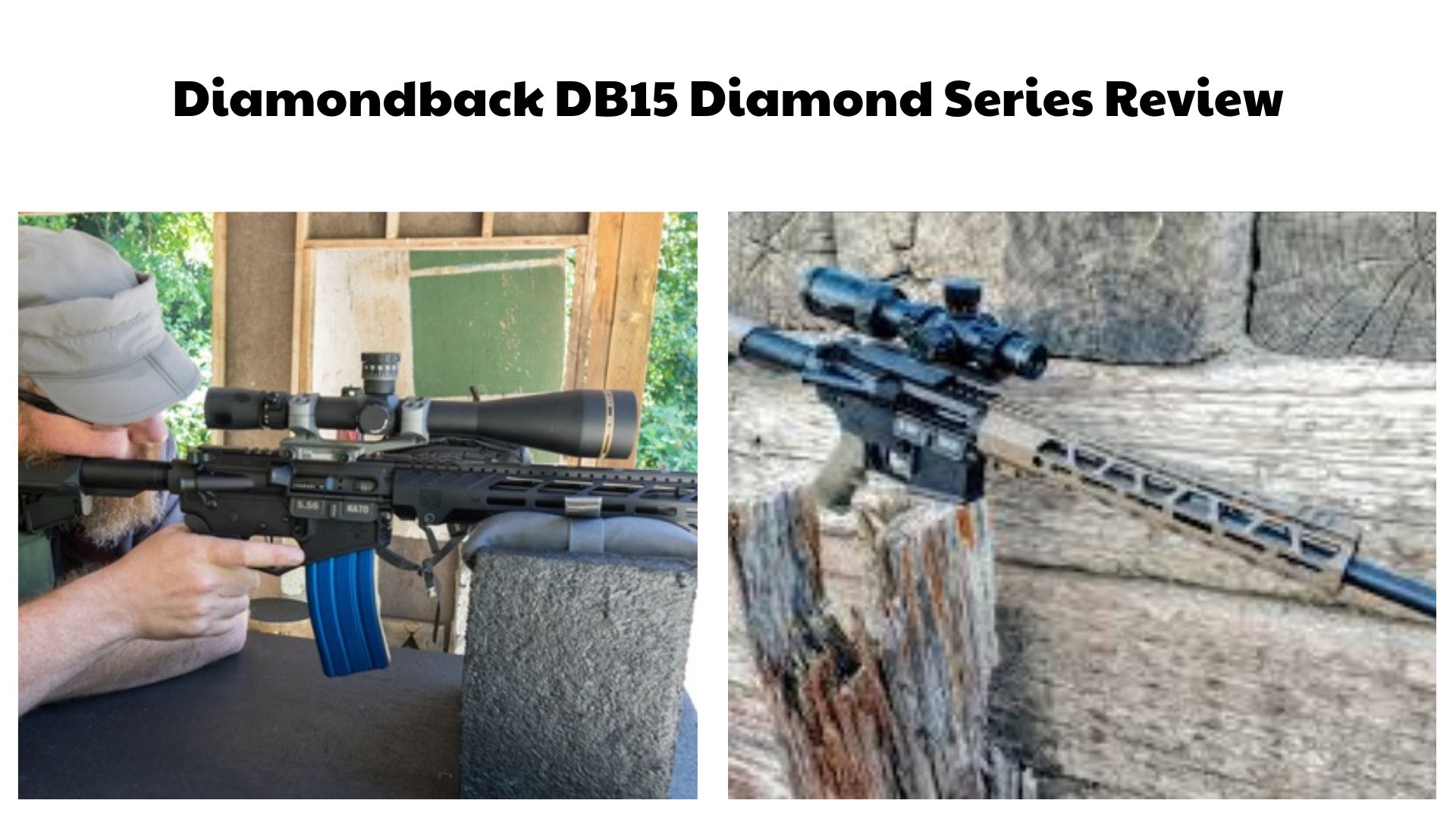
The DB15 Diamond Series represents the higher-end configuration within Diamondback’s AR-15 lineup, sitting above entry variants such as the Carbon and Black Gold series. It is designed to offer a more complete and refined package without requiring immediate aftermarket upgrades.
Unlike bare-bones entry models, the Diamond Series typically includes upgraded components such as enhanced triggers, improved furniture, and better overall fit-and-finish. This makes it more attractive to users who want a rifle that performs well immediately after purchase.
The core idea behind the Diamond Series is convenience: a factory-built AR-15 that already includes many of the upgrades that shooters would otherwise install themselves. This reduces initial setup costs and simplifies the ownership experience.
Purpose and Market Position
The Diamondback DB15 Diamond Series is positioned as an entry-to-mid-tier defensive rifle designed for multiple real-world applications, including home defense, recreational shooting, and basic tactical training.
It is not intended to compete with premium-duty rifles from brands like BCM or Daniel Defense, but rather to offer a practical alternative for shooters who want a reliable AR-15 without a premium price tag.
In the broader AR-15 market, the Diamond Series competes in the “best value AR-15” category, where price-to-performance ratio is the primary deciding factor rather than elite-level refinement or duty-grade certifications.
Key Design Philosophy and Development
Budget-Friendly Performance Concept
The design philosophy behind the DB15 Diamond Series is centered on delivering acceptable performance at a controlled manufacturing cost. Diamondback focuses on creating a rifle that meets the functional expectations of most civilian shooters without unnecessary premium features.
This approach emphasizes accessibility, ensuring that new gun owners and budget-conscious buyers can enter the AR-15 platform without significant financial barriers. At the same time, the platform is designed to remain upgrade-friendly, allowing users to gradually improve components over time.
The result is a modular foundation that prioritizes practicality over luxury, making it suitable for a wide range of non-professional use cases.
Manufacturing Approach
The DB15 Diamond Series is built using forged 7075-T6 aluminum receivers, which is the industry standard for durable AR-15 platforms. This material provides a strong balance of weight reduction and structural integrity under repeated firing cycles.
Diamondback also utilizes a combination of in-house manufacturing and controlled sourcing for key components such as barrels and bolt carrier groups. This vertical integration helps reduce costs while maintaining production consistency across large batches.
Although not positioned as a boutique manufacturer, Diamondback focuses on efficiency and scalability, allowing it to produce rifles at a price point that remains competitive in the entry-level AR market.
Diamond Series Upgrade Philosophy
The Diamond Series stands out due to its inclusion of upgraded internal and external components compared to base models. One of the most notable enhancements is the inclusion of improved trigger systems, with some configurations featuring a CMC single-stage trigger for a cleaner and more responsive shooting experience.
Additionally, Diamond Series rifles often include upgraded furniture packages such as enhanced stocks, grips, and free-float handguards. These improvements reduce the need for immediate aftermarket modifications and improve out-of-the-box usability.
This upgrade philosophy is focused on delivering a more complete firearm experience while still maintaining a budget-conscious price structure, bridging the gap between entry-level and mid-tier AR-15 offerings.
Build Quality and Materials
Receiver Construction
The DB15 Diamond Series uses forged aluminum upper and lower receivers made from 7075-T6 alloy, which is widely regarded as the industry standard for AR-15 durability. This provides strong resistance to wear and structural stress during extended firing sessions.
Receiver fitment is generally consistent, although minor variations in tightness may occur depending on production batch. These tolerances remain within acceptable mil-spec standards and do not typically affect reliability or function.
The platform is designed to be mil-spec compatible, meaning it supports a wide range of aftermarket components and upgrades commonly available in the AR-15 ecosystem.
Barrel and BCG System
The barrels used in the DB15 Diamond Series are typically nitride-treated, which improves surface hardness, corrosion resistance, and barrel longevity compared to untreated steel barrels. This treatment also reduces fouling and simplifies maintenance.
The bolt carrier group is often shot-peened and MPI (Magnetic Particle Inspected), ensuring that critical stress points are tested for structural integrity. This helps reduce the likelihood of early component failure under normal use conditions.
Many Diamond Series rifles also feature a mid-length gas system, which helps soften recoil impulse and improve cycling smoothness compared to carbine-length gas systems.
Furniture and Accessories
One of the key advantages of the Diamond Series is its upgraded furniture package. Many models come equipped with Magpul stocks and grips, which are known for their durability, ergonomics, and widespread user acceptance in the AR-15 community.
The inclusion of free-float M-LOK handguards enhances modularity by allowing users to attach accessories such as lights, vertical grips, and bipods without affecting barrel harmonics.
Compared to base DB15 models, these factory-installed upgrades significantly improve the rifle’s readiness for immediate use without requiring additional aftermarket investment.
Trigger, Controls, and Ergonomics
Trigger Performance
Entry-level DB15 models typically come with standard mil-spec triggers, which are functional but relatively heavy and less refined in terms of break and reset characteristics.
In contrast, Diamond Series configurations often include upgraded triggers such as the CMC single-stage system, offering a cleaner break, shorter reset, and improved overall shooting consistency.
This upgrade has a noticeable impact on practical shooting performance, especially in rapid-fire or precision-oriented scenarios.
Controls and Handling
The DB15 maintains a standard AR-15 control layout, making it highly intuitive for both new and experienced shooters. This includes a familiar safety selector, magazine release, bolt catch, and charging handle configuration.
While not fully ambidextrous in factory form, the platform is compatible with ambidextrous upgrades, allowing users to customize controls based on preference or training requirements.
Overall ergonomics are functional and straightforward, but they do not reach the refinement level of higher-end AR manufacturers focused on duty-grade ergonomics.
Magazine System
The Diamondback DB15 is fully compatible with standard AR-15 magazines, including Magpul PMAGs and traditional GI aluminum magazines. This ensures wide availability and affordability of ammunition feeding options.
Higher-tier Diamond Series models may include a flared magazine well, which improves reload speed and reduces the likelihood of misfeeds during fast magazine changes.
This compatibility and ease of use make the platform accessible and practical for both training and defensive applications.
Size, Weight, and Handling Characteristics
Standard AR-15 Dimensions
The Diamondback DB15 Diamond Series follows standard AR-15 dimensional patterns, most commonly featuring a 16-inch barrel configuration. This makes it a full-size rifle platform that aligns with the majority of civilian AR-15 builds in the U.S. market.
Because it adheres closely to mil-spec geometry, the rifle maintains compatibility with common accessories, stocks, and aftermarket components. Its overall size is designed for general-purpose use rather than specialized compact or ultra-light configurations.
In terms of weight class, the DB15 sits within the standard full-size AR category, meaning it is not considered a lightweight or ultra-compact platform compared to modern carbines optimized for mobility.
Handling and Balance
The DB15 Diamond Series benefits from a mid-length gas system, which contributes to smoother recoil impulse and more controlled cycling compared to carbine-length systems. This results in a more comfortable shooting experience, particularly during extended range sessions.
The rifle is generally balanced for general-purpose use, making it suitable for a wide variety of shooting applications including training, defensive scenarios, and recreational shooting.
However, due to its full-size construction and standard-weight components, it is heavier than ultra-light premium carbines. While this added weight improves stability, it may reduce maneuverability for users seeking a lightweight tactical build.
Field Use Experience
In real-world conditions, the DB15 Diamond Series performs well across multiple use cases such as range shooting, home defense, and basic firearms training. Its stability and predictable handling make it approachable for new shooters.
The platform’s weight and balance contribute to a steady shooting platform, which is especially beneficial for beginners who are still developing proper shooting fundamentals.
However, it is not specifically optimized for ultra-light tactical applications or highly mobile field operations where reduced weight and compact size are critical factors.
Accuracy and Real-World Performance
Accuracy Expectations
The Diamondback DB15 Diamond Series typically delivers 2–3 MOA accuracy with standard factory ammunition, which is considered acceptable for a rifle in its price category. This level of precision is suitable for defensive, training, and general recreational shooting purposes.
Barrel quality across Diamond Series models is generally consistent within the mid-tier AR segment. While not match-grade, it provides reliable and repeatable performance under normal shooting conditions.
Overall, the platform is designed for practical accuracy rather than precision competition shooting, aligning with its intended role as a value-oriented AR-15.
Reliability Performance
When paired with quality magazines and properly maintained, the DB15 demonstrates generally reliable performance with minimal malfunctions under standard operating conditions. This makes it suitable for routine civilian use cases such as range training and home defense.
Like many AR-15 platforms, reliability may improve after an initial break-in period where components settle and wear-in occurs naturally during early use.
While not engineered for extreme-duty military environments, the DB15 performs consistently within the expectations of its price class.
Real-World Use Cases
The DB15 Diamond Series is commonly used as a home defense-capable rifle due to its balance of controllability, capacity, and ease of operation.
It also serves effectively as an entry-level training platform for new AR-15 owners who are learning fundamentals such as marksmanship, manipulation, and maintenance.
Additionally, it functions well as a general-purpose AR for recreational shooters who want a dependable and affordable rifle without requiring high-end performance characteristics.
Pros and Cons of Diamondback DB15 Diamond Series
Pros
The DB15 Diamond Series offers excellent value for money within the AR-15 market, making it one of the more accessible complete rifle packages available to civilian buyers.
One of its key advantages is the inclusion of upgraded components such as improved triggers and enhanced furniture, which improve usability right out of the box compared to base models.
The mid-length gas system contributes to improved recoil control and smoother cycling, enhancing overall shooting comfort and consistency.
Strong aftermarket compatibility allows users to upgrade nearly every component, making the platform highly adaptable over time.
Additionally, the rifle is manufactured in the United States, which is an important consideration for many buyers in this market segment.
Cons
One of the most commonly cited drawbacks is inconsistent finish quality between production batches, which can result in minor cosmetic or fit-and-finish variations.
Lower-tier DB15 models may include more basic components, which can require upgrades for users seeking improved performance or ergonomics.
The brand also has limited prestige compared to higher-end manufacturers, which can affect resale value in the secondary market.
Additionally, it does not compete at the same performance level as premium AR-15 brands such as BCM or Daniel Defense, particularly in terms of refinement and duty-grade reliability expectations.
Ideal Use Cases
The DB15 Diamond Series is well-suited for first-time AR-15 ownership, offering a straightforward and affordable entry point into the AR platform.
It is commonly used as a home defense rifle due to its balance of capacity, ease of use, and acceptable accuracy at typical defensive distances.
The platform also performs well as a budget-friendly training rifle, allowing shooters to practice fundamentals without significant financial investment.
For recreational shooting, it provides a reliable and enjoyable experience at the range.
Additionally, it serves as a strong base platform for customization projects, allowing owners to gradually upgrade components over time.
Comparison with Competing AR-15 Platforms
DB15 vs PSA PA-15
The Diamondback DB15 and PSA PA-15 occupy a very similar market segment, both targeting budget-conscious AR-15 buyers.
PSA generally offers more frequent sales and a wider variety of configurations, making it highly flexible in terms of purchase options.
However, the DB15 may offer slightly tighter machining and a more refined out-of-box feel in certain models, depending on production batch.
DB15 vs Ruger AR-556
Ruger AR-556 benefits from stronger brand recognition and a long-standing reputation for reliability in the firearms industry.
In contrast, the DB15 offers comparable performance at a similar price point while often providing more customization potential through aftermarket components.
Overall reliability between the two platforms is generally comparable for civilian use cases, with differences largely coming down to brand preference and feature set.
DB15 vs Anderson AM-15
The DB15 generally provides a higher level of fit and finish compared to the Anderson AM-15, which is known for being one of the most budget-oriented AR-15 platforms available.
While Anderson rifles are often cheaper, they tend to be more basic in configuration and finish quality.
As a result, the DB15 offers a more refined out-of-box experience, making it more appealing to users who want slightly better initial quality without moving into mid-tier pricing.
Maintenance and Durability
Routine Maintenance
The DB15 Diamond Series follows standard AR-15 maintenance procedures, including regular cleaning, lubrication, and inspection of key components such as the bolt carrier group and barrel.
Field stripping is simple and follows the traditional AR-15 takedown method, making it easy for both beginners and experienced users to service the rifle.
Overall maintenance requirements are minimal, provided the rifle is cleaned and lubricated regularly after use.
Long-Term Durability
The forged 7075-T6 receiver construction ensures strong long-term durability, even under high round counts typical of recreational or training use.
Barrel life will depend heavily on ammunition type, firing frequency, and maintenance habits, but generally falls within standard expectations for AR-15 platforms in this class.
The bolt system is designed to meet mil-spec durability standards, supporting extended service life under normal civilian usage conditions.
Common Wear Points
Common wear points include trigger components on entry-level configurations, which may show wear more quickly than upgraded systems in Diamond Series models.
Cosmetic finish wear may appear on high-contact areas such as the receiver, buffer tube, and handguard over time, especially with frequent use.
Additionally, buffer springs and recoil components are considered consumable parts and may require replacement after extended use to maintain optimal performance.
Final Verdict
The Diamondback DB15 Diamond Series is a strong entry-level AR-15 option that delivers solid value for its price class. It offers a practical balance of performance, usability, and affordability for civilian shooters.
It is best suited for beginners, budget-conscious buyers, and those seeking a reliable general-purpose rifle without investing in premium-tier platforms.
The Diamond Series configuration provides the best out-of-box experience within the DB15 lineup due to its upgraded components and improved usability.
While it is not a premium-tier rifle and does not compete with high-end manufacturers in refinement or duty-grade performance, it remains a highly practical and cost-effective AR-15 platform for most civilian applications.
Frequently Asked Questions (Diamondback DB15 Diamond Series Review)
1. What is the Diamondback DB15 Diamond Series?
The Diamondback DB15 Diamond Series is the premium configuration within Diamondback Firearms’ AR-15 lineup. It is designed to offer an upgraded, ready-to-use rifle package that includes better components such as improved triggers, upgraded furniture, and enhanced out-of-the-box performance compared to entry-level DB15 models. It targets shooters who want a more complete AR-15 without needing immediate aftermarket upgrades.
2. Is the DB15 Diamond Series a good AR-15 for beginners?
Yes, the DB15 Diamond Series is widely considered suitable for beginners because it offers a familiar AR-15 platform with improved usability features. The rifle is easy to operate, maintain, and customize. The upgraded components in the Diamond Series also reduce the need for early modifications, making it a convenient first rifle for new shooters.
3. What makes the Diamond Series different from standard DB15 models?
The Diamond Series differs mainly through upgraded factory components. These often include improved triggers (such as CMC triggers in some configurations), enhanced furniture like Magpul grips and stocks, and free-float handguards. These upgrades provide a more refined shooting experience compared to base models that come with more basic mil-spec parts.
4. Where is the Diamondback DB15 manufactured?
The Diamondback DB15 is manufactured in the United States, specifically in Florida. The company focuses on domestic production and assembly, which helps maintain cost control while meeting standard AR-15 manufacturing requirements.
5. What caliber does the DB15 Diamond Series use?
The DB15 Diamond Series is most commonly chambered in 5.56 NATO and .223 Remington. These calibers are standard for AR-15 platforms and are widely available, making them practical for training, defense, and recreational shooting.
6. Is the DB15 reliable?
Yes, the DB15 is generally considered reliable within its price category. When properly maintained and paired with quality magazines and ammunition, it performs consistently for range use, training, and defensive scenarios. Like most AR-15s, reliability improves with proper lubrication and break-in.
7. What type of gas system does the DB15 use?
Many Diamond Series models use a mid-length gas system, which helps reduce recoil impulse and improve cycling smoothness. This system is preferred over carbine-length systems for its softer shooting characteristics and reduced wear over time.
8. How accurate is the DB15 Diamond Series?
The DB15 typically delivers around 2–3 MOA accuracy with standard factory ammunition. This level of performance is sufficient for defensive use, training, and general shooting, though it is not considered match-grade precision.
9. Is the DB15 good for home defense?
Yes, the DB15 Diamond Series is often used for home defense due to its controllability, capacity, and reliability. The AR-15 platform allows for effective target engagement at typical indoor distances while maintaining manageable recoil.
10. What magazines does the DB15 use?
The DB15 is compatible with standard AR-15 magazines, including Magpul PMAGs and traditional GI aluminum magazines. This compatibility ensures wide availability and low cost for spare magazines.
11. Does the DB15 support optics?
Yes, the DB15 comes with a Picatinny rail or flat-top upper receiver, allowing easy installation of red dot sights, holographic optics, magnifiers, and scopes depending on the user’s preference.
12. Is the DB15 good for training?
The DB15 is widely used for training due to its affordability, reliability, and AR-15 platform familiarity. It allows shooters to practice fundamentals without investing in expensive premium rifles.
13. What is the weight of the DB15 Diamond Series?
The weight varies depending on configuration, but it typically falls within the standard full-size AR-15 range of approximately 6.5 to 7.5 pounds unloaded. This makes it stable but not ultra-light.
14. Is the DB15 over-gassed?
Most Diamondback DB15 rifles are not significantly over-gassed, especially those with mid-length gas systems. However, some entry-level configurations may feel slightly sharper compared to premium tuned AR-15s.
15. Does the DB15 come with upgraded furniture?
Yes, Diamond Series models often include upgraded furniture such as Magpul stocks and grips. These improvements enhance ergonomics, durability, and overall shooting comfort.
16. Is the DB15 compatible with aftermarket parts?
Yes, the DB15 is fully compatible with standard AR-15 aftermarket parts. Users can upgrade triggers, handguards, stocks, grips, and other components easily.
17. How durable is the DB15?
The DB15 uses forged 7075-T6 aluminum receivers, which provide strong durability under normal use conditions. It is designed to handle high round counts typical of civilian shooting without structural issues when properly maintained.
18. Does the DB15 require a break-in period?
While not strictly required, many users report that AR-15 platforms, including the DB15, perform more smoothly after an initial break-in period of a few hundred rounds as internal components settle.
19. What is the trigger like on the Diamond Series?
The Diamond Series often features an upgraded trigger compared to base models. Some configurations include a CMC single-stage trigger, offering a lighter and crisper break than standard mil-spec triggers.
20. Is the DB15 good for long-term ownership?
Yes, with proper maintenance, the DB15 can provide long-term service. Its mil-spec compatibility and durable construction allow it to remain functional for many years of recreational or defensive use.
21. Can the DB15 handle steel-cased ammunition?
Yes, the DB15 can generally cycle steel-cased ammunition, although brass-cased ammo is typically recommended for smoother operation and reduced wear over time.
22. Does the DB15 have a free-floating barrel?
Many Diamond Series models include a free-float M-LOK handguard, which improves accuracy potential by reducing pressure on the barrel during shooting.
23. What is the barrel life expectancy?
Barrel life depends on usage and ammunition type, but a typical 5.56 AR-15 barrel can last between 10,000 to 20,000 rounds under normal civilian use before noticeable accuracy degradation.
24. Is Diamondback a good AR-15 brand?
Diamondback is considered a solid budget-to-mid-tier AR manufacturer. While not a premium brand, it offers good value for shooters seeking affordable and functional rifles.
25. How does DB15 compare to PSA?
The DB15 and PSA rifles are closely matched in price and performance. PSA often offers more customization options, while DB15 may provide slightly more consistent fit and finish in some models.
26. Is the DB15 better than Ruger AR-556?
Both rifles are comparable in reliability. Ruger has stronger brand recognition, while the DB15 may offer more upgrade flexibility at a similar price point.
27. What are common issues with the DB15?
Common issues are usually minor, such as finish inconsistencies or slightly rough triggers on lower-tier models. Serious reliability issues are uncommon with proper maintenance.
28. Is the DB15 suitable for competition shooting?
It can be used in entry-level competition, but it is not designed for high-level competitive shooting where ultra-lightweight and precision-tuned rifles dominate.
29. Does the DB15 support suppressors?
Yes, many DB15 models feature threaded barrels that support suppressor installation, making it compatible with suppressed shooting setups.
30. What upgrades are recommended for DB15?
Common upgrades include improved triggers, enhanced optics, better charging handles, and upgraded grips depending on user preference and intended use.
31. Is the DB15 good for hunting?
It can be used for small to medium game hunting depending on local regulations, but it is primarily designed as a defensive and training rifle rather than a dedicated hunting platform.
32. How does the recoil feel?
The recoil is mild and controllable, especially with mid-length gas systems. It is slightly sharper than premium tuned rifles but well within comfortable AR-15 standards.
33. Is the DB15 reliable in harsh conditions?
It performs reliably under normal environmental conditions when properly maintained, but like most AR-15s, performance depends heavily on lubrication and cleaning habits.
34. Does it include ambidextrous controls?
Most DB15 models are not fully ambidextrous from the factory but are compatible with aftermarket ambidextrous upgrades.
35. Is the DB15 good for tactical use?
It is suitable for civilian defensive training and basic tactical use but is not considered a duty-grade professional rifle.
36. How does it compare to BCM rifles?
BCM rifles are significantly more refined, durable, and expensive. The DB15 is a budget-friendly alternative, not a direct competitor in performance class.
37. What is the resale value?
The DB15 generally has moderate resale value, lower than premium brands due to its budget positioning in the market.
38. Does the DB15 use mil-spec parts?
Yes, it is designed around mil-spec AR-15 compatibility, allowing users to replace or upgrade components easily.
39. Is the DB15 good for first AR purchase?
Yes, it is commonly recommended as a first AR-15 due to affordability, simplicity, and ease of maintenance.
40. What type of rail system does it use?
Many Diamond Series rifles use M-LOK free-float handguards combined with Picatinny upper rails for optics mounting.
41. Does it require special maintenance?
No, standard AR-15 cleaning, lubrication, and inspection procedures are sufficient for maintaining the DB15.
42. Is Diamondback quality consistent?
Quality is generally good for the price range, though minor inconsistencies in finish may occur between production batches.
43. Can it be used for long-term defensive storage?
Yes, with proper maintenance and periodic inspection, it can serve as a reliable defensive firearm over long periods.
44. What is the best use for DB15?
The best uses include home defense, training, and recreational shooting where cost-effective reliability is the priority.
45. Is the DB15 easy to clean?
Yes, like all AR-15s, it is easy to field strip and clean using standard cleaning tools and procedures.
46. Does it have good ergonomics?
Ergonomics are standard AR-15 level, functional but not as refined as higher-end tactical rifles.
47. Is the DB15 overhyped?
No, but it is also not a premium rifle. It is best understood as a value-oriented AR-15 rather than a high-performance platform.
48. Does it support customization?
Yes, it supports extensive AR-15 customization due to its mil-spec compatibility and aftermarket ecosystem.
49. Is it worth upgrading?
Yes, many users gradually upgrade components such as triggers, optics, and furniture to improve performance over time.
50. Is the Diamond Series the best DB15 option?
Yes, the Diamond Series is generally considered the best DB15 configuration due to its upgraded trigger and improved out-of-box setup.
Read more: