
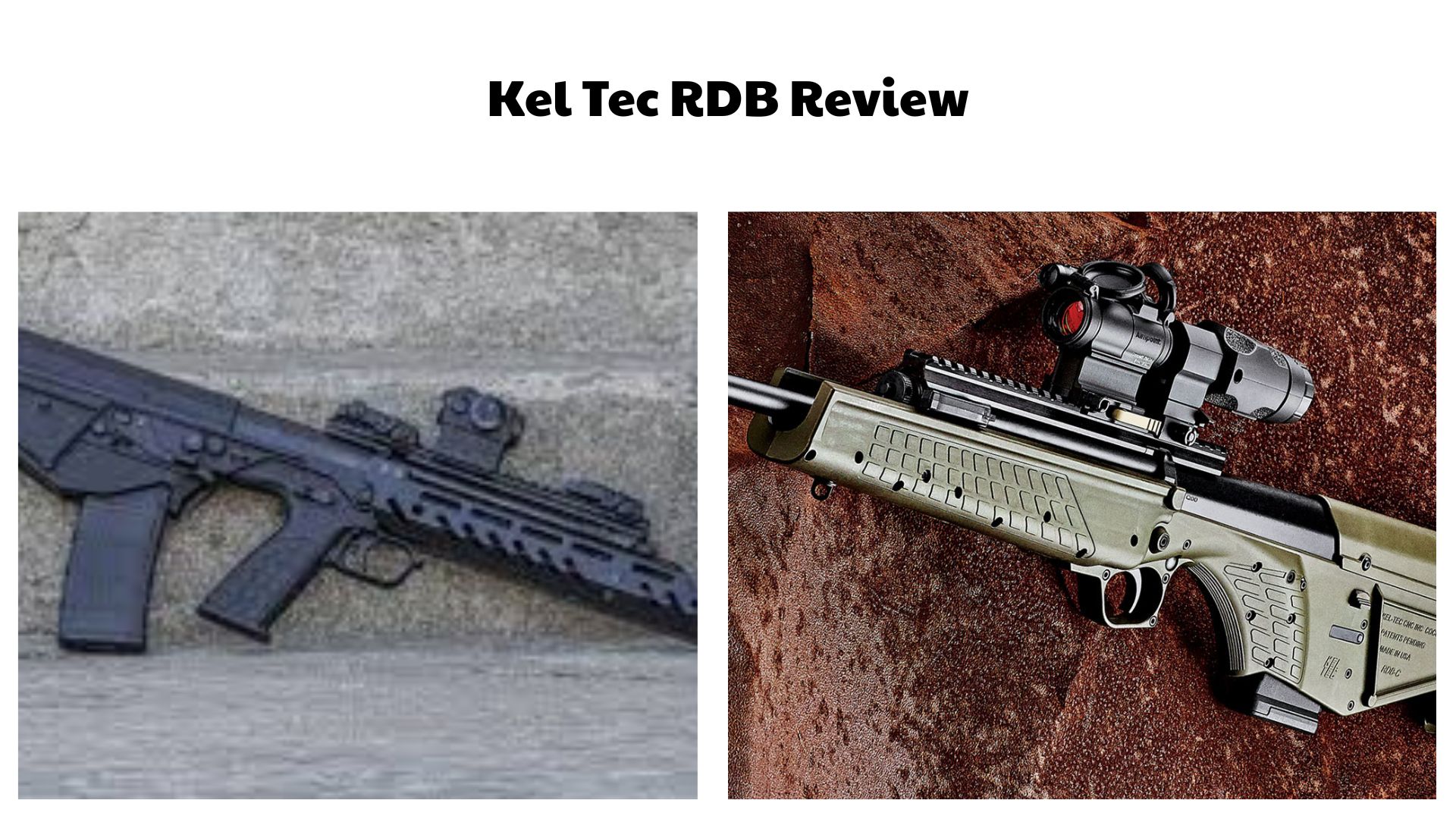

The Kel-Tec RDB is a modern 5.56 NATO bullpup rifle designed to improve upon traditional bullpup shortcomings while maintaining compact size and full rifle performance. Unlike conventional rifles where the action sits in front of the trigger, the RDB places the action behind the grip, significantly reducing overall length without sacrificing barrel length or ballistic efficiency.
Its most distinctive feature is the downward ejection system, which directs spent casings away from the shooter, eliminating one of the biggest issues found in many bullpup designs. Combined with fully ambidextrous controls, AR-15 magazine compatibility, and a lightweight polymer construction, the RDB is designed for usability, versatility, and compact tactical performance.
Kel Tec RDB Overview
What Is the Kel Tec RDB?
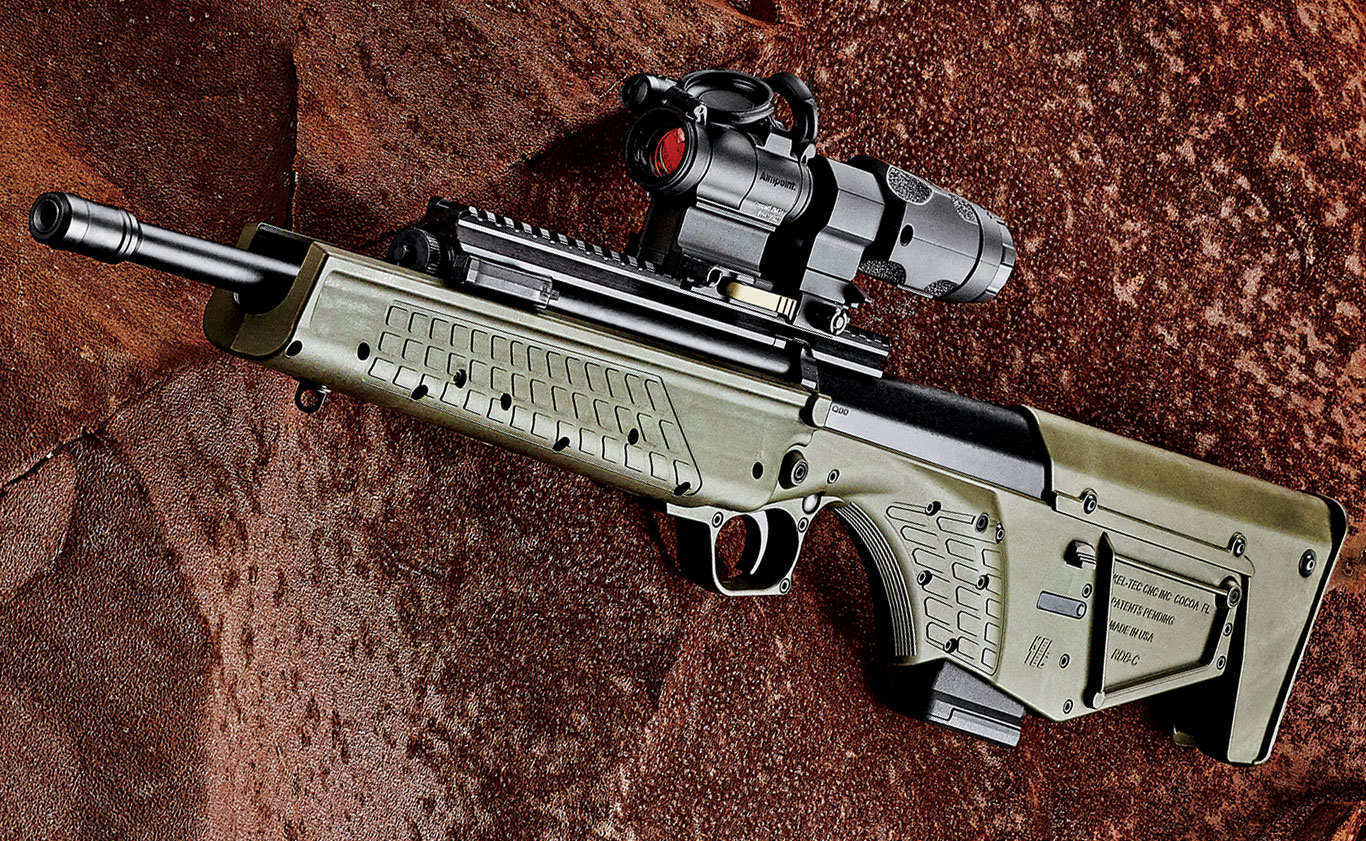
The Kel Tec RDB (Rifle Downward-ejecting Bullpup) is a semi-automatic, gas-operated rifle chambered in 5.56 NATO. It is designed as a compact tactical firearm that maintains full rifle performance in a shortened platform. The key innovation is its downward ejection system, which expels spent casings through a chute in front of the trigger guard.
Unlike many bullpups that feel unintuitive or require retraining, the RDB is engineered to feel closer to AR-style handling while offering a significantly shorter overall length.
History and Development of the RDB Platform
Kel-Tec developed the RDB as part of its ongoing effort to innovate in the bullpup rifle category. Building on earlier platforms like the RFB, the company aimed to resolve common issues such as side ejection interference, complex triggers, and inconsistent ergonomics.
The RDB was designed to be simpler, more user-friendly, and more reliable, focusing on ambidextrous operation, improved maintenance access, and a more refined shooting experience.
Meaning Behind “RDB” (Rifle Downward-ejecting Bullpup)
The name “RDB” directly describes the rifle’s core engineering concept:
Rifle (5.56 NATO platform), Downward-ejecting (brass exits downward), and Bullpup (rear-mounted action design).
This naming reflects the rifle’s engineering-first philosophy rather than traditional marketing terminology.
Design Philosophy and Innovation
Bullpup Configuration Advantages
The bullpup design allows the RDB to maintain a full-length barrel while significantly reducing overall length. This improves maneuverability in tight environments such as vehicles, buildings, and close-quarters scenarios.
It also provides full rifle ballistic performance in a compact form factor, making it more practical than traditional carbines in confined spaces.
Downward Ejection System Explained
The RDB’s downward ejection system is one of its most innovative features. Instead of ejecting spent casings sideways, the rifle extracts and guides brass through an internal chute that releases it downward in front of the magazine well.
This design eliminates brass interference with the shooter’s face and optics and ensures safe use for both right- and left-handed shooters without modification.
Fully Ambidextrous Operation
The Kel Tec RDB is designed to be fully ambidextrous without requiring conversion parts. Controls such as the safety selector, magazine release, and general handling ergonomics are accessible from both sides.
This makes the rifle equally suitable for left- and right-handed shooters and reduces the need for training adaptation.
AR-15 Magazine Compatibility
The RDB uses standard AR-15/M4 magazines, providing significant logistical and practical advantages. Users can rely on widely available magazines without needing proprietary systems.
This compatibility also makes transitions from AR-platform rifles smoother for experienced shooters.
Key Specifications of Kel Tec RDB
Caliber and Barrel Options (5.56 NATO, 1:7 Twist)
The RDB is chambered in 5.56 NATO and commonly features a 1:7 twist rate barrel. This allows stabilization of a wide range of bullet weights, including heavier tactical ammunition.
Weight, Length, and Compact Size Benefits
The bullpup configuration enables a full-length barrel in a significantly shorter overall package. This improves mobility, handling, and transport convenience while maintaining rifle-level performance.
Gas System and Adjustable Regulator
The rifle uses a short-stroke gas piston system with an adjustable gas regulator. This allows shooters to tune the rifle for different ammunition types and suppressor use while improving reliability and recoil control.
Trigger Mechanism Overview
Due to the bullpup layout, the RDB uses a mechanical linkage trigger system. While functional and reliable, it typically has a heavier and longer pull compared to AR-style triggers.
Materials and Polymer Construction
The RDB uses a polymer-heavy construction to reduce weight and manufacturing cost. While durable enough for general use, it prioritizes practicality over premium metal construction.
Build Quality and Engineering
Internal Mechanism Simplicity
Despite its futuristic appearance, the RDB features a relatively simple internal design. Fewer moving parts contribute to easier maintenance and improved functional reliability.
Bolt Carrier and Operating System Design
The bolt carrier group is compact and integrated into the rear of the rifle. It operates via a short-stroke gas piston system that ensures controlled cycling and synchronized downward ejection.
Field Stripping and Maintenance
The RDB can be field stripped without specialized tools. Basic maintenance involves accessing the rear assembly, bolt system, and cleaning the downward ejection channel.
Modular Construction Design Groups
The rifle is built in modular sections including the upper receiver, trigger housing, and gas system assembly, allowing for easier maintenance and part replacement.
Ergonomics and Handling
Balance and Weight Distribution
With the action positioned at the rear, the RDB has a rear-biased weight distribution. This improves muzzle control but can feel unusual for AR-15 users initially.
Grip, Controls, and Manual of Arms
The rifle features a naturally positioned pistol grip and centrally located controls. While intuitive, the manual of arms differs from traditional AR platforms and requires some adaptation.
Magazine Release and Reloading Process
The magazine release is centrally located behind the magwell, and reloads are performed in a slightly different motion compared to AR-style rifles.
Charging Handle Placement and Use
The charging handle is ambidextrous and non-reciprocating, allowing manipulation from either side without interfering with firing operations.
Shooting Performance
Accuracy Expectations (Battle Rifle Level Precision)
The RDB delivers practical combat accuracy suitable for defensive and tactical use. It is not a precision rifle but is capable of consistent hits at typical engagement distances.
Recoil Management and Control
The gas system and compact design result in manageable recoil for a 5.56 NATO rifle. Muzzle rise is controlled, allowing fast follow-up shots.
Suppressor Use and Gas Adjustment
The adjustable gas regulator allows the rifle to function effectively with suppressors while reducing gas blowback and maintaining reliable cycling.
Reliability in Field Conditions
Reliability is generally good when properly maintained, although some users report variability between units due to manufacturing tolerances.
Common Malfunctions and Troubleshooting
Common issues include failure to eject in dirty conditions, sensitivity to magazine quality, and occasional trigger linkage wear in high round-count use.
Pros and Cons of Kel Tec RDB
Advantages
Lightweight and compact bullpup design
One of the strongest advantages of the Kel Tec RDB is its compact bullpup configuration combined with a relatively light overall weight. By placing the action behind the trigger, the rifle achieves a full-length barrel in a much shorter package, making it highly maneuverable in tight spaces such as vehicles, indoor environments, and confined shooting positions.
Despite its compact size, it still delivers full 5.56 NATO performance, making it practical for both recreational and defensive applications.
Fully ambidextrous operation
The RDB is designed from the ground up to be truly ambidextrous without requiring conversion kits or modifications. All major controls—including the safety selector, magazine release, and charging operation—are accessible from either side.
This makes the platform especially attractive for left-handed shooters and reduces training complexity when multiple users share the same firearm.
Downward ejection eliminates brass-to-face issues
Unlike many bullpup rifles that eject spent casings near the shooter’s cheek or shoulder, the RDB uses a downward ejection system. This eliminates the common “brass-in-the-face” problem and allows comfortable use for both right- and left-handed shooters.
It also improves usability when shooting near barriers or in confined positions where side ejection could cause interference.
Adjustable gas system for tuning
The adjustable gas regulator allows shooters to tune the rifle based on ammunition type, environmental conditions, and suppressor use. This improves reliability and helps reduce excessive recoil or gas blowback.
Proper gas tuning also contributes to smoother cycling and extended component life when optimized correctly.
Disadvantages
Heavy use of polymer construction
The RDB relies heavily on polymer materials to reduce weight and manufacturing cost. While this keeps the rifle lightweight and affordable, some shooters prefer more metal reinforcement in high-stress areas for increased confidence in long-term durability.
Trigger quality below premium bullpups
Like most bullpup rifles, the RDB uses a linkage-based trigger system, which results in a heavier and less crisp trigger pull compared to AR-15 platforms or higher-end bullpups such as the Steyr AUG or Tavor X95.
Mixed reliability reports depending on unit
User feedback on reliability is mixed. Some rifles run flawlessly, while others may experience issues depending on factory tolerances, maintenance habits, or ammunition selection.
This inconsistency is one of the most commonly cited concerns among experienced users.
Ergonomics not as refined as competitors
Although innovative, the RDB’s ergonomics are not as polished as some competing bullpups. Controls can feel less intuitive at first, and the overall handling experience may require adjustment for shooters transitioning from AR-style rifles.
Kel Tec RDB vs Competing Bullpups
RDB vs IWI Tavor X95
The IWI Tavor X95 is often considered a more battle-proven bullpup with stronger military adoption and refined ergonomics. Compared to the RDB, the X95 typically offers:
– Better overall durability perception
– More refined controls and feel
– Heavier but more robust construction
However, the RDB has advantages in downward ejection comfort, lighter weight, and often lower price point, making it more accessible for civilian shooters.
RDB vs Steyr AUG
The Steyr AUG is a classic bullpup design known for reliability and iconic engineering. Compared to the RDB:
– The AUG offers superior proven reliability and build quality
– The RDB offers better ambidextrous usability
– The AUG has a more premium trigger feel (depending on model)
– The RDB is typically more affordable and AR-mag compatible
RDB vs Springfield Hellion
The Springfield Hellion (based on VHS-2 design) is a modern competitor with improved ergonomics and rail space. Compared to the RDB:
– The Hellion provides more modern accessory mounting options
– The RDB is lighter and more compact in many configurations
– The Hellion generally feels more refined in controls
– The RDB remains simpler and often less expensive
Value Comparison in Price Category
In terms of value, the Kel Tec RDB is typically positioned as a mid-range bullpup option. It competes by offering innovative features like downward ejection and AR-mag compatibility at a lower price than premium European or military-adopted platforms.
While it may not match the refinement of higher-end bullpups, it delivers strong value for shooters seeking a compact 5.56 platform without a premium price tag.
Reliability and Real-World Use
Reported User Experiences
Real-world feedback on the RDB is varied. Many users report smooth cycling and reliable operation with proper maintenance and quality ammunition. Others report occasional feeding or ejection issues, often linked to break-in periods or magazine quality.
Factory Quality Control Variability
One of the most frequently discussed aspects of Kel Tec firearms is variability in factory quality control. Some RDB units perform exceptionally well out of the box, while others may require minor tuning or break-in to reach optimal reliability.
Long-Term Durability Considerations
Long-term durability appears generally acceptable for civilian and range use, though heavy-duty professional or combat use may reveal limitations compared to more established military-grade bullpups.
Suitability for Range vs Duty Use
The RDB is widely considered more suitable for recreational shooting, training, and general defensive use rather than high-intensity duty applications. While capable, it is often viewed as a civilian innovation platform rather than a hardened service rifle.
Customization and Accessories
Optics Mounting Options
The RDB features a top Picatinny rail, allowing users to mount a wide range of optics including red dots, holographic sights, and magnified scopes. This enhances its versatility across different shooting roles.
Suppressor Compatibility
With its adjustable gas system, the RDB can be used with suppressors more effectively than many non-adjustable rifles. Proper tuning helps reduce gas blowback and improves cycling consistency when suppressed.
Aftermarket Support and Limitations
Aftermarket support for the RDB is more limited compared to AR-15 platforms. While some accessories exist, customization options remain relatively restricted due to its unique bullpup architecture.
Magazines and Compatibility Notes
The rifle uses standard AR-15 magazines, which is a major advantage. However, magazine quality can significantly impact reliability, making high-quality mags strongly recommended.
Who Should Buy the Kel Tec RDB?
Ideal Users (Recreational Shooters, Bullpup Enthusiasts)
The Kel Tec RDB is best suited for recreational shooters who want a compact, innovative rifle with modern features. It is also ideal for bullpup enthusiasts interested in experimenting with downward ejection and non-traditional rifle layouts.
It appeals to users who prioritize compactness, ambidextrous usability, and affordability over military-grade refinement.
Not Recommended For (Duty/Professional Users Seeking Premium Reliability)
The RDB may not be the best choice for users requiring maximum duty-grade reliability, such as military or law enforcement applications. Shooters who prioritize proven long-term durability and extensive field testing may prefer more established platforms like the Tavor or AUG.
Final Verdict
Overall Value Assessment
The Kel Tec RDB delivers strong value as an innovative bullpup rifle with unique features such as downward ejection, ambidextrous controls, and AR-mag compatibility. It stands out as an affordable entry into the bullpup category.
Innovation vs Execution Balance
While the RDB introduces several clever engineering solutions, its execution is not always as refined as competing premium bullpups. This creates a balance between innovation and practical consistency that varies depending on user expectations.
Is the Kel Tec RDB Worth It?
The Kel Tec RDB is worth considering for shooters who value compact design, innovation, and affordability in a 5.56 bullpup platform. However, those seeking the highest level of refinement, consistency, and battle-proven reliability may prefer more established alternatives.
FAQ – Kel Tec RDB Review (50+ Questions)
1. What is the Kel Tec RDB?
The Kel Tec RDB is a semi-automatic 5.56 NATO bullpup rifle designed with a downward ejection system, ambidextrous controls, and a compact layout that preserves full barrel length while reducing overall size.
2. What does RDB stand for?
RDB stands for “Rifle Downward-ejecting Bullpup,” directly describing its core engineering feature where spent casings are ejected downward instead of sideways.
3. Is the Kel Tec RDB a bullpup rifle?
Yes, the RDB is a true bullpup rifle, meaning the action and magazine are located behind the trigger group, allowing a shorter overall length without sacrificing barrel length or ballistic performance.
4. What caliber does the RDB use?
The Kel Tec RDB is chambered in 5.56 NATO, making it compatible with both 5.56x45mm NATO and .223 Remington ammunition depending on the specific load and configuration.
5. Is the Kel Tec RDB AR-15 compatible?
It is partially compatible in that it uses standard AR-15 magazines, but internally it is not an AR-15 platform. The operating system, trigger mechanism, and layout are completely different.
6. How does the downward ejection system work?
The rifle extracts spent casings internally and guides them through a built-in chute that directs them downward in front of the magazine well. This prevents side ejection and improves ambidextrous usability.
7. Is the RDB truly ambidextrous?
Yes, the RDB is designed to be fully ambidextrous without requiring conversion kits. Controls such as the safety, magazine release, and charging handle are accessible from both sides.
8. What makes the RDB different from other bullpups?
The biggest difference is its downward ejection system, which eliminates the common bullpup issue of brass hitting the shooter or interfering with left-handed use.
9. Is the Kel Tec RDB reliable?
Reliability is generally good when properly maintained, but user reports vary. Some rifles run flawlessly while others may require break-in or magazine tuning.
10. What are the most common RDB issues?
Common issues include failure to eject in dirty conditions, sensitivity to low-quality magazines, and occasional feeding inconsistencies depending on ammunition.
11. Does the RDB have a good trigger?
The trigger is functional but not exceptional. Like most bullpups, it uses a linkage system, resulting in a heavier and less crisp pull compared to AR-15 triggers.
12. How heavy is the Kel Tec RDB?
The RDB is relatively lightweight for a bullpup due to its polymer construction, typically falling into a mid-weight rifle category suitable for extended handling without excessive fatigue.
13. What is the barrel length of the RDB?
Most versions feature a barrel length that maintains full rifle performance while keeping the overall length compact due to the bullpup configuration.
14. Is the RDB good for beginners?
Yes, it can be suitable for beginners due to its compact size and reduced recoil, but the non-AR manual of arms may require some learning.
15. Is the Kel Tec RDB good for self-defense?
It can be used for home defense due to its compact size and controllability, though many users still prefer AR-15 platforms for familiarity and aftermarket support.
16. Can the RDB be used with a suppressor?
Yes, the RDB supports suppressor use, especially when paired with its adjustable gas system, which helps reduce gas blowback and maintain reliable cycling.
17. How does the gas system work on the RDB?
It uses a short-stroke gas piston system that drives the bolt carrier rearward, cycling the action and coordinating downward ejection.
18. Is the gas system adjustable?
Yes, the adjustable gas regulator allows tuning for different ammunition types and suppressor use to optimize reliability and recoil.
19. How accurate is the Kel Tec RDB?
The RDB offers practical combat-level accuracy suitable for defensive and mid-range shooting, but it is not designed as a precision rifle.
20. Is the RDB better than an AR-15?
It depends on priorities. The AR-15 is more modular and widely supported, while the RDB is more compact and innovative but less refined in ergonomics and aftermarket support.
21. How does the RDB compare to the Tavor X95?
The Tavor X95 is generally considered more refined and battle-proven, while the RDB offers better affordability and a unique downward ejection system.
22. How does the RDB compare to the Steyr AUG?
The AUG is more established with a reputation for durability, while the RDB offers ambidextrous use and AR magazine compatibility at a lower cost.
23. Is the Kel Tec RDB better than the Hellion?
The Hellion has more modern ergonomics and accessory support, while the RDB is lighter, simpler, and often more affordable.
24. What are the pros of the RDB?
Key pros include compact size, ambidextrous design, downward ejection, AR magazine compatibility, and adjustable gas system.
25. What are the cons of the RDB?
Cons include a heavier trigger, polymer-heavy construction, inconsistent QC reports, and limited aftermarket support.
26. Is the RDB made mostly of polymer?
Yes, the rifle uses significant polymer components to reduce weight and cost, with metal used in key internal areas.
27. How durable is the Kel Tec RDB?
It is durable enough for civilian and range use, though long-term military-style endurance testing is more limited compared to established service rifles.
28. Can the RDB handle high round counts?
It can handle regular high-round shooting with proper maintenance, though long-term durability depends on care and individual unit quality.
29. How easy is it to clean the RDB?
Cleaning is moderately easy but more complex than an AR-15 due to the bullpup layout and downward ejection channel.
30. Can the RDB be field stripped easily?
Yes, it can be field stripped without special tools, though the process is less intuitive than traditional AR platforms.
31. What magazines does the RDB use?
It uses standard AR-15/M4 magazines, which are widely available and inexpensive.
32. Does the RDB have last round bolt hold open?
Yes, the rifle includes a bolt hold-open feature for improved reload efficiency and user feedback.
33. Is the charging handle ambidextrous?
Yes, the charging handle can be operated from either side, supporting full ambidextrous use.
34. Where is the magazine release located?
The magazine release is centrally located behind the magazine well for intuitive access in a bullpup layout.
35. Is the RDB comfortable to shoot?
Yes, it is generally comfortable due to its compact size and reduced recoil, though ergonomics may feel unfamiliar at first.
36. Does the RDB have heavy recoil?
No, recoil is mild for a 5.56 rifle, aided by the gas system and compact design.
37. Is the RDB suitable for left-handed shooters?
Yes, it is one of the most left-hand-friendly bullpups due to its downward ejection system.
38. Does the RDB overheat during extended firing?
Like most lightweight rifles, it can heat up under sustained fire, but normal civilian use does not typically cause issues.
39. What is the price range of the Kel Tec RDB?
It is generally positioned in the mid-range bullpup price category, offering affordability compared to premium imported models.
40. Is the RDB considered a budget bullpup?
Yes, it is often considered a more affordable entry into the bullpup market compared to high-end competitors.
41. Is Kel Tec known for quality control issues?
Kel Tec has a reputation for variable quality control, which can affect consistency between individual rifles.
42. What are common reliability complaints?
Complaints typically involve feeding issues, magazine sensitivity, or occasional ejection inconsistencies in some units.
43. Can the RDB be used for hunting?
Yes, it can be used for certain types of hunting where 5.56 is legal and appropriate for target game.
44. Is the RDB good for tactical training?
It can be used for training, especially for bullpup familiarity, though AR platforms remain more common in training environments.
45. Does the RDB support optics easily?
Yes, it includes a top Picatinny rail suitable for red dots, scopes, and other optics.
46. What kind of sights work best?
Red dot sights and low-power magnified optics are commonly used for balancing speed and accuracy.
47. Is recoil manageable?
Yes, recoil is very manageable due to the gas system and compact bullpup design.
48. How does the RDB eject brass?
It ejects brass downward through a chute located in front of the magazine well.
49. Does brass eject downward safely?
Yes, the design ensures spent casings do not interfere with the shooter or nearby equipment.
50. Is the RDB fun to shoot?
Many shooters find it enjoyable due to its compact size, unique design, and mild recoil.
51. What is the main advantage of bullpup design?
The main advantage is achieving a full-length barrel in a much shorter overall rifle length.
52. Does the RDB require special maintenance?
It does not require special tools, but attention to the ejection chute and gas system is important for reliability.
53. Is the RDB good value for money?
Yes, it is often considered a good value due to its innovative features at a lower price than premium bullpups.
54. Should you trust Kel Tec firearms?
Kel Tec firearms are innovative but sometimes inconsistent in quality, so experiences can vary by individual unit.
55. Is the Kel Tec RDB worth buying in 2026?
It depends on user priorities. It is worth considering for innovation, compactness, and affordability, but less ideal for those seeking maximum refinement and proven military-grade consistency.
Read more: