


Firearm ownership comes with responsibility, and one of the most important responsibilities is maintenance. Understanding How often should guns be cleaned? is essential for keeping any firearm safe, reliable, and long-lasting. Cleaning is not just a routine task—it directly affects how a gun performs under real conditions, whether at the range, in the field, or for home defense.
A common misconception among new gun owners is that firearms must be cleaned after every single use. While this approach is not harmful in itself, it is not always necessary. Modern firearms are designed to function under high levels of fouling and can often operate reliably for extended periods without immediate cleaning. Over-cleaning can sometimes even introduce unnecessary wear if done excessively or improperly.
Several key factors influence how often a firearm should be cleaned. These include how frequently it is used, the type of ammunition being fired, and the environment in which it operates. A handgun used weekly at an indoor range will not accumulate the same level of debris as a hunting rifle exposed to rain, mud, and dust in the field.
The goal of firearm maintenance is not perfection but balance. Owners must weigh reliability, safety, and practicality. A well-maintained gun should function smoothly without being over-serviced. This guide will break down exactly why cleaning matters and how to approach it in a realistic and effective way.
Why Gun Cleaning Matters ?
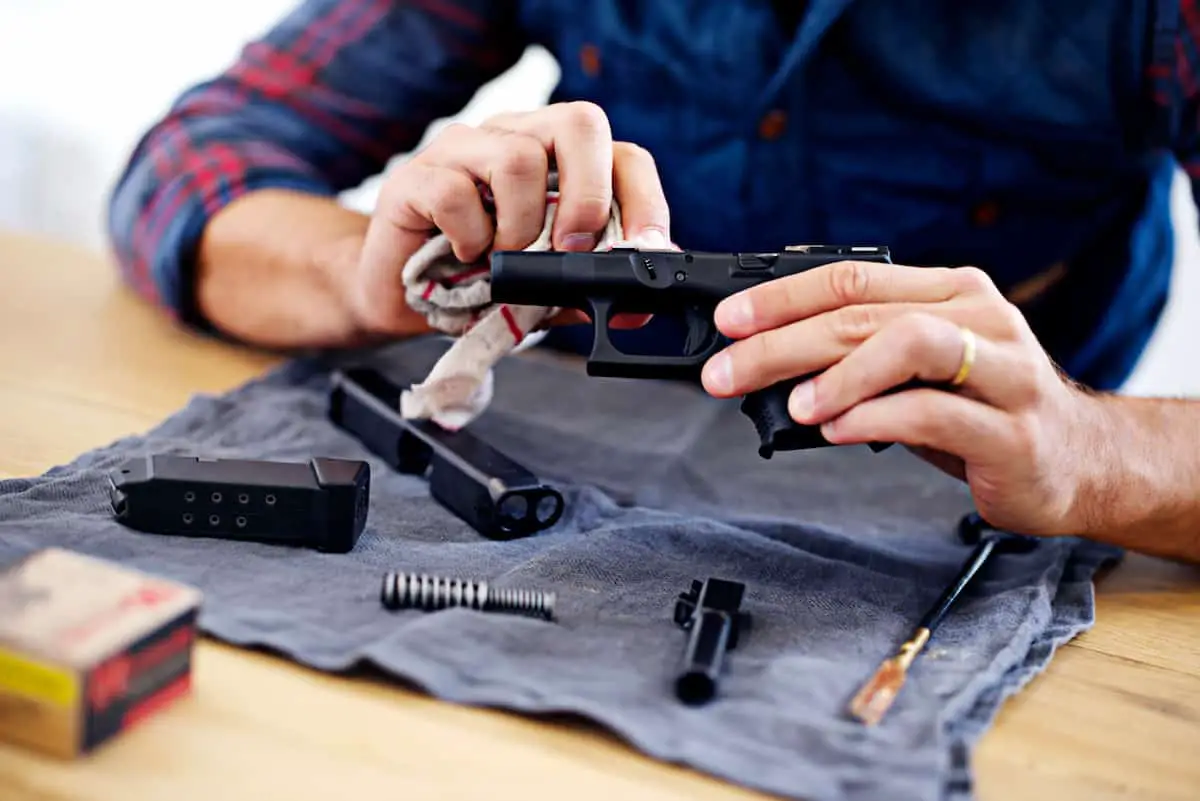
Preventing Carbon and Fouling Buildup
Every time a firearm is discharged, it produces residue. This includes carbon deposits, unburned powder particles, and microscopic metal fragments from bullets. Over time, this material builds up inside the barrel, chamber, and moving parts of the firearm.
Carbon fouling is one of the most common byproducts of shooting. It forms as a dark, sticky layer that adheres to metal surfaces. While small amounts of fouling are normal and expected, excessive buildup can begin to interfere with the firearm’s mechanical operation. This is especially important in semi-automatic firearms where cycling depends on precise movement of internal parts.
As fouling accumulates, it can gradually reduce accuracy. A dirty barrel may cause slight inconsistencies in bullet trajectory due to uneven friction and residue buildup. Although this change is often subtle at first, it can become more noticeable over time, especially in precision shooting scenarios.
Beyond accuracy, carbon and fouling can also impact reliability. Heavy buildup can affect the smooth cycling of the action, leading to issues such as failure to feed, failure to eject, or increased resistance in moving parts. These malfunctions are not always immediate, but they become more likely as residue continues to accumulate without maintenance.
In addition to carbon, copper and lead fouling can also build up depending on the ammunition used. These materials may bond to the inside of the barrel and require specific cleaning solutions to remove effectively. Left unchecked, this buildup can reduce overall performance and shorten the lifespan of the firearm’s internal components.
Understanding this process is key to answering How often should guns be cleaned? Because fouling builds gradually, cleaning schedules should be based on usage and exposure rather than a fixed rule. A firearm that is used frequently will naturally require more attention than one that is stored for occasional use.
Ultimately, preventing fouling buildup is not about keeping a firearm spotless at all times. It is about maintaining a functional balance where residue does not reach a level that compromises safety, accuracy, or reliability. This is the foundation of smart firearm maintenance and the reason regular inspection and cleaning remain essential parts of responsible gun ownership.
Preventing Rust and Corrosion
Rust and corrosion are silent threats that can damage a firearm even when it is not being used. Unlike carbon fouling, which is directly related to shooting, corrosion can develop simply from exposure to moisture, air, and even human contact. This is why understanding How often should guns be cleaned? is not only about performance, but also long-term preservation.
One of the most common causes of rust is moisture. Humidity in the air can slowly interact with exposed metal surfaces, especially if the firearm is stored in a non-climate-controlled environment. Even small changes in temperature can create condensation inside a safe or storage case. Over time, this moisture begins to oxidize metal parts, leading to rust formation.
Fingerprints are another surprisingly important factor. Human skin naturally contains oils, salts, and acids. When these substances are transferred onto a firearm’s surface, they can begin breaking down protective finishes. This is why even handling a gun without firing it can still contribute to corrosion risk if it is not properly cleaned afterward.
Ammunition type also plays a major role. Corrosive ammunition, although less common today, can leave behind chemical residues that attract moisture and accelerate rust formation. If such ammunition is used, immediate cleaning becomes essential to prevent long-term damage. Even non-corrosive ammunition can contribute to minor residue buildup that increases corrosion risk over time.
Proper storage helps reduce these risks but does not eliminate them completely. Using dehumidifiers, silica gel packs, or climate-controlled safes can significantly slow down corrosion. However, these measures should always be paired with regular inspection and cleaning. A stored firearm is not a maintenance-free firearm.
In practical terms, corrosion prevention is about consistency. A light protective oil layer combined with periodic cleaning creates a barrier that helps shield metal surfaces from environmental exposure. This is especially important for firearms stored long-term or carried daily.
Ultimately, rust prevention is a core part of answering How often should guns be cleaned? because it extends beyond shooting frequency. Even unfired firearms require attention to ensure they remain in safe and functional condition over time.
Reliability and Safety Factors
Reliability is one of the most important reasons firearm owners maintain regular cleaning habits. A firearm is a mechanical system that depends on precise movement between multiple components. When dirt, carbon, or debris builds up, it can interfere with that movement and reduce overall performance.
Dirty firearms are more prone to malfunctions such as misfeeds, failures to eject, and cycling issues. These problems may start small, appearing only occasionally, but they can become more frequent as buildup increases. In semi-automatic firearms, where timing and pressure are critical, even minor obstruction can affect function.
Regular cleaning helps ensure consistent performance by removing obstructions and restoring smooth operation. This does not mean the firearm must be spotless at all times, but it should remain within a condition where mechanical parts can move freely and predictably.
Safety is another critical factor. While modern firearms are designed with multiple safety mechanisms, poor maintenance can still contribute to unsafe conditions. A heavily fouled firearm may behave unpredictably, especially under stress or rapid firing conditions. Ensuring cleanliness reduces the likelihood of unexpected malfunctions.
This is particularly important for defensive firearms. A home defense or concealed carry weapon must function reliably under pressure. There is no opportunity for troubleshooting in a critical situation, which makes preventive maintenance essential. Regular cleaning ensures that the firearm is ready when it matters most.
From a practical standpoint, reliability and safety go hand in hand. A clean firearm is more predictable, easier to inspect, and less likely to fail when needed. This is why maintenance routines are not just recommended but considered a core part of responsible firearm ownership.
How Often Should You Clean a Gun?
After Every Range Session (Most Recommended Standard)
One of the most widely recommended practices is cleaning a firearm after every range session, especially for defensive or carry weapons. This approach focuses on reliability and consistency. By cleaning immediately after use, fresh fouling is removed before it has a chance to harden or accumulate in critical areas.
This method is particularly popular among concealed carry users and professionals who prioritize readiness. A clean firearm reduces uncertainty and ensures that every component is functioning as intended. Even if only a small number of rounds are fired, cleaning afterward provides reassurance and control over maintenance conditions.
Another benefit of this approach is inspection. Cleaning after use naturally leads to closer examination of internal parts. This helps identify early signs of wear, loose components, or potential issues before they become serious problems.
While this method is effective, it is also more time-consuming. It may not be necessary for every type of firearm use, especially for high-volume recreational shooting where modern firearms can tolerate more fouling.
Every 200–1000 Rounds (Usage-Based Approach)
A more flexible method for determining How often should guns be cleaned? is based on round count. Many shooters follow a cleaning schedule between 200 and 1,000 rounds, depending on firearm type, ammunition quality, and operating conditions.
This approach is especially common among sport shooters and range enthusiasts. It recognizes that modern firearms are engineered to function reliably under moderate fouling conditions. Instead of cleaning after every session, maintenance is performed when a certain level of use has been reached.
The exact interval can vary. Some pistols may run reliably for extended periods without cleaning, while precision rifles or tightly fitted firearms may require more frequent attention. Ammunition quality also influences this schedule, as dirtier-burning loads may accelerate fouling.
This method offers a balance between maintenance efficiency and performance reliability. It reduces unnecessary cleaning while still ensuring the firearm remains in good working condition.
Monthly or Scheduled Cleaning (Low-Use Firearms)
Firearms that are not used frequently still require regular maintenance. A monthly or scheduled cleaning approach is often used for stored or low-use guns. Even without firing, firearms can accumulate dust, moisture, and environmental residue over time.
This type of maintenance focuses less on fouling removal and more on inspection and preservation. A light cleaning combined with lubrication helps prevent corrosion and ensures that the firearm remains operational if needed.
Scheduled cleaning also provides an opportunity to verify storage conditions. Checking for humidity, rust spots, or mechanical issues helps maintain long-term reliability.
Seasonal Cleaning (Hunting Firearms)
Hunting firearms follow a seasonal maintenance pattern. They are typically cleaned before the hunting season begins to ensure full reliability in the field. This preparation step ensures that the firearm is free of dust, old residue, and storage-related buildup.
After the season ends, cleaning becomes even more important. Exposure to rain, snow, mud, and temperature changes can introduce moisture and debris into the firearm. A thorough cleaning after use helps prevent corrosion and prepares the firearm for long-term storage.
This seasonal approach is practical because it aligns maintenance with actual use conditions rather than arbitrary schedules. It ensures that hunting firearms remain dependable in real-world environments.
Factors That Affect Cleaning Frequency
There is no single fixed answer to How often should guns be cleaned? because firearm maintenance is influenced by several real-world conditions. Understanding these factors helps gun owners create a practical cleaning routine that matches their actual usage rather than following rigid or unnecessary rules.
Instead of relying on a universal schedule, experienced shooters adjust their maintenance habits based on usage, ammunition, environment, and storage conditions. These variables determine how quickly fouling builds up, how likely corrosion becomes, and how often inspection is truly needed.
Frequency of Use
The most important factor affecting cleaning frequency is how often the firearm is used. Every time a gun is fired, it produces carbon residue, unburned powder, and microscopic metal particles. The more rounds fired, the faster this buildup accumulates inside the barrel and action.
For high-volume shooters, such as competitive shooters or instructors, cleaning tends to happen more frequently. These users may fire hundreds or even thousands of rounds in a short period, which naturally increases fouling and wear. In these cases, maintenance is not optional but part of regular training routines.
On the other hand, casual shooters who visit the range occasionally may not need to clean their firearms as often. Modern firearms are designed to handle extended firing sessions without immediate performance loss. However, even low-use firearms still require periodic inspection to ensure reliability.
In simple terms, more shooting equals more residue. This direct relationship makes usage frequency one of the clearest indicators for determining cleaning needs.
Ammunition Type
Ammunition type plays a major role in how quickly a firearm becomes dirty. Different powders and bullet materials produce different levels of fouling. Some ammunition burns cleaner, while others leave heavier residue inside the barrel and action.
Corrosive ammunition is the most demanding in terms of maintenance. It leaves behind chemical residues that can attract moisture and accelerate rust formation. If this type of ammunition is used, immediate cleaning is essential to prevent long-term damage.
Non-corrosive modern ammunition is much more forgiving. It still produces carbon and fouling, but at a slower rate and without the same chemical corrosion risk. This allows for more flexible cleaning schedules, especially for recreational shooters.
Even among non-corrosive options, quality varies. Budget ammunition may produce more residue than premium loads due to differences in powder composition. Over time, this can influence how frequently cleaning is needed.
Understanding ammunition behavior helps shooters adjust expectations and maintenance routines realistically rather than assuming all rounds create the same level of fouling.
Environment and Conditions
Environmental conditions significantly affect firearm cleanliness and maintenance needs. A firearm used in a controlled indoor environment will stay cleaner longer than one exposed to outdoor elements.
Humidity is one of the biggest environmental factors. Moist air increases the likelihood of rust and corrosion, especially on unprotected metal surfaces. Even short-term exposure to high humidity can begin oxidation processes if the firearm is not properly maintained.
Dust and sand also contribute to faster wear. These particles can enter moving parts and create friction or abrasion. In extreme environments, such as deserts or outdoor field conditions, firearms may require more frequent cleaning and inspection to ensure smooth operation.
Temperature changes can also affect firearm condition. Rapid shifts between hot and cold environments can cause condensation inside barrels or receivers, increasing moisture exposure. This is especially relevant when moving firearms between indoor storage and outdoor use.
Environmental awareness is essential because it directly impacts corrosion risk and mechanical reliability, even if the firearm is not heavily used.
Storage Conditions
How a firearm is stored has a long-term impact on its maintenance needs. Proper storage can significantly reduce cleaning frequency, while poor storage conditions can increase it.
Firearms stored in climate-controlled environments, such as safes with dehumidifiers, are better protected against rust and moisture damage. These conditions help maintain a stable environment that slows down corrosion and reduces the need for frequent deep cleaning.
In contrast, firearms stored in vehicles, garages, or damp environments are exposed to fluctuating temperatures and humidity levels. These conditions can accelerate corrosion and require more frequent inspection and maintenance.
Even when a firearm is not being used, improper storage can slowly degrade its condition. This is why storage is considered just as important as cleaning when answering How often should guns be cleaned?
Good storage practices do not eliminate the need for cleaning, but they can extend the time between maintenance sessions and help preserve long-term firearm condition.
Do You Really Need to Clean a Gun After Every Use?
One of the most debated topics among firearm owners is whether a gun should always be cleaned after every use. The answer depends on the intended purpose of the firearm and the user’s approach to maintenance.
There are two main schools of thought: the “always clean” approach and the “clean when needed” approach. Both are valid, but they serve different priorities.
The “Always Clean” Approach
The “always clean” approach is common among defensive firearm users, law enforcement personnel, and responsible concealed carriers. The primary goal here is reliability under all conditions.
Cleaning after every use ensures that fouling does not have time to build up or harden inside the firearm. It also allows for regular inspection of critical components such as springs, extractors, and firing mechanisms.
This method reduces uncertainty. A firearm that is cleaned regularly is more predictable and less likely to experience unexpected malfunctions. For defensive situations, this level of consistency is highly valued.
The downside is that it requires more time and effort. Frequent disassembly and cleaning may also lead to unnecessary wear if not done carefully.
The “Clean When Needed” Approach
The “clean when needed” approach is more common among experienced shooters and recreational firearm users. This method is based on performance rather than strict schedules.
Modern firearms are designed to operate under a wide range of conditions, including moderate fouling. Many can function reliably for hundreds or even thousands of rounds without cleaning, depending on design and ammunition quality.
Instead of cleaning after every session, users monitor performance and condition. Cleaning is performed when signs of buildup appear or after a certain round count is reached.
This approach reduces unnecessary maintenance and minimizes wear from repeated disassembly. It is efficient and practical for high-volume shooters.
Balanced Recommendation
The most practical approach often lies between the two extremes. A balanced maintenance routine focuses on regular inspection, light cleaning, and periodic deep cleaning when necessary.
Rather than over-cleaning or under-maintaining, shooters benefit most from consistency. Light maintenance after use, combined with scheduled deeper cleaning, provides both reliability and efficiency.
In the end, answering How often should guns be cleaned? is less about strict rules and more about understanding how your firearm is used in real conditions. Balance is the key to long-term performance and safety.
Risks of Over-Cleaning Your Gun
While regular maintenance is important for firearm performance, over-cleaning is a real issue that many gun owners overlook when thinking about How often should guns be cleaned? Cleaning too frequently or too aggressively can introduce problems that are just as serious as neglect.
One of the most common risks is increased wear on small parts due to repeated disassembly. Every time a firearm is taken apart, components are handled, moved, and reassembled. Over time, this repeated process can contribute to gradual wear, especially on pins, springs, and tight-fitting parts.
Another risk is improper reassembly. Firearms are mechanical systems that require correct alignment and installation of parts. Frequent disassembly increases the chance of small mistakes, such as misaligned components or improperly seated springs. Even minor errors can affect reliability and safety.
Over-cleaning can also place unnecessary stress on mechanical components. Excessive scrubbing or repeated use of harsh solvents may gradually strip protective finishes or dry out lubricated surfaces. This can lead to increased friction or reduced smoothness in operation.
Finally, over-cleaning is often time-consuming without providing additional benefit. Modern firearms are designed to tolerate a reasonable level of fouling, meaning that constant cleaning does not always improve performance. In some cases, it simply adds effort without measurable improvement.
The key takeaway is that cleaning should be purposeful, not excessive. Maintenance is about keeping the firearm functional, not achieving perfection after every use.
Risks of Under-Cleaning Your Gun
On the other side of the spectrum, under-cleaning presents more direct and noticeable risks. When discussing How often should guns be cleaned?, neglecting maintenance can lead to performance and safety issues over time.
One of the first problems that develops is carbon buildup affecting accuracy. As fouling accumulates inside the barrel, it can create uneven surfaces that slightly alter bullet trajectory. While this effect may start small, it becomes more noticeable with extended use.
Another major risk is a higher chance of malfunctions. Dirt, debris, and carbon buildup can interfere with the firearm’s cycling process. This can result in failures such as misfeeds, failure to eject, or inconsistent firing behavior. These issues may not occur immediately but tend to increase as maintenance is delayed.
Rust and corrosion are also serious consequences of neglect. Moisture, humidity, and environmental exposure can slowly degrade metal surfaces. Without regular cleaning and lubrication, corrosion can develop in critical areas, potentially damaging the firearm permanently if left untreated.
Over time, under-cleaning can also reduce the overall lifespan of a firearm. Excessive wear caused by friction, corrosion, or buildup can shorten the service life of internal components. While firearms are durable, they are not maintenance-free.
In short, neglecting cleaning does not always cause immediate failure, but it increases long-term risk. Proper maintenance ensures consistent performance and preserves the firearm’s condition over time.
Recommended Gun Cleaning Schedule (Summary Guide)
To help simplify the question How often should guns be cleaned?, a general maintenance schedule can be used as a practical reference. While individual needs may vary, these guidelines provide a balanced starting point for most firearm owners.
- Defensive firearms: Clean after every range session. These firearms require maximum reliability, and frequent inspection ensures readiness at all times.
- Range guns: Clean every 500–1000 rounds. These firearms can tolerate more fouling and are often used in controlled environments.
- Hunting rifles: Clean seasonally or after exposure to weather. Environmental conditions such as rain, snow, and mud are key factors.
- Stored firearms: Inspect every 2–3 months. Even unused firearms need periodic maintenance to prevent rust and ensure long-term condition.
This schedule is not rigid but serves as a practical framework. Adjustments should be made based on ammunition type, environment, and individual usage patterns.
Best Practices for Firearm Maintenance
Proper firearm care goes beyond cleaning frequency. Best practices ensure that maintenance is effective, safe, and consistent over time.
- Always inspect before and after use: Regular inspection helps identify wear, damage, or buildup early. This prevents small issues from becoming larger problems.
- Use proper cleaning tools and solvents: Firearm-specific products are designed to clean effectively without damaging metal finishes or internal components.
- Do not over-oil or over-clean: Excess lubrication can attract dirt, and excessive cleaning can cause unnecessary wear. A balanced approach is best.
- Store in dry, controlled environments: Proper storage reduces moisture exposure and helps prevent rust and corrosion over time.
- Follow manufacturer recommendations: Each firearm may have specific maintenance guidelines that should always be considered as a primary reference.
These best practices work together to maintain reliability, safety, and longevity. When applied consistently, they help ensure that a firearm remains in good working condition without unnecessary maintenance effort.
Common Gun Cleaning Mistakes
Even experienced firearm owners can develop habits that reduce effectiveness when maintaining their guns. When discussing How often should guns be cleaned?, it is just as important to understand what not to do as it is to understand proper cleaning frequency. Many issues in firearm performance come not from lack of cleaning, but from incorrect cleaning practices.
- Using too much oil or lubricant: Excess lubrication is one of the most common mistakes. While lubrication is essential for smooth operation, too much oil can attract dust, carbon, and debris. This creates a sticky buildup that may interfere with moving parts instead of protecting them.
- Skipping magazine maintenance: Magazines are often overlooked, but they play a critical role in feeding ammunition reliably. Dirt, dust, or spring wear inside magazines can lead to feeding issues, even if the firearm itself is clean.
- Ignoring internal inspection: Cleaning without inspecting internal components is a missed opportunity. Small cracks, worn springs, or loose parts can go unnoticed if the firearm is only superficially cleaned.
- Cleaning without proper disassembly knowledge: Improper disassembly can lead to damage or incorrect reassembly. Each firearm has a specific design, and forcing parts apart or putting them back incorrectly can affect function and safety.
- Over-cleaning without necessity: As discussed earlier, cleaning too often can cause unnecessary wear on components and finishes. It may also introduce handling errors through repeated disassembly.
Avoiding these mistakes helps ensure that maintenance improves firearm performance rather than creating new problems. A careful, informed approach is always more effective than aggressive or unnecessary cleaning routines.
Conclusion
Understanding How often should guns be cleaned? ultimately comes down to balance, not strict rules. Firearms are designed to function reliably under a range of conditions, but they still require responsible maintenance to ensure long-term performance and safety.
There is no single cleaning schedule that applies to every firearm or every shooter. Instead, cleaning frequency depends on how often the firearm is used, the environment it is exposed to, and the type of ammunition being fired. A defensive handgun, a hunting rifle, and a range firearm will all have different maintenance needs.
Most firearms perform best with regular but not excessive cleaning. Over-cleaning can create unnecessary wear, while under-cleaning can lead to malfunctions, corrosion, and reduced reliability. The goal is not perfection, but consistent functionality and safety.
In the end, proper firearm maintenance is about awareness and responsibility. By understanding your firearm’s needs and following practical cleaning habits, you ensure safe operation, reliable performance, and long-term durability.
Frequently Asked Questions (FAQ) – How Often Should Guns Be Cleaned?
1. How often should guns be cleaned?
There is no single universal rule. Most firearms should be cleaned based on usage, environment, and ammunition type. Defensive firearms are often cleaned after each use, while range guns may be cleaned every 500–1000 rounds. The key idea is consistency, not perfection. A firearm should be clean enough to function reliably without being over-cleaned unnecessarily.
2. Do guns need to be cleaned after every use?
Not always. While many defensive shooters prefer cleaning after every use to ensure maximum reliability, modern firearms can often handle multiple sessions without issues. Cleaning after every use is a conservative approach, but not a strict requirement for all firearm types.
3. What happens if you don’t clean your gun?
If a firearm is not cleaned, carbon buildup, dirt, and moisture can accumulate over time. This may lead to malfunctions such as feeding issues, reduced accuracy, or corrosion. In extreme cases, neglect can shorten the firearm’s lifespan and affect safety and reliability.
4. Can you over-clean a gun?
Yes. Over-cleaning can cause unnecessary wear on internal components, especially if the firearm is repeatedly disassembled. It can also lead to improper reassembly or damage from excessive use of cleaning chemicals. Balance is more important than frequency alone.
5. What is the best cleaning schedule for a handgun?
A common recommendation is to clean defensive handguns after every range session. For recreational handguns, cleaning every few hundred rounds is often sufficient. The key is ensuring the firearm remains reliable and lightly lubricated at all times.
6. How often should a concealed carry gun be cleaned?
Concealed carry firearms should be cleaned more frequently than recreational guns. Many experts recommend cleaning after each use or at least once a month if carried regularly. This ensures reliability in high-stress situations where failure is not an option.
7. How often should rifles be cleaned?
Rifles can often go longer between cleanings compared to handguns. Many shooters clean rifles every 200–1000 rounds depending on precision requirements. Hunting rifles should also be cleaned before and after hunting seasons.
8. Do modern guns need less cleaning?
Yes. Modern firearms are built with improved materials and tighter manufacturing standards. This allows them to function reliably even with moderate fouling. However, this does not eliminate the need for regular maintenance.
9. What is carbon buildup in guns?
Carbon buildup is residue left from burning gunpowder during firing. It collects inside the barrel and action and can eventually affect performance if not cleaned. It is one of the main reasons firearms require maintenance.
10. Does cleaning improve accuracy?
Yes, to a point. A moderately clean barrel ensures consistent bullet travel. However, over-cleaning can sometimes temporarily affect accuracy in precision rifles until the barrel is “settled” again after cleaning.
11. Can dirty guns still work?
Yes, many firearms can still function when dirty, especially modern designs. However, reliability decreases as fouling increases. A very dirty firearm is more likely to experience malfunctions.
12. How often should guns be cleaned if not used?
Even unused firearms should be inspected and lightly cleaned every 2–3 months. This prevents rust, checks storage conditions, and ensures the firearm remains in working order.
13. What is the biggest risk of not cleaning a gun?
The biggest risks are corrosion, malfunctions, and reduced reliability. Over time, neglect can also permanently damage internal components.
14. Should you clean a gun before storage?
Yes. Cleaning before storage removes residue and moisture that could cause corrosion. A light coat of oil is also recommended to protect metal surfaces.
15. What is the safest way to clean a gun?
The safest method is to follow the manufacturer’s instructions, use proper cleaning tools, and avoid over-disassembly. Always ensure the firearm is unloaded before cleaning.
16. How often should magazines be cleaned?
Magazines should be cleaned periodically, especially if they are exposed to dirt or sand. Many users clean them every few range sessions or during full firearm maintenance.
17. Does ammunition type affect cleaning frequency?
Yes. Dirty-burning or corrosive ammunition increases fouling and requires more frequent cleaning. Cleaner ammunition allows longer intervals between maintenance.
18. What happens if a gun rusts?
Rust can damage metal surfaces, reduce smooth operation, and eventually weaken structural integrity. Early-stage rust can often be cleaned, but severe corrosion may permanently damage the firearm.
19. Is lubrication part of cleaning?
Yes. Cleaning removes debris, while lubrication ensures smooth operation. Both are essential parts of firearm maintenance.
20. How much oil should you use on a gun?
Only a light layer is needed. Excess oil can attract dirt and cause buildup. The goal is smooth movement, not saturation.
21. Can humidity damage a gun?
Yes. Humidity accelerates rust formation and corrosion, especially on unprotected metal surfaces. Proper storage reduces this risk significantly.
22. Should you clean a gun after dry firing?
Dry firing does not create fouling, so cleaning is not required afterward unless the firearm was already due for maintenance.
23. How long can a gun go without cleaning?
It depends on usage. Some firearms can function for thousands of rounds without cleaning, while others require more frequent maintenance. Reliability expectations determine the interval.
24. Do suppressors increase cleaning needs?
Yes. Suppressors increase carbon buildup and typically require more frequent cleaning of both the suppressor and firearm.
25. Is ultrasonic cleaning better?
Ultrasonic cleaning is effective for deep cleaning but should not replace routine maintenance. It is typically used for detailed or professional-level cleaning.
26. Can over-cleaning damage barrel accuracy?
In rare cases, aggressive cleaning can wear barrel crowns or rifling if done improperly. Gentle and correct cleaning does not harm accuracy.
27. Do revolvers need less cleaning than semi-autos?
Generally yes. Revolvers have fewer moving parts exposed to cycling fouling, but they still require regular maintenance.
28. What is fouling in firearms?
Fouling refers to residue left behind after firing, including carbon, powder, and metal particles. It accumulates over time and affects performance.
29. Should you clean a new gun before first use?
Yes. Factory oils and residues should be removed before first use, followed by light lubrication.
30. Can cleaning improve trigger performance?
Indirectly yes. A clean and lubricated mechanism ensures smoother trigger movement and consistent operation.
31. How do you know when a gun needs cleaning?
Signs include visible residue, cycling issues, or after a set round count. Regular inspection is the best indicator.
32. Is bore snake cleaning enough?
A bore snake is useful for quick cleaning but does not replace full disassembly and deep cleaning.
33. Do cold climates affect cleaning frequency?
Yes. Cold environments can cause condensation and moisture buildup, increasing rust risk and maintenance needs.
34. Can improper cleaning void warranty?
In some cases, yes. Damage caused by improper cleaning methods may void manufacturer warranties.
35. Should you clean optics on guns?
Yes. Optics should be cleaned carefully using proper lens cloths to avoid scratching.
36. Do military firearms need less cleaning?
Military firearms are designed for harsh conditions but still require regular maintenance depending on use.
37. Can dirt cause a gun to jam?
Yes. Dirt and debris can interfere with cycling and cause malfunctions.
38. What is the most important part to clean?
The barrel and action are the most critical areas, as they directly affect performance and reliability.
39. Should you clean a gun after rain exposure?
Yes. Moisture exposure significantly increases rust risk and should be addressed immediately.
40. Is gun cleaning difficult?
Not if done properly. Most modern firearms are designed for relatively simple maintenance routines.
41. Can cleaning improve firearm lifespan?
Yes. Regular maintenance reduces wear and corrosion, extending the firearm’s usable life.
42. Do all guns require the same cleaning tools?
No. Different firearms may require specific brushes, rods, or solvents depending on design.
43. Can poor cleaning cause permanent damage?
Yes. Corrosion and excessive fouling can permanently damage barrels and internal parts.
44. Is professional cleaning necessary?
Not usually. Most firearms can be maintained by owners, but professional cleaning is useful for deep maintenance.
45. Should you clean gun parts separately?
Yes. Disassembling and cleaning parts individually ensures more thorough maintenance.
46. Do polymer guns need less cleaning?
They resist corrosion better, but internal metal components still require maintenance.
47. Can cleaning fix malfunctions?
Sometimes. Dirt-related malfunctions can often be resolved with proper cleaning.
48. Is cleaning more important than shooting skill?
Both are important. A skilled shooter still needs a reliable firearm to perform effectively.
49. What is the simplest cleaning routine?
Basic cleaning includes barrel cleaning, light lubrication, and visual inspection after use.
50. What is the key takeaway about gun cleaning frequency?
There is no fixed rule. The best approach is to clean based on use, environment, and reliability needs. Consistency and balance matter more than strict schedules.
Read more:
- How to Choose Your First Firearm: Complete Beginner’s Guide (Handguns, Rifles & Shotguns Explained)
- 10 Best Gun Oil Options for Cleaning, Lubrication, Rust Protection, and Firearm Care