
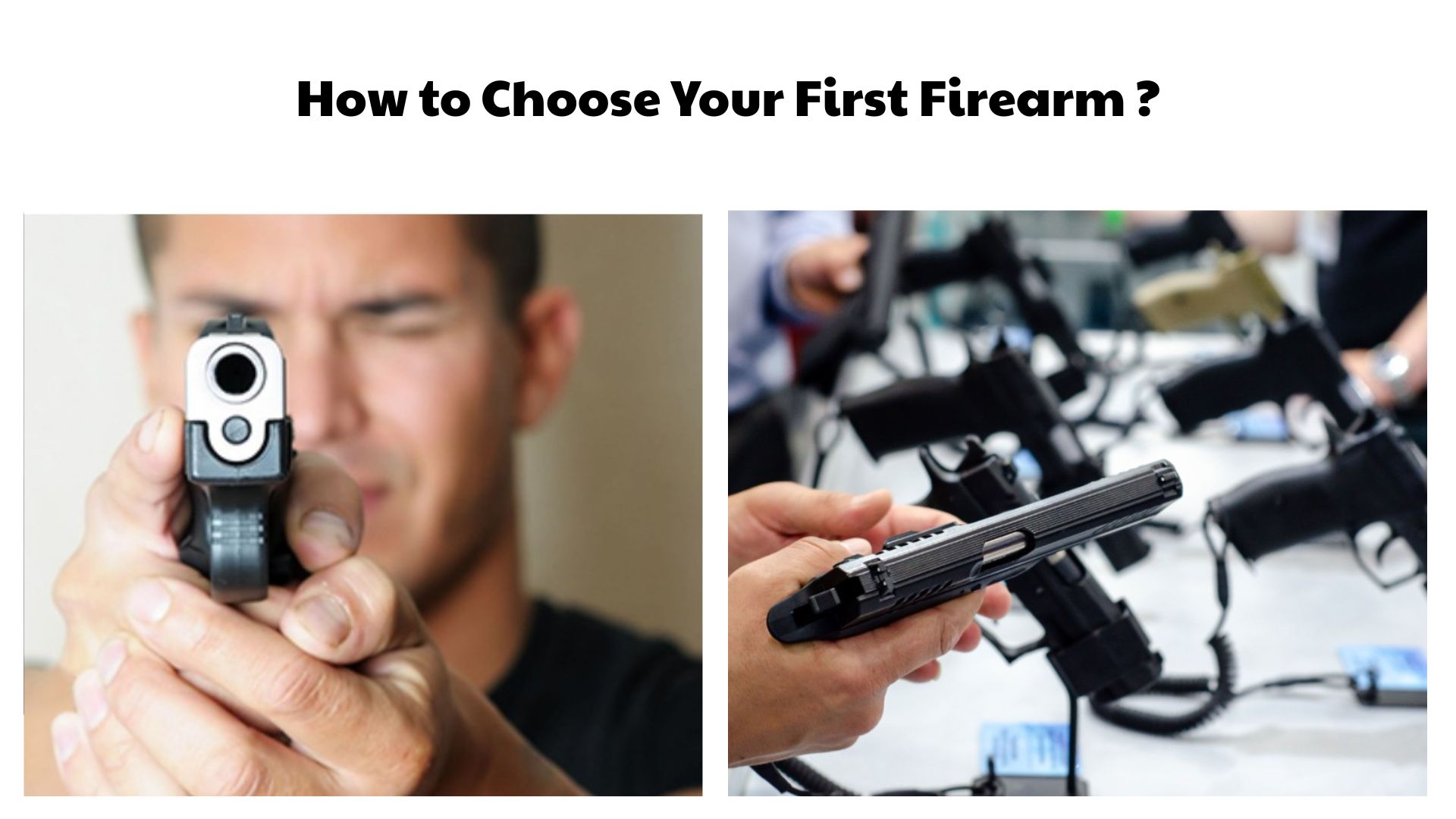

Choosing your first firearm is a long-term decision that directly impacts your safety, comfort, training progress, and overall shooting experience. A well-informed choice can make learning easier and more effective, while a poor choice may lead to frustration or unsafe handling habits.
Most new firearm owners are motivated by different needs such as self-defense, hunting, sport shooting, training, or general recreational use. Each purpose requires a different balance of features, including size, power, ease of use, and cost.
One of the most important principles for beginners is matching the firearm to its real-world purpose rather than following trends, brand popularity, or online opinions. A firearm that works well for one user may not be suitable for another depending on their intended use and experience level.
This guide will break down the key decision factors every first-time buyer should understand, including intended purpose, firearm type, caliber selection, ergonomic fit, budget considerations, and the importance of proper training before and after purchase.
Step 1 – Define Your Purpose First
Home Defense
- For home defense, the primary focus should be on reliability, simplicity, and ease of use under stress. In high-pressure situations, a firearm must be intuitive, easy to operate, and dependable without requiring complex manipulation.
- Common choices for home defense include compact or full-size handguns, shotguns, and pistol-caliber carbines (PCCs). Each option offers different advantages in terms of recoil control, capacity, and ease of handling.
- Safe storage and quick access systems are equally important. Responsible owners must balance secure storage (to prevent unauthorized access) with rapid accessibility in emergencies, often using safes or quick-access lock systems.
Concealed Carry
- Concealed carry firearms should prioritize size, concealability, weight, and comfort, as they are typically carried for long periods every day.
- The main decision often comes down to micro-compact vs compact pistols. Micro-compacts are easier to conceal but may have more recoil, while compact pistols offer better control and capacity at the cost of slightly reduced concealability.
- Proper holsters and consistent training are essential. A good holster ensures safe retention and draw efficiency, while regular practice builds confidence and safe handling habits for daily carry.
Hunting
- For hunting, firearm selection depends heavily on the type of game being pursued. Small game and big game require different calibers, barrel lengths, and firearm platforms.
- Shotguns, rifles, and caliber selection must also align with local legal requirements, which often define what is allowed for specific species or hunting zones.
- Ethical shot placement and understanding effective range limits are critical. Hunters must ensure clean, humane harvests by using appropriate firearms and practicing accurate shot placement.
Range Shooting / Recreation
- For recreational shooting, affordability, low recoil, and training value are the most important considerations. This category focuses on building fundamentals rather than defensive or hunting performance.
- The .22 LR platform is one of the most common recommendations for beginners due to its low cost, minimal recoil, and excellent suitability for learning basic shooting skills.
- Emphasis should be placed on skill development and fundamentals such as grip, stance, trigger control, and sight alignment, which transfer to all other firearm types.
Step 2 – Choose the Right Firearm Type
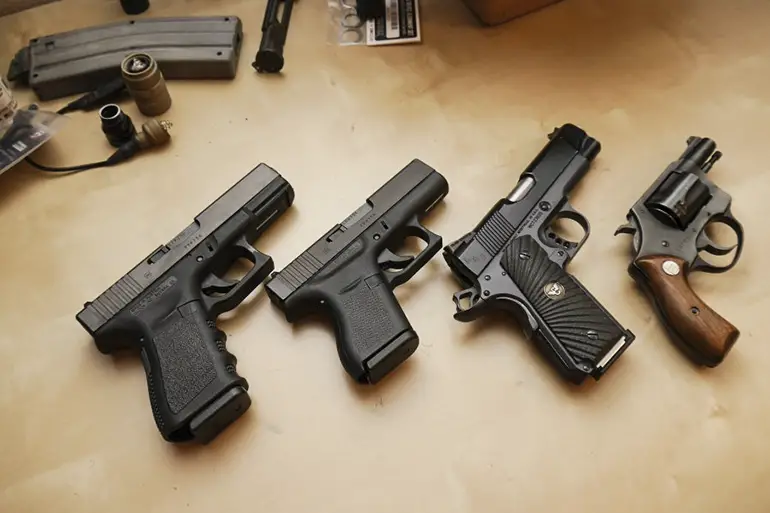
Once you have clearly defined your purpose, the next critical step in choosing your first firearm is selecting the right type. Firearms generally fall into three main categories—handguns, rifles, and shotguns—and each one serves different roles in terms of handling, accuracy, recoil, and practical application. Understanding how each platform performs in real-world use will help you avoid mismatches between your needs and your equipment.
Handguns (Most Common First Choice)
Handguns are often the most popular choice for first-time firearm owners, especially those interested in home defense or concealed carry. Their compact size, ease of storage, and relatively simple operation make them practical for a wide range of users. However, not all handguns are the same, and understanding the differences is essential before making a decision.
The first major distinction is between semi-automatic pistols and revolvers. Semi-automatic pistols are magazine-fed firearms that automatically chamber the next round after each shot. They typically offer higher capacity, faster reloads, and more modern ergonomic designs. Revolvers, on the other hand, use a rotating cylinder to hold ammunition and are known for their mechanical simplicity and reliability. While revolvers can be easier to operate mechanically, they usually hold fewer rounds and require more effort to reload.
Among semi-automatic pistols, striker-fired systems are widely recommended for beginners. These firearms use a simplified internal firing mechanism that results in a consistent trigger pull from shot to shot. This consistency helps new shooters develop proper trigger control without needing to adapt to different trigger weights during operation.
One of the most important factors when selecting a handgun is simplicity. First-time owners benefit greatly from firearms that are intuitive and easy to operate under stress. A consistent trigger pull, straightforward safety features, and ergonomic grip design can significantly improve learning speed and overall confidence. Complex manual safeties or inconsistent trigger systems can add unnecessary difficulty for beginners who are still developing foundational skills.
Rifles
Rifles are widely regarded as the most accurate and stable firearm platform, making them ideal for learning shooting fundamentals and engaging in hunting or precision shooting activities. Their longer barrels and shoulder-mounted design provide better stability and sight radius, which translates into improved accuracy compared to handguns.
For beginners, one of the best entry points into rifle shooting is the .22 LR rifle. This platform is extremely popular because it offers very low recoil, minimal ammunition cost, and excellent training value. It allows new shooters to focus on core skills such as sight alignment, breathing control, and trigger discipline without being overwhelmed by recoil or expense.
Beyond training rifles, AR-style rifles are another common option for new firearm owners. These rifles are highly modular, meaning they can be customized with different optics, grips, stocks, and accessories. This flexibility makes them adaptable for various purposes including sport shooting, home defense, and recreational use. However, beginners should still focus on mastering basic handling before investing heavily in modifications.
Rifles are also commonly used for hunting due to their accuracy and effective range. Depending on the caliber selected, they can be suitable for small game or larger animals. However, legal requirements and ethical hunting considerations must always be taken into account when choosing a rifle for field use.
Shotguns
Shotguns are highly versatile firearms that serve both defensive and hunting roles. Unlike rifles and handguns, shotguns fire a spread of projectiles or a single large projectile (slug), making them effective at shorter distances where precision shooting may not be as critical.
In home defense scenarios, shotguns are often valued for their stopping power and simplicity. However, they require proper training due to recoil and handling characteristics. For hunting, shotguns are commonly used for bird hunting and deer hunting (in slug or shotgun-only zones), making them a flexible option for outdoor use.
One of the most important decisions when selecting a shotgun is gauge. The 12-gauge shotgun is the most powerful and widely used option, offering strong performance but also higher recoil. The 20-gauge shotgun is often recommended for beginners because it produces less recoil, making it easier to control while still being effective for many applications.
Despite their versatility, shotguns come with trade-offs. They typically have more recoil than rifles or handguns, especially with heavier loads, which can be challenging for new shooters. They are also generally less precise at longer distances, meaning they are best suited for close to medium-range engagements rather than long-range accuracy.
Overall, choosing between handguns, rifles, and shotguns depends heavily on your intended use. Handguns offer portability and defensive utility, rifles provide precision and training value, and shotguns deliver versatility across hunting and home defense roles. A clear understanding of these differences will help ensure your first firearm aligns with your real-world needs rather than assumptions or trends.
Step 3 – Caliber Selection Explained
After choosing the firearm type, caliber selection becomes one of the most important decisions for a first-time gun owner. Caliber directly affects recoil, cost per shot, training frequency, and overall shooting comfort. Selecting the right caliber can significantly influence how quickly a beginner develops confidence and proper shooting fundamentals.
Beginner-Friendly Calibers
For most new shooters, the 9mm is widely considered the standard handgun caliber. It offers a strong balance between manageable recoil, effective performance, and affordable ammunition cost. Because of its widespread use in both training and defensive applications, 9mm allows beginners to practice more frequently without excessive expense or recoil fatigue.
Another highly recommended caliber for beginners is the .22 LR. This cartridge is extremely low in recoil and very inexpensive compared to other options. It is ideal for learning fundamental shooting skills such as grip, sight alignment, trigger control, and follow-through. Many experienced shooters still use .22 LR platforms for regular training due to its efficiency and affordability.
Other beginner-friendly alternatives include .380 ACP and .38 Special. These calibers are often chosen by individuals who want reduced recoil while still using a defensive-capable firearm. While they may not offer the same performance or capacity as 9mm, they can be easier to control for new shooters, especially those with smaller hands or limited upper-body strength.
Caliber Myths vs Reality
One of the most common misconceptions among new firearm owners is that larger caliber automatically means better stopping power. In reality, effective shooting depends far more on shot placement, control, and consistency than raw caliber size. A well-placed shot from a smaller caliber is often more effective than a poorly placed shot from a larger one.
Another important consideration is training frequency. Larger calibers typically cost more per round, which can discourage regular practice. Since consistent training is essential for skill development, many experts recommend choosing a caliber that allows frequent range time without financial strain.
Ultimately, caliber selection should balance comfort, controllability, and practical training needs rather than focusing solely on perceived power.
Step 4 – Fit, Ergonomics, and Comfort
Why Fit Matters More Than Brand
One of the most overlooked aspects of choosing a first firearm is proper fit. Many beginners focus heavily on brand reputation or specifications, but ergonomics and comfort play a much more important role in real-world performance. A firearm that fits well will feel more natural to hold, aim, and control.
Hand size, grip reach, and overall control are critical factors. If a firearm is too large or too small for the user’s hand, it can negatively impact trigger control and accuracy. A proper grip allows the shooter to maintain stability and reduce fatigue during extended practice sessions.
Natural point of aim is another important concept. A well-fitted firearm should align naturally with the target when raised, requiring minimal adjustment. This improves speed, consistency, and overall shooting confidence, especially for beginners still developing muscle memory.
Testing Before Buying
One of the best ways to ensure proper fit is through rental range testing. Many shooting ranges allow customers to rent different firearms, giving beginners a hands-on opportunity to compare models before making a purchase decision.
Dry handling is also extremely valuable. Simply holding the firearm, checking grip comfort, and practicing basic control movements can reveal whether a model feels natural or awkward. This step helps eliminate unsuitable options early in the decision process.
Trigger reach and control accessibility should also be evaluated carefully. If the trigger is too far or difficult to press smoothly, it may negatively affect accuracy and safety. Every control should be reachable without strain or unnatural hand positioning.
Step 5 – Action Types and Mechanisms
Striker-Fired Pistols
Striker-fired pistols are among the most recommended handgun types for first-time buyers. They feature a simplified internal mechanism that results in a consistent trigger pull for every shot, making them easier to learn and operate.
Their straightforward design reduces complexity and allows new shooters to focus on fundamentals rather than mechanical operation. This consistency is especially helpful during training, where repeatable trigger behavior improves skill development.
DA/SA Pistols
Double-action/single-action (DA/SA) pistols feature a heavier first trigger pull followed by lighter subsequent pulls. This design offers a combination of safety and performance but introduces more complexity compared to striker-fired systems.
While DA/SA pistols are commonly used in duty and defensive roles, they require more training to master effectively. The difference in trigger pull between the first and second shot can be challenging for beginners who are still building consistency.
Revolvers
Revolvers are known for their mechanical simplicity and reliability. They operate using a rotating cylinder and do not rely on magazines or complex feeding systems, making them easy to understand and operate.
For beginners, revolvers can be a good option, especially for those who prefer simplicity or have limited hand strength. However, they typically hold fewer rounds and can have heavier trigger pulls depending on the model.
Overall, revolvers offer a straightforward shooting experience, but like all firearm types, they still require proper training and practice to use effectively and safely.
Step 6 – Budgeting for Your First Firearm
Budgeting is one of the most overlooked aspects of buying a first firearm. Many beginners focus only on the purchase price of the gun itself, but the true cost of ownership extends far beyond the initial transaction. Understanding the full financial picture helps ensure long-term sustainability, consistent training, and responsible ownership.
The cost of the firearm is only the starting point. While entry-level handguns or rifles may seem affordable, the total ownership cost includes several additional expenses that are essential for safe and effective use.
Ammunition is one of the most significant ongoing costs. Regular practice is necessary to build and maintain shooting skills, and ammunition prices can vary widely depending on caliber. Training courses are another important investment, especially for beginners who need structured instruction in safety, handling, and marksmanship fundamentals.
Holsters, storage solutions, cleaning kits, and accessories also contribute to the total cost. A quality holster is essential for safe carry and handling, while secure storage options such as safes or lockboxes are often legally required or strongly recommended. Maintenance tools ensure the firearm remains reliable over time.
Most importantly, beginners should prioritize long-term affordability rather than focusing only on the lowest purchase price. A slightly more expensive firearm that is cheaper to shoot, more comfortable to handle, and easier to maintain can often provide better long-term value than a budget option that limits training or usability.
Step 7 – Safety and Training First
Safety is the foundation of responsible firearm ownership. No matter the type or purpose of the firearm, proper safety habits and consistent training are essential to prevent accidents and build confidence.
Basic firearm safety rules must always be followed. These include treating every firearm as if it is loaded, maintaining strict muzzle awareness, keeping fingers off the trigger until ready to shoot, and ensuring proper target identification before firing. These principles are universal and apply in every shooting environment.
Professional training classes are highly recommended for all first-time gun owners. Structured instruction provides hands-on experience, corrects unsafe habits early, and builds a strong foundation in firearm handling. Training also helps new shooters become comfortable in controlled environments before practicing independently.
It is important to understand the difference between practice and real defensive readiness. While casual range shooting improves accuracy and familiarity, defensive scenarios require additional training in stress management, situational awareness, and decision-making under pressure. Both aspects are important but serve different purposes in overall preparedness.
Step 8 – Common Beginner Mistakes
First-time firearm buyers often make avoidable mistakes that can negatively impact their experience, safety, and long-term satisfaction. Recognizing these mistakes early can help new owners make more informed and responsible decisions.
One of the most common mistakes is buying a firearm that is either too small or too powerful for the user. A firearm that is too small may be difficult to control, while one that is too powerful may discourage regular practice due to excessive recoil.
Another frequent issue is choosing a firearm based on hype, trends, or recommendations from others rather than personal purpose and fit. A firearm that works well for someone else may not be suitable for a different user with different needs or experience levels.
Skipping training and practice is another critical mistake. Owning a firearm without proper instruction significantly increases the risk of unsafe handling and reduces effectiveness in real-world scenarios. Consistent training is essential for developing both skill and confidence.
Ignoring ergonomics and fit can also lead to poor shooting performance. If a firearm does not fit the user’s hand properly or feels uncomfortable to operate, it will negatively affect accuracy, control, and overall usability.
Finally, many beginners underestimate the total cost of ownership. Beyond the initial purchase, ongoing expenses such as ammunition, training, accessories, and storage must be considered. Failing to account for these costs can lead to reduced practice and limited skill development over time.
Step 9 – Where and How to Buy Your First Firearm
Once you have narrowed down the type, caliber, fit, and budget of your first firearm, the final step is understanding where and how to make a safe and legal purchase. Buying a firearm is not just a retail transaction—it involves legal processes, background checks, and responsible decision-making to ensure compliance and safety.
The most common and recommended method of purchasing a firearm is through a licensed dealer, often referred to as an FFL (Federal Firearms License) dealer in the United States. These licensed sellers are legally authorized to transfer firearms to consumers while ensuring all required background checks and paperwork are completed properly. This process helps ensure that firearms are sold responsibly and in compliance with local and federal laws.
For beginners, visiting gun ranges that offer rental testing is highly beneficial before making a purchase. Many modern ranges allow customers to try different firearms in a controlled environment, which helps new shooters compare recoil, ergonomics, trigger feel, and overall comfort. This hands-on experience can significantly reduce the risk of buying a firearm that does not suit your needs.
Another important factor is choosing firearms from reputable manufacturers known for reliability and quality control. Established brands typically offer more consistent performance, better durability, and stronger customer support. While brand name alone should not be the only factor, it is an important consideration when balancing safety, performance, and long-term value.
Expert Insight Summary
- Purpose should always guide firearm selection. Whether for defense, hunting, or recreation, the intended use determines the most suitable firearm type and configuration.
- 9mm handguns remain the most commonly recommended choice for beginners due to their balance of recoil, cost efficiency, availability, and real-world effectiveness.
- Fit, comfort, and training are far more important than specifications or marketing claims. A firearm that feels natural and is easy to control will always perform better in practice than one chosen purely on technical data.
- Simplicity and reliability are key qualities for first-time firearm owners. A straightforward, dependable firearm reduces training complexity and increases confidence during use.
Conclusion
- There is no single “best” first firearm for every new gun owner. The ideal choice varies based on intended use, personal comfort, physical fit, and experience level.
- The best firearm is one that aligns with your real-world needs, not trends, assumptions, or popular opinions. Matching the firearm to its purpose ensures better long-term satisfaction and performance.
- Beginners should prioritize safety, structured training, and practical application above all else. These foundations are essential for responsible and effective firearm ownership.
- Final advice: test multiple options whenever possible, focus on mastering fundamentals, and choose a firearm you can confidently and safely operate in real-world conditions.
Frequently Asked Questions (FAQ) – Choosing Your First Firearm
1. What is the best first firearm for a beginner?
There is no single “best” firearm for everyone, but many experts recommend a 9mm semi-automatic pistol for beginners due to its balance of recoil, cost, availability, and real-world effectiveness. However, the best choice always depends on your intended use, hand size, comfort level, and training commitment.
2. Should I start with a handgun, rifle, or shotgun?
Most beginners start with a handgun because it is versatile and commonly used for home defense and concealed carry. Rifles are better for accuracy and training fundamentals, while shotguns are often used for home defense and hunting. The right choice depends on your specific purpose.
3. Is 9mm a good caliber for beginners?
Yes, 9mm is widely considered the best starting handgun caliber. It offers manageable recoil, affordable ammunition, and effective performance. It is also one of the most commonly used calibers worldwide, making it ideal for consistent training and practice.
4. Why is .22 LR recommended for new shooters?
.22 LR is extremely low in recoil and very inexpensive, allowing beginners to practice frequently without fatigue or high cost. It is excellent for learning fundamentals such as grip, sight alignment, and trigger control before moving to larger calibers.
5. What is the most important factor when choosing a firearm?
Purpose is the most important factor. Whether you are choosing a firearm for self-defense, hunting, or sport shooting, your intended use should guide every other decision including type, caliber, and size.
6. Are revolvers good for first-time gun owners?
Revolvers are simple and reliable, making them a viable option for beginners. However, they often have heavier triggers and lower capacity compared to semi-automatic pistols, which is why many instructors prefer striker-fired handguns for new shooters.
7. What is a striker-fired pistol?
A striker-fired pistol uses an internal firing mechanism that provides a consistent trigger pull for every shot. This simplicity makes it easier for beginners to learn proper trigger control and reduces mechanical complexity.
8. How important is firearm fit?
Fit is extremely important. A firearm that does not fit your hand properly can negatively affect control, accuracy, and comfort. Proper fit improves natural aiming and reduces fatigue during practice.
9. Should I test a firearm before buying it?
Yes, if possible. Renting firearms at a shooting range allows you to compare recoil, grip, and handling. This hands-on experience is one of the best ways to ensure you choose the right firearm.
10. What is the best firearm for home defense?
There is no single best option, but common choices include 9mm handguns, shotguns, and pistol-caliber carbines. The ideal firearm is one you can operate confidently, safely store, and use effectively under stress.
11. Are shotguns good for beginners?
Shotguns can be effective but may have stronger recoil, especially in 12-gauge. Many beginners prefer 20-gauge shotguns for reduced recoil. They are commonly used for home defense and hunting.
12. What is the difference between semi-automatic and revolver?
Semi-automatic pistols use magazines and automatically chamber the next round after firing. Revolvers use a rotating cylinder. Semi-autos typically have higher capacity, while revolvers are simpler mechanically.
13. How much should I spend on my first firearm?
Budget depends on your needs, but it is important to consider total ownership costs, not just the firearm price. Ammunition, training, and accessories can significantly increase overall expenses.
14. What hidden costs should I expect?
Hidden costs include ammunition, range fees, training classes, holsters, cleaning kits, and safe storage solutions. These are essential for responsible and effective firearm ownership.
15. Is expensive always better?
Not necessarily. Many mid-range firearms offer excellent reliability and performance. The most important factors are fit, reliability, and suitability for your intended purpose.
16. What is the safest beginner firearm?
Safety depends more on training and handling than the firearm itself. However, simple, reliable designs like striker-fired pistols are often recommended for beginners due to ease of use.
17. Do I need training before buying a firearm?
While not always legally required, training is highly recommended. Proper instruction builds safe handling habits and improves confidence and accuracy.
18. What are the basic firearm safety rules?
Always treat every firearm as if it is loaded, keep your finger off the trigger until ready to shoot, never point at anything you are not willing to destroy, and be aware of your target and surroundings.
19. Can I carry a firearm immediately after buying it?
This depends on local laws. Many jurisdictions require permits or additional steps before carrying a firearm, especially for concealed carry.
20. What is concealed carry?
Concealed carry refers to carrying a firearm in a hidden manner on your person. It requires proper training, a suitable firearm, and often a legal permit depending on jurisdiction.
21. What is the easiest handgun to use?
Striker-fired pistols are often considered easiest due to their simple controls and consistent trigger pull. However, ease of use depends on individual comfort and training.
22. Should I choose a small or large handgun?
Smaller handguns are easier to conceal but may have more recoil. Larger handguns are easier to control but harder to carry discreetly. The choice depends on your purpose.
23. What is recoil and why does it matter?
Recoil is the backward force generated when a firearm is fired. It affects comfort, accuracy, and how quickly you can shoot follow-up shots.
24. Can beginners handle recoil?
Yes, with proper training and the right caliber selection. Starting with low-recoil options like .22 LR or 9mm helps beginners adapt gradually.
25. What is the best beginner rifle?
.22 LR rifles are often recommended because they are affordable, accurate, and easy to shoot, making them ideal for learning fundamentals.
26. What is an AR-style rifle?
An AR-style rifle is a modular semi-automatic rifle platform known for customization and versatility. It is widely used for sport shooting and training.
27. Are firearms hard to maintain?
Modern firearms are relatively easy to maintain with basic cleaning and lubrication. Regular maintenance improves reliability and lifespan.
28. How often should I clean my firearm?
Cleaning frequency depends on usage. Regular cleaning after range sessions and periodic maintenance ensures reliability and safe operation.
29. What is the safest way to store a firearm?
Firearms should be stored unloaded in a secure locked container or safe, away from unauthorized access and in compliance with local laws.
30. What is a gun safe?
A gun safe is a secure storage container designed to prevent unauthorized access and protect firearms from theft or damage.
31. Should I buy a used firearm?
Used firearms can be a good option if inspected carefully, but beginners should prioritize reliability and safety, often making new firearms a safer choice.
32. What is caliber selection?
Caliber refers to the size of the ammunition used in a firearm. It affects recoil, cost, and performance.
33. Is bigger caliber always better?
No. Larger calibers often produce more recoil and cost more to shoot. Effective shooting depends more on accuracy than size.
34. What is the easiest firearm to learn on?
.22 LR rifles or pistols are generally considered the easiest due to low recoil and low cost.
35. Do I need a license to own a firearm?
Licensing requirements vary by location. Some regions require permits or background checks before purchase or ownership.
36. Can I carry my firearm everywhere?
No. Carry laws vary widely and include restricted areas such as schools, government buildings, and private property restrictions.
37. What is the difference between open and concealed carry?
Open carry means the firearm is visible, while concealed carry means it is hidden from view. Laws differ by region.
38. What is the most beginner-friendly firearm brand?
Many reputable manufacturers produce beginner-friendly firearms. Reliability and fit matter more than brand alone.
39. Should I prioritize capacity or size?
It depends on use. Concealed carry often prioritizes size, while home defense may prioritize capacity and control.
40. What is the role of training classes?
Training classes teach safety, handling, marksmanship, and legal responsibilities, which are essential for responsible ownership.
41. Can I learn firearm safety online only?
Online resources are helpful, but hands-on training is essential for safe and effective firearm handling.
42. What is the most common beginner mistake?
One of the most common mistakes is choosing a firearm based on trends rather than personal needs and fit.
43. How important is comfort when choosing a firearm?
Comfort is critical because it directly affects control, accuracy, and willingness to train regularly.
44. Should I buy accessories first?
No. Beginners should focus on mastering the firearm first before investing heavily in accessories.
45. What is the best way to improve shooting skills?
Consistent practice, professional training, and focusing on fundamentals like grip and trigger control are key.
46. Are expensive firearms more accurate?
Not necessarily. Accuracy depends more on shooter skill and fit than price alone.
47. Can I own multiple firearms as a beginner?
Yes, but it is better to master one firearm before expanding your collection.
48. What should I bring to the shooting range?
Eye protection, hearing protection, ammunition, and your firearm are essential items for range visits.
49. How do I know if a firearm is reliable?
Reliability is best evaluated through reviews, manufacturer reputation, and real-world testing.
50. What is the most important advice for first-time gun owners?
Prioritize safety, training, and proper fit over everything else. A well-trained shooter with a simple firearm is far more effective than an untrained user with a complex or expensive weapon.
Read more: