
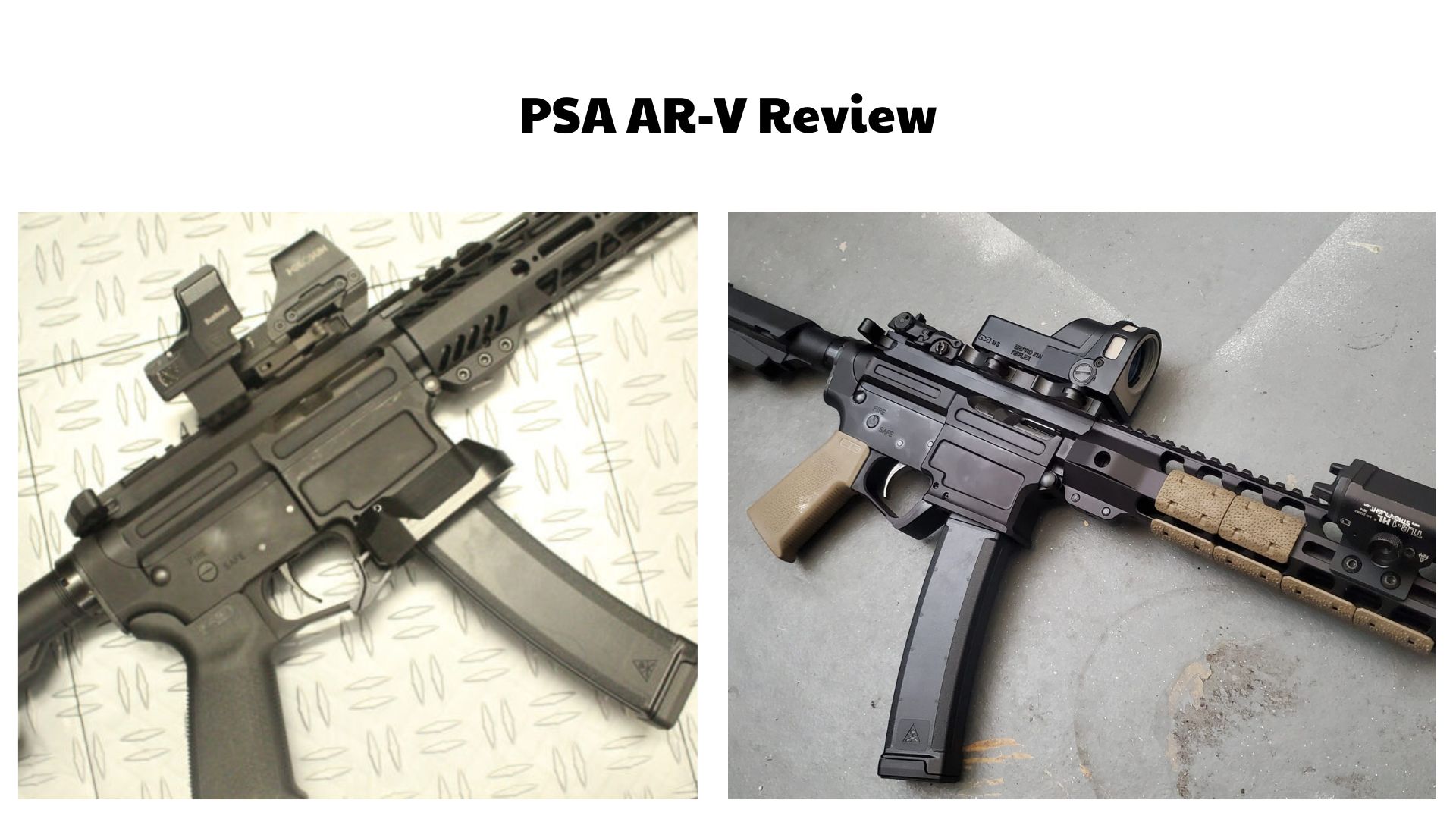

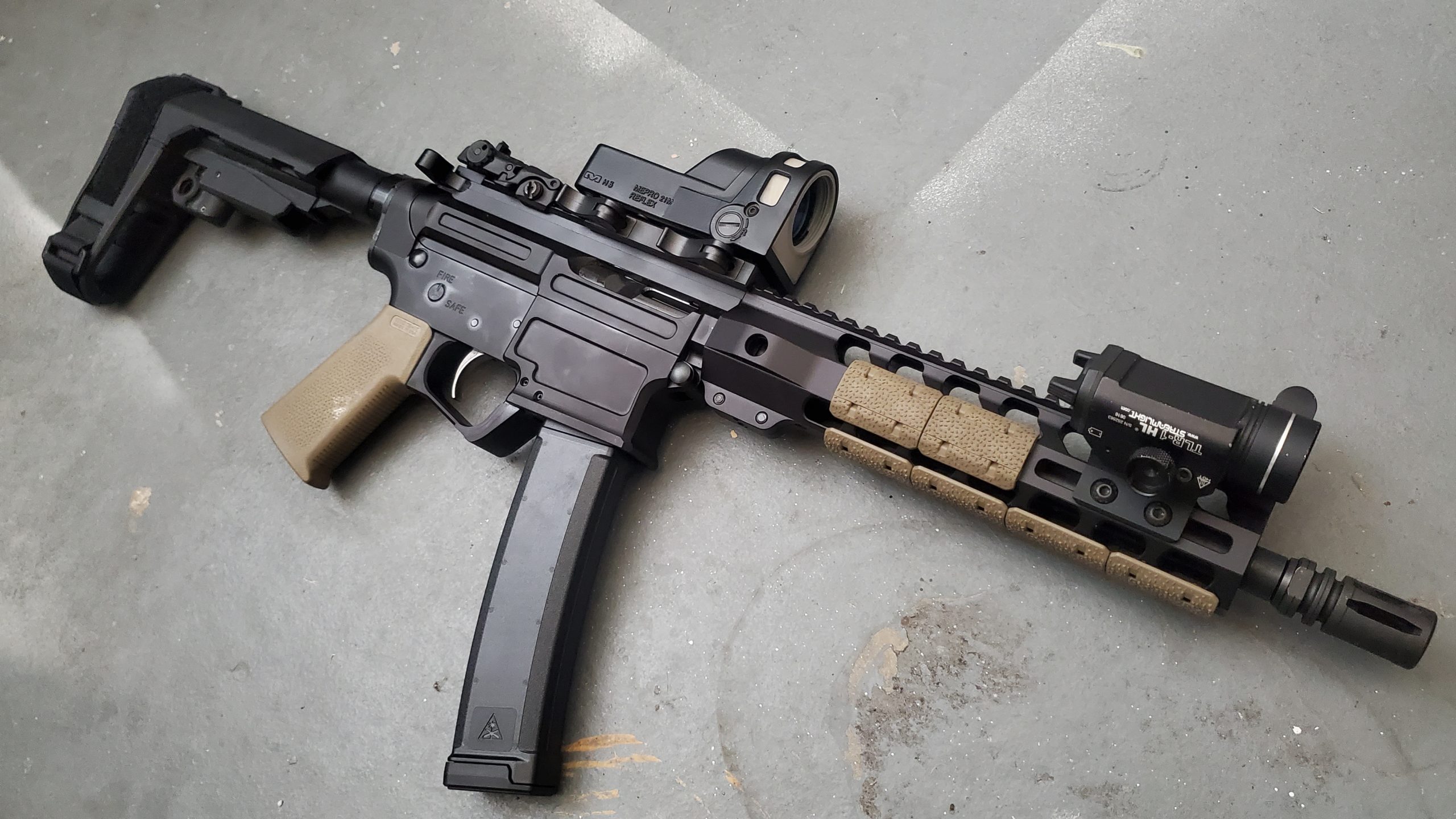
The PSA AR-V is a modern pistol caliber carbine (PCC) chambered in 9mm, developed by Palmetto State Armory as a hybrid-style platform that blends AR-15 ergonomics with SMG-inspired magazine architecture. Built around the idea of affordability, reliability, and practicality, the AR-V uses CZ Scorpion-pattern magazines and a compact blowback-operated system designed for both recreational shooting and defensive applications. Its appeal lies in offering a cost-effective alternative to premium PCC platforms like MP5-style or roller-delayed systems while maintaining familiar AR-style controls that many shooters already understand.
Positioned as a budget-friendly yet highly capable PCC, the PSA AR-V has become increasingly popular among range shooters, PCC competition users, and home defense buyers who want a low-recoil, easy-to-shoot 9mm platform with modern modularity and strong aftermarket support. Its combination of affordability, magazine availability, and AR compatibility makes it one of the most accessible PCC options in its category.
What Is the PSA AR-V?
Development of PSA’s PCC Platform Strategy
The PSA AR-V is part of Palmetto State Armory’s broader effort to expand into the pistol caliber carbine market with a platform that remains true to AR-15 handling characteristics. Rather than adapting a Glock-magazine system or proprietary SMG layout, PSA engineered the AR-V around CZ Scorpion magazine compatibility to improve feeding geometry, reliability, and magazine affordability while keeping the AR control layout intact.
Influence from CZ Scorpion and MP5 Design Concepts
While the AR-V retains a direct blowback operating system typical of most PCCs, its magazine interface and feeding design draw clear influence from the CZ Scorpion EVO platform. At the same time, its compact handling characteristics and suppressor-friendly use cases reflect some of the design philosophies seen in MP5-style submachine guns, particularly in recoil management and short-range efficiency.
Purpose of a Modern AR-Based 9mm PCC
The core purpose of the AR-V is to deliver a 9mm carbine that feels familiar to AR-15 users while offering reduced recoil, lower ammunition costs, and improved usability in close-quarters environments. It is designed for training, home defense, and competitive PCC shooting disciplines where fast follow-up shots and low operating costs are key priorities.
Design and Build Quality
AR-15 Lower Receiver Derivative Design
The PSA AR-V is built around a modified AR-15 lower receiver architecture, allowing it to maintain familiar ergonomics such as the safety selector, trigger group compatibility, and pistol grip configuration. This design choice makes the platform highly accessible to AR shooters transitioning into PCC platforms without needing to relearn manual of arms.
Free-Float Handguard and Compact PCC Layout
Most AR-V configurations feature a free-float handguard system that enhances accessory mounting flexibility while maintaining a compact overall footprint. The shortened barrel options and tight receiver layout make the rifle well-suited for confined spaces and rapid handling scenarios.
Fit, Finish, and PSA Manufacturing Improvements
Palmetto State Armory has significantly improved its manufacturing consistency over time, and the AR-V reflects these refinements through better part alignment, smoother machining, and more reliable assembly tolerances. While still positioned in the budget PCC category, modern AR-V models generally demonstrate improved finish quality compared to earlier entry-level PCC designs.
Weight, Balance, and Handling Characteristics
The AR-V is relatively lightweight compared to traditional submachine guns but slightly heavier than ultra-light AR pistols due to its blowback bolt system. Its balance is typically centered toward the receiver, offering stable handling during rapid fire while still remaining quick to maneuver in close-quarters environments.
Key Specifications of the PSA AR-V
Caliber and Chambering (9mm Luger Performance Profile)
The PSA AR-V is chambered in 9×19mm Luger, one of the most widely used handgun cartridges in the world. This allows for low-cost training, manageable recoil, and broad ammunition availability, making it ideal for high-volume shooting and defensive applications.
Barrel Length Options (4”, 5.5”, 16” Variants)
The platform is offered in multiple barrel lengths, ranging from compact 4-inch and 5.5-inch configurations to full 16-inch carbine versions. Shorter barrels enhance maneuverability and suppressor compatibility, while longer barrels provide improved velocity and ballistic consistency.
Blowback Operating System Explained
The AR-V uses a straight direct blowback operating system, where bolt mass and buffer resistance control cycling rather than a gas system. This simplifies the design, reduces maintenance requirements, and improves reliability with 9mm ammunition, though it results in a more noticeable recoil impulse compared to delayed-blowback systems.
Magazine System (CZ Scorpion Pattern Magazines)
One of the defining features of the AR-V is its use of CZ Scorpion-pattern magazines. These polymer magazines are widely available, relatively inexpensive, and known for reliable feeding geometry, making them a strong choice for a high-volume PCC platform.
Bolt and Buffer System Design Features
The AR-V’s bolt and buffer system are tuned specifically for 9mm blowback operation, using increased bolt mass and buffer weight to manage recoil impulse and cycling speed. This helps maintain reliability while reducing excessive bolt bounce and improving overall shooting consistency.
Operating System and Performance
Direct Blowback System Behavior in 9mm Platforms
In a direct blowback PCC like the AR-V, recoil is driven primarily by bolt mass and spring tension rather than gas diversion. This creates a sharper recoil impulse compared to gas-operated rifles, but it remains highly manageable due to the relatively low power of the 9mm cartridge.
Reliability with Brass and Steel-Cased Ammunition
The AR-V generally performs reliably with both brass and steel-cased 9mm ammunition, although brass tends to provide more consistent cycling characteristics. The blowback system is forgiving, making it suitable for a wide range of training ammunition.
Cycling Speed and Recoil Impulse Characteristics
Cycling speed in the AR-V is relatively fast due to the simple mechanical operation of the blowback system. While recoil is more noticeable than in delayed-blowback designs, it remains flat and controllable, especially in semi-automatic firing strings.
Heat and Fouling Management in PCC Use
Because it lacks a gas system, the AR-V experiences fouling primarily in the chamber and bolt area rather than throughout a gas tube. Heat buildup is moderate during extended shooting sessions, but the 9mm cartridge generates less thermal stress compared to rifle calibers.
Reliability and Real-World Testing
Performance in High Round Count Training Sessions
The PSA AR-V is generally regarded as a reliable PCC platform during extended high-round-count training sessions, where the simplicity of its direct blowback system contributes to consistent cycling. With proper lubrication and quality magazines, the platform can sustain long training strings with minimal stoppages, making it well-suited for range use and PCC competition practice.
Magazine Feeding Reliability and Lock-Up Consistency
One of the strongest aspects of the AR-V is its use of CZ Scorpion-pattern magazines, which are widely recognized for reliable feeding geometry. When properly seated, these magazines lock up securely in the AR-V’s magwell, providing consistent feeding even under rapid-fire conditions or when using a variety of 9mm ammunition types.
Common PCC Issues (Bolt Bounce, Feeding Angle, Buffer Tuning)
Like most blowback PCC platforms, the AR-V can experience typical issues such as bolt bounce, variations in feeding angle depending on ammunition, and sensitivity to buffer weight tuning. These factors are inherent to straight blowback systems, where bolt mass and spring resistance play a critical role in overall cycling behavior.
PSA AR-V Improvements Over Early PCC Designs
Compared to earlier generations of budget PCCs, the AR-V reflects significant improvements in design refinement, including better bolt mass balancing, improved magazine interface geometry, and more consistent manufacturing tolerances. These refinements help reduce common PCC reliability issues seen in older or less optimized platforms.
Accuracy and Shooting Performance
Typical PCC Accuracy (1–3 MOA Practical Range)
In practical shooting conditions, the PSA AR-V typically delivers 1–3 MOA accuracy depending on barrel length, ammunition quality, and shooter skill. While not designed as a precision rifle, it offers more than adequate accuracy for defensive, training, and competition PCC applications.
9mm Ballistics and Effective Range Limitations
The 9mm cartridge used in the AR-V is optimized for close to medium-range performance, with most effective use occurring within 50 to 100 yards. Beyond this range, bullet drop and energy loss become more significant, limiting its effectiveness compared to rifle-caliber platforms.
Ammunition Sensitivity and Grouping Differences
Different 9mm loads can produce noticeable variations in grouping performance. Higher-quality brass-cased ammunition tends to provide tighter groups and more consistent velocities, while bulk steel or economy ammunition may result in slightly wider dispersion.
Comparison with MP5-Style Roller Delayed Systems
Compared to MP5-style roller-delayed PCCs, the AR-V generally exhibits a sharper recoil impulse due to its direct blowback system. However, it often provides similar practical accuracy and lower cost of ownership, making it an attractive alternative for shooters prioritizing affordability and AR-style ergonomics.
Recoil and Shooting Experience
Felt Recoil Compared to AR-15 and Other PCCs
The AR-V produces noticeably less recoil than an AR-15 chambered in rifle calibers but more felt impulse than delayed-blowback or gas-operated PCCs. This places it in the middle of the recoil spectrum for 9mm carbines, making it easy to control during rapid fire.
Straight Blowback Recoil Characteristics
The straight blowback system results in a direct rearward recoil impulse that is quick and predictable. While slightly “snappier” than more complex systems, it remains highly manageable due to the low recoil energy of the 9mm cartridge.
Muzzle Control in Rapid Fire Strings
Muzzle control in the AR-V is generally strong, especially when paired with proper stance and grip technique. The weight of the bolt system helps stabilize the rifle during rapid fire, allowing for fast follow-up shots and controlled shot placement.
Shooter Comfort in Extended Range Sessions
During extended shooting sessions, the AR-V remains relatively comfortable to shoot, with low overall recoil fatigue compared to rifle-caliber platforms. Heat buildup and minor blowback fouling may accumulate over time, but these effects are typical for PCC systems.
Ergonomics and Handling
AR-15 Controls Familiarity Advantage
One of the AR-V’s biggest advantages is its use of AR-15-style controls, including the safety selector, magazine release, and charging handle placement. This makes it highly intuitive for users already experienced with AR platforms.
Magazine Changes and Scorpion Magazine Ergonomics
Magazine changes are generally fast and straightforward, with CZ Scorpion magazines offering a textured and ergonomic design that aids in quick reloads. Once familiar with the magwell geometry, users can achieve efficient reload speeds suitable for competition or defensive scenarios.
Charging Handle and Bolt Operation Feel
The charging handle operates in a familiar AR-style manner, providing smooth bolt manipulation for chambering and clearing the firearm. The blowback bolt system, however, gives a slightly heavier feel compared to gas-operated AR platforms.
Compact Handling for CQB and Range Use
The compact design of the AR-V makes it particularly well-suited for close-quarters environments and range use. Its shorter barrel configurations enhance maneuverability in confined spaces while maintaining stable handling characteristics during firing.
PSA AR-V vs Other PCC Platforms
Comparison with CZ Scorpion EVO 3
When compared directly to the CZ Scorpion EVO 3, the PSA AR-V offers a more AR-15-like shooting experience while still using Scorpion-pattern magazines. The Scorpion EVO 3 is purpose-built as a dedicated submachine gun-style PCC with fully integrated controls, whereas the AR-V prioritizes AR familiarity, modularity, and accessory compatibility. In terms of recoil and shootability, both platforms are similar due to their blowback operation, but the AR-V benefits from a more familiar manual of arms for AR users.
Comparison with HK MP5-Style PCCs
Against MP5-style roller-delayed PCCs, the AR-V is significantly more affordable and easier to maintain, but it does not match the MP5’s smooth recoil impulse. The MP5’s delayed blowback system produces softer recoil and better suppression characteristics, while the AR-V focuses on cost efficiency and modular AR ergonomics. For most civilian users, the AR-V provides a practical alternative without the premium price tag.
Comparison with Glock Magazine PCC Platforms
Compared to Glock-magazine PCCs, the AR-V offers a more robust magazine lock-up system through CZ Scorpion magazines, which are generally considered more stable in feed geometry. Glock-mag PCCs benefit from extreme magazine availability and cross-compatibility with handguns, but AR-V platforms often feel more rigid and purpose-built in carbine form.
Value-for-Money Analysis in the PCC Market
In terms of value, the PSA AR-V stands out as one of the most cost-effective AR-style PCCs available. It delivers solid reliability, widely available magazines, and strong aftermarket compatibility at a lower price point than many competing PCC platforms, making it especially attractive for budget-conscious shooters.
Magazine System and Compatibility
CZ Scorpion Magazine Ecosystem Advantages
The AR-V benefits significantly from the CZ Scorpion magazine ecosystem, which offers durable polymer construction, reliable feeding geometry, and widespread availability. These magazines are designed for SMG-style use, making them highly suitable for fast cycling 9mm carbines.
Polymer Magazine Durability and Cost Efficiency
Scorpion-pattern polymer magazines used in the AR-V are lightweight, impact-resistant, and relatively inexpensive compared to metal magazine systems. This makes it practical for high-volume training without excessive magazine costs.
Feeding Reliability and Angle Geometry
One of the key strengths of this system is its optimized feed angle, which helps reduce misfeeds and ensures consistent chambering under rapid-fire conditions. This geometry contributes to the AR-V’s reputation for reliable operation when paired with quality ammunition.
High-Capacity Magazine Performance
High-capacity magazines perform well in the AR-V when properly maintained, although like all blowback PCC systems, spring tension and ammunition quality can influence long-term reliability. Proper loading practices help maintain consistent feeding performance.
Customization and Upgrade Potential
Optics Mounting and AR-Style Rail System
The AR-V supports standard AR-style optics mounting solutions, allowing users to install red dots, holographic sights, and magnified optics depending on their intended use. Its Picatinny and M-LOK rail systems provide extensive flexibility for accessory configuration.
Handguards, Braces, and Stock Configurations
Users can customize the AR-V with a variety of handguards, pistol braces, and stock configurations (where legally permitted). This modularity allows shooters to tailor the platform for competition, home defense, or recreational shooting roles.
Trigger Upgrades and PCC Optimization
Trigger upgrades are possible using compatible AR-15 trigger systems, enabling users to reduce pull weight and improve reset characteristics. This is especially beneficial for PCC competition shooters seeking faster split times.
Suppressor Compatibility and 9mm Performance
The AR-V is generally suppressor-friendly due to the subsonic nature of many 9mm loads. Suppressor use can further reduce recoil perception and improve shooting comfort, particularly when paired with subsonic ammunition.
Suppressor Use and Performance
Subsonic 9mm Suppressor Optimization
When paired with subsonic 9mm ammunition, the AR-V becomes highly effective in suppressed configurations. The combination significantly reduces report, making it suitable for indoor ranges and discreet training environments.
Blowback Gas and Carbon Management
As with most direct blowback PCCs, suppressor use can increase perceived gas blowback and carbon fouling around the action. Regular cleaning and maintenance help mitigate these effects and maintain reliability.
Sound Reduction Effectiveness
Sound suppression performance is generally strong with quality suppressors and subsonic ammunition, though it will never reach the mechanical quietness of roller-delayed systems like the MP5. Still, the AR-V performs very well within its category.
Best Use Cases for Suppressed AR-V Builds
Suppressed AR-V builds are ideal for home defense, training, and recreational shooting where reduced noise and recoil are priorities. The platform’s AR ergonomics make it especially user-friendly in these configurations.
Common Issues and Limitations
Blowback Gas and Carbon Fouling
A common limitation of the AR-V is increased carbon buildup and gas exposure during extended shooting sessions, especially when suppressed. This is inherent to direct blowback systems and requires routine cleaning.
Weight Compared to Dedicated SMG Platforms
While compact, the AR-V can feel slightly heavier than purpose-built SMG-style PCCs due to its AR-based receiver design and bolt system mass.
Limited Long-Range Capability of 9mm
As a 9mm platform, the AR-V is inherently limited in effective range compared to rifle-caliber systems. It is best suited for close to mid-range engagements rather than precision shooting beyond 100 yards.
Magazine Availability in Restricted Markets
Although Scorpion magazines are widely available in many regions, legal restrictions in certain markets may limit access to higher-capacity options, affecting the platform’s full potential.
Who Should Buy the PSA AR-V?
PCC Competition Shooters on a Budget
The AR-V is an excellent choice for PCC competition shooters who want AR-style ergonomics at a lower entry cost. Its fast handling and magazine availability make it competitive in practical shooting disciplines.
Home Defense Users Seeking Low-Recoil Platforms
For home defense users, the AR-V offers low recoil, high controllability, and effective close-range performance, making it a practical defensive firearm option.
Range Shooters Wanting Affordable 9mm Training
Because it uses inexpensive 9mm ammunition and affordable magazines, the AR-V is ideal for high-volume training and recreational shooting at the range.
Not Ideal for Long-Range or Duty Rifle Users
The AR-V is not intended for long-range precision shooting or duty rifle roles requiring extended ballistic performance, as its 9mm chambering limits effective range.
Pros and Cons of PSA AR-V
Advantages (Affordability, Reliability, AR Controls, Scorpion Mags)
Key advantages of the AR-V include its low cost of entry, reliable blowback operation, familiar AR-15 controls, and use of widely available CZ Scorpion magazines. These factors make it one of the most accessible PCC platforms available today.
Disadvantages (Blowback Recoil, Limited Range, Gas Fouling)
The main drawbacks include a sharper recoil impulse compared to delayed-blowback systems, limited effective range due to the 9mm cartridge, and increased fouling during suppressed or high-volume shooting.
Overall Value in the PCC Market
Overall, the PSA AR-V offers exceptional value in the PCC market by combining affordability, modularity, and reliable performance. While it does not outperform premium PCC systems in recoil smoothness or suppression efficiency, it delivers a highly practical and cost-effective solution for most civilian shooting applications.
Final Verdict on PSA AR-V Review
The PSA AR-V stands out as a highly accessible and modern 9mm PCC that successfully blends AR-15 ergonomics with CZ Scorpion magazine compatibility. It offers strong reliability, excellent usability, and low-cost training capability, making it especially attractive for home defense users, PCC competitors, and recreational shooters.
While it has limitations inherent to its direct blowback design—such as increased recoil impulse, carbon fouling under suppression, and limited long-range performance—it remains one of the strongest value-driven PCC platforms in its category. For shooters seeking an affordable, AR-style 9mm carbine with proven magazine support and solid real-world performance, the AR-V is a highly practical and well-balanced choice.
PSA AR-V FAQ (50+ Questions with Detailed Answers)
1. What is the PSA AR-V designed for?
The PSA AR-V is designed as a 9mm pistol caliber carbine (PCC) intended for affordable training, home defense, and competitive shooting. Its primary goal is to give shooters AR-15-style ergonomics combined with low-cost 9mm ammunition and reduced recoil, making it ideal for high-volume practice and close-quarters applications.
2. Is the PSA AR-V good for beginners?
Yes, the AR-V is considered beginner-friendly due to its low recoil, simple blowback operation, and familiar AR-style controls. New shooters often find it easier to learn fundamentals like trigger control, sight alignment, and recoil management using a 9mm PCC rather than a rifle-caliber firearm.
3. How reliable is the PSA AR-V?
In general use, the AR-V is regarded as reliable when paired with quality magazines and ammunition. Its blowback system has fewer moving parts than gas-operated rifles, which contributes to mechanical simplicity. However, like all PCCs, reliability can be influenced by buffer tuning and ammunition selection.
4. What magazines does the PSA AR-V use?
The AR-V uses CZ Scorpion-pattern magazines, which are polymer magazines widely known for durability and consistent feeding geometry. These magazines are generally affordable and available in multiple capacities, making them a cost-effective option for shooters.
5. Is the AR-V better than Glock-mag PCCs?
The AR-V and Glock-mag PCCs each have strengths. The AR-V benefits from more stable magazine insertion and feeding geometry, while Glock-mag PCCs offer cross-compatibility with pistols and extremely wide magazine availability. The better option depends on user preference and existing equipment.
6. How accurate is the PSA AR-V?
The AR-V typically produces 1–3 MOA accuracy in practical shooting conditions. While not a precision rifle, it is more than accurate enough for defensive distances and PCC competitions where engagements are usually under 100 yards.
7. What is the effective range of the AR-V?
The effective range of the AR-V is generally considered to be 50 to 100 yards for practical use. Beyond that distance, 9mm loses velocity and energy quickly, making it less suitable for precision or defensive applications at longer ranges.
8. Does the AR-V have a lot of recoil?
The AR-V has low recoil compared to rifle-caliber firearms, but it does produce a sharper impulse than delayed-blowback or gas-operated PCCs. This is typical of straight blowback 9mm systems and remains very manageable for most shooters.
9. Is the AR-V good for home defense?
Yes, many users choose the AR-V for home defense due to its low recoil, ease of handling, and compact size. 9mm ammunition also offers manageable penetration characteristics compared to rifle calibers, making it suitable for indoor defensive scenarios.
10. Can the PSA AR-V be suppressed?
Yes, the AR-V is commonly used with suppressors. When paired with subsonic 9mm ammunition, it significantly reduces noise levels. However, users should expect increased blowback and carbon fouling typical of direct blowback systems.
11. What is the operating system of the AR-V?
The AR-V uses a direct blowback operating system. In this system, bolt mass and spring tension control cycling rather than gas diversion. This simplifies design and reduces maintenance but increases perceived recoil compared to gas systems.
12. How does the AR-V compare to an AR-15?
Compared to an AR-15, the AR-V has less recoil and lower ammunition cost but significantly shorter effective range and reduced ballistic power. The AR-15 is more versatile for distance shooting, while the AR-V excels in close-range training and defense.
13. Is the AR-V good for competition shooting?
Yes, the AR-V is widely used in PCC competition due to its fast cycling, low recoil, and AR-style controls. Its ability to use affordable 9mm ammunition makes it especially popular for high-volume training.
14. What are the main disadvantages of the AR-V?
The main disadvantages include sharper recoil compared to premium PCC systems, carbon fouling during suppressed use, and limited long-range capability due to the 9mm cartridge.
15. Does the AR-V support AR-15 parts?
Many AR-15 components such as triggers, grips, and stocks are compatible with the AR-V. However, it uses a specialized upper and bolt system designed specifically for 9mm blowback operation.
16. Is the PSA AR-V expensive?
No, the AR-V is considered one of the more affordable PCC platforms on the market. Its price point is significantly lower than MP5-style or roller-delayed PCC systems.
17. What makes the AR-V unique?
Its unique combination of AR-15 ergonomics and CZ Scorpion magazine compatibility makes it stand out. This design balances affordability, reliability, and modularity in a way few PCCs achieve.
18. Can the AR-V use suppressor-ready barrels?
Yes, many AR-V configurations include threaded barrels that support suppressor attachment, allowing users to reduce noise and recoil when paired with appropriate ammunition.
19. Is the AR-V suitable for tactical training?
Yes, the AR-V is suitable for tactical and defensive training scenarios that focus on close-range engagement, weapon manipulation, and high-volume drills.
20. How durable is the AR-V?
The AR-V is generally durable for its price range. Its steel bolt components and polymer magazines are designed to withstand regular use, though long-term durability depends on maintenance and shooting volume.
21. Does buffer weight tuning matter on the PSA AR-V?
Yes, buffer weight plays an important role in the AR-V because it uses a direct blowback system. A properly weighted buffer helps slow bolt velocity, reduce felt recoil, and improve feeding consistency. If the buffer is too light, the bolt may cycle too aggressively, increasing wear and recoil impulse.
22. Can the AR-V reliably shoot steel-cased 9mm ammo?
In most cases, yes. The AR-V is generally tolerant of steel-cased 9mm ammunition due to its simple blowback design. However, brass-cased ammo usually provides more consistent ignition and smoother cycling over extended use.
23. How often should the AR-V be cleaned?
The AR-V should be cleaned regularly, especially after high-round-count sessions or suppressed use. Blowback systems tend to accumulate carbon in the receiver area, so routine maintenance helps preserve long-term reliability.
24. Is the AR-V reliable when suppressed?
Yes, but suppressed operation increases gas blowback and fouling. While reliability generally remains solid, users should expect more frequent cleaning and slightly increased wear compared to unsuppressed shooting.
25. What optics are best for the AR-V?
Red dot sights and holographic optics are most popular because they match the AR-V’s close-range role. Some users also use low-power prism scopes for added precision at longer PCC distances.
26. Is the PSA AR-V heavy for a PCC?
It is moderately weighted compared to ultra-light PCCs, but still comfortable for extended use. The added weight helps stabilize recoil during rapid fire, improving controllability.
27. How fast is the AR-V’s cyclic rate?
The AR-V cycles relatively quickly due to its blowback design. This allows fast follow-up shots, but proper buffer tuning helps maintain control and prevent excessive bolt speed.
28. Can the AR-V be used for hunting?
It is not ideal for traditional hunting due to the limited range and energy of 9mm ammunition. However, it may be used for small game at close distances in certain legal contexts.
29. What is the ideal use case for the AR-V?
The AR-V is best suited for home defense, PCC competition shooting, and high-volume range training where low recoil and low ammunition cost are important.
30. Does the AR-V use standard AR-15 controls?
Yes, most controls such as the safety selector, trigger group, and pistol grip follow AR-15 standards, making it intuitive for AR users.
31. Are CZ Scorpion magazines durable?
Yes, Scorpion magazines are known for strong polymer construction and reliable feeding geometry. They are designed for SMG-style use, making them well-suited for PCC platforms like the AR-V.
32. Is the AR-V good for recoil-sensitive shooters?
Yes, the 9mm chambering and blowback system result in very manageable recoil, making it an excellent choice for new or recoil-sensitive shooters.
33. Can the AR-V handle high round counts?
Yes, it is capable of sustained high-round-count use when properly maintained. Regular lubrication and cleaning help ensure consistent long-term reliability.
34. What triggers are compatible with the AR-V?
Many AR-15-compatible triggers can be used, depending on configuration. Upgrading the trigger can improve reset speed and overall shooting performance in competition settings.
35. Is the AR-V legal in most regions?
Legality depends on local firearm and magazine laws. In many regions, PCCs are legal, but magazine capacity and configuration restrictions may apply.
36. How does the AR-V compare to MP5 clones?
MP5 clones typically offer smoother recoil due to roller-delayed blowback, while the AR-V is more affordable and easier to maintain. The AR-V prioritizes cost efficiency and modularity over premium recoil smoothness.
37. How effective is suppression on the AR-V?
Suppression is effective, especially with subsonic ammunition. However, blowback systems inherently produce more gas exposure than roller-delayed or gas-piston PCCs.
38. What ammo works best in the AR-V?
124-grain and 147-grain 9mm loads are commonly recommended for balanced performance. Heavier bullets often perform better in suppressed or competition setups.
39. Is the AR-V good for PCC competitions?
Yes, it is widely used in PCC divisions due to its AR ergonomics, fast cycling, and affordability, making it a strong entry-level competition platform.
40. Does the AR-V produce a lot of blowback gas?
Yes, especially when suppressed. This is a common characteristic of direct blowback PCC systems and should be expected during extended shooting sessions.
41. Can the AR-V be fired one-handed?
While physically possible, it is not recommended for safety and control reasons. PCCs are designed for two-handed operation for stability and accuracy.
42. How accurate is the AR-V at 50 yards?
At 50 yards, the AR-V is typically very consistent and capable of tight groupings, making it well-suited for defensive and training applications at that distance.
43. Is the AR-V suitable for indoor ranges?
Yes, especially with subsonic ammunition and suppressor use. Its low recoil and reduced noise profile make it a popular indoor range firearm.
44. Does the AR-V require special lubrication?
No special lubrication is required. Standard firearm oils and greases are sufficient to maintain smooth operation and reduce wear.
45. Can the AR-V be used in competitive USPSA PCC division?
Yes, the AR-V is commonly used in USPSA PCC divisions due to its affordability, AR ergonomics, and fast handling characteristics.
46. Does suppressor use increase recoil?
Yes, slightly. Suppressor back pressure can increase bolt speed and perceived recoil in blowback systems like the AR-V.
47. Is the AR-V better than Glock-mag PCCs?
It depends on user preference. The AR-V offers better magazine stability with Scorpion mags, while Glock-mag PCCs benefit from pistol compatibility and widespread magazine availability.
48. Does the AR-V overheat during extended shooting?
It does not overheat quickly, but prolonged rapid fire will warm the bolt and receiver area, which is normal for PCC platforms.
49. Is the AR-V easy to disassemble?
Yes, it follows an AR-style takedown process, making maintenance and cleaning straightforward for most users.
50. Is the AR-V worth the price?
For most shooters, yes. It offers strong value due to its low cost, reliable performance, and AR-style usability in a 9mm platform.
51. Does the AR-V support high-capacity magazines?
Yes, it supports high-capacity Scorpion magazines where legally permitted. These magazines perform reliably when properly maintained.
52. Can the AR-V be used for defensive training?
Yes, it is well-suited for defensive training scenarios that involve close-range engagement, weapon manipulation, and rapid target transitions.
53. How does weather affect the AR-V?
The AR-V performs reliably in most weather conditions. However, like all firearms, extreme dirt, mud, or moisture requires proper cleaning afterward.
54. Is the AR-V beginner-friendly for maintenance?
Yes, its AR-style design makes it easy for beginners to field-strip, clean, and maintain without specialized tools.
55. What is the biggest advantage of the PSA AR-V?
Its biggest advantage is value: it combines low-cost 9mm shooting, AR ergonomics, and reliable Scorpion magazine compatibility into one accessible PCC platform.
Read more: