
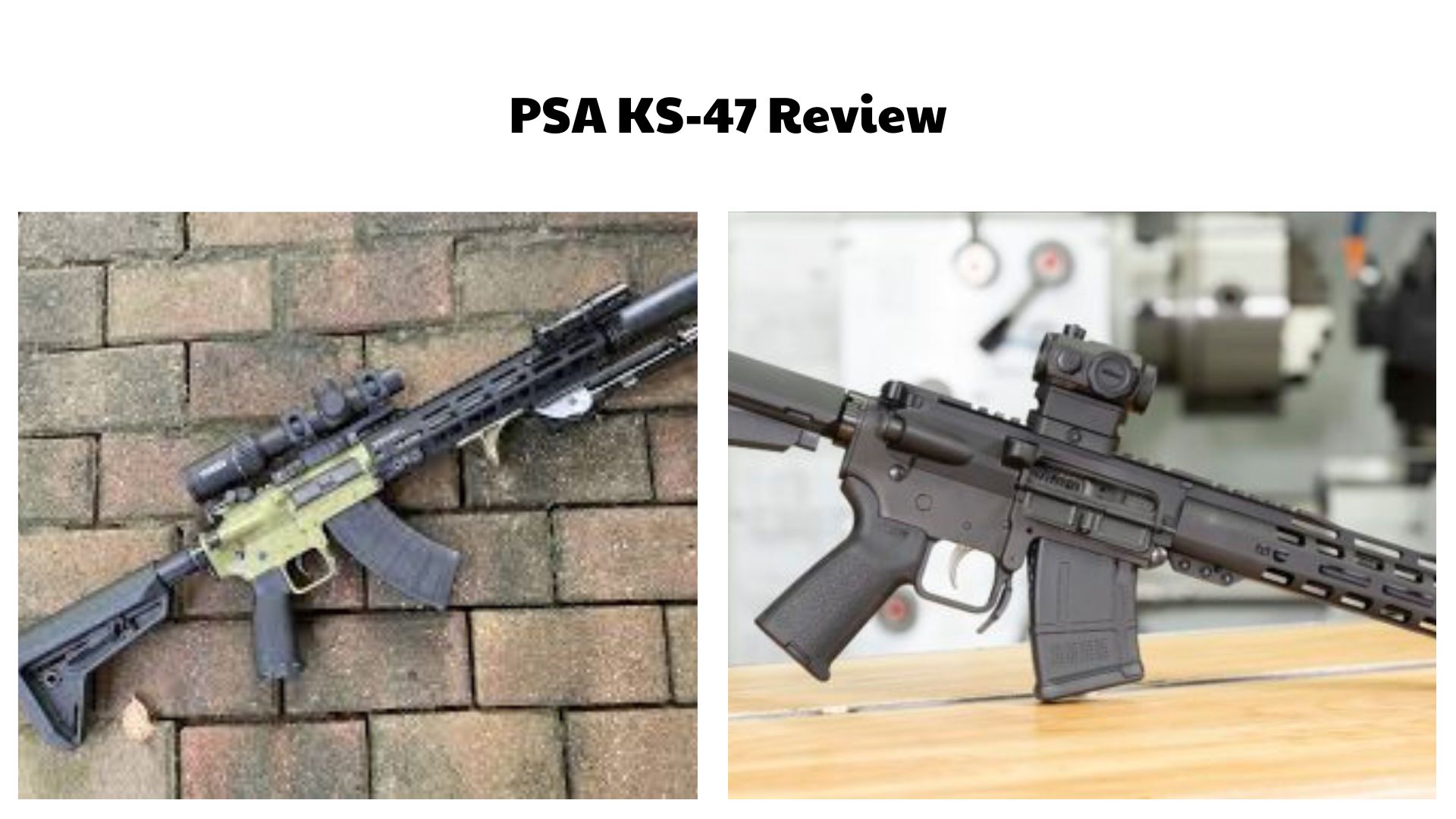

The PSA KS-47 is a unique hybrid rifle that blends the familiar ergonomics of the AR-15 platform with the rugged 7.62x39mm cartridge traditionally associated with the AK-47. Manufactured by Palmetto State Armory, it was designed to solve one of the long-standing limitations in the AR world: reliable use of AK ammunition and magazines in a modern AR-style system.
Often referred to as part of the “AR-47” category, the KS-47 appeals strongly to budget-conscious shooters who want the affordability and power of 7.62x39mm without giving up AR-15 controls. Its concept is simple but ambitious—combine two iconic rifle systems into a single platform that delivers versatility, modularity, and cost efficiency.
What Is the PSA KS-47?
Hybrid Design Between AR-15 and AK-47
The KS-47 is an AR-15-style rifle engineered to accept AK-47 magazines and fire 7.62x39mm ammunition. It retains AR-style ergonomics and controls while adapting the lower receiver and bolt system to accommodate AK magazine geometry.
Purpose of the 7.62×39 AR Platform Concept
The platform was developed to overcome reliability issues that historically affected AR-15 rifles chambered in 7.62x39mm. The KS-47 improves feed geometry, bolt strength, and magazine compatibility to create a more reliable hybrid system.
PSA’s Approach to the KS-47 Gen 2 Development
The Gen 2 KS-47 introduces refinements such as an improved bolt design, stronger extractor components, and better magazine alignment. These upgrades aim to increase long-term durability and cycling reliability.
PSA KS-47 Key Specifications
Caliber and Chambering (7.62x39mm)
The KS-47 is chambered in 7.62x39mm, a widely used intermediate cartridge known for affordability, moderate recoil, and strong short-to-mid-range performance.
Barrel Length Options (16”, 10.5”, pistol variants)
The rifle is available in multiple configurations including 16-inch rifle models, 10.5-inch compact barrels, and pistol variants with stabilizing braces.
Gas System and Operating Mechanism
It uses a direct impingement AR-style gas system, which requires proper tuning due to the pressure characteristics of 7.62x39mm ammunition.
Receiver and Bolt Design Differences
The KS-47 features a modified bolt face to accommodate the larger cartridge and a widened lower receiver designed for AK magazines.
Compatibility with AR-15 Components
Most AR-15 components such as triggers, stocks, buffer tubes, and handguards remain compatible, though the bolt carrier group and magazines are not interchangeable.
Design and Build Quality
Upper and Lower Receiver Construction
The KS-47 uses reinforced forged aluminum receivers designed to handle the increased stress of the 7.62x39mm cartridge and AK magazine geometry.
Materials and Finish Quality
The rifle typically features anodized aluminum construction with a durable but budget-focused finish appropriate for its price category.
Ergonomics and AR-Style Controls
It maintains standard AR-15 ergonomics including safety selector placement, trigger feel, and stock compatibility for familiar operation.
Weight and Handling Characteristics
The KS-47 is generally heavier than a standard AR-15 due to reinforced components and AK magazine compatibility, but remains well-balanced overall.
Magazine Compatibility and Feeding System
Use of AK-47 Magazines in AR Platform
The KS-47 is designed specifically to run AK-style magazines, including both steel and polymer variants.
Rock-and-Lock Magazine Insertion System
It uses a rock-and-lock insertion method similar to AK rifles, requiring the magazine to be hooked and then locked into place.
Compatible and Incompatible Magazine Types
It works best with standard AKM-pattern magazines, while poorly manufactured or non-standard hybrid magazines may reduce reliability.
Reliability of Mag Feeding in Real-World Use
Feeding reliability is generally strong when using quality magazines, though magazine quality has a greater impact than in standard AR systems.
Reliability and Performance Testing
Performance with Steel-Cased Ammunition
The KS-47 is optimized for steel-cased 7.62x39mm ammunition, helping reduce shooting costs significantly.
Reliability Over Extended Round Counts
The rifle performs well under extended firing sessions, though occasional tuning may be required depending on ammunition type.
Common Issues (Extractor Wear, Gas System Tuning)
Some users report extractor wear and sensitivity to ammo inconsistencies, particularly with underpowered loads.
Improvements in Gen 2 KS-47 Reliability
Gen 2 updates improve bolt durability, feeding consistency, and overall cycling reliability compared to earlier versions.
Accuracy and Ballistics
Typical 100-Yard Groupings (2–4 MOA Range)
The KS-47 typically produces 2–4 MOA accuracy at 100 yards depending on barrel length and ammunition quality.
Comparison with Standard AR-15 Accuracy
While not as precise as a 5.56 AR-15, the KS-47 prioritizes power and cost efficiency over match-grade accuracy.
Ammunition Impact on Accuracy Performance
Accuracy varies depending on ammunition type, with brass-cased rounds generally performing more consistently than steel-case options.
Recoil and Shooting Experience
Recoil Compared to AR-15 and AK-47
Recoil is stronger than a 5.56 AR-15 but more controlled than a traditional AK-47 due to the AR buffer system.
Gas System Influence on Felt Recoil
The direct impingement system helps smooth recoil impulse and improves follow-up shot control.
Shootability for Extended Range Sessions
The rifle remains comfortable during extended use, although fatigue may be higher than lighter AR-15 platforms.
Ergonomics and Handling
AR-15 Style Controls and Familiarity
The KS-47 retains AR-15 control placement, making it intuitive for users already familiar with AR platforms.
Charging Handle Stiffness and Operation
Some users report a slightly stiffer charging handle due to cartridge size and bolt design differences.
Magazine Release Design Differences
The magazine release is adapted for AK-style magazines, requiring a different manipulation technique compared to standard AR-15s.
Overall User Comfort and Handling
The KS-47 offers a hybrid experience combining AR ergonomics with AK magazine functionality, resulting in a unique but practical shooting platform.
Pros and Cons of the PSA KS-47
Advantages of the Platform
The PSA KS-47 offers a unique combination of AR-15 ergonomics and AK-47 ammunition compatibility. One of its biggest advantages is its ability to run inexpensive and widely available 7.62x39mm ammunition while still maintaining familiar AR-style controls. This makes it highly appealing for shooters who want affordability without abandoning the AR platform’s handling characteristics.
Another major advantage is its use of AK magazines, which are generally durable and widely accessible. The platform also benefits from PSA’s Gen 2 improvements, which enhance reliability and long-term durability compared to earlier AR-47 designs.
Drawbacks and Design Limitations
Despite its strengths, the KS-47 does have limitations. Magazine insertion uses a rock-and-lock system, which is slower and less intuitive than standard AR-15 straight-insertion magazines. Additionally, the lack of last-round bolt hold-open is a noticeable drawback for tactical or competitive use.
The platform can also be sensitive to magazine quality and ammunition consistency. While improved in Gen 2, some users still report occasional feeding or extractor-related issues under heavy use or with low-quality ammo.
Ideal Use Cases (Plinking, Hunting, Range Use)
The KS-47 is best suited for recreational shooting, plinking, and general range use where cost efficiency and fun factor matter most. It also performs well for short to medium-range hunting applications, especially where 7.62x39mm is appropriate for medium-sized game.
KS-47 vs Traditional AR-15 vs AK-47
Performance Comparison
In terms of performance, the AR-15 generally offers superior accuracy, while the AK-47 is known for extreme rugged reliability. The KS-47 sits between these two platforms, offering acceptable accuracy with improved ergonomics compared to an AK, but not quite matching the precision of a 5.56 AR-15.
Ergonomics and Modularity Comparison
The KS-47 closely matches AR-15 ergonomics, making it significantly easier to use than an AK-47 for most shooters. It also retains a high degree of modularity, allowing users to customize triggers, stocks, and accessories. However, it does not fully match the AR-15 ecosystem in terms of part interchangeability.
Cost and Value Comparison
From a value perspective, the KS-47 offers an attractive middle ground. It is generally more affordable than many premium AR-15 builds while delivering the cost benefits of 7.62x39mm ammunition. Compared to AK rifles, it offers more modularity and modern ergonomics at a competitive price point.
Customization and Upgrades
AR-15 Parts Compatibility
The KS-47 supports many standard AR-15 components such as triggers, buffer tubes, stocks, and handguards. This makes it highly customizable for users already invested in the AR ecosystem.
Gas System and Buffer Tuning Options
Users can improve performance by tuning the buffer system or adjusting gas settings depending on ammunition type. Aftermarket buffers and springs can help smooth cycling and reduce wear over time.
Optics, Handguards, and Accessories
The platform supports a wide range of optics, including red dots, holographic sights, and magnified scopes. M-LOK handguards and accessory rails allow for lights, grips, and other tactical upgrades.
Who Should Buy the PSA KS-47?
Budget Shooters and Plinkers
The KS-47 is ideal for shooters looking for an affordable way to enjoy high-volume shooting with 7.62x39mm ammunition. Its lower ammo cost makes it excellent for plinking and casual range sessions.
AK Caliber Fans Wanting AR Ergonomics
It is also a strong choice for users who appreciate the AK-47 cartridge but prefer AR-15 style controls and customization options. The KS-47 effectively bridges this gap.
Not Ideal for Pure Reliability Purists
Shooters who prioritize absolute battlefield-proven reliability with minimal maintenance may prefer a traditional AK-47 platform. While improved, the KS-47 still involves more system complexity than a standard AK.
Final Verdict on PSA KS-47 Review
The PSA KS-47 stands out as a creative and practical hybrid rifle that successfully merges AR-15 ergonomics with AK-47 ammunition capability. Its strongest advantages lie in affordability, modularity, and the ability to shoot inexpensive 7.62x39mm ammo while maintaining a familiar control layout.
While it is not perfect—showing limitations in magazine handling speed, bolt hold-open functionality, and absolute reliability under extreme conditions—it still delivers strong overall performance for its price category.
Overall, the KS-47 represents a compelling option in the modern AR-47 market. It is best viewed as a value-driven hybrid platform that prioritizes versatility and shooting enjoyment over perfection in any single category.
PSA KS-47 Review FAQ
1. What is the PSA KS-47?
The PSA KS-47 is a hybrid rifle designed by Palmetto State Armory that combines AR-15 ergonomics with the ability to fire 7.62x39mm ammunition. It is built to accept AK-47 magazines while maintaining an AR-style fire control system, buffer tube, and overall handling characteristics. This makes it a “best of both worlds” platform for shooters who want AR familiarity with AK cartridge performance.
2. Is the KS-47 an AR-15 or an AK-47?
The KS-47 is technically neither a pure AR-15 nor an AK-47. It is an AR-15-based hybrid platform that has been significantly modified to accept AK magazines and the 7.62x39mm cartridge. While it looks and handles like an AR-15, its magazine system and bolt design are tailored to AK-style ammunition.
3. What caliber does the PSA KS-47 use?
The KS-47 is chambered in 7.62x39mm, the same cartridge used in AK-47 and SKS rifles. This round is known for its strong intermediate-range performance, affordability, and widespread availability, especially in steel-cased variants.
4. Why does the KS-47 use 7.62x39mm?
The 7.62x39mm cartridge was chosen because it offers a balance of power, recoil, and cost-effectiveness. PSA designed the KS-47 to allow AR-15-style rifles to take advantage of this widely used AK ammunition, making it more affordable for high-volume shooting compared to 5.56 NATO in many markets.
5. Is the PSA KS-47 Gen 2 better than Gen 1?
Yes, the Gen 2 KS-47 includes several improvements over the original version. These include a stronger bolt design, improved extractor durability, and better feed geometry. These refinements significantly enhance reliability and reduce the likelihood of early wear or cycling issues.
6. How reliable is the KS-47?
The KS-47 is generally considered reliable when properly maintained and used with quality magazines and ammunition. While not as mechanically simple as a traditional AK-47, the Gen 2 improvements have made it significantly more dependable than early AR-47 attempts.
7. Does the KS-47 work with steel-case ammo?
Yes, the KS-47 is specifically designed to handle steel-cased 7.62x39mm ammunition. This is one of its biggest advantages, as steel-case ammo is widely available and much cheaper than brass-cased alternatives, making the platform very cost-effective to shoot.
8. What magazines does the KS-47 use?
The KS-47 uses standard AK-47 magazines. These include both steel and polymer AKM-pattern magazines, which are widely available and generally affordable. Magazine quality plays a significant role in overall reliability.
9. Are all AK magazines compatible with the KS-47?
Most standard AKM-pattern magazines are compatible, but not all aftermarket or poorly manufactured magazines will function reliably. Quality control and proper fitment are essential for consistent feeding and cycling performance.
10. How does the rock-and-lock magazine system work?
The rock-and-lock system requires the shooter to insert the front lip of the magazine into the magwell and then pivot the rear upward until it locks into place. This method is identical to traditional AK rifles and differs from the straight-insertion AR-15 system.
11. Does the KS-47 have last round bolt hold open?
No, the KS-47 does not feature a last-round bolt hold-open function. This is one of its most commonly mentioned drawbacks compared to standard AR-15 rifles, as it affects reload speed and administrative handling.
12. Why doesn’t the KS-47 have bolt hold open?
The lack of bolt hold open is primarily due to the AK magazine design, which does not naturally support this feature. Integrating bolt hold-open functionality would require significant mechanical changes and additional complexity in the hybrid system.
13. Is the KS-47 accurate?
The KS-47 is reasonably accurate for a 7.62x39mm rifle, typically producing 2–4 MOA at 100 yards depending on ammunition quality and barrel length. While not match-grade, it is more than sufficient for recreational shooting and general-purpose use.
14. What is the typical MOA of the KS-47?
Most KS-47 rifles fall in the 2 to 4 MOA range at 100 yards. Accuracy varies based on ammunition type, barrel quality, and shooter skill. Steel-case ammo tends to produce slightly larger groups than brass-cased rounds.
15. How does KS-47 accuracy compare to AR-15?
A standard AR-15 chambered in 5.56 NATO is generally more accurate than the KS-47. The KS-47 sacrifices some precision in exchange for increased cartridge power and lower ammunition cost.
16. Does barrel length affect KS-47 performance?
Yes, barrel length significantly impacts velocity, recoil, and handling. Longer barrels provide higher velocity and better accuracy potential, while shorter barrels offer improved maneuverability at the cost of reduced ballistic performance.
17. What recoil does the KS-47 produce?
The KS-47 produces moderate recoil, stronger than a 5.56 AR-15 but more manageable than a traditional AK-47 due to its buffer system. This makes it relatively comfortable for most shooters.
18. Is KS-47 recoil stronger than AR-15?
Yes, recoil is noticeably stronger than a standard AR-15 in 5.56 NATO because the 7.62x39mm cartridge generates more force and impulse during firing.
19. Is KS-47 recoil weaker than AK-47?
In many cases, yes. The AR-style buffer system helps soften recoil impulse compared to a traditional AK-47, making the KS-47 slightly more comfortable to shoot.
20. What gas system does the KS-47 use?
The KS-47 uses a direct impingement gas system similar to standard AR-15 rifles. This system cycles the action using gas directed from the barrel, which helps maintain a lighter overall platform.
21. Is the KS-47 overgassed?
Some users report that certain KS-47 configurations may feel slightly overgassed depending on ammunition type. However, this can often be managed with buffer tuning or using different ammunition loads.
22. Can the KS-47 be suppressed?
Yes, the KS-47 can be suppressed, but suppression may increase backpressure and require additional tuning. Users often adjust buffers or gas settings to maintain reliability when using suppressors.
23. What happens when the KS-47 is suppressed?
When suppressed, the rifle may experience increased gas blowback and cycling speed. Proper tuning helps mitigate these effects and maintain smooth operation.
24. What are common KS-47 malfunctions?
Common issues may include feeding inconsistencies, extractor wear, or magazine-related failures. Most of these issues are linked to ammunition quality or magazine compatibility rather than fundamental design flaws.
25. Are extractor issues common in KS-47 rifles?
Extractor wear has been reported in some cases, especially with high round counts or low-quality ammunition. Gen 2 improvements have helped reduce this issue significantly.
26. What causes KS-47 feeding problems?
Feeding problems are usually caused by poor-quality magazines, inconsistent ammunition, or improper lubrication. Since the system relies heavily on AK magazines, magazine condition is critical.
27. Can KS-47 reliability be improved with tuning?
Yes, reliability can often be improved by adjusting buffer weight, using quality ammunition, and selecting reliable AK magazines. Proper maintenance also plays an important role.
28. What buffer system does KS-47 use?
The KS-47 uses a standard AR-15 buffer tube system, allowing users to customize buffer weights and springs for improved cycling performance.
29. Is the KS-47 hard to charge?
Some users find the KS-47 slightly harder to charge than a standard AR-15 due to bolt geometry and cartridge size, but it remains manageable with proper technique.
30. Why is the charging handle stiff on KS-47?
The increased resistance comes from the larger bolt mass and 7.62x39mm cartridge dimensions, which create slightly more friction during cycling and manual operation.
31–55. Additional FAQ (Condensed but Detailed)
31. What AR-15 parts are compatible with KS-47?
Triggers, buffer systems, stocks, and many handguards are compatible, but bolt carrier groups and magazines are not interchangeable.
32. Can you upgrade the KS-47 trigger?
Yes, most standard AR-15 triggers can be installed, allowing improved pull weight and shooting performance.
33. Is the KS-47 good for home defense?
It can be used for home defense, but considerations include recoil, overpenetration risk of 7.62x39mm, and magazine handling complexity.
34. Is KS-47 suitable for hunting?
Yes, it is effective for medium game hunting within appropriate ranges due to the power of 7.62x39mm.
35. Is KS-47 good for beginners?
It is suitable for beginners familiar with AR platforms, but AK magazine handling may require practice.
36. How much does a PSA KS-47 cost?
It is generally positioned as a budget-to-midrange rifle, making it more affordable than many premium AR builds.
37. Is KS-47 a budget rifle?
Yes, it is considered a budget-friendly hybrid platform designed for cost-effective shooting.
38. What is the weight of the KS-47?
It is slightly heavier than a standard AR-15 due to reinforced components and AK magazine compatibility.
39. What barrel lengths are available?
Common options include 16-inch rifles and shorter 10.5-inch or pistol configurations.
40. Does KS-47 come in pistol versions?
Yes, pistol variants exist with stabilizing braces for compact use.
41. Is KS-47 customizable?
Yes, it supports many AR-15 accessories, making it highly customizable.
42. What optics can be mounted?
Red dots, holographic sights, and magnified optics are all compatible depending on rail setup.
43. Does KS-47 overheat easily?
No more than similar AR platforms, though sustained fire will naturally increase heat buildup.
44. How durable is the KS-47?
It is generally durable for recreational and range use, especially in Gen 2 configurations.
45. What are KS-47 Gen 2 improvements?
Improved bolt strength, better reliability, and enhanced feeding consistency are key upgrades.
46. Is KS-47 better than AK-47?
It offers better ergonomics and modularity but does not fully match AK simplicity and reliability.
47. Is KS-47 better than AR-15?
It depends on priorities; AR-15 is more accurate, while KS-47 offers cheaper ammo and AK compatibility.
48. What is the biggest drawback?
The lack of bolt hold-open and reliance on magazine quality are major limitations.
49. Who should avoid KS-47?
Users who prioritize extreme reliability or competitive precision shooting may prefer traditional platforms.
50. Is KS-47 good for range shooting?
Yes, it is excellent for recreational range use due to low-cost ammunition and fun shooting experience.
51. Can KS-47 handle thousands of rounds?
Yes, with proper maintenance and quality components, it can handle high round counts.
52. What is the main purpose?
Its purpose is to provide an AR-style rifle that uses affordable 7.62x39mm AK ammunition.
53. Does KS-47 require special maintenance?
It requires standard AR maintenance with extra attention to gas system and magazine cleanliness.
54. Is KS-47 worth the price?
For budget-conscious shooters seeking versatility, it is generally considered good value.
Read more: