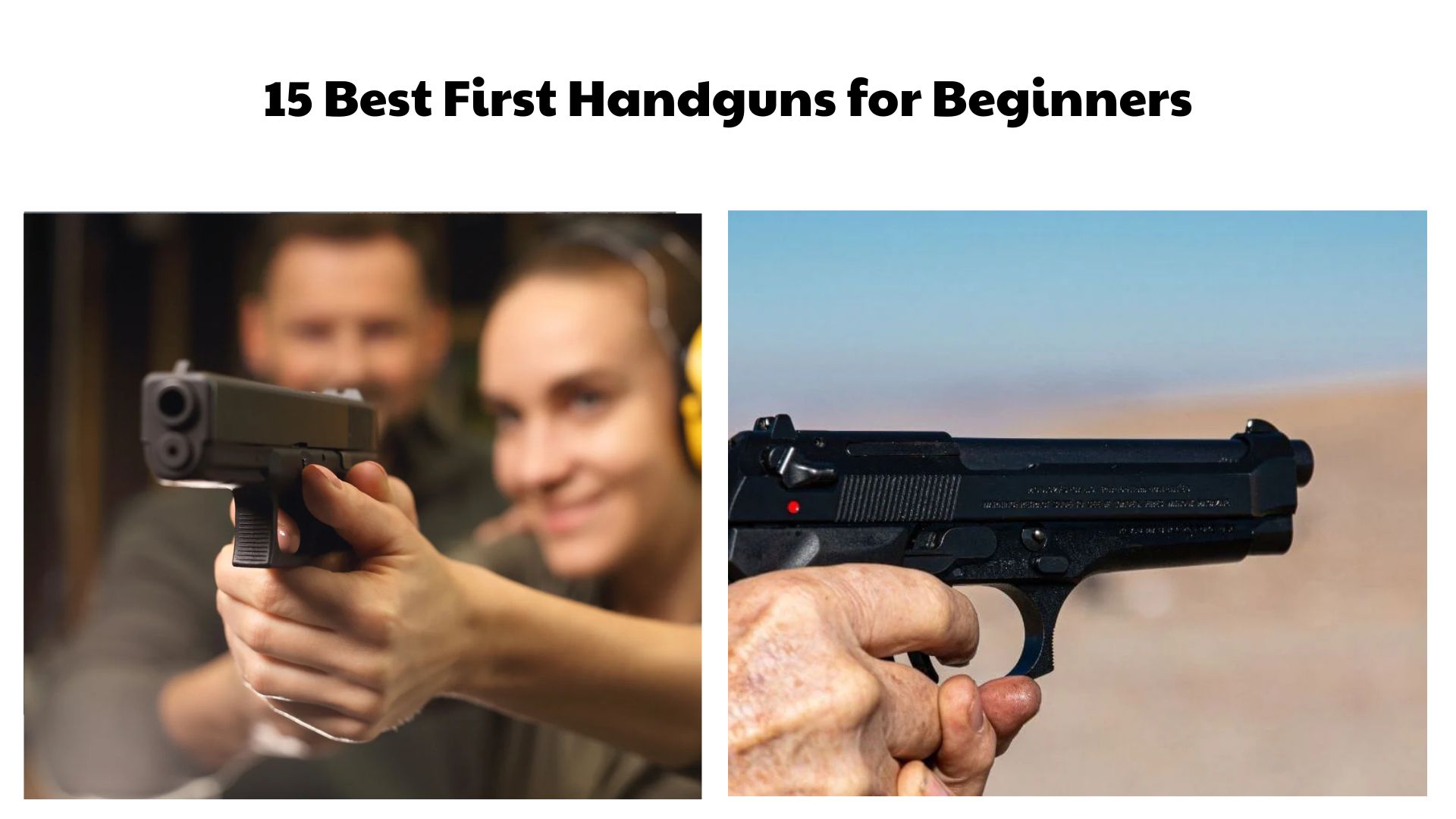
Choosing the Best First Handguns is one of the most important steps for anyone entering the world of firearms. A first handgun should not be selected based on power alone, but rather on control, simplicity, reliability, and how comfortably a new shooter can learn fundamental skills. In most beginner-focused recommendations, handguns chambered in 9mm or .22LR are preferred because they offer manageable recoil and affordable practice opportunities. This guide breaks down carefully selected First Handguns that are widely trusted for training, home defense, and everyday familiarity building. Each firearm listed here is chosen for its ease of use, ergonomic design, and proven track record, helping new shooters develop confidence without unnecessary complexity.
15 Best First Handguns for Beginners
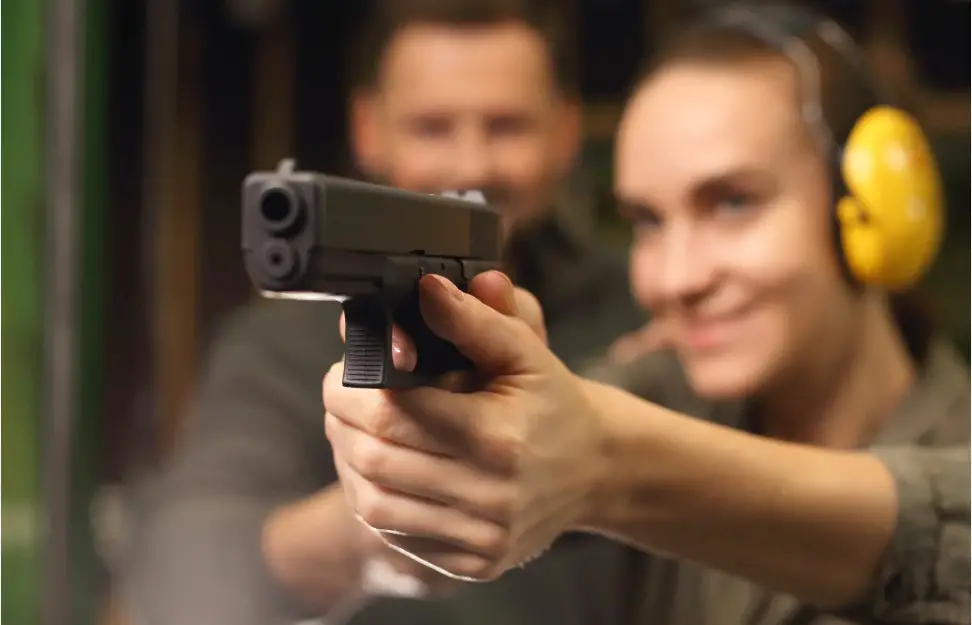
1. Glock 19 Gen 5 – The Benchmark First Handgun
The Glock 19 Gen 5 is often considered the benchmark when discussing the Best First Handguns, and this reputation comes from decades of real-world use across civilian, law enforcement, and defensive applications. It is a compact 9mm pistol that strikes a near-perfect balance between size, capacity, and shootability. For beginners, this balance is important because it allows the shooter to learn without being overwhelmed by recoil or complicated manual operations. The Glock platform is designed with simplicity in mind, featuring a striker-fired system with no external safety lever, which reduces confusion during training and promotes consistent handling habits.
One of the most important aspects of the Glock 19 Gen 5 is its reliability. It is engineered to function under a wide range of conditions, including dirt, moisture, and extended use without frequent maintenance interruptions. This makes it particularly suitable for beginners who may not yet have advanced cleaning routines or technical firearm knowledge. The grip design has been refined in the Gen 5 version to improve ergonomics, offering better control and reduced hand fatigue during longer practice sessions. The mild recoil of the 9mm cartridge also helps new shooters focus on accuracy rather than managing heavy muzzle rise.
From a training perspective, the Glock 19 encourages consistency. Its trigger system is predictable, allowing shooters to build muscle memory over time. The magazine capacity is also generous for its size, giving beginners more opportunities to practice follow-up shots without frequent reloading. While it may feel simple compared to more feature-heavy pistols, this simplicity is exactly what makes it effective. For anyone searching for a dependable entry point into First Handguns, the Glock 19 Gen 5 remains one of the most recommended choices worldwide.
2. Smith & Wesson M&P Shield Plus – Compact Control for New Shooters
The Smith & Wesson M&P Shield Plus is designed for shooters who prioritize concealability without sacrificing control, making it one of the strongest candidates among the Best First Handguns. It features a slim profile that fits comfortably in the hand and easily conceals under everyday clothing, which is especially important for those considering a handgun for personal protection. Despite its compact size, the Shield Plus manages to maintain a surprisingly stable shooting platform, which helps beginners develop proper grip and trigger discipline.
A key advantage of the Shield Plus is its improved magazine capacity compared to earlier compact designs. This allows new shooters to train longer between reloads, which is useful during early learning stages. The trigger system has also been refined to provide a smoother and more consistent pull, reducing the likelihood of flinching or inconsistent shot placement. Combined with manageable recoil from the 9mm cartridge, this makes the handgun approachable even for those with limited shooting experience.
Ergonomically, the Shield Plus is designed with user comfort in mind. The grip texture provides a secure hold without being overly aggressive, allowing for better control during rapid firing drills. The sight system is simple and intuitive, helping beginners focus on fundamentals rather than complex adjustments. Maintenance is also straightforward, which is important for new firearm owners learning responsible upkeep. Overall, this handgun is a practical blend of portability and usability, making it a strong option for First Handguns in both training and defensive contexts.
3. SIG Sauer P365 – Micro Compact with Real Capability
The SIG Sauer P365 has reshaped expectations for micro-compact pistols and is frequently mentioned among the Best First Handguns due to its impressive balance of size and performance. Despite its small frame, it offers a surprisingly high magazine capacity, which is a major advantage in a compact carry firearm. This design makes it particularly appealing to beginners who want something easy to carry without sacrificing defensive capability. The lightweight construction also ensures that it remains comfortable for daily use, even for extended periods.
The shooting experience of the P365 is notably smooth for its size class. Recoil is controlled and predictable, allowing new shooters to maintain accuracy during practice sessions. The grip design is slightly curved and textured, helping stabilize the firearm in the hand despite its compact dimensions. This is especially important for beginners, as smaller handguns can sometimes feel less stable, but the P365 minimizes that issue effectively.
Another important aspect is its modern sight system, which allows for fast target acquisition. This helps new shooters develop quick reaction habits without sacrificing accuracy. The internal design is also built for reliability, ensuring consistent performance with quality ammunition. While micro-compacts can sometimes feel challenging for beginners, the P365 is engineered to reduce that learning curve. It stands out as a modern solution for those entering the world of First Handguns with a focus on concealed carry readiness.
4. Ruger Security-9 – Affordable and Beginner Friendly
The Ruger Security-9 is often recommended as one of the most accessible Best First Handguns due to its affordability and straightforward operation. It is designed to provide a smooth introduction to centerfire pistols without overwhelming new users with complexity or high cost. The handgun features a traditional double-action style trigger system that is predictable and easy to learn, making it a suitable platform for developing foundational shooting skills.
One of the standout features of the Security-9 is its balanced recoil management. While it is chambered in 9mm, the design helps soften the shooting experience, making it more comfortable for beginners. The grip is ergonomically shaped to support natural hand positioning, which reduces fatigue and improves accuracy over time. This is particularly beneficial during longer training sessions where consistency is key.
Maintenance is also simple, which is an important factor for first-time handgun owners. The firearm can be disassembled easily for cleaning, and its internal components are designed for durability under regular use. The Security-9 may not have the premium feel of higher-end models, but it excels in delivering reliable performance at an entry-level price point. For many new shooters, it represents a practical and stress-free introduction to First Handguns.
5. Glock 17 – Full-Size Stability for Learning
The Glock 17 is a full-size handgun that plays an important role in beginner training, especially for those who want maximum stability while learning the basics. As one of the original modern polymer service pistols, it offers a large frame that helps absorb recoil and improve shooting control. For new shooters, this added stability can significantly improve confidence and accuracy during early training stages.
The full-size grip of the Glock 17 allows for a more natural hand position, reducing the likelihood of improper grip habits forming during practice. Its longer sight radius also contributes to improved accuracy, making it easier for beginners to align shots consistently. Although it is larger than compact alternatives, this size actually benefits training by providing a more forgiving shooting platform.
Reliability is another defining characteristic of the Glock 17. It is known for functioning consistently under a wide range of conditions, which is essential for building trust in a first firearm. While it may not be the most convenient option for concealed carry, it is one of the best tools for developing strong shooting fundamentals. For those focused on learning properly from the start, the Glock 17 remains one of the most dependable First Handguns available.
6. SIG Sauer P320 – Modular First Handgun for Flexible Training
The SIG Sauer P320 is widely recognized among the Best First Handguns because it introduces a level of modularity that is rare in beginner-friendly firearms. At its core, the P320 is built around a removable fire control unit, meaning the user can change grip sizes, frame styles, and even slide configurations without replacing the entire handgun. For a new shooter, this flexibility is important because it allows the firearm to evolve as skills improve. Instead of outgrowing the platform, the shooter adapts the platform to their development.
In terms of shooting experience, the P320 delivers a smooth and controllable recoil impulse in 9mm. This makes it suitable for beginners who are still learning how to manage muzzle rise and follow-up shots. The grip ergonomics are also highly adaptable, with different sizes available to match various hand shapes. This reduces common beginner issues such as improper grip tension or inconsistent trigger control. The trigger itself is consistent and predictable, helping build strong fundamentals during training sessions.
From a practical standpoint, the P320 is designed for long-term use. It is durable, reliable, and widely supported with accessories and aftermarket parts. This makes it a strong candidate for those who want a First Handgun that can grow with them over time. While it may feel slightly more advanced than ultra-simple beginner pistols, its adaptability makes it an excellent investment for serious new shooters.
7. CZ P-10 C – Natural Grip Geometry for New Shooters
The CZ P-10 C is often praised for its exceptional ergonomics, making it one of the most naturally comfortable Best First Handguns available. CZ designed this pistol with a focus on how the hand naturally aligns with the frame, resulting in a grip angle that feels intuitive even for first-time shooters. This reduces the learning curve and allows beginners to focus more on fundamentals such as sight alignment and trigger control rather than fighting the ergonomics of the firearm.
The recoil management of the P-10 C is another strong advantage. Chambered in 9mm, it offers a balanced shooting experience that is neither too harsh nor too soft. This balance is important for developing consistent shooting habits. The trigger is crisp and clean, providing clear feedback that helps shooters understand each shot they take. This improves accuracy over time and builds confidence during training.
Durability is also a key feature of the P-10 C. It is built to withstand heavy use and requires minimal maintenance to remain reliable. For beginners, this reduces the stress of ownership while ensuring the firearm performs consistently. Overall, the CZ P-10 C is a strong, ergonomic, and user-friendly option within the First Handguns category.
8. Walther PDP Compact – Precision-Oriented Beginner Choice
The Walther PDP Compact is designed with an emphasis on precision and shooting performance, making it a standout among the Best First Handguns for users who want to develop strong accuracy skills early. One of its most notable features is the Performance Duty Trigger, which is widely regarded as one of the best factory triggers in its class. This allows beginners to experience a clean and predictable break, which is essential for learning proper trigger discipline.
The grip texture on the PDP is intentionally aggressive, providing excellent control even in extended shooting sessions. While this may feel firm at first, it actually helps beginners maintain a stable grip under recoil. The optics-ready slide also allows users to mount red dot sights, which can significantly improve target acquisition speed and accuracy for new shooters learning visual alignment techniques.
The PDP Compact is also known for its reliability and modern design. It performs consistently with a wide range of ammunition and is built to handle frequent training use. For beginners who want a slightly more performance-focused First Handgun, the Walther PDP Compact offers a blend of precision, control, and modern features.
9. Springfield Hellcat Pro – High Capacity Compact for Everyday Use
The Springfield Hellcat Pro is a compact handgun designed with a strong emphasis on capacity and portability, making it a practical option among Best First Handguns. It offers a higher magazine capacity than many competitors in its size class, giving beginners more flexibility during training and defensive scenarios. This increased capacity can also reduce the frequency of reloads, allowing new shooters to focus more on shooting fundamentals.
The recoil of the Hellcat Pro is well-managed for a compact 9mm firearm. Despite its smaller size, it remains controllable and predictable, which is important for maintaining accuracy. The grip is ergonomically designed to provide a secure hold, even during rapid firing. This helps beginners avoid common issues such as limp wristing or inconsistent grip pressure.
Another advantage is its optics-ready design, which allows users to install red dot sights for improved accuracy. This feature is becoming increasingly important for modern shooters and provides an easier learning curve for target acquisition. Overall, the Hellcat Pro is a compact but capable First Handgun suitable for both training and carry.
10. Smith & Wesson M&P 2.0 Compact – Balanced Training Platform
The Smith & Wesson M&P 2.0 Compact is one of the most balanced Best First Handguns available, offering a combination of durability, ergonomics, and ease of use. It is designed to serve as both a training platform and a practical defensive firearm, making it ideal for beginners who want one handgun that can do it all. The frame is slightly textured to improve grip stability, and the overall design feels solid without being overly heavy.
One of the key strengths of the M&P 2.0 is its improved trigger system compared to earlier versions. The trigger provides a more defined break and reset, helping beginners develop better shooting rhythm. The recoil system is also well-tuned, making the 9mm cartridge easier to manage during extended practice sessions.
Maintenance is straightforward, and the firearm is built for long-term durability. It can handle frequent use without significant wear, which is important for new shooters who plan to train regularly. The M&P 2.0 Compact remains a reliable and practical First Handgun for building strong foundational skills.
11. Ruger Mark IV 22/45 – Best .22LR Training First Handgun
The Ruger Mark IV 22/45 is one of the most recommended .22LR platforms among the Best First Handguns because it focuses heavily on training efficiency and shooting fundamentals. Unlike centerfire pistols, this handgun produces extremely low recoil, which allows beginners to concentrate entirely on grip, sight alignment, and trigger control without being distracted by muzzle rise. This makes it an ideal learning tool for absolute beginners who are still developing basic shooting coordination.
One of the standout advantages of the Mark IV series is its simple takedown system. Earlier generations of .22 pistols were often criticized for being difficult to disassemble, but the Mark IV solves this with a one-button takedown design. This makes cleaning and maintenance significantly easier, especially for first-time gun owners who may not yet be familiar with firearm mechanics. Ease of maintenance is a major factor in keeping a training firearm reliable over time.
The grip angle of the 22/45 variant mimics the feel of modern service pistols, which helps bridge the gap between training and real-world defensive firearms. This means beginners can build transferable skills while enjoying the affordability of .22LR ammunition. Overall, the Ruger Mark IV 22/45 is not just a training pistol—it is a foundational learning tool for anyone starting their firearm journey.
12. Smith & Wesson M&P22 Compact – Lightweight Learning Platform
The Smith & Wesson M&P22 Compact is designed to provide a smooth introduction to handgun handling, making it a strong candidate among Best First Handguns for beginners who want a low-recoil experience. Built around a polymer frame, it is lightweight and easy to handle, which reduces fatigue during long practice sessions. This is especially important for new shooters who are still developing hand strength and proper grip discipline.
The .22LR chambering plays a key role in its beginner-friendly nature. Recoil is extremely mild, allowing users to focus entirely on accuracy rather than managing kick. This helps build confidence early, which is essential for safe and effective firearm handling. The controls are also simplified, making it easy to learn basic functions such as loading, firing, and unloading without confusion.
The M&P22 Compact is also known for its comfortable ergonomics. The grip is shaped to fit naturally in the hand, and the controls are positioned intuitively. While it is not designed for high-performance shooting, it excels as a training and confidence-building tool. For many new shooters, this handgun serves as a stepping stone toward larger caliber firearms.
13. Taurus TX22 – High-Capacity .22LR Trainer
The Taurus TX22 is widely recognized as one of the most modern and practical Best First Handguns in the .22LR category. Unlike traditional rimfire pistols that often suffer from limited capacity or inconsistent cycling, the TX22 was engineered specifically to function like a full-size defensive handgun while still using inexpensive ammunition. This makes it an excellent choice for beginners who want realistic training without the cost of 9mm rounds.
One of its strongest features is its high-capacity magazine, which allows for extended training sessions without frequent reloads. This helps new shooters build rhythm and consistency during practice. The trigger is also surprisingly smooth for its category, offering a clean break that supports accurate shooting habits. Combined with low recoil, it becomes an extremely easy platform to learn on.
Reliability has been a major focus in the TX22 design. Many .22LR pistols struggle with feeding or cycling issues, but this model performs consistently with a wide range of ammunition types. Its modern ergonomics and accessory-ready design further enhance its usability, making it one of the most versatile First Handguns for beginners who want both training and fun shooting capability.
14. Beretta APX A1 Compact – Modern Defensive Starter Pistol
The Beretta APX A1 Compact is a modern striker-fired pistol designed with simplicity and control in mind, making it a solid entry in the Best First Handguns category. It offers a clean, aggressive grip texture that enhances stability during shooting, which is especially helpful for beginners learning to manage recoil and maintain consistent hand positioning. The design reflects modern defensive pistol trends, focusing on efficiency and ease of use.
Chambered in 9mm, the APX A1 Compact provides manageable recoil that is suitable for new shooters. The trigger system has been improved over earlier models, offering a more predictable break and reset. This helps beginners develop consistent shooting habits without unnecessary complexity. The controls are also well-placed and intuitive, reducing the learning curve for first-time users.
Durability is another strong point of this handgun. It is built to handle frequent training sessions and defensive use without significant wear. The modular design also allows for some customization, giving users the ability to adapt the firearm as their experience grows. For beginners who want a modern, duty-style handgun, the APX A1 Compact is a reliable and practical option.
15. Canik TP9 Elite SC – Value-Packed Beginner Performer
The Canik TP9 Elite SC has gained a strong reputation as one of the best value options among Best First Handguns due to its combination of performance, features, and affordability. It is designed to deliver a premium shooting experience at a lower price point, making it especially attractive for beginners who want quality without overspending. The compact size also makes it suitable for concealed carry while still offering a stable shooting platform.
One of the most praised aspects of the TP9 Elite SC is its trigger. It is exceptionally smooth for its class, offering a crisp break that helps new shooters develop accurate shooting habits quickly. The recoil is well-managed, and the grip design provides excellent control even during rapid fire. These characteristics make it easier for beginners to build confidence during training sessions.
The handgun also comes optics-ready in many configurations, allowing users to upgrade with red dot sights as their skills progress. Its overall reliability and feature set make it feel like a higher-end firearm, even though it remains budget-friendly. For many first-time buyers, the Canik TP9 Elite SC represents one of the most complete and accessible First Handguns available today.
Conclusion
Choosing the right First Handgun is not about selecting the most powerful option, but about finding a firearm that feels natural, controllable, and easy to learn with. The Best First Handguns listed here share common qualities such as reliability, manageable recoil, and user-friendly design. Whether starting with a .22LR trainer like the Ruger Mark IV or stepping directly into a 9mm platform like the Glock 19 or SIG P320, the key is consistent practice and responsible handling. A well-chosen first handgun builds confidence, and confidence is the foundation of safe and effective shooting.
FAQ: Best First Handguns
1. What is the best first handgun for beginners?
The best first handgun depends on the shooter’s goals, but most experts recommend 9mm pistols like the Glock 19, Smith & Wesson M&P 2.0 Compact, or SIG Sauer P320. These models are widely used because they balance manageable recoil, reliability, and ease of training. A good first handgun should feel comfortable in the hand, be simple to operate, and allow the shooter to focus on fundamentals such as grip and trigger control. There is no single perfect choice, but proven, widely used platforms are generally the safest starting point.
2. Should a beginner start with 9mm or .22LR?
Both calibers have advantages. .22LR is easier to shoot due to its very low recoil and low cost, making it ideal for learning fundamentals. 9mm, on the other hand, is more practical for self-defense and offers better real-world performance. Many instructors recommend starting with .22LR for training and then transitioning to 9mm once basic skills are developed. However, some beginners choose 9mm immediately to avoid switching later.
3. Is Glock 19 good for first-time shooters?
Yes, the Glock 19 is one of the most recommended first handguns in the world. It is simple, durable, and extremely reliable. The recoil is manageable for most beginners, and its controls are minimal, which reduces confusion. Many instructors use it as a training standard because skills learned on the Glock 19 transfer easily to other handguns.
4. Why is reliability important in a first handgun?
Reliability ensures the firearm functions consistently when needed. For beginners, this is critical because malfunctions can interrupt learning and create unsafe handling situations. A reliable handgun allows the shooter to focus on technique rather than troubleshooting mechanical issues. This is why brands like Glock, SIG Sauer, and Smith & Wesson are often recommended.
5. Is recoil important for beginners?
Yes, recoil directly affects how quickly and accurately a beginner can learn. Low recoil allows shooters to maintain control, stay on target, and build confidence. Excessive recoil can lead to flinching, poor habits, and slower learning progress. That is why many first-time shooters start with 9mm or even .22LR pistols.
6. What is the safest handgun for beginners?
Safety depends more on handling than the firearm itself, but models with simple controls and internal safeties are often preferred. Glock pistols, for example, use a trigger safety system that reduces accidental discharge risk when properly handled. Regardless of the model, safe handling practices and training are more important than mechanical safety features alone.
7. Are compact handguns good for beginners?
Compact handguns can be good for beginners, especially for concealed carry, but they are slightly harder to control than full-size models. Smaller size usually means more felt recoil and a shorter sight radius. Many instructors recommend starting with a full-size pistol for training and later moving to a compact version.
8. What is the easiest handgun to learn on?
The easiest handguns to learn on are typically .22LR pistols such as the Ruger Mark IV or Taurus TX22. These firearms have minimal recoil and are very affordable to shoot, which encourages frequent practice. They are excellent for building foundational skills before transitioning to more powerful calibers.
9. How important is grip size for a first handgun?
Grip size is extremely important because it affects control, comfort, and accuracy. A grip that is too large or too small can make it difficult to hold the firearm properly. Many modern handguns include interchangeable backstraps or modular grips to help users find the right fit.
10. Should beginners buy a used handgun?
Beginners can buy used handguns if they are inspected carefully and come from a reliable source. However, purchasing a new handgun is often recommended for first-time buyers because it ensures full reliability and warranty coverage. Used firearms require more knowledge to evaluate properly.
11. Is .22LR enough for self-defense?
.22LR can be used for self-defense, but it is generally considered less effective than larger calibers like 9mm. Its main advantages are low recoil and ease of use. However, shot placement and multiple follow-up shots are more critical with this caliber compared to more powerful options.
12. What is the best budget first handgun?
The Ruger Security-9 and Canik TP9 Elite SC are often considered strong budget options. They provide reliable performance at an affordable price, making them ideal for new shooters who want quality without high cost.
13. Do I need training before buying a handgun?
While not legally required in many places, training is strongly recommended. Proper instruction helps beginners understand safe handling, storage, and shooting techniques. Training also builds confidence and reduces the risk of accidents.
14. How many rounds should a first handgun hold?
Most modern first handguns hold between 10 and 17 rounds. Higher capacity is generally beneficial because it reduces the need for frequent reloading during practice or defensive use. However, capacity should not be prioritized over comfort and control.
15. What is the difference between striker-fired and hammer-fired?
Striker-fired pistols use an internal firing mechanism without an external hammer, making them simpler and easier for beginners. Hammer-fired pistols have an external hammer and can offer different trigger modes. Striker-fired systems like Glock are often preferred for first-time shooters due to simplicity.
16. Are safeties necessary on a first handgun?
Safeties are optional depending on the design. Many modern pistols rely on internal safety systems instead of manual switches. Beginners should focus more on safe handling habits than relying solely on mechanical safeties.
17. What handgun is best for home defense beginners?
Full-size 9mm pistols like the Glock 17 or Smith & Wesson M&P 2.0 Compact are commonly recommended. They offer better control, higher capacity, and improved accuracy compared to smaller pistols.
18. How often should I practice with a first handgun?
Regular practice is essential. Many instructors recommend at least once or twice per month for beginners, with a focus on consistency rather than volume. Frequent short sessions are more effective than rare long sessions.
19. Is dry fire practice useful?
Yes, dry fire practice is extremely useful for improving trigger control, grip, and sight alignment without using live ammunition. It is safe when done with an unloaded firearm and proper safety checks.
20. What is the most forgiving handgun for beginners?
Forgiving handguns are typically those with low recoil, good ergonomics, and reliable operation. Glock 19, SIG P320, and Ruger Mark IV are often considered forgiving due to their balance of simplicity and performance.
21. Can beginners carry a handgun daily?
Yes, but it depends on local laws and proper training. Beginners should first become comfortable with safe handling and shooting before considering concealed carry.
22. What makes a handgun easy to shoot?
A handgun is easy to shoot when it has low recoil, good grip ergonomics, and a smooth trigger. These factors reduce strain and improve accuracy.
23. Are lightweight handguns good for beginners?
Lightweight handguns are easier to carry but may have more felt recoil. Beginners often find mid-weight pistols more stable and easier to control.
24. What is the best caliber for first handgun?
9mm is widely considered the best balance of control, cost, and effectiveness. .22LR is also excellent for training and skill development.
25. How do I choose the right handgun size?
The right size depends on hand fit, intended use, and comfort. Full-size pistols are better for training, while compact models are better for carry.
26. Are expensive handguns better for beginners?
Not necessarily. Many mid-range handguns perform just as well for beginners. Reliability and comfort matter more than price.
27. What is the role of sights in beginner handguns?
Sights help with aiming and accuracy. Clear, easy-to-see sights make learning faster and improve shooting confidence.
28. Can I customize my first handgun?
Yes, many handguns allow upgrades like sights, grips, and lights. However, beginners should focus on fundamentals before heavy customization.
29. What is the best way to store a handgun?
Handguns should be stored unloaded in a secure locked container or safe. Proper storage is essential for safety.
30. How long does it take to learn handgun basics?
Most beginners can learn basic handling and shooting within a few weeks of consistent practice, but mastery takes ongoing training.
31. Should I rent before buying?
Yes, renting allows beginners to try different models and find what feels most comfortable before making a purchase.
32. What is the biggest mistake beginners make?
One of the most common mistakes is choosing a handgun based on appearance or power instead of comfort and controllability.
33. Are polymer handguns good for beginners?
Yes, polymer handguns are lightweight, durable, and widely used in modern firearm design, making them ideal for beginners.
34. Do I need a license for a first handgun?
Requirements vary by location. Some regions require permits or background checks before purchase or ownership.
35. What is trigger reset?
Trigger reset is the point where the trigger is ready to fire again after a shot. Learning reset improves speed and accuracy.
36. How do I improve accuracy quickly?
Focus on grip, slow trigger press, and consistent sight alignment. Regular dry fire and live fire practice help significantly.
37. Is magazine capacity important?
Yes, higher capacity allows more shots before reloading, which can be helpful during training and defensive use.
38. What is limp wristing?
Limp wristing is when the shooter does not hold the handgun firmly, causing cycling issues. Proper grip prevents this problem.
39. Can beginners use optics?
Yes, red dot optics can actually make shooting easier by simplifying sight alignment.
40. What is the best handgun brand for beginners?
Glock, Smith & Wesson, SIG Sauer, Ruger, and CZ are commonly recommended for reliability and ease of use.
41. Are revolvers good for first-time shooters?
Yes, revolvers are simple and reliable, but they have lower capacity and slower reload speed compared to semi-automatics.
42. What is the best training routine?
A mix of dry fire practice, live fire drills, and safety review provides the best learning foundation.
43. How do I reduce recoil control issues?
Improve grip strength, stance, and practice with low recoil calibers first.
44. Are used law enforcement guns good for beginners?
Yes, they are often well-maintained and reliable, but should be inspected carefully before purchase.
45. What is the importance of stance?
A proper shooting stance improves balance, recoil control, and accuracy.
46. Can I learn without a trainer?
Yes, but professional instruction accelerates learning and improves safety significantly.
47. What is the safest way to handle a handgun?
Always keep it pointed in a safe direction, finger off trigger until ready to shoot, and treat every firearm as loaded.
48. What is the most important skill for beginners?
Trigger control is one of the most important skills, as it directly affects accuracy.
49. Should I focus on speed or accuracy first?
Accuracy should always come first. Speed improves naturally with practice.
50. What is the final advice for first handgun buyers?
Choose a handgun that feels comfortable, is easy to control, and encourages regular practice. Skill development matters more than the firearm itself.
Read more: