
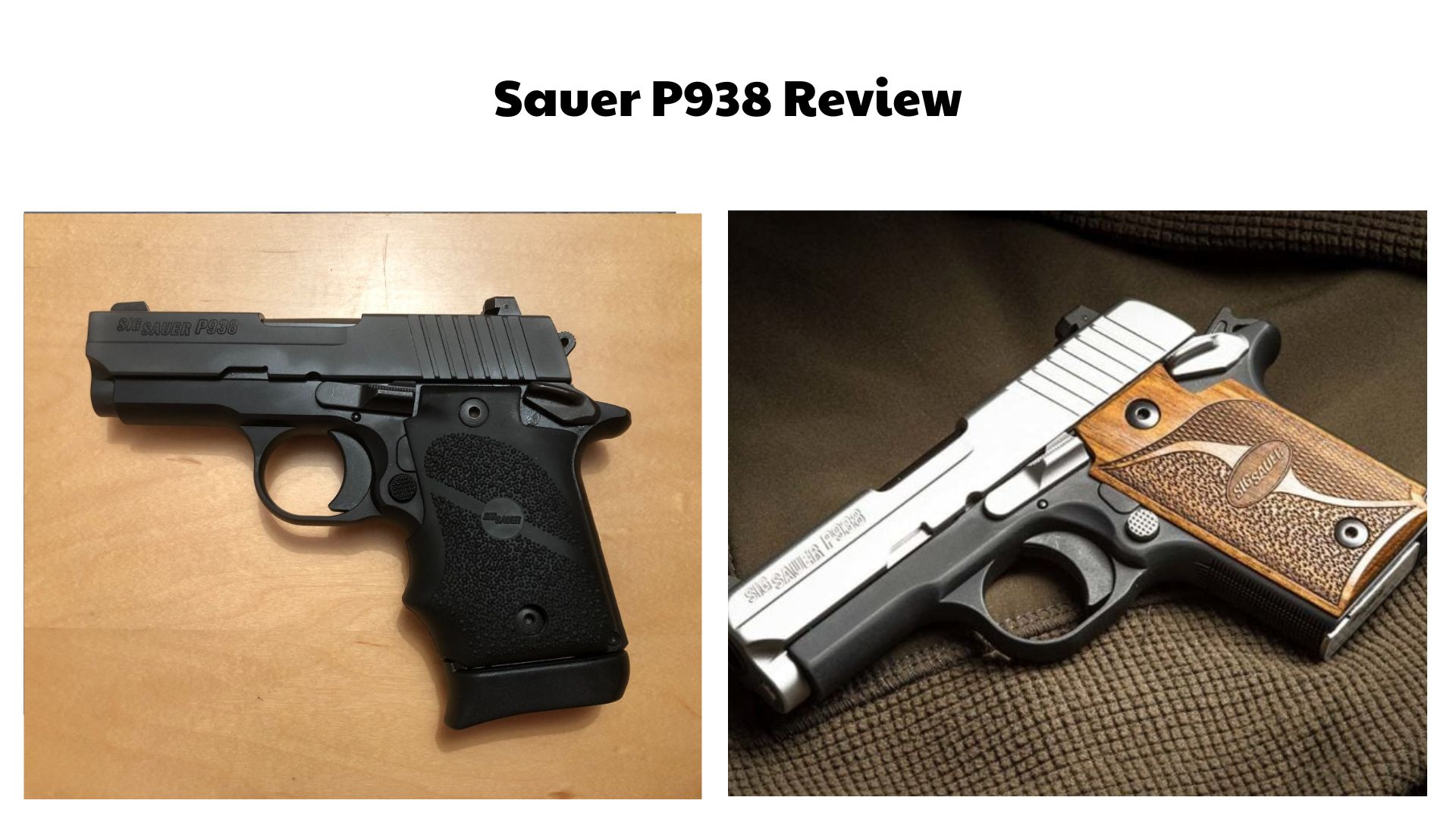

The SIG Sauer P938 remains one of the most recognizable micro-compact 9mm pistols in the concealed carry world. Even though newer striker-fired pistols like the SIG P365, Glock 43X, and Springfield Hellcat dominate today’s market, the P938 continues to hold a loyal following among shooters who value classic design, metal construction, and a 1911-inspired shooting experience.
Often described as a “mini 1911,” the P938 delivers a single-action, hammer-fired operation in a very compact frame. It is small enough for deep concealment but still offers a crisp trigger and familiar manual safety system that many experienced shooters appreciate. Unlike many modern polymer micro pistols, it leans heavily into traditional handgun handling characteristics.
So the key question becomes simple: is the SIG P938 still a viable concealed carry option today, or has it been fully replaced by modern striker-fired designs? The answer depends on what the shooter values most—capacity and modern features, or classic feel and refined shooting behavior in a compact package.
In this review, we will break down the P938 in detail, covering its history, design philosophy, specifications, shooting characteristics, and real-world performance as a defensive handgun.
2. SIG Sauer P938 Background & Development
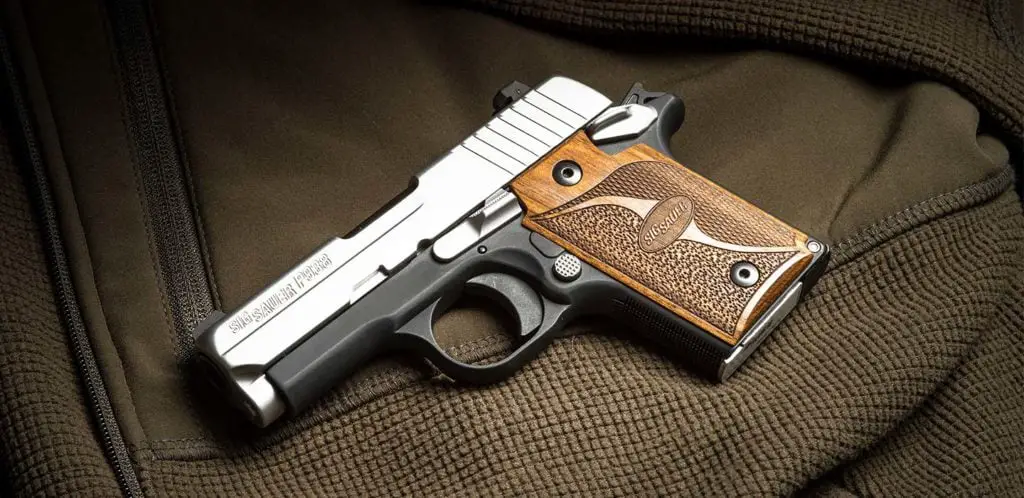
The SIG Sauer P938 was introduced in the early 2010s as part of SIG’s effort to expand its micro-compact lineup. It built directly on the success of the smaller .380 ACP P238 platform, but transitioned into the more powerful and widely used 9mm Luger caliber. This move significantly increased its appeal for concealed carry users who wanted greater defensive effectiveness in a compact form.
At its core, the P938 draws inspiration from the classic Colt Mustang and the broader 1911 design philosophy. SIG essentially scaled down the 1911 concept into a pocket-sized defensive pistol, maintaining the single-action trigger system and manual thumb safety while reducing size and weight for everyday carry.
During its release period, the concealed carry market was rapidly evolving. There was a strong demand for ultra-compact 9mm pistols that could replace larger compact handguns without sacrificing defensive capability. The P938 entered a competitive space that included early pocket 9mm designs like the Ruger LC9, Kahr CM9, Smith & Wesson Shield, and Kel-Tec PF9.
While many of these competitors focused on polymer frames and striker-fired systems, the P938 took a different approach. It leaned into premium materials, metal construction, and a traditional manual-of-arms experience. This positioned it as a higher-end option rather than a budget-friendly utility pistol.
Over time, the P938 earned a reputation as a “premium micro 1911-style carry gun.” It stood out not because it was the most modern design, but because it offered a unique blend of craftsmanship, shootability, and classic handling in a very small footprint. This identity continues to define its appeal even in today’s more advanced concealed carry market.
3. Key Specifications & Technical Overview
The SIG Sauer P938 is a micro-compact 9mm pistol designed specifically for concealed carry. Its specifications reflect a strong focus on minimizing size while maintaining practical defensive performance.
Caliber: 9mm Luger
The P938 is chambered in 9mm Luger, one of the most widely used defensive handgun calibers. This choice provides a balance of manageable recoil, effective terminal performance, and broad ammunition availability. Compared to its .380 ACP sibling, the P938 offers improved stopping power in a similarly compact platform.
Barrel Length: ~3 Inches
The pistol features a barrel length of approximately 3 inches. This short barrel contributes to its compact size, making it ideal for concealed carry. While it slightly reduces ballistic performance compared to longer barrels, it remains effective for close-range defensive use, which is the primary role of this firearm.
Overall Length: ~5.9 Inches
With an overall length of roughly 5.9 inches, the P938 fits comfortably into the micro-compact category. This size allows it to be easily concealed in inside-the-waistband holsters or even pocket carry setups with the right holster.
Weight: ~15–16 oz (Alloy Frame)
The P938 weighs approximately 15 to 16 ounces unloaded, depending on the variant. The aluminum alloy frame helps keep weight low while maintaining structural strength. This makes it comfortable for all-day carry without excessive fatigue.
Capacity: 6+1 or 7+1
Magazine capacity varies depending on configuration. Standard magazines typically hold 6+1 rounds, while extended magazines offer 7+1 capacity. While this is lower than modern double-stack micro pistols, it reflects the single-stack, ultra-compact design philosophy.
Action: Single-Action-Only (SAO), Hammer-Fired
One of the defining features of the P938 is its single-action-only, hammer-fired system. This means the pistol must be carried cocked and locked, similar to a traditional 1911. The trigger pull is short, crisp, and consistent, which many shooters consider a major advantage in defensive shooting scenarios.
Frame: Aluminum Alloy with Stainless Steel Slide
The frame is constructed from durable aluminum alloy, while the slide is made from stainless steel with SIG’s Nitron finish. This combination provides strength, corrosion resistance, and a premium feel compared to many polymer-framed competitors.
Controls: Manual Thumb Safety (1911-Style)
The P938 features a manual thumb safety positioned similarly to a 1911 pistol. This reinforces its traditional handling style and allows users to carry it in a cocked-and-locked condition. For shooters familiar with 1911 platforms, this control layout feels intuitive and familiar.
Sights: 3-Dot or SIGLITE Night Sights
Sight configurations vary by model. Many versions include SIGLITE night sights or standard 3-dot iron sights. These sights are designed for quick target acquisition in defensive scenarios, although the compact size of the pistol limits sight radius compared to larger handguns.
4. Design Philosophy & 1911 Influence
The SIG Sauer P938 is deeply rooted in classic 1911 design philosophy, but scaled down into a micro-compact defensive pistol. Rather than reinventing the wheel with a fully modern striker-fired system, SIG chose to preserve the feel and manual-of-arms that made the 1911 one of the most respected handgun platforms in history. The result is a compact firearm that feels familiar to traditional shooters while still meeting the demands of modern concealed carry.
At its core, the P938 is a miniaturized 1911-inspired platform. This influence is visible not only in its external controls but also in its firing mechanism, trigger behavior, and safety system. The pistol uses a single-action, hammer-fired system with a manual thumb safety, allowing it to be carried in a cocked-and-locked condition. This setup mirrors the operational style of a full-size 1911, just in a significantly smaller footprint.
Emphasis on Manual Safety and Cocked-and-Locked Carry
One of the most defining design choices of the P938 is its reliance on a manual safety. Instead of adopting passive striker-fired safety systems, SIG intentionally kept the traditional thumb safety found on 1911 pistols. This allows users to carry the pistol with the hammer cocked and safety engaged, a method commonly referred to as “cocked and locked.”
For experienced shooters, this system provides a sense of control and familiarity. The manual safety also reinforces disciplined handling habits, as the user must intentionally disengage the safety during the draw stroke. While this may not appeal to all modern shooters, it is a core part of the P938’s identity.
All-Metal Construction vs Polymer Micro Pistols
Another major design distinction is the use of all-metal construction. The P938 features an aluminum alloy frame paired with a stainless steel slide, giving it a solid and premium feel in the hand. This stands in contrast to most modern micro-compact pistols, which rely heavily on polymer frames to reduce weight and manufacturing cost.
The metal construction provides several practical benefits. It helps reduce felt recoil, adds stability during firing, and contributes to a more refined shooting experience. However, it also slightly increases weight compared to ultra-light polymer competitors. This tradeoff is intentional, as the P938 prioritizes shootability and control over absolute weight reduction.
Classic Ergonomics in a Compact Footprint
Despite its small size, the P938 maintains classic 1911-style ergonomics. The grip angle is natural and intuitive, helping the pistol point naturally toward the target. This design characteristic is one of the reasons many shooters find the P938 easy to transition to, even in a compact form.
The controls are also laid out in a familiar fashion, with the thumb safety positioned for quick activation and deactivation. Slide operation and magazine release placement follow traditional patterns, making the pistol feel like a scaled-down version of a full-size defensive handgun rather than a completely different platform.
Focus on Shootability Over Maximum Capacity
The design philosophy of the P938 clearly prioritizes shootability over capacity. With a single-stack magazine holding 6+1 or 7+1 rounds, it does not compete with modern double-stack micro pistols in terms of ammunition capacity. Instead, it focuses on delivering a superior shooting experience within a compact frame.
This tradeoff reflects an older but still relevant philosophy in concealed carry design: accuracy, control, and confidence matter more than maximum round count for many defensive scenarios. The P938 is built for users who value precision and handling over magazine size.
5. Ergonomics & Handling Experience
The SIG Sauer P938 delivers a unique ergonomic experience shaped by its 1911-inspired design and micro-compact dimensions. While it is small enough for concealed carry, its handling characteristics reflect a blend of classic pistol geometry and modern defensive expectations.
1911 Grip Angle and Natural Point-of-Aim
One of the strongest ergonomic advantages of the P938 is its 1911-style grip angle. This design naturally aligns the pistol with the shooter’s line of sight, allowing for instinctive aiming without excessive adjustment. Many users find that the pistol “points naturally,” which can improve speed and confidence during defensive use.
This grip angle is particularly beneficial under stress, where natural alignment can reduce the time needed to acquire a target. It is one of the reasons the 1911 platform—and by extension the P938—remains popular despite its age.
Short Grip Frame and Limited Pinky Support
Due to its compact size, the P938 features a short grip frame. This means that shooters with medium to large hands may find their pinky finger hanging off the bottom of the grip when using standard magazines. While this does not significantly impact functionality, it can reduce control for some users during rapid fire.
Extended magazines help address this limitation by providing additional grip surface. This improves stability and makes the pistol more comfortable to handle, especially during extended shooting sessions.
Extended Magazine Improvements
The use of extended magazines is a common solution among P938 users. These magazines not only increase capacity but also enhance ergonomics by providing a fuller grip. This added support improves recoil control and makes the pistol easier to manage during follow-up shots.
For many shooters, extended magazines are the preferred configuration for range use, while flush-fit magazines are reserved for maximum concealment carry.
Thumb Safety and Manual-of-Arms Familiarity
The thumb safety on the P938 is positioned similarly to a traditional 1911, making it familiar to those who have trained on that platform. It is easily accessible during the draw stroke and can be disengaged smoothly with proper technique.
However, this also introduces a training requirement. Shooters must consistently practice safety manipulation to ensure it becomes a natural part of their draw process. Without training, the manual safety can slow down initial response time.
Concealability vs Ergonomic Tradeoff
The P938 achieves excellent concealability due to its compact size and slim profile. It can be comfortably carried in IWB holsters, appendix positions, and even some pocket carry setups with appropriate holsters.
However, this concealability comes with ergonomic tradeoffs. The shorter grip and reduced mass make it less forgiving than larger pistols. Shooters must adapt their grip technique to maintain control, especially during rapid fire or extended range sessions.
Overall, the ergonomics of the P938 reflect a careful balance between concealment and shootability, leaning slightly toward concealment without fully sacrificing handling quality.
6. Trigger System & Shooting Characteristics
One of the most defining features of the SIG Sauer P938 is its single-action-only trigger system. This is a major departure from the striker-fired triggers found in most modern concealed carry pistols. Instead, the P938 offers a traditional hammer-fired trigger experience that closely resembles a compact 1911.
Single-Action-Only Trigger System
The P938 operates as a single-action-only (SAO) firearm. This means the hammer must be manually cocked before firing, or cocked automatically during cycling after the first shot. In practice, this results in a consistent and predictable trigger pull for every shot after the initial chambering.
This system is widely appreciated by experienced shooters who value consistency and mechanical clarity in trigger operation. It eliminates the long, heavy initial pull found in double-action systems and provides a more refined shooting experience overall.
Crisp Break and Clean Trigger Feel
The trigger on the P938 is known for its crisp break and clean feel. There is minimal mush or stacking during the pull, which allows the shooter to anticipate shot release with precision. This contributes to improved accuracy, especially in defensive shooting scenarios where control matters more than speed alone.
The break is often described as “glass-like,” a common term used for high-quality single-action triggers. This level of refinement is one of the key reasons many shooters prefer the P938 over striker-fired micro pistols.
Trigger Pull Weight
The trigger pull weight typically falls in the range of 7 to 8 pounds, depending on the specific model and wear-in condition. While this is heavier than competition pistols, it is appropriate for a defensive firearm where safety and control are important considerations.
The consistent pull weight also helps users develop muscle memory and predictable shooting behavior over time.
Short Reset for Fast Follow-Up Shots
Another advantage of the P938 trigger system is its short reset distance. After firing a shot, the trigger only needs to travel a small distance forward before it can be engaged again. This allows for faster follow-up shots when needed.
For defensive shooting scenarios, this short reset provides a balance between speed and control, helping shooters maintain accuracy during rapid engagements.
Performance in Defensive Shooting
In real-world defensive use, the P938 trigger system performs reliably and predictably. It is not designed for competition-level speed shooting, but rather for controlled, accurate fire under stress. The crisp break and consistent reset help shooters maintain composure during critical moments.
Overall, the trigger system is considered one of the strongest aspects of the P938 platform, especially for users who appreciate traditional firearm mechanics and refined shooting behavior.
7. Recoil & Shootability
The SIG Sauer P938 delivers a recoil experience that sits in an interesting middle ground. It is not as soft as full-size 9mm pistols, but it is noticeably more controlled than many ultra-light micro-compact handguns. This balance is one of the reasons it continues to attract shooters who want a small carry gun that is still comfortable to practice with.
Mild Recoil Compared to Ultra-Light Micro Pistols
One of the first things shooters notice when firing the P938 is that its recoil is relatively mild for its size. Many ultra-light pocket pistols in 9mm tend to feel sharp and abrupt due to their low weight and short barrels. The P938, while still compact, avoids the worst of this behavior.
This makes it more enjoyable during extended range sessions. Instead of feeling like a “one-magazine-and-done” pistol, it can be comfortably used for longer training sessions without excessive fatigue or discomfort.
All-Metal Frame Helps Absorb Recoil Energy
A major factor contributing to the P938’s shootability is its all-metal construction. The aluminum alloy frame adds mass and rigidity, which helps absorb and distribute recoil energy more effectively than lightweight polymer frames.
This added weight works in the shooter’s favor. Instead of feeling overly snappy or uncontrollable, the recoil impulse feels more dampened and predictable. It does not eliminate recoil, but it smooths it out in a noticeable way.
Low Bore Axis Improves Control
The P938 also benefits from a relatively low bore axis, meaning the barrel sits closer to the shooter’s hand. This design reduces muzzle flip by keeping recoil forces more in line with the shooter’s grip.
In practical terms, this translates into faster target reacquisition between shots. The muzzle rises less dramatically, allowing the shooter to maintain better sight alignment during rapid fire sequences.
Snappier Than Larger Compact Pistols
Despite its advantages, the P938 is still a micro-compact 9mm pistol, and physics cannot be fully overcome. Compared to larger compact pistols with longer barrels and heavier frames, the P938 does feel snappier.
This snap is most noticeable during rapid firing or when using defensive +P ammunition. However, it remains within a manageable range for most shooters with basic handgun experience.
Proper grip technique plays a significant role in controlling this snap. With a firm, high grip and consistent stance, most shooters can manage recoil effectively.
Better Comfort Than Polymer Pocket 9mm Guns
When compared to lightweight polymer pocket pistols chambered in 9mm, the P938 often provides a more comfortable shooting experience. Many of those ultra-light pistols sacrifice weight for concealability, which can result in harsh recoil and difficult follow-up shots.
The P938 strikes a better balance. It is small enough for concealed carry, but heavy enough to remain controllable. This makes it a more practical training and defensive platform for shooters who plan to shoot regularly rather than only carry.
8. Accuracy & Range Performance
The SIG Sauer P938 is widely respected for its accuracy within the micro-compact category. While it is not designed for long-range precision shooting or competition use, it performs exceptionally well within the distances most defensive encounters actually occur.
Strong Accuracy for Its Size Category
For a pistol of its size, the P938 delivers impressive accuracy. The combination of a crisp single-action trigger, solid lock-up, and fixed barrel design helps ensure consistent shot placement.
Many shooters are surprised by how tight their groups can be once they become familiar with the platform. It often outperforms expectations when compared to other ultra-compact defensive pistols.
Excellent Performance at 5–10 Yard Distances
The P938 is particularly effective at typical defensive distances between 5 and 10 yards. Within this range, it is capable of producing consistent, repeatable groupings when used with proper fundamentals.
This is the most realistic engagement distance for concealed carry scenarios, and the P938 is well-suited for this role. Its compact size does not significantly hinder practical defensive accuracy at these ranges.
Effective Out to ~15 Yards with Practice
With practice and familiarity, the P938 can remain effective out to approximately 15 yards. At this distance, sight alignment and trigger control become more critical, but the pistol still performs reliably in skilled hands.
Shooters who train regularly often find that their confidence at mid-range distances improves significantly over time.
Fixed Barrel Consistency Improves Grouping
One design advantage of the P938 is its fixed barrel system, which contributes to consistent shot alignment. A stable barrel improves mechanical repeatability, which in turn supports tighter shot groupings.
This consistency is especially noticeable when comparing it to looser-fitting, budget-oriented compact pistols.
Best Suited for Defensive Shooting
It is important to understand that the P938 is optimized for defensive shooting rather than precision marksmanship. Its compact size and short sight radius naturally limit long-range accuracy potential.
However, within its intended role—close-range defensive use—it performs extremely well. The focus is on fast, reliable hits rather than tight competition-grade groupings.
9. Concealed Carry Performance
The SIG Sauer P938 was designed with concealed carry as its primary mission, and this is where it truly excels. Its compact dimensions, lightweight construction, and slim profile make it a strong candidate for everyday defensive carry in a variety of environments.
True Pocket-Size Capability (With Holster)
While technically compact rather than ultra-micro, the P938 can be carried in a pocket with a proper holster in certain clothing setups. This is not the most common method of carry, but it is possible depending on pocket size and holster design.
More realistically, it shines in inside-the-waistband (IWB) and appendix carry configurations, where it remains discreet while still being quickly accessible.
Excellent for IWB and Appendix Carry
The P938 is especially well-suited for IWB and appendix carry. Its slim profile allows it to sit close to the body without creating excessive bulk or discomfort.
This makes it a practical choice for users who carry daily and need a firearm that blends into their natural movement patterns without drawing attention.
Lightweight and Comfortable for All-Day Carry
At approximately 15–16 ounces unloaded, the P938 is light enough for extended all-day carry. The aluminum alloy frame reduces weight without sacrificing durability, making it comfortable even during long periods of wear.
This is an important factor for concealed carriers, as discomfort often leads to inconsistent carry habits. The P938 helps reduce that barrier.
Minimal Printing Under Clothing
Thanks to its compact frame and slim slide, the P938 produces minimal printing when properly holstered and dressed around. This makes it easier to conceal under casual clothing, jackets, or even light shirts.
Proper holster selection and positioning further enhance its concealability, making it a discreet defensive option in most everyday environments.
Strong Option for Backup Gun or Deep Concealment
The P938 is also frequently used as a backup gun or secondary concealed carry option. Its small size and reliable performance make it suitable for situations where a primary firearm may not be practical.
For users who prioritize deep concealment, the P938 offers a strong balance between size, control, and defensive capability, making it a trusted choice in demanding carry scenarios.
10. Reliability & Ammo Performance
The SIG Sauer P938 generally maintains a solid reputation for reliability, especially once it has been properly broken in. Like many compact, tightly engineered pistols, it tends to perform best after an initial round count that allows internal components to settle and smooth out.
Strong Reliability After Break-In Period
Most users report that the P938 becomes highly reliable after a short break-in period. During early use, some pistols may experience minor feeding or cycling inconsistencies, but these issues typically decrease as the firearm is used more extensively.
This behavior is not unusual for tightly fitted defensive pistols, especially those built with metal frames and precision machining. Once broken in, the P938 is widely considered dependable for everyday concealed carry use.
Best Performance with Quality 9mm Ammunition
The P938 performs most consistently with high-quality 9mm ammunition. Standard full metal jacket (FMJ) rounds are generally used for training, while premium defensive hollow points are recommended for carry purposes.
Because of its compact barrel and tight tolerances, ammunition quality can have a noticeable effect on cycling smoothness. Well-manufactured defensive loads tend to deliver the most reliable performance.
Occasional Early Issues (Model Dependent)
Some early production units or specific variants have reported minor issues, such as light feeding inconsistencies or sensitivity to certain ammunition types. These issues are not universal but can occur depending on production batch and usage conditions.
In most cases, these concerns are resolved through break-in, cleaning, or selecting more suitable ammunition. SIG’s overall quality control has remained strong, and long-term reliability is generally positive.
Importance of Testing Defensive Loads
One of the most important steps for any P938 owner is testing multiple defensive ammunition types before committing to a carry load. Not all hollow point designs behave the same in compact barrels, and some may cycle more reliably than others.
By testing at the range, users can identify the specific ammunition that provides both reliable feeding and consistent point of impact. This step is essential for any concealed carry firearm, but especially important in compact platforms like the P938.
Proven Long-Term Durability
With proper maintenance, the P938 has demonstrated strong long-term durability. Regular cleaning, lubrication, and routine inspection help ensure consistent performance over thousands of rounds.
Despite its small size, the firearm is built with robust materials and tight engineering standards, making it capable of sustaining long-term defensive use when properly cared for.
11. SIG P938 Variants Overview
The SIG Sauer P938 lineup includes several variants, each designed to meet different user preferences in terms of aesthetics, ergonomics, and concealment style. While the core mechanics remain the same across models, differences in grip, finish, and sight configuration create distinct user experiences.
Standard P938 Models
The standard P938 models represent the base configuration of the platform. These versions typically feature rubber or G10-style grips, standard finishes, and basic 3-dot or SIGLITE night sights depending on the package.
They are designed to provide a straightforward concealed carry solution without additional enhancements. These models are often chosen for their balance of performance and cost within the P938 lineup.
SAS Variant (Anti-Snag Design)
The SAS (SIG Anti-Snag) variant focuses on streamlined concealment. It removes or flushes external controls and sharp edges to reduce the chance of snagging during the draw stroke.
This model also features a unique sight system designed for fast target acquisition at close range rather than traditional iron sights. The SAS variant is ideal for deep concealment users who prioritize smooth draw over precision aiming systems.
Legion Variant (Premium Upgrades)
The Legion variant represents the premium end of the P938 lineup. It typically includes upgraded grips, enhanced trigger components, and refined finishes that improve both aesthetics and handling feel.
This version is designed for users who want the highest level of refinement within the platform. It often includes subtle performance improvements and enhanced visual detailing.
Differences in Sights, Grips, and Finish Quality
Across all variants, differences are primarily found in sights, grip materials, and surface finishes. Some models prioritize night visibility, while others focus on low-profile concealment or enhanced texture for better control.
Finish quality also varies, with premium models offering more durable coatings and improved corrosion resistance compared to base configurations.
Role of Each Variant in Concealed Carry
Each variant serves a slightly different concealed carry purpose. Standard models offer balanced performance, SAS models prioritize ultra-smooth concealment, and Legion models focus on premium handling and refinement.
This variety allows users to choose a configuration that best matches their carry style and personal preferences rather than forcing a one-size-fits-all solution.
12. SIG P938 vs Modern Micro Pistols (P365, Hellcat, etc.)
The SIG P938 exists in a unique position within today’s concealed carry market. While it remains respected, it competes against a new generation of micro-compact pistols that prioritize capacity, modularity, and striker-fired simplicity.
Capacity Disadvantage vs Modern Double-Stack Micro Pistols
One of the most significant differences between the P938 and modern micro pistols is magazine capacity. The P938 typically offers 6+1 or 7+1 rounds, while newer double-stack designs like the SIG P365 or Springfield Hellcat can hold significantly more ammunition.
This capacity gap is one of the main reasons modern pistols have become dominant in the concealed carry market. More rounds provide added flexibility in defensive scenarios and training environments.
Trigger Advantage Over Striker-Fired Designs
Despite its capacity limitations, the P938 holds a clear advantage in trigger quality compared to most striker-fired micro pistols. Its single-action trigger provides a crisp break and short reset that many shooters prefer for controlled shooting.
This difference is especially noticeable during slow, deliberate fire where trigger precision plays a major role in accuracy.
Recoil vs Capacity Tradeoff
The comparison between recoil control and magazine capacity is a key tradeoff. While modern double-stack pistols offer more rounds, they often come with different recoil characteristics depending on frame weight and design.
The P938, with its all-metal construction, offers a different shooting feel that many users describe as more “solid” and controlled, even if it holds fewer rounds.
P365 Platform Dominance in Modern Market
The SIG P365 platform has largely set the standard for modern concealed carry pistols due to its combination of high capacity, compact size, and modular design. It has become the benchmark against which many other pistols are measured.
In this context, the P938 is no longer a mainstream choice but rather a specialized alternative for shooters who prefer traditional mechanics over modern striker-fired systems.
Why the P938 Remains Niche but Respected
Despite being overshadowed by newer designs, the P938 continues to hold respect in the firearms community. Its combination of classic 1911-style operation, metal construction, and refined trigger system gives it a distinct identity.
It is not intended to compete directly with modern high-capacity pistols. Instead, it occupies a niche role as a compact, traditional-style defensive handgun for users who value feel, control, and craftsmanship over maximum capacity.
13. Advantages of the SIG P938
The SIG Sauer P938 remains a respected micro-compact pistol because it delivers a set of advantages that many modern polymer pistols do not fully replicate. While it is not the highest-capacity or most technologically advanced handgun in its class, it excels in areas that matter deeply to shooters who appreciate traditional design and refined shooting characteristics.
Exceptional Single-Action Trigger
One of the most significant strengths of the P938 is its single-action-only trigger. It offers a crisp, clean break with minimal travel, which allows for precise shot placement and predictable performance. Compared to many striker-fired micro pistols, the trigger feel is noticeably more refined.
This trigger system also provides a short reset, enabling faster follow-up shots once the shooter becomes familiar with the platform. For many users, this is one of the defining reasons they choose the P938 over newer alternatives.
All-Metal Construction Durability
The P938 features an aluminum alloy frame paired with a stainless steel slide, giving it a durable and solid construction. This all-metal build contributes to long-term durability and a more substantial feel in the hand.
Unlike lightweight polymer pistols, the added mass helps stabilize the firearm during firing and enhances overall shooting confidence. It is built to withstand consistent use with proper maintenance.
Very Compact and Highly Concealable
One of the key advantages of the P938 is its compact size. It is small enough for deep concealment while still maintaining enough structure for controlled shooting. This makes it a strong option for everyday concealed carry users.
Its slim profile also helps reduce printing under clothing, allowing for discreet carry in a variety of environments and clothing styles.
Excellent Accuracy for Its Size
Despite its compact dimensions, the P938 delivers strong accuracy within defensive shooting distances. Its combination of a fixed barrel design and crisp trigger contributes to consistent shot placement.
Many shooters find that it performs exceptionally well at typical self-defense ranges, making it a reliable choice for close-quarters scenarios.
Soft Recoil for a Micro 9mm
The recoil behavior of the P938 is relatively mild compared to many ultra-light micro pistols. Its metal frame and low bore axis help absorb and control recoil energy, resulting in a more manageable shooting experience.
This makes it more comfortable for extended range sessions and more accessible for shooters with moderate experience levels.
Familiar 1911-Style Manual of Arms
The P938’s 1911-inspired design offers a familiar manual of arms for experienced shooters. The manual thumb safety, single-action operation, and grip angle all reflect traditional firearm handling principles.
For those already trained on 1911 platforms, transitioning to the P938 feels intuitive and natural, reducing the learning curve significantly.
14. Disadvantages & Limitations
While the SIG P938 has many strengths, it also comes with limitations that are important to consider before choosing it as a primary concealed carry firearm. These drawbacks are largely a result of its compact size and traditional design philosophy.
Low Magazine Capacity (6–7 Rounds)
One of the most notable limitations is its relatively low magazine capacity. With 6+1 or 7+1 rounds depending on configuration, it falls behind modern double-stack micro pistols that offer significantly higher capacity.
This difference is often the deciding factor for users who prioritize maximum ammunition availability in defensive situations.
Higher Price vs Modern Competitors
The P938 is generally priced higher than many modern polymer micro pistols. This reflects its metal construction, precision machining, and premium branding, but it can be a barrier for budget-conscious buyers.
In a market filled with cost-effective striker-fired options, the P938 positions itself as a more premium niche choice.
Heavier Than Polymer Micro Pistols
Although still lightweight for an all-metal firearm, the P938 is heavier than most polymer-framed micro pistols. This added weight can be noticeable during long periods of carry, especially for users accustomed to ultra-light designs.
However, this weight also contributes to improved recoil control and shooting stability.
Manual Safety Requires Training
The inclusion of a manual thumb safety introduces a training requirement. Users must consistently practice engaging and disengaging the safety during the draw stroke to ensure smooth operation under stress.
Without proper training, this feature can slow down response time in defensive situations.
Limited Accessories and Modernization Options
Compared to platforms like the SIG P365 or Glock series, the P938 has a more limited aftermarket ecosystem. Options for optics mounting, modular upgrades, and customization are relatively restricted.
This makes it less adaptable for users who prefer heavily customized or modernized carry setups.
Smaller Grip Not Ideal for All Shooters
The compact grip frame can be challenging for shooters with larger hands. Without extended magazines, some users may find their grip less secure, particularly during rapid fire.
This is a common tradeoff in micro-compact pistol design, where concealability often takes priority over full ergonomic comfort.
15. Ideal Users for the SIG P938
The SIG P938 is not designed to be a universal solution for every shooter. Instead, it serves a specific group of users who value its unique combination of traditional design, compact size, and refined shooting characteristics.
Experienced Shooters Who Prefer 1911-Style Pistols
The P938 is an excellent fit for shooters who already have experience with 1911 platforms. Its manual safety, single-action trigger, and grip angle feel familiar and intuitive to those users.
These shooters often appreciate the transition to a smaller, more concealable version of a trusted platform.
Concealed Carriers Prioritizing Trigger Quality
For users who value trigger performance above all else, the P938 offers one of the best trigger systems in the micro-compact category. Its crisp break and short reset make it appealing for defensive shooting scenarios where precision matters.
This focus on trigger quality often outweighs capacity concerns for this group of users.
Backup Gun Users Needing Deep Concealment
The compact size of the P938 makes it a strong candidate for backup gun use. It can be easily carried in concealed or secondary positions without adding significant bulk or weight.
Its reliability and shootability make it a practical choice for redundancy in defensive setups.
Shooters Comfortable with Manual Safeties
Users who are comfortable with manual safeties will find the P938’s operation straightforward. It rewards proper training and disciplined handling, aligning well with traditional firearm practices.
This makes it less suitable for users who prefer passive safety systems or striker-fired simplicity.
Collectors of Classic SIG Firearms
The P938 also appeals to firearm enthusiasts and collectors who appreciate SIG Sauer’s traditional designs. Its 1911-inspired architecture and metal construction give it a distinct place within SIG’s product lineup.
It is often viewed as a modern interpretation of classic carry pistols.
Users Prioritizing Shootability Over Capacity
Ultimately, the P938 is best suited for users who prioritize shooting experience over magazine capacity. It emphasizes control, accuracy, and handling in a compact form rather than maximizing round count.
For these users, the tradeoff is worthwhile, making the P938 a dependable and enjoyable concealed carry option.
16. Final Verdict: Is the SIG P938 Worth It?
The SIG Sauer P938 remains one of the more distinctive micro-compact pistols on the market. It is not designed to compete directly with modern high-capacity striker-fired handguns, but instead to serve a very specific role: a compact, traditional-style concealed carry pistol that prioritizes shooting quality over magazine size.
Strong Niche Concealed Carry Pistol with Premium Feel
At its core, the P938 is a niche firearm, but a very well-executed one. It offers a premium shooting experience in a small package, combining all-metal construction, a crisp trigger, and classic 1911-inspired controls. These characteristics give it a refined feel that many polymer micro pistols simply do not replicate.
It is often chosen by shooters who value craftsmanship and shooting experience as much as defensive utility.
Excels in Trigger Quality, Accuracy, and Concealability
The P938 performs especially well in three key areas: trigger quality, accuracy, and concealability. Its single-action trigger is widely regarded as one of the best in the micro-compact category, offering a clean break and predictable reset.
Accuracy is also strong for its size, particularly at typical defensive distances. Combined with its compact frame and slim profile, it becomes an effective concealed carry option for users who prioritize discreet carry without sacrificing shooting control.
Outclassed in Capacity by Modern Micro 9mm Pistols
Despite its strengths, the P938 is clearly outclassed in magazine capacity by modern micro-compact pistols like the SIG P365, Springfield Hellcat, and similar double-stack designs. These newer platforms offer significantly more rounds in similar or even smaller footprints.
This capacity gap is one of the main reasons the P938 has shifted from mainstream recommendation to more of a specialized enthusiast choice.
Best Suited for Enthusiasts, Not Mass-Market Users
The P938 is best understood as a firearm for enthusiasts rather than general-purpose buyers. It appeals to shooters who appreciate traditional mechanics, manual safeties, and the feel of a mini 1911-style platform.
For new shooters or those focused purely on maximum defensive efficiency, modern striker-fired pistols may be a more practical choice. However, for users who enjoy the shooting experience itself, the P938 offers something more personal and engaging.
Final Takeaway: A Classic Micro 1911 That Still Earns Respect Today
The SIG P938 continues to hold its place in the concealed carry world because it delivers a unique blend of tradition and performance. It is not the most advanced or highest-capacity option available, but it remains one of the most character-rich compact pistols ever produced.
Its combination of a crisp single-action trigger, all-metal construction, and classic 1911-inspired design ensures it still earns respect among experienced shooters. In the end, the P938 is not about following modern trends—it is about preserving a shooting experience that many users still value today.
Final verdict: The SIG P938 is absolutely worth it for shooters who prioritize feel, control, and classic design. It is less ideal for those seeking maximum capacity or modern modularity, but as a compact defensive handgun with personality, it remains a standout choice in its category.
17. Frequently Asked Questions (50+ FAQs About the SIG Sauer P938)
1. What is the SIG Sauer P938 designed for?
The SIG Sauer P938 is designed primarily as a concealed carry defensive handgun. It is built for close-range personal protection rather than competition or duty use. Its compact size allows it to be carried discreetly in everyday environments, while its single-action trigger and metal construction aim to provide a more refined shooting experience than typical ultra-compact pistols.
2. Is the SIG P938 good for concealed carry?
Yes, the P938 is widely considered a strong concealed carry option, especially for users who prefer a small, lightweight firearm with a traditional manual safety. Its slim profile makes it easy to conceal under light clothing, and it works well in IWB or appendix carry setups. However, its lower capacity compared to modern micro-9mm pistols is an important tradeoff.
3. How reliable is the SIG P938?
The P938 is generally reliable once properly broken in. Like many tightly fitted compact pistols, it may experience minor issues early in its lifecycle, but these typically improve after several hundred rounds. With quality ammunition and proper maintenance, long-term reliability is strong according to most user reports.
4. What caliber does the P938 use?
The SIG P938 is chambered in 9mm Luger. This is one of the most common defensive handgun calibers, offering a balance between manageable recoil, good terminal performance, and wide ammunition availability.
5. How many rounds does the P938 hold?
The standard capacity of the P938 is 6+1 rounds, with some extended magazines offering 7+1. While this is lower than modern double-stack pistols, it is consistent with its ultra-compact, single-stack design philosophy.
6. Is the P938 easy to shoot?
The P938 is relatively easy to shoot for experienced handgun users, especially due to its crisp single-action trigger and metal frame. However, beginners may need time to adjust to its recoil and manual safety system. It is not the easiest micro pistol, but it is one of the most refined in its class.
7. How bad is recoil on the P938?
Recoil on the P938 is moderate. It is softer than many ultra-light polymer micro pistols but still snappier than full-size handguns. The metal frame and low bore axis help control muzzle rise, making it manageable with proper grip technique.
8. Is the P938 suitable for beginners?
It can be used by beginners, but it is better suited for those who have at least basic handgun training. The manual safety, single-action trigger, and small grip require familiarity with safe handling and shooting fundamentals.
9. Does the P938 have a safety?
Yes, the P938 features a manual thumb safety similar to a 1911 pistol. It is designed for cocked-and-locked carry and requires the shooter to disengage it during the draw stroke.
10. What makes the P938 different from striker-fired pistols?
The main difference is its single-action hammer-fired system. Unlike striker-fired pistols with consistent but longer trigger pulls, the P938 offers a short, crisp trigger with a manual safety. This gives it a more traditional shooting feel but requires additional training.
11. Is the P938 better than the SIG P365?
It depends on priorities. The P365 offers higher capacity, modularity, and modern features. The P938 offers a better trigger feel and a more traditional shooting experience. The P365 is more practical for most users, while the P938 appeals to enthusiasts.
12. Is the P938 good for pocket carry?
It can be pocket carried in some situations with a proper holster and loose clothing, but it is more commonly carried inside-the-waistband. It is slightly larger than true pocket pistols.
13. What is the effective range of the P938?
The effective defensive range is typically 3 to 15 yards. With practice, skilled shooters can extend accuracy beyond that, but it is primarily designed for close-quarters defense.
14. Is the P938 accurate?
Yes, the P938 is known for strong accuracy within its size class. The fixed barrel and crisp trigger help produce consistent shot placement at typical defensive distances.
15. Does the P938 require a break-in period?
Yes, many units benefit from a break-in period of a few hundred rounds. During this time, minor feeding or cycling inconsistencies may occur but often improve with use.
16. What type of ammo works best in the P938?
High-quality 9mm ammunition is recommended. Most users prefer reliable FMJ for training and premium hollow points for defensive use. Testing different loads is important to ensure reliability.
17. Is the P938 heavy?
It is not heavy compared to full-size pistols, but it is heavier than polymer micro pistols. The weight is intentional and contributes to better recoil control and shooting stability.
18. Is the P938 all metal?
Yes, it features an aluminum alloy frame and stainless steel slide. This gives it a solid, durable feel compared to polymer-framed pistols.
19. Is the P938 discontinued?
Availability can vary by market and variant, but the platform is still recognized and sold in different configurations. It remains part of SIG’s micro-compact lineup.
20. What is the main disadvantage of the P938?
The biggest disadvantage is its low magazine capacity compared to modern double-stack micro pistols. It also has a higher price and more traditional manual safety system.
21. Does the P938 have night sights?
Many models come with SIGLITE night sights, though configurations vary depending on the specific version.
22. Is the P938 good for self-defense?
Yes, it is designed specifically for personal defense. It performs well at close range, which is where most defensive encounters occur.
23. Can the P938 handle +P ammo?
It can generally handle +P ammunition, but users should follow SIG recommendations and test carefully, as +P loads increase recoil and wear.
24. Is the P938 comfortable to carry all day?
Yes, many users find it comfortable due to its small size and moderate weight. Proper holster selection plays a major role in carry comfort.
25. How does the P938 compare to Glock 43?
The Glock 43 is striker-fired with a simpler manual of arms and slightly higher capacity options. The P938 offers a better trigger feel but requires manual safety training.
26. Is the P938 good for appendix carry?
Yes, its slim profile and compact size make it suitable for appendix carry with a proper holster setup.
27. Does the P938 rust easily?
No, the stainless steel slide and protective finishes provide good corrosion resistance. Regular maintenance is still recommended.
28. Is the P938 loud when firing?
Like all short-barreled 9mm pistols, it produces significant muzzle blast, but this is normal for its size category.
29. Can the P938 be used for home defense?
Yes, but it is primarily designed for concealed carry. Larger pistols may offer better capacity and control for home defense scenarios.
30. Is the trigger safe?
Yes, when used properly with the manual safety engaged and proper training, the trigger system is safe and reliable.
31. Does the P938 have a rail for accessories?
No, it does not include a rail for lights or lasers, which limits accessory options.
32. Is the P938 good for small hands?
Yes, its compact grip is well-suited for smaller hands, though extended magazines may improve comfort.
33. Is it good for large hands?
It can be used by larger hands, but grip space is limited. Extended magazines are often recommended.
34. How long does a P938 last?
With proper care, it can last many thousands of rounds. Its metal construction supports long-term durability.
35. Is the P938 expensive?
Yes, it is generally priced higher than many polymer micro pistols due to its premium build and materials.
36. Is it worth buying in 2026?
It depends on the user. Enthusiasts and 1911 fans often say yes, while users seeking maximum capacity may prefer newer designs.
37. Is the P938 good for range training?
Yes, but it is not a competition pistol. It is suitable for defensive training and skill development.
38. Does it have a strong aftermarket?
Compared to Glock or P365 platforms, aftermarket support is limited.
39. What is the reset like?
The trigger reset is short and predictable, allowing controlled follow-up shots.
40. Is the P938 snappy?
It is moderately snappy due to its size but less so than ultra-light polymer micro pistols.
41. Can it be used for competition?
It is not designed for competition shooting due to capacity and platform limitations.
42. Is it easy to conceal in summer clothing?
Yes, its slim profile makes it suitable for light clothing concealment.
43. Does it require special maintenance?
No special maintenance is required beyond standard cleaning and lubrication.
44. Is it drop safe?
Yes, it includes internal safeties designed to prevent accidental discharge.
45. Is the P938 still popular?
It remains popular among enthusiasts, though less dominant than modern striker-fired pistols.
46. Is it good for off-duty carry?
Yes, many professionals use it as a compact backup or off-duty option.
47. What holster works best?
IWB and appendix holsters designed specifically for compact 1911-style pistols are ideal.
48. Does it have slide bite issues?
Some users with larger hands may experience minor slide contact depending on grip technique.
49. Is it better than revolvers?
It depends on preference, but it generally offers higher capacity and faster reloads than small revolvers.
50. Why do people still buy the P938?
Because it offers a unique blend of classic 1911 feel, excellent trigger quality, and deep concealability that modern pistols do not fully replicate.
Read more: