
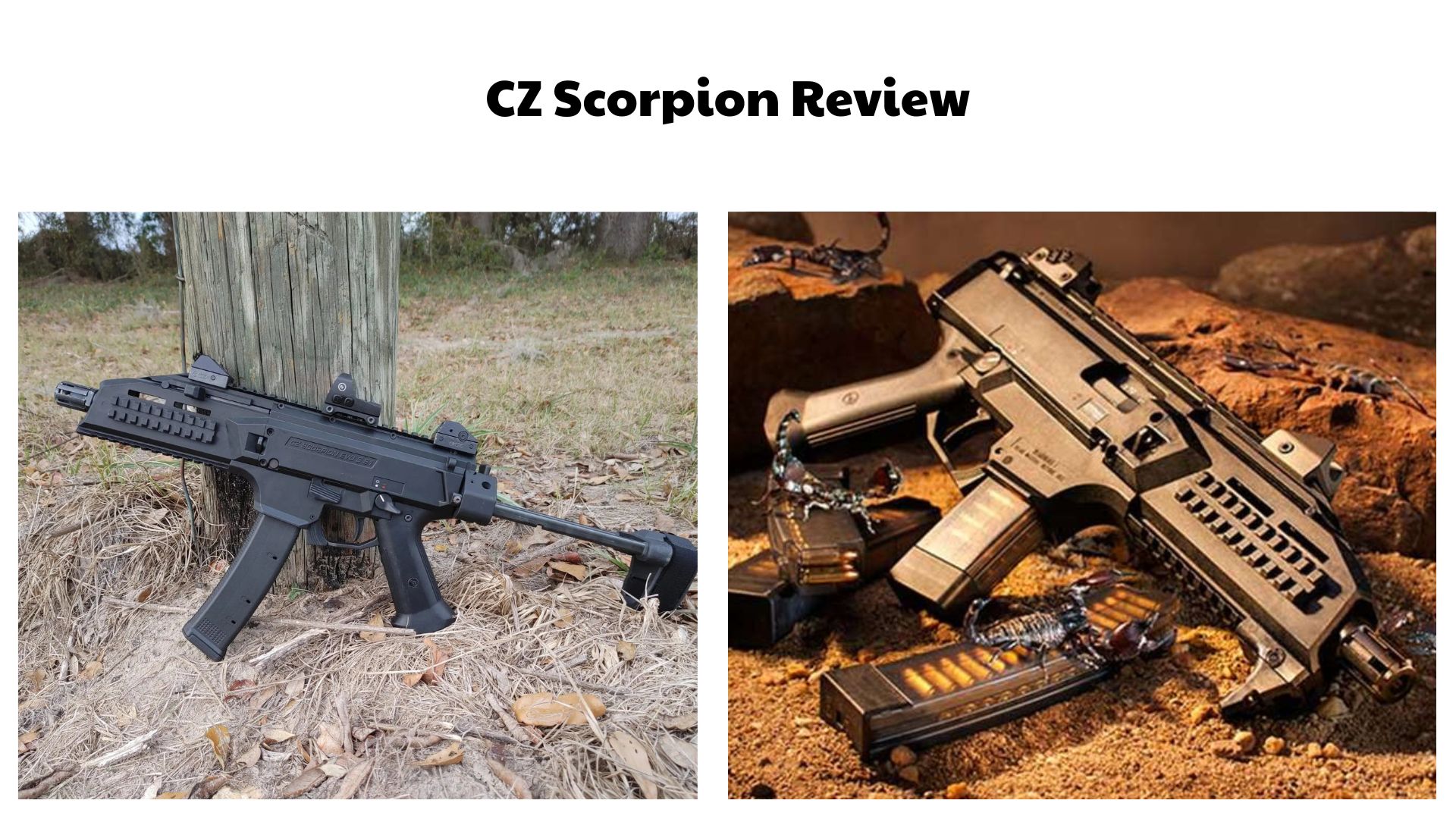

The CZ Scorpion EVO 3 is one of the most recognizable modern pistol-caliber platforms in the firearms industry, originally designed as a compact 9mm submachine gun concept and later adapted into civilian-legal pistol and PCC configurations. Manufactured by Česká zbrojovka Uherský Brod (CZ) in the Czech Republic, the Scorpion was engineered to deliver a lightweight, highly controllable, and cost-effective alternative to traditional SMG designs.
At its core, the Scorpion EVO 3 was developed with military and law enforcement requirements in mind, emphasizing simplicity, durability, and ease of use in close-quarters environments. Over time, this platform transitioned into the civilian market, where it quickly gained popularity among sport shooters, home defense users, and tactical training communities due to its compact size and AR-style ergonomics.
In today’s PCC landscape, the CZ Scorpion occupies a strong position as a compact PDW-style firearm that bridges the gap between traditional submachine guns and modern civilian pistol-caliber carbines. Its lightweight construction, modular accessory compatibility, and widespread aftermarket support have helped it maintain relevance even as newer delayed-blowback systems have entered the market.
One of the main reasons the Scorpion remains so widely recognized is its distinctive combination of affordability, ruggedness, and intuitive handling. Unlike more complex or expensive PCC systems, the Scorpion delivers a straightforward shooting experience that appeals to both new shooters and experienced users looking for a reliable, no-frills defensive platform.
Key Design Philosophy and Development
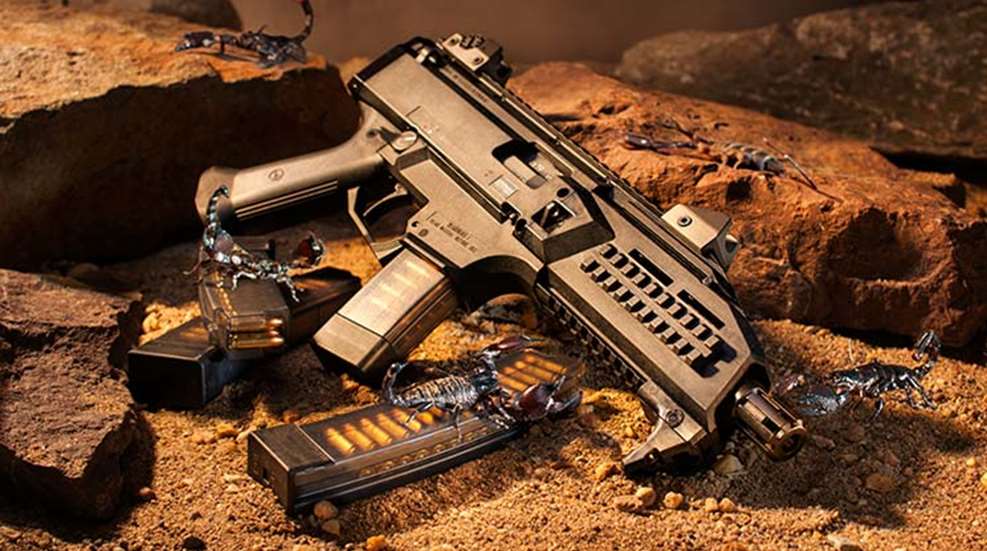
Lightweight Polymer SMG Concept
The CZ Scorpion was designed around a lightweight, polymer-heavy construction philosophy that prioritizes mobility and durability. The extensive use of fiber-reinforced polymer in the receiver and furniture allows the platform to remain extremely light while still maintaining structural integrity under high round counts and harsh operating conditions.
This material choice is intentional, reflecting the Scorpion’s original role as a submachine gun intended for military and security applications where rapid movement, portability, and environmental resistance are essential. The polymer construction also contributes to corrosion resistance and reduced maintenance requirements compared to all-metal platforms.
From a design standpoint, the Scorpion is optimized for close-quarters maneuverability. Its compact dimensions, short barrel configurations, and ergonomic grip layout make it highly effective in confined environments such as indoor spaces, vehicles, and tactical entry scenarios.
Despite its lightweight build, the platform is engineered to withstand extreme environmental conditions including moisture, dust, and temperature variations, making it suitable for real-world operational use rather than purely recreational shooting.
Blowback Operating System
The CZ Scorpion utilizes a straight blowback operating system, one of the simplest and most proven mechanisms in pistol-caliber firearm design. In this system, the bolt is held closed by mass and spring tension, and upon firing, the rearward force of the cartridge cycles the action without the need for complex locking mechanisms.
This simplicity is one of the key advantages of the Scorpion, as it results in high reliability and ease of maintenance. Fewer moving parts mean fewer potential failure points, making the platform particularly attractive for users who prioritize dependability and ease of service.
The Scorpion fires from a closed-bolt position, which enhances accuracy and shot-to-shot consistency compared to open-bolt submachine gun designs. Closed-bolt operation ensures that the firearm remains mechanically stable at the moment of firing, reducing movement and improving control.
However, the trade-off for this simplicity is a more noticeable recoil impulse compared to delayed blowback systems. Because the bolt must be heavier to manage chamber pressure safely, shooters may experience sharper recoil characteristics, especially in compact variants.
Evolution from EVO 3 to Scorpion 3+
The evolution from the original Scorpion EVO 3 to the newer Scorpion 3+ generation represents a significant refinement of the platform based on extensive user feedback. While the core operating system remains unchanged, the 3+ model introduces a series of ergonomic and functional improvements that enhance usability.
One of the most notable upgrades is the improved grip angle, which provides a more natural wrist position and better control during firing. This adjustment helps reduce fatigue and improves overall handling comfort, especially during extended shooting sessions.
Another major enhancement is the introduction of an AR-style magazine release system in the 3+ platform. This change replaces the older paddle-style release and significantly improves reload speed and intuitive operation for users familiar with AR-platform firearms.
The handguard and control layout have also been modernized, offering improved accessory mounting options and better integration with modern tactical equipment such as lights, lasers, and foregrips. These refinements collectively make the Scorpion 3+ more user-friendly and competitive in today’s PCC market.
Action, Operating System, and Core Engineering
Closed-Bolt Blowback System
The Scorpion’s closed-bolt blowback system relies on a heavy bolt mass and recoil spring assembly to control the cycling of the action. When a round is fired, the rearward force pushes the bolt backward, compressing the spring and extracting the spent casing before chambering a new round.
This system is valued for its mechanical simplicity and consistent reliability. Because it does not rely on gas systems or mechanical delay mechanisms, it is easier to manufacture, maintain, and troubleshoot compared to more complex operating systems.
In compact platforms like the Scorpion, the heavy bolt mass plays a critical role in ensuring safe operation while managing the pressure generated by 9mm ammunition. However, this same mass contributes to a more pronounced recoil impulse, particularly in lightweight configurations.
Despite this, the system remains highly effective for close-quarters applications where reliability and simplicity are more important than recoil refinement.
Trigger and Fire Control Group
The Scorpion features a polymer-based fire control housing designed for durability and cost-effective manufacturing. In civilian configurations such as the S1 and 3+ models, the firearm is limited to semi-automatic operation, maintaining compliance with legal requirements in various markets.
Factory triggers in the Scorpion are often described as functional but somewhat heavy, with a longer pull and less refined break compared to higher-end competition triggers. This is a common characteristic of many factory PCC platforms designed with duty and reliability in mind.
Fortunately, the Scorpion benefits from a strong aftermarket ecosystem, allowing users to install upgraded triggers that significantly improve pull weight, reset, and overall shooting feel. This makes it highly customizable for users seeking enhanced performance.
Barrel and Internal Engineering
The CZ Scorpion typically features a cold hammer-forged barrel depending on the specific variant, which contributes to long-term durability and consistent accuracy. Cold hammer forging is widely recognized for producing strong and wear-resistant barrels suitable for high-volume use.
In Micro configurations, barrel lengths are extremely compact, often ranging around 4 to 5 inches. This short barrel design enhances maneuverability and reinforces the platform’s role as a close-quarters defensive firearm rather than a long-range precision tool.
The internal engineering of the Scorpion is focused on durability and reliability across a wide range of ammunition types. It is designed to function consistently with both standard FMJ and defensive hollow point loads, making it a versatile choice for training and defensive use.
Overall, the barrel and internal system are built to withstand sustained use while maintaining consistent performance, even under high round counts and demanding shooting conditions.
Build Quality and Materials
Polymer Receiver Construction
The CZ Scorpion is built around a reinforced polymer receiver system that forms the backbone of its lightweight yet durable structure. This extensive use of fiber-reinforced polymer significantly reduces overall weight while maintaining the rigidity required for consistent firearm operation under stress.
Critical stress points within the receiver are reinforced with embedded metal inserts, ensuring that areas subjected to repeated force—such as the fire control group housing and rail mounting interfaces—retain long-term structural integrity. This hybrid construction approach allows CZ to balance durability with manufacturability and cost efficiency.
One of the key advantages of polymer construction is its natural resistance to corrosion and environmental wear. Unlike all-metal platforms, the Scorpion is less susceptible to rust and moisture-related degradation, making it especially suitable for field use in varying climates and conditions.
Additionally, the polymer construction contributes to a noticeable reduction in overall weight, which directly improves handling speed, maneuverability, and user fatigue during extended use.
Metal Components and Finish
Despite its polymer exterior, the CZ Scorpion relies heavily on steel internal components to ensure reliability and longevity. The bolt assembly, recoil system, and critical mechanical interfaces are all constructed from hardened steel designed to withstand repeated cycling under high pressure conditions.
To further enhance durability, these metal components are treated with protective coatings that improve resistance to corrosion, wear, and environmental exposure. This makes the platform suitable for harsh operating environments, including humidity, dust, and temperature extremes.
The external finish of the Scorpion is engineered for long-term resilience, maintaining structural and aesthetic integrity even after extended use. This durability ensures that the firearm remains functional and reliable over thousands of rounds with minimal maintenance requirements.
Modular Rail System
The CZ Scorpion incorporates a modular rail system designed to support a wide range of modern tactical accessories. The top of the receiver features a full-length Picatinny rail, allowing users to mount optics such as red dot sights, holographic sights, or magnified optics depending on their intended application.
In the Scorpion 3+ generation, the platform further improves modularity by integrating an M-LOK compatible handguard. This allows for lightweight and flexible attachment of accessories such as weapon lights, foregrips, laser devices, and sling mounts without adding unnecessary bulk.
This modular approach ensures compatibility with modern tactical ecosystems, enabling users to fully customize their setup based on mission requirements, whether for home defense, training, or recreational shooting.
Size, Weight, and Handling Characteristics
Compact PDW Form Factor
The CZ Scorpion is widely recognized for its extremely compact PDW-style form factor, particularly in its Micro variants. These configurations feature shortened barrels and minimized overall dimensions, making them ideal for environments where space is limited and rapid deployment is critical.
Depending on configuration, the platform may include folding or compact stabilizing brace systems that further reduce its storage footprint. This makes it highly suitable for discreet transport in backpacks, vehicle compartments, or confined storage areas.
The compact nature of the Scorpion is one of its defining characteristics, reinforcing its role as a close-quarters defensive firearm rather than a long-range precision system.
Lightweight Handling Advantage
One of the most noticeable advantages of the CZ Scorpion is its lightweight construction, with most configurations weighing under 6 pounds unloaded. This low weight significantly enhances handling speed and reduces shooter fatigue during prolonged use.
In practical terms, the reduced weight makes the platform exceptionally easy to maneuver in confined environments such as hallways, vehicles, or indoor spaces. This is particularly beneficial in defensive scenarios where rapid target acquisition and movement efficiency are critical.
The lightweight design also makes the Scorpion an excellent option for range use and training, as it allows shooters to maintain control and comfort over extended shooting sessions.
Ergonomics and User Experience
Ergonomics have evolved significantly between the original EVO 3 and the newer Scorpion 3+ generation. The updated grip angle in the 3+ model provides a more natural wrist position, improving control and reducing strain during extended firing sessions.
Modern variants also incorporate ambidextrous controls, making the platform accessible and efficient for both left- and right-handed shooters. This improves usability in dynamic shooting scenarios where rapid manipulation is required.
However, earlier EVO 3 models are often criticized for their aggressively positioned safety selector, which can interfere with comfort for some shooters. While functional, this design choice reflects the platform’s original military-oriented development rather than civilian ergonomic optimization.
Accuracy and Real-World Performance
PCC-Level Accuracy
The CZ Scorpion delivers solid accuracy within typical pistol-caliber carbine engagement distances, generally effective between 25 and 100 yards. Within this range, the platform is capable of producing consistent groupings when paired with quality ammunition and proper shooting fundamentals.
However, like all 9mm PCC platforms, its accuracy is inherently limited by the ballistic performance of pistol-caliber ammunition. This means it is optimized for close-to-mid-range engagements rather than extended precision shooting.
Despite these limitations, the Scorpion remains highly effective for defensive and tactical applications where fast, repeatable shots are more important than long-range precision.
Recoil Characteristics
The Scorpion’s straight blowback operating system produces a more noticeable recoil impulse compared to delayed blowback or gas-operated platforms. This is primarily due to the heavy bolt mass required to safely manage chamber pressures in a simple blowback design.
While the recoil is more pronounced than some competitors, the system remains manageable and predictable, especially with proper stance and grip technique. The weight of the bolt helps smooth out cycling, preventing erratic or inconsistent recoil behavior.
In the Scorpion 3+ generation, improved ergonomics and grip geometry help mitigate the perceived recoil, resulting in better overall controllability during rapid fire.
Practical Shooting Behavior
In real-world shooting scenarios, the CZ Scorpion performs exceptionally well in fast-paced target transitions and close-quarters drills. Its compact size and responsive handling make it particularly effective in dynamic shooting environments.
The platform also demonstrates strong reliability with a wide range of ammunition types, including standard FMJ and defensive hollow point loads. This consistency contributes to its popularity as a defensive PCC platform.
Overall, the Scorpion is optimized for speed, reliability, and maneuverability rather than long-range precision or recoil refinement.
Controls, Ergonomics, and User Interface
Ambidextrous Controls
The CZ Scorpion incorporates a range of ambidextrous controls designed to improve usability for all shooters. The safety selector is accessible from both sides of the receiver, allowing intuitive operation regardless of dominant hand preference.
In the Scorpion 3+ generation, the platform introduces an AR-style magazine release, significantly improving reload speed and familiarity for users transitioning from AR-platform firearms.
The charging handle system is also reversible, allowing users to configure it for left- or right-handed operation based on personal preference or tactical requirements.
Grip and Trigger Reach
The updated Scorpion 3+ platform introduces improved grip positioning options, allowing better adjustment for different hand sizes and shooting styles. This enhances comfort and control during firing sequences.
Compared to the original EVO 3, the newer design provides a more refined ergonomic experience, reducing awkward hand positioning and improving overall weapon control.
This focus on ergonomics makes the platform more adaptable to a wider range of users, from beginners to experienced tactical shooters.
Charging Handle System
The Scorpion features a non-reciprocating side charging handle that enhances safety and usability during operation. Because it does not move during firing, it reduces the risk of interference or injury during rapid shooting.
The handle can be configured for left or right-side operation, improving accessibility and customization for different shooting preferences.
Designed for stress environments, the charging system allows fast and intuitive manipulation, making it easier to clear malfunctions or chamber rounds quickly when needed.
Suppression, Muzzle Devices, and Modularity
Suppressor Compatibility
The CZ Scorpion is equipped with a threaded barrel, allowing direct attachment of suppressors and a wide range of muzzle devices. This makes it a flexible platform for users who want to reduce muzzle blast and noise signature in training or defensive scenarios.
When paired with subsonic 9mm ammunition, the Scorpion becomes significantly quieter, making it an effective option for suppressed shooting setups. This combination is commonly used by shooters who prioritize reduced sound exposure and improved shooting comfort.
However, because the Scorpion operates on a straight blowback system, suppressed use can sometimes increase gas blowback toward the shooter. This is a known characteristic of blowback PCC designs and can result in more fouling and gas exposure compared to delayed or gas-operated systems.
Despite this limitation, the platform remains widely used in suppressed configurations due to its reliability, simplicity, and strong aftermarket support for suppressor-ready accessories.
Accessory Ecosystem
The CZ Scorpion features a full-length Picatinny rail on the top of the receiver, providing a stable mounting platform for optics such as red dot sights, holographic sights, and magnifiers. This ensures compatibility with a wide range of modern sighting systems.
In addition, the Scorpion 3+ generation includes an M-LOK compatible handguard, allowing users to attach accessories such as weapon lights, vertical grips, laser modules, and sling mounts. This significantly improves modularity and customization potential.
Thanks to this dual-rail system, the Scorpion integrates well into modern tactical ecosystems and can be configured for home defense, range training, or duty-style applications depending on user needs.
Pros and Cons of CZ Scorpion
Pros
The CZ Scorpion is widely regarded as one of the most reliable and accessible PCC platforms on the market. Its straight blowback system is mechanically simple, which contributes to consistent performance and ease of maintenance.
Its lightweight polymer construction provides excellent durability while keeping overall weight low, making it easy to handle in dynamic environments. This also enhances portability for users who need a compact defensive firearm.
The platform benefits from strong aftermarket support, allowing extensive customization of triggers, grips, charging handles, and other components. This makes it highly adaptable to individual preferences.
The compact PDW-style design is another major advantage, offering excellent maneuverability in tight spaces such as vehicles or indoor environments.
Finally, compared to premium PCC systems, the Scorpion remains relatively affordable, making it an attractive entry point into the PCC market without sacrificing core reliability.
Cons
One of the primary drawbacks of the Scorpion is its stronger recoil impulse compared to delayed blowback or gas-operated PCC systems. The heavy bolt required for safe blowback operation contributes to a more noticeable recoil sensation.
The factory trigger is also commonly criticized for being heavy and less refined than aftermarket or competition-grade triggers. While functional, it often requires upgrading for users seeking a smoother shooting experience.
Another ergonomic concern is the safety selector placement on earlier EVO 3 models, which can be uncomfortable or awkward for some shooters during manipulation.
Additionally, the polymer-heavy construction, while durable and lightweight, may not appeal to users who prefer the solid feel of all-metal firearm platforms.
Ideal Use Cases
The CZ Scorpion is well-suited for home defense applications due to its compact size, fast handling characteristics, and ease of use in close-quarters environments.
It also serves effectively as a truck gun or vehicle storage PCC, where its small footprint and lightweight design allow for discreet and convenient storage.
In tactical training and range environments, the Scorpion performs well due to its reliability and consistent cycling, making it a solid platform for skill development and drills.
For entry-level PCC competition shooters, the platform offers a cost-effective way to participate in matches while still benefiting from a proven and durable design.
Its compact size also makes it suitable for backpack or travel firearm setups where portability is a priority.
Comparison with Competing PCC Platforms
CZ Scorpion vs AR-9 PCCs
When compared to AR-9 platforms, the CZ Scorpion represents a simpler and more self-contained system. AR-9s often benefit from the AR ecosystem’s modularity, but also introduce more variation in reliability depending on configuration.
The Scorpion’s blowback system is mechanically simpler, though it produces more recoil compared to some tuned AR-9 buffer systems. This makes AR-9s potentially smoother but more complex in setup.
Magazine ecosystems also differ significantly, with the Scorpion using proprietary magazines while AR-9 platforms commonly use Glock-compatible magazines, which are often more widely available and less expensive.
CZ Scorpion vs MP5 Platforms
Compared to MP5-style platforms, the Scorpion uses a simpler blowback system instead of a roller-delayed mechanism. While this makes the Scorpion easier to manufacture and maintain, it does not match the recoil smoothness of the MP5.
Ergonomically, the Scorpion benefits from more modern AR-style controls, whereas the MP5 retains traditional HK-style layout and handling characteristics that some shooters prefer for historical or tactical familiarity reasons.
In terms of accessory compatibility, the Scorpion offers more modern modularity with Picatinny and M-LOK systems, while MP5 platforms often require additional mounting solutions for optics and accessories.
EVO 3 vs Scorpion 3+
The transition from EVO 3 to Scorpion 3+ introduces significant ergonomic and functional improvements. The updated design refines user interaction with the platform and addresses many of the criticisms of earlier models.
One of the most important upgrades is the improved magazine release system, which moves closer to AR-style ergonomics and significantly speeds up reload operations.
Grip design and overall handling characteristics are also improved, resulting in reduced user friction and more intuitive control during firing and manipulation.
Maintenance and Durability
Cleaning and Reliability
The CZ Scorpion features a simple field-stripping design that allows users to quickly disassemble the firearm for cleaning and maintenance. This simplicity is one of its strongest advantages in long-term ownership.
Because of its blowback system and polymer construction, the platform requires relatively low maintenance compared to more complex firearm systems. Routine cleaning and lubrication are generally sufficient to maintain reliable operation.
Even under heavy use, the Scorpion maintains consistent reliability, making it suitable for high-volume training environments and defensive readiness.
Long-Term Durability
The Scorpion’s high-impact polymer construction ensures resistance to physical stress, impact, and environmental exposure. This makes it suitable for demanding field conditions where durability is critical.
The internal steel bolt system provides the mechanical strength required for repeated cycling, ensuring long-term operational reliability even under extended use.
The platform has also been widely adopted in military and law enforcement roles, further demonstrating its proven durability and field performance history.
Wear Considerations
Over time, the heavy bolt mass system can place consistent stress on internal components, particularly in high-round-count usage scenarios. This is a normal characteristic of blowback firearm designs.
Polymer wear points may also develop in areas of frequent contact, although these typically do not affect core functionality when properly maintained.
Additionally, periodic replacement of springs and consumable components is recommended to ensure continued reliability and optimal performance throughout the firearm’s service life.
Final Verdict
The CZ Scorpion remains one of the most popular and widely recognized PCC platforms in the modern firearms market. Its combination of reliability, affordability, and modular design has made it a long-standing favorite among civilian shooters and professionals alike.
It offers an excellent balance of durability, simplicity, and customization potential, making it especially appealing to users who want a dependable 9mm platform without unnecessary complexity.
The Scorpion is best suited for shooters who prioritize straightforward operation, compact design, and proven reliability in close-quarters environments. However, it may not be ideal for users who are highly sensitive to recoil or seeking precision-focused long-range performance.
With a strong aftermarket ecosystem and continuous platform refinement, the CZ Scorpion continues to remain relevant in a competitive PCC market and is likely to stay a major player for years to come.
Frequently Asked Questions (CZ Scorpion Review)
1. What is the CZ Scorpion EVO 3 platform designed for?
The CZ Scorpion EVO 3 is designed as a compact 9mm submachine gun platform intended for close-quarters engagements. Its original purpose was military and law enforcement use, focusing on simplicity, reliability, and maneuverability in confined environments. In civilian form, it is commonly used for home defense, tactical training, and PCC sport shooting due to its lightweight build and easy handling characteristics.
2. What is the difference between CZ Scorpion EVO 3 and Scorpion 3+?
The Scorpion 3+ is an upgraded evolution of the EVO 3 with major ergonomic improvements. The most significant changes include an AR-style magazine release, improved grip angle, redesigned handguard with M-LOK compatibility, and enhanced overall handling. While the core blowback system remains the same, the 3+ offers a more modern and user-friendly experience.
3. Is the CZ Scorpion a pistol or a carbine?
In most civilian configurations, the CZ Scorpion is classified as a pistol or PCC depending on barrel length and brace/stock setup. Short-barreled versions are often classified as pistols with stabilizing braces, while rifle configurations may exist in certain regions depending on legal compliance.
4. What caliber does the CZ Scorpion use?
The CZ Scorpion is chambered in 9×19mm Parabellum (9mm), a widely used pistol cartridge. This caliber is chosen for its balance of manageable recoil, affordability, and effectiveness in close to mid-range engagements, making it ideal for PCC platforms.
5. How does the CZ Scorpion operate?
The Scorpion uses a straight blowback, closed-bolt operating system. This means the bolt is held closed by spring pressure and mass, and cycles rearward after firing due to cartridge pressure. The simplicity of this system enhances reliability and reduces mechanical complexity, but it also contributes to a sharper recoil impulse compared to delayed systems.
6. Is the CZ Scorpion reliable?
Yes, the CZ Scorpion is widely regarded as a highly reliable platform. Its simple blowback mechanism, robust polymer construction, and steel internal components allow it to function consistently under a wide range of conditions with minimal maintenance.
7. What is the effective range of the CZ Scorpion?
The effective range of the CZ Scorpion is typically between 25 and 100 yards. While it can technically shoot beyond that distance, its 9mm cartridge limits long-range effectiveness, making it best suited for close-quarters and mid-range engagements.
8. Is the CZ Scorpion good for home defense?
Yes, it is commonly used for home defense due to its compact size, controllability, and ease of use. The low recoil and high magazine capacity make it effective for rapid response situations in confined indoor environments.
9. How heavy is the CZ Scorpion?
The Scorpion typically weighs under 6 pounds unloaded, depending on configuration. This lightweight design significantly improves handling speed and reduces fatigue during extended use.
10. What makes the Scorpion so popular?
The CZ Scorpion is popular because it combines affordability, reliability, compact size, and strong aftermarket support. It offers an accessible entry point into the PCC market while still providing tactical-grade performance.
11. Does the CZ Scorpion have strong recoil?
The recoil is noticeable compared to delayed blowback or gas-operated PCCs, but it remains manageable. The straight blowback system and heavy bolt contribute to a sharper recoil impulse, though proper grip and stance significantly improve control.
12. Is the Scorpion accurate?
The Scorpion is accurate within its intended range of 25–100 yards. It can produce consistent groupings with quality ammunition, but like all PCCs, its accuracy is limited by the ballistic characteristics of 9mm ammunition.
13. Can the CZ Scorpion be suppressed?
Yes, it features a threaded barrel compatible with suppressors. Suppressed shooting is common with the Scorpion, although blowback operation may result in increased gas exposure compared to more advanced systems.
14. Does suppressing the Scorpion affect performance?
Suppressing the Scorpion does not negatively impact reliability, but it may increase gas blowback to the shooter. Many users pair suppressors with subsonic ammunition for optimal sound reduction.
15. What magazines does the CZ Scorpion use?
The Scorpion uses proprietary CZ magazines specifically designed for the platform. These magazines are known for reliability but are not compatible with Glock or AR-15 magazine systems.
16. Are CZ Scorpion magazines expensive?
They are moderately priced but can be more expensive than widely available Glock magazines used in AR-9 platforms. However, they are durable and reliable, which helps justify the cost.
17. Is the Scorpion good for beginners?
Yes, it is beginner-friendly due to its simple operation, low recoil, and intuitive controls. However, beginners should still receive proper training in firearm safety and handling.
18. How does the Scorpion compare to AR-9 PCCs?
The Scorpion is simpler and more compact, while AR-9 PCCs offer greater modularity through the AR ecosystem. AR-9s may have smoother recoil depending on buffer tuning, but they can also be more complex to configure.
19. How does it compare to MP5-style firearms?
The Scorpion is simpler and more modern in ergonomics, while MP5 platforms offer smoother recoil due to roller-delayed blowback systems. MP5s are often considered more refined but are typically more expensive and less modular.
20. Is the Scorpion good for competition shooting?
Yes, it is used in PCC competitions, particularly entry-level divisions. While not the most refined platform for competition, its reliability and low cost make it a popular choice for new competitors.
21. What is the main disadvantage of the Scorpion?
The main disadvantage is its recoil characteristics, which are sharper than delayed blowback systems. Additionally, the factory trigger and older safety placement are commonly criticized.
22. Can the trigger be upgraded?
Yes, the Scorpion has strong aftermarket support for trigger upgrades. Many users install reduced-weight triggers for improved shooting performance and better control.
23. Is the Scorpion durable?
Yes, its reinforced polymer construction and steel internals make it highly durable. It is designed to withstand harsh conditions and extended use.
24. What is the barrel type?
Many Scorpion models use cold hammer-forged barrels, which are known for durability and consistent performance over high round counts.
25. What is the barrel length on Micro models?
Micro variants typically feature very short barrels around 4 to 5 inches, optimized for compact PDW-style performance and maneuverability.
26. Is the Scorpion modular?
Yes, especially in the 3+ generation, which includes M-LOK handguards and Picatinny rails for optics and accessories.
27. Does it support optics?
Yes, the full-length top Picatinny rail allows mounting of red dots, holographic sights, and magnifiers.
28. Is the Scorpion ambidextrous?
Yes, it features ambidextrous safety controls and reversible charging handle options, making it suitable for both left- and right-handed shooters.
29. What is the weight advantage of the Scorpion?
The lightweight polymer construction reduces fatigue and improves handling speed, especially in dynamic or confined environments.
30. Is the Scorpion good for vehicle use?
Yes, its compact PDW design makes it ideal for discreet storage in vehicles or emergency kits.
31. What are common upgrades?
Common upgrades include triggers, charging handles, grips, braces, and muzzle devices to improve ergonomics and performance.
32. Is maintenance difficult?
No, maintenance is simple due to its straightforward blowback system and easy field stripping design.
33. How often should it be cleaned?
Regular cleaning after range sessions is recommended, especially if using suppressors or high round counts.
34. Does it require special lubrication?
No, standard firearm lubricants or CLP products are sufficient for maintaining reliable operation.
35. Is it good for tactical training?
Yes, it is widely used in training environments due to its reliability and realistic handling characteristics.
36. What is the safety issue with older models?
Older EVO 3 models had a safety selector placement that could interfere with comfort and ergonomics for some users.
37. Is the Scorpion expensive?
It is considered mid-range in price, more affordable than premium PCC systems but more expensive than budget AR-9 builds.
38. Why choose Scorpion over AR-9?
Users often choose the Scorpion for its simplicity, compact size, and factory-integrated reliability without needing extensive tuning.
39. Is it good for suppression training?
Yes, it is frequently used with suppressors for training due to its compatibility and reliability.
40. What is the bolt system like?
It uses a heavy straight blowback bolt system that ensures reliable cycling but contributes to recoil impulse.
41. Does it have last-round bolt hold open?
Yes, it includes a bolt hold-open feature depending on magazine and configuration.
42. Is it good for fast shooting?
Yes, it performs well in rapid fire scenarios due to controllable recoil and compact size.
43. Is it a good defensive firearm?
Yes, many users select it for defensive purposes due to its reliability, capacity, and maneuverability.
44. What is the lifespan of a CZ Scorpion?
With proper maintenance, it can last tens of thousands of rounds, thanks to durable materials and robust design.
45. Is it better than MP5 clones?
It depends on priorities: Scorpion is more modern and affordable, while MP5 clones offer smoother recoil and classic design refinement.
46. Is it good for left-handed shooters?
Yes, ambidextrous controls and reversible features make it adaptable for left-handed users.
47. What is the biggest upgrade benefit of Scorpion 3+?
The biggest improvement is ergonomics, particularly the AR-style magazine release and improved grip design.
48. Can it be used in competitions?
Yes, it is commonly used in PCC divisions, especially for shooters who value reliability and affordability.
49. What type of recoil system does it use?
It uses a straight blowback system with a heavy bolt mass to manage cycling forces.
50. Is it still relevant in 2026?
Yes, the CZ Scorpion remains highly relevant due to its balance of cost, reliability, and modern updates in the 3+ generation.
51. What is the best use case for the Scorpion?
Its best use cases include home defense, training, and compact PCC applications where maneuverability and reliability are essential.
Read more: