
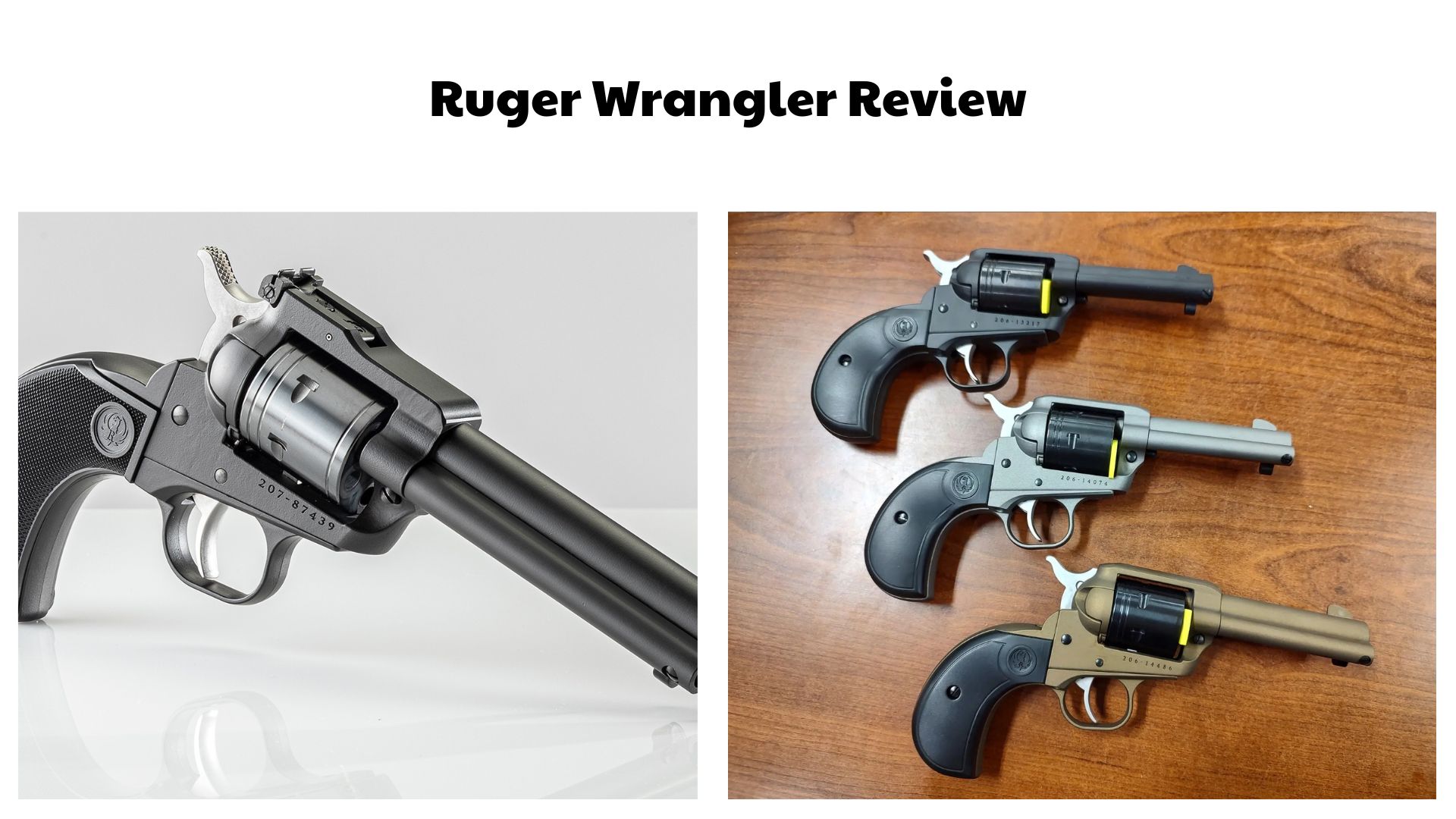

The Ruger Wrangler is a budget-friendly, single-action revolver chambered in .22 LR that has quickly gained popularity among beginner shooters and recreational firearm enthusiasts. It offers a classic cowboy-style shooting experience at a highly accessible price point, making it one of the most affordable revolvers in Ruger’s lineup.
Positioned below models like the Ruger Single-Six and Vaquero, the Wrangler is designed as an entry-level option that focuses on simplicity, reliability, and cost efficiency rather than premium features or advanced customization.
Its popularity in the U.S. market is largely driven by the combination of low-cost ammunition and an inexpensive revolver platform, making it ideal for high-volume practice and casual range shooting.
The Ruger Wrangler is best suited for beginners learning handgun fundamentals, plinkers who enjoy informal target shooting, cowboy-action shooting fans, and casual shooters looking for a simple and dependable revolver.
History and Design Philosophy
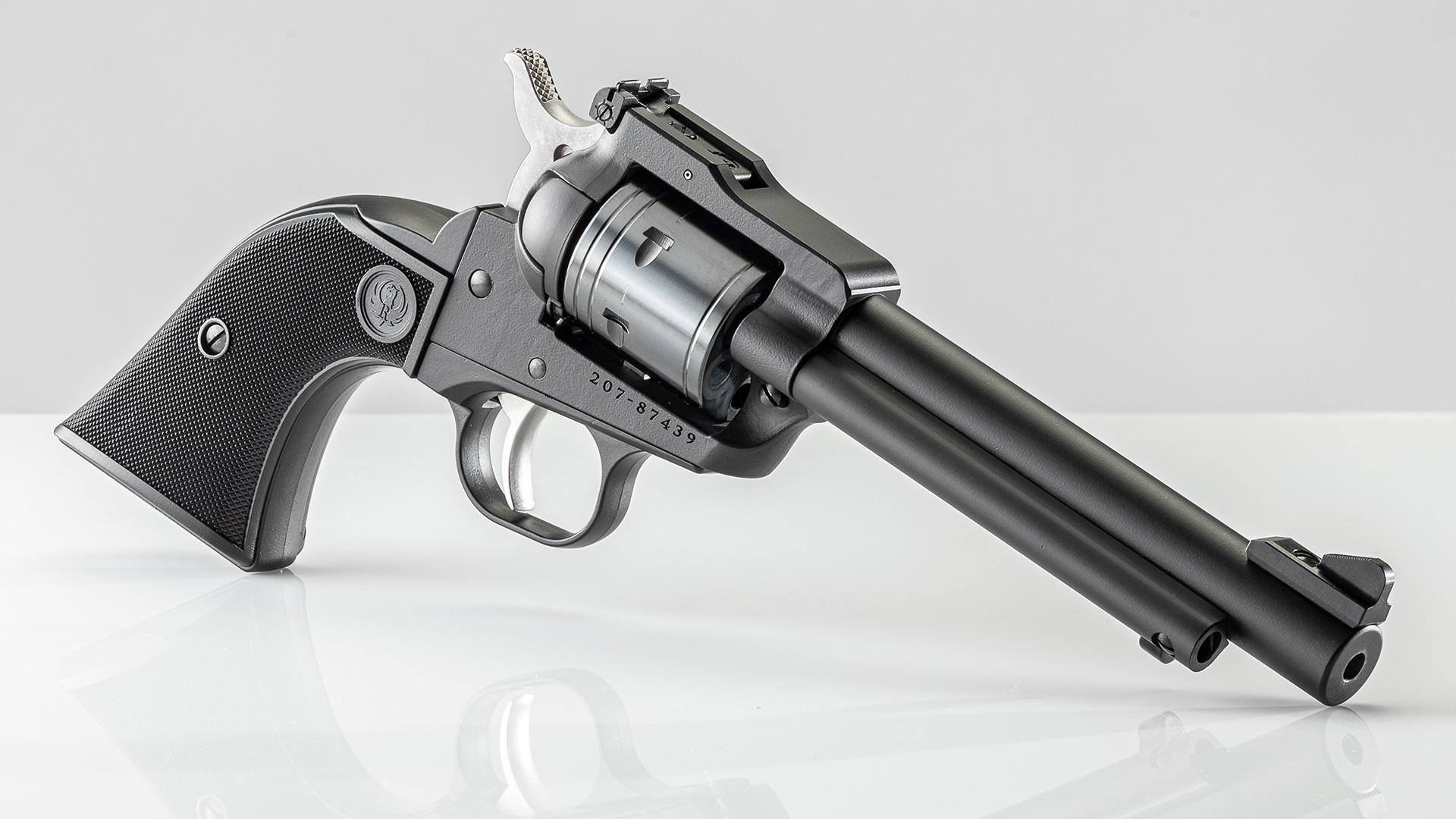
Inspiration from the Single-Action Army (SAA)
The Ruger Wrangler draws heavy inspiration from the iconic Colt Single Action Army revolver, one of the most historically significant handguns ever produced. Like the SAA, the Wrangler operates on a single-action mechanism, requiring the shooter to manually cock the hammer before each shot.
Ruger has a long-standing tradition of producing single-action revolvers, including models such as the Single-Six, Vaquero, and Blackhawk. The Wrangler continues this legacy but simplifies the design for affordability and ease of production.
Budget Engineering Approach
The Wrangler was engineered with cost reduction as a primary goal while maintaining functional reliability. Ruger achieved this by using an aluminum alloy frame, which reduces both manufacturing cost and overall weight.
Key components such as the barrel and cylinder are made from steel to ensure durability and safe operation under repeated firing conditions.
By simplifying machining processes and limiting advanced features, Ruger created a revolver that delivers dependable performance at a very low price point.
Ruger Wrangler Variants Explained
Standard Model (4.62-inch Barrel)
The standard 4.62-inch barrel version of the Ruger Wrangler is the most widely used configuration. It offers a balanced combination of accuracy, handling, and sight radius, making it ideal for general plinking and recreational shooting.
This model is often considered the best all-around option for new shooters and casual range users.
Birdshead Grip Variant
The Birdshead grip variant features a more compact and rounded grip design inspired by traditional Western revolvers. This version is more portable and visually distinctive, appealing to shooters who prefer a classic aesthetic.
However, the smaller grip can feel less comfortable for shooters with larger hands and may slightly reduce control during extended shooting sessions.
Short-Barrel and Compact Versions
Short-barrel variants of the Wrangler are designed for maximum portability and convenience. These models are easier to carry in backpacks or for outdoor use such as camping or hiking.
The trade-off is a reduced sight radius, which can slightly impact precision at longer distances compared to the standard model.
Super Wrangler (Convertible Model – if applicable)
The Super Wrangler, where available, expands the platform’s versatility by offering additional configuration options compared to the standard model.
It is designed for shooters who want greater flexibility and enhanced performance features while staying within the Wrangler family.
Key Specifications of the Ruger Wrangler
The Ruger Wrangler is chambered in .22 Long Rifle, one of the most affordable and widely available ammunition types, making it ideal for frequent practice and recreational shooting.
It features a six-round cylinder capacity and operates on a traditional single-action mechanism, requiring manual cocking of the hammer before each shot.
Barrel lengths typically range from 3.75 inches to 4.62 inches depending on the variant, allowing users to choose between compact carry and improved accuracy.
The frame is constructed from aluminum alloy, helping reduce overall weight while maintaining structural strength. The barrel and cylinder are made of steel for durability and long-term reliability.
The Wrangler uses fixed sights, consisting of a front blade and rear notch, which prioritize simplicity over adjustability.
The revolver weighs approximately 30 ounces, making it lightweight and easy to handle during extended shooting sessions. It is widely regarded as one of the most affordable revolvers available on the market, offering strong value for entry-level shooters.
Build Quality and Materials
Frame, Barrel, and Cylinder Construction
The Ruger Wrangler uses a deliberately simplified but effective construction approach that balances cost and durability. The frame is made from lightweight aluminum alloy, which significantly reduces overall weight while keeping manufacturing costs low.
Despite its budget positioning, Ruger reinforces critical stress areas with steel components, including the barrel and cylinder. This ensures the revolver can safely handle repeated firing of .22 LR ammunition without premature wear or structural issues.
This hybrid design—aluminum frame combined with steel working parts—gives the Wrangler a strong durability-to-price ratio, making it suitable for long-term recreational use.
Finish Options
The Ruger Wrangler is available in several Cerakote finish options, including black, silver, bronze, and other limited color variations depending on production runs.
Cerakote coating enhances surface durability by providing resistance to corrosion, scratches, and general wear from handling and outdoor use.
While not a premium-grade polish or deep bluing finish, the coating is practical and well-suited for a budget revolver designed for frequent shooting and rough handling.
Fit and Finish Evaluation
For its price category, the Ruger Wrangler offers solid manufacturing quality with consistent assembly and reliable mechanical fit. The revolver feels sturdy in hand and functions smoothly despite its cost-effective design.
However, minor cosmetic imperfections can occasionally be found, such as rough edges or less refined polishing compared to higher-end revolvers like the Ruger Single-Six or custom-grade firearms.
These imperfections are mostly aesthetic and do not negatively impact performance or reliability, reinforcing the Wrangler’s focus on function over finish.
Controls and Operation
Single-Action Mechanism Explained
The Ruger Wrangler operates on a traditional single-action mechanism, meaning the hammer must be manually cocked before each shot. This system is simple, mechanical, and highly reliable.
Loading is performed through a side loading gate, and each chamber must be indexed manually as the cylinder rotates.
Loading and Unloading Process
Loading the Wrangler is a straightforward but manual process. Each round is inserted individually into the cylinder chambers through the loading gate, one at a time.
To unload spent casings, the user rotates the cylinder and uses the ejector rod to push out each empty shell individually. While slower than modern semi-automatic systems, this process is consistent with traditional revolver operation.
Safety Features
The Ruger Wrangler includes a transfer bar safety system, which prevents the hammer from directly contacting the firing pin unless the trigger is fully engaged. This significantly reduces the risk of accidental discharge.
It also features a loading gate interlock, which prevents the firearm from being fired while the gate is open, adding an additional layer of operational safety.
Ergonomics and Handling
Grip Design and Comfort
The Wrangler features a classic Single-Action Army-style grip design, which gives it a traditional Western revolver feel. This grip shape naturally guides the hand into a consistent shooting position.
For shooters with smaller hands, the grip feels comfortable and secure, offering good control. However, users with larger hands may find it somewhat compact, which can slightly affect comfort during extended shooting sessions.
Balance and Weight Distribution
The revolver has a slightly barrel-heavy balance due to its steel barrel combined with a lightweight aluminum frame. This helps stabilize the gun during aiming and firing.
Despite this forward weight bias, the overall lightweight design makes the Wrangler easy to carry and handle, especially during long range sessions.
Overall Shooting Experience
Shooting the Ruger Wrangler is a simple and intuitive experience. The manual single-action operation encourages deliberate shooting, which is ideal for training fundamentals or relaxed recreational use.
It is particularly well-suited for slow-paced range sessions, plinking, and enjoying the traditional feel of a cowboy-style revolver.
Performance and Range Testing
Accuracy Results
In typical range testing, the Ruger Wrangler delivers respectable accuracy for a budget .22 LR revolver. At distances of 7 to 25 yards, it is capable of producing consistent groupings suitable for recreational target shooting.
Accuracy can vary depending on ammunition type, with some .22 LR loads performing better than others due to differences in bullet velocity and quality.
Ammunition Compatibility
The Wrangler is compatible with a wide range of .22 LR ammunition, including both bulk training rounds and higher-quality premium loads.
It generally performs reliably across different bullet types, making it a flexible option for shooters who want to use inexpensive ammo for practice without sacrificing dependability.
Reliability Testing
Reliability is one of the strongest aspects of the Ruger Wrangler. In extended testing scenarios involving 500+ rounds, the revolver typically demonstrates very few malfunctions.
Its simple mechanical design reduces the likelihood of feeding or extraction issues, especially compared to semi-automatic pistols in the same price range.
Trigger Performance
The Wrangler’s trigger pull averages around 6 to 7 pounds, which is typical for a budget single-action revolver.
While the trigger is generally smooth, it may feel slightly heavy and can include minor creep before break. However, this is consistent with its entry-level design and does not significantly affect overall usability.
Pros and Cons of the Ruger Wrangler
Advantages
The Ruger Wrangler stands out primarily due to its extremely affordable price point, making it one of the most accessible revolvers on the market. It allows new shooters and casual enthusiasts to experience a classic single-action revolver without a significant financial investment.
Built with Ruger’s well-known engineering standards, the Wrangler maintains a reputation for reliability despite its budget construction. It performs consistently with .22 LR ammunition and is trusted for casual and training use.
Its lightweight aluminum frame makes it easy to carry and handle, especially during extended shooting sessions. This also makes it a great option for beginners who may be sensitive to heavier firearms.
The Wrangler is also widely appreciated for being fun and beginner-friendly, offering a simple, straightforward shooting experience. Combined with its classic revolver styling, it appeals to both new shooters and fans of traditional Western firearms.
Disadvantages
One of the main drawbacks is the relatively heavy trigger pull, which is typical for budget single-action revolvers but can affect shooting smoothness for some users.
It also features fixed sights only, meaning there is no option for adjustment, which can limit precision tuning for different ammunition types or shooting preferences.
The Ruger Wrangler is limited to .22 LR and does not support .22 Magnum, reducing its versatility compared to more expensive convertible models.
Customization options are minimal, as the revolver is designed as a simple, no-frills platform. Additionally, its six-round capacity is lower than many modern semi-automatic pistols, which may be a limitation for some users.
Ruger Wrangler vs Competitors
Ruger Wrangler vs Heritage Rough Rider
When compared to the Heritage Rough Rider, the Ruger Wrangler generally offers superior build quality and Ruger’s reputation for long-term durability. The Wrangler feels more solid in terms of mechanical consistency and internal fit.
However, the Rough Rider often provides more features and decorative options at a similar or lower price point, making it attractive for buyers who prioritize aesthetics and variety over long-term durability.
In terms of value, the Wrangler leans toward reliability and longevity, while the Rough Rider focuses more on affordability and customization.
Ruger Wrangler vs Ruger Single Six
The Ruger Single Six is a more refined and higher-end revolver compared to the Wrangler, offering better overall finish quality, smoother operation, and enhanced durability.
In terms of accuracy and upgrade potential, the Single Six has a clear advantage due to its adjustable sights, improved machining, and broader caliber options, including .22 Magnum in convertible models.
While the Wrangler is designed for budget-conscious shooters, the Single Six is better suited for those who want a more versatile and precision-oriented revolver.
Ruger Wrangler vs Other Budget .22 Revolvers
Compared to other budget .22 revolvers, the Ruger Wrangler consistently ranks high in terms of value for money. It offers a strong balance between affordability and Ruger’s proven reliability.
While some competitors may offer additional features or lower pricing, the Wrangler typically outperforms them in long-term durability and consistent mechanical performance.
Ideal Use Cases for the Ruger Wrangler
The Ruger Wrangler is best suited for backyard plinking, where shooters can enjoy inexpensive and casual target practice using .22 LR ammunition.
It is also an excellent choice for beginner firearm training, helping new shooters develop fundamental skills such as trigger control, sight alignment, and safe handling.
Cowboy-action shooting practice is another popular use case, as the Wrangler closely mimics traditional single-action revolvers used in historical shooting disciplines.
In limited scenarios, it may also be used for small pest control tasks, although its primary role remains recreational rather than defensive or tactical.
Overall, the Wrangler excels in recreational shooting and relaxed range sessions where fun and simplicity are the main goals.
Maintenance and Durability
Maintaining the Ruger Wrangler is straightforward due to its simple mechanical design. Regular cleaning after shooting is typically sufficient to keep it in good working condition.
New users may notice a slight wear-in period for components such as the loading gate, which tends to become smoother with use over time.
In terms of long-term durability, the Wrangler is built to handle thousands of rounds of .22 LR ammunition when properly maintained, making it a reliable long-term recreational firearm.
Ruger’s strong customer service reputation further adds confidence for owners, as the company is known for supporting its products with repairs and parts availability.
Common Issues and Limitations
One of the most commonly mentioned issues is the stiff trigger and initial break-in period, which can feel heavy for new shooters before smoothing out slightly with use.
The fixed sight system is another limitation, as it does not allow for windage or elevation adjustments, reducing fine-tuning capability.
As a budget-oriented revolver, it also lacks advanced features found in modern handguns, focusing instead on simplicity and core functionality.
Shooters with larger hands may also find the ergonomics somewhat limiting due to the compact grip design and traditional frame shape.
Expert Verdict – Is the Ruger Wrangler Worth It?
The Ruger Wrangler offers a strong value proposition, especially in the under-$200 revolver category, where few competitors match its combination of reliability and brand trust.
It is best suited for recreational shooting, training, and general fun rather than precision shooting or professional use cases.
Overall, it is highly recommended as an entry-level single-action revolver for anyone interested in learning or enjoying classic wheelgun shooting without a high financial barrier.
Final Conclusion
In summary, the Ruger Wrangler delivers a compelling mix of affordability, simplicity, and reliability. Its strengths lie in its rugged design, ease of use, and low-cost shooting experience, while its limitations are primarily related to its basic feature set and entry-level construction.
For new shooters, casual plinkers, and cowboy-action enthusiasts, it remains one of the best-value revolvers available today.
Despite its simplicity, the Wrangler continues to be a top-selling budget revolver due to its strong reputation, practical performance, and accessible price point.
FAQs About the Ruger Wrangler
1. What is the Ruger Wrangler?
The Ruger Wrangler is a budget-friendly, single-action revolver chambered in .22 LR. It is designed for recreational shooting, training, and plinking. Built with a lightweight aluminum frame and steel barrel/cylinder, it offers Ruger’s reputation for reliability at a very affordable price point, making it a popular entry-level revolver for beginners and casual shooters.
2. Is the Ruger Wrangler good for beginners?
Yes, the Ruger Wrangler is widely considered one of the best beginner revolvers. Its simple single-action operation forces new shooters to learn basic fundamentals such as manual cocking, sight alignment, and trigger control. The .22 LR chambering also produces very low recoil, making it easy to handle for first-time shooters.
3. What caliber does the Ruger Wrangler use?
The Ruger Wrangler is chambered exclusively in .22 Long Rifle (.22 LR). This caliber is widely available, inexpensive, and ideal for high-volume shooting practice. However, it does not support .22 Magnum, which limits its versatility compared to convertible revolvers.
4. How many rounds does the Ruger Wrangler hold?
The Ruger Wrangler has a six-round cylinder capacity. This is standard for traditional single-action revolvers. While lower than modern semi-automatic pistols, it is sufficient for recreational shooting and training purposes where speed is not the primary focus.
5. Is the Ruger Wrangler reliable?
Yes, the Ruger Wrangler is known for strong reliability, especially for its price range. Its simple mechanical design reduces the likelihood of malfunctions. In extended testing, it typically cycles hundreds of rounds of .22 LR without major issues, making it a dependable recreational firearm.
6. Is the Ruger Wrangler accurate?
The Ruger Wrangler delivers solid accuracy for a budget revolver. At typical distances of 7 to 25 yards, it is capable of producing consistent groupings suitable for plinking and casual target shooting. Accuracy can vary slightly depending on ammunition quality and shooter skill.
7. What is the Ruger Wrangler made of?
The Wrangler uses a hybrid construction. The frame is made from lightweight aluminum alloy to reduce cost and weight, while the barrel and cylinder are made from steel for strength and durability. This combination allows Ruger to maintain safety and longevity while keeping the price low.
8. Does the Ruger Wrangler have adjustable sights?
No, the Ruger Wrangler uses fixed sights only. It features a front blade sight and a rear notch. While simple and durable, this means shooters cannot adjust windage or elevation, which may limit fine-tuning accuracy with different ammunition types.
9. How heavy is the Ruger Wrangler?
The Ruger Wrangler weighs approximately 30 ounces depending on the variant. This lightweight design makes it easy to carry and handle, especially during extended shooting sessions, though it still feels stable due to its steel barrel.
10. Is the Ruger Wrangler safe?
Yes, the Ruger Wrangler includes multiple safety features such as a transfer bar safety system and a loading gate interlock. These mechanisms help prevent accidental discharge by ensuring the firing pin cannot be struck unless the trigger is fully engaged.
11. What is the trigger pull weight on the Ruger Wrangler?
The trigger pull on the Ruger Wrangler typically ranges from 6 to 7 pounds. It is slightly heavy and may include minor creep, which is common in budget single-action revolvers. However, it becomes smoother with use over time.
12. Can the Ruger Wrangler be used for self-defense?
While it is technically a firearm, the Ruger Wrangler is not designed for self-defense. Its .22 LR caliber, six-round capacity, and single-action operation make it better suited for recreational shooting rather than defensive situations.
13. What is the Ruger Wrangler best used for?
The Ruger Wrangler is best used for plinking, target practice, beginner training, and cowboy-action shooting. It is designed primarily for fun and learning rather than tactical or professional use.
14. Is the Ruger Wrangler good for concealed carry?
No, the Ruger Wrangler is not suitable for concealed carry. It is relatively bulky compared to modern carry pistols and requires manual cocking before each shot, which makes it impractical for defensive carry purposes.
15. Does the Ruger Wrangler use .22 Magnum?
No, the standard Ruger Wrangler does not support .22 Magnum ammunition. Some higher-end Ruger revolvers offer convertible cylinders, but the Wrangler is strictly a .22 LR platform.
16. How do you load the Ruger Wrangler?
To load the Ruger Wrangler, you open the loading gate and manually rotate the cylinder. Each .22 LR round is inserted one at a time into the chambers. This traditional method reflects classic single-action revolver operation.
17. How do you unload the Ruger Wrangler?
Unloading is done by opening the loading gate and using the ejector rod to push out each spent casing individually. This process is slower than modern firearms but is standard for single-action revolvers.
18. Is the Ruger Wrangler good for cowboy action shooting?
Yes, the Ruger Wrangler is a popular choice for cowboy-action shooting practice. Its traditional design closely resembles historical revolvers, making it a good training or recreational option for this shooting sport.
19. What is the difference between Ruger Wrangler and Heritage Rough Rider?
The Ruger Wrangler generally offers better build consistency and Ruger’s reputation for durability. The Heritage Rough Rider, however, often provides more aesthetic options and lower pricing. Wrangler focuses more on long-term reliability, while Rough Rider emphasizes customization.
20. What is the difference between Ruger Wrangler and Ruger Single Six?
The Ruger Single Six is a higher-end revolver with better finish quality, adjustable sights, and .22 Magnum compatibility in some models. The Wrangler is a simplified, budget-friendly version designed for basic use and affordability.
21. Is the Ruger Wrangler durable?
Yes, the Ruger Wrangler is surprisingly durable for its price. The steel barrel and cylinder provide strength, while the aluminum frame reduces weight. With proper care, it can last for many years of recreational shooting.
22. Does the Ruger Wrangler require a break-in period?
Yes, some users notice a short break-in period where the loading gate and trigger feel slightly stiff. After regular use, these components typically smooth out and become more comfortable.
23. Can the Ruger Wrangler shoot dirty or bulk ammo?
Yes, the Wrangler generally handles bulk .22 LR ammunition well. However, like most rimfire firearms, performance can vary depending on ammo quality, and occasional misfires may occur with lower-quality rounds.
24. Is the Ruger Wrangler good for target shooting?
Yes, it is suitable for casual target shooting at short to medium distances. While not a precision competition firearm, it performs well enough for recreational paper targets and steel plinking.
25. What is the finish on the Ruger Wrangler?
The Ruger Wrangler typically uses Cerakote finishes, which provide corrosion resistance and durability. Common colors include black, silver, and bronze variations depending on production batches.
26. Is the Ruger Wrangler expensive?
No, the Ruger Wrangler is one of the most affordable revolvers available. It is positioned in the budget category, making it accessible to beginners and casual shooters.
27. Can the Ruger Wrangler be customized?
Customization options for the Wrangler are limited compared to other firearms. While grips and minor accessories can be changed, it is not designed as a highly modular platform.
28. Is the Ruger Wrangler loud?
The Wrangler produces a moderate sound typical of .22 LR revolvers. It is generally quieter than centerfire handguns, especially when using subsonic ammunition.
29. What type of sights does it use?
It uses fixed iron sights with a front blade and rear notch. These are durable and simple but not adjustable for fine tuning.
30. Is the Ruger Wrangler good for training new shooters?
Yes, it is excellent for training new shooters because it teaches manual operation, discipline, and basic handgun fundamentals in a low-recoil environment.
31. How often should you clean the Ruger Wrangler?
The Ruger Wrangler should ideally be cleaned after every shooting session, especially if you fire a large number of rounds. Because it uses .22 LR ammunition, which tends to be dirty, powder residue can build up quickly. Regular cleaning helps maintain smooth cylinder rotation, reliable ignition, and long-term durability of internal components.
32. What is the lifespan of the Ruger Wrangler?
With proper maintenance, the Ruger Wrangler can last for many thousands of rounds. The steel barrel and cylinder are designed for long-term durability, while the aluminum frame keeps weight low without significantly compromising structural integrity. For recreational shooters, it can easily last decades.
33. Does the Ruger Wrangler jam frequently?
No, the Ruger Wrangler rarely jams because it is a single-action revolver with a simple mechanical design. Unlike semi-automatic pistols, it does not rely on feeding or cycling systems. Most issues, if they occur, are related to low-quality ammunition rather than the firearm itself.
34. Is the Ruger Wrangler suitable for small game hunting?
The Ruger Wrangler can be used for very small game or pest control in limited situations, but it is not primarily designed as a hunting firearm. Its .22 LR caliber is suitable for small targets at close range, but ethical and legal considerations must always be followed.
35. What is the recoil like on the Ruger Wrangler?
Recoil on the Ruger Wrangler is extremely light due to its .22 LR chambering. Most shooters describe it as minimal to nearly nonexistent, making it ideal for beginners, youth shooters under supervision, and anyone sensitive to recoil.
36. Can the Ruger Wrangler shoot high-velocity ammo?
Yes, the Ruger Wrangler can safely shoot standard, high-velocity, and hyper-velocity .22 LR ammunition. However, performance and accuracy may vary slightly depending on the ammunition brand and bullet design.
37. Is the Ruger Wrangler good for teaching gun safety?
Yes, the Wrangler is often used as a teaching tool for firearm safety. Its manual operation forces users to follow deliberate steps for each shot, reinforcing safe handling practices such as muzzle awareness and trigger discipline.
38. What makes the Ruger Wrangler different from semi-automatic pistols?
Unlike semi-automatic pistols, the Ruger Wrangler is a single-action revolver that requires manual cocking for each shot. It does not use magazines or automatic cycling, which makes it simpler but slower in operation. This simplicity is ideal for training and recreational shooting.
39. Is the Ruger Wrangler good for accuracy practice?
Yes, the Wrangler is useful for basic accuracy practice at short to medium ranges. While not a precision competition firearm, it helps shooters develop fundamental marksmanship skills such as trigger control and sight alignment.
40. Does the Ruger Wrangler rust easily?
The Ruger Wrangler is fairly resistant to rust due to its Cerakote finish and steel components. However, like any firearm, it should be properly cleaned and stored in a dry environment to prevent corrosion over time.
41. Can the Ruger Wrangler be used in competitions?
It can be used in informal or beginner-level cowboy-action shooting competitions. However, for serious competitive shooting, higher-end revolvers with adjustable sights and smoother triggers are typically preferred.
42. Is the Ruger Wrangler loud when fired?
The Ruger Wrangler produces moderate noise typical of .22 LR revolvers. It is quieter than most centerfire handguns, but hearing protection is still recommended during shooting.
43. What type of grip does the Ruger Wrangler use?
The Wrangler uses a classic single-action revolver grip, inspired by the Colt Single Action Army design. It provides a natural pointing angle but may feel small for users with larger hands.
44. Can you dry fire the Ruger Wrangler?
Yes, the Ruger Wrangler can generally be dry fired safely because it uses a transfer bar safety system. However, excessive dry firing without snap caps is still not recommended for long-term preservation of internal parts.
45. How does the Ruger Wrangler compare in price to other revolvers?
The Ruger Wrangler is one of the most affordable revolvers available, typically priced significantly lower than Ruger Single Six or Smith & Wesson revolvers. Its low cost is one of its strongest selling points in the market.
46. Is the Ruger Wrangler good for left-handed shooters?
Yes, the Wrangler can be used comfortably by left-handed shooters since it is a revolver and does not eject casings automatically. The loading gate is located on the right side, which may require slight adjustment but is still manageable.
47. What ammunition works best in the Ruger Wrangler?
The Ruger Wrangler performs well with most quality .22 LR ammunition. Many users find that standard and high-velocity rounds from reputable brands provide the most consistent accuracy and reliability.
48. Is the Ruger Wrangler suitable for kids or youth training?
Under strict adult supervision, the Wrangler can be suitable for youth training due to its low recoil and simple operation. It is often used to introduce younger shooters to firearm fundamentals safely.
49. How does temperature affect the Ruger Wrangler?
Extreme cold or heat does not significantly affect the mechanical function of the Wrangler, but ammunition performance may vary slightly. Proper lubrication is important in colder conditions to ensure smooth operation.
50. Does the Ruger Wrangler have a warranty?
Yes, Ruger is known for its strong customer support and warranty service. While specific terms may vary, Ruger typically assists with repairs and replacement parts if manufacturing defects are found.
51. Can the Ruger Wrangler be upgraded?
The Wrangler has limited upgrade options compared to modular firearms. Some users may replace grips or add cosmetic enhancements, but its internal design is not intended for extensive modification.
52. Is the Ruger Wrangler good for plinking?
Yes, plinking is one of the primary uses of the Ruger Wrangler. Its low-cost ammunition and simple operation make it ideal for casual target shooting at cans, steel plates, or paper targets.
53. How does the Ruger Wrangler feel to shoot?
The Wrangler provides a traditional, mechanical shooting experience. Each shot requires deliberate action, giving shooters a sense of control and rhythm that is different from modern semi-automatic pistols.
54. Is the Ruger Wrangler worth buying in 2026?
Yes, the Ruger Wrangler remains a strong value choice in 2026 for anyone seeking an affordable, reliable, and simple .22 LR revolver. It continues to be one of the best entry-level options in its category.
55. What is the biggest reason people choose the Ruger Wrangler?
The main reason people choose the Ruger Wrangler is its combination of low price and Ruger reliability. It delivers a fun, classic shooting experience without requiring a large financial investment, making it highly appealing to beginners and recreational shooters.
Read more: