
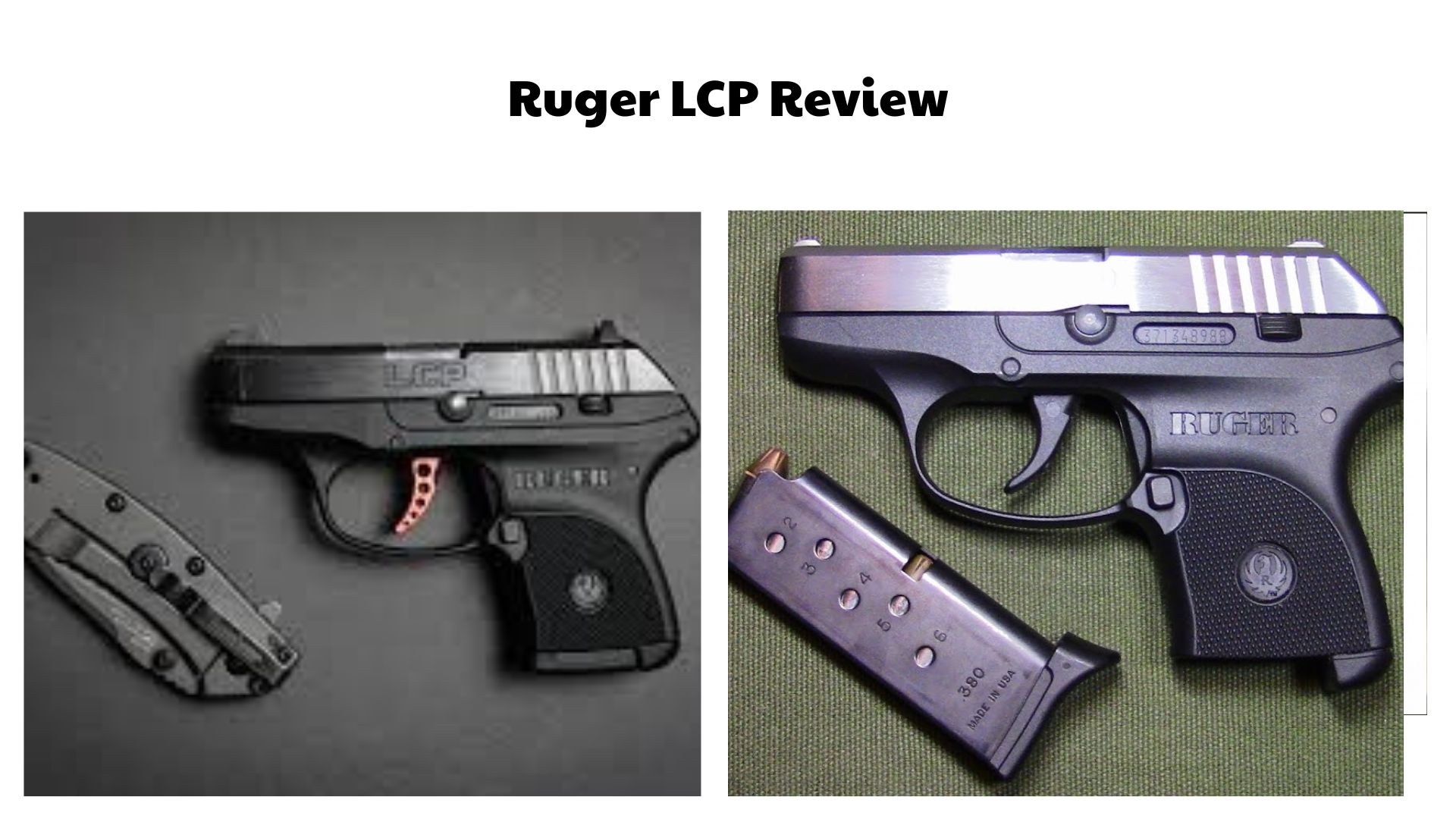

The Ruger LCP is widely regarded as one of the most iconic ultra-compact .380 ACP pocket pistols ever produced. Designed specifically for deep concealment and everyday carry (EDC), it has earned a reputation for simplicity, reliability, and extreme portability.
The LCP family has evolved over time, starting with the original Ruger LCP, followed by the improved LCP II, and most recently the LCP Max. Each generation has refined the platform with better ergonomics, improved triggers, and increased capacity while maintaining the same core philosophy: maximum concealability in a minimal footprint.
Built specifically for deep concealment, the LCP line is intended for pocket carry, ankle carry, and backup defensive roles where size and weight matter more than firepower. This focus has helped it become one of the most popular pocket pistols in the United States.
The introduction of the LCP Max marked a significant upgrade, bringing higher capacity and improved sights while still maintaining a compact, pocket-friendly design.
In the ultra-compact pistol category, the Ruger LCP competes with models such as the Sig Sauer P238, Smith & Wesson Bodyguard 380, Taurus 738, and Kel-Tec P3AT.
Overall, the LCP platform is known for being an ultra-lightweight, simple, and highly reliable concealed carry solution for users who prioritize discretion above all else.
Key Specifications (Ruger LCP & LCP Max)
- Caliber: .380 ACP
- Action: Internal hammer-fired (LCP) / Secure Action system (LCP Max)
- Barrel Length: Approximately 2.75″–2.8″
- Overall Length: Approximately 5.2″–5.8″
- Width: ~0.75″–0.8″ ultra-slim profile
- Weight: ~9–11 oz (LCP) / ~10–11 oz (LCP Max)
- Capacity:
- LCP: 6+1 rounds
- LCP Max: 10+1 rounds (12–13+1 with extended magazines)
- Frame: Glass-filled polymer construction
- Slide: Alloy steel with corrosion-resistant finish
- Sights: Fixed sights (LCP) / upgraded high-visibility sights (LCP Max)
- Safety: Internal safety systems (no manual external safety on most models)
These specifications highlight the Ruger LCP platform’s core identity as an ultra-compact defensive firearm engineered for maximum concealability, minimal weight, and practical everyday carry use.
Design & Build Quality
Ultra-Compact Pocket Pistol Design
The Ruger LCP was engineered from the ground up as a true pocket carry firearm, prioritizing deep concealment and minimal footprint over all other characteristics. Its dimensions are so compact that it can easily be carried in a front pocket without printing when paired with a proper holster.
In terms of size, the LCP is often compared to everyday objects like a smartphone or small wallet, highlighting just how minimal its profile is. This makes it one of the most practical options for users who need a firearm that disappears into everyday clothing.
The design also emphasizes smooth, rounded edges and a low-profile slide, reducing the chance of snagging during the draw. This is especially important for pocket and ankle carry, where quick access and unobstructed presentation are critical.
Evolution of Ergonomics (LCP vs LCP II vs Max)
The Ruger LCP platform has gone through several generations, each improving usability while maintaining its core concealment-focused design philosophy.
- Original LCP: The first generation focused on extreme minimalism, offering a very compact grip and simple controls. While highly concealable, it had limited ergonomics and a heavier trigger.
- LCP II: Introduced meaningful upgrades, including a significantly improved trigger system, better grip texture, and enhanced shooting comfort. This version addressed many of the criticisms of the original model.
- LCP Max: The most modern evolution, featuring a wider grip for improved control, higher magazine capacity, and upgraded sights. It maintains concealability while greatly enhancing shootability and defensive performance.
Each generation reflects Ruger’s effort to balance concealability, control, and modern defensive shooting expectations.
Materials and Durability
The Ruger LCP series is built with durability in mind despite its ultra-lightweight construction. The frame is made from glass-filled polymer, which helps maintain strength while keeping overall weight extremely low.
The slide is constructed from alloy steel with a corrosion-resistant finish, ensuring long-term reliability even under daily carry conditions where exposure to sweat, moisture, and friction is common.
Overall, the LCP is designed as a long-term defensive carry firearm, capable of withstanding regular use while remaining lightweight enough for constant everyday carry.
Magazine Capacity & Concealability
- LCP: Standard 6-round single-stack magazine designed for maximum compactness and deep concealment.
- LCP Max: Upgraded 10-round flush-fit magazine using a tapered double-stack design that significantly increases capacity without drastically enlarging the frame.
- Extended magazines: Available options increase both capacity (up to 12–13 rounds on the Max) and grip length for better control.
- Core trade-off: Users must balance concealability, shooting comfort, and magazine capacity depending on carry priorities.
- Ideal use case: Best suited for pocket carry, ankle carry, and backup defensive roles where minimal size is essential.
Trigger Performance
Original DAO Trigger (LCP)
The original Ruger LCP uses a traditional double-action-only (DAO) style trigger system. This results in a long, relatively heavy trigger pull designed with safety in mind, especially for pocket carry scenarios where an external safety is not present.
While this design enhances safe carry characteristics, it also requires more deliberate trigger control compared to modern striker-fired systems.
Improved Trigger (LCP II & Max)
The LCP II and LCP Max introduced a significantly improved trigger system under Ruger’s “Secure Action” design philosophy. This update provides a lighter and cleaner trigger break with a shorter reset, improving both usability and defensive shooting performance.
These enhancements make the newer models far more shooter-friendly while still maintaining a safe, concealed carry-oriented design.
Shooting Feel
In real-world use, the LCP Max offers the smoothest and most refined trigger experience in the lineup. It provides better control during rapid defensive shooting compared to earlier models.
However, even with improvements, the trigger remains heavier than full-size pistols, which is intentional given its role as a compact defensive firearm.
Most users also report that a short break-in period further improves trigger smoothness and consistency over time.
Shooting Performance & Accuracy
Recoil Management
Due to its ultra-lightweight frame, the Ruger LCP produces noticeable recoil, especially in rapid fire. This is a natural trade-off for its extreme portability.
The LCP Max improves recoil control thanks to its wider grip and slightly increased mass, making it more manageable for a broader range of shooters.
Despite its snappy nature, the .380 ACP cartridge remains controllable for most users with proper grip technique and training.
Accuracy
The LCP platform is designed for close-range defensive accuracy, typically within 5 to 15 yards. Within this range, it performs reliably for self-defense situations.
The short barrel and limited sight radius naturally restrict long-range precision, but this is expected for a pocket-sized pistol.
The LCP Max improves consistency and grouping due to better sights and enhanced ergonomics, making it more effective in defensive scenarios.
Reliability
The Ruger LCP series has built a strong reputation for reliability, particularly after a proper break-in period. It generally performs well with both FMJ and quality defensive hollow point ammunition.
Some units may show occasional sensitivity to lower-quality or steel-case ammunition, which is common in ultra-compact pistols with tight mechanical tolerances.
Overall, the platform is considered dependable for everyday concealed carry when maintained properly and paired with quality ammunition.
Controls & Features
- Minimal external controls: The Ruger LCP is intentionally designed with very few protruding controls to ensure a smooth, snag-free draw from pockets or concealed holsters.
- Reversible magazine release: On LCP Max models, the magazine release can be reversed to accommodate left-handed shooters.
- No accessory rail: The platform does not include a rail for lights or lasers, helping maintain its ultra-slim and compact profile.
- Improved sights: The LCP Max features upgraded high-visibility sights for faster target acquisition compared to earlier generations.
- Simple field stripping: The design allows for quick and easy disassembly, making routine cleaning and maintenance straightforward.
- Pocket holster compatibility: Optimized for pocket carry with a wide range of holster options designed specifically for the LCP platform.
Pros and Cons
Pros
- Extremely lightweight and ultra-concealable: One of the easiest handguns to carry daily without printing or discomfort.
- Proven reliability: Strong track record as a dependable concealed carry firearm when properly maintained.
- LCP Max capacity upgrade: Significantly increased magazine capacity compared to earlier pocket pistols while maintaining compact size.
- All-day carry comfort: Lightweight design makes it ideal for extended daily carry without fatigue.
- Strong holster support: Wide availability of pocket, IWB, and ankle holsters from major manufacturers.
Cons
- Snappy recoil: Lightweight frame results in noticeable recoil, especially in rapid fire.
- Limited capacity (original LCP): Early models offer only 6+1 rounds, which is low compared to modern alternatives.
- Minimal features: No accessory rail or optics compatibility, limiting tactical customization.
- Basic ergonomics (early models): Original versions lacked the improved grip and trigger enhancements seen in newer designs.
- Not range-focused: Designed for defensive carry rather than extended shooting sessions or training-heavy use.
Comparison with Competitors
Ruger LCP vs Smith & Wesson Bodyguard 380
The Ruger LCP and Smith & Wesson Bodyguard 380 occupy the same ultra-compact .380 ACP category and are both designed for deep concealment and pocket carry. They share similar dimensions and intended use cases, making them direct competitors in the pocket pistol market.
- Size and purpose: Both pistols are extremely compact and designed specifically for concealed carry and backup defense roles.
- Simplicity and reliability: The Ruger LCP is often considered to have a simpler internal design and a strong long-term reliability reputation across multiple generations.
- Feature advantage: The Bodyguard 380 offers integrated laser sight options on some models, giving it an edge in low-light aiming capability.
Overall, the LCP is typically favored for simplicity and proven durability, while the Bodyguard appeals to users who value built-in laser assistance.
Ruger LCP Max vs Sig Sauer P365
The Ruger LCP Max and Sig Sauer P365 serve very different roles despite both being used for concealed carry. The P365 is a micro-compact 9mm pistol, while the LCP Max is an ultra-light .380 pocket pistol.
- Capacity and power: The P365 offers significantly higher capacity and more powerful 9mm performance compared to the .380 ACP LCP Max.
- Concealability: The LCP Max excels in ultra-light pocket concealment, making it easier to carry in very discreet setups.
- Role difference: The P365 is a primary concealed carry handgun, while the LCP Max often functions as a backup or deep concealment option.
In short, the P365 is a more capable fighting pistol, while the LCP Max prioritizes minimal size and maximum concealability.
Ruger LCP Max vs Glock 42
The Ruger LCP Max and Glock 42 are both .380 ACP pistols, but they differ in size, ergonomics, and shooting comfort.
- Recoil and comfort: The Glock 42 offers softer recoil due to its slightly larger frame and weight distribution.
- Size and capacity: The LCP Max is smaller and more compact while offering higher capacity in a similar footprint class.
- Use case: Both are excellent .380 defensive pistols, but the Glock 42 leans toward shootability, while the LCP Max emphasizes concealability.
Each model appeals to different priorities: comfort and control versus maximum concealment and capacity efficiency.
Best Use Cases
- Deep concealment everyday carry (EDC): Ideal for users who require a firearm that remains completely discreet in daily environments.
- Pocket carry in casual or athletic clothing: Small size allows safe and comfortable carry in light clothing where larger pistols would be impractical.
- Backup gun for law enforcement/security: Functions effectively as a secondary defensive firearm in professional settings.
- Lightweight summer carry pistol: Perfect for hot weather carry when larger firearms become uncomfortable or difficult to conceal.
- Minimalist concealed carry setups: Suited for users who prioritize simplicity, low weight, and minimal printing.
Aftermarket Support & Accessories
- Wide holster availability: The Ruger LCP platform has strong aftermarket support for pocket holsters, IWB (inside-the-waistband), and ankle carry holsters. Nearly every major holster manufacturer offers dedicated LCP-fit options due to its popularity.
- Extended magazines: Especially for the LCP Max, extended magazines increase capacity up to 12–13 rounds while also improving grip length and shootability.
- Laser accessories: Some trigger-guard-mounted laser systems are available, providing an aiming advantage in low-light defensive scenarios without permanently modifying the firearm.
- Upgraded sights: Aftermarket fiber optic and tritium night sights are available, particularly beneficial for faster target acquisition in defensive situations.
- Pocket holsters: Specialized pocket holsters are widely used to ensure safe trigger coverage, proper orientation, and discreet carry in everyday clothing.
Who Should Buy the Ruger LCP / LCP Max?
- Users prioritizing maximum concealability: Ideal for those who need a firearm that remains completely hidden in daily carry situations.
- True pocket carry users: Designed for individuals who specifically want a pocket-sized defensive handgun.
- Backup weapon carriers: Frequently chosen by law enforcement or security professionals as a secondary defensive firearm.
- Ultra-light EDC users: Perfect for those who prioritize minimal weight and all-day carry comfort.
- Minimalist concealed carriers: Best for users who prefer simplicity and low-profile defensive setups without extra features.
Who Should Avoid It?
- High-capacity seekers: Not suitable for users who prioritize large magazine capacity in a defensive handgun.
- Recoil-sensitive beginners: The snappy recoil of the lightweight frame may be challenging for inexperienced shooters.
- Feature-focused users: Not ideal for those wanting optics-ready platforms or tactical accessory rails.
- Comfort-oriented shooters: Users who prefer full-size pistols with softer recoil and better grip ergonomics may find it too small.
- Range-focused shooters: Not designed for extended training sessions or recreational target shooting.
Final Verdict
The Ruger LCP and LCP Max stand as some of the most iconic pocket pistols ever developed, defining the ultra-compact .380 ACP category for modern concealed carry.
The introduction of the LCP Max significantly improved the platform by increasing capacity, enhancing sights, and improving overall shootability while maintaining its ultra-light concealability advantage.
However, the platform still represents a clear compromise between size, recoil control, and capacity. It is not designed to compete with full-size or even micro-compact 9mm pistols in performance.
Its true strength lies in roles where concealment is the top priority, such as deep carry and backup defense scenarios.
Final recommendation: The Ruger LCP series remains a benchmark ultra-compact .380 carry system, best suited for users who prioritize extreme concealability, lightweight carry, and dependable backup defense capability.
Frequently Asked Questions (FAQ) – Ruger LCP & LCP Max
1. What is the Ruger LCP designed for?
The Ruger LCP is designed specifically as a deep concealment, ultra-compact pocket pistol for personal defense. It prioritizes small size, lightweight construction, and simplicity, making it ideal for everyday carry in situations where larger firearms would be difficult to conceal or uncomfortable to carry.
2. What does LCP stand for?
LCP stands for “Lightweight Compact Pistol.” The name reflects Ruger’s design goal of creating a firearm that is extremely light and compact while still being functional for defensive use.
3. What is the difference between LCP, LCP II, and LCP Max?
The original LCP focused on ultra-minimal size and simplicity. The LCP II improved the trigger, grip texture, and shooting feel. The LCP Max is the most advanced version, offering significantly increased magazine capacity (up to 10+1), improved sights, and better ergonomics while maintaining pocket-sized concealability.
4. Is the Ruger LCP good for concealed carry?
Yes, the Ruger LCP is one of the most popular concealed carry pistols in the pocket gun category. Its extremely small size and lightweight design make it ideal for deep concealment, especially in situations where larger handguns are impractical.
5. Is the LCP Max better than the original LCP?
Yes, in most aspects. The LCP Max offers higher capacity, better sights, improved ergonomics, and a more refined trigger system. However, it is slightly larger and heavier, though still very compact.
6. How many rounds does the Ruger LCP hold?
The original LCP holds 6+1 rounds. The LCP Max holds 10+1 rounds with flush-fit magazines and up to 12–13+1 rounds with extended magazines, making it significantly more capable.
7. Is .380 ACP powerful enough for self-defense?
.380 ACP is considered a lower-recoil defensive cartridge suitable for close-range self-defense. While not as powerful as 9mm, modern defensive ammunition improves its effectiveness. It is commonly chosen for small, easily concealable pistols.
8. Is the Ruger LCP reliable?
Yes, the LCP platform has a strong reputation for reliability, especially after break-in. It generally performs well with quality ammunition, though some units may be sensitive to lower-grade or steel-case ammo.
9. Does the Ruger LCP require a break-in period?
Yes, many users report improved performance after the first few hundred rounds. This break-in period helps smooth internal components and enhances trigger and cycling consistency.
10. Is the LCP good for beginners?
It can be used by beginners, but it is not ideal. Its small size and snappy recoil require good grip technique and familiarity with defensive shooting fundamentals.
11. How bad is the recoil on the LCP?
Recoil is noticeable due to the extremely lightweight frame. It is manageable with proper grip, but it is sharper than larger pistols. The LCP Max improves control thanks to its wider grip design.
12. Is the LCP Max easier to shoot than the original LCP?
Yes, the LCP Max is significantly easier to shoot due to improved ergonomics, better sights, and a more stable grip platform.
13. Can the LCP be used for range practice?
Yes, but it is not ideal for extended range sessions. It is primarily designed for defensive use rather than recreational shooting.
14. Is the Ruger LCP accurate?
The LCP is accurate enough for defensive distances of 5–15 yards. It is not designed for precision shooting at longer ranges due to its short barrel and compact sight radius.
15. What is the effective range of the LCP?
The effective defensive range is typically within 5 to 15 yards, which aligns with most real-world self-defense scenarios.
16. Does the LCP have a safety?
Most LCP models do not have an external manual safety. They rely on internal safety systems and trigger design to prevent accidental discharge.
17. Is the LCP Max safe to carry?
Yes, when used with proper holster discipline. A quality pocket or IWB holster is essential to protect the trigger and ensure safe concealed carry.
18. Can the LCP be carried in a pocket?
Yes, pocket carry is one of its primary use cases. A dedicated pocket holster is strongly recommended for safety and proper orientation.
19. Does the LCP print when carried?
Due to its small size, the LCP prints very little, especially when carried in proper clothing and holster setups.
20. Is the LCP good for appendix carry?
It can be used for appendix carry, but its primary strength is pocket and deep concealment carry rather than appendix-focused setups.
21. What is the trigger like on the LCP?
The original LCP has a long, heavy double-action-style trigger. The LCP II and Max versions feature improved triggers that are lighter, smoother, and more consistent.
22. Is the LCP trigger good for self-defense?
Yes, it is designed for defensive use. The heavier pull adds a layer of safety, while improved versions offer better control for accurate shooting under stress.
23. Does the LCP have an accessory rail?
No, the LCP does not include a rail. This is intentional to maintain its slim and snag-free design for pocket carry.
24. Can I mount a light or laser on the LCP?
Not directly. Some aftermarket laser systems exist, but options are limited compared to larger pistols with built-in rails.
25. What kind of sights does the LCP have?
The original LCP has fixed sights, while the LCP Max features improved high-visibility sights for faster target acquisition.
26. Is the LCP good for summer carry?
Yes, it is one of the best summer carry pistols due to its lightweight design and ability to remain concealed under light clothing.
27. Is it good for winter carry?
Yes, but many users prefer larger pistols in winter since heavier clothing allows better concealment of larger firearms.
28. How easy is it to clean the LCP?
The LCP is relatively easy to clean and maintain. Field stripping is simple, and routine maintenance is straightforward.
29. Does the LCP rust easily?
No, it uses corrosion-resistant materials and finishes. However, regular maintenance is still recommended for long-term durability.
30. Is the LCP good for home defense?
It can be used for home defense, but it is not ideal compared to larger pistols or shotguns due to limited capacity and recoil.
31. Is the LCP good for law enforcement backup use?
Yes, it is often used as a backup firearm due to its small size and ease of concealment.
32. What is the biggest drawback of the LCP?
The biggest drawback is limited capacity (especially in original models) combined with snappy recoil and minimal features.
33. What is the biggest advantage of the LCP?
Its biggest advantage is extreme concealability combined with ultra-lightweight carry comfort.
34. Is the LCP Max worth it?
Yes, for many users it is worth upgrading because it significantly improves capacity, sights, and shooting control while maintaining pocket carry size.
35. Is the LCP better than Glock 42?
The Glock 42 offers softer recoil and larger grip comfort, while the LCP Max offers higher capacity and smaller overall footprint.
36. Is the LCP better than Smith & Wesson Bodyguard 380?
Both are similar, but the LCP is often preferred for simplicity and long-term reliability reputation, while the Bodyguard offers laser options.
37. Is the LCP good for concealed carry beginners?
It can be, but beginners may find recoil and small size challenging compared to larger pistols like compact 9mm handguns.
38. Does the LCP have good aftermarket support?
Yes, especially for holsters. However, accessory support is more limited than for larger handgun platforms.
39. Can the LCP be customized?
Customization is limited but includes sights, grips, and holsters. It is not designed as a heavily modular platform.
40. Is the LCP good for pocket carry in jeans?
Yes, it fits comfortably in most front pockets when paired with a proper holster.
41. Is the LCP safe to carry loaded?
Yes, when carried properly in a holster that fully covers the trigger guard. This is standard practice for concealed carry firearms.
42. How durable is the LCP?
The LCP is built for long-term defensive use, with durable polymer and steel components designed for daily carry conditions.
43. Is the LCP good for people with small hands?
Yes, it fits small hands well due to its compact grip, though larger hands may find it cramped.
44. Is the LCP Max better for larger hands?
Yes, the LCP Max offers a wider grip that improves control and comfort for larger-handed shooters.
45. What makes the LCP so popular?
Its popularity comes from its combination of extreme concealability, low weight, reliability, and ease of carry in everyday situations.
46. Is the LCP outdated?
The original LCP is somewhat outdated, but the LCP Max modernizes the platform significantly with better capacity and ergonomics.
47. Is the LCP good for travel carry?
Yes, it is an excellent travel firearm due to its compact size and ease of concealment.
48. Can the LCP handle +P ammo?
The LCP is generally not recommended for frequent +P use. It is best to use standard pressure defensive ammunition.
49. How long does the LCP last?
With proper maintenance, it can last many years of defensive use. Ruger firearms are known for durability and longevity.
50. What is the final takeaway?
The Ruger LCP and LCP Max represent the benchmark for ultra-compact pocket pistols, offering unmatched concealability and lightweight carry, with the LCP Max providing a modern upgrade in capacity and usability while still maintaining deep concealment capability.
Read more: