
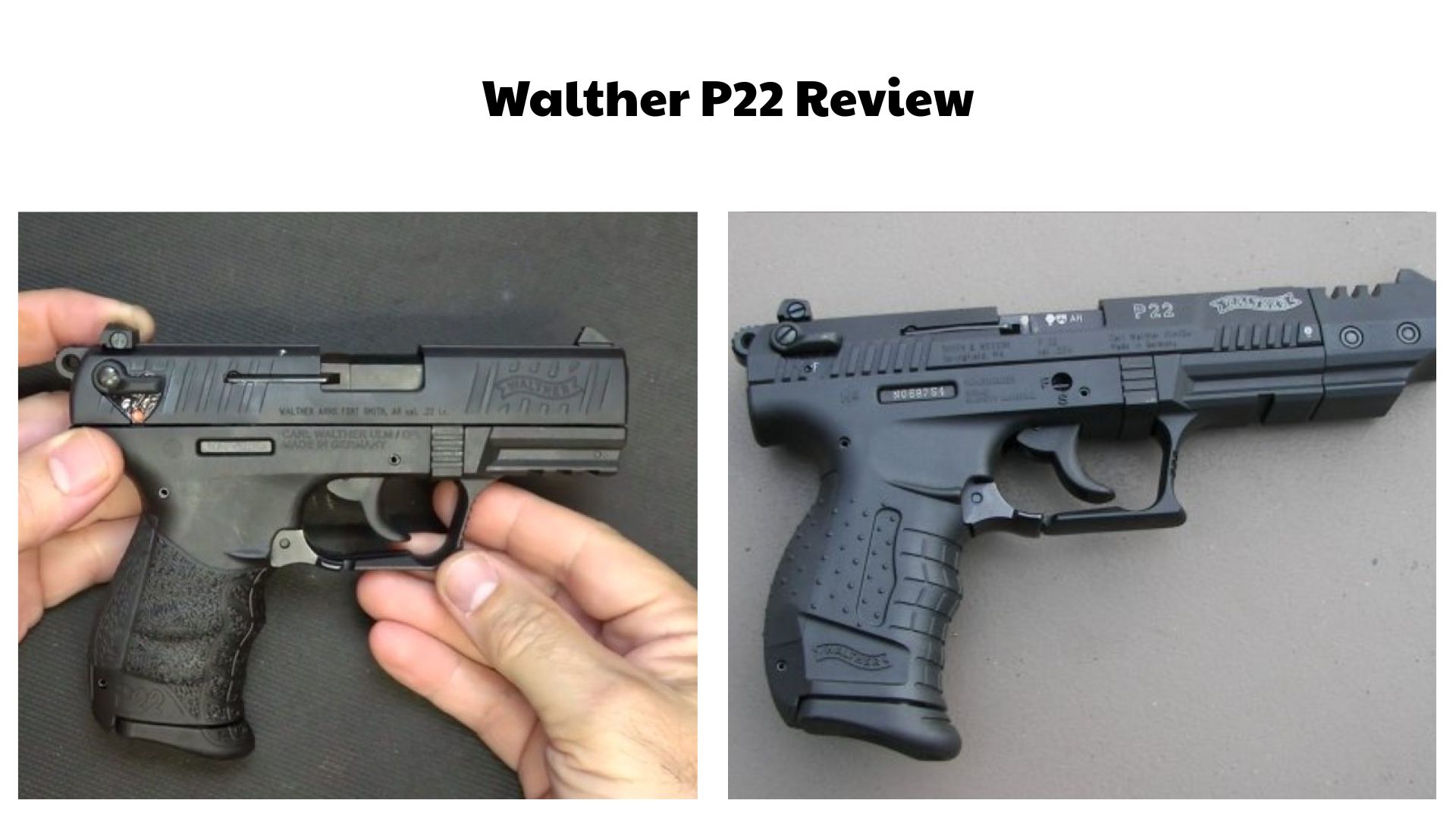

The Walther P22 is a compact .22 LR polymer-framed semi-automatic pistol designed primarily for training, recreational shooting, and beginner-friendly use. It is widely regarded as one of the most approachable rimfire handguns for new shooters due to its lightweight construction and low recoil characteristics.
Unlike defensive or duty-oriented pistols, the P22 is best understood as a training and plinking platform. Its main role is to introduce users to handgun fundamentals in a comfortable, low-cost shooting environment.
Key themes of this review include the balance between ergonomic design quality and the inherent reliability limitations of rimfire systems, as well as the pistol’s extremely low recoil that makes it especially suitable for beginners. However, real-world performance can vary depending on ammunition quality and maintenance habits.
This review is intended for first-time handgun buyers, beginner shooters, recreational plinkers, rimfire enthusiasts, and users comparing entry-level .22 LR pistols.
Overview of the Walther P22
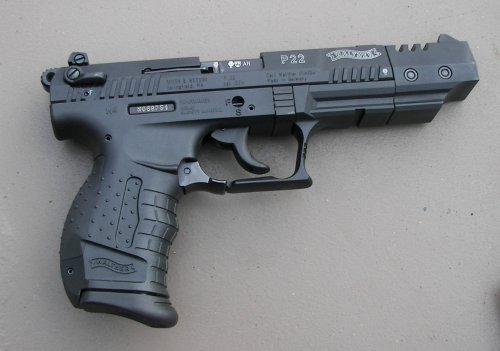
History and Development of the P22 Platform
The Walther P22 was introduced in the early 2000s by Carl Walther as one of the first modern polymer-framed .22 LR pistols. It was designed to bring the ergonomics and handling characteristics of centerfire duty pistols into a more affordable rimfire training platform.
Its design draws heavily from Walther’s P99 duty pistol lineage, incorporating similar styling and control placement in a scaled-down format. Over time, the platform has evolved through various updates, including improved internal components and refined safety features, with later P22Q variants addressing some early design concerns.
Design Philosophy – Compact Training-Focused Rimfire Pistol
The Walther P22 is built around the idea of an affordable and lightweight training pistol. Its polymer frame reduces overall weight while maintaining sufficient durability for regular recreational use.
The compact design mimics full-size duty pistols in reduced form, helping new shooters build familiarity with handgun ergonomics and controls before transitioning to larger centerfire platforms. The focus remains on low recoil, ease of use, and cost-effective practice shooting.
Why the Walther P22 Became Popular
The P22 gained popularity due to its excellent ergonomics and comfortable grip design, which is often praised as one of the best in the .22 LR category. Its lightweight frame makes it easy to handle, even during extended range sessions.
Additionally, the low cost of .22 LR ammunition makes it an attractive option for high-volume training. The pistol is also widely used in rental fleets, beginner shooting classes, and recreational shooting environments due to its approachable nature.
Walther P22 Specifications
Core Technical Specs
The Walther P22 is chambered in .22 LR, a rimfire cartridge known for low recoil, low noise, and affordability. It operates using a blowback semi-automatic action with a double-action/single-action trigger system.
Barrel lengths vary by model, typically ranging from approximately 3.4 inches to 5 inches. The overall length is around 6.3 inches, making it a compact handgun suitable for smaller hands and easy handling.
Unloaded weight is approximately 17–18 ounces, making it one of the lightest polymer-framed pistols in its class.
Magazine System and Capacity
Most Walther P22 models use a standard 10-round detachable magazine. Some variants may have region-specific capacity restrictions depending on local firearm regulations.
The pistol also incorporates a magazine safety disconnect system, which prevents firing when the magazine is removed. This feature is intended as an additional layer of mechanical safety.
Frame, Barrel, and Construction
The frame is constructed from durable polymer, contributing to the pistol’s lightweight profile while maintaining structural integrity for training and recreational use.
A steel slide ensures reliable blowback operation and durability under repeated firing cycles. The design also includes interchangeable backstrap inserts, allowing users to adjust grip fit for better ergonomics.
Overall, the compact slide design is influenced by Walther’s centerfire pistol ergonomics, helping new shooters become familiar with standard handgun control layouts.
Design and Build Quality
Polymer Frame and Compact Structure
The Walther P22 features a lightweight polymer frame that significantly reduces overall weight, making it easy to handle for new shooters and extended range sessions. This design choice prioritizes comfort and accessibility over heavy-duty durability.
Its compact dimensions also make it well-suited for users with smaller hands or those who prefer a more controllable and less intimidating handgun platform. While the materials are durable enough for recreational use, the P22 is generally considered a budget-oriented design rather than a duty-grade pistol.
Ergonomics and Grip System
One of the strongest aspects of the Walther P22 is its ergonomics. The pistol includes interchangeable backstrap inserts that allow users to adjust grip size for better comfort and control.
The grip angle is naturally comfortable for most shooters and contributes to the pistol’s reputation as one of the best-feeling .22 LR handguns in its category. This ergonomic design helps new shooters build confidence and maintain proper shooting fundamentals.
Slide Design and Controls
The P22 includes a compact slide with simple blowback operation and user-friendly controls. Many models feature a manual safety, along with a magazine disconnect safety system that prevents firing when the magazine is removed.
Control placement is generally intuitive, and the design is intended to be accessible for both right- and left-handed shooters, making it a flexible training platform.
Performance and Shooting Characteristics
Accuracy and Practical Shooting Performance
In practical use, the Walther P22 delivers good accuracy at short ranges, typically between 7 and 25 yards. This level of precision is more than sufficient for plinking, casual target shooting, and basic training exercises.
However, mechanical accuracy can vary depending heavily on ammunition quality. Higher-quality .22 LR rounds tend to produce more consistent groupings compared to bulk or lower-cost ammunition.
Recoil and Shooting Experience
Thanks to the low power of the .22 LR cartridge, the Walther P22 produces extremely low recoil. This makes it an excellent platform for learning handgun fundamentals such as trigger control, sight alignment, and follow-through.
The minimal recoil also allows for fast follow-up shots and quick target reacquisition, making the shooting experience smooth and enjoyable for beginners and recreational users alike.
Real-World Reliability and Function
Reliability reports for the Walther P22 are mixed across the user base. While many shooters experience smooth operation, others report occasional feeding or cycling issues depending on ammunition selection and maintenance practices.
The pistol tends to perform best when using high-velocity .22 LR ammunition. Bulk ammo may increase the likelihood of malfunctions, particularly in poorly maintained or lightly lubricated firearms.
Regular cleaning and proper lubrication are important for maintaining consistent reliability, especially during high-volume shooting sessions.
Trigger System and Controls
Double/Single Action Trigger System
The Walther P22 uses a double-action/single-action (DA/SA) trigger system. The first shot in double-action mode requires a heavier and longer trigger pull, while subsequent shots in single-action mode are lighter and smoother.
This design is intended to enhance safety and training value rather than provide competition-level trigger performance.
Trigger Performance in Real Use
In real-world shooting, the trigger system is suitable for beginners learning proper trigger discipline and control. It provides a clear distinction between double-action and single-action operation, which can help develop fundamental shooting skills.
However, the trigger is not as refined as those found on higher-end or competition-focused pistols. Reset and break characteristics may also vary slightly depending on the generation, usage, and maintenance condition of the firearm.
Optics, Sights, and Accessories
Factory Sights and Sight Picture
Most Walther P22 models come equipped with adjustable 3-dot style iron sights. These sights provide a simple and intuitive sight picture that is adequate for close-range shooting applications such as plinking and basic target practice.
However, the system is relatively basic compared to modern optics-ready pistols. The P22 is not typically optics-ready in its standard configuration, meaning users must rely on traditional iron sights unless aftermarket modifications are made.
Accessory Compatibility
The Walther P22 includes an integrated Picatinny rail under the barrel, allowing users to mount accessories such as tactical lights or laser aiming devices. This adds some versatility for low-light training scenarios.
Despite this, the aftermarket ecosystem is more limited compared to platforms like Glock or Ruger, meaning fewer upgrade options are available overall. Some variants do exist with threaded barrels designed for suppressor use, particularly for users interested in quieter shooting setups.
Size, Weight, and Handling
Compact Lightweight Dimensions
The Walther P22 is extremely lightweight, typically weighing around 17–18 ounces unloaded. This makes it one of the easiest rimfire pistols to handle and carry during long training sessions or recreational shooting.
Its compact frame is particularly well-suited for shooters with smaller hands or those who prefer a lightweight, easy-to-manage handgun platform.
Carry and Handling Considerations
The P22 is not designed for concealed carry or duty use. Instead, it is best suited for range training, recreational shooting, and introductory handgun practice.
Due to its lightweight construction, some shooters may find it slightly “snappy” or less stable during fast handling, especially when compared to heavier steel-framed pistols.
Reliability and Durability
Real-World Reliability Testing
Real-world reliability of the Walther P22 varies depending heavily on ammunition selection. The pistol generally performs best with high-velocity .22 LR ammunition, which supports more consistent cycling.
Some users report a break-in period during which minor feeding or cycling issues may occur, particularly when using lower-quality or bulk ammunition.
Long-Term Durability
The polymer frame is durable enough for recreational use and regular training sessions, but the pistol is not intended for high-round-count duty environments.
Internal components require routine cleaning and maintenance to ensure reliable operation over time, especially with extended use or suppressed configurations.
Walther P22 Variants
Standard Walther P22 Models
Standard versions of the Walther P22 feature a basic polymer frame configuration with a 10-round magazine capacity. These models are designed for entry-level training and recreational shooting.
Walther P22Q Updated Versions
The P22Q variants introduce improved internal components, enhanced ergonomics, and refined safety systems. These updates were intended to address some of the early concerns found in original P22 models.
Threaded Barrel and Suppressor Models
Threaded barrel versions are designed for suppressor compatibility and are especially popular among users who want a quieter shooting experience. These models tend to perform better with subsonic ammunition when suppressed.
Pros and Cons of the Walther P22
Main Advantages
The Walther P22 offers excellent ergonomics and a comfortable grip, making it one of the most user-friendly .22 LR pistols available. Its extremely low recoil makes it ideal for beginners learning fundamental shooting skills.
It is also lightweight, easy to handle, and affordable to shoot due to the low cost of .22 LR ammunition. Overall, it serves as a strong training platform for new shooters.
Main Disadvantages
Despite its strengths, the P22 has some limitations. It can be sensitive to ammunition quality, with reliability varying depending on the load used. It is also not suitable for defensive applications.
The aftermarket ecosystem is relatively limited, and its compact size can feel less stable for some users during rapid shooting. Additionally, it requires consistent maintenance to maintain optimal cycling reliability.
Comparison With Similar .22 LR Pistols
Walther P22 vs Ruger SR22
The Ruger SR22 is often considered one of the most reliable .22 LR pistols in its class, offering more consistent cycling with a wider range of ammunition compared to the Walther P22. While both pistols are lightweight and beginner-friendly, the SR22 generally has a stronger reputation for out-of-the-box reliability.
The P22 tends to win in ergonomics and grip comfort, but the SR22 is preferred by users who prioritize function and fewer malfunctions during extended shooting sessions.
Walther P22 vs Smith & Wesson M&P 22
The Smith & Wesson M&P 22 is larger, more stable, and more duty-oriented compared to the compact Walther P22. It typically offers smoother operation and better consistency with bulk ammunition.
The P22, however, is lighter and more compact, making it easier for beginners and smaller-handed shooters. The M&P 22 is often chosen for training that closely mirrors full-size service pistols.
Walther P22 vs Taurus TX22
The Taurus TX22 is widely regarded as one of the best-performing modern .22 LR pistols in terms of reliability and magazine capacity. It often outperforms the P22 in feeding consistency and has a higher round count per magazine.
While the TX22 is more competition and performance focused, the P22 offers a more traditional compact design and slightly better ergonomics for very small hands.
Walther P22 vs Beretta 21A Bobcat
The Beretta 21A Bobcat is a pocket-sized .22 LR pistol with a very different design philosophy, focusing on ultra-compact concealability rather than training ergonomics.
Compared to the Bobcat, the Walther P22 is significantly easier to shoot accurately due to its larger grip, better sights, and more conventional controls. However, the Bobcat is far more compact and easier to conceal.
Real User Feedback and Community Opinions
Professional Reviewer Insights (American Rifleman, Pew Pew Tactical, etc.)
Professional reviewers generally highlight the Walther P22 as a solid entry-level rimfire pistol with excellent ergonomics and low recoil. However, many reviews also note its sensitivity to ammunition and the importance of proper maintenance for reliable operation.
Overall, it is often described as a “fun training pistol” rather than a high-performance or duty-grade firearm.
Reddit and Firearms Community Discussions
Community discussions frequently emphasize that the P22 can be both enjoyable and frustrating depending on the individual unit and ammunition used. Many users report that high-velocity .22 LR ammunition improves reliability significantly.
Across forums, the general consensus is that the pistol is fun and beginner-friendly, but not as consistent as competing designs in the same category.
Range Instructor and Training Feedback
Instructors often recommend the Walther P22 as an introductory training platform for new shooters due to its low recoil and intuitive handling. It helps students focus on fundamentals such as trigger control and sight alignment without being intimidated by recoil.
However, instructors also caution that it should not be used as a substitute for training with centerfire defensive handguns.
Common Praise and Criticism Trends
Common praise includes excellent ergonomics, very low recoil, and affordability of shooting. These factors make it a popular recreational pistol.
Common criticisms include inconsistent reliability with certain ammunition types, limited aftermarket support, and the need for more frequent maintenance compared to more modern .22 LR platforms.
Practical Use Cases
Beginner Training and Skill Development
The Walther P22 is widely used for beginner training due to its soft recoil and easy handling characteristics. It allows new shooters to develop confidence and learn basic handgun mechanics without the intimidation of centerfire recoil.
Recreational Plinking and Range Shooting
One of the strongest use cases for the P22 is casual plinking and recreational shooting. Its lightweight design and inexpensive ammunition make it ideal for extended range sessions focused on fun and practice.
Youth and New Shooter Introduction Platform
Because of its low recoil and manageable size, the P22 is often used to introduce younger or first-time shooters to handguns in a controlled and comfortable environment.
Suppressed Rimfire Shooting Setup
Threaded barrel variants allow for suppressor use, making the pistol even quieter when paired with subsonic ammunition. This setup is popular among recreational shooters seeking a low-noise shooting experience.
Not Recommended for Self-Defense Use
Despite its strengths, the Walther P22 is not generally recommended for self-defense. Rimfire ammunition lacks the stopping power and reliability consistency of centerfire calibers, making it better suited for training and recreation only.
Final Verdict
Who Should Buy the Walther P22
The Walther P22 is best suited for first-time handgun owners, beginner shooters, and recreational users who want a lightweight, low-recoil training pistol. It is also a good option for those looking for an affordable entry into rimfire shooting.
Who Should Avoid It
Shooters who prioritize defensive reliability, competition performance, or maximum mechanical consistency should avoid the P22. It is not intended for duty or serious self-defense use.
Overall Performance Summary
Overall, the Walther P22 delivers strong ergonomics, very low recoil, and an enjoyable shooting experience, but it sacrifices some reliability consistency in exchange for affordability and compact design.
Final Assessment: Is the Walther P22 Still Worth It Today?
The Walther P22 remains a relevant choice in the modern rimfire market, especially for beginners and recreational shooters. While newer .22 LR pistols may offer better reliability, the P22 still stands out for its comfort, ease of use, and training-friendly design, making it a worthwhile option for the right user.
Walther P22 FAQ (50+ Detailed Questions and Answers)
1. What is the Walther P22 primarily designed for?
The Walther P22 is designed primarily as a compact .22 LR training and recreational pistol. It is intended to help new shooters learn handgun fundamentals such as grip, sight alignment, and trigger control in a low-recoil and low-cost environment. It is not designed as a duty or self-defense firearm.
2. Is the Walther P22 good for beginners?
Yes, it is widely considered a beginner-friendly pistol due to its extremely low recoil, lightweight frame, and comfortable ergonomics. However, beginners should also be aware of its sensitivity to ammunition and the need for proper maintenance to ensure reliable operation.
3. Is the Walther P22 reliable?
Reliability is mixed depending on ammunition and maintenance. High-velocity .22 LR ammunition tends to produce better cycling, while bulk or low-powered ammo can result in occasional feeding or ejection issues. Cleanliness and lubrication significantly affect performance.
4. Why does the Walther P22 have reliability issues?
Like many .22 LR pistols, the P22 is sensitive because rimfire cartridges vary widely in power and consistency. Its compact blowback design also requires sufficient energy from ammunition to cycle properly, making it less forgiving than centerfire pistols.
5. What ammo works best in the Walther P22?
High-velocity .22 LR ammunition such as CCI Mini-Mag or similar premium loads generally performs best. These rounds provide more consistent cycling energy compared to bulk-pack ammunition.
6. Can the Walther P22 use subsonic ammo?
Yes, but subsonic ammunition may not always cycle reliably in unsuppressed configurations. It performs better when used with a suppressor, which helps reduce gas pressure loss and improves function.
7. Is the Walther P22 suitable for self-defense?
No, it is not recommended for self-defense. The .22 LR cartridge lacks the stopping power and reliability consistency of defensive centerfire calibers, making the P22 better suited for training and recreation.
8. What is the effective range of the Walther P22?
The effective practical range is typically around 7 to 25 yards for most users. While it can shoot farther, accuracy and energy drop significantly beyond typical handgun distances.
9. How accurate is the Walther P22?
It is reasonably accurate at short ranges when paired with quality ammunition. Mechanical accuracy is sufficient for plinking and training but is not on the level of competition or precision target pistols.
10. Does the Walther P22 have recoil?
Recoil is extremely minimal due to the low power of the .22 LR cartridge. This makes it ideal for new shooters who are sensitive to recoil or learning proper fundamentals.
11. What is the weight of the Walther P22?
The pistol weighs approximately 17–18 ounces unloaded, making it one of the lightest polymer-framed pistols available in its category.
12. What is the magazine capacity?
Standard magazine capacity is typically 10 rounds, depending on model and regional restrictions.
13. Does the Walther P22 have a safety?
Yes, most models include a manual safety as well as a magazine disconnect safety, which prevents the pistol from firing without a magazine inserted.
14. Does the Walther P22 have interchangeable grips?
Yes, it includes interchangeable backstraps to help users adjust grip size for better comfort and control.
15. Is the Walther P22 good for concealed carry?
No, it is not recommended for concealed carry. It is designed for training and recreational use rather than defensive deployment.
16. Is the Walther P22 easy to clean?
Yes, it is relatively easy to clean, although rimfire firearms generally require more frequent maintenance due to fouling from .22 LR ammunition.
17. How often should it be cleaned?
It is recommended to clean the pistol after every few hundred rounds, especially if using bulk ammunition or shooting suppressed.
18. Can the Walther P22 be suppressed?
Yes, threaded barrel versions can accept suppressors. Performance is best with subsonic ammunition when suppressed.
19. Does suppressing improve reliability?
In some cases, yes. Suppression can help maintain consistent back pressure, improving cycling with certain ammunition types.
20. Is the Walther P22 good for training?
Yes, it is commonly used for training beginners due to its low recoil and simple manual of arms.
21. Is it good for youth shooters?
Yes, under supervision, it is often used for introducing younger shooters to handguns safely.
22. What is the trigger system like?
It uses a double-action/single-action (DA/SA) trigger system, with a heavier first pull and lighter subsequent pulls.
23. Is the trigger good?
The trigger is adequate for training purposes but not considered refined compared to higher-end pistols or competition triggers.
24. Does the trigger reset feel short?
The reset is moderate and varies slightly by generation and usage condition.
25. Is the Walther P22 durable?
It is durable enough for recreational and training use, but not designed for extreme high-volume duty cycles.
26. What is the frame made of?
The frame is constructed from lightweight polymer, which reduces weight while maintaining acceptable durability for its intended purpose.
27. Is the slide metal?
Yes, the slide is made of steel to handle the stresses of blowback operation.
28. Does the Walther P22 jam a lot?
It can experience jams if low-quality ammunition is used or if the firearm is not properly cleaned and lubricated.
29. What causes most malfunctions?
Most malfunctions are caused by weak ammunition, dirt buildup, or insufficient lubrication rather than mechanical defects.
30. Is the Walther P22 good for plinking?
Yes, it is excellent for plinking due to its low recoil and inexpensive ammunition costs.
31. Can it be used for competition?
It is not designed for competition shooting and is outperformed by more modern .22 LR pistols in that category.
32. Does it have optics capability?
Most standard models are not optics-ready and rely on iron sights.
33. What type of sights does it use?
It typically uses 3-dot adjustable iron sights for basic aiming at short ranges.
34. Is it good for left-handed shooters?
Yes, many controls are ambidextrous-friendly, making it usable for left-handed shooters.
35. Is it lightweight enough for long shooting sessions?
Yes, its lightweight design makes it comfortable for extended range sessions without fatigue.
36. What is its main disadvantage?
The biggest disadvantage is inconsistent reliability with certain types of ammunition.
37. What is its biggest advantage?
Its biggest advantage is excellent ergonomics combined with very low recoil.
38. Is it better than the Ruger SR22?
The SR22 is generally more reliable, while the P22 is often preferred for ergonomics and grip comfort.
39. Is it better than the Taurus TX22?
The TX22 typically offers better reliability and capacity, while the P22 focuses more on compact size and ergonomics.
40. Is it worth buying in 2026?
Yes, for beginners and recreational shooters, it remains a relevant and affordable training pistol.
41. Does it require a break-in period?
Some users report improved reliability after a break-in period of several hundred rounds.
42. Can it handle bulk ammo?
It can, but performance may be less consistent compared to premium ammunition.
43. Does temperature affect performance?
Extreme cold or poor-quality ammo can negatively affect cycling reliability.
44. Is it noisy?
Yes, like most .22 LR pistols, it produces moderate noise when unsuppressed.
45. Is it good for range rental use?
Yes, it is commonly used in rental fleets due to its beginner-friendly design.
46. Can it shoot rapidly?
Yes, its low recoil allows for fast follow-up shots.
47. Is it expensive to shoot?
No, .22 LR ammunition is among the most affordable, making it very cost-effective.
48. Does it rust easily?
With proper care, it resists rust well due to its steel and polymer construction.
49. What is the best use case overall?
Its best use case is recreational shooting and beginner training.
50. What is the final verdict?
The Walther P22 is a highly ergonomic and beginner-friendly .22 LR pistol that excels in training and recreational roles, but it trades off some reliability consistency compared to more modern competitors.
Read more: