
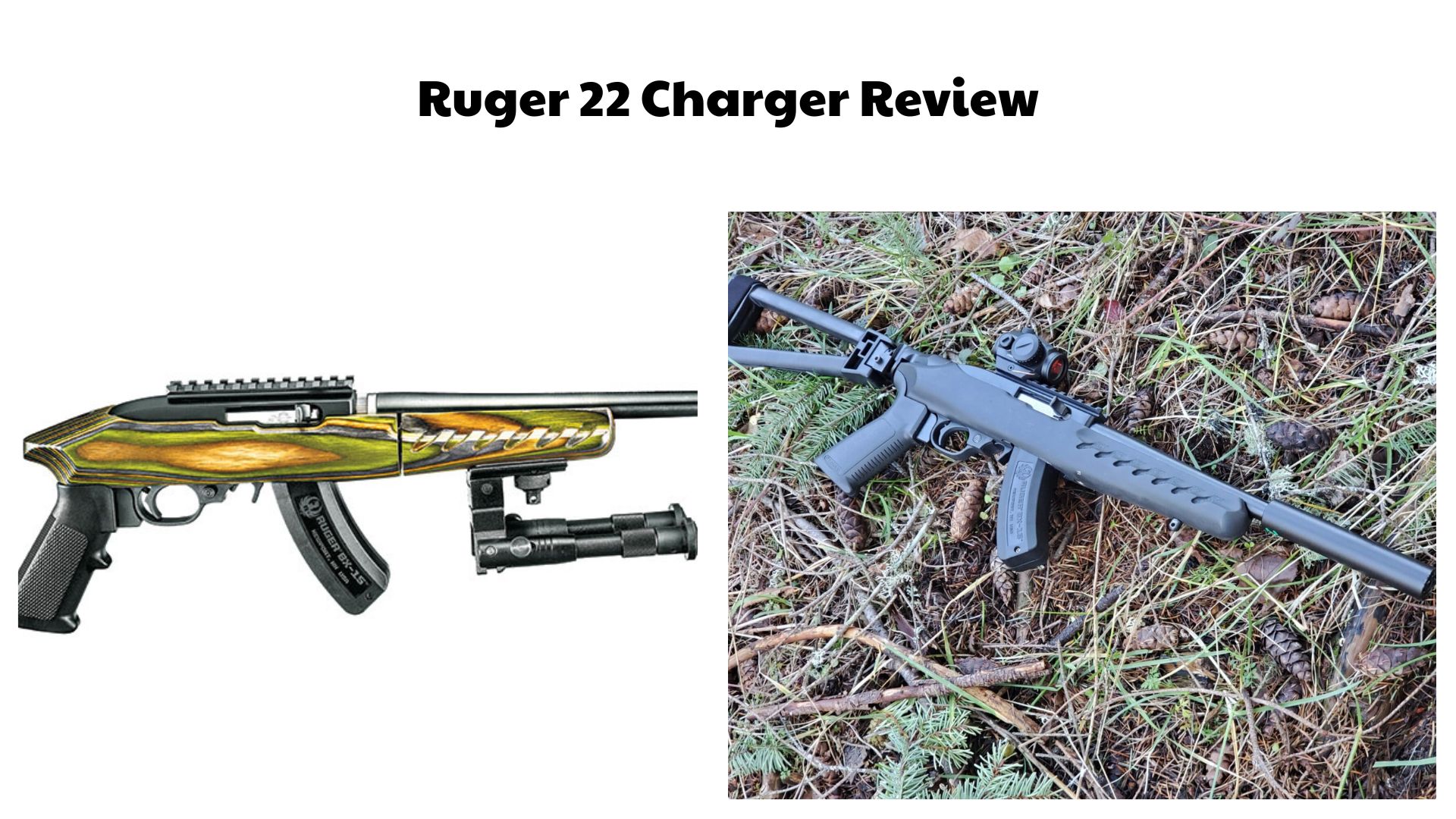

The Ruger 22 Charger is a compact .22 LR semi-automatic firearm designed in a “backpack pistol” format, offering the performance of a rimfire platform in an ultra-portable package. Built on the proven Ruger 10/22 action, it delivers familiarity, reliability, and versatility in a significantly shortened form factor intended for outdoor and survival use.
Its popularity has grown among hikers, campers, and preparedness-focused shooters due to its lightweight design, modular customization options, and compatibility with widely available .22 LR ammunition. The concept of a “backpack gun” refers to a compact firearm that can be easily stored and transported in a pack for emergency, hunting, or recreational use.
This review is intended for a wide range of users, including backpackers and hikers looking for lightweight protection or small game capability, survival and prepper communities building emergency kits, recreational shooters seeking an affordable plinking platform, small game hunters, and rimfire enthusiasts who value customization and low-cost shooting.
Overview of the Ruger 22 Charger
History and Development of the Ruger 22 Charger Platform
The Ruger 22 Charger is derived from the iconic Ruger 10/22 rifle platform, one of the most successful rimfire designs in history. Ruger originally introduced the Charger concept as a compact pistol variant of the 10/22, aimed at providing a portable, accurate rimfire option.
After its initial release, the platform saw periods of discontinuation and later reintroduction due to renewed interest in tactical rimfire firearms and backpack-friendly survival weapons. Modern versions of the 22 Charger reflect significant improvements in ergonomics, optics integration, and accessory compatibility.
Today’s Charger has evolved into a modern tactical rimfire pistol that bridges the gap between recreational shooting and practical field utility.
Design Philosophy – Compact Power and Rimfire Efficiency
The Ruger 22 Charger is designed around the idea of delivering maximum portability without sacrificing the inherent reliability of the 10/22 system. It prioritizes lightweight construction, modularity, and ease of transport while maintaining the efficiency and low recoil characteristics of the .22 LR cartridge.
The platform is intended for users who value compact storage, easy handling, and versatile field performance over traditional rifle ergonomics.
How the 22 Charger Differs From the Ruger 10/22 Rifle
While both platforms share the same operating system, the key difference lies in form factor and intended use. The Ruger 10/22 is a full-length rifle designed for stable shoulder-fired accuracy, whereas the 22 Charger is configured as a compact pistol or braced firearm.
The Charger eliminates traditional rifle stocks in favor of pistol grips or stabilizing braces, significantly reducing overall length. It also typically relies on optics rather than iron sights and is optimized for portability and close-to-medium range shooting rather than traditional rifle marksmanship.
Ruger 22 Charger Specifications
Core Technical Specs
The Ruger 22 Charger is chambered in .22 LR and operates using a semi-automatic blowback system. Most configurations feature an approximate 8-inch threaded barrel, although variations exist depending on the model and generation.
Overall length is typically around 17 inches, making it extremely compact compared to standard rifles. Weight generally ranges from 3 to 5 pounds depending on attachments, optics, and accessories installed.
Magazine System and Capacity
The platform uses Ruger’s BX-series magazines, including the standard BX-15 and higher-capacity BX-25 options. One of its strengths is full compatibility with Ruger 10/22 magazines, giving users access to a wide and affordable magazine ecosystem.
Barrel, Threading, and Suppressor Compatibility
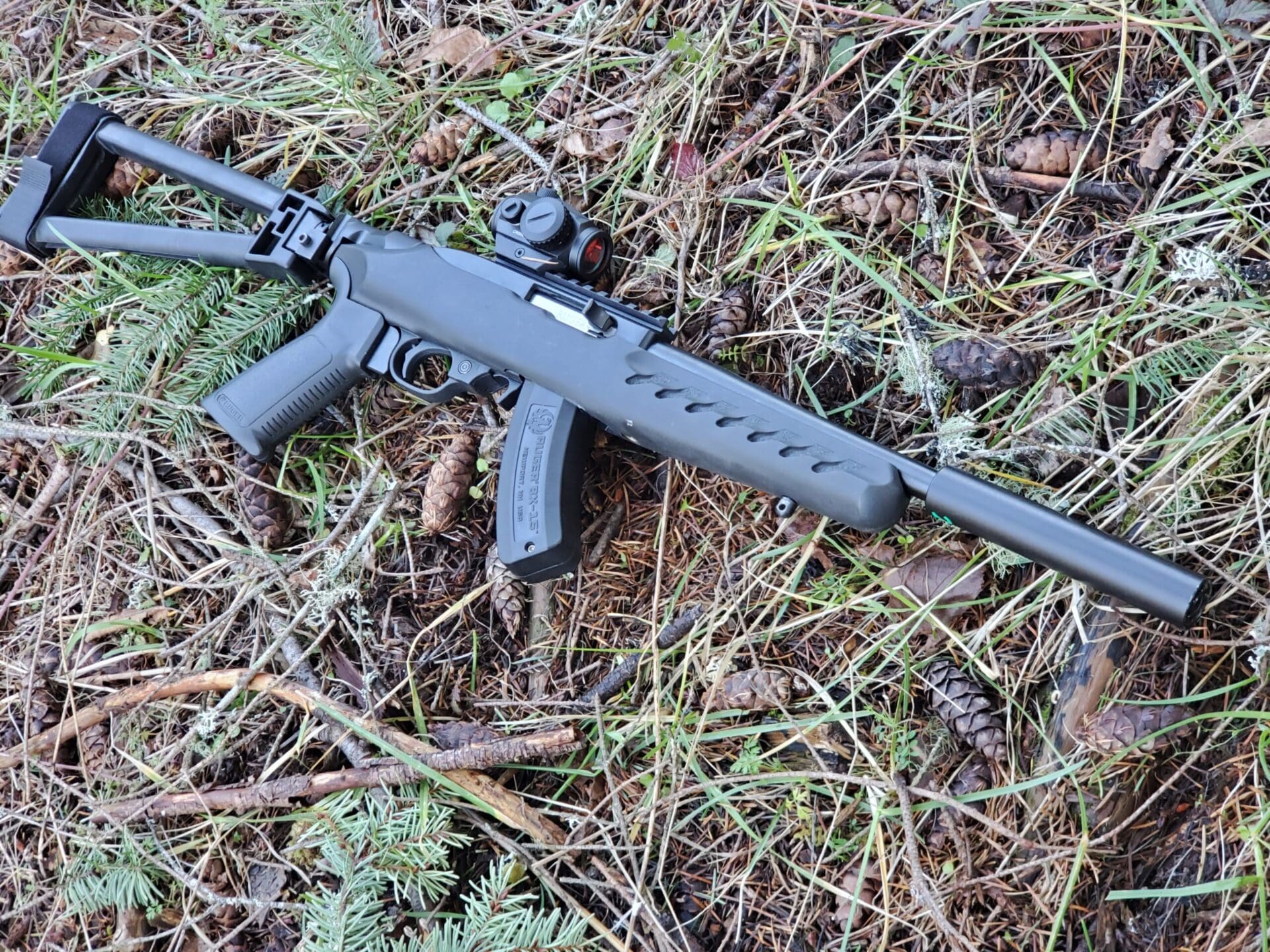
Most modern Ruger 22 Charger models come with a threaded barrel, making them compatible with suppressors and muzzle devices. This enhances its appeal for quiet shooting applications, especially when paired with subsonic .22 LR ammunition.
Frame, Grip, and Stock/Brace Configurations
The Charger is available in multiple configurations, including pistol grip setups and versions compatible with stabilizing braces or aftermarket chassis systems. This modular approach allows users to tailor the firearm for backpacking, range use, or more stable supported shooting positions.
Design and Build Quality
Ruger 10/22-Based Action and Reliability Foundation
The Ruger 22 Charger inherits its reliability from the proven 10/22 action, which has earned a strong reputation for consistent cycling and durability over decades of use. This foundation makes the Charger one of the more dependable rimfire pistols in its category.
Cold Hammer-Forged Barrel Performance Benefits
The cold hammer-forged barrel used in most Charger models contributes to improved barrel life and consistent accuracy. This manufacturing process enhances durability while maintaining tight tolerances suitable for precision rimfire shooting.
Rail System and Optics Mounting Setup
Unlike traditional rifles, the Ruger 22 Charger does not include iron sights in most configurations. Instead, it features a full-length Picatinny rail that requires the use of optics such as red dots or compact scopes.
This design emphasizes modern shooting setups and allows users to optimize target acquisition based on personal preference.
Bipod Mount and Stability Features
Many Charger configurations include a bipod mount or compatibility with accessory rails, allowing for stabilized shooting positions. This significantly improves accuracy when shooting from rested positions in the field.
Takedown Model Design Advantages
Takedown versions of the Ruger 22 Charger enhance portability by allowing the firearm to be quickly separated into two compact components. This makes storage in backpacks or survival kits even more practical.
Ergonomics and Handling
AR-Style Grip and Control Layout
The Ruger 22 Charger typically uses an AR-style pistol grip, offering familiar ergonomics for shooters accustomed to modern rifle platforms. This improves control, comfort, and handling during extended shooting sessions.
Balance and Weight Distribution for Field Use
Due to its compact size and lightweight construction, the Charger is highly portable but may feel front-heavy depending on optic and accessory setup. Proper configuration is important to maintain balance during use.
Backpack Carry Considerations and Draw Speed
The primary advantage of the Charger is its ability to be carried in a backpack or compact storage case. This makes it ideal for emergency preparedness or hiking scenarios where portability is essential.
Shooting Positions (Bipod, Rested, Freehand)
While capable of being fired freehand, the Ruger 22 Charger performs best when used with a bipod or supported rest. This improves stability and accuracy, especially during longer shooting sessions.
Optics and Accessories
Why Optics Are Mandatory on the 22 Charger
Since most configurations do not include iron sights, optics are essential for effective use. Red dots and compact scopes significantly enhance target acquisition and overall shooting performance.
Best Red Dot and Scope Options
Popular optic choices include compact red dot sights for close-range shooting and lightweight scopes for extended accuracy. The choice depends on whether the user prioritizes speed or precision.
Popular Upgrades and Aftermarket Enhancements
The Ruger 22 Charger benefits from a strong aftermarket ecosystem. Common upgrades include BX-Trigger enhancements for improved trigger feel, stabilizing braces and folding adapters for portability, upgraded charging handles and bolt components for smoother operation, and full chassis systems for improved ergonomics and modularity.
Suppressor Compatibility and Subsonic Performance
With a threaded barrel and .22 LR chambering, the Charger performs exceptionally well with suppressors. When paired with subsonic ammunition, it becomes a very quiet and effective platform for field or range use.
Accuracy and Shooting Performance
Practical Accuracy at 25–50 Yards
The Ruger 22 Charger delivers solid practical accuracy within typical rimfire engagement distances of 25 to 50 yards. While it is not designed as a precision benchrest rifle, it is more than capable of producing consistent groupings when paired with quality ammunition and a stable shooting platform.
Most shooters find that the platform performs best when supported by a bipod or rest, where its compact barrel and optics setup can be fully utilized for controlled, repeatable shots.
Role of Barrel Quality in Precision Shooting
Barrel quality plays a significant role in the Charger’s accuracy. The cold hammer-forged barrel used in most models contributes to consistent harmonics and long-term durability.
Combined with the proven Ruger 10/22 action, the barrel provides a stable foundation for predictable shot placement, especially at mid-range distances.
Ammo Sensitivity and Performance Variations
Like most .22 LR firearms, the Ruger 22 Charger can show variation in performance depending on ammunition type. Standard velocity, high velocity, and subsonic loads may produce slightly different accuracy results and cycling reliability.
Higher-quality ammunition generally produces tighter groupings and more consistent cycling, while bulk ammo may introduce minor variability in performance.
Performance With Suppressed vs Unsuppressed Setup
When used with a suppressor, the Ruger 22 Charger becomes significantly quieter, especially when paired with subsonic ammunition. Suppressed shooting can also slightly affect point of impact due to added weight and barrel harmonics.
Unsuppressed setups typically offer slightly more predictable ballistics, while suppressed configurations prioritize noise reduction and recoil reduction over absolute precision consistency.
Real-World Shooting Impressions
In real-world use, the Ruger 22 Charger is widely regarded as a fun, practical, and highly controllable rimfire platform. Shooters consistently highlight its ease of use, low recoil, and ability to deliver accurate fire from compact shooting positions in field environments.
Recoil and Shooting Experience
Extremely Low Recoil Characteristics
The .22 LR cartridge produces extremely low recoil, and the Ruger 22 Charger takes full advantage of this. The result is a very soft-shooting platform that allows for extended range sessions without fatigue.
Fast Follow-Up Shot Capability
Due to minimal recoil and simple blowback operation, the Charger allows for extremely fast follow-up shots. This makes it ideal for plinking, small game hunting, and training scenarios where rapid target engagement is beneficial.
Stability With Bipod or Rested Shooting
When supported by a bipod or stable rest, the Ruger 22 Charger becomes highly controllable and easy to keep on target. The platform benefits significantly from added stability, especially during longer shooting strings.
Training Benefits for New Shooters
The low recoil and simple operation make the Charger an excellent training tool for new shooters. It helps develop fundamental skills such as trigger control, sight alignment, and breathing without the intimidation of larger calibers.
Reliability and Maintenance
Overall Reliability Based on 10/22 Platform
The Ruger 22 Charger inherits its reliability from the Ruger 10/22 platform, which is widely respected for its dependable cycling and long service life. This makes the Charger generally reliable when properly maintained and fed quality ammunition.
Ammo Sensitivity and Feeding Behavior
As with most rimfire firearms, the Charger can be sensitive to ammunition type and cleanliness. Certain bulk .22 LR rounds may produce occasional feeding or ejection inconsistencies, especially in dirty or heavily suppressed configurations.
Suppressor Fouling and Cleaning Requirements
Using a suppressor increases carbon and lead fouling, which can accelerate buildup in the action and barrel. Regular cleaning becomes more important when shooting suppressed to maintain consistent reliability.
Maintenance Best Practices for Field Use
Routine maintenance includes cleaning the bolt, chamber, and barrel, as well as ensuring the magazine is free of debris. Light lubrication and periodic inspection help maintain long-term performance, especially in outdoor or backpacking environments.
Size, Weight, and Portability
Compact Backpack-Friendly Dimensions
The Ruger 22 Charger is designed specifically for portability, with compact dimensions that allow it to fit easily into backpacks or compact storage cases. This makes it ideal for hiking, camping, and emergency preparedness scenarios.
Takedown Model Portability Advantages
Takedown models significantly enhance portability by allowing the firearm to be separated into two smaller components. This reduces storage footprint and makes packing even more efficient for travel or survival kits.
Ease of Storage in Packs and Survival Kits
The lightweight design and modular configuration make the Charger easy to store in bug-out bags or outdoor gear kits. It is often chosen specifically for its ability to be carried discreetly without adding excessive weight.
Trade-Offs Between Size and Stability
While compact size is a major advantage, it can reduce inherent stability compared to full-length rifles. Users often compensate for this with bipods, braces, or shooting rests to maximize accuracy and control.
Ruger 22 Charger Variants
Standard Ruger 22 Charger Models
Standard models feature a pistol grip configuration with a Picatinny rail system for optics mounting. These versions prioritize simplicity and affordability while maintaining full compatibility with the 10/22 ecosystem.
Takedown Version Overview
The takedown variant allows the firearm to be quickly disassembled for compact storage. This version is especially popular among backpackers and survival-focused users due to its enhanced portability.
Threaded Barrel vs Non-Threaded Versions
Threaded barrel models support suppressors and muzzle devices, making them more versatile for quiet shooting applications. Non-threaded versions are simpler but less flexible in terms of accessory use.
Discontinued and Limited Editions
Over the years, Ruger has released and discontinued various Charger configurations, including limited editions and special chassis-based models. These variants often differ in furniture, rails, and factory-installed accessories.
Pros and Cons of the Ruger 22 Charger
Main Advantages
The Ruger 22 Charger offers several key advantages, including its extremely compact and lightweight design, making it ideal for backpack carry and field use. Its strong aftermarket ecosystem allows for extensive customization, from triggers to chassis systems.
The platform is also very easy to shoot due to minimal recoil, and it benefits from affordable .22 LR ammunition. Additionally, many models include threaded barrels for suppressor compatibility, further enhancing versatility.
Main Disadvantages
Despite its strengths, the Charger has some limitations. It lacks iron sights in most configurations, meaning optics are required for use. Some setups can show minor ammo sensitivity depending on configuration and cleanliness.
Its ergonomics are less natural compared to traditional rifles, especially for users accustomed to shoulder-fired platforms. It also lacks the stopping power of centerfire firearms, limiting its defensive applications.
Finally, adding accessories such as optics, braces, and bipods can increase both weight and overall cost, reducing some of its simplicity and affordability advantages.
Comparison With Similar Platforms
Ruger 22 Charger vs Ruger 10/22 Rifle
The Ruger 22 Charger and Ruger 10/22 share the same core operating system, but they serve very different roles. The 10/22 is a traditional shoulder-fired rifle designed for stability, precision, and general-purpose shooting, while the Charger is a compact pistol-style platform optimized for portability and backpack carry.
In practical use, the 10/22 offers better inherent stability and longer sight radius (or optic mounting consistency), making it more suitable for consistent precision shooting. The Charger, on the other hand, sacrifices some stability for extreme compactness, making it ideal for field carry and survival kits.
Ruger 22 Charger vs Kel-Tec Sub-2000
The Kel-Tec Sub-2000 is a folding 9mm carbine, while the Ruger 22 Charger is a .22 LR rimfire platform. The Sub-2000 provides significantly more defensive capability due to its centerfire cartridge, but it is larger, heavier, and more expensive to shoot.
The Charger wins in portability, simplicity, and ammunition cost, while the Sub-2000 offers superior stopping power and defensive utility. These platforms serve fundamentally different purposes despite overlapping in the “compact survival firearm” category.
Ruger 22 Charger vs AR-15 .22 LR Platforms
AR-style .22 LR platforms offer a more traditional rifle experience, with better ergonomics, full-length stocks, and improved stability. They are often more comfortable for sustained shooting and training.
However, the Ruger 22 Charger is significantly more compact and easier to pack. While AR-22 platforms excel in training realism and handling, the Charger prioritizes minimal size and backpack portability over rifle-like ergonomics.
Ruger 22 Charger vs Survival Rifles
Dedicated survival rifles often focus on simplicity, ruggedness, and multi-caliber capability. Compared to these, the Ruger 22 Charger stands out for its modularity and widespread aftermarket support, but it lacks the multi-caliber versatility found in some survival rifle systems.
The Charger is better suited for lightweight, .22 LR-specific roles such as small game hunting and recreational survival use, rather than multi-role emergency weapon systems.
Real User Feedback and Community Opinions
Professional Reviewers (GunMade, Pew Pew Tactical, etc.)
Professional reviewers consistently highlight the Ruger 22 Charger as a highly capable niche platform within the rimfire category. Publications like GunMade and Pew Pew Tactical emphasize its accuracy potential, modular design, and strong performance as a backpack firearm, while also noting the need for optics and occasional ammo sensitivity.
Reddit and Firearms Community Discussions
Community discussions often focus on the Charger’s practicality as a “SHTF” or survival gun. Many users appreciate its lightweight design and compatibility with the 10/22 ecosystem, while others point out its awkward ergonomics compared to traditional rifles and the reliance on optics for effective use.
Backcountry Users and Survival Shooters
Backcountry users frequently value the Charger for its portability and ability to handle small game at short-to-medium distances. It is commonly praised as a lightweight “insurance gun” for hiking and camping trips where pack space is limited.
Common Praise and Criticism Patterns
Common praise includes its extreme compactness, low recoil, affordability of ammunition, and strong aftermarket support. Criticism typically centers on its lack of iron sights, less natural handling compared to rifles, and limited effectiveness for defensive scenarios.
Practical Use Cases
Backpacking and Outdoor Carry Use
The Ruger 22 Charger is most commonly used as a backpack firearm for outdoor activities. Its compact size makes it easy to store in survival kits or hiking packs, offering a lightweight option for emergency or opportunistic shooting needs.
Small Game Hunting Applications
In small game hunting scenarios, the Charger performs effectively at close to moderate distances. Its low recoil and compatibility with a variety of .22 LR ammunition make it suitable for hunting small animals where precision and quiet operation are important.
Plinking and Recreational Shooting
The platform excels as a recreational shooting tool due to its affordability and ease of use. High-capacity magazines and minimal recoil make it ideal for extended plinking sessions at the range.
Survival and Emergency Preparedness Role
In survival contexts, the Charger is valued as a lightweight, compact firearm that can be stored in emergency kits. While it lacks the stopping power of centerfire weapons, it provides a practical solution for small game procurement and basic defensive utility in remote environments.
Training Platform for New Shooters
The low recoil and simple operation make the Charger an excellent training firearm. It helps new shooters develop fundamental skills such as trigger discipline, sight alignment, and target acquisition in a low-cost and low-recoil environment.
Final Verdict
Who Should Buy the Ruger 22 Charger
The Ruger 22 Charger is best suited for users who prioritize portability, modularity, and low-cost shooting. It is an excellent choice for backpackers, survival enthusiasts, and recreational shooters who want a compact rimfire platform with strong customization potential.
Who Should Avoid It
This platform may not be ideal for users seeking a traditional rifle experience, defensive stopping power, or out-of-the-box ergonomic comfort. It also requires optics and may not suit those who prefer iron sight simplicity.
Overall Performance Summary
Overall, the Ruger 22 Charger delivers strong performance as a niche compact rimfire firearm. It combines the reliability of the 10/22 platform with extreme portability, making it a versatile tool for specific outdoor and recreational applications.
Final Assessment: Is It the Best Backpack Gun?
While “best” depends on use case, the Ruger 22 Charger remains one of the most popular and capable backpack-style rimfire firearms available. Its balance of size, cost efficiency, and customization makes it a strong contender in the backpack gun category, especially for users who understand its intended role and limitations.
Frequently Asked Questions (FAQ) – Ruger 22 Charger
1. What is the Ruger 22 Charger designed for?
The Ruger 22 Charger is designed as a compact, portable .22 LR firearm intended for backpacking, small game hunting, recreational shooting, and survival use. It prioritizes lightweight design and modularity over traditional rifle ergonomics, making it ideal for field carry and emergency preparedness kits.
2. Is the Ruger 22 Charger a pistol or a rifle?
The Ruger 22 Charger is classified as a pistol in its standard configuration. However, certain versions may be fitted with stabilizing braces or chassis systems that blur the line between pistol and compact rifle-style platforms, depending on local laws.
3. Is the Ruger 22 Charger based on the Ruger 10/22?
Yes, the Charger is built on the Ruger 10/22 action, one of the most proven rimfire systems ever created. This gives it a strong foundation of reliability, parts compatibility, and aftermarket support.
4. How accurate is the Ruger 22 Charger?
The Ruger 22 Charger is capable of good practical accuracy at 25–50 yards, especially when used with a stable rest or bipod. While not a precision rifle, it performs well for plinking, small game hunting, and general field use when paired with quality ammunition.
5. Does the Ruger 22 Charger require an optic?
Yes, most configurations require an optic because the Charger typically does not include iron sights. Users commonly install red dot sights or compact scopes for effective aiming and target acquisition.
6. What caliber does the Ruger 22 Charger use?
The Ruger 22 Charger is chambered in .22 Long Rifle (.22 LR), one of the most affordable and widely available ammunition types in the world, making it ideal for high-volume shooting.
7. Is the Ruger 22 Charger good for beginners?
Yes, it is often recommended for beginners due to its extremely low recoil, simple operation, and affordable ammunition. However, the lack of iron sights may require new shooters to become comfortable with optics early on.
8. Is the Ruger 22 Charger good for self-defense?
While it can be used in emergencies, the Ruger 22 Charger is not ideal for self-defense due to its .22 LR caliber. It is primarily designed for recreational, hunting, and survival utility rather than defensive stopping power.
9. How reliable is the Ruger 22 Charger?
It is generally very reliable due to its Ruger 10/22-based action. However, like most .22 LR firearms, it can be somewhat sensitive to ammunition quality and may require more frequent cleaning when used heavily or suppressed.
10. Does the Ruger 22 Charger jam often?
Jamming is uncommon when using quality ammunition and a clean firearm. Most issues are related to low-quality bulk ammo or lack of maintenance rather than design flaws.
11. What magazines does the Ruger 22 Charger use?
It uses Ruger BX-series magazines, including BX-15 and BX-25 magazines. It is also compatible with most Ruger 10/22 magazines, which increases flexibility and availability.
12. Is the Ruger 22 Charger good for backpacking?
Yes, it is specifically popular among backpackers due to its compact size, lightweight design, and ease of storage in survival packs or hiking gear.
13. Can you hunt with the Ruger 22 Charger?
Yes, it is suitable for small game hunting such as squirrels, rabbits, and similar animals at close to moderate distances, depending on shooter skill and ammunition choice.
14. Can the Ruger 22 Charger be suppressed?
Yes, many models come with threaded barrels that allow suppressor installation. When paired with subsonic .22 LR ammunition, it becomes extremely quiet.
15. What is the barrel length of the Ruger 22 Charger?
Most models feature an approximately 8-inch barrel, although variations exist depending on configuration and model generation.
16. Is the Ruger 22 Charger accurate at long distances?
It is not intended for long-range shooting. Its effective range is typically within 25–50 yards for practical accuracy, depending on optics and ammunition.
17. What is the weight of the Ruger 22 Charger?
It typically weighs between 3 and 5 pounds depending on attachments such as optics, bipods, and braces.
18. Does it have iron sights?
Most models do not include iron sights and instead feature a Picatinny rail system for optics mounting.
19. Is the Ruger 22 Charger good for survival situations?
Yes, it is often used in survival kits due to its portability, ammo efficiency, and ability to harvest small game in emergency situations.
20. What is the difference between Charger and 10/22?
The 10/22 is a full-length rifle designed for stability and accuracy, while the Charger is a compact pistol-style firearm designed for portability and backpack use.
21. Can the Ruger 22 Charger be used with a brace?
Yes, many configurations support stabilizing braces, improving control and stability during shooting.
22. Is the Ruger 22 Charger legal everywhere?
Its legality depends on local firearm laws, especially regarding braces and pistol classifications. Users must always check regional regulations before purchase or modification.
23. What is the best ammo for Ruger 22 Charger?
High-quality .22 LR ammunition such as CCI Mini-Mag or similar loads typically provides the most reliable performance and consistent cycling.
24. Does it work with subsonic ammo?
Yes, it works well with subsonic ammunition, especially when suppressed, though cycling reliability may vary depending on load strength.
25. Is the Ruger 22 Charger loud?
Without a suppressor, it produces typical .22 LR noise levels. With a suppressor and subsonic ammo, it becomes significantly quieter.
26. Is it good for target shooting?
Yes, it is excellent for casual target shooting and plinking due to low recoil and inexpensive ammunition.
27. How easy is it to clean?
It is relatively easy to clean, especially since it shares the simple blowback system of the Ruger 10/22 platform.
28. How often should it be cleaned?
Cleaning frequency depends on use, but rimfire firearms generally benefit from cleaning after heavy use or every few hundred rounds, especially when suppressed.
29. Does it require lubrication?
Yes, light lubrication is recommended to ensure smooth cycling and reduce wear on moving parts.
30. Is the Ruger 22 Charger customizable?
Yes, it has a large aftermarket ecosystem including triggers, stocks, chassis systems, optics mounts, and internal upgrades.
31. What is the best optic for it?
Compact red dot sights are most popular for fast target acquisition, while small scopes are used for more precision-focused shooting.
32. Is it good for kids or youth shooters?
Yes, under supervision, it is often used for youth training due to low recoil and simple operation, though optics may require instruction.
33. Can it be used one-handed?
Technically yes, but it is not designed for one-handed use and performs best with two-handed control or supported shooting.
34. Is it better than a rifle?
It depends on use case. A rifle offers better stability and accuracy, while the Charger offers superior portability and compact storage.
35. Is it good for bug-out bags?
Yes, it is commonly used in bug-out bags due to its compact size, lightweight design, and survival utility.
36. Does it have recoil?
Recoil is extremely minimal due to the .22 LR cartridge, making it very easy to control.
37. Is it good for fast shooting?
Yes, low recoil allows for quick follow-up shots and rapid target engagement.
38. What are common upgrades?
Popular upgrades include BX triggers, improved charging handles, stabilizing braces, chassis systems, and upgraded optics.
39. Is it expensive to run?
No, it is very affordable to operate due to the low cost of .22 LR ammunition.
40. What is its effective range?
Its practical effective range is typically 25–50 yards, depending on shooter skill and setup.
41. Does it work in cold weather?
Yes, but rimfire ammunition performance can be slightly affected in extreme cold conditions.
42. Is it durable?
Yes, it is built on the durable Ruger 10/22 platform, known for long-term reliability.
43. Can it handle heavy use?
Yes, with proper maintenance, it can handle high round counts over time.
44. Does it rust easily?
It is resistant to rust under normal conditions, especially with proper cleaning and storage.
45. Is it better than AR-15 .22 platforms?
It depends on priorities. AR-22 platforms offer better ergonomics, while the Charger offers superior compactness.
46. What is its biggest advantage?
Its biggest advantage is extreme portability combined with proven 10/22 reliability.
47. What is its biggest disadvantage?
Its biggest disadvantage is the lack of iron sights and reliance on optics.
48. Is it worth buying in 2026?
Yes, it remains relevant due to its versatility, affordability, and strong aftermarket ecosystem.
49. Who should avoid it?
Users needing defensive stopping power or traditional rifle ergonomics may find it unsuitable.
50. What is the final verdict?
The Ruger 22 Charger is one of the most capable backpack-style rimfire platforms, offering a strong balance of portability, customization, and shooting enjoyment when used within its intended role.
Read more: