
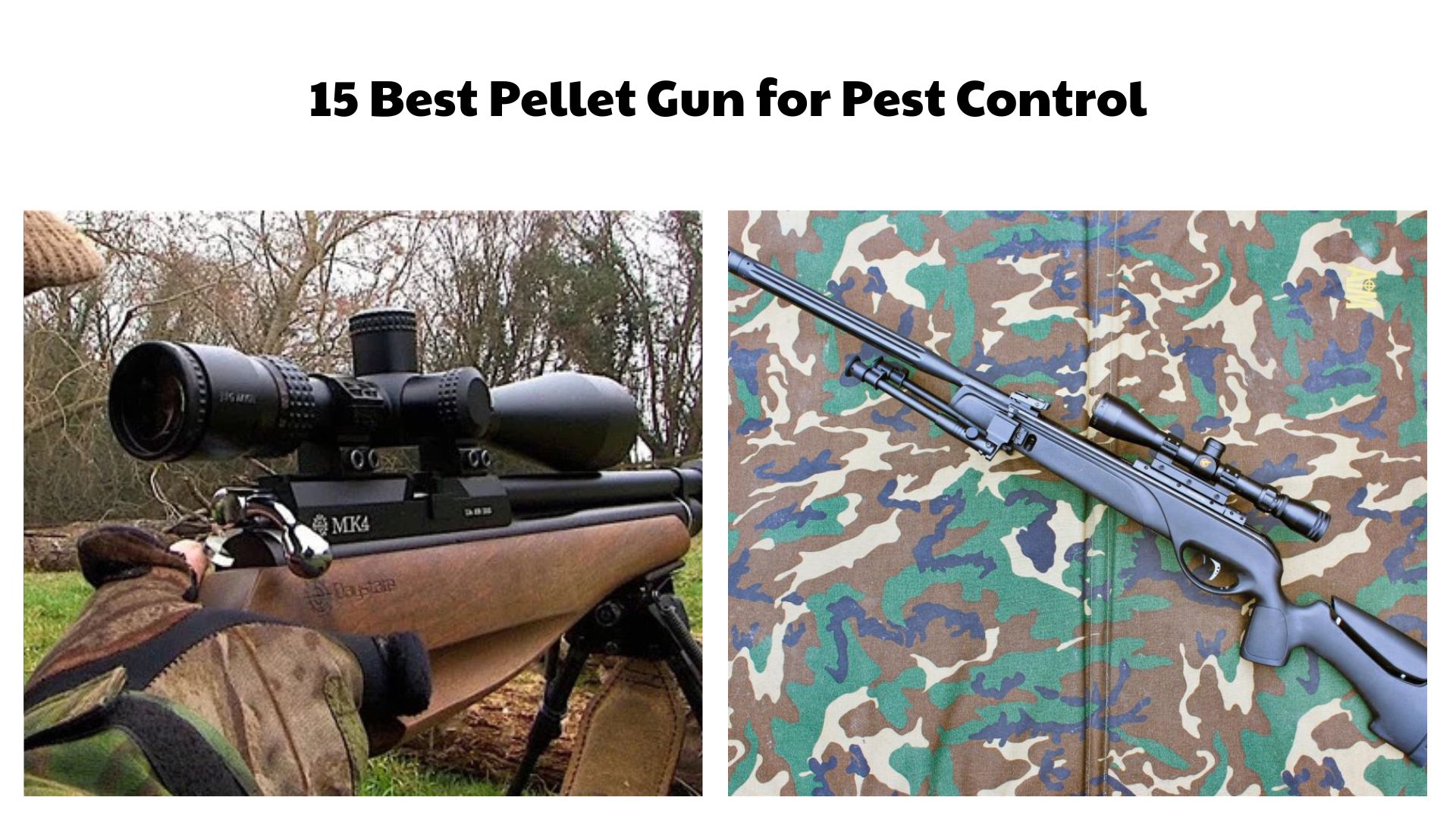

Choosing the best pellet gun for pest control requires a careful balance between power, precision, and stealth. Pest control situations are very different from recreational shooting because targets are often small, fast-moving, and located in sensitive environments such as farms, gardens, barns, or residential areas. A good pellet gun must deliver consistent accuracy, enough energy for ethical pest elimination, and low noise to avoid disturbing surroundings. Modern air rifles have become highly advanced, offering PCP, break-barrel, and gas-piston systems that can handle a wide range of pest control scenarios. This guide presents the top 15 pellet guns trusted by experienced shooters for effective and responsible pest management.
15 Best Pellet Gun for Pest Control
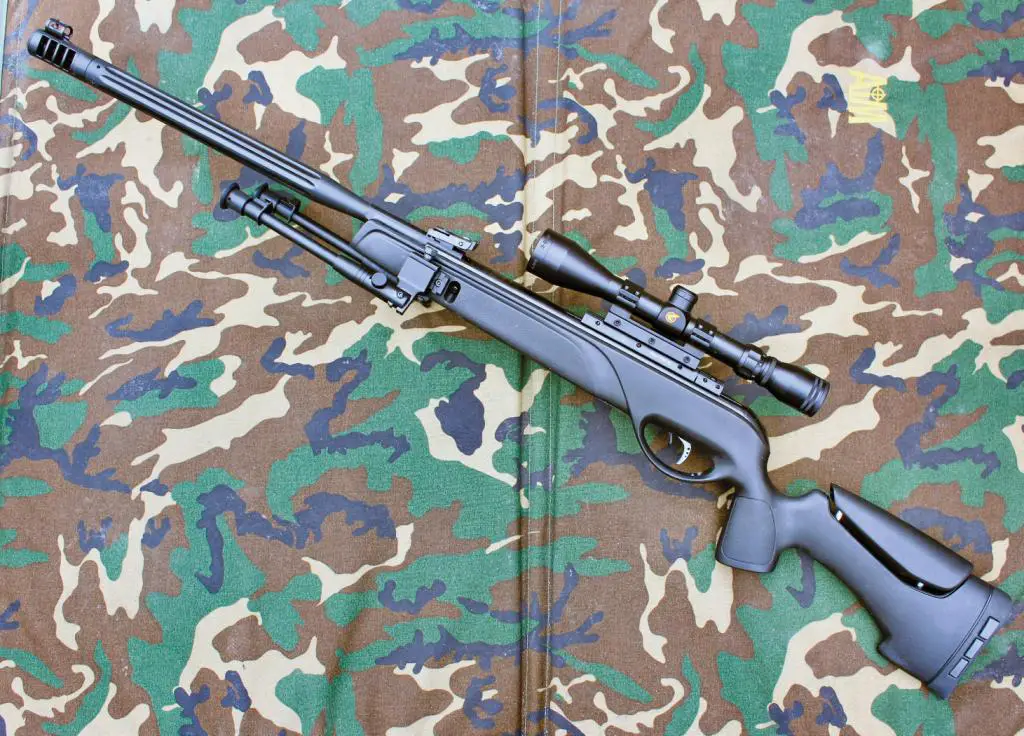
1. Gamo Swarm Magnum 10X GEN3i (.22)
The Gamo Swarm Magnum 10X GEN3i is one of the most powerful break-barrel air rifles available for pest control. It is designed for users who need strong impact energy combined with fast follow-up shots. The 10-shot rotary magazine system allows shooters to fire multiple rounds without reloading after each shot, which is extremely useful when dealing with multiple pests in a short period of time.
In practical use, this rifle delivers high muzzle velocity and excellent penetration, making it suitable for larger pests such as groundhogs, raccoons, and fox squirrels. Despite its power, the rifle remains relatively manageable due to its ergonomic stock design and shock absorption system. However, it requires practice to control recoil effectively, especially for beginners.
Overall, this model is best suited for experienced shooters who want maximum power in a spring-based system without relying on external air tanks.
2. Benjamin Marauder .22 PCP Air Rifle
The Benjamin Marauder is widely respected in the airgun community for its precision and consistency. As a PCP (Pre-Charged Pneumatic) rifle, it offers smooth, recoil-free shooting, which significantly improves accuracy in pest control scenarios. This makes it a strong candidate for the best pellet gun for pest control in controlled environments.
One of its strongest features is its built-in shrouded barrel, which reduces noise levels significantly. This allows shooters to take multiple shots without alarming nearby pests. The rifle also features a highly adjustable trigger system, enabling precise control over shot release.
In the field, the Marauder performs exceptionally well at medium distances. It is especially effective for rodents, squirrels, and small rabbits, where shot placement is more important than raw power.
3. Umarex Gauntlet 2 PCP Air Rifle
The Umarex Gauntlet 2 is designed as a budget-friendly yet high-performance PCP rifle. It includes a regulated air system, which ensures that each shot maintains consistent velocity. This consistency is critical for pest control, where accuracy must remain stable across multiple shots.
The rifle also offers a high shot count per fill, making it suitable for longer pest control sessions without frequent refilling. Its modular design allows easy maintenance and customization, which is beneficial for long-term use.
Its balance of affordability, power, and consistency makes it one of the most practical choices for both beginners and intermediate shooters.
4. Hatsan Flash QE .22 PCP Air Rifle
The Hatsan Flash QE is a lightweight PCP rifle that delivers impressive power in a compact frame. It is designed for shooters who need mobility without sacrificing performance. The QuietEnergy barrel system significantly reduces noise, making it ideal for discreet pest control in residential or semi-urban environments.
Its lightweight construction allows for easy handling during extended use, especially in fields or barns where movement is required. Despite its compact size, it produces enough energy to handle medium-sized pests effectively.
This model is particularly suitable for users who want a balance between portability and performance.
5. Gamo Whisper Fusion Mach 1
The Gamo Whisper Fusion Mach 1 is a gas piston air rifle designed for quiet and efficient pest control. It uses Whisper Fusion sound suppression technology, which significantly reduces firing noise. This is a key advantage when operating in areas where silence is important.
The IGT (Inert Gas Technology) system replaces traditional spring mechanisms, resulting in smoother cocking and reduced vibration. This improves accuracy and makes follow-up shots easier to control.
It is best suited for small to medium pests such as rats, squirrels, and birds, especially in environments where noise control is a priority.
6. Crosman Optimus .22 Break Barrel Rifle
The Crosman Optimus is a classic break-barrel air rifle known for its reliability and ease of use. It is often recommended for beginners entering the world of pest control because it does not require external air systems or complex adjustments. Its straightforward design makes it a practical tool for everyday use in barns, gardens, and rural environments.
In terms of performance, the Optimus delivers consistent power suitable for small to medium pests. It performs best at short to moderate distances, where shot placement is more important than extreme velocity. The rifle’s wooden or synthetic stock provides good stability, helping shooters maintain control during firing.
While it may not have advanced features like PCP systems, its simplicity and durability make it a dependable long-term option for basic pest control tasks.
7. Diana RWS 34 Classic Break Barrel
The Diana RWS 34 Classic is a German-engineered air rifle known for its precision and craftsmanship. It is widely respected among experienced shooters who value consistency and build quality in pest control applications.
This rifle offers smooth cocking and a well-balanced shooting experience, making it easier to maintain accuracy over multiple shots. Its internal mechanics are designed for long-term durability, which reduces wear even with frequent use.
In pest control situations, it performs best against squirrels, rats, and similar-sized pests. Its accuracy and reliability make it a trusted tool for consistent field use.
8. Hatsan 95 Vortex QE Gas Piston Rifle
The Hatsan 95 Vortex QE uses a gas piston system instead of a traditional spring, resulting in smoother operation and reduced vibration. This makes it easier to achieve consistent accuracy, especially during repeated shooting sessions.
The QuietEnergy barrel system helps reduce noise output, which is useful for pest control in semi-urban or sensitive environments. It also delivers strong power output, making it suitable for medium-sized pests that require higher energy impact.
Although heavier than some models, its stability and power make it a solid choice for experienced users who need dependable field performance.
9. Benjamin Trail NP2 .22 Gas Piston Rifle
The Benjamin Trail NP2 is designed with Nitro Piston 2 technology, which improves shot consistency and reduces recoil compared to traditional spring rifles. This makes it more comfortable to shoot and easier to control during pest management tasks.
Its improved trigger system enhances shot precision, which is important when targeting small and fast-moving pests. The rifle also offers good energy output, making it effective at moderate ranges.
It is a strong all-around option for users who want a balance of power, comfort, and accuracy in pest control situations.
10. Ruger Blackhawk Elite .177 Break Barrel Rifle
The Ruger Blackhawk Elite is a lightweight and affordable break-barrel rifle suitable for beginners. It is often used for small pest control tasks such as birds, rats, and garden pests. Its simplicity makes it easy to operate and maintain.
Despite its entry-level design, it delivers respectable accuracy when properly zeroed. The included scope helps improve targeting at short distances, which is typical in pest control scenarios.
It is best suited for casual users who need a reliable and low-cost solution for basic pest issues.
11. Benjamin Trail Nitro Piston 2 .22 Rifle
This model is an upgraded version of the Nitro Piston series, offering improved smoothness and reduced vibration. It is designed for users who want better accuracy without switching to PCP systems.
The gas piston technology ensures consistent power delivery, which is important for maintaining accuracy during repeated shots. It is effective against small to medium pests in both rural and suburban environments.
Its durable build and improved trigger system make it a dependable choice for long-term pest control use.
12. Stoeger XM1 PCP Air Rifle
The Stoeger XM1 is a modern PCP air rifle designed with ergonomics and efficiency in mind. It offers a lightweight structure combined with solid power output, making it suitable for extended pest control sessions.
Its multi-shot magazine system allows for quick follow-up shots, which is useful when dealing with multiple pests. The rifle also features adjustable stock components for better shooting comfort.
It is a versatile option for users who want a balance of modern design and practical field performance.
13. Umarex Notos Carbine PCP .22
The Umarex Notos Carbine is a compact PCP rifle designed for discreet pest control in tight environments. Its small size makes it easy to maneuver in barns, sheds, or residential areas.
Despite its compact design, it delivers consistent power and excellent accuracy. Its quiet operation is one of its strongest advantages, making it ideal for low-disturbance environments.
It is best suited for users who prioritize stealth and precision over long-range power.
14. Air Venturi Avenger .22 PCP Air Rifle
The Air Venturi Avenger is one of the most customizable PCP rifles in its class. It allows users to adjust air pressure, hammer spring tension, and regulator settings, making it highly adaptable for different pest control needs.
This flexibility allows shooters to fine-tune performance depending on target type and distance. It also provides excellent shot consistency, which is critical for ethical pest control.
It is widely considered one of the best value PCP rifles available today.
15. Barra 250Z .22 PCP Air Rifle
The Barra 250Z is an affordable PCP rifle that delivers strong performance for its price range. It is designed for beginners transitioning into PCP systems and offers reliable accuracy for pest control tasks.
Its lightweight build and simple operation make it easy to use in various environments. While it may not match high-end models in refinement, it performs well for general pest management.
It is a practical entry point into PCP air rifles for users on a budget.
Conclusion: Choosing the Best Pellet Gun for Pest Control
Selecting the best pellet gun for pest control depends on your environment, experience level, and target species. PCP rifles like the Benjamin Marauder and Air Venturi Avenger offer the highest accuracy and consistency, making them ideal for serious pest control work. Break-barrel and gas piston rifles, such as the Gamo and Crosman series, provide simplicity and affordability for beginners or casual users.
Across all categories, the most important factor is not raw power but precision and shot placement. Ethical pest control requires clean, accurate shots that minimize suffering while effectively managing pest populations. Choosing the right rifle ensures both efficiency and responsibility in the field.
50+ Frequently Asked Questions (FAQ) – Best Pellet Gun for Pest Control
1. What is the best pellet gun for pest control overall?
There is no single “perfect” model, but PCP rifles like the Benjamin Marauder, Air Venturi Avenger, and Umarex Gauntlet 2 are widely considered top-tier. They offer consistent power, low recoil, and high accuracy. These features are essential for ethical and effective pest control, especially when targeting small or fast-moving animals.
2. What caliber is best for pest control?
The most common calibers are .177 and .22. The .177 is ideal for small pests like rats and birds due to higher velocity and flatter trajectory. The .22 is better for slightly larger pests like squirrels and rabbits because it delivers more energy and impact.
3. Is .177 or .22 better for pest control?
Both are useful, but the choice depends on the target. .177 is better for precision and long-range shots on small pests. .22 is preferred when more stopping power is needed. Most experienced shooters choose .22 for a balance of power and control.
4. What makes a pellet gun good for pest control?
A good pest control pellet gun must have accuracy, consistent power output, manageable recoil, and low noise. These factors ensure clean, ethical shots and reduce the chance of missed or non-lethal impacts.
5. Are PCP air rifles better for pest control?
Yes, PCP rifles are generally superior because they offer recoil-free shooting, consistent velocity, and multi-shot capability. This makes them ideal for professional or serious pest control applications.
6. Are break barrel air rifles good for pest control?
Yes, break barrel rifles are effective and more affordable. They are best for beginners or occasional users. However, they require more effort to master due to recoil and single-shot operation.
7. What is the effective range of a pest control pellet gun?
Most air rifles are effective between 20 and 50 yards. High-end PCP rifles may extend accuracy beyond that range, but ethical pest control usually prioritizes closer, more precise shots.
8. Do pellet guns work for rats?
Yes, pellet guns are commonly used for rat control. A .177 caliber rifle is usually sufficient due to the small size of rats and the need for precise shot placement.
9. Can pellet guns be used for squirrels?
Yes, squirrels are one of the most common pest targets. A .22 caliber rifle is preferred because it offers better stopping power for quick and ethical results.
10. Are pellet guns humane for pest control?
Yes, when used correctly. A well-placed shot with a properly powered air rifle ensures quick and humane dispatch. Poor accuracy or underpowered rifles can lead to suffering, so proper training is important.
11. What is the quietest pellet gun for pest control?
PCP rifles like the Benjamin Marauder and Umarex Notos Carbine are among the quietest due to built-in suppressors and low mechanical noise.
12. Do I need a scope for pest control?
Yes, a scope greatly improves accuracy. Pest control often involves small targets at varying distances, so optical magnification is highly recommended.
13. What magnification is best for pest control scopes?
A 3-9x magnification scope is ideal. It provides enough zoom for precision while maintaining a wide field of view for tracking moving pests.
14. What is the best pellet gun for beginners?
Crosman Optimus, Ruger Blackhawk Elite, and Gamo Varmint are good beginner options due to their simplicity and affordability.
15. What is the most powerful pellet gun for pest control?
Gamo Swarm Magnum and Hatsan 95 Vortex are among the most powerful break barrel rifles available for pest control.
16. Is higher FPS always better?
Not always. High FPS helps with energy, but accuracy and shot placement are more important than raw speed in pest control.
17. What is FPE in air rifles?
FPE (Foot Pounds of Energy) measures the impact force of a pellet. Higher FPE means more stopping power, but must be matched with accuracy.
18. How much FPE is needed for pest control?
For small pests, 12–20 FPE is enough. For medium pests like squirrels, 20–40 FPE is preferred.
19. Are gas piston rifles better than spring rifles?
Gas piston rifles offer smoother shooting, less vibration, and better consistency compared to traditional spring systems.
20. What is the quietest air rifle system?
PCP systems are the quietest, especially when paired with integrated suppressors.
21. Can pellet guns be used in residential areas?
It depends on local laws. In many areas, low-noise PCP rifles are preferred for discreet pest control, but legal compliance is essential.
22. Do pellet guns require maintenance?
Yes, regular cleaning, seal checks, and proper storage are necessary for long-term performance.
23. What is the lifespan of a pellet gun?
A well-maintained air rifle can last many years, often over a decade depending on usage and build quality.
24. What is the difference between CO2 and PCP rifles?
CO2 rifles use gas cartridges and are less powerful, while PCP rifles use compressed air and offer higher performance and consistency.
25. Can pellet guns shoot through walls?
No, pellet guns are not designed for penetrating hard structures. They are intended for small animal pest control only.
26. What is the safest pellet gun caliber?
.177 is generally considered safer due to lower impact energy, but safe handling practices are always required.
27. Do pellet guns need permits?
In many regions, they do not, but laws vary by country and state. Always check local regulations.
28. Can pellet guns be used for farm pest control?
Yes, they are commonly used to manage rodents, birds, and other pests in agricultural environments.
29. What is the best pellet type for pest control?
Hollow point pellets are preferred because they expand on impact, increasing stopping effectiveness.
30. Are heavier pellets better?
Heavier pellets provide more energy transfer and stability but may reduce velocity.
31. Do pellet guns lose accuracy over time?
Only if poorly maintained. Regular cleaning and proper storage preserve accuracy.
32. What causes pellet gun inaccuracy?
Common causes include poor scope alignment, dirty barrels, low-quality pellets, and improper shooting technique.
33. Are expensive pellet guns worth it?
Yes, they offer better accuracy, durability, and consistency, which are critical for pest control.
34. Can beginners use PCP rifles?
Yes, but they require understanding of air filling systems and basic maintenance.
35. What is the best shooting distance for pest control?
Most effective shots occur between 20 and 40 yards for optimal accuracy and energy transfer.
36. Do weather conditions affect pellet guns?
Yes, wind and temperature can influence pellet trajectory and accuracy.
37. What is wind drift in pellet shooting?
Wind drift is the sideways movement of pellets caused by wind, affecting accuracy at longer distances.
38. Are suppressed pellet guns legal?
In many places, yes, but regulations vary. Always check local laws.
39. Can pellet guns be used at night?
Yes, especially with illuminated scopes or night vision attachments.
40. What is the best pellet gun brand?
Benjamin, Gamo, Hatsan, Umarex, and Air Venturi are among the most trusted brands.
41. What is the most accurate pellet gun type?
PCP rifles are generally the most accurate due to zero recoil and consistent pressure.
42. Can pellet guns overheat?
No, but seals and components may wear with excessive use without maintenance.
43. What is the role of barrel length?
Longer barrels can improve velocity stability and accuracy in some cases.
44. Do pellet guns need break-in period?
Yes, some rifles improve accuracy after initial use as components settle.
45. Can pellet guns be used for rabbits?
Yes, .22 caliber rifles are commonly used for rabbit control.
46. What is the best scope pairing for pest control?
A 3-9×40 AO scope is the most versatile option for most air rifles.
47. Are multi-shot pellet guns better?
Yes, they allow faster follow-up shots which is useful for multiple pest encounters.
48. What is barrel twist effect?
Barrel twist stabilizes the pellet in flight, improving accuracy.
49. Do pellet guns need lubrication?
Yes, but only specific parts should be lubricated according to manufacturer guidelines.
50. What is the most important factor in pest control shooting?
Shot placement is the most critical factor. Even powerful rifles are ineffective without accuracy.
51. Can pellet guns replace traps?
They can complement traps but should be used responsibly as part of an overall pest management strategy.
Read more: