
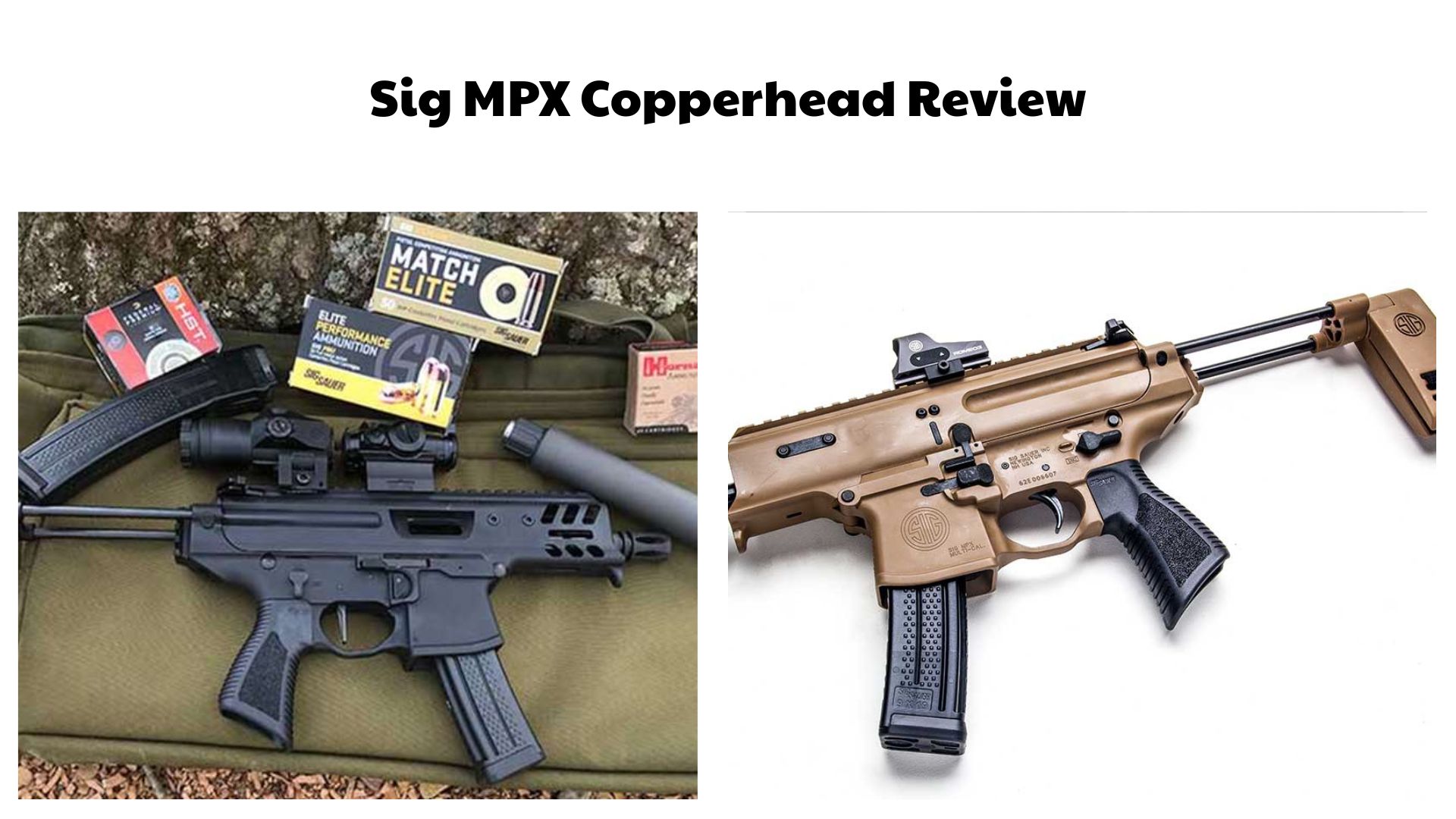

The Sig MPX Copperhead is an ultra-compact, professional-grade pistol-caliber carbine (PCC) engineered for users who prioritize maximum concealability, rapid deployment, and modern tactical performance within an exceptionally small footprint. Designed as one of the most compact configurations in the MPX family, it delivers a highly specialized solution for close-quarters engagements and discreet carry scenarios where traditional carbines would be too large or cumbersome.
Built around a short-barrel 9mm platform and SIG Sauer’s monolithic receiver design, the Copperhead distinguishes itself from typical blowback-operated PCCs by utilizing a short-stroke gas piston system paired with a closed rotating bolt, which enhances control, reduces recoil impulse, and improves cycling consistency even in a highly compact form factor. This engineering approach positions it closer to a purpose-built personal defense weapon (PDW) than a conventional pistol-caliber carbine.
The MPX Copperhead is widely recognized for its strong appeal in home defense roles, close-quarters tactical environments, and highly portable storage applications such as backpacks or vehicle compartments, where its extremely small size provides a significant operational advantage. However, despite its advanced engineering and premium construction, it is also frequently discussed in terms of its high price point, limited accessory rail space, increased gas blowback in ultra-short configurations, and mixed opinions regarding ergonomics when compared to larger and more controllable MPX variants.
Sig MPX Copperhead Overview
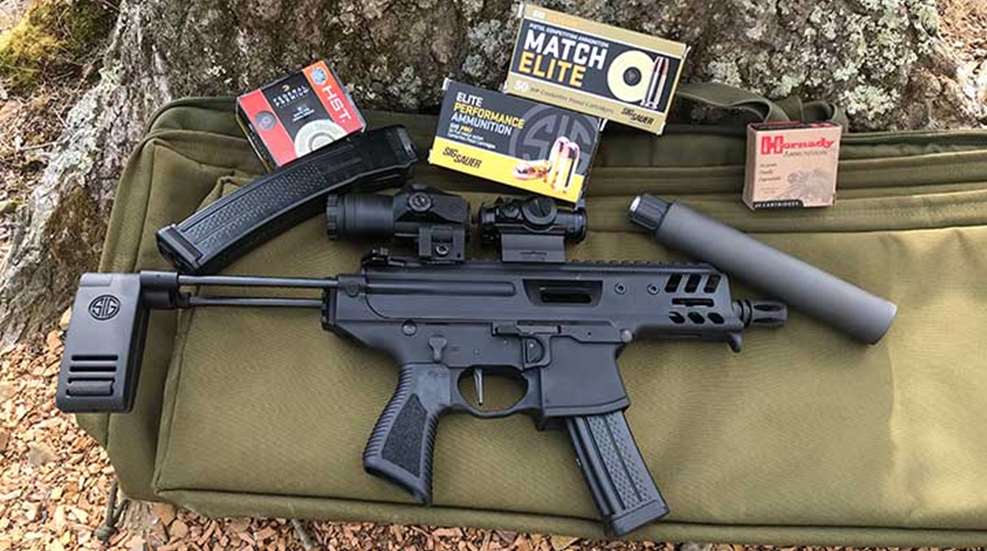
What is the Sig MPX Copperhead?
The Sig MPX Copperhead is a compact pistol-caliber carbine (PCC) and personal defense weapon (PDW)-style firearm that represents the smallest factory-produced configuration within the SIG MPX lineup. It is designed to fire 9mm ammunition from an extremely short barrel platform while maintaining rifle-like stability through its shoulder-stabilized design and advanced operating system.
Its primary purpose is to serve as an ultra-compact defensive and tactical platform optimized for close-quarters engagements, where maneuverability, speed of deployment, and minimal size are more important than long-range ballistic performance. This makes it especially suitable for environments where space is limited and rapid target engagement is required.
Within the SIG MPX family lineup, the Copperhead sits at the extreme end of compact design evolution, prioritizing size reduction while retaining the core engineering principles of the MPX platform, including gas piston operation and modular construction.
Design Philosophy of the MPX Copperhead
The design philosophy behind the MPX Copperhead is centered on maximum concealability and minimal footprint, resulting in one of the smallest commercially available MPX configurations while still maintaining functional reliability and controllability. Every aspect of its design is optimized to reduce size without fully sacrificing operational effectiveness in close-range scenarios.
It draws heavily from personal defense weapon (PDW) concepts, where compact dimensions and rapid deployment capability are prioritized over long-barrel ballistic optimization. This makes it ideal for users who require a firearm that can be stored discreetly yet accessed quickly when needed.
However, this extreme focus on compactness introduces inherent trade-offs, particularly in terms of recoil control, muzzle blast, accessory mounting space, and overall ballistic efficiency, meaning the Copperhead is best understood as a specialized tool rather than a general-purpose PCC.
Intended Users
The Sig MPX Copperhead is designed for a very specific category of users, starting with home defense users who require a compact PDW-style firearm capable of being stored in tight spaces while still offering faster target acquisition and better stability than a handgun.
It is also relevant for law enforcement and private security personnel operating in close-quarters battle (CQB) environments, where compact size and rapid handling are critical factors in confined or urban settings.
In addition, firearm enthusiasts and collectors who focus on premium PCC platforms are often drawn to the Copperhead due to its engineering complexity, brand reputation, and unique position within the MPX lineup. Finally, preparedness-minded users who prioritize backpack or vehicle carry setups may value its ultra-compact profile for emergency or survival applications.
SIG Sauer Background and MPX Line Evolution
SIG Sauer is widely recognized as a premium firearms manufacturer known for producing high-performance tactical weapons used by military, law enforcement, and civilian markets worldwide. The company’s engineering philosophy emphasizes precision manufacturing, modularity, and advanced operating systems designed for reliability under demanding conditions.
The MPX platform itself was developed as a modern evolution of the pistol-caliber carbine concept, incorporating a gas piston system rather than the traditional straight-blowback mechanism found in most PCCs. This allowed SIG to improve recoil characteristics, cycling smoothness, and overall controllability.
Over time, the MPX line has evolved from larger configurations such as the MPX K into increasingly compact variants, ultimately leading to the development of the Copperhead as the most extreme expression of portability within the platform.
This evolution reflects SIG Sauer’s continuous improvement manufacturing philosophy, where iterative refinement and user feedback drive the development of more specialized and performance-focused firearm variants.
Design and Build Quality
Ultra-Compact PDW Layout
The Sig MPX Copperhead features one of the shortest production layouts in the MPX lineup, with a highly compact overall structure that prioritizes minimal length and fast deployment capability. Its design centers around a 3.5-inch class barrel configuration, which significantly reduces overall size while maintaining compatibility with the MPX operating system.
A key structural element is the monolithic upper receiver, which integrates critical components into a single rigid assembly, enhancing durability and alignment consistency despite the extremely compact dimensions of the platform.
Construction and Materials
The Copperhead is constructed using a combination of high-strength aluminum alloys for the receiver and reinforced polymer components for select interface and control areas, allowing it to maintain structural integrity while minimizing unnecessary weight in a very small frame.
This construction approach ensures that even under compact PDW constraints, the firearm maintains durability suitable for repeated use in training or defensive applications without excessive wear or deformation over time.
Weight distribution is carefully managed within the short platform, although the extreme compactness can create a forward-heavy or tightly concentrated balance point that affects handling characteristics depending on user preference and shooting stance.
Size and Portability Advantages
One of the most significant advantages of the MPX Copperhead is its exceptional portability, as its compact dimensions make it highly suitable for storage in backpacks, vehicle compartments, or other confined spaces where larger firearms would be impractical.
This portability is directly tied to its design philosophy of concealability and rapid deployment, allowing users to transition from storage to operational readiness in minimal time.
When compared to larger PCC platforms, the Copperhead stands out primarily due to its extreme size reduction, although this comes at the cost of reduced stability and accessory mounting space.
Operating System and Engineering
Short-Stroke Gas Piston System
The Sig MPX Copperhead utilizes a short-stroke gas piston system, which differentiates it significantly from the more common straight-blowback systems found in many pistol-caliber carbines. In this system, gas pressure from firing is used to drive a piston that imparts energy to the bolt carrier group without exposing the action directly to high-pressure gases.
This design improves recoil control and reduces felt impulse, resulting in a smoother shooting experience even in a very short-barreled configuration where recoil management is typically more challenging.
Compared to blowback PCC systems, the gas piston design offers enhanced control and reduced bolt mass dependency, which contributes to more consistent cycling behavior across different ammunition types.
Closed Rotating Bolt Design
The MPX Copperhead incorporates a closed rotating bolt system that locks into place during firing, improving safety and structural integrity by ensuring that the chamber remains securely locked under pressure until the projectile has exited the barrel.
This locking mechanism enhances reliability and cycling consistency, particularly in a compact platform where timing and pressure management are critical for smooth operation.
The rotating bolt design also contributes to reduced stress on internal components, improving long-term durability and maintaining consistent performance across extended firing cycles.
Reliability in Different Ammunition Types
The Sig MPX Copperhead is generally capable of functioning with a variety of 9mm ammunition types, including 115 grain, 124 grain, and 147 grain loads, although performance characteristics may vary slightly depending on pressure and bullet weight.
Heavier subsonic loads such as 147 grain ammunition are often favored for suppressed use due to reduced velocity and improved sound suppression characteristics, while lighter loads may produce slightly different recoil and cycling dynamics.
In suppressed versus unsuppressed configurations, the Copperhead can exhibit changes in backpressure and gas behavior, although its piston system helps mitigate some of the excessive gas issues typically seen in blowback PCCs. However, like all short-barreled platforms, it may still show some sensitivity to ammunition consistency and pressure variation.
Controls and Ergonomics
Fully Ambidextrous Control Layout
The Sig MPX Copperhead features a fully ambidextrous control layout that is designed to accommodate both left- and right-handed shooters with equal efficiency, making it one of the more user-friendly compact PCC/PDW platforms in terms of manual operation. Key controls such as the safety selector, magazine release, and bolt-related functions are all positioned for intuitive access from either side of the firearm, reducing the need for retraining or adaptation based on dominant hand orientation.
This ambidextrous configuration also provides strong compatibility with AR-style shooting fundamentals, allowing users who are already familiar with AR platforms to transition to the MPX system with minimal learning curve. The consistent control placement supports faster manipulation under stress, particularly in defensive or close-quarters scenarios where instinctive handling is critical.
Charging Handle and Manual of Arms
The charging handle on the MPX Copperhead is designed to provide smooth but compact manipulation, although its reduced size and ultra-short platform architecture can make it feel more constrained compared to full-length carbines. The charging effort is generally light due to the gas piston system, but the limited leverage inherent in the compact design can make gross motor manipulation slightly less comfortable for some users.
Because of the extremely short overall length of the platform, the manual of arms is condensed into a tighter workspace, which can affect ergonomics during rapid administrative handling such as loading, clearing, or malfunction drills. While still functional and efficient, the design prioritizes compactness over spacious manipulation geometry, which is a trade-off inherent in PDW-style firearms.
Trigger Performance
The factory trigger on the Sig MPX Copperhead is generally described as serviceable and consistent, with a pull weight that leans toward the heavier side of refined competition triggers but remains predictable for defensive use. It is engineered to provide safe and reliable operation under a wide range of conditions rather than delivering a highly tuned match-grade feel.
Trigger reset is relatively short and tactile, allowing for controlled follow-up shots once the shooter becomes familiar with the system’s rhythm. This contributes to overall shooting consistency, especially in rapid-fire sequences where predictable reset behavior is more important than ultra-light pull weight.
For users seeking enhanced performance, aftermarket trigger upgrades from manufacturers such as Timney, Geissele, and other specialty providers are often available, offering improved pull smoothness, reduced weight, and a more refined break suitable for competition or precision-focused shooting applications.
Grip, Brace, and Handling Characteristics
The MPX Copperhead utilizes a compact brace system designed to maintain stability while preserving its extremely short overall length, providing the shooter with a functional point of contact for improved control during firing. Despite its small footprint, the brace contributes meaningfully to stability, particularly in rapid engagement scenarios.
Control stability under recoil is generally strong for a firearm of its size, largely due to the gas piston system and the weight distribution of the platform, which help mitigate muzzle rise and maintain sight alignment during follow-up shots. However, the extremely short length of the firearm inherently reduces leverage, meaning that it requires more deliberate technique to achieve optimal control compared to longer MPX variants.
These trade-offs are a direct result of the Copperhead’s PDW-focused design philosophy, where maximum compactness is prioritized over extended stability and traditional rifle ergonomics.
Magazine System
Proprietary MPX Magazine Design
The Sig MPX Copperhead utilizes a proprietary magazine system specifically designed for the MPX platform, meaning it is not compatible with common handgun magazines such as Glock or SIG P-series magazines. These magazines are engineered to work seamlessly with the MPX’s gas piston and bolt system, ensuring consistent feeding geometry and reliable cycling under a variety of conditions.
Constructed from durable polymer materials with internal reinforcement, MPX magazines are designed to withstand repeated use while maintaining structural integrity and feed reliability. Many versions also feature translucent bodies, allowing users to visually monitor remaining ammunition levels, which can be a practical advantage in both training and defensive scenarios.
Magazine Reliability and Cost
In terms of reliability, MPX magazines are generally considered highly dependable when properly maintained and used within their design specifications, with consistent feeding performance across a wide range of ammunition types. This reliability contributes positively to the overall performance reputation of the platform.
However, one of the primary drawbacks of the system is cost, as proprietary magazines tend to be significantly more expensive than widely available pistol magazine alternatives, which increases long-term ownership expenses for high-volume shooters.
Additionally, the lack of cross-platform compatibility means that users cannot leverage existing handgun magazine inventories, which may be a disadvantage for those who prefer logistical standardization across multiple firearms.
Accuracy and Shooting Performance
Real-World Accuracy
In real-world use, the Sig MPX Copperhead delivers strong practical accuracy within its intended engagement envelope, particularly at distances between 25 and 50 yards where its compact design and gas piston system allow for fast target acquisition and consistent shot placement. While it is not designed as a precision long-range platform, it is more than capable of delivering accurate hits in close-quarters and defensive shooting scenarios.
At typical defensive distances, the Copperhead can reliably produce headshot-capable accuracy when used by a competent shooter, making it suitable for CQB environments where precision under stress is more important than extended-range grouping performance.
Its practical engagement distance is therefore best understood as short to intermediate, with performance optimized for fast, controlled shooting rather than long-distance precision work.
Short Barrel Ballistics
Due to its extremely short 3.5-inch class barrel, the MPX Copperhead experiences noticeable velocity loss compared to longer MPX variants, which can affect both external ballistics and terminal energy delivery. This is an expected trade-off in ultra-compact PDW designs where size reduction is prioritized over ballistic efficiency.
The reduced barrel length results in lower muzzle velocity, which can slightly alter trajectory and energy retention at distance, although these effects are generally minimal within close-quarters ranges where the platform is intended to operate.
When compared to longer MPX configurations, the Copperhead sacrifices some ballistic performance in exchange for dramatically improved portability and concealability, reinforcing its role as a specialized compact system rather than a general-purpose carbine.
Recoil and Shooting Experience
The recoil characteristics of the Sig MPX Copperhead are notably soft for such a compact firearm, largely due to its short-stroke gas piston system, which helps reduce felt recoil impulse and smooth out the cycling action compared to straight-blowback PCC designs. This results in a shooting experience that feels more controlled and less abrupt than many other ultra-compact platforms.
Low muzzle rise is another key advantage, allowing shooters to maintain sight picture more effectively during rapid follow-up shots, which is particularly valuable in defensive or dynamic shooting environments.
Overall, the Copperhead offers fast and predictable recoil recovery, making it well-suited for rapid engagement sequences despite its extremely short overall length.
Heat and Sustained Fire Behavior
As with most short-barreled firearms, barrel heating becomes more noticeable in the MPX Copperhead during sustained or rapid-fire sequences, as the reduced mass and compact design provide less thermal dispersion compared to larger platforms.
This heat buildup can gradually influence shooting consistency, potentially affecting point of impact during extended firing sessions if the barrel temperature rises significantly. However, in typical defensive or training scenarios, this is rarely a limiting factor.
Practical use limitations are therefore more related to sustained high-volume fire rather than controlled semi-automatic use, reinforcing the Copperhead’s intended role as a close-quarters defensive PDW rather than a high-round-count endurance platform.
Reliability and Common Issues
Break-In Behavior
Like many precision-engineered firearms, the Sig MPX Copperhead may exhibit a short break-in period during which internal components such as the bolt carrier group, recoil assembly, and gas system gradually smooth out through repeated cycling. During this initial phase, some users may notice a slight increase in mechanical stiffness or a less refined cycling feel compared to a fully seasoned platform.
Over the course of early usage cycles, the system typically becomes noticeably smoother as friction points wear in naturally and tolerances settle into consistent operation. This improvement is often accelerated by proper lubrication, which plays a critical role in reducing friction and ensuring that the short-stroke gas piston system operates within its optimal performance range.
Cycling and Feeding Issues
While the MPX Copperhead is generally regarded as highly reliable, occasional cycling and feeding issues can still occur under specific conditions, particularly when using low-quality or inconsistent ammunition that does not meet optimal pressure standards for the system. These issues are relatively rare but can manifest as failures to feed or incomplete cycling in certain edge-case scenarios.
Magazine sensitivity is another factor that can influence reliability, as the platform relies on SIG’s proprietary magazine system, which performs best when properly maintained and used within design specifications. Worn or damaged magazines can introduce inconsistencies in feeding geometry, potentially affecting overall reliability.
Maintenance-related factors also play a significant role, as carbon buildup or insufficient lubrication in the bolt and gas system can gradually reduce cycling efficiency, making routine cleaning an important part of sustaining long-term performance.
Long-Term Durability
The Sig MPX Copperhead has developed a strong reputation for long-term durability, with many users reporting consistent performance across high round counts without significant mechanical degradation. This is largely attributed to its robust engineering design, high-quality materials, and the inherent advantages of its gas piston operating system.
In both competition and duty-style use cases, the platform has demonstrated the ability to withstand repeated firing cycles while maintaining consistent reliability and functional integrity. This makes it a viable option for users who require a compact firearm capable of sustained operational readiness.
Wear characteristics in short-barreled systems are typically more pronounced due to increased thermal and mechanical stress, but the Copperhead mitigates many of these effects through its reinforced construction and controlled gas system design, helping preserve long-term operational stability.
Quality Control and Variability
Across the MPX lineup, including the Copperhead variant, there have been incremental generation differences and continuous improvements that reflect SIG Sauer’s iterative manufacturing approach. These refinements can sometimes lead to slight variations in performance characteristics between production batches.
This continuous improvement model allows SIG to enhance reliability, ergonomics, and internal components over time, but it can also result in user confusion when comparing different production variants or revisions of the same platform.
As a result, some perceived inconsistencies are often tied not to fundamental design flaws but rather to generational differences or small manufacturing updates that refine the system over time.
Suppressor Compatibility
Suppression Performance
When the Sig MPX Copperhead is used in a suppressed configuration, its short-barrel gas system can result in increased gas blowback due to higher backpressure levels being redirected through the action. This is a common characteristic of compact gas-operated firearms, particularly when paired with suppressors that further elevate system pressure.
Despite this, the platform still provides meaningful noise reduction benefits, making it significantly quieter and more comfortable to shoot compared to an unsuppressed configuration, especially when using subsonic ammunition.
However, backpressure considerations must always be taken into account, as the balance between suppression efficiency and gas management becomes more sensitive in ultra-short barrel systems like the Copperhead.
Best Practices for Suppressed Use
To achieve optimal performance when using a suppressor on the MPX Copperhead, ammunition selection plays a critical role, with heavier subsonic loads generally providing more consistent suppression results and reduced velocity-related pressure spikes.
Increased cleaning frequency is also strongly recommended, as suppressor use naturally accelerates carbon buildup within the gas system, bolt carrier group, and receiver, requiring more regular maintenance to preserve reliability.
Reliability tuning expectations should also be realistic, as while the platform is designed to function effectively suppressed, it is still constrained by its compact gas system architecture, meaning that some minor adjustments in ammo or maintenance habits may be necessary for optimal performance.
Advantages and Disadvantages
Key Advantages
The Sig MPX Copperhead offers several significant advantages, starting with its extremely compact PDW footprint, which makes it one of the most portable and easily storable professional-grade PCC platforms available on the market today.
Its short-stroke gas piston system contributes to exceptionally soft recoil characteristics for its size, allowing for improved control and faster follow-up shots compared to traditional blowback PCC designs.
Despite its small dimensions, the platform maintains high accuracy for its size, particularly within close-quarters engagement distances where it is primarily intended to operate.
The fully ambidextrous control layout enhances usability for both left- and right-handed shooters, while its premium construction quality reinforces its reputation as a high-end tactical firearm designed for demanding applications.
Key Disadvantages
One of the most significant drawbacks of the MPX Copperhead is its very high price point, which places it in a premium category that may be inaccessible or difficult to justify for budget-conscious users.
The proprietary magazine system further adds to long-term ownership costs, as replacement magazines tend to be more expensive and are not interchangeable with more common handgun platforms.
Limited rail space and accessory mounting options can also restrict customization potential, particularly for users who prefer highly modular firearm setups.
Additionally, increased gas blowback when suppressed and inherent velocity limitations from the short barrel configuration represent functional trade-offs associated with its extreme compact design philosophy.
Sig MPX Copperhead vs Competing PCCs
Copperhead vs SIG MPX K
When compared to the SIG MPX K, the Copperhead is significantly more compact and optimized for concealability, while the MPX K offers improved control, better handling balance, and increased rail space for accessories, making it more versatile in extended use scenarios.
Copperhead vs APC9K / B&T Platforms
Against competitors such as the B&T APC9K, the Copperhead competes closely in terms of compact PDW performance, but differences emerge in ergonomics, modularity, and accessory ecosystems, with each platform offering distinct advantages depending on user preference and mission profile.
Copperhead vs AR-9 PDW Builds
Compared to AR-9 PDW-style builds, the MPX Copperhead offers superior compact engineering and a more refined gas piston system, while AR-based platforms generally provide better customization flexibility and lower cost of ownership.
Compact PDW vs Full PCC Platforms
In direct comparison between compact PDW systems and full-sized PCC platforms, the trade-offs center around size versus control, with the Copperhead offering unmatched portability while full PCCs provide superior stability, recoil management, and ballistic efficiency.
Ballistic performance differences are also notable, as full PCC platforms with longer barrels tend to achieve higher velocities and more consistent downrange energy compared to ultra-short configurations like the Copperhead.
Real-world usability ultimately depends on the intended application, with compact PDW systems excelling in constrained environments while full PCC platforms perform better in extended-range or sustained-use scenarios.
Ergonomics Comparison
AR-style platforms maintain a strong familiarity advantage due to their standardized controls and widespread user adoption, making them easier for many shooters to transition into and operate efficiently under stress.
The Copperhead, while highly compact, presents more challenging manipulation due to reduced space and condensed ergonomics, requiring users to adapt to tighter handling geometry.
Control accessibility also varies, with AR-style systems offering more spacious and intuitive layouts, while the Copperhead prioritizes minimal size over ergonomic comfort.
Reliability and System Complexity
The MPX Copperhead’s gas piston system offers advantages in recoil management and cleanliness compared to blowback systems, which can reduce felt recoil and improve shooting smoothness in compact platforms.
However, blowback PCCs are generally simpler mechanically, which can translate into easier maintenance and fewer moving parts, albeit at the cost of increased recoil impulse.
In terms of long-term durability, both systems are capable of high round counts, but the MPX’s more complex engineering may require more precise maintenance practices to sustain optimal performance.
Best Use Cases for the Sig MPX Copperhead
Home Defense Applications
The MPX Copperhead is well-suited for home defense scenarios where compact size, fast deployment, and controllability in close quarters are critical factors, making it a practical PDW-style option for confined environments.
Close-Quarters Tactical Use
Its design excels in close-quarters tactical environments where maneuverability and rapid target engagement are prioritized over long-range ballistic performance.
Backpack / Vehicle PDW Setup
Due to its extremely compact form factor, the Copperhead is highly suitable for backpack or vehicle storage setups where space constraints demand minimal firearm dimensions without sacrificing functional capability.
Range Training and Enthusiast Shooting
For range training and enthusiast use, the platform offers a premium shooting experience with low recoil, high build quality, and unique engineering characteristics that appeal to users interested in advanced PCC systems.
Final Verdict
The Sig MPX Copperhead stands out as one of the most compact and technologically advanced pistol-caliber carbines available, combining a short-stroke gas piston system with a closed rotating bolt design to deliver surprisingly soft recoil and strong accuracy despite its extremely short barrel length. Its strengths lie in its unmatched compactness, premium construction quality, and excellent control in close-range defensive scenarios where size and speed matter most.
However, it is also a highly specialized platform that comes with notable compromises, including its high cost, proprietary magazine system, limited accessory space, and reduced ballistic performance compared to longer PCC configurations. Additionally, its ultra-compact design can introduce more pronounced gas blowback and handling limitations when used with suppressors or extended firing sessions.
Despite these trade-offs, the MPX Copperhead remains one of the most capable micro-PDW-style PCCs on the market, best suited for users who prioritize maximum portability and elite-level engineering over affordability and modular flexibility.
Frequently Asked Questions (FAQ) – Sig MPX Copperhead Review
1. What is the Sig MPX Copperhead?
The Sig MPX Copperhead is an ultra-compact, pistol-caliber carbine (PCC) / PDW-style firearm designed by SIG Sauer to provide maximum portability and fast deployment in a very small footprint, while still maintaining the performance advantages of a shoulder-fired platform. It is part of the MPX family and represents the most compact factory configuration available, built around a short-barrel 9mm system with a gas piston operating mechanism.
2. Is the MPX Copperhead a pistol or a rifle?
Legally, the MPX Copperhead is typically classified as a pistol in its standard configuration due to its lack of a fixed stock and its brace-based design, although functionally it behaves like a compact rifle or PDW when shouldered for firing.
3. What does PCC mean?
PCC stands for Pistol-Caliber Carbine, which refers to a firearm that uses handgun ammunition, such as 9mm, but is designed in a rifle-style platform to improve accuracy, stability, and recoil control compared to a traditional handgun.
4. Why is the MPX Copperhead so small?
It is intentionally engineered to be extremely small as part of a personal defense weapon (PDW) design philosophy, prioritizing concealability, storage efficiency, and rapid deployment in confined environments such as vehicles, backpacks, or tight indoor spaces.
5. What is the barrel length of the MPX Copperhead?
The Copperhead features a very short barrel in the 3.5-inch class range, which significantly reduces overall length while still allowing the gas piston system to function reliably within its intended operating envelope.
6. What caliber does it use?
The MPX Copperhead is chambered in 9mm, which is one of the most widely available pistol cartridges in the world, offering a balance between controllability, cost efficiency, and defensive effectiveness.
7. How effective is the Copperhead for home defense?
It is considered highly effective for home defense in close-quarters environments due to its compact size, low recoil, and fast target acquisition capability, making it easier to control than a handgun while being more maneuverable than a full-size rifle.
8. What is the effective range of the MPX Copperhead?
Its practical effective range is typically within 25 to 50 yards for defensive use, although it can be used beyond that distance with reduced ballistic efficiency due to its extremely short barrel.
9. Does the short barrel affect performance?
Yes, the short barrel reduces muzzle velocity compared to longer PCCs, which can slightly decrease energy and extend trajectory drop, but within close-range engagements, this impact is generally minimal and manageable.
10. Is recoil strong on the MPX Copperhead?
Recoil is relatively soft and controllable due to the short-stroke gas piston system, which reduces felt impulse compared to blowback-operated PCCs, making it easier to shoot quickly and accurately.
11. How does the gas piston system help?
The gas piston system redirects energy away from direct blowback pressure, resulting in smoother cycling, reduced recoil impulse, and improved control during rapid fire compared to simpler straight-blowback designs.
12. Is it better than blowback PCCs?
In terms of recoil control and cleanliness, yes, the gas piston system generally offers advantages over blowback PCCs, although blowback systems can be simpler and easier to maintain.
13. Is the MPX Copperhead reliable?
It is widely regarded as reliable when properly maintained and used with quality ammunition and magazines, benefiting from SIG Sauer’s high manufacturing standards and robust internal engineering.
14. Does it require a break-in period?
Some units may exhibit a short break-in period where mechanical components smooth out, but performance typically stabilizes quickly with normal usage and proper lubrication.
15. What are common malfunctions?
Occasional issues may include failures to feed or eject, usually linked to magazine condition, ammunition inconsistency, or insufficient maintenance rather than inherent design flaws.
16. Is the MPX Copperhead ammo sensitive?
It can show slight sensitivity to low-quality or inconsistent ammunition, but it generally performs well with standard 115gr, 124gr, and 147gr loads from reputable manufacturers.
17. What magazines does it use?
It uses proprietary SIG MPX magazines, which are specifically designed for the platform and are not interchangeable with Glock or other common pistol magazines.
18. Are MPX magazines reliable?
Yes, MPX magazines are generally very reliable when properly maintained, with strong feeding performance and durable polymer construction designed for repeated use.
19. Why are MPX magazines expensive?
They are expensive because they are proprietary, precision-engineered components with lower production scale compared to mass-market handgun magazines.
20. Can it use Glock magazines?
No, the MPX Copperhead does not support Glock magazines, as it uses a dedicated SIG magazine system designed specifically for the MPX platform.
21. Is the trigger good?
The factory trigger is functional and consistent but not considered a match-grade trigger, typically having a moderate pull weight and a utilitarian feel suited for defensive use.
22. Can the trigger be upgraded?
Yes, aftermarket trigger upgrades are available from manufacturers such as Timney and Geissele, which can improve pull weight, smoothness, and overall shooting experience.
23. Is the MPX Copperhead ambidextrous?
Yes, it features fully ambidextrous controls, including safety selector and magazine release functions, making it suitable for both left- and right-handed shooters.
24. Is it easy to control?
It is generally easy to control for its size, but its ultra-compact form factor can make it less stable than longer MPX variants, requiring more deliberate technique.
25. How does it perform in CQB?
It performs very well in close-quarters battle scenarios due to its extremely short length and fast handling characteristics, making it ideal for confined environments.
26. Is it good for vehicle or backpack storage?
Yes, its compact PDW design makes it one of the most suitable PCC platforms for discreet storage in vehicles or backpacks.
27. Can it be used with a suppressor?
Yes, it can be suppressed, although users should expect increased gas blowback and higher maintenance requirements due to backpressure in the short barrel system.
28. Does suppressor use increase gas to the face?
Yes, suppressor use typically increases gas blowback, which can be more noticeable in ultra-short platforms like the Copperhead.
29. How often should it be cleaned?
It should be cleaned regularly, and more frequently when used with suppressors, due to increased carbon buildup in the gas system and receiver.
30. Is it good for long shooting sessions?
It is capable of sustained shooting, but heat buildup and compact design limitations make it less ideal for extended high-volume firing compared to larger PCCs.
31. How accurate is it?
It is accurate enough for defensive and CQB use, especially within 25–50 yards, where its performance is highly consistent and practical.
32. Does it lose accuracy due to short barrel?
Not significantly at close range, but at longer distances, reduced velocity can slightly affect precision and energy retention.
33. Is it good for beginners?
It can be used by beginners, but its premium cost and compact ergonomics make it more appealing to experienced shooters or enthusiasts.
34. What are its biggest advantages?
Its biggest advantages include extreme compactness, low recoil for its size, premium build quality, and excellent CQB performance.
35. What are its biggest disadvantages?
Its main disadvantages include high cost, proprietary magazines, limited accessory space, and reduced ballistic performance from the short barrel.
36. How does it compare to MPX K?
The MPX K offers better control and usability due to its larger size, while the Copperhead prioritizes maximum compactness and concealability.
37. How does it compare to AR-9 platforms?
AR-9 platforms are generally more customizable and cost-effective, while the MPX Copperhead offers superior compact engineering and gas piston refinement.
38. Is it worth the price?
It depends on user priorities; it is worth it for those who value premium engineering and compact PDW performance, but not ideal for budget-focused buyers.
39. Is it durable long-term?
Yes, it is built for long-term durability with high-quality materials and a robust operating system designed for repeated use.
40. Does it get hot quickly?
Yes, due to its short barrel and compact design, it can heat up faster during sustained fire compared to larger platforms.
41. Is it good for range use?
Yes, it is enjoyable for range use, especially for shooters who appreciate compact, high-performance firearms with smooth recoil.
42. Is it modular?
It is less modular than AR-style platforms due to its compact design and proprietary ecosystem, limiting customization options.
43. Can it be used for competition?
It can be used in PCC competition, but it is not as optimized as longer, more stable, and more customizable competition-focused platforms.
44. Does it require special maintenance?
No special maintenance is required, but regular cleaning and lubrication are important for maintaining peak performance.
45. Is it loud without a suppressor?
Yes, like most short-barrel 9mm firearms, it produces a sharp and loud muzzle report when unsuppressed.
46. Does it have good resale value?
Yes, SIG MPX platforms generally hold strong resale value due to brand reputation and demand in the PCC market.
47. Is it legal everywhere?
Legality depends on local firearm laws and regulations, including restrictions on braces, barrel length, and configuration.
48. Who should buy the MPX Copperhead?
It is best suited for users who prioritize extreme compactness, premium build quality, and PDW-style performance over cost and modularity.
49. Who should avoid it?
Users seeking budget-friendly, highly modular, or long-range PCC platforms may find better value in other systems.
50. What makes it unique?
Its combination of ultra-compact PDW design, gas piston operation, and premium SIG engineering makes it one of the most distinctive PCC platforms available.
51. Is it still relevant today?
Yes, it remains highly relevant due to its unique position as one of the smallest high-performance PCC/PDW platforms on the market.
52. Is it better than a handgun?
In stability and accuracy, yes, but it is less concealable than a handgun, making it a situational upgrade rather than a replacement.
53. Is it good for survival use?
Yes, its compact size and reliability make it suitable for survival or emergency preparedness scenarios where space is limited.
54. Why do people choose it?
People choose it for its extreme compactness, premium engineering, and superior recoil control compared to other ultra-short PCC options.
55. What is the overall reputation?
Its overall reputation is strong, with users recognizing it as a high-end, specialized PDW platform that excels in compact defensive roles despite its cost and trade-offs.
Read more: