
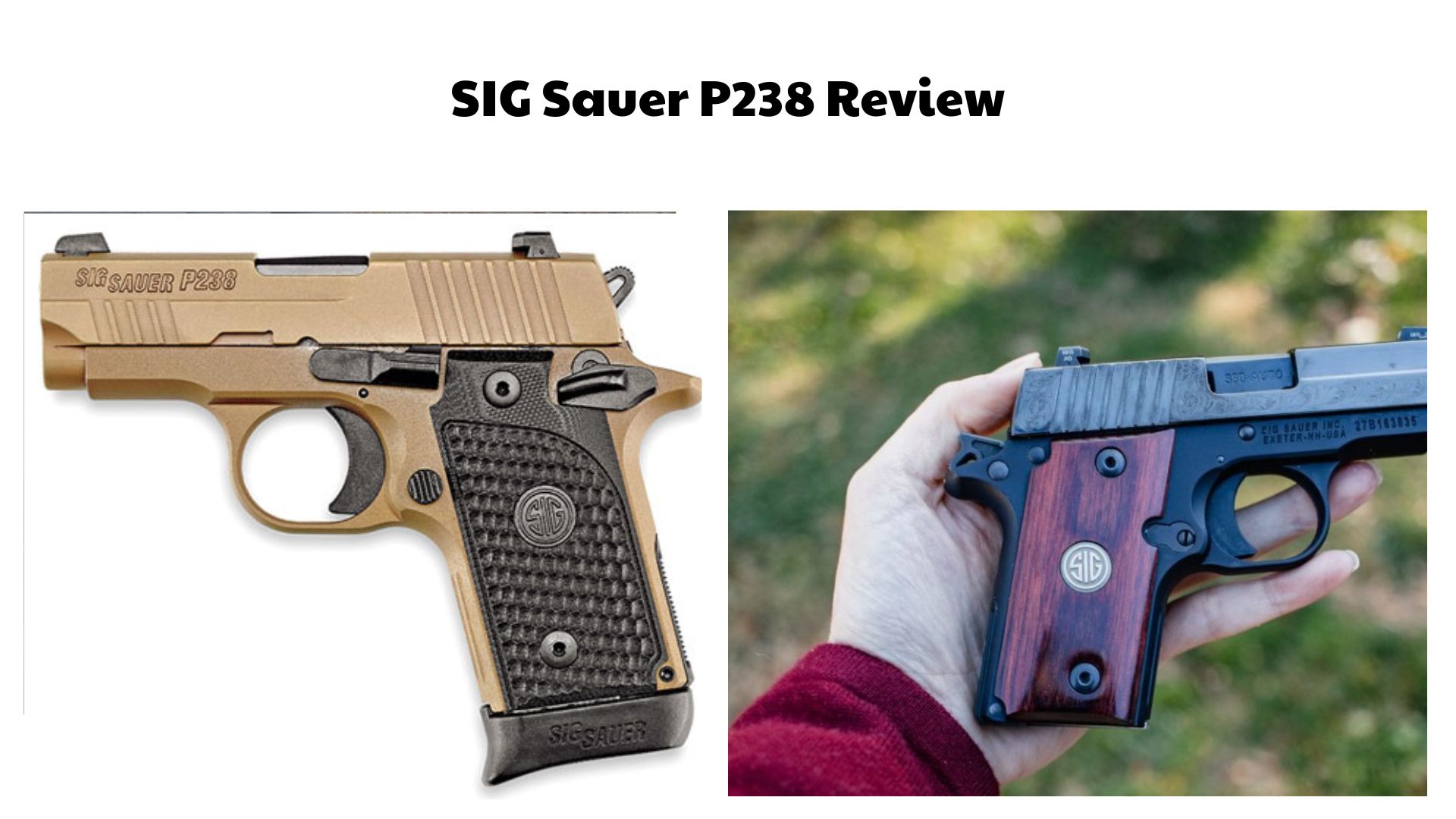

The SIG Sauer P238 remains one of the most recognizable micro-compact .380 pistols on the market, even years after its initial release. Designed specifically for concealed carry and personal defense, it combines a compact footprint with a refined shooting experience that is not always found in pistols of this size. Its design takes clear inspiration from the classic 1911 platform, offering a single-action trigger and manual safety in a much smaller, more carry-friendly format.
What makes the P238 stand out is its balance of shootability and concealability. While many modern micro pistols prioritize size over comfort, the P238 maintains a level of control and handling that appeals to both beginners and experienced shooters. This raises an important question in today’s market: Is the SIG Sauer P238 still worth buying in the era of high-capacity micro 9mm pistols?
This guide breaks down its design, performance, and real-world usability to help answer that question in a clear and practical way.
2. SIG Sauer P238 Background & History
Origins and Market Demand
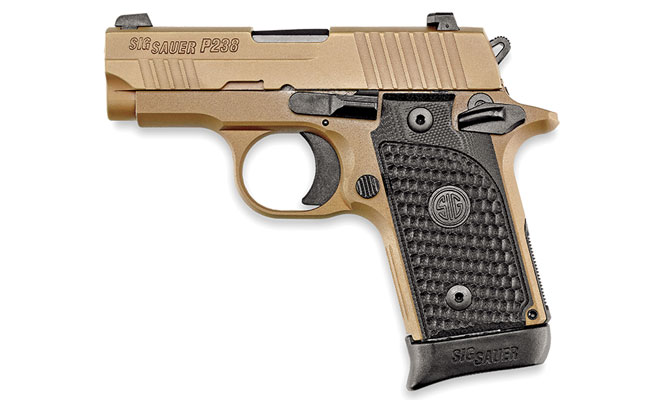
The SIG Sauer P238 was introduced in 2009 during a period when demand for ultra-compact concealed carry pistols was rapidly increasing. As more regions expanded concealed carry rights, civilian shooters began looking for firearms that were small enough for daily carry without sacrificing reliability or usability. At that time, many available options were either too bulky or too difficult to shoot comfortably due to harsh recoil and minimal ergonomics.
The P238 was developed to address this gap. SIG Sauer aimed to create a pistol that was small enough for discreet carry while still offering a refined shooting experience. Instead of following the trend toward polymer-framed, striker-fired designs, SIG chose a different path—one rooted in traditional handgun engineering.
Design Inspiration: Colt Mustang and 1911 Platform
The design of the P238 is heavily influenced by the Colt Mustang, which itself draws from the iconic 1911 pistol platform. This lineage is immediately visible in the pistol’s single-action trigger system, manual thumb safety, and overall ergonomics. The 1911-style design provides a familiar manual of arms for shooters who appreciate traditional handguns.
Unlike many micro pistols, the P238 retains a true single-action operation. This means it is typically carried in a “cocked and locked” condition, with the hammer back and safety engaged. While this may seem unusual to new shooters, it is a well-established and safe method when handled properly.
This design choice sets the P238 apart from most of its competitors. It offers a level of trigger quality and shooting precision that is uncommon in pistols of its size.
Evolution of Micro .380 Pistols
Before the P238 entered the market, many micro .380 pistols were built using simple blowback systems. These designs were often lightweight but produced sharp recoil and limited shootability. The P238 introduced a locked-breech system in a compact .380 platform, which significantly improved recoil control and overall handling.
This innovation helped redefine expectations for pocket pistols. Shooters began to see that a small handgun could still be comfortable to shoot and easy to control, rather than just a last-resort defensive tool.
Early Skepticism and Reputation Growth
When the P238 was first released, it faced skepticism from the market. One of the main concerns was its price. Compared to other .380 pistols available at the time, the P238 was positioned as a premium product. Many shooters questioned whether the higher cost was justified for a firearm in this caliber.
Over time, however, its reputation improved significantly. Users began to appreciate its build quality, smooth trigger, and reduced recoil. Positive real-world performance helped establish the P238 as more than just a niche option—it became a reliable and respected concealed carry pistol.
Positioning as a Premium Alternative
Today, the SIG Sauer P238 is widely viewed as a premium alternative to polymer pocket pistols. It is not the cheapest option, nor is it the most feature-rich by modern standards. Instead, it focuses on delivering a high-quality shooting experience in a compact package.
This positioning appeals to a specific group of users: those who prioritize comfort, trigger quality, and craftsmanship over maximum capacity or ultra-lightweight design. In a market dominated by polymer frames and striker-fired systems, the P238 stands out as a refined, traditional option.
3. Key Specifications & Technical Overview
The SIG Sauer P238 is built with a clear focus on compactness, reliability, and shootability. Its specifications reflect a balance between portability and performance, making it suitable for everyday concealed carry while maintaining a level of control that many micro pistols struggle to achieve.
Caliber: .380 ACP
The P238 is chambered in .380 ACP, a cartridge widely used in compact defensive handguns. While it is less powerful than 9mm, it offers reduced recoil and improved control, especially in small platforms. With modern defensive ammunition, .380 ACP remains a viable option for close-range self-defense.
Action: Single-Action, Hammer-Fired
This pistol uses a single-action-only, hammer-fired system. The trigger pull is consistent for every shot, providing a clean and predictable break. This is a major advantage over many striker-fired micro pistols, which often have heavier and less refined triggers.
The hammer must be cocked for the pistol to fire, which is why it is typically carried with the safety engaged. This system offers both precision and control, especially during rapid follow-up shots.
Size and Dimensions
The P238 is designed for maximum concealability without sacrificing usability:
- Barrel length: approximately 2.7 inches
- Overall length: approximately 5.5 inches
- Height: compact profile suitable for pocket carry
These dimensions place it firmly in the micro-compact category, making it easy to carry in a variety of positions including pocket, inside-the-waistband, and ankle carry.
Weight and Materials
The pistol weighs around 15 ounces unloaded, thanks to its aluminum alloy frame. This keeps it lightweight enough for daily carry while still providing enough mass to help manage recoil.
The stainless steel slide adds durability and strength. Together, these materials create a balance between portability and long-term reliability. The metal construction also gives the pistol a solid, high-quality feel that stands out compared to polymer alternatives.
Magazine Capacity
The P238 offers two primary magazine configurations:
- 6+1 rounds with a flush-fit magazine
- 7+1 rounds with an extended magazine
While this capacity is lower than modern micro 9mm pistols, it is typical for .380 ACP platforms of this size. The extended magazine improves grip comfort and control without significantly affecting concealability.
Sight System
Most P238 models come equipped with SIGLITE night sights. These sights provide improved visibility in low-light conditions, which is a valuable feature for defensive firearms. The three-dot configuration is easy to align and supports quick target acquisition.
Unlike many budget pocket pistols, which often include basic or fixed sights, the P238 offers a more refined sighting system that enhances overall usability.
Safety Features
The pistol includes several safety mechanisms designed to support secure carry:
- Manual thumb safety for secure carry in cocked-and-locked condition
- Firing pin block to prevent accidental discharge if dropped
These features align with its 1911-style operation and provide an added layer of confidence for users who prefer manual safety controls.
Operating System: Locked-Breech Design
One of the most important technical aspects of the P238 is its locked-breech operating system. Unlike many .380 pistols that use blowback operation, this system locks the barrel and slide together during firing, reducing felt recoil.
This results in a softer, more controlled shooting experience. It also allows the pistol to use lighter recoil springs, making the slide easier to rack. For many users, especially those with limited hand strength, this is a significant advantage.
Overall, the technical design of the SIG Sauer P238 reflects a clear goal: deliver a compact pistol that is not only easy to carry, but also enjoyable and controllable to shoot. This balance is what continues to set it apart in a crowded concealed carry market.
4. Design & Build Quality
The SIG Sauer P238 stands out immediately because of its design philosophy. Unlike many modern micro pistols that prioritize minimalism and polymer construction, the P238 embraces a classic approach. It brings the look and feel of a full-size 1911 into a compact, highly concealable format. This combination of traditional styling and modern engineering is one of the key reasons it continues to attract attention in a crowded market.
Miniaturized 1911-Style Aesthetics and Controls
The P238 closely mirrors the iconic 1911 design, scaled down for concealed carry. This is not just a visual similarity—it extends to the control layout and overall handling. The presence of a manual thumb safety, exposed hammer, and single-action trigger gives it a familiar manual of arms for shooters who have experience with 1911-style pistols.
This design approach creates a sense of familiarity and confidence. Users who are comfortable with 1911 platforms often find the transition to the P238 seamless. Even for new shooters, the layout is intuitive once learned, and it reinforces deliberate handling habits.
The overall aesthetic is clean and refined. It avoids the utilitarian look of many modern pocket pistols and instead offers a more polished, classic appearance. This may not affect performance directly, but it contributes to the overall appeal of the firearm.
Metal Construction vs Polymer Competitors
One of the most defining characteristics of the P238 is its all-metal construction. It uses an aluminum alloy frame paired with a stainless steel slide. This is a significant departure from the polymer frames that dominate the micro-compact pistol market.
The metal construction provides several advantages. First, it adds durability and long-term structural integrity. Second, it contributes to a more stable shooting experience by helping to absorb recoil. Third, it gives the pistol a solid, high-quality feel in the hand.
Compared to polymer competitors, the P238 feels more substantial and less “hollow.” While this adds a bit of weight, many users consider it a worthwhile tradeoff for improved control and perceived quality.
Fit and Finish Quality
SIG Sauer positions the P238 as a premium product, and this is evident in its fit and finish. The machining is clean, with tight tolerances and smooth edges. Controls operate with a consistent, deliberate feel rather than a loose or overly stiff response.
Surface finishes vary depending on the model, but they are generally well-applied and durable. Whether it is a matte black coating, stainless finish, or a more decorative variant, the attention to detail is noticeable.
This level of refinement sets the P238 apart from many budget .380 pistols, which often show rougher machining or simpler finishing processes.
Variants and Customization Options
The P238 is available in a wide range of variants, allowing users to choose a model that fits both functional needs and personal preferences. These options include different grip materials, finishes, and special editions.
Grip panels range from basic polymer to more decorative wood or G10 designs. Finish options can include standard black, stainless, or more stylized coatings. Some versions also feature enhanced details such as checkering or upgraded sights.
Premium variants, including Legion-style models, offer additional refinements such as improved grips and enhanced aesthetics. While the platform itself is not highly modular in the modern sense, these factory variations provide a degree of personalization.
Comparison to Budget .380 Pistols
When compared to budget .380 pistols, the differences in design and build quality become more apparent. Many lower-cost options prioritize lightweight construction and simple manufacturing, often resulting in sharper recoil and less refined handling.
The P238, by contrast, emphasizes quality over cost. It offers a smoother shooting experience, better trigger performance, and more durable construction. However, this comes at a higher price point, which may not appeal to all buyers.
In simple terms, the P238 is not trying to compete as the cheapest option—it is positioned as a higher-quality alternative for users who value craftsmanship and performance.
5. Ergonomics & Handling
Ergonomics play a critical role in how a handgun performs in real-world use, and the SIG Sauer P238 delivers a surprisingly comfortable experience for a pistol of its size. While it is undeniably compact, its design helps maintain control and usability beyond what many micro pistols offer.
1911 Grip Angle and Natural Pointability
The P238 inherits the classic 1911 grip angle, which is widely known for its natural pointability. This means that when the pistol is raised toward a target, it tends to align naturally with the shooter’s line of sight. This characteristic can improve accuracy and reduce the time needed to acquire a sight picture.
For many users, this results in a more intuitive shooting experience. It feels less like aiming a tool and more like pointing an extension of the hand.
Comfort Despite Small Size
Despite its compact dimensions, the P238 is comfortable to hold and shoot. The metal frame adds stability, and the grip shape allows for a secure hold without excessive bulk. This balance makes it suitable for both short defensive drills and longer range sessions.
The overall design avoids the overly aggressive texturing found on some modern pistols, instead offering a more controlled and comfortable grip surface.
Grip Limitations
As with most micro-compact pistols, the P238 does have some limitations related to grip size. The standard flush-fit magazine provides minimal extension, which can leave the shooter’s pinky finger unsupported.
This does not prevent effective use, but it can reduce stability for some shooters, particularly during rapid fire. It is a common compromise in small carry pistols.
Extended Magazine Improves Handling
Using an extended magazine significantly improves the grip experience. The additional length allows the pinky finger to rest comfortably, increasing control and reducing perceived recoil. For many users, this simple change makes a noticeable difference in handling performance.
Control Placement
The control layout follows the 1911-style configuration, which is both familiar and functional.
- Thumb Safety: Positioned for easy engagement and disengagement with the thumb
- Slide Release: Accessible and appropriately sized for the pistol
- Magazine Release: Located near the trigger guard for quick operation
These controls are well-placed and easy to use without requiring excessive hand movement. However, they are primarily designed for right-handed users, which may require adjustment for left-handed shooters.
Ease of Slide Manipulation
One of the standout ergonomic features of the P238 is how easy it is to rack the slide. Thanks to its locked-breech system, the recoil spring does not need to be as heavy as those in blowback pistols. This results in a lighter racking force.
This makes the pistol more accessible for users with limited hand strength, including beginners or those with smaller hands. It also improves overall ease of operation during loading and maintenance.
Suitability for Small vs Large Hands
The P238 is particularly well-suited for shooters with small to medium-sized hands. Its compact grip and manageable controls make it easy to handle without feeling oversized.
For users with larger hands, the experience may vary. While the pistol remains usable, the shorter grip can feel cramped, especially with flush-fit magazines. Extended magazines help address this issue but do not completely replicate the feel of a larger handgun.
Overall, the ergonomics are thoughtfully designed to maximize usability within the constraints of a micro-compact platform.
6. Trigger System & Shooting Characteristics
The trigger system is one of the defining features of the SIG Sauer P238. It sets the pistol apart from most micro-compact firearms and plays a major role in its reputation for shootability and control.
Single-Action-Only Trigger System
The P238 uses a single-action-only trigger system, meaning the hammer must be cocked for the pistol to fire. Each trigger pull performs the same function—releasing the hammer—resulting in a consistent shooting experience.
This consistency is a major advantage over double-action or striker-fired systems, where trigger pull weight and travel can vary between shots.
Crisp, Clean Break
The trigger is often described as crisp and clean, similar to a traditional 1911. There is minimal take-up, followed by a defined break point. This allows the shooter to predict exactly when the shot will fire, which improves accuracy and control.
This level of trigger quality is uncommon in pistols of this size and price category. It is one of the key reasons the P238 is favored by shooters who value precision.
Trigger Pull Weight (~7–8 lbs)
The trigger pull weight typically falls in the range of 7 to 8 pounds. While this is slightly heavier than some full-size 1911 triggers, it is appropriate for a concealed carry firearm. It provides a balance between safety and ease of use.
The pull remains smooth throughout its travel, without the gritty or uneven feel that can be found in lower-cost pistols.
Short Reset and Predictable Performance
The reset on the P238 is short and clearly defined. After firing, the trigger only needs to move forward a small distance before it is ready for the next shot. This allows for faster follow-up shots and more controlled shooting sequences.
The combination of a short reset and consistent trigger pull creates a predictable shooting rhythm, which is especially beneficial during defensive drills.
Advantages Over Striker-Fired Triggers
Compared to striker-fired micro pistols, the P238’s trigger offers several advantages. It is typically smoother, more predictable, and easier to control. This can lead to better accuracy and a more enjoyable shooting experience.
However, it also requires a different manual of arms, including the use of a thumb safety and cocked-and-locked carry. For users willing to learn and practice this system, the benefits can outweigh the added complexity.
Overall, the trigger system is one of the strongest aspects of the P238, contributing significantly to its reputation as one of the most shootable micro-compact pistols available.
7. Recoil & Shootability
Recoil and overall shootability are where the SIG Sauer P238 clearly separates itself from many other micro-compact .380 pistols. While most firearms in this size category prioritize concealability at the expense of comfort, the P238 takes a more balanced approach. It is designed to be small enough for daily carry while still offering a shooting experience that feels controlled and manageable.
Mild Recoil Compared to Most Micro .380 Pistols
One of the first things shooters notice about the P238 is how mild its recoil feels. For a pistol chambered in .380 ACP and built on a compact frame, the recoil impulse is surprisingly soft. This makes it easier to control, especially for shooters who may be sensitive to recoil or new to defensive handguns.
In practical terms, this translates to better confidence during shooting. The pistol does not feel “snappy” or abrupt, which is a common complaint with many pocket-sized firearms. Instead, it delivers a smoother, more predictable recoil pattern that allows the shooter to maintain control throughout the firing cycle.
Benefit of Locked-Breech System
The primary reason for this improved recoil behavior is the P238’s locked-breech operating system. Unlike many micro .380 pistols that rely on blowback designs, the P238 uses a system where the barrel and slide are temporarily locked together during firing.
This mechanism delays the rearward movement of the slide, reducing the immediate transfer of energy to the shooter’s hand. The result is a softer recoil impulse and less perceived snap. It also allows the pistol to use lighter recoil springs, which contributes to easier slide manipulation.
This design is a key factor in making the P238 more comfortable to shoot than many similarly sized pistols.
Impact of All-Metal Frame on Recoil Control
The all-metal construction of the P238 further enhances recoil control. The aluminum alloy frame and steel slide add weight compared to polymer alternatives. While the difference may seem small on paper, it has a noticeable effect in practice.
The added mass helps absorb recoil energy and reduces muzzle flip. This allows the pistol to stay more stable in the hand, making it easier to maintain sight alignment between shots. It also contributes to a more balanced feel, which can improve overall shooting confidence.
For many users, this combination of locked-breech design and metal construction results in one of the most comfortable shooting experiences in the micro .380 category.
Shootability During Extended Range Sessions
Another advantage of the P238 is its suitability for extended range sessions. Many ultra-compact pistols are uncomfortable to shoot for long periods due to sharp recoil and limited grip area. The P238 avoids this issue to a large extent.
Its manageable recoil and stable design allow shooters to practice longer without fatigue. This is an important factor because consistent practice is essential for effective defensive use. A pistol that is uncomfortable to shoot often discourages training, which can impact real-world performance.
With the P238, users are more likely to spend time at the range, refining their skills and becoming familiar with the firearm.
Comparison to Polymer .380 Pistols
When compared to lightweight polymer .380 pistols, the differences become even more apparent. Many polymer models are lighter, which makes them easier to carry but also increases felt recoil. These pistols often feel sharper and more difficult to control during rapid fire.
The P238, while slightly heavier, offers a smoother and more controlled shooting experience. It sacrifices a small amount of carry comfort in exchange for significantly improved shootability. For many users, this tradeoff is well worth it.
In summary, the P238 is one of the easiest micro-compact .380 pistols to shoot comfortably. Its design prioritizes control and consistency, making it a practical choice for both beginners and experienced shooters.
8. Accuracy & Range Performance
Accuracy is a critical factor for any defensive handgun, and the SIG Sauer P238 performs well within its intended role. While it is not designed for long-range precision shooting, it delivers reliable and consistent accuracy at typical defensive distances.
Strong Accuracy for Its Size
For a pistol with such compact dimensions, the P238 offers impressive accuracy. The combination of a crisp single-action trigger, stable recoil behavior, and well-designed sights contributes to consistent shot placement.
Many shooters find that the pistol performs above expectations for its size class. It provides a level of precision that is often lacking in smaller, lighter pocket pistols.
Typical Performance at Defensive Distances
At a distance of around 7 yards, the P238 is capable of producing tight shot groups. This is the range at which most defensive encounters occur, making it highly relevant for real-world use. Shooters can maintain consistent center-mass hits with proper technique.
At slightly longer distances, such as 10 to 15 yards, the pistol remains effective. While group sizes may open up slightly, it still delivers reliable accuracy for defensive purposes. This range capability adds versatility, allowing the user to handle a wider range of scenarios.
Consistency and Barrel Design
The P238’s design contributes to consistent performance across repeated shots. The locked-breech system helps stabilize the firing process, while the overall build quality ensures that components fit together tightly and operate smoothly.
This consistency is important because it allows shooters to develop predictable shooting patterns. Over time, this leads to improved accuracy and confidence.
Practical Defensive Accuracy vs Precision Limitations
It is important to understand the role of the P238. It is a defensive handgun, not a competition or target pistol. While it can deliver accurate shots, it is not intended for precision shooting at extended distances.
The short barrel and compact sight radius naturally limit its long-range performance. However, within its intended range, it performs exactly as needed. It prioritizes reliability and usability over extreme precision.
Role as a Close-Range Defensive Pistol
The P238 is best viewed as a close-range defensive tool. It is designed for situations where quick response and reliable shot placement are more important than long-distance accuracy.
Within this context, it performs very well. Its accuracy, combined with manageable recoil and a high-quality trigger, makes it effective for personal defense scenarios.
Overall, the P238 delivers strong accuracy where it matters most, reinforcing its role as a dependable concealed carry pistol.
9. Concealed Carry Performance
The SIG Sauer P238 was designed with concealed carry as its primary purpose, and this is where it truly excels. Its compact size, lightweight construction, and thoughtful design make it highly adaptable to a variety of carry methods.
Ultra-Compact Size for Deep Concealment
The P238’s small dimensions make it ideal for deep concealment. It can be easily hidden under light clothing without creating noticeable printing. This is especially important for users who prioritize discretion in their daily carry setup.
Its slim profile allows it to sit close to the body, reducing visibility and improving comfort.
Versatile Carry Options
The P238 supports multiple carry methods, giving users flexibility based on their preferences and lifestyle.
Pocket Carry
Thanks to its compact size and relatively light weight, the P238 is well-suited for pocket carry. When paired with a proper holster, it can be carried discreetly in a jacket or pants pocket.
IWB (Inside-the-Waistband)
Inside-the-waistband carry is another popular option. The pistol’s slim design makes it comfortable to wear for extended periods, even in tighter clothing configurations.
Ankle Carry
The lightweight construction also makes it suitable for ankle carry. This method is often used for backup firearms or situations where traditional carry positions are not practical.
Lightweight Design for All-Day Carry
Weighing around 15 ounces, the P238 strikes a balance between stability and portability. It is light enough to carry throughout the day without causing significant discomfort, yet heavy enough to maintain control during shooting.
This balance is one of the reasons it remains a popular choice for everyday carry users.
Minimal Printing and Snag-Free Profile
The smooth contours and compact frame reduce the risk of snagging during draw. This is important in defensive situations where speed and reliability are critical.
Additionally, the pistol’s shape minimizes printing, allowing it to remain discreet even under light or fitted clothing.
Ideal for Summer Carry and Backup Use
The P238 is particularly well-suited for summer carry, when lighter clothing makes concealment more challenging. Its small size allows it to remain hidden without requiring bulky cover garments.
It also serves well as a backup firearm. Its compact nature allows it to be carried alongside a primary weapon without adding significant weight or bulk.
Overall, the P238 delivers strong performance in concealed carry scenarios, combining comfort, discretion, and accessibility.
10. Reliability & Ammo Performance
Reliability is a critical consideration for any defensive firearm, and the SIG Sauer P238 has developed a generally positive reputation in this area. While not entirely without issues, it is widely regarded as dependable when properly maintained and used with appropriate ammunition.
General Reliability Reputation
Most users report consistent performance from the P238 after an initial break-in period. It is capable of handling regular use and defensive scenarios with a high degree of reliability. This has contributed to its long-standing popularity in the concealed carry market.
Improvements Over Earlier Designs
The P238 builds upon earlier compact designs such as the Colt Mustang, incorporating improvements in manufacturing quality and materials. These enhancements have helped address some of the reliability concerns associated with older platforms.
As a result, the P238 is generally viewed as a more refined and dependable evolution of the micro 1911-style pistol.
Performance with Quality Ammunition
The pistol performs best when used with high-quality ammunition. Both full metal jacket (FMJ) and well-designed defensive hollow points can function reliably, provided they are within standard pressure specifications.
Using consistent, reputable ammunition helps ensure smooth feeding, proper cycling, and reliable ejection.
Break-In Period Considerations
Like many compact pistols, the P238 may require a short break-in period. During the first few hundred rounds, minor inconsistencies can occur as internal components settle into place.
After this period, performance typically becomes more consistent. Many experienced users recommend firing at least 200 rounds before relying on the pistol for defensive carry.
Common User-Reported Issues
While generally reliable, the P238 is not completely immune to issues. Some users have reported occasional feeding inconsistencies, particularly with certain types of hollow point ammunition.
These issues are usually minor and can often be resolved through proper maintenance, magazine inspection, or switching ammunition types.
Importance of Testing Defensive Ammo
Testing defensive ammunition is essential for any carry pistol, and the P238 is no exception. Each firearm can respond differently to specific loads, so it is important to confirm reliable operation before relying on it for self-defense.
This includes testing for feeding, cycling, and accuracy. Once a reliable combination is found, the P238 can serve as a dependable defensive tool.
In conclusion, the P238 offers strong reliability within its category, provided it is properly maintained and paired with suitable ammunition. Its performance reflects its position as a well-built, premium micro-compact handgun.
11. Advantages of the SIG Sauer P238
The SIG Sauer P238 has built a strong reputation over the years by focusing on quality, control, and user experience. While it operates in a highly competitive segment, it continues to stand out because of several key advantages that directly impact real-world usability. These strengths make it particularly appealing to shooters who value comfort, precision, and craftsmanship in a compact firearm.
Excellent Ergonomics for a Micro Pistol
One of the most notable advantages of the P238 is its ergonomics. Unlike many micro-compact pistols that feel cramped or difficult to control, the P238 offers a more natural and comfortable grip. Its 1911-inspired design provides a familiar grip angle that aligns well with the shooter’s hand.
This ergonomic design improves pointability, allowing the pistol to naturally align with the target when raised. It also enhances control during firing, especially for users who may struggle with smaller, lighter pistols. Even though the grip is compact, it feels more stable than many competing models.
Crisp Single-Action Trigger
The trigger system is one of the strongest features of the P238. Its single-action-only design delivers a crisp, clean break with minimal take-up. This allows for precise shot placement and better overall shooting performance.
Compared to striker-fired micro pistols, which often have longer and less predictable trigger pulls, the P238 provides a more refined and consistent experience. This is particularly beneficial for accuracy and confidence, especially in defensive scenarios.
Soft Recoil Compared to Competitors
Recoil management is another area where the P238 excels. Thanks to its locked-breech system and metal construction, it produces a softer and more controlled recoil impulse than many other .380 pistols.
This makes it easier to shoot accurately and comfortably, even during extended range sessions. It also reduces fatigue and improves follow-up shot speed, which can be critical in defensive situations.
Premium Build Quality
The P238 is designed and manufactured with a focus on quality. Its aluminum alloy frame and stainless steel slide provide durability and a solid feel. The machining and finishing are typically clean and consistent, reflecting its position as a premium product.
This level of build quality not only enhances performance but also contributes to long-term reliability. It gives users confidence that the firearm will hold up under regular use.
Easy Concealment and Carry Versatility
The compact size and slim profile of the P238 make it easy to conceal in a variety of carry positions. Whether carried in a pocket, inside the waistband, or on the ankle, it remains discreet and comfortable.
Its versatility allows users to adapt their carry method based on clothing, environment, and personal preference. This flexibility is a major advantage for everyday carry.
Night Sights Included on Many Models
Many P238 variants come equipped with factory-installed night sights. These sights improve visibility in low-light conditions, which is an important factor for defensive use.
This feature is not always standard on pistols in this category, especially at lower price points. Having night sights included adds value and enhances the pistol’s overall practicality.
12. Disadvantages & Limitations
While the SIG Sauer P238 offers many strengths, it is not without its limitations. Understanding these drawbacks is important for making an informed decision. These factors may not be deal-breakers for every user, but they should be carefully considered based on individual needs and preferences.
Low Magazine Capacity
The P238 has a relatively low magazine capacity, typically holding 6+1 or 7+1 rounds. This is standard for .380 pistols of its size but falls short compared to modern micro 9mm pistols, which often offer double-digit capacities.
For users who prioritize higher round counts for defensive scenarios, this limitation may be a concern. It requires a greater emphasis on shot placement and may necessitate carrying spare magazines.
Higher Price Than Most .380 Pistols
The P238 is positioned as a premium product, and its price reflects that. It is generally more expensive than many other .380 pistols on the market, particularly polymer models.
While the higher cost is justified by its build quality and performance, it may not fit every budget. Buyers must decide whether the added refinement is worth the additional investment.
Manual Safety May Not Appeal to All Users
The inclusion of a manual thumb safety is a defining feature of the P238, but it is not universally preferred. Some users favor simpler striker-fired systems without external safeties for quicker deployment.
Using the safety effectively requires training and familiarity. For those who are not accustomed to this type of system, it may add an extra step during use.
Short Grip for Larger Hands
The compact grip, while beneficial for concealment, can be limiting for users with larger hands. With the standard flush-fit magazine, the pinky finger may not have a place to rest, which can affect stability.
Extended magazines help address this issue, but they do not completely replicate the feel of a full-sized grip. This is a common compromise in micro-compact pistols.
Less Powerful Caliber Compared to 9mm
The .380 ACP cartridge is effective for self-defense at close range, but it is less powerful than 9mm. This means it delivers less energy and may have reduced penetration and expansion compared to larger calibers.
For some users, this tradeoff is acceptable due to the reduced recoil. For others, it may be a reason to consider more powerful alternatives.
Not as Modern as Striker-Fired Alternatives
The P238 follows a traditional design approach and lacks some of the modern features found in newer pistols. It does not include elements such as optics-ready slides, accessory rails, or modular grip systems.
While this simplicity appeals to some users, others may prefer the added versatility and customization options offered by more modern designs.
13. SIG P238 vs Modern Micro Pistols
The SIG Sauer P238 exists in a competitive landscape that includes a wide range of modern micro pistols. To understand its value, it is important to compare it with both micro 9mm pistols and polymer .380 options. Each category offers distinct advantages, and the P238 occupies a unique position among them.
Comparison with Micro 9mm Pistols
Micro 9mm pistols have become increasingly popular due to their higher capacity and greater stopping power. Many models offer 10 or more rounds in a similarly compact size, making them attractive for defensive use.
However, this increased performance often comes with tradeoffs. Micro 9mm pistols can produce more recoil, which may make them harder to control, especially for beginners. Their triggers are also typically less refined than the single-action system of the P238.
The P238, while offering fewer rounds and less power, provides a smoother shooting experience and greater control. This can be a decisive factor for users who prioritize accuracy and comfort over raw capacity.
Comparison with Polymer .380 Pistols
Polymer .380 pistols are generally lighter and more affordable than the P238. They are designed for maximum portability and ease of carry, often at a lower price point.
However, these benefits come with compromises. Lighter weight often results in sharper recoil, and build quality may not match that of the P238. Triggers in polymer pistols are also typically less refined, which can affect shooting performance.
The P238 offers a more premium experience, with better recoil control, improved trigger quality, and more durable construction. It is less about minimalism and more about balanced performance.
Key Tradeoffs
Choosing between the P238 and modern micro pistols involves several important tradeoffs:
- Shootability vs Capacity: The P238 is easier to shoot, but holds fewer rounds.
- Comfort vs Firepower: It offers softer recoil, but less power than 9mm options.
- Quality vs Affordability: It provides premium build quality at a higher price.
These tradeoffs highlight the importance of understanding personal priorities when selecting a concealed carry firearm.
Where the P238 Excels
Despite strong competition, the P238 continues to excel in several key areas. Its trigger quality remains one of the best in the micro-compact category, offering precision and consistency that many competitors cannot match.
Recoil control is another standout feature. The combination of a locked-breech system and metal frame results in a smoother shooting experience, making it more accessible to a wider range of users.
Finally, its build quality sets it apart. The attention to detail, material choice, and overall construction give it a level of refinement that reinforces its premium positioning.
In conclusion, the SIG Sauer P238 may not lead in capacity or modern features, but it remains a strong contender due to its balance of comfort, control, and craftsmanship. For the right user, these qualities can outweigh the advantages offered by newer designs.
14. Ideal Users for the SIG Sauer P238
The SIG Sauer P238 is not designed to appeal to every shooter. Instead, it fits a specific niche within the concealed carry market. Understanding who benefits most from this pistol helps clarify its value and why it continues to remain relevant despite newer alternatives. Its combination of compact size, refined trigger, and manageable recoil makes it especially attractive to certain types of users.
Concealed Carry Users Needing Deep Concealment
The P238 is an excellent option for individuals who prioritize deep concealment. Its compact dimensions—roughly 5.5 inches in length with a slim profile—allow it to be carried discreetly in situations where larger firearms would be difficult to hide :contentReference[oaicite:0]{index=0}.
This makes it particularly useful in environments where discretion is essential, such as professional settings or during warm weather when lighter clothing is worn. The pistol’s snag-free design and minimal printing further enhance its ability to remain concealed throughout the day.
For users who need a firearm that can stay hidden without compromising accessibility, the P238 delivers a practical solution.
Shooters Who Prefer 1911-Style Controls
The P238’s 1911-inspired design makes it especially appealing to shooters who are already familiar with that platform. Its single-action trigger and manual thumb safety provide a traditional manual of arms that many experienced users appreciate.
This familiarity reduces the learning curve and allows for more confident handling. Shooters who value deliberate control and consistent trigger performance often prefer this setup over striker-fired systems.
In a market dominated by polymer, striker-fired pistols, the P238 offers a refreshing alternative rooted in classic design principles.
Beginners Wanting Low Recoil and Easy Handling
For beginners, the P238 offers a manageable introduction to concealed carry firearms. Its relatively soft recoil—thanks to its locked-breech system—makes it easier to control than many competing micro pistols :contentReference[oaicite:1]{index=1}.
This reduced recoil helps new shooters build confidence and develop proper shooting fundamentals. It also makes practice more comfortable, which encourages consistent training.
Additionally, the slide is easier to rack compared to many blowback-operated pistols, making it more accessible for users with limited hand strength.
Users with Smaller Hands
The compact grip size of the P238 is well-suited for individuals with smaller hands. Many full-size or even compact pistols can feel oversized or difficult to control for these users, but the P238 offers a more manageable alternative.
The controls are within easy reach, and the overall size allows for a secure grip without excessive stretching or adjustment. While larger-handed users may find the grip slightly short, those with smaller hands often find it comfortable and intuitive.
Backup Gun Carriers
The P238 is widely used as a backup firearm. Its small size and lightweight construction make it easy to carry alongside a primary weapon without adding significant bulk.
Law enforcement and experienced carriers often choose compact pistols like the P238 for this role. It provides a reliable secondary option in case the primary firearm becomes unavailable or inaccessible :contentReference[oaicite:2]{index=2}.
This versatility adds to its appeal, especially for users who prioritize preparedness.
Those Prioritizing Comfort Over Capacity
The P238 is best suited for users who value comfort, control, and ease of use over maximum magazine capacity. With a typical capacity of 6+1 or 7+1 rounds, it falls behind many modern micro 9mm pistols in terms of firepower :contentReference[oaicite:3]{index=3}.
However, what it lacks in capacity, it makes up for in shootability. Its smooth trigger, reduced recoil, and solid construction create a more enjoyable and controllable shooting experience.
For many users, especially those who prioritize accuracy and confidence, this tradeoff is acceptable.
15. Final Verdict: Is the SIG Sauer P238 Worth It?
The SIG Sauer P238 occupies a unique position in today’s concealed carry market. It does not attempt to compete directly with high-capacity micro 9mm pistols or ultra-light polymer designs. Instead, it focuses on delivering a refined shooting experience in a compact and highly concealable package.
To determine whether it is worth purchasing, it is important to evaluate its performance against its cost and intended purpose.
Balanced Evaluation of Performance vs Cost
The P238 is undeniably more expensive than many other .380 pistols. This higher price reflects its premium materials, improved machining, and overall build quality. It is not designed to be the most affordable option, but rather a higher-end choice within its category.
In return, users receive a firearm that offers better ergonomics, smoother operation, and greater shooting comfort. For those who value these qualities, the investment can be justified.
Key Strengths
Ergonomics
The P238’s grip angle and overall design make it one of the most comfortable micro pistols to handle. Its natural pointability and stable feel contribute to better control and accuracy.
Trigger
The single-action trigger is a standout feature. It provides a crisp, predictable break that enhances precision and shooting confidence. This level of trigger quality is rare in this size category.
Recoil
Compared to many micro .380 pistols, the P238 offers softer recoil. Its locked-breech system and metal construction reduce the sharpness typically associated with compact firearms, making it easier to shoot effectively.
Key Weaknesses
Capacity
The limited magazine capacity is one of the most significant drawbacks. With only 6–7 rounds available, it falls short of modern standards for concealed carry pistols.
Price
The higher cost may deter budget-conscious buyers. There are less expensive options available that fulfill the same basic role, though often with compromises in quality or shootability.
Caliber Limitations
The .380 ACP cartridge is effective for close-range defense but lacks the power of 9mm. This requires greater emphasis on shot placement and ammunition selection.
Recommendation
The SIG Sauer P238 is best suited for users who prioritize shootability, comfort, and concealment over raw capacity and modern features. It excels as a concealed carry pistol for those who value a refined trigger, manageable recoil, and high-quality construction.
However, it may not be the ideal choice for users seeking higher capacity, greater power, or the latest advancements in handgun design. Modern micro 9mm pistols offer more rounds and additional features, often at a similar or lower price point.
In conclusion, the P238 remains a strong and relevant option—particularly for shooters who appreciate traditional design and a smooth shooting experience. It is not the most advanced pistol available, but it is one of the most refined in its class. For the right user, that distinction makes all the difference.
Frequently Asked Questions (50+ FAQs) About the SIG Sauer P238
1. Is the SIG Sauer P238 a good concealed carry pistol?
Yes, the SIG Sauer P238 is widely considered a strong option for concealed carry. Its compact size, slim profile, and lightweight design make it easy to carry discreetly throughout the day. In addition, its smooth trigger and manageable recoil make it easier to shoot accurately compared to many other micro pistols. While it has a lower capacity than modern 9mm options, it excels in comfort and control.
2. Is the SIG P238 reliable?
The P238 has a generally solid reputation for reliability, especially after a proper break-in period. Most users report consistent performance when using quality ammunition. Like many compact firearms, it can be somewhat sensitive to certain ammo types, so testing your preferred defensive load is essential.
3. What caliber is the SIG Sauer P238?
The P238 is chambered in .380 ACP. This caliber is commonly used in compact defensive pistols due to its relatively low recoil and manageable size. While it is less powerful than 9mm, it remains effective for close-range self-defense when paired with modern ammunition.
4. How many rounds does the SIG P238 hold?
The standard magazine capacity is 6 rounds, with an extended magazine offering 7 rounds. With a round in the chamber, this gives a total capacity of 6+1 or 7+1. While lower than many modern pistols, this capacity is typical for micro .380 firearms.
5. Is the SIG P238 easy to conceal?
Yes, the P238 is specifically designed for concealment. Its compact size allows it to be carried in a pocket, inside the waistband, or even on the ankle. Its slim frame helps reduce printing, making it suitable for discreet everyday carry.
6. Does the SIG P238 have a safety?
Yes, the P238 features a manual thumb safety similar to a 1911 pistol. It is designed to be carried “cocked and locked,” meaning the hammer is back and the safety is engaged. This provides an added layer of control and security.
7. Is the SIG P238 good for beginners?
Yes, especially for beginners who are comfortable learning a manual safety system. Its low recoil and smooth trigger make it easier to shoot accurately. However, new users should train regularly to become familiar with its operation.
8. How does the P238 compare to 9mm pistols?
The P238 is smaller and easier to conceal than most 9mm pistols, but it offers less power and lower capacity. In return, it provides softer recoil and a more comfortable shooting experience, which can be beneficial for certain users.
9. What is the recoil like on the SIG P238?
The recoil is relatively mild compared to other micro .380 pistols. Its locked-breech design and metal frame help reduce felt recoil, making it easier to control during rapid fire.
10. Is the SIG P238 accurate?
Yes, it is accurate for its size. It performs well at typical defensive distances, such as 7 to 15 yards. Its crisp trigger and stable shooting characteristics contribute to consistent shot placement.
11. What is the trigger pull weight?
The trigger pull is typically around 7 to 8 pounds. It is smooth and consistent, with a clean break that enhances accuracy.
12. Does the SIG P238 have night sights?
Many models come equipped with SIGLITE night sights. These improve visibility in low-light conditions, which is important for defensive use.
13. Is the SIG P238 made of metal?
Yes, it features an aluminum alloy frame and a stainless steel slide. This all-metal construction contributes to durability and improved recoil control.
14. How heavy is the SIG P238?
The P238 weighs approximately 15 ounces unloaded. This makes it light enough for daily carry while still providing enough weight to manage recoil effectively.
15. Can the SIG P238 shoot hollow points?
Yes, it can shoot hollow point ammunition, but performance may vary depending on the brand. It is important to test your chosen defensive ammo to ensure reliable feeding.
16. Is the SIG P238 good for self-defense?
Yes, it is designed specifically for self-defense. Its accuracy, reliability, and concealability make it a practical option for personal protection at close range.
17. Does the SIG P238 require a break-in period?
Yes, it is recommended to fire around 200–300 rounds to ensure proper function. This helps smooth out internal components and improve reliability.
18. Is the SIG P238 easy to rack?
Yes, the slide is relatively easy to rack due to its locked-breech design. This makes it suitable for users with limited hand strength.
19. Can the SIG P238 be pocket carried?
Yes, it is well-suited for pocket carry when used with a proper holster. Its compact size makes it easy to conceal in a pocket.
20. What are the main advantages of the P238?
The main advantages include excellent ergonomics, a crisp trigger, soft recoil, high build quality, and easy concealment.
21. What are the main disadvantages?
The main disadvantages are low capacity, higher price, and less power compared to 9mm pistols.
22. Is the SIG P238 worth the price?
For users who value quality and shootability, it is worth the price. However, budget-conscious buyers may find cheaper alternatives that meet basic needs.
23. Is the SIG P238 good for small hands?
Yes, its compact grip and accessible controls make it ideal for users with smaller hands.
24. Can it be used as a backup gun?
Yes, its small size and lightweight design make it an excellent backup firearm.
25. Does the SIG P238 have a rail?
No, it does not include an accessory rail for lights or lasers.
26. Is the SIG P238 modern?
It uses a traditional design rather than modern striker-fired features. While not cutting-edge, it remains effective.
27. What holster works best?
IWB, pocket, and ankle holsters are all popular choices depending on the user’s needs.
28. How durable is the SIG P238?
It is durable for regular use, thanks to its metal construction and quality manufacturing.
29. Can it handle +P ammo?
Using +P ammunition is generally not recommended, as it can increase wear on the firearm.
30. Is it comfortable for all-day carry?
Yes, its lightweight and compact design make it comfortable for extended carry.
31. Is the SIG P238 better than Ruger LCP?
The P238 offers better ergonomics and trigger quality, while the Ruger LCP is lighter and more affordable.
32. How does it compare to Glock 42?
The P238 has a better trigger, while the Glock 42 offers higher capacity and a simpler manual of arms.
33. Is maintenance difficult?
No, basic cleaning and lubrication are straightforward and similar to other semi-automatic pistols.
34. Does it rust easily?
The stainless steel slide resists rust, but proper maintenance is still required.
35. Is it suitable for women?
Yes, especially due to its manageable recoil and compact size.
36. Is the SIG P238 loud?
It produces typical handgun noise levels for its caliber.
37. What makes it unique?
Its combination of 1911-style controls, metal construction, and smooth shooting experience sets it apart.
38. Can beginners train effectively with it?
Yes, its low recoil and good trigger make it suitable for skill development.
39. Is the SIG P238 still popular?
Yes, it maintains a loyal user base due to its reliability and quality.
40. Does it have aftermarket support?
There is moderate aftermarket support, mainly for grips, holsters, and magazines.
41. Is it good for home defense?
It can be used for home defense, but larger pistols are often preferred for this role.
42. How long does it last?
With proper care, it can last for many years and thousands of rounds.
43. Does it require special ammo?
No, but high-quality standard-pressure ammo is recommended.
44. Is it easy to learn?
Yes, with proper training, its controls are straightforward.
45. Can it be used in cold weather?
Yes, it performs reliably in various environmental conditions.
46. Is the SIG P238 good for summer carry?
Yes, its small size makes it ideal for light clothing conditions.
47. What is the biggest strength?
Its biggest strength is its shootability, especially its trigger and recoil control.
48. What is the biggest weakness?
Its biggest weakness is its limited magazine capacity.
49. Should I choose it over a 9mm?
Choose it if you prioritize comfort and concealment. Choose 9mm if you want more power and capacity.
50. Is it worth buying in 2026?
Yes, for users who value a refined, easy-to-shoot micro pistol, it remains a strong choice.
51. Who should avoid the SIG P238?
Users who want high capacity, modern features, or the lowest price may prefer other options.
Read more: