
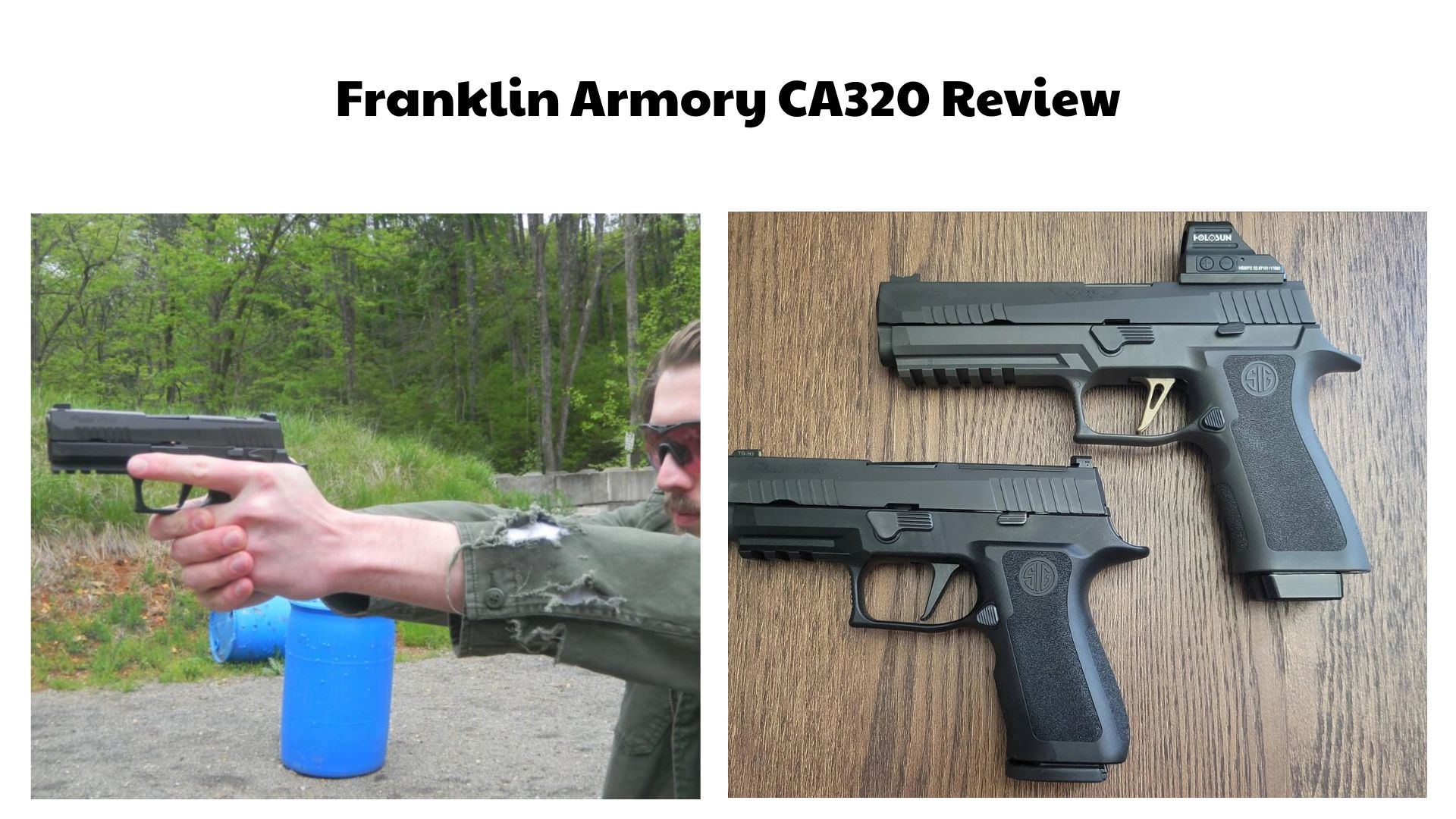

The Franklin Armory CA320 exists as a direct response to California’s strict handgun roster laws, which significantly limit the availability of modern semi-automatic pistols. Over time, these restrictions have created a gap between what is legally available in California and what is considered standard in the broader U.S. handgun market.
At the same time, demand for modern striker-fired pistols continues to grow, especially among shooters who want duty-grade features such as modular frames, optics compatibility, and high-capacity magazines. This conflict between demand and regulation is what ultimately led to the development of the CA320.
Franklin Armory’s solution was to adapt the widely respected SIG Sauer P320 platform into a configuration that complies with California’s roster requirements. By re-engineering the system into a compliant format, the company effectively created an “on-roster P320” alternative for California residents.
This concept is highly significant within the California gun market because it provides legal access to a modern duty-style pistol platform that would otherwise be unavailable due to roster limitations. As a result, the CA320 has become both a practical solution and a controversial topic within firearm communities.
Built specifically for compliance, the CA320 highlights the tension between innovation and regulation in restrictive firearm markets. Its unique design has also generated curiosity and debate regarding how far manufacturers can go in adapting modern platforms to meet legal constraints.
What Is the Franklin Armory CA320?
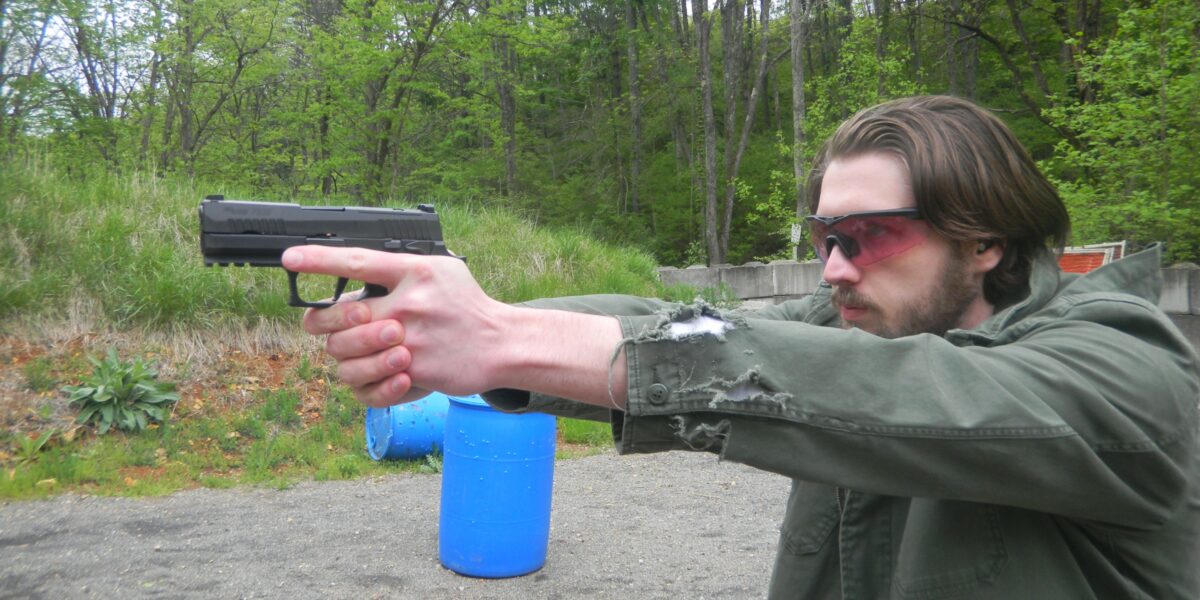
The Franklin Armory CA320 is a California-compliant handgun based on the SIG Sauer P320 Fire Control Unit (FCU) system. At its core, it uses the modular FCU architecture that makes the P320 platform unique, allowing the internal fire control group to be the serialized component of the firearm.
The CA320 is essentially a hybrid build that combines a P320-compatible slide, barrel, and recoil system with a custom-designed Franklin Armory grip module. This grip module is specifically engineered to meet California regulatory requirements while maintaining compatibility with the P320 FCU system.
One of the defining characteristics of the CA320 is its classification as a single-shot, California roster-compliant handgun. This legal configuration is what allows it to be sold within the state despite restrictions on most modern semi-automatic pistols.
Importantly, the CA320 is manufactured by Franklin Armory and not SIG Sauer. While it uses SIG P320 components and architecture, it is a separate product designed specifically for California compliance purposes.
California Roster Compliance & Legal Design
California’s handgun roster system is a regulatory framework that determines which handguns can be legally sold by licensed dealers in the state. To be approved, firearms must meet strict safety testing and configuration requirements, which significantly limits the availability of newer handgun models.
The CA320 achieves compliance through a single-shot configuration. In California law, single-shot pistols are treated differently from semi-automatic handguns, allowing them to bypass certain roster restrictions and be legally listed for sale.
This configuration typically involves modifications that prevent standard semi-automatic cycling or restrict magazine functionality during the compliance process. As a result, the firearm is classified differently under state law.
The grip module plays a key role in this compliance strategy, as it is engineered specifically to meet legal requirements while still maintaining compatibility with the P320 fire control system.
However, the CA320 also raises ongoing debate regarding its long-term legality and the potential for post-purchase modifications that could alter its classification. This legal gray area contributes to its controversial reputation in the firearm community.
CA320 Design Philosophy – A Compliance-Driven P320 Variant
The design philosophy behind the CA320 is centered entirely on compliance with California handgun regulations while preserving as much of the modern striker-fired pistol experience as possible.
Rather than designing an entirely new firearm from scratch, Franklin Armory focused on adapting the SIG P320 platform, which is known for its modularity, ergonomics, and widespread use in duty applications.
The goal was to balance modern pistol performance characteristics with strict legal limitations imposed by California law. This includes maintaining familiarity for shooters accustomed to the P320 system while ensuring regulatory compliance.
A key objective was to bring a “modern duty pistol feel” into a restricted market where many contemporary handguns are not available. This makes the CA320 unique as both a functional firearm and a compliance workaround.
As a result, the CA320 is considered a niche product, primarily targeting California civilian shooters who want access to a modern striker-fired platform within legal constraints.
Specifications & Build Overview
The Franklin Armory CA320 is built around a familiar and proven platform architecture, offering compatibility with many standard P320 components.
Caliber
The pistol is chambered in 9mm, which is the standard caliber for most modern defensive and duty handguns due to its balance of recoil, capacity, and effectiveness.
Platform
It is based on the SIG Sauer P320 Fire Control Unit (FCU) system, which serves as the serialized and functional core of the firearm.
Action
The CA320 uses a striker-fired system, consistent with the P320 family, providing a familiar trigger system for users experienced with modern duty pistols.
Barrel and Slide
It utilizes P320-compatible barrel and slide components, allowing for a degree of parts familiarity and interchangeability depending on configuration.
Configuration
The firearm is configured as a single-shot compliant system to meet California roster requirements, which is central to its legal classification.
Optics Readiness
Depending on the specific configuration, the CA320 may support optics-ready setups, allowing compatibility with red dot sights designed for the P320 platform.
Holster Compatibility
Due to its P320-based architecture, the CA320 is generally compatible with standard P320 holsters, making it easier for users to integrate into existing carry or duty setups.
Operating System & Functionality
The Franklin Armory CA320 operates in a fundamentally different way compared to a standard semi-automatic handgun. Its design is centered around a single-shot, manually cycled operation that meets California compliance requirements while still using the SIG P320-based architecture.
Single-Shot Manual Operation Cycle
Each shot requires a manual cycle of the action, meaning the user must physically manipulate the slide after every round. This removes the traditional self-loading behavior found in standard semi-automatic pistols.
Slide Manipulation Requirement
After each trigger pull, the shooter must rack the slide to eject the spent casing and chamber a new round. This significantly changes the shooting rhythm and slows overall firing pace compared to conventional P320 models.
Manual Loading Workflow
The loading process involves inserting a round, firing, and then manually repeating the cycle for each subsequent shot. This workflow is intentionally designed to comply with California’s single-shot exemption requirements.
Elimination of Semi-Automatic Cycling
Unlike a standard P320, the CA320 does not utilize recoil energy to cycle the next round automatically. This fundamentally alters the user experience and limits sustained fire capability.
Real-World Shooting Pace
In practical use, the shooting pace is significantly slower than a typical striker-fired pistol. This makes the CA320 less suitable for defensive scenarios requiring rapid follow-up shots.
Ergonomics & Handling
Grip Module Design
Custom Franklin Armory Grip Layout
The CA320 features a specially designed grip module developed by Franklin Armory to meet California compliance requirements while maintaining compatibility with the P320 FCU system.
Comfort vs Standard P320 Frames
Compared to standard SIG P320 grips, the CA320’s grip may feel slightly different in contour and balance. Some users find it familiar, while others notice variations in texture and geometry.
Texture and Hand Fit Feedback
User feedback generally notes adequate control and retention, although preferences vary depending on hand size and prior experience with P320 platforms.
Control Layout
Ambidextrous Control Placement
The CA320 maintains ambidextrous-friendly control placement, including slide catch mechanisms designed for both left- and right-handed shooters.
California-Required Frame Safety
A frame-mounted manual safety is included to comply with California handgun regulations, adding an additional layer of control not found on all standard P320 models.
Impact on Manual Operation
The need for manual cycling after each shot makes control manipulation more frequent, which can affect ergonomics during extended shooting sessions.
Trigger Performance & Shooting Feel
The CA320 retains the core trigger characteristics of the SIG P320 system, offering a familiar striker-fired trigger experience despite its modified operating system.
Standard P320 Trigger System
The pistol uses a striker-fired trigger mechanism similar to the standard P320, known for its consistent pull, defined break, and predictable reset.
Consistent Break and Reset
Even in its modified configuration, the trigger maintains a relatively consistent break point and reset, which helps preserve accuracy fundamentals.
Perceived Trigger Differences
Some shooters report that the manual cycling process slightly alters the perceived shooting rhythm, even though the mechanical trigger system remains largely unchanged.
Impact of Manual Cycling
Because each shot requires manual slide operation, the natural cadence of trigger control and follow-up shots is interrupted, changing the overall shooting feel.
Reliability & Real-World Performance
User experiences with the CA320 vary depending on familiarity with manual cycling systems and individual handling techniques.
Mixed Initial User Feedback
Early impressions from the shooting community show mixed results, with some users adapting quickly while others note a learning curve associated with the manual operation cycle.
Dependence on Technique
Reliable operation is highly dependent on proper grip strength and consistent slide manipulation technique, which directly impacts cycling consistency.
Ammunition Sensitivity
Some discussions have noted a preference for standard 115gr ammunition for smoother operation, while lighter loads may require more deliberate cycling effort.
Break-In Considerations
As with many mechanical systems, a short break-in period is often reported before smoother operation is achieved through repeated use.
Community Feedback on Cycling
Online user discussions highlight occasional concerns regarding extraction and cycling consistency, though these reports vary depending on usage conditions.
Accuracy & Practical Shooting Performance
Mechanical Accuracy
When fired, the CA320 maintains mechanical accuracy comparable to standard SIG P320 platforms, as the barrel, slide, and FCU system remain fundamentally consistent.
Limitations of Single-Shot Operation
While inherent accuracy is solid, the single-shot design limits practical shooting efficiency, especially in scenarios requiring rapid engagement.
Rate of Fire Constraints
The manual cycling requirement significantly reduces effective rate of fire, making sustained shooting impractical compared to semi-automatic pistols.
Defensive Use Considerations
From a real-world defensive standpoint, the CA320 is generally viewed more as a compliance-driven platform rather than an optimal defensive handgun due to its operational limitations.
Concealability & Carry Considerations
The Franklin Armory CA320 shares a general footprint similar to compact SIG P320 variants, which makes it physically compatible with many existing carry setups. However, its unique operating system significantly changes how it performs in a concealed carry role.
Similar Size to Compact P320 Variants
In terms of dimensions, the CA320 is comparable to compact P320 models, meaning it can fit within the same general category of concealed carry pistols. This allows users to apply existing knowledge of P320 sizing when planning carry setups.
Compatibility with Standard P320 Holsters
Because it is built on the P320 platform, the CA320 is generally compatible with standard P320 holsters, making it easier for users to integrate into existing carry systems without needing specialized gear.
Comfortable IWB Carry Setup
With the right holster and clothing configuration, the CA320 can be carried inside-the-waistband (IWB) comfortably. Its weight and size distribution are manageable for daily carry, similar to other compact striker-fired pistols.
Limitations for Defensive Deployment
Despite its carry compatibility, the manual single-shot operation significantly limits its suitability for high-speed defensive deployment. The need to manually cycle the slide after each shot makes it less practical in dynamic defensive scenarios.
Controls, Safety & User Interface
Ambidextrous Slide Stop Design
The CA320 maintains ambidextrous-friendly control features, including a slide stop that can be operated from either side, making it accessible for both right- and left-handed shooters.
Frame-Mounted Manual Safety Requirement
In compliance with California regulations, the pistol includes a frame-mounted manual safety. This adds an additional layer of user control but also changes the manual of arms compared to standard P320 models.
Slide Manipulation Workflow Differences
Unlike a standard semi-automatic P320, the CA320 requires manual slide manipulation after every shot. This fundamentally changes the shooting workflow and introduces an additional step between each trigger pull.
Ease of Disassembly & Maintenance
Despite its modified operation, the CA320 retains P320-style modularity, making field stripping and maintenance relatively straightforward compared to more complex firearm systems.
Pros and Cons of the CA320
Pros
Legal on California Handgun Roster
One of the most significant advantages of the CA320 is that it is legally available on the California handgun roster, giving residents access to a modern striker-fired platform within strict regulatory limits.
Based on Proven SIG P320 FCU System
The firearm is built around the well-established SIG P320 Fire Control Unit, which is known for its modularity, reliability, and widespread adoption in military and law enforcement applications.
Modular Design Potential
Like other P320-based systems, the CA320 retains a degree of modularity, allowing for potential configuration changes depending on legal and mechanical constraints.
Optics-Ready Slide Compatibility
Depending on configuration, the platform can support optics-ready slides, enabling compatibility with modern red dot sights used in defensive and training environments.
Standard P320 Parts and Holster Compatibility
The CA320 maintains compatibility with many standard P320 components and holsters, making it easier for users already familiar with the platform to transition or integrate accessories.
Cons
Single-Shot Operation Limits Performance
The most significant limitation is its single-shot configuration, which removes traditional semi-automatic functionality and significantly reduces firing efficiency.
Not a Traditional Semi-Automatic Pistol
Because it does not cycle automatically, the CA320 does not function like a standard defensive handgun, which limits its practical application in real-world defensive scenarios.
Niche California Compliance Use Case
The platform is highly specialized for California regulatory compliance, making it a niche product with limited relevance outside of that specific legal environment.
Learning Curve in Operation
Users must adapt to a manual cycling workflow, which introduces an operational learning curve compared to standard striker-fired pistols.
Limited Defensive Practicality
Outside of its legal purpose, the CA320 offers limited practical defensive advantages due to its reduced rate of fire and manual operation requirements.
CA320 vs Standard SIG P320
Functional Differences in Operation
The most significant difference between the Franklin Armory CA320 and a standard SIG P320 is how they operate. While the standard P320 functions as a semi-automatic striker-fired pistol with self-loading capability, the CA320 is configured as a single-shot platform. This means the CA320 requires manual slide cycling after every shot, whereas the standard P320 automatically chambers the next round using recoil energy.
Modularity Comparison
Both platforms share the same core Fire Control Unit (FCU) design, which is a major advantage of the P320 system. However, the CA320’s compliance-driven configuration may limit certain modular upgrades depending on California legal requirements. In contrast, the standard P320 offers broader flexibility in grip modules, slides, barrels, and calibers.
Real-World Shooting Capability Gap
In practical use, the performance gap between the two systems is substantial. The standard P320 supports rapid follow-up shots, defensive shooting scenarios, and high-speed engagement drills. The CA320, by comparison, is significantly slower due to its manual cycling requirement, making it less suitable for dynamic defensive applications.
Legal vs Standard Commercial Configurations
The CA320 exists primarily to comply with California’s handgun roster laws, while the standard P320 is a commercially available semi-automatic pistol sold in most U.S. states. This legal distinction is the core reason for the differences in configuration and functionality.
User Intent and Market Positioning Differences
The standard SIG P320 is positioned as a duty, defense, and law enforcement platform. The CA320, however, is positioned as a compliance-focused solution for restricted markets. This creates two very different use cases despite their shared internal architecture.
Who Should Buy the Franklin Armory CA320?
California Residents Needing a Roster-Compliant Modern Pistol
The primary target audience for the CA320 is California residents who want access to a modern striker-fired platform that complies with the state’s handgun roster requirements.
Collectors of SIG P320 Variants
Firearm collectors interested in unique or rare variations of the SIG P320 platform may find the CA320 an interesting addition due to its unusual compliance-driven design.
Enthusiasts of Compliance Engineering
Shooters who are interested in firearm design, legal engineering, and regulatory adaptation may appreciate the CA320 as an example of how manufacturers navigate restrictive laws.
Modular FCU Platform Explorers
Users who want to explore the SIG FCU ecosystem within legal constraints may also find value in the CA320’s architecture and compatibility with P320-based systems.
Who Should Avoid It?
Users Outside California
For shooters outside California, the CA320 offers little practical advantage compared to a standard SIG P320, making it an unnecessary choice in unrestricted markets.
Defensive Shooters Requiring Semi-Automatic Performance
Those who prioritize defensive readiness, fast follow-up shots, and semi-automatic cycling should avoid the CA320 due to its single-shot operational limitations.
Users Prioritizing Speed and High-Capacity Operation
Shooters who require rapid fire capability and standard magazine-fed semi-automatic performance will find the CA320 unsuitable for their needs.
Budget Buyers Seeking Traditional Performance Pistols
For buyers seeking straightforward, cost-effective defensive handguns with full functionality, traditional striker-fired pistols provide significantly better value and performance.
Final Verdict – Is the CA320 Worth It in 2026?
Innovative Legal Workaround for Restrictive Laws
The Franklin Armory CA320 represents an innovative engineering solution designed to navigate California’s restrictive handgun laws while still offering access to a modern pistol platform.
Strong Engineering Foundation
Built on the proven SIG P320 Fire Control Unit system, the CA320 benefits from a well-established and widely respected mechanical foundation.
Highly Niche but Important Market Solution
While its use case is highly specific, the CA320 fills an important niche for California gun owners seeking legal access to modern striker-fired handgun technology.
Compliance-Driven Platform, Not Duty Pistol
It is important to understand that the CA320 is not designed to function as a standard duty or defensive pistol, but rather as a compliance-oriented adaptation of an existing platform.
Valuable for Legal Access, Not Performance
Ultimately, the CA320’s value lies in providing legal access to a modern handgun system in a restricted environment, rather than delivering superior performance compared to traditional semi-automatic pistols.
Franklin Armory CA320 – 50+ FAQ (Detailed Answers)
1. What is the Franklin Armory CA320?
The Franklin Armory CA320 is a California-compliant handgun based on the SIG Sauer P320 Fire Control Unit (FCU). It is configured as a single-shot pistol to meet California’s handgun roster requirements, allowing it to be legally sold within the state while still using P320-based components.
2. Why was the CA320 created?
It was created to address California’s restrictive handgun roster laws, which limit access to modern semi-automatic pistols. Franklin Armory designed it to give California residents access to a modern striker-fired platform in a legally compliant format.
3. Is the CA320 a real SIG P320?
No. While it uses the SIG P320 FCU system, it is not manufactured by SIG Sauer. It is a Franklin Armory-built firearm that uses P320-compatible components in a compliance-driven configuration.
4. How is the CA320 different from a standard P320?
The biggest difference is operation. The standard P320 is semi-automatic and cycles automatically after each shot, while the CA320 is configured as a single-shot pistol requiring manual slide cycling after every round.
5. Is the CA320 semi-automatic?
No. It is not semi-automatic in its California-compliant configuration. It must be manually cycled after each shot, which significantly changes its shooting function.
6. Is the CA320 legal in California?
Yes. It is designed specifically to comply with California’s handgun roster requirements by being classified under a single-shot exemption configuration.
7. Can I convert the CA320 into a standard P320?
Legally, modifications may have serious compliance implications in California. Any attempt to convert it into a semi-automatic configuration could violate state law depending on configuration changes.
8. What caliber does the CA320 use?
The CA320 is chambered in 9mm, which is the most common defensive handgun caliber due to its balance of recoil, capacity, and effectiveness.
9. Who manufactures the CA320?
It is manufactured by Franklin Armory, not SIG Sauer, even though it uses SIG P320 internal architecture and components.
10. What is the Fire Control Unit (FCU)?
The FCU is the serialized internal component that contains the trigger and firing system. In the P320 ecosystem, it is the core part that defines the firearm and allows modularity.
11. Is the CA320 good for concealed carry?
It can be carried, but it is not ideal for defensive concealed carry due to its single-shot operation, which limits speed and practicality in emergency situations.
12. Is the CA320 good for home defense?
While it can be used for home defense, its manual cycling requirement makes it less effective than standard semi-automatic pistols in high-stress scenarios.
13. What makes the CA320 legal under California law?
It is classified as a single-shot pistol, which allows it to bypass certain restrictions under California’s handgun roster regulations.
14. Does the CA320 use standard P320 magazines?
Yes, it is compatible with P320 magazines, although functionality depends on the compliant configuration used in California.
15. Is the CA320 reliable?
Reliability is generally good in terms of mechanical components, but user experience varies due to its manual cycling system and shooter technique.
16. Does the CA320 have recoil issues?
Recoil is similar to a standard P320 since the platform is similar, but the manual cycling process changes shooting rhythm and perceived recoil control.
17. What type of trigger does it use?
It uses a SIG P320-style striker-fired trigger system with a consistent break and reset similar to standard models.
18. Is the trigger good?
The trigger is generally considered solid and consistent, but performance perception varies due to the manual operation cycle.
19. Can the CA320 mount optics?
Depending on configuration, some CA320 variants support optics-ready setups compatible with P320-style red dot systems.
20. What optics are compatible?
Compatibility may include common P320 footprint optics, but exact compatibility depends on slide configuration and mounting system used.
21. Is the CA320 modular?
Yes, it retains modularity through the FCU system, although California compliance limits how far modifications can go.
22. Is it good for beginners?
It is not ideal for beginners due to its non-standard operation. New shooters may struggle with manual cycling between shots.
23. Is the CA320 better than Glock 19?
No. The Glock 19 is a fully functional semi-automatic pistol, while the CA320 is a compliance-driven single-shot platform.
24. Why choose CA320 over other pistols?
The main reason is legal access in California. It provides a modern platform where many standard pistols are restricted.
25. Can the CA320 be used for competition?
It is not suitable for most shooting competitions due to its single-shot manual cycling limitation.
26. How accurate is the CA320?
Mechanically, it is as accurate as a standard P320 since the barrel and FCU system are similar.
27. Does it have a safety?
Yes, it includes a frame-mounted manual safety required for California compliance.
28. Is the CA320 expensive?
Pricing varies, but it is generally more expensive than standard pistols due to its niche compliance engineering.
29. Is it worth buying outside California?
No. Outside California, there is little practical reason to choose it over a standard P320 or other semi-automatic pistols.
30. What is the biggest disadvantage of CA320?
Its biggest disadvantage is the lack of semi-automatic functionality, which limits speed and defensive effectiveness.
31. Can it be used for law enforcement?
It is generally not used for active duty law enforcement due to operational limitations.
32. Is maintenance easy?
Yes. It maintains P320-style modularity, making field stripping and maintenance relatively simple.
33. Does it feel like a real P320?
In terms of ergonomics and trigger feel, it is similar, but the manual cycling changes the overall shooting experience.
34. Is it heavy?
It is similar in weight to compact P320 variants, making it manageable for carry.
35. Does it support aftermarket parts?
Some P320-compatible parts may work, but California compliance restrictions limit extensive modifications.
36. What is its main purpose?
Its primary purpose is legal access to a modern striker-fired platform in California, not high-performance shooting.
37. Is it good for training?
It can be used for basic training, but its manual cycling makes it less effective for defensive training drills.
38. Does it jam often?
Most issues are related to user cycling technique rather than mechanical failure.
39. Is it better than revolvers?
It depends on use case, but revolvers offer simpler operation without manual slide cycling between shots.
40. What makes it controversial?
Its compliance-driven design and legal workaround approach make it a debated firearm in the community.
41. Is it future-proof?
Its future depends heavily on California firearm laws and roster changes.
42. Can it be carried daily?
Yes, but practicality is reduced due to its operation style.
43. Is it good for self-defense?
It is less ideal for self-defense compared to standard semi-automatic pistols.
44. Does it require special training?
Yes, users need to adapt to manual cycling between shots.
45. Is it widely available?
No, availability is limited primarily to California markets.
46. Does it improve over time?
Some users report smoother operation after break-in and practice.
47. Can it compete with modern pistols?
Not in performance terms, but it competes in terms of legal accessibility in California.
48. Is it a good investment?
It depends on legal needs rather than performance value.
49. Who should avoid it completely?
Anyone needing standard semi-automatic defensive capability should avoid it.
50. What is the final takeaway?
The CA320 is best understood as a compliance engineering solution rather than a traditional defensive handgun.
Read more: