
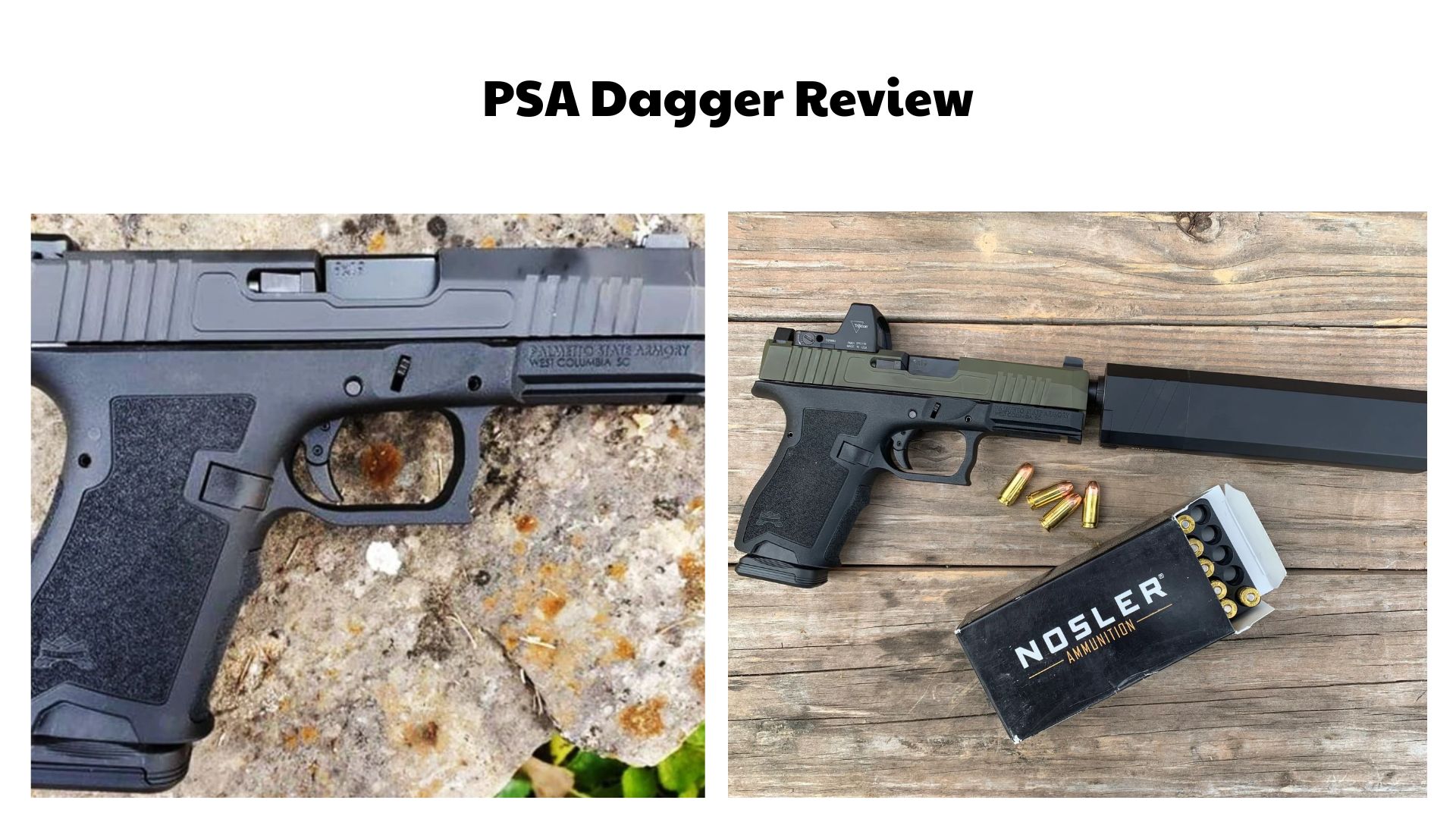

The PSA Dagger is a budget-friendly, striker-fired 9mm pistol that has quickly gained attention as one of the most competitive alternatives to the Glock 19 Gen 3. Built around a familiar Glock-style platform but offered at a significantly lower price point, the Dagger has positioned itself as a serious contender in the modern budget handgun market.
Often described as a Glock 19 Gen 3 clone with thoughtful upgrades, the PSA Dagger maintains compatibility with many Glock components while introducing improved ergonomics and modern factory features. This combination of familiarity and affordability has made it especially attractive to new gun owners and experienced shooters looking for a cost-effective secondary firearm.
The pistol has become one of the most popular budget handguns in the United States, largely due to its aggressive pricing strategy and broad availability. As firearm prices continue to rise across the industry, demand for value-driven platforms like the Dagger has increased significantly.
Palmetto State Armory (PSA), the manufacturer behind the Dagger, is widely recognized for its mission of delivering high-value, low-cost firearms to civilian shooters. The company has built its reputation on offering affordable AR-15 platforms, parts, and accessories, and the Dagger represents its expansion into the handgun market with the same value-focused approach.
In recent years, the PSA Dagger has attracted growing attention due to widespread reliability testing, high-volume range use, and ongoing debates about its suitability for concealed carry and defensive applications. These discussions have helped solidify its place as one of the most talked-about budget pistols in the industry.
In this review, we will break down everything you need to know about the PSA Dagger, including its specifications, design features, shooting performance, reliability, pros and cons, and how it compares to other popular handguns on the market.
PSA Dagger Overview and Background
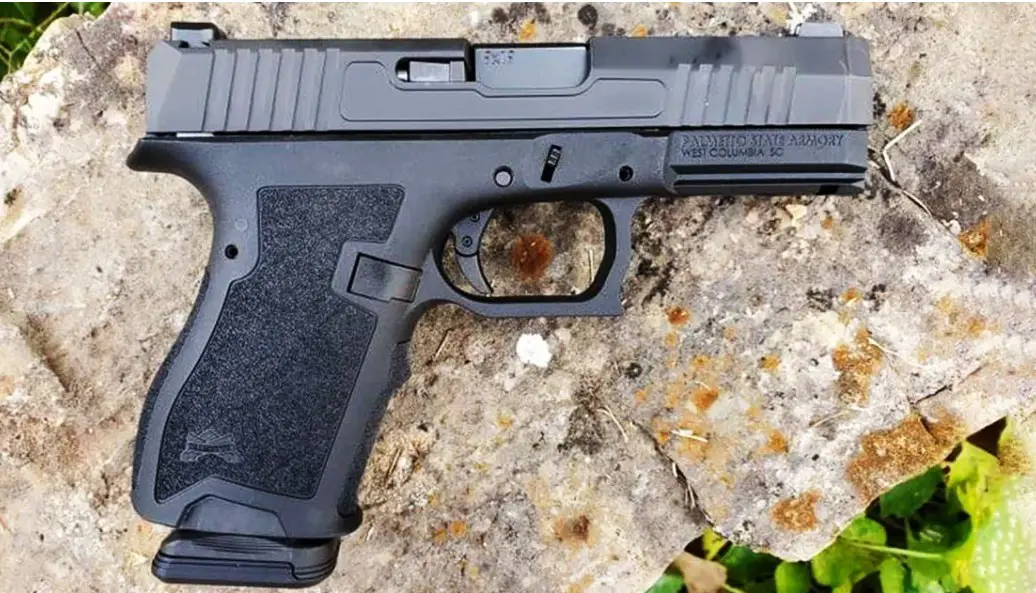
What Is the PSA Dagger?
The PSA Dagger is a striker-fired, polymer-framed 9mm pistol designed as a direct competitor to the Glock 19 platform. It is built around the proven Glock Gen 3 architecture, meaning many of its internal components and design principles are compatible with Glock-style parts and accessories.
Produced by Palmetto State Armory (PSA), the Dagger is intended to deliver a familiar shooting experience at a significantly lower price point than OEM Glock pistols. This makes it an appealing option for budget-conscious shooters who want a modern semi-automatic handgun without paying premium-brand pricing.
PSA Company Background
Palmetto State Armory has established a strong reputation in the budget firearms market by focusing on affordability, accessibility, and high production volume. The company is best known for its cost-effective AR-15 rifles, components, and accessories that cater to both entry-level and experienced firearm owners.
Over time, PSA has expanded its manufacturing capabilities beyond parts and rifle platforms into complete firearm production. The introduction of the Dagger marked a significant step into the handgun market, allowing the company to compete directly with established pistol manufacturers.
PSA is widely recognized for its value-driven pricing strategy, often offering firearms and components at prices that undercut many competitors while still maintaining acceptable performance standards for civilian use.
Design Philosophy of the Dagger
The PSA Dagger is built around the concept of being “Glock-compatible but improved ergonomics.” This means it retains the core mechanical DNA of the Glock Gen 3 platform while introducing refinements aimed at enhancing shooter comfort and usability.
A key focus of the design is modularity and aftermarket support. Because it follows Glock-compatible standards, the Dagger benefits from a large ecosystem of available parts, holsters, and upgrades, making it highly adaptable for different use cases.
The design also reflects a careful balance between cost efficiency and modern features. While it is manufactured as a budget firearm, it still includes contemporary elements such as optics-ready configurations, accessory rails, and improved grip texturing on many models.
Overall, the PSA Dagger is built with mass-market accessibility in mind, offering a practical and affordable handgun option that appeals to a wide range of civilian shooters, from beginners to experienced enthusiasts.
PSA Dagger Specifications and Features
Key Specifications
The PSA Dagger is chambered in 9mm, the most widely used handgun caliber in modern defensive and training pistols. This caliber choice ensures broad ammunition availability and cost-effective practice, which aligns with the Dagger’s budget-oriented design philosophy.
It operates using a striker-fired action, similar to the Glock platform it is based on. This system eliminates the need for an external hammer, providing a consistent trigger pull and simplified manual of arms, which is especially beneficial for new shooters and concealed carry users.
The standard magazine capacity is 15+1 rounds, although variations exist depending on the specific model configuration and state compliance versions. This capacity places it directly in competition with Glock 19-style compact pistols.
Barrel lengths typically range from approximately 3.9 to 4.5 inches depending on the variant. Compact models are designed for concealed carry, while longer slide versions offer improved sight radius and slightly enhanced velocity.
The unloaded weight is approximately 22 to 23 ounces, making it relatively lightweight for a full-featured compact pistol. This contributes to improved carry comfort compared to heavier all-metal handguns.
The frame is constructed from polymer, helping reduce weight while maintaining durability. The slide is made from stainless steel, often treated with protective coatings to improve corrosion resistance and longevity.
Included Features
Many PSA Dagger models come with an optics-ready slide featuring an RMR footprint, allowing users to mount red dot sights directly without additional machining or modification. This is one of the platform’s most popular modern features.
An accessory rail is integrated into the frame, enabling the attachment of lights, lasers, or other tactical accessories. This increases versatility for both home defense and duty-style setups.
The slide includes front and rear serrations, improving grip and control during press checks, chambering, and malfunction clearing. This enhances usability under stress or in adverse conditions.
The grip is textured and often includes finger indexing features to improve hand placement and control. These enhancements help shooters maintain a stable grip during recoil.
On optic-ready models, co-witness iron sights are included, allowing shooters to use backup sights in conjunction with mounted optics. This improves reliability in case of optic failure or battery depletion.
Build Quality and Materials
The PSA Dagger uses a polymer frame construction, which helps keep manufacturing costs low while providing adequate strength and flexibility for recoil absorption. This is consistent with modern striker-fired pistol designs.
The slide is made from steel or stainless steel depending on production variation, with protective coatings applied to improve durability and resistance to wear and corrosion.
A major advantage of the Dagger is its compatibility with Glock Gen 3 parts, allowing users to source a wide range of aftermarket components such as triggers, barrels, and internal upgrades.
Overall manufacturing reflects PSA’s budget-friendly approach, but newer production models show improved finishing quality compared to earlier PSA firearm offerings, indicating gradual refinement of production standards.
Ergonomics and Design
Grip and Handling
The PSA Dagger features improved grip texture compared to traditional Glock Gen 3 pistols, offering better traction and control during shooting. This is one of the most commonly praised ergonomic upgrades.
The grip angle is comfortable for many shooters and closely resembles the Glock platform, making it familiar for users transitioning from similar pistols. This helps reduce the learning curve for new owners.
Some models include finger grooves or different stippling patterns depending on configuration, providing variations in grip feel and customization options.
However, feedback on grip comfort can be mixed depending on hand size, with some users preferring aftermarket modifications to optimize fit and comfort.
Controls and Layout
The Dagger uses a standard Glock-style magazine release, making magazine changes intuitive for users familiar with striker-fired pistols.
The slide stop lever is included, though its quality and tactile feedback may vary slightly depending on production batch. It remains functional for standard operation.
A simple trigger safety system is integrated into the design, consistent with striker-fired pistols, helping prevent accidental discharge while maintaining ease of use.
Some configurations offer ambidextrous-friendly handling characteristics, making the pistol more accessible for left-handed shooters depending on model setup.
Size and Carry Comfort
The PSA Dagger is built around a Glock 19-sized compact frame, placing it in one of the most popular concealed carry categories in the handgun market.
Weight distribution is well-balanced for a polymer striker-fired pistol, contributing to stable shooting and manageable recoil during extended use.
With proper holster selection, the Dagger is suitable for concealed carry, offering a balance between capacity and concealability that appeals to many everyday carriers.
However, it does have slightly more bulk compared to ultra-compact or micro-compact pistols, which may affect deep concealment comfort for some users.
Shooting Performance
Recoil and Control
The PSA Dagger delivers moderate recoil for a compact 9mm pistol. While not as soft-shooting as full-size competition handguns, it remains very manageable for most shooters, including beginners.
One of its key advantages is the polymer frame, which helps absorb and dissipate recoil energy more effectively than all-metal designs. This contributes to a more comfortable shooting experience during extended range sessions.
In practice, the Dagger tends to feel flatter shooting compared to many budget competitors. The combination of grip angle, weight distribution, and slide design helps keep muzzle rise under control during rapid fire strings.
Overall, recoil control is considered one of the stronger points of the platform, especially when compared to other pistols in the same price category.
Accuracy Performance
The PSA Dagger provides consistent accuracy at typical defensive distances, generally ranging from 5 to 25 yards. Most shooters report tight and repeatable grouping when using quality ammunition and proper fundamentals.
Its barrel-to-slide lockup is solid for a pistol in this price range, contributing to consistent point-of-impact performance. While it is not a precision or competition-focused firearm, it performs well within its intended defensive role.
Optics-ready versions significantly enhance practical precision, allowing users to mount red dot sights for faster target acquisition and improved accuracy at distance. This feature helps bridge the gap between budget and mid-tier performance expectations.
Overall, the Dagger is well-suited for both range use and defensive shooting applications.
Trigger Performance
The PSA Dagger uses a Glock-style striker-fired trigger system, making it familiar to users who have experience with Glock pistols or similar platforms.
The trigger break is consistent and predictable, but it is not considered premium or competition-grade. It maintains the characteristic “safe and functional” feel commonly associated with striker-fired defensive pistols.
Many users describe the pull as slightly heavy with a typical Glock-like resistance. While it is serviceable out of the box, it is not designed for refined shooting performance.
Over time, the trigger feel may improve slightly after a break-in period, as internal components smooth out with use.
Reliability and Durability
Real-World Reliability
The PSA Dagger is generally considered reliable after an initial break-in period. Many users report smooth operation after several hundred rounds, especially when using quality factory ammunition.
However, there are mixed reports of early malfunctions in some units, which is not uncommon in budget firearm categories. These issues often decrease as the pistol is broken in and properly maintained.
When running quality ammunition, the Dagger typically performs well in extended testing environments, including high-round-count evaluations exceeding 1,000 to 3,000 rounds in various reviews.
Overall, reliability is considered strong for its price category, especially once initial settling-in has occurred.
Ammunition Compatibility
The PSA Dagger reliably runs standard 9mm FMJ ammunition, making it suitable for affordable range training and high-volume shooting.
It is also generally compatible with most defensive jacketed hollow point (JHP) loads, which makes it viable for home defense or concealed carry applications.
However, like many budget-friendly pistols, it can show occasional sensitivity to very cheap or inconsistent ammunition. Using quality, factory-loaded rounds improves overall performance consistency.
Long-Term Durability
The PSA Dagger is considered durable within the budget handgun category. It is designed to withstand high round counts when properly maintained, making it suitable for regular training use.
While the platform is robust, some components such as recoil springs or firing pins may require replacement over time, particularly after extensive use. This is typical for high-volume shooting in many striker-fired pistols.
One of the platform’s strengths is its strong aftermarket support. The availability of replacement parts and upgrades helps extend the pistol’s service life and maintain long-term reliability.
PSA Dagger Pros and Cons
Advantages
One of the biggest advantages of the PSA Dagger is that it serves as an extremely affordable Glock alternative. It delivers a similar operating system and manual of arms to the Glock 19 platform at a significantly lower entry cost, making it highly attractive to budget-conscious buyers.
The pistol also offers good ergonomics for its price range. Many shooters find the grip angle, texturing, and overall handling more comfortable than older generation Glock designs, especially Gen 3 models that it closely resembles.
Another strong selling point is the availability of optics-ready configurations. This allows users to mount red dot sights directly from the factory, improving versatility and modernizing the platform for defensive or range use.
Wide aftermarket compatibility is another major advantage. Because it follows Glock Gen 3 architecture, users have access to a large ecosystem of compatible parts, upgrades, and accessories, increasing customization potential.
In terms of performance, the Dagger shows solid reliability after a break-in period and delivers good accuracy for defensive shooting applications when paired with quality ammunition.
Disadvantages
One of the most commonly noted drawbacks is that quality control can vary between individual units. While many pistols perform reliably, some users report inconsistencies that may require break-in or minor adjustments.
The trigger system is another weak point. It is functional but basic, lacking the refinement, smoothness, or crisp break found in higher-end factory pistols. It is designed more for reliability than performance shooting.
Some small internal parts may experience faster wear compared to premium firearms, particularly under high round counts. While this is not unusual in budget pistols, it is something long-term users should be aware of.
Compared to OEM Glock pistols, the Dagger is not as polished in terms of fit, finish, or long-term consistency. Glock maintains a higher standard of manufacturing refinement and proven durability.
Additionally, base models may come with limited factory accessories, meaning users often need to invest in aftermarket upgrades to fully customize or optimize the platform.
PSA Dagger vs Competitors
PSA Dagger vs Glock 19
When compared to the Glock 19, the differences are most apparent in refinement and brand legacy. Glock offers more proven long-term durability, tighter quality control, and a more established track record across military, law enforcement, and civilian use.
The PSA Dagger, however, competes strongly on price. It delivers a similar Glock-style platform at a significantly lower cost, while also offering more factory features such as optics-ready options and improved ergonomics in many configurations. It is often viewed as a value-driven alternative rather than a direct replacement.
PSA Dagger vs Taurus G3 / SCCY
Compared to budget competitors like the Taurus G3 or SCCY pistols, the PSA Dagger generally offers better ergonomics and a more refined shooting experience. Its grip design and handling characteristics are often considered more modern and comfortable.
Another key advantage is optics-ready support, which is not always available or as well-integrated in similarly priced competing pistols. This gives the Dagger an edge in terms of modernization and upgrade potential.
While some competitors may match or slightly undercut its pricing, they often provide fewer upgrade paths and less extensive aftermarket ecosystems, which limits long-term customization flexibility.
PSA Dagger vs Other Glock Clones
Among Gen 3 Glock-style clones, the PSA Dagger is widely considered a strong value leader. It combines affordability with a feature set that often exceeds other budget clones in the same category.
One of its key advantages over competing clones is its factory feature set, including optics-ready slides, improved grip textures, and modern accessory compatibility. These features are often absent or less refined in lower-cost alternatives.
The Dagger also benefits from a strong aftermarket ecosystem due to its Glock compatibility. This allows it to outperform many competitors in terms of upgrade potential, parts availability, and long-term customization options.
Real-World Use Cases
Concealed Carry
The PSA Dagger is a viable option for concealed carry when paired with a proper holster and appropriate clothing. Its Glock 19-sized frame places it in the compact pistol category, which is widely used for everyday carry.
However, it is slightly heavier than modern micro-compact pistols, which can make all-day carry less comfortable for some users. This extra weight can be noticeable, especially during extended periods of movement or sitting.
On the positive side, the Dagger offers a strong balance between size and magazine capacity. Compared to smaller carry guns, it provides significantly more rounds while still remaining concealable with the right setup.
Home Defense
The PSA Dagger performs very well in a home defense role due to its capacity, reliability, and ease of use. The 15+1 round standard magazine gives users a practical defensive advantage without the need for frequent reloading.
It is also easy to mount weapon lights and optics, especially on modern optics-ready models. This improves target identification in low-light environments and enhances overall defensive capability.
The platform features a simple manual of arms, making it easy to operate under stress. This simplicity is a key advantage in defensive scenarios where ease of use is critical.
Range and Training Use
The PSA Dagger is widely used as a training pistol due to its low cost of entry. Both the firearm itself and its Glock-compatible platform make it attractive for high-volume shooters.
It is ideal for high round-count practice sessions, allowing shooters to develop skills without the financial burden associated with more expensive pistols and accessories.
The Dagger also serves as a solid platform for learning fundamental handgun skills, including grip, trigger control, sight alignment, and recoil management, making it popular among beginners and intermediate shooters.
Community and User Feedback
Positive Feedback
One of the most consistent points of praise within the firearms community is the Dagger’s strong value-for-money reputation. Many users highlight that it delivers reliable performance at a significantly lower price than comparable pistols.
A common sentiment is that it offers “Glock performance at half the price,” reflecting its ability to deliver similar functionality to more expensive platforms while maintaining affordability.
Users also frequently note improved ergonomics compared to older Gen 3 Glock pistols, especially in terms of grip texture and handling comfort during extended shooting sessions.
Negative Feedback
Despite its popularity, the PSA Dagger does receive criticism regarding inconsistent quality control in some production batches. While many units perform flawlessly, others may require break-in or minor tuning.
Another common criticism involves the trigger system and internal refinement. While functional, it is not considered premium and lacks the smoothness or crisp break found in higher-end handguns.
Some users also report occasional reliability concerns during the initial break-in period, particularly when using lower-quality ammunition or before the pistol has been fully cycled.
Overall Reputation
Overall, the PSA Dagger is widely regarded as one of the best budget Glock 19 alternatives available today. It has earned a strong following among both beginner shooters and experienced firearm enthusiasts looking for an affordable secondary platform.
Its reputation is built on a balanced mix of praise and caution: while it offers excellent value and solid performance for the price, it is also recognized as a budget firearm that may require some user patience and maintenance to reach optimal performance.
Pros and Cons Summary
Why People Buy It
One of the main reasons people choose the PSA Dagger is its position as a budget-friendly Glock alternative. It delivers a familiar Glock-style shooting experience at a significantly lower price point, making it attractive to cost-conscious buyers who still want a modern striker-fired 9mm pistol.
The platform is also widely valued for its upgrade potential. Because it is based on Glock Gen 3 architecture, it supports a large ecosystem of aftermarket parts, allowing users to customize triggers, barrels, sights, and other components over time.
For many shooters, the Dagger represents an affordable entry into modern 9mm pistols. It provides core defensive handgun functionality without the financial barrier associated with premium brands.
Why Some Avoid It
Some shooters prefer OEM Glock pistols due to their long-standing reputation for reliability, consistency, and military/law enforcement adoption. Glock’s proven track record gives it an advantage in perceived durability and quality control.
Others avoid the PSA Dagger because they want a higher level of trigger refinement and overall finish quality. Compared to more expensive pistols, the Dagger’s trigger system and fit-and-finish are more basic and utilitarian.
There is also some concern among buyers regarding long-term quality control consistency. While many units perform well, variability between production batches can influence user confidence.
Final Verdict on the PSA Dagger
Is the PSA Dagger Worth It?
The PSA Dagger is widely considered one of the best value pistols in its class. It delivers a solid balance of functionality, features, and affordability, making it highly competitive in the budget handgun market.
While it is not a perfect firearm, it offers impressive performance for its price range and remains one of the most compelling options for shooters looking for a Glock-style platform without paying Glock-level prices. It is best described as “budget performance with modern features.”
Who Should Buy It
The PSA Dagger is an excellent choice for first-time handgun owners who want an affordable yet modern introduction to striker-fired pistols. It provides a practical learning platform without requiring a large investment.
It is also well-suited for budget-conscious concealed carriers who want a full-size capacity compact pistol without spending premium-level money. With the right setup, it can serve as a dependable everyday carry option.
Additionally, it appeals to shooters who want a Glock-style platform at a lower cost, especially those interested in customization and aftermarket upgrades over time.
Final Thoughts
Overall, the PSA Dagger stands as a strong contender in the budget 9mm handgun market. It reflects Palmetto State Armory’s broader success in making firearm ownership more accessible by offering functional, modern designs at aggressive price points.
It is best viewed as a value-first defensive and range pistol rather than a premium-duty firearm. For the right buyer, it delivers an impressive combination of affordability, usability, and upgrade potential that is difficult to match in its price category.
Frequently Asked Questions About the PSA Dagger
1. What is the PSA Dagger?
The PSA Dagger is a striker-fired, polymer-framed 9mm handgun produced by Palmetto State Armory. It is built around the Glock Gen 3 design architecture, meaning it shares many internal design similarities and parts compatibility with Glock pistols. It is positioned as a budget-friendly alternative to the Glock 19, offering similar functionality at a much lower price point.
2. Is the PSA Dagger a Glock clone?
Yes, the PSA Dagger is often described as a Glock 19 Gen 3 clone, but with some refinements. While it follows the same basic operating system and internal layout, PSA has introduced its own improvements in ergonomics, grip texture, and factory features such as optics-ready slides. It is not an exact copy but heavily based on the Glock platform.
3. Is the PSA Dagger reliable?
The PSA Dagger is generally considered reliable after a break-in period. Many users report thousands of rounds fired without major issues when using quality ammunition and proper maintenance. However, like many budget pistols, some units may experience early malfunctions or require break-in before achieving full reliability.
4. How does the PSA Dagger compare to Glock 19?
The Glock 19 is more refined, has tighter quality control, and a long-standing reputation for military and law enforcement use. The PSA Dagger offers similar functionality at a much lower price but sacrifices some refinement, consistency, and long-term proven durability. It is best seen as a budget alternative rather than a direct replacement.
5. Is the PSA Dagger good for concealed carry?
Yes, the PSA Dagger can be used for concealed carry, especially in Glock 19-sized holsters. It offers a good balance between capacity and concealability. However, it is slightly heavier and bulkier than modern micro-compact pistols, which may affect comfort for all-day carry.
6. How much does the PSA Dagger cost?
The PSA Dagger is known for its aggressive pricing, often significantly lower than OEM Glock pistols. Depending on configuration and sales, it is typically one of the most affordable Glock-style pistols available on the market.
7. What caliber is the PSA Dagger?
The PSA Dagger is chambered in 9x19mm (9mm Luger), which is the most popular handgun caliber in the world. This ensures wide ammunition availability, affordability, and suitability for both self-defense and training.
8. What magazine capacity does the PSA Dagger have?
Standard PSA Dagger magazines typically hold 15 rounds, plus one in the chamber for a total of 16 rounds. Capacity may vary depending on model configuration and local regulations.
9. Is the PSA Dagger optics ready?
Yes, many PSA Dagger models come optics-ready with an RMR-style footprint. This allows users to mount red dot sights directly onto the slide, improving target acquisition speed and accuracy.
10. Can I use Glock magazines in the PSA Dagger?
In many cases, the PSA Dagger is compatible with Glock Gen 3 magazines. However, reliability can vary depending on magazine generation and specific firearm tolerances. PSA magazines are generally recommended for best performance.
11. Is the PSA Dagger good for beginners?
Yes, the PSA Dagger is often recommended for beginners due to its simple striker-fired design and low cost. However, its trigger and ergonomics are not as refined as higher-end pistols, which may slightly increase the learning curve.
12. Does the PSA Dagger have a safety?
The PSA Dagger uses a trigger safety system typical of striker-fired pistols. It does not have a traditional external manual safety lever, relying instead on internal safeties and proper handling procedures.
13. Is the PSA Dagger accurate?
Yes, the PSA Dagger is generally accurate for defensive and range shooting distances. Most users report consistent grouping at typical handgun ranges (5–25 yards), especially with quality ammunition and optics-equipped models.
14. What is the recoil like on the PSA Dagger?
Recoil is moderate and manageable. The polymer frame helps absorb energy, and the Glock-style design keeps muzzle rise under control. It is not as soft-shooting as full-size pistols but is comfortable for most shooters.
15. Is the PSA Dagger durable?
The PSA Dagger is considered durable within its price category. While not as proven as Glock pistols, it is designed for long-term use with proper maintenance and can handle high round counts in normal civilian use.
16. Does the PSA Dagger need a break-in period?
Yes, some users report a break-in period of a few hundred rounds where reliability improves. During this time, internal components smooth out and feeding becomes more consistent.
17. What type of trigger does the PSA Dagger use?
It uses a Glock-style striker-fired trigger system. The pull is functional but not premium, with a somewhat heavy and consistent break designed for reliability rather than performance shooting.
18. Can the PSA Dagger use red dot sights?
Yes, optics-ready versions of the PSA Dagger support red dot sights using an RMR-style footprint. This is one of its most popular modern features for defensive and competition-style shooting.
19. Is the PSA Dagger good for home defense?
Yes, it is a strong option for home defense due to its capacity, reliability, and ease of use. It also supports lights and optics, making it practical for low-light defensive situations.
20. What are the main advantages of the PSA Dagger?
The main advantages include low cost, good ergonomics for its price, optics-ready options, Glock compatibility, and solid performance after break-in. It is widely considered one of the best budget 9mm pistols available.
21. What are the disadvantages of the PSA Dagger?
Disadvantages include inconsistent quality control in some units, a basic trigger system, less refined finish compared to Glock, and potential variability in long-term durability depending on usage.
22. Is the PSA Dagger better than Taurus pistols?
In many cases, the PSA Dagger offers better ergonomics and more modern features like optics-ready slides. However, both brands compete in the budget category and each has strengths depending on model comparison.
23. Is the PSA Dagger better than SCCY pistols?
The PSA Dagger generally offers better ergonomics, higher capacity, and more upgrade potential than SCCY pistols. SCCY may be cheaper, but the Dagger provides a more modern platform overall.
24. Does the PSA Dagger have good aftermarket support?
Yes, because it is Glock Gen 3 compatible, it has extensive aftermarket support including triggers, barrels, sights, holsters, and internal upgrades from multiple manufacturers.
25. Is the PSA Dagger good for range shooting?
Yes, it is widely used as a range and training pistol due to its low cost and decent accuracy. It is especially popular for high round-count practice sessions.
26. Can the PSA Dagger handle hollow point ammo?
Yes, most PSA Daggers run hollow point ammunition reliably, although testing with your chosen defensive ammo is always recommended for optimal confidence.
27. Is the PSA Dagger heavy?
It is moderately light compared to metal pistols but slightly heavier than some modern polymer competitors. Its weight contributes to recoil control and stability.
28. Is the PSA Dagger good for duty use?
While it can be used for duty or defensive roles, most professionals prefer more established platforms like Glock. The Dagger is more commonly used in civilian and budget-conscious applications.
29. Does PSA make good firearms?
PSA is known for producing affordable, functional firearms. While not always matching premium brands in refinement, they are widely recognized for delivering strong value for money.
30. What is the PSA Dagger best used for?
It is best used for concealed carry, home defense, and range training, especially for users who prioritize affordability and Glock-style operation over premium refinement.
31. How long will a PSA Dagger last?
A PSA Dagger can last for thousands of rounds if it is properly maintained and cleaned regularly. Many users report high round counts in the 3,000–10,000+ range with basic upkeep. While it is not built to the same long-term endurance standard as premium duty pistols, it is more than capable for typical civilian defensive and training use.
32. Does the PSA Dagger require a lot of maintenance?
No, the PSA Dagger does not require excessive maintenance, but it does benefit from regular cleaning and lubrication. Because it is a budget firearm, keeping it clean is important to maintain consistent reliability, especially after extended shooting sessions.
33. Is the PSA Dagger good for everyday carry?
Yes, it can be used for everyday concealed carry, especially in Glock 19-style holsters. However, its slightly heavier weight compared to micro-compacts may make it less comfortable for all-day carry depending on body type and holster setup.
34. Can the PSA Dagger be used in cold or harsh environments?
The PSA Dagger can function in a variety of environmental conditions, but like most budget firearms, it performs best when properly maintained. Extreme dirt, moisture, or lack of lubrication may increase the chance of malfunctions.
35. Is the PSA Dagger better than a Glock clone kit?
In many cases, the PSA Dagger is considered more reliable out-of-the-box than self-built Glock clone kits. It comes factory-assembled with tested components, reducing the risk of compatibility or fitting issues that can occur in DIY builds.
36. Does the PSA Dagger rust easily?
The Dagger does not rust easily under normal conditions due to its polymer frame and coated slide. However, like any firearm, it should be stored properly and lightly oiled to prevent corrosion over time.
37. Is the PSA Dagger good for home storage?
Yes, it is commonly used as a home defense or storage firearm. Its simple design, magazine capacity, and ease of operation make it suitable for defensive readiness in secure storage setups.
38. How does the PSA Dagger feel in the hand?
The PSA Dagger feels similar to a Glock 19 but with improved grip texture in many models. Some users find it more comfortable than older Glock Gen 3 pistols, while others still prefer aftermarket grip modifications for a perfect fit.
39. Is the PSA Dagger good for left-handed shooters?
The PSA Dagger is partially ambidextrous-friendly depending on the model, but it is not fully ambidextrous out of the box. Left-handed shooters can still use it comfortably, though some controls may feel more right-hand oriented.
40. What magazines work best with the PSA Dagger?
Factory PSA magazines are generally recommended for best reliability. While some Glock Gen 3 magazines may function, performance can vary depending on manufacturer and generation.
41. Is the PSA Dagger safe to carry loaded?
Yes, like most modern striker-fired pistols, the PSA Dagger is designed to be safely carried with a round in the chamber when proper holsters and safe handling practices are used.
42. Does the PSA Dagger have drop safety?
Yes, it includes internal safeties similar to Glock-style pistols, including trigger safety mechanisms designed to prevent accidental discharge if dropped.
43. Can you modify the PSA Dagger trigger?
Yes, the trigger can be upgraded using Glock-compatible aftermarket parts. Many users install performance triggers or springs to improve pull weight and reset feel.
44. Is the PSA Dagger good for competition shooting?
While it is not a dedicated competition pistol, it can be used for casual competition or training matches. However, serious competitors typically choose more refined or customized platforms.
45. How does recoil compare to a Glock 19?
Recoil is very similar to a Glock 19, though some shooters feel the Dagger has slightly more muzzle movement depending on grip and ammunition. Overall, both are manageable 9mm platforms.
46. Is the PSA Dagger worth the money?
For most budget-conscious buyers, the PSA Dagger is widely considered worth the money. It delivers strong functionality at a very low price, making it one of the best-value pistols in its category.
47. Can the PSA Dagger be used for tactical training?
Yes, it is often used for basic tactical training, including defensive shooting drills and weapon manipulation practice. Its Glock-style controls make it useful for learning fundamentals.
48. Does the PSA Dagger come with a warranty?
Yes, PSA provides customer support and warranty coverage for manufacturing defects. This adds confidence for buyers, especially in the budget firearm category.
49. Is the PSA Dagger a good Glock 19 replacement?
It can serve as a functional alternative, but it is not a full replacement for a Glock 19 in terms of refinement and long-term proven durability. It is best viewed as a value alternative rather than a direct equivalent.
50. What is the biggest drawback of the PSA Dagger?
The biggest drawback is inconsistent refinement compared to premium pistols. While functional and affordable, it does not match Glock-level polish, consistency, or long-term proven track record.
51. Why is the PSA Dagger so popular?
Its popularity comes from offering Glock-like performance at a much lower price. This combination of affordability and functionality has made it extremely attractive in the civilian firearms market.
52. Is the PSA Dagger suitable for security work?
It can be used for basic security applications, but most professionals prefer higher-end duty pistols due to stricter reliability standards and long-term durability requirements.
53. Does the PSA Dagger have a lot of recoil for beginners?
No, recoil is manageable for most beginners. While not the softest-shooting pistol, it is still within a comfortable range for new shooters with proper grip and stance training.
54. Can the PSA Dagger handle high round counts?
Yes, it can handle high round counts with proper maintenance. Many users report thousands of rounds fired without major issues, making it suitable for regular training use.
55. What is the final takeaway on the PSA Dagger?
The PSA Dagger is a highly competitive budget 9mm pistol that delivers strong value, decent reliability, and modern features at a low price. While it does not match premium pistols in refinement, it remains one of the best entry-level Glock-style alternatives available today.
Read more: