
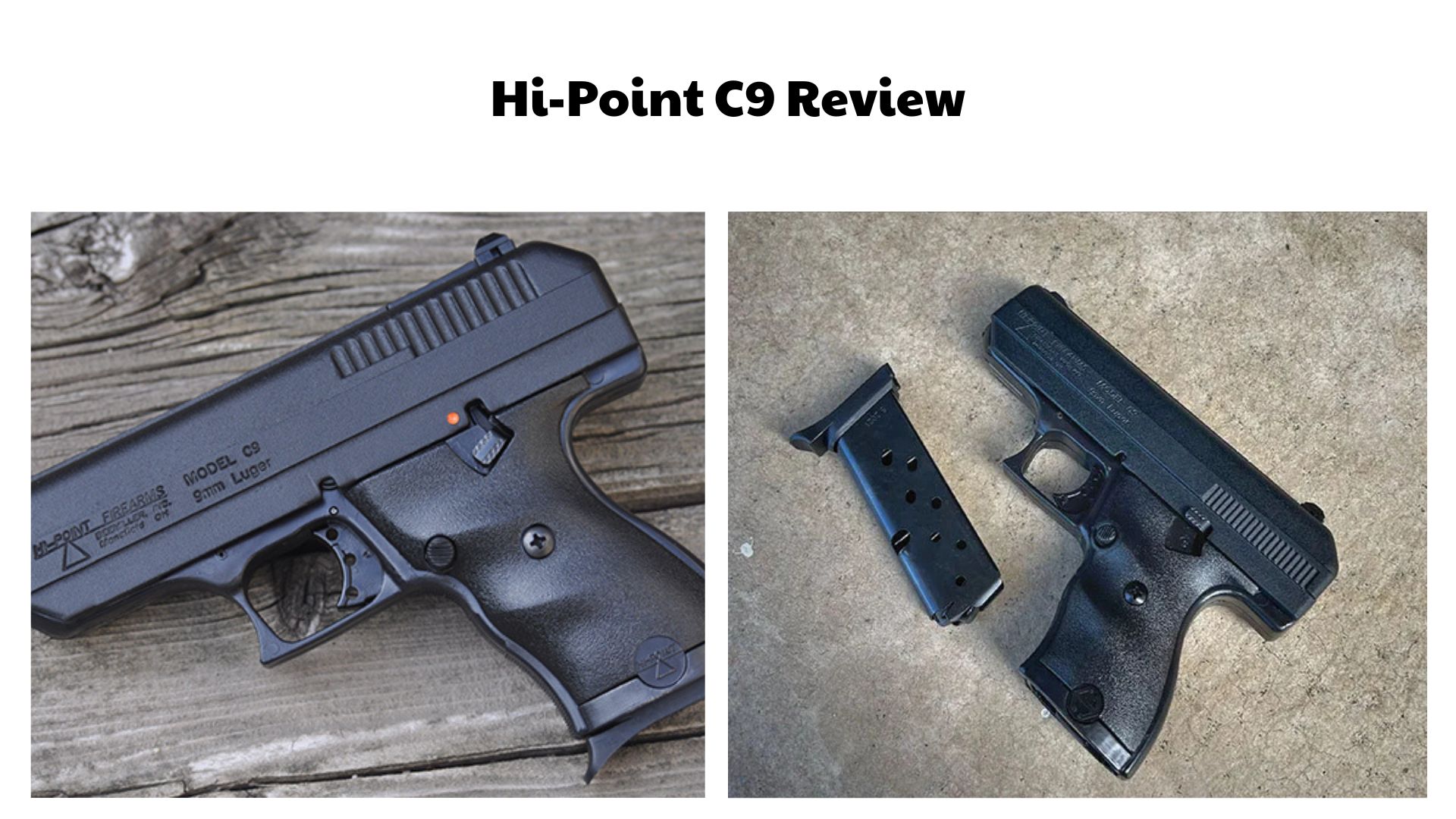

The Hi-Point C9 is widely known as one of the most affordable 9mm pistols available on the market today. It stands out in the firearms world not because of premium engineering or cutting-edge design, but because it delivers a functional semi-automatic handgun at a price point far below most competitors. For many buyers, the C9 represents the lowest-cost entry into centerfire pistol ownership.
Over time, the Hi-Point C9 has developed a dual reputation. On one hand, it is often labeled a “meme gun” within firearm communities due to its bulky design, heavy weight, and budget-level materials. On the other hand, it has also earned recognition as a surprisingly capable budget defensive firearm that continues to function reliably under a variety of conditions. This contrast between reputation and real-world performance is one of the main reasons the C9 remains a widely discussed handgun.
Hi-Point’s overall philosophy is centered on accessibility. The company focuses on producing ultra-low-cost firearms that prioritize basic functionality and affordability over premium finishes, lightweight materials, or advanced features. This approach has allowed many first-time gun owners and budget-conscious buyers to enter the firearms market without significant financial barriers.
Interest in the Hi-Point C9 has also grown in recent years due to ongoing debates about firearm reliability at low price points, as well as increased demand for affordable home-defense options. While some shooters remain skeptical of budget firearms, others point to real-world usage and testing as evidence that the C9 can serve a practical purpose when properly maintained.
In this review, we will break down everything you need to know about the Hi-Point C9, including its specifications, design philosophy, shooting performance, reliability, advantages, disadvantages, and real-world applications. The goal is to provide a clear and balanced understanding of what this pistol offers and where it fits in the modern handgun market.
Hi-Point C9 Overview and Background
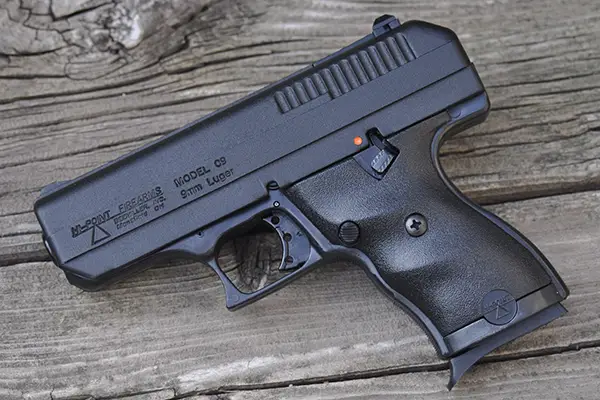
History of Hi-Point Firearms
Hi-Point Firearms is an American manufacturer known for producing some of the most budget-friendly handguns and carbines in the industry. From its early development, the company has focused heavily on affordability, aiming to make firearm ownership accessible to a wider audience rather than competing in the premium or tactical market segments.
Unlike manufacturers that emphasize high-end materials, lightweight construction, or modular platforms, Hi-Point has consistently prioritized cost reduction and functional simplicity. This strategy has resulted in firearms that are often criticized for their appearance and weight, but still maintain a loyal customer base due to their low price and practical utility.
The Hi-Point C9 quickly became one of the company’s most popular pistol models. Designed as a straightforward 9mm handgun for civilian use, it gained traction among budget buyers looking for an entry-level defensive firearm that could be purchased at a fraction of the cost of mainstream alternatives.
Design Philosophy Behind the C9
The Hi-Point C9 is built around a simple and utilitarian design philosophy. It uses a direct blowback operating system, which is mechanically straightforward and cost-effective to produce. This design choice eliminates the need for more complex locking systems commonly found in higher-end pistols, helping keep manufacturing costs low.
The firearm uses a polymer frame combined with a heavy zinc-alloy or steel slide assembly. While this combination results in a noticeably heavier pistol compared to modern polymer striker-fired handguns, it also contributes to durability and manufacturing simplicity. The overall design prioritizes function over aesthetics or advanced engineering refinement.
The C9 is clearly purpose-built for the low-cost self-defense market. Every aspect of its construction reflects an effort to provide a functional handgun at the lowest possible price point. This includes simplified controls, basic sights, and minimal external features. While it lacks the refinement of more expensive pistols, it remains a practical option for those with limited budgets.
Who the Hi-Point C9 Is Made For
The Hi-Point C9 is primarily designed for budget-conscious gun owners who need a functional 9mm handgun without spending significantly more money. It serves as one of the most accessible entry points into centerfire pistol ownership, especially for individuals who are price-sensitive.
It is also commonly chosen by first-time firearm buyers who are new to handgun ownership and want a simple, low-cost option for learning the basics of shooting and firearm handling. While it may not offer premium ergonomics or advanced features, it provides a straightforward platform for developing fundamental skills.
Home defense users on a tight budget also represent a key segment of the C9’s audience. In situations where cost is the primary concern, the pistol offers a basic but functional defensive tool that can be stored for emergency use.
Finally, the Hi-Point C9 has gained attention among casual range shooters and firearm enthusiasts who are interested in “meme guns” or unconventional budget firearms. For some, the appeal lies in testing its reputation firsthand, while others simply enjoy the novelty of owning one of the most debated pistols in the market.
Hi-Point C9 Specifications and Features
Key Specifications
The Hi-Point C9 is chambered in 9mm, one of the most widely used handgun calibers in the world. This choice helps keep ammunition affordable and readily available for most shooters, making it a practical option for both training and defensive use.
The pistol operates using a direct blowback semi-automatic action. This is a simple and cost-effective operating system that relies on slide mass and recoil spring tension rather than a locked-breech design. While this increases slide weight, it also reduces mechanical complexity and manufacturing cost.
The standard magazine capacity is 8+1 rounds. While lower than many modern double-stack pistols, this capacity is consistent with the design’s focus on simplicity and affordability rather than maximum firepower.
The barrel length is approximately 3.5 inches, placing the C9 in the compact pistol category. Despite its compact barrel, the overall size of the firearm is larger than many modern compact 9mm pistols due to its heavy slide and overall construction.
The weight of the Hi-Point C9 is notably heavy for its size, typically around 29 ounces unloaded. This weight is primarily due to the large zinc-alloy or steel slide used in the blowback system, which contributes to recoil management but reduces carry comfort.
Included Features
The Hi-Point C9 comes equipped with adjustable iron sights, allowing shooters to make basic windage and elevation adjustments for improved accuracy. While not high-end tactical sights, they are functional and serviceable for defensive use.
The pistol is rated for +P ammunition, meaning it can safely handle higher-pressure 9mm loads. This increases its versatility for users who choose to use more powerful defensive ammunition, although long-term use of +P loads may accelerate wear.
A last-round slide hold-open feature is included, which locks the slide back after the final round is fired. This provides a clear visual and tactile indicator that the magazine is empty and assists with faster reloads.
The firearm includes a manual safety system located on the frame. This safety allows users to mechanically block the trigger when engaged, adding an additional layer of control for storage or handling.
One notable design element is the simple fixed barrel system. Unlike many tilting-barrel pistols, the C9’s fixed barrel design can contribute to basic mechanical accuracy by maintaining a consistent barrel position during firing.
Materials and Construction
The Hi-Point C9 uses a polymer frame, which helps reduce manufacturing costs while providing a lightweight structural base for the firearm. However, the overall weight of the pistol remains high due to the heavy slide assembly.
The slide is constructed from zinc alloy or steel components depending on production generation. This material choice is a key factor in the pistol’s affordability but also contributes to its bulk and weight compared to more modern forged or machined steel slides.
Overall, the construction reflects Hi-Point’s emphasis on cost reduction over premium materials or refined machining. The design prioritizes affordability and function over aesthetics, modularity, or high-end finishing.
Ergonomics and Handling
Grip Design and Comfort
The Hi-Point C9 features a thick grip that generates mixed feedback among shooters. Some users find it serviceable for handling recoil, while others consider it overly bulky compared to modern ergonomic handgun designs.
The factory grip texture is relatively slick, which can reduce control during extended shooting sessions or in wet conditions. Many owners choose aftermarket grip tape or rubber grip sleeves to improve handling comfort and traction.
Another common observation is the short grip length, which can leave the pinky finger partially or fully off the grip for some shooters. This can affect comfort and stability, especially for users with larger hands.
Controls and Operation
The Hi-Point C9 includes a simple manual safety lever that allows the shooter to engage or disengage the trigger block. While not as refined as safeties found on higher-end pistols, it is straightforward and functional.
The magazine release is often described as surprisingly effective for a budget handgun. Despite the overall low-cost construction, it generally performs reliably and allows for consistent magazine changes.
The pistol does not include a traditional slide release lever. Instead, users must use the “slingshot method” to chamber a round by pulling and releasing the slide manually. While this may feel unfamiliar to shooters used to modern pistols, it remains a simple and reliable operation method.
Size and Weight Impressions
One of the most commonly noted characteristics of the Hi-Point C9 is its heavy and bulky feel for a compact 9mm handgun. Compared to modern polymer-framed pistols, it feels significantly larger in the hand and more cumbersome to carry.
The pistol also has a slightly “top-heavy” balance due to the large slide required for its blowback operating system. This design helps control recoil but contributes to a less refined handling experience.
In terms of carry and handling, the weight can be both an advantage and a disadvantage. While it helps reduce recoil during shooting, it makes the firearm less comfortable for concealed carry or prolonged daily wear. As a result, many users treat the C9 more as a home-defense or range firearm rather than an everyday carry option.
Shooting Performance
Recoil and Muzzle Flip
The Hi-Point C9 produces noticeably strong recoil for a 9mm pistol of its size, primarily due to its direct blowback operating system. Unlike locked-breech designs used in most modern handguns, blowback systems rely heavily on slide mass to delay cycling, which results in a heavier slide moving more forcefully during firing.
As a result, muzzle rise is quite noticeable, especially during rapid or uncontrolled shooting strings. The pistol tends to climb more than similarly sized modern 9mm handguns, requiring the shooter to actively manage recoil through grip strength and stance.
However, the heavy slide does provide some recoil mitigation. While it does not eliminate recoil or muzzle flip, it helps slow the rearward movement enough to make the pistol manageable for most shooters with practice. The overall recoil impulse is firm but predictable.
Accuracy Testing
Despite its budget classification, the Hi-Point C9 delivers surprisingly decent accuracy within typical defensive engagement distances. Many shooters report consistent grouping at short to medium ranges when firing at a controlled pace.
One of the contributing factors to this consistency is the fixed barrel design. Because the barrel does not tilt during cycling like many modern pistols, the mechanical alignment remains more consistent shot to shot, which can help improve basic accuracy potential.
However, performance tends to decline during fast-paced shooting drills. The combination of heavy recoil, bulky ergonomics, and basic trigger design makes it more difficult to maintain tight groupings during rapid fire compared to higher-end handguns. It performs best when shot deliberately rather than aggressively.
Trigger Performance
The Hi-Point C9 features a simple, utilitarian trigger system designed for function rather than refinement. The trigger pull weight is moderate, and while it is not especially smooth, it remains predictable once the shooter becomes familiar with it.
There is no significant pre-travel, and the break is generally described as consistent, if somewhat gritty or heavy compared to modern striker-fired pistols. The reset is functional but not particularly short or tactile.
Overall, the trigger is serviceable for defensive use, but it lacks the crispness, speed, and refinement found in higher-tier handguns. It performs adequately within the intended budget-focused role of the firearm.
Reliability and Durability
Real-World Reliability
The Hi-Point C9 has a mixed but generally acceptable reputation for reliability when properly maintained. Many owners report that the pistol runs reliably under normal conditions, particularly after an initial break-in period where internal components begin to smooth out.
However, occasional malfunctions have been documented during testing and early use, often linked to ammunition type, lubrication levels, or magazine condition. As with many budget firearms, consistency can vary between individual units.
Over time, performance often improves as the firearm is used more regularly, suggesting that the platform benefits from mechanical break-in and proper maintenance practices.
Ammunition Compatibility
The Hi-Point C9 is generally compatible with standard 9mm FMJ ammunition as well as most common jacketed hollow-point (JHP) defensive loads. This makes it suitable for both training and basic self-defense applications.
However, some users report sensitivity to certain magazine conditions and lubrication levels. Ensuring clean magazines and proper lubrication can significantly improve feeding reliability and reduce stoppages.
As with many blowback-operated pistols, consistent ammunition quality also plays a role in overall reliability, with higher-quality loads typically producing smoother performance.
Long-Term Durability
The Hi-Point C9 is known for its basic but surprisingly durable construction relative to its price point. While it does not use premium materials or tight manufacturing tolerances, the design is intentionally robust and overbuilt in certain areas to withstand long-term use.
The pistol is often described as having a high tolerance for rough handling and extended shooting sessions, making it suitable for users who need a low-cost firearm capable of enduring basic abuse.
Additionally, Hi-Point has built a strong reputation for its warranty support. The company is known for offering a no-questions-asked lifetime warranty on its firearms, which adds confidence for owners concerned about long-term durability and potential mechanical issues.
Hi-Point C9 Pros and Cons
Advantages
One of the biggest advantages of the Hi-Point C9 is its extremely affordable price point. It is widely regarded as one of the least expensive functional 9mm pistols available, making it accessible to a broad range of firearm owners who may not be able to afford higher-priced alternatives.
Despite its budget nature, the C9 offers acceptable accuracy for defensive use at typical close-range distances. While it is not designed for precision shooting or competition, it performs adequately when used within realistic self-defense scenarios.
The pistol is also generally reliable when properly maintained. Many users report consistent function after an initial break-in period, particularly when using quality ammunition and keeping the firearm clean and lubricated.
Another advantage is its simple and easy-to-use control layout. The manual safety, magazine release, and basic operation are straightforward, making the firearm accessible for beginners or users who prefer uncomplicated systems.
Finally, Hi-Point is well known for its lifetime warranty support. The company’s reputation for repairing or replacing firearms at minimal cost adds value and peace of mind for budget-conscious buyers.
Disadvantages
The most commonly cited drawback of the Hi-Point C9 is its very heavy and bulky design. Compared to modern polymer-framed pistols, it feels significantly larger and less comfortable for extended carry or handling.
Ergonomics are another weakness. The grip design and overall handling characteristics are not as refined as contemporary handgun designs, leading to mixed comfort feedback among shooters.
Customization options are also limited. Unlike many modern pistols that support optics, lights, and extensive aftermarket upgrades, the C9 offers relatively few factory-supported modification paths.
Recoil characteristics are often described as harsh for a 9mm pistol. The blowback system and heavy slide produce noticeable muzzle flip, especially during rapid firing sequences.
Lastly, the pistol has a relatively low magazine capacity of 8 rounds, which is below the standard capacity of most modern double-stack 9mm handguns. This can be a disadvantage in defensive or high-volume shooting scenarios.
Customization and Aftermarket Support
Limited Upgrade Options
The Hi-Point C9 has limited factory and aftermarket customization support compared to mainstream handguns. It does not typically include an optics-ready slide, which restricts the ability to mount red dot sights without modification.
Most models also lack an accessory rail for mounting lights or lasers, which further limits tactical customization options. Additionally, Hi-Point provides minimal factory customization compared to brands that support modular handgun systems.
Common Upgrades
Despite limited factory support, some basic upgrades are commonly used by owners to improve usability. One of the most popular modifications is the application of grip tape or rubberized grip sleeves, such as Talon Grips, to improve handling comfort and traction.
Some users also add aftermarket laser attachments where compatible mounting options exist, helping improve aiming speed in low-light conditions.
Sight improvements are another common upgrade area. While the factory sights are functional, some owners experiment with aftermarket replacements or simple polishing work to enhance visibility and sight alignment.
Hi-Point C9 vs Competitors
vs Glock Pistols
When compared to Glock pistols, the differences are immediately noticeable in terms of refinement and design philosophy. Glock pistols are significantly lighter, more ergonomically optimized, and widely regarded as more refined overall in terms of trigger feel, modularity, and performance consistency.
In contrast, the Hi-Point C9 is much more affordable but also heavier and less refined. While it can function as a defensive handgun, it lacks the performance efficiency, concealability, and modern feature set of Glock platforms.
vs Budget Pistols (SCCY, Taurus, etc.)
When compared to other budget-friendly pistols such as SCCY or Taurus models, the Hi-Point C9 maintains a strong pricing advantage, often being one of the lowest-cost options available.
In terms of performance, however, refinement levels vary. While all budget pistols may have occasional trade-offs in fit and finish, many competing models offer lighter weight, better ergonomics, and more modern design features. Even so, the Hi-Point C9 remains competitive in basic defensive capability within its price class.
vs Modern Compact 9mm Pistols
Against modern compact 9mm pistols, the Hi-Point C9 struggles significantly in terms of size, weight, and feature integration. Contemporary pistols are typically smaller, lighter, and designed specifically for concealed carry efficiency.
Modern handguns also tend to dominate in terms of ergonomics, modularity, optics readiness, and accessory compatibility. While the C9 remains functional, it lacks many of the advancements that define today’s compact pistol market.
Real-World Use Cases
Home Defense Role
The Hi-Point C9 is often considered a functional emergency firearm option for home defense, especially among budget-conscious buyers. Its primary advantage in this role is simple: it provides access to a working 9mm handgun at a very low cost, making it an accessible defensive tool when financial constraints are a major factor.
In real-world discussions, its reliability is generally considered “good enough” for defensive use when properly maintained and paired with quality ammunition. While it may not match the refinement or consistency of higher-end pistols, many users view it as a viable last-resort option for protecting the home.
Range Use
At the range, the Hi-Point C9 is often viewed as a fun and inexpensive practice gun. Its low purchase price and relatively affordable 9mm ammunition make it an accessible platform for casual shooting sessions and basic marksmanship training.
However, it is not ideal for competition or speed shooting disciplines. The heavy weight, bulky design, and harsh recoil characteristics make it less efficient for rapid-fire drills or precision-based competitive environments. Instead, it performs best during slow, deliberate shooting practice.
First-Time Gun Owners
The Hi-Point C9 is frequently chosen by first-time gun owners due to its entry-level affordability. It allows new shooters to gain experience with a centerfire semi-automatic pistol without a significant financial investment.
While the operation of the firearm is relatively simple, the learning curve can still be challenging due to its heavy weight, basic ergonomics, and less refined trigger system. New users may need additional time to become comfortable with handling and recoil management compared to more modern pistols.
Community and Owner Opinions
Positive Feedback
Among supporters, one of the most common positive remarks is the “it goes bang every time” reputation. Many owners report that, despite its low cost and simple construction, the Hi-Point C9 performs reliably when properly maintained and used with quality ammunition.
Another frequently praised aspect is the strong lifetime warranty support offered by Hi-Point. Owners often highlight the company’s willingness to repair or replace firearms at minimal cost, which adds confidence for budget buyers.
Some users also express surprise at the pistol’s accuracy for its price category. While not a precision or competition firearm, it is often described as adequately accurate for close-range defensive shooting.
Negative Feedback
On the critical side, the most common complaint is the pistol’s heavy and uncomfortable design. Many shooters find it significantly less ergonomic compared to modern polymer-framed handguns, especially during extended use.
Concerns about cheap materials and overall finish quality are also frequently mentioned. The C9’s utilitarian construction reflects its budget design philosophy, but it does not offer the refined feel or visual appeal of more expensive firearms.
Another recurring criticism is the lack of tactical features. The absence of modern enhancements such as optics readiness, accessory rails on many models, and advanced ergonomics limits its appeal for users seeking a more modern defensive platform.
Overall Reputation
The Hi-Point C9 maintains a highly polarizing reputation within the firearms community. It is often simultaneously praised and criticized depending on the perspective of the shooter.
For many, it is appreciated as a budget-friendly tool that provides basic defensive capability at an extremely low cost. For others, it is criticized for its weight, design limitations, and lack of refinement compared to modern pistols.
At the same time, the C9 has achieved strong “meme gun” status online due to its unconventional appearance and reputation. Despite this, real-world usage demonstrates that it remains a functional defensive firearm when used within its intended role and limitations.
Pros and Cons Summary
Why People Buy It
The primary reason many buyers choose the Hi-Point C9 is its status as one of the lowest-cost functional 9mm pistols on the market. For individuals working within extremely tight budgets, it provides an accessible entry point into semi-automatic handgun ownership without the financial barrier of more expensive brands.
Another common reason for purchase is its role as a backup or emergency firearm. Some owners keep the C9 as a secondary defensive option stored in a vehicle, home safe, or emergency kit, where cost-effectiveness is more important than refinement or advanced features.
Finally, curiosity and “meme ownership” also play a role in its popularity. Many firearm enthusiasts purchase the C9 simply to experience it firsthand, test its reputation, or add an unconventional budget pistol to their collection for discussion and range experimentation.
Why Some Avoid It
Despite its affordability, many shooters choose to avoid the Hi-Point C9 because slightly higher budgets can unlock significantly better firearms. Even a small increase in price often provides lighter, more ergonomic, and more refined pistols with improved features and performance.
Ergonomics and weight issues are also major deterrents. The C9 is noticeably heavy and bulky compared to modern compact pistols, which makes it less comfortable for carry, handling, and extended shooting sessions.
Additionally, the platform lacks many modern features that have become standard in today’s handgun market. These include optics-ready slides, accessory rails, modular ergonomics, and advanced trigger systems. For users seeking a modern defensive pistol, these limitations can be significant drawbacks.
Final Verdict on the Hi-Point C9
Is the Hi-Point C9 Worth It?
The Hi-Point C9 is best described as “budget functional” rather than refined. It is designed to deliver basic semi-automatic handgun capability at the lowest possible cost, and in that specific role, it succeeds.
It is a solid choice only when the budget is extremely limited and alternatives are not financially accessible. While it can serve as a working defensive firearm, it does not compete with modern pistols in terms of comfort, features, or shooting refinement.
If a buyer can slightly increase their budget, better alternatives typically become available in the form of lighter, more ergonomic, and more feature-rich handguns. For many shooters, that small price jump results in a significantly improved ownership experience.
Who Should Buy It
The Hi-Point C9 is most suitable for absolute budget buyers who prioritize affordability above all else. It provides the most cost-effective entry point into 9mm handgun ownership currently available in the market.
It is also a practical option for emergency or backup firearm users who need a simple defensive tool stored for rare or last-resort situations. In these cases, cost and basic functionality often outweigh comfort and refinement.
Additionally, it may appeal to beginners who are looking for the cheapest possible entry into 9mm shooting. While it is not the most comfortable learning platform, it does allow new shooters to gain experience with a functional semi-automatic pistol.
Final Thoughts
The Hi-Point C9 is generally reliable enough to defend life in extreme budget scenarios when properly maintained and used with quality ammunition. While it lacks the refinement of higher-end pistols, it still fulfills its intended role as a basic defensive handgun.
It should not be viewed as a premium shooting experience or a high-performance platform. Instead, it exists as a practical example of a firearm designed to meet the minimum functional requirements at the lowest possible price point.
Ultimately, the C9 is a clear illustration of the philosophy “you get what you pay for—but it works.” It delivers basic functionality, limited refinement, and maximum affordability, making it a unique but polarizing option in the modern handgun market.
Frequently Asked Questions About the Hi-Point C9
1. Is the Hi-Point C9 a good gun?
The Hi-Point C9 is a “good gun” depending on how it is defined. It is not a refined or premium handgun, but it is a functional, ultra-budget 9mm pistol designed to go bang reliably when properly maintained. For its extremely low price point, many users consider it acceptable for basic self-defense, range use, or emergency backup purposes. However, compared to modern pistols, it lacks ergonomics, refinement, and advanced features.
2. How reliable is the Hi-Point C9?
Reliability is one of the most debated aspects of the C9. Many owners report that it runs reliably after a break-in period, especially when kept clean and properly lubricated. However, it may experience occasional malfunctions depending on ammunition quality, magazine condition, and maintenance. Overall, it is considered “good enough” for budget defensive use, but not as consistent as higher-end pistols.
3. Is the Hi-Point C9 good for self-defense?
The C9 can be used for self-defense in extreme budget situations. It provides basic 9mm firepower and adequate accuracy at close range. However, it is heavy, bulky, and less ergonomic than modern defensive pistols. While it can work in emergencies, many experts recommend upgrading to a more modern handgun if budget allows.
4. Why is the Hi-Point C9 so cheap?
The C9 is inexpensive because Hi-Point uses cost-saving manufacturing methods such as blowback operation, zinc alloy components, and simplified internal design. The company prioritizes affordability over aesthetics, weight reduction, and premium materials. This allows them to produce one of the lowest-cost functional 9mm pistols in the market.
5. Is the Hi-Point C9 accurate?
The C9 is surprisingly accurate for its price category at short to medium defensive distances. Its fixed barrel design helps improve consistency. However, it is not designed for precision shooting or competition, and accuracy tends to decline during rapid-fire drills due to recoil and trigger limitations.
6. How many rounds does the Hi-Point C9 hold?
The standard Hi-Point C9 magazine holds 8 rounds, plus 1 in the chamber for a total capacity of 9 rounds. This is lower than most modern double-stack pistols, which often hold 15–17+ rounds, but it reflects the pistol’s simple, compact design philosophy.
7. Is the Hi-Point C9 heavy?
Yes, the C9 is considered very heavy for its size, weighing around 29 ounces unloaded. This weight comes mainly from its large blowback-operated slide. While the weight helps reduce recoil, it makes the pistol less comfortable for concealed carry or extended handling.
8. Is Hi-Point a good brand?
Hi-Point is known for producing ultra-budget firearms. It is not considered a premium manufacturer, but it has a reputation for offering lifetime warranty support and functional firearms at very low prices. The brand is polarizing, with both strong supporters and critics.
9. Does the Hi-Point C9 have a safety?
Yes, the C9 includes a manual safety lever that blocks the trigger when engaged. This provides an additional layer of security during handling or storage. However, it is a simple design and not as refined as safeties found on higher-end pistols.
10. What type of action does the Hi-Point C9 use?
The Hi-Point C9 uses a direct blowback semi-automatic action. This system relies on the weight of the slide and recoil spring tension rather than a locked-breech mechanism. It is simple and inexpensive but results in a heavier slide and more felt recoil.
11. Can the Hi-Point C9 handle +P ammo?
Yes, the manufacturer rates the C9 for +P 9mm ammunition. However, long-term use of +P loads may increase wear on internal components due to higher pressure. Most users reserve +P ammunition for defensive purposes rather than regular training.
12. What is the recoil like on the Hi-Point C9?
Recoil is noticeably heavier than most modern 9mm pistols. The blowback design and heavy slide create a sharp and upward muzzle movement. While manageable, it requires more effort to control compared to modern polymer-framed handguns.
13. Is the Hi-Point C9 good for beginners?
It can be used by beginners due to its low cost and simple operation. However, its heavy weight and harsh recoil may make learning more difficult compared to modern ergonomic pistols. Many instructors recommend more refined pistols for easier skill development.
14. Does the Hi-Point C9 jam a lot?
It does not “jam a lot” when properly maintained, but it is more sensitive to ammunition quality and lubrication than higher-end firearms. Occasional malfunctions may occur, especially during early use or with dirty magazines.
15. What magazines does the Hi-Point C9 use?
It uses proprietary Hi-Point 9mm magazines designed specifically for the C9 platform. These magazines are steel-bodied and relatively simple in design, but proper maintenance is important for reliable feeding.
16. Can you conceal carry a Hi-Point C9?
Technically yes, but it is not ideal for concealed carry due to its heavy weight and bulky frame. Most users prefer smaller, lighter pistols for daily carry, while using the C9 for home defense or range use.
17. Is the Hi-Point C9 durable?
The C9 is considered durable for its price range. While it uses low-cost materials, the design is intentionally overbuilt in certain areas to withstand rough use. Many owners report long-term functionality with basic maintenance.
18. Does Hi-Point have a lifetime warranty?
Yes, Hi-Point is known for offering a lifetime warranty on its firearms. The company is widely recognized for repairing or replacing guns with minimal difficulty, which is a major selling point for budget buyers.
19. What is the biggest weakness of the Hi-Point C9?
The biggest weaknesses are its weight, bulkiness, and poor ergonomics compared to modern pistols. These factors affect comfort, handling speed, and concealability more than raw mechanical reliability.
20. How does the Hi-Point C9 compare to Glock pistols?
Glock pistols are lighter, more refined, and ergonomically superior. The Hi-Point C9 is significantly cheaper but lacks modern features, modularity, and overall shooting refinement. Glock is considered a professional-grade platform, while Hi-Point is a budget option.
21. Why is the Hi-Point C9 so heavy?
The weight comes from its blowback design, which requires a large, heavy slide to safely manage 9mm recoil without a locked-breech system. This is a cost-saving design choice but results in a much heavier firearm.
22. Is the Hi-Point C9 good for home defense?
Yes, it can serve as a basic home defense firearm. It offers adequate stopping power, reliability in many cases, and simple operation. However, its size and ergonomics may make it less comfortable to handle under stress.
23. Can the Hi-Point C9 shoot hollow points?
Yes, it generally functions with most jacketed hollow point ammunition. However, performance can vary depending on magazine condition and ammunition brand, so testing is recommended before defensive use.
24. Does the Hi-Point C9 have a slide release?
No, it does not have a traditional slide release lever. Users must manually rack the slide to chamber a round, commonly referred to as the “slingshot method.”
25. What is the trigger like on the Hi-Point C9?
The trigger is functional but not refined. It has a moderate pull weight and a somewhat heavy, gritty feel compared to modern striker-fired pistols. It is serviceable but not designed for performance shooting.
26. Can the Hi-Point C9 be customized?
Customization options are limited. Most upgrades are cosmetic or basic functional improvements such as grips, sights, or grip tape. It does not support extensive modular upgrades like modern tactical pistols.
27. Is the Hi-Point C9 good for range practice?
Yes, it is commonly used as an inexpensive range gun. Its low purchase price and affordable ammunition make it suitable for casual shooting practice, although it is not ideal for advanced training or competition.
28. What are common problems with the Hi-Point C9?
Common issues include occasional feeding problems, heavy recoil, and ergonomic discomfort. Most problems are related to maintenance, ammunition quality, or magazine condition rather than catastrophic failures.
29. Is Hi-Point C9 better than Taurus or SCCY pistols?
It depends on preference. Hi-Point is usually cheaper and very durable, while Taurus and SCCY pistols often offer better ergonomics, lighter weight, and more modern designs at slightly higher prices.
30. Is the Hi-Point C9 worth buying?
It is worth buying only if budget is the top priority. If a buyer can afford to spend slightly more, better-performing and more ergonomic options are widely available. However, it remains a functional entry-level option.
31. How long does a Hi-Point C9 last?
The lifespan of a Hi-Point C9 varies depending on maintenance, ammunition quality, and usage intensity. Many owners report thousands of rounds fired without major issues when the pistol is properly cleaned and lubricated. While it is not designed for extreme high-round-count competition use, it can last a long time under normal recreational or defensive usage.
32. Is the Hi-Point C9 good for concealed carry?
The C9 is generally not ideal for concealed carry due to its heavy weight and bulky profile. Modern compact pistols are significantly lighter and easier to conceal. While it can be carried, most users find it uncomfortable for daily concealed carry compared to more modern alternatives.
33. Does the Hi-Point C9 rust easily?
The C9 is relatively resistant to rust due to its polymer frame and coated metal components, but it is not fully immune. Like any firearm, it can corrode if exposed to moisture and not properly maintained. Regular cleaning and light oiling help prevent rust issues.
34. Is the Hi-Point C9 good for women shooters?
It can be used by women shooters, but its heavy weight and thick grip may be challenging for smaller hands. Many female shooters prefer lighter, more ergonomic pistols. However, some appreciate its simplicity and low cost for home defense use.
35. Can the Hi-Point C9 be used in competitions?
The C9 is not designed for competitive shooting. Its heavy trigger, limited capacity, and bulky design make it less suitable for speed or precision competitions. It is primarily intended for basic defensive or recreational shooting.
36. Is the Hi-Point C9 safe to use?
Yes, when used properly, the C9 is considered safe. It includes a manual safety and standard mechanical safeguards. Like all firearms, safety depends heavily on proper handling, training, and adherence to firearm safety rules.
37. Why do some people hate the Hi-Point C9?
Criticism usually focuses on its weight, bulky design, and low-cost materials. Some shooters also dislike its rough ergonomics compared to modern pistols. However, many of these criticisms are balanced by its extremely low price and functional reliability.
38. Why do some people love the Hi-Point C9?
Supporters appreciate its affordability, simplicity, and “it works” reliability when properly maintained. For many users, it represents the most accessible entry into handgun ownership, especially for self-defense on a tight budget.
39. Does the Hi-Point C9 have good resale value?
The resale value is generally low compared to mainstream firearms. Because it is already a budget gun, used units do not retain high value. However, its low cost also means depreciation is less of a concern for most buyers.
40. Is the Hi-Point C9 loud?
Yes, like most 9mm pistols, it is loud when fired, especially indoors. The sound level is typical for the caliber and should always be expected when shooting without hearing protection.
41. Can the Hi-Point C9 handle dirty conditions?
The C9 is fairly tolerant of rough conditions, but excessive dirt and lack of lubrication can affect performance. It is not a “maintenance-free” firearm and requires basic cleaning to maintain reliability.
42. Is the Hi-Point C9 beginner friendly?
It is beginner friendly in terms of simplicity, but not ideal ergonomically. Its weight and recoil can make learning more difficult compared to modern beginner-focused pistols.
43. Does the Hi-Point C9 have good sights?
The C9 comes with adjustable iron sights that are functional but basic. They are adequate for defensive shooting but not as refined or durable as higher-end sight systems.
44. Can you dry fire a Hi-Point C9?
Yes, it can generally be dry fired safely in moderation. However, using snap caps is recommended to reduce wear over time, as with most centerfire pistols.
45. Is the Hi-Point C9 good for training?
It can be used for basic training such as grip, trigger control, and sight alignment. However, its heavy trigger and recoil characteristics make it less ideal for advanced training progression.
46. How does the Hi-Point C9 compare to revolvers?
Compared to revolvers, the C9 offers higher capacity and faster reloads. However, revolvers are often simpler mechanically and can be more reliable in certain conditions. Both have different strengths depending on use case.
47. Does the Hi-Point C9 require a break-in period?
Yes, many users report a break-in period where reliability improves after several hundred rounds. During this time, internal parts smooth out and cycling becomes more consistent.
48. Can the Hi-Point C9 be used with one hand?
It can be fired one-handed, but its weight and recoil make it less comfortable than lighter pistols. Two-handed shooting is strongly recommended for better control and safety.
49. Is the Hi-Point C9 good for home storage?
Yes, it is commonly used as a home storage firearm due to its low cost and basic defensive capability. Many owners keep it as a “just in case” weapon stored securely at home.
50. What makes the Hi-Point C9 different from modern pistols?
The C9 differs mainly in its heavy blowback design, limited features, and low cost focus. Modern pistols prioritize lightweight construction, modularity, and ergonomics, while the C9 prioritizes affordability and simplicity.
51. Is the Hi-Point C9 outdated?
In terms of design and features, it is considered outdated compared to modern polymer-framed striker-fired pistols. However, it still serves a niche role in the budget firearm market.
52. Can the Hi-Point C9 be used for survival situations?
It can be used as a basic survival or emergency firearm due to its simplicity and reliability when maintained. However, its weight and limited capacity make it less ideal than modern survival-oriented pistols.
53. Is the Hi-Point C9 good for security guards?
It is generally not preferred for professional security work due to its weight and limited capacity. Most professionals choose more modern duty pistols with better ergonomics and higher magazine capacity.
54. What is the biggest advantage of the Hi-Point C9?
The biggest advantage is its extremely low price combined with functional 9mm capability. It allows firearm ownership at a cost significantly lower than most competing pistols.
55. What is the final takeaway about the Hi-Point C9?
The Hi-Point C9 is best understood as a budget-first firearm that prioritizes affordability and basic functionality over refinement. It is not a premium handgun, but it fills an important role for users who need a working 9mm pistol at the lowest possible cost.
Read more: