
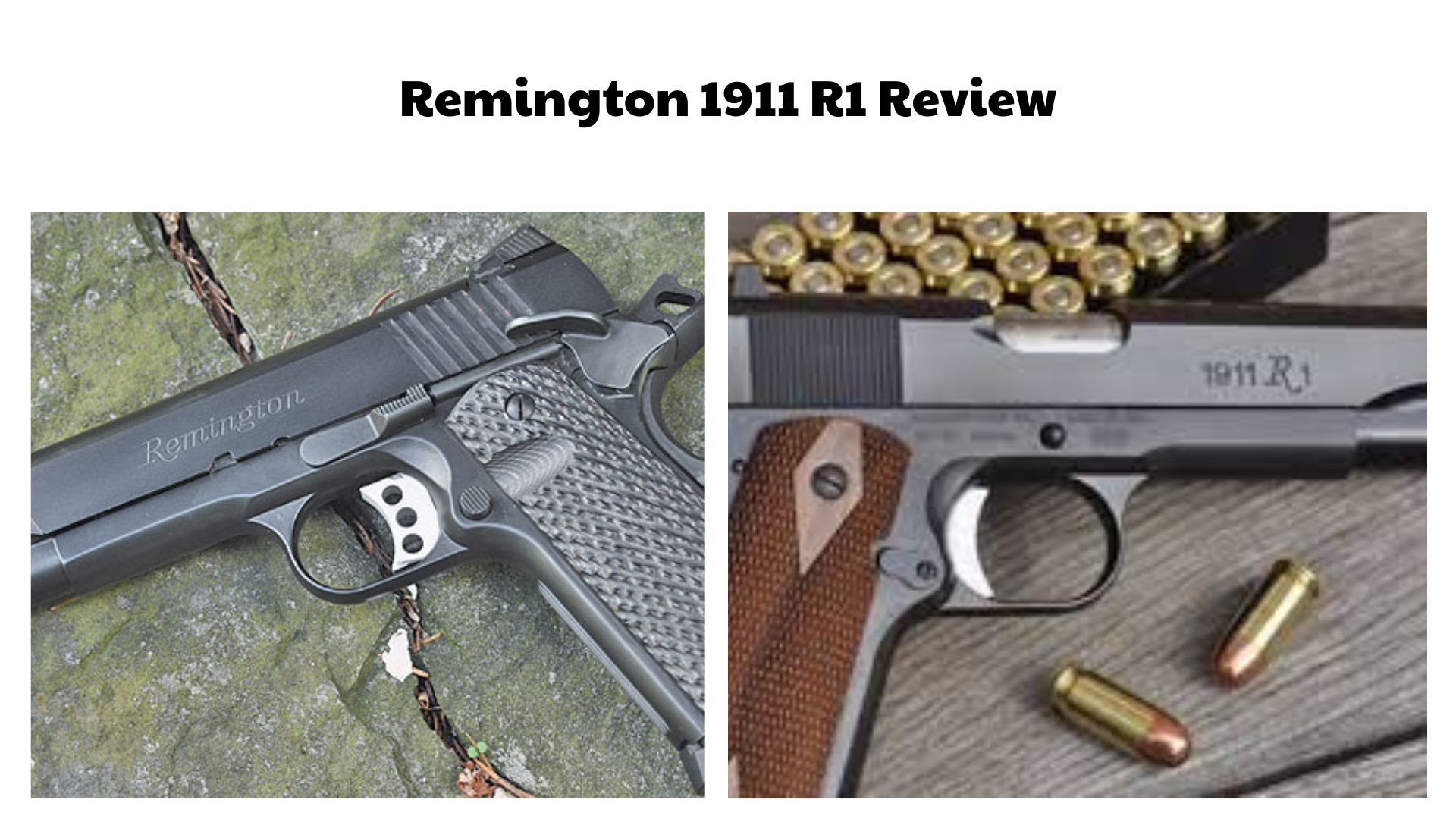

The Remington 1911 R1 represents Remington’s attempt to revive one of America’s most legendary handgun platforms for modern shooters. Built as a modern production take on the classic Colt 1911 design, the R1 combines traditional styling with updated manufacturing techniques while preserving the steel-frame, single-action feel that has made the 1911 platform iconic for more than a century.
Positioned as a traditional all-steel .45 ACP handgun, the Remington 1911 R1 was aimed at multiple audiences, including firearm enthusiasts, collectors, defensive shooters, and longtime fans of classic American pistols. Rather than reinventing the 1911, Remington focused on delivering a familiar Government-model experience with a blend of vintage aesthetics and modern usability.
Since its release, the R1 has developed a mixed reputation within the firearms community. Many owners praise the pistol for its comfortable ergonomics, smooth recoil impulse, and classic appearance, while others criticize certain production runs for quality control inconsistencies and occasional reliability concerns. This split reputation has made the R1 one of the more debated production 1911s on the market.
The pistol also gained attention because it marked Remington’s return to the handgun market during a time when the company was attempting to expand beyond its traditional rifle and shotgun roots. By introducing the R1, Remington entered a highly competitive 1911 market already dominated by manufacturers such as Colt, Springfield Armory, Kimber, and Rock Island Armory.
Despite the rise of modern striker-fired polymer pistols, the 1911 platform itself remains enormously popular. Originally designed by John Browning and adopted by the U.S. military in the early 1900s, the 1911 continues to attract shooters thanks to its excellent trigger design, slim grip profile, soft recoil characteristics, and timeless styling. More than 100 years after its introduction, the platform still holds a respected place among competitive shooters, collectors, and defensive handgun enthusiasts.
In this review, readers will learn everything important about the Remington 1911 R1, including its specifications, design philosophy, ergonomics, trigger performance, reliability, durability, range behavior, customization potential, advantages, disadvantages, and comparisons with competing 1911 pistols and modern handguns.
Remington 1911 R1 Overview and Background
What Is the Remington 1911 R1?
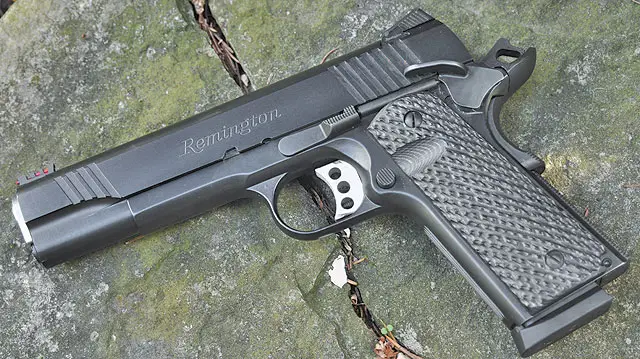
The Remington 1911 R1 is a full-size semi-automatic handgun based on the classic M1911 design originally created by John Browning. Chambered primarily in .45 ACP, the pistol follows the traditional Government-model configuration with a steel frame, steel slide, and single-action operating system.
Unlike many modern polymer-framed pistols, the R1 stays true to the traditional 1911 formula by emphasizing metal construction, slim ergonomics, and crisp single-action trigger performance. It was designed to appeal to shooters who appreciate classic handgun engineering while still wanting a newly manufactured pistol for modern use.
The pistol became available in several variants, including the standard R1 and upgraded Enhanced models. Standard models typically focused on traditional styling with minimal modern additions, while Enhanced versions introduced upgraded sights, improved controls, front slide serrations, and cosmetic refinements intended to attract contemporary shooters.
Because the R1 closely follows the classic Government 1911 design, it retains many of the features enthusiasts expect from the platform, including a grip safety, manual thumb safety, single-stack magazine configuration, and slim grip profile. These elements help preserve the traditional handling characteristics that have kept the 1911 popular for generations.
Remington’s History With the 1911 Platform
Remington’s connection to the 1911 platform goes back to America’s military firearm manufacturing history. During World War I, Remington-UMC was among the companies involved in producing M1911 pistols for the U.S. military. This historical relationship gave Remington legitimate historical ties to one of America’s most important military sidearms.
Decades later, Remington decided to revive that connection by introducing the R1 product line. The goal was to capitalize on the continuing popularity of the 1911 platform while reestablishing Remington as a competitor in the handgun market.
At the time of the R1’s introduction, the 1911 market was already crowded with both premium and budget-oriented manufacturers. Companies such as Colt, Springfield Armory, Kimber, Ruger, SIG Sauer, and Rock Island Armory had already developed strong reputations in the category. Remington entered this market hoping that its historic American brand recognition and traditional styling would help attract buyers.
The R1 was also part of a larger effort by Remington to expand beyond its core rifle and shotgun business. Although the company had long been associated with hunting firearms and military contracts, the handgun market represented a growing opportunity that Remington hoped to capture through recognizable American-made designs.
Design Philosophy Behind the R1
The Remington 1911 R1 was designed around the idea of delivering a classic American handgun experience while incorporating enough modern manufacturing improvements to satisfy contemporary shooters. Instead of radically redesigning the 1911 platform, Remington chose to preserve much of the original appearance and handling that made the pistol famous.
One major focus was maintaining traditional aesthetics. Many versions of the R1 feature classic slide contours, traditional grip panels, and vintage-inspired finishes that appeal strongly to collectors and long-time 1911 enthusiasts. At the same time, Enhanced models introduced more modern upgrades such as improved sights, beavertail grip safeties, skeletonized triggers, and extended controls.
The pistol was intended to serve multiple purposes. Some shooters viewed the R1 as a collectible or nostalgia piece tied to American firearm history, while others used it for defensive carry, home defense, or recreational shooting. The combination of traditional styling and practical usability helped broaden its appeal.
Ultimately, the R1’s philosophy centered around offering shooters a traditional steel-frame .45 ACP pistol that delivered the familiar feel of a classic 1911 without the extremely high prices associated with some premium custom models.
Remington 1911 R1 Specifications and Features
Key Specifications
The Remington 1911 R1 follows the classic Government-model 1911 format and maintains many of the dimensions and characteristics that shooters have associated with the platform for decades. Most standard models are chambered in .45 ACP, the cartridge most closely tied to the original military M1911 pistol. Some variants were also offered in alternative calibers, but the .45 ACP version remains the most recognized and widely discussed.
The standard Government configuration includes a 5-inch barrel, which is the traditional length for a full-size 1911 handgun. This barrel length helps provide a longer sight radius, balanced weight distribution, and improved recoil management compared to shorter compact variants.
Magazine capacity typically ranges from 7+1 to 8+1 rounds depending on the specific magazine design being used. While this capacity is low compared to modern double-stack polymer pistols, it remains standard for traditional single-stack 1911 platforms.
The pistol weighs approximately 38 to 40 ounces unloaded depending on configuration and finish. This substantial all-steel weight contributes heavily to the pistol’s soft shooting characteristics but also makes it noticeably heavier than most modern carry handguns.
The R1 was offered with both carbon steel and stainless steel frame and slide variants. Standard matte finishes and stainless options gave buyers choices between more traditional military-inspired appearances and modern corrosion-resistant styling.
Like virtually all traditional 1911 pistols, the R1 operates using a single-action-only trigger system. This means the hammer must already be cocked for the pistol to fire, either manually or through slide cycling during operation.
Included Features
Depending on the exact model, the Remington 1911 R1 included a mixture of classic and modernized features intended to appeal to different categories of shooters. One of the most important upgrades found on many versions is the beavertail grip safety, which improves comfort and helps prevent hammer bite during shooting.
Enhanced variants introduced several modernized components including skeletonized hammers and triggers. These parts not only reduced weight slightly but also gave the pistol a more contemporary custom-1911 appearance that appealed to enthusiasts.
Many models also featured an extended thumb safety, allowing easier manipulation for defensive shooting and competitive use. This larger safety design improved ergonomics for shooters who prefer modern tactical handling techniques.
Front and rear slide serrations were included on several upgraded models. Rear serrations assist with standard slide manipulation, while front serrations provide additional grip options for press checks and administrative handling.
Certain R1 variants were equipped with Novak-style sights, which are widely respected for their clean sight picture and snag-resistant design. These sights offered better visibility and faster target acquisition compared to traditional GI-style 1911 sights.
Higher-end Enhanced versions also incorporated match-grade barrels intended to improve lockup consistency and practical accuracy. While not true custom competition pistols, these upgrades helped position the R1 Enhanced as a more performance-oriented version of the standard handgun.
Materials and Build Construction
One of the defining characteristics of the Remington 1911 R1 is its all-steel construction. Both the frame and slide are built from steel rather than lightweight polymer or aluminum alloys, giving the pistol the solid feel many traditional handgun enthusiasts prefer.
Internally, the R1 largely follows the traditional 1911 mechanical layout. It uses the familiar barrel bushing system, recoil spring arrangement, single-stack magazine design, and internal hammer system that have defined the platform for generations.
Machining quality and overall fit varied somewhat depending on production period and individual firearm. Some owners praised the pistol for smooth slide movement, attractive finish quality, and solid frame-to-slide fit, while others reported rough machining marks, inconsistent finishing, or parts fitting concerns.
The standard R1 models generally focused on maintaining a more traditional appearance with fewer modern upgrades. In contrast, the R1 Enhanced models incorporated cosmetic and functional improvements such as upgraded triggers, enhanced controls, improved sights, and additional machining features intended to modernize the shooting experience.
Despite the debates surrounding quality control, the overall construction philosophy remained centered around delivering a classic steel-frame American 1911 experience at a more accessible price point than many premium custom pistols.
Design and Ergonomics
Classic 1911 Grip Angle
One of the biggest reasons shooters continue to appreciate the 1911 platform is its legendary ergonomics, and the Remington 1911 R1 benefits greatly from this design heritage. The grip angle naturally aligns with the shooter’s wrist and arm position, allowing many users to point the pistol instinctively with minimal adjustment.
Compared to many modern double-stack pistols, the R1 features a noticeably thinner grip profile due to its single-stack magazine design. This slim grip is especially appreciated by shooters with medium or smaller hands who may find wider polymer-frame pistols uncomfortable.
The pistol’s grip shape also contributes to excellent overall comfort during long shooting sessions. Combined with the steel frame weight, the ergonomics help make recoil feel softer and more manageable than many shooters expect from a .45 ACP handgun.
Even after more than a century of handgun development, the 1911’s ergonomics are still highly respected throughout the firearm industry. Many modern pistols continue borrowing elements from the original design because of how naturally the platform fits in the hand.
Controls and Layout
The Remington 1911 R1 uses the traditional 1911 control layout, which remains one of the most recognizable handgun operating systems ever created. The pistol features a manual thumb safety mounted on the left side of the frame, allowing users to carry the handgun “cocked and locked” with the hammer back and safety engaged.
In addition to the thumb safety, the pistol also includes a grip safety located at the rear of the frame. The firearm cannot fire unless this safety is depressed by the shooter’s hand during a proper firing grip.
The magazine release is positioned behind the trigger guard in the standard American-style location familiar to most handgun shooters. This placement allows fast magazine changes without significantly altering grip position.
The slide stop is easily accessible and functions both as a manual slide release and as the automatic lock-open mechanism after the last round is fired. While modern shooters accustomed to striker-fired pistols may initially require some adaptation, many enthusiasts appreciate the precise and deliberate manual of arms associated with the 1911 platform.
Weight and Balance
The Remington 1911 R1’s all-steel construction gives it a substantial amount of weight compared to modern polymer pistols. While this extra weight can make concealed carry more challenging, it significantly improves shooting comfort and recoil control.
The pistol feels extremely balanced in the hand, especially with a loaded magazine inserted. The long slide and steel frame distribute weight evenly, helping reduce muzzle movement during firing.
One of the major tradeoffs with the full-size Government model design is balancing excellent shootability against practical carry comfort. The R1 shoots softly and tracks smoothly under recoil, but its weight and size can become noticeable during extended daily carry.
Nevertheless, many enthusiasts believe the Government-model dimensions are ideal for range use, recreational shooting, home defense, and traditional 1911 handling characteristics. The pistol’s overall balance remains one of its strongest ergonomic advantages.
Trigger Performance
Single-Action Trigger Characteristics
The single-action trigger is one of the defining strengths of the 1911 platform, and the Remington 1911 R1 benefits greatly from this design. Unlike striker-fired pistols that often use longer and heavier trigger pulls, the 1911 trigger moves straight to the rear with very little travel.
This short trigger pull allows faster and more precise shooting because the shooter applies less movement and disruption before the shot breaks. Many enthusiasts consider the 1911 trigger system one of the best handgun trigger designs ever created.
The break on a properly functioning 1911 is typically crisp and clean with minimal creep. Reset distance is also very short, allowing quick follow-up shots and rapid shooting strings.
Compared to most modern striker-fired pistols, the single-action system generally provides superior precision potential and a more refined shooting feel. This is one reason the 1911 platform remains popular in competitive shooting disciplines.
Trigger Feel on the R1
The factory trigger pull on the Remington 1911 R1 varies somewhat between individual pistols and model variants, but most examples fall within the moderate range expected from production 1911s. Many shooters describe the trigger as reasonably smooth with a clean break, though not as refined as premium custom 1911 pistols.
Standard models generally feature more traditional trigger setups, while Enhanced variants often provide slightly improved trigger feel due to upgraded components and tuning. Enhanced models tend to offer smoother operation and a somewhat cleaner break.
For defensive or range shooting purposes, the trigger is usually considered more than adequate by most owners. While some high-end 1911 enthusiasts may seek additional refinement, the R1’s factory trigger still performs noticeably better than many entry-level striker-fired pistols.
The consistency of the trigger pull also contributes to the pistol’s practical accuracy and comfortable shooting experience, especially during slow-fire target shooting or controlled rapid-fire drills.
Upgrade Potential
One major advantage of owning a 1911 platform pistol is the enormous aftermarket support available for upgrades and customization. The Remington 1911 R1 benefits from this ecosystem and can accept a wide variety of aftermarket trigger components and performance parts.
Many owners choose to install upgraded hammers, sears, triggers, springs, or match-grade internals to improve trigger smoothness and reduce pull weight. Skilled gunsmiths can also perform custom trigger jobs that significantly enhance overall feel and performance.
Drop-in upgrade parts are widely available from numerous manufacturers, making the 1911 one of the easiest handgun platforms to customize extensively. This flexibility appeals strongly to enthusiasts who enjoy personalizing their firearms.
Because of the 1911’s long history and popularity, customization culture surrounding the platform remains extremely strong. Many R1 owners view the pistol as a foundation for future upgrades and personalized modifications.
Shooting Performance
Recoil and Control
Despite firing the powerful .45 ACP cartridge, the Remington 1911 R1 is generally considered a soft-shooting handgun. The heavy steel frame absorbs a significant amount of recoil energy, reducing the sharp snap commonly associated with lighter pistols.
The pistol produces more of a slow rearward push than a harsh recoil impulse, making it comfortable for many shooters during extended range sessions. Combined with the slim grip and excellent ergonomics, the recoil characteristics contribute heavily to the pistol’s enjoyable shooting experience.
Muzzle rise remains manageable thanks to the pistol’s overall weight and balanced slide design. Follow-up shots can be delivered quickly and accurately once shooters become familiar with the platform.
Many enthusiasts specifically prefer steel-frame 1911 pistols because of this smooth recoil behavior, especially compared to lightweight polymer .45 ACP handguns that can feel snappier under rapid fire.
Accuracy Performance
The Remington 1911 R1 is capable of strong practical accuracy, particularly at typical defensive handgun distances. Most shooters can achieve tight groupings at 7 to 15 yards with proper technique and quality ammunition.
At longer distances such as 25 yards and beyond, the pistol still performs well due to its long sight radius and consistent barrel lockup design. Enhanced models with upgraded barrels and sights may offer slightly improved precision potential.
The fixed barrel-to-slide relationship inherent to the 1911 platform helps contribute to accuracy consistency. Combined with the crisp single-action trigger, the R1 allows shooters to make precise shots with relatively little effort.
While it is not a custom-built match pistol, the R1 provides more than enough accuracy for defensive use, recreational shooting, and most range applications.
Range Impressions
Many shooters describe the Remington 1911 R1 as extremely enjoyable to shoot. The combination of steel-frame balance, smooth recoil impulse, slim ergonomics, and crisp trigger characteristics creates a shooting experience that feels refined and traditional.
The pistol delivers the classic 1911 feel that enthusiasts often seek when purchasing a steel-frame .45 ACP handgun. The controls operate positively, recoil feels controlled, and the trigger system allows accurate shot placement with confidence.
Accurate follow-up shots are relatively easy once the shooter becomes comfortable with the manual safety system and single-action trigger operation. The pistol’s predictable handling characteristics make it enjoyable for both casual target shooting and more serious practice sessions.
For many owners, the overall enjoyment factor is one of the R1’s greatest strengths. Even shooters who criticize aspects of reliability or quality control often admit that the pistol is fun and satisfying to shoot when functioning properly.
Reliability and Durability
Real-World Reliability
Reliability is one of the most debated aspects of the Remington 1911 R1. Some owners report thousands of rounds of dependable operation with very few malfunctions, while others have experienced feeding, extraction, or quality control issues depending on the production run and individual pistol.
One of the most common criticisms involves occasional feeding problems with certain ammunition types, especially during the initial break-in period. Some users also reported extraction or ejection inconsistencies, which are not uncommon issues in production-grade 1911 pistols when tolerances, extractor tuning, or magazines are less than ideal.
At the same time, many long-term owners describe the R1 as completely reliable once properly broken in and maintained. Several shooters report smooth operation after a few hundred rounds, particularly when using quality magazines and standard-pressure ammunition.
The concept of a “break-in period” is frequently discussed among 1911 enthusiasts. Unlike many modern striker-fired pistols designed to run flawlessly immediately out of the box, some 1911s benefit from several hundred rounds of use before parts fully smooth out and reliability stabilizes.
Ultimately, reliability experiences with the R1 tend to vary more than with some competing handguns. While many examples function extremely well, the platform’s reputation has been affected by reports of inconsistent quality control during certain periods of Remington production.
Ammunition Compatibility
The Remington 1911 R1 generally performs best with standard FMJ (full metal jacket) training ammunition. Traditional 1911 pistols were originally designed around FMJ ball ammunition, and many R1 pistols feed these loads very reliably.
Most examples also handle modern hollow point defensive ammunition reasonably well, especially newer production runs and Enhanced models with improved feed ramp geometry. However, some pistols may show sensitivity to specific bullet profiles depending on magazine quality and individual manufacturing tolerances.
Magazine selection plays a major role in overall 1911 reliability. Many feeding problems blamed on the pistol itself are actually caused by low-quality or worn magazines. Experienced 1911 shooters often recommend using premium magazines from manufacturers such as Wilson Combat, Chip McCormick, or Tripp Research to improve reliability consistency.
Because the 1911 platform operates with relatively tight tolerances compared to many modern service pistols, lubrication and ammunition quality can significantly affect performance. Well-lubricated pistols running quality ammunition generally produce the best results.
Shooters considering the R1 for defensive use should thoroughly test their chosen carry ammunition to verify reliability before trusting the pistol for serious purposes.
Long-Term Durability
The all-steel construction of the Remington 1911 R1 contributes heavily to its long-term durability potential. Steel-frame pistols can handle extremely high round counts when properly maintained, and the 1911 platform itself has proven capable of decades of service in military, law enforcement, and civilian use.
The R1’s slide and frame generally hold up well under sustained shooting, particularly when owners follow regular maintenance schedules and use quality recoil springs. Steel construction also provides strong wear resistance compared to lightweight alloy-frame pistols.
However, some owners have reported concerns involving extractors, small internal parts, or inconsistent fitting in certain production examples. These issues are not universal, but they contributed to ongoing debates surrounding Remington’s quality control standards during parts of the R1’s production history.
Like most 1911 pistols, the R1 benefits from periodic inspection and preventive maintenance. Recoil springs, extractors, and magazines may eventually require replacement after high round counts to maintain optimal reliability.
Compared to modern striker-fired service pistols, the 1911 platform generally demands slightly more maintenance attention. Enthusiasts often accept this tradeoff because of the platform’s excellent ergonomics, trigger quality, and shooting characteristics.
Remington 1911 R1 Enhanced Model
What Makes the Enhanced Model Different?
The Remington 1911 R1 Enhanced was designed as a more modernized and feature-rich version of the standard R1. While the base model focused heavily on traditional styling and classic 1911 simplicity, the Enhanced version introduced several upgrades aimed at contemporary shooters and enthusiasts.
One of the most noticeable improvements involved upgraded sights. Many Enhanced models featured larger, easier-to-acquire sight systems compared to the more basic sights found on standard variants. This improvement made the pistol faster and more comfortable to use during defensive drills and range shooting.
The Enhanced model also incorporated skeletonized triggers and hammers, which not only reduced weight slightly but also gave the pistol a more modern custom appearance. These upgrades became especially popular among shooters who preferred tactical or competition-inspired aesthetics.
An upgraded beavertail grip safety improved overall shooting comfort and helped shooters achieve a higher grip position on the pistol. This contributed to better recoil control and reduced the likelihood of hammer bite during firing.
Front slide serrations and additional cosmetic refinements further separated the Enhanced version from the standard R1. These changes gave the pistol a more aggressive and modern visual profile while also improving practical handling during press checks and slide manipulation.
Performance Improvements
Beyond cosmetic upgrades, the Enhanced model also introduced several practical improvements that positively affected shooting performance. Many shooters report that Enhanced versions offer smoother and cleaner trigger characteristics compared to the standard R1.
The upgraded controls and improved ergonomics make the pistol feel more natural for modern defensive shooting techniques. Extended safeties, enhanced grip shaping, and upgraded sight systems all contribute to quicker target acquisition and easier handling under stress.
The improved sight picture is one of the most appreciated upgrades on the Enhanced model. Larger and more visible sights help shooters engage targets faster while maintaining greater confidence during rapid-fire drills or defensive-style practice.
Several Enhanced variants also included match-grade barrels and tighter fitting intended to improve practical accuracy. While still not equivalent to full custom competition pistols, these upgrades helped the pistol feel more refined and performance-oriented.
Overall, the Enhanced model was designed to bridge the gap between traditional 1911 styling and the expectations of modern handgun shooters who wanted upgraded ergonomics and practical performance features directly from the factory.
Is the Enhanced Model Worth It?
Whether the Remington 1911 R1 Enhanced is worth the additional cost largely depends on the shooter’s priorities. For enthusiasts who appreciate upgraded sights, improved controls, enhanced ergonomics, and more modern styling, the Enhanced version often provides noticeably better out-of-box usability than the standard model.
The price difference between the standard R1 and Enhanced variants was generally moderate compared to the cost of adding similar upgrades individually through aftermarket customization. For many buyers, this made the Enhanced version the better overall value.
Shooters who prefer a more traditional military-style 1911 appearance may still favor the standard R1. However, users interested in defensive shooting, practical range performance, or modern handling techniques often appreciate the Enhanced model’s improvements.
Because the 1911 platform is highly customizable, some enthusiasts choose the standard model specifically as a foundation for future upgrades. Others prefer the convenience of purchasing an Enhanced model already equipped with modernized features from the factory.
In general, the Enhanced version is often considered the stronger option for shooters wanting a more refined and practical shooting experience without moving into significantly higher-priced premium 1911 territory.
Remington 1911 R1 Pros and Cons
Advantages
One of the Remington 1911 R1’s greatest strengths is its classic 1911 styling. The pistol captures much of the timeless appearance and traditional feel that continue to attract enthusiasts to the platform more than a century after its original introduction.
The ergonomics are another major advantage. The slim grip profile, natural grip angle, and excellent trigger system make the pistol extremely comfortable for many shooters. Few handgun platforms are praised as consistently for their handling characteristics as the 1911.
Thanks to its heavy steel-frame construction, the R1 also delivers very soft recoil for a .45 ACP handgun. The pistol shoots smoothly and remains comfortable during long range sessions, helping many shooters maintain fast and accurate follow-up shots.
The 1911 platform benefits from one of the largest aftermarket support networks in the firearms industry. Owners can easily customize grips, triggers, sights, safeties, hammers, magazines, and countless other components to personalize the pistol to their preferences.
Finally, the overall shooting experience remains one of the R1’s strongest selling points. Even shooters who criticize aspects of quality control often admit that the pistol is enjoyable, accurate, and satisfying to shoot when functioning properly.
Disadvantages
One of the biggest criticisms surrounding the Remington 1911 R1 involves quality control inconsistencies reported across certain production periods. While many pistols functioned well, others left the factory with issues related to feeding, extraction, machining quality, or cosmetic finishing. These inconsistent experiences contributed heavily to the pistol’s mixed reputation among enthusiasts.
The R1’s heavy all-steel construction also creates disadvantages for concealed carry use. Although the weight helps reduce recoil and improve shooting comfort, carrying a nearly 40-ounce handgun daily can become tiring compared to lightweight polymer alternatives.
Magazine capacity is another limitation when compared to modern defensive pistols. Traditional single-stack 1911 magazines typically hold only 7 or 8 rounds of .45 ACP, while many modern double-stack 9mm pistols offer capacities ranging from 15 to 20 rounds in similarly sized packages.
Some owners also report needing minor reliability tuning or aftermarket upgrades to achieve optimal performance. Extractor adjustments, recoil spring replacements, or premium magazines are occasionally recommended to improve consistency in certain examples.
Fit and finish quality can vary noticeably between individual pistols. Some R1 handguns display attractive machining and tight fitting, while others show rougher finishing, uneven slide-to-frame fit, or visible tool marks. These inconsistencies are part of why the R1 remains somewhat controversial among dedicated 1911 enthusiasts.
Remington 1911 R1 vs Competitors
Remington R1 vs Colt 1911
Comparisons between the Remington R1 and Colt 1911 pistols are inevitable because Colt represents the original source of the 1911 platform. Colt handguns carry a major historical authenticity advantage and remain deeply tied to the platform’s military and cultural legacy.
The Remington R1 generally entered the market at a lower price point than many comparable Colt models, making it more attractive to budget-conscious buyers wanting a traditional steel-frame 1911 experience.
However, Colt pistols often maintain a stronger reputation for fit, finish, and long-term collector value. Many enthusiasts view Colt as the benchmark for traditional production 1911 pistols due to its historical lineage and established reputation.
The R1 may appeal more to shooters focused primarily on affordability and practical shooting enjoyment, while Colt often attracts buyers seeking heritage, prestige, and stronger resale value.
Remington R1 vs Springfield Armory 1911
Springfield Armory is frequently considered one of the strongest competitors to the Remington R1 in the production 1911 market. Springfield pistols generally maintain a stronger reputation for reliability consistency and quality control compared to the R1.
The Remington R1 often competed aggressively on price, making it appealing to shooters who wanted an affordable American-branded 1911 without entering premium price ranges.
Springfield models typically offered broader factory feature selections, including upgraded sights, enhanced controls, optics-ready options, and stronger factory support networks. Many shooters also considered Springfield’s customer service reputation more consistent during the same period.
While the R1 provided solid value in many cases, Springfield Armory pistols were often viewed as safer overall choices for buyers prioritizing reliability and long-term support.
Remington R1 vs Rock Island Armory 1911
Rock Island Armory (RIA) occupies a similar budget-focused segment of the 1911 market, making it another common comparison for the Remington R1. Both brands targeted shooters wanting affordable access to the classic 1911 platform without paying premium custom-pistol prices.
One of the most discussed differences involves construction methods. Rock Island pistols commonly use cast frames, while the Remington R1 emphasized more traditional steel construction approaches depending on the model variant.
Many shooters debate whether forged or cast construction offers significant real-world advantages for civilian use. In practice, both designs can provide long service lives when properly manufactured and maintained.
Rock Island pistols often developed strong reputations for reliable function relative to their price point, while the R1 generated more divided opinions because of reported quality control variability. However, some shooters preferred the R1’s styling, trigger feel, and overall refinement when compared to entry-level RIA models.
Remington R1 vs Modern Polymer Pistols
Modern polymer-frame pistols differ dramatically from the Remington 1911 R1 in both design philosophy and practical use. One of the biggest differences is ammunition capacity. Polymer pistols such as the Glock 17, SIG P320, or Smith & Wesson M&P series typically carry far more rounds than a traditional single-stack 1911.
Weight is another major distinction. Polymer-frame pistols are significantly lighter than steel-frame 1911s, making them easier to carry for extended periods and more practical for everyday concealed carry use.
Despite these advantages, many shooters still strongly prefer the 1911 platform because of its exceptional trigger feel, slim grip profile, natural ergonomics, and classic shooting characteristics. The crisp single-action trigger remains one of the 1911’s greatest advantages over striker-fired systems.
Some enthusiasts also simply prefer the solid feel and recoil behavior of metal-frame pistols. While polymer handguns dominate the modern defensive market for practical reasons, the 1911 continues attracting shooters who value tradition, precision shooting, and refined handling characteristics.
Carry and Defensive Use
Concealed Carry Considerations
Carrying a full-size Remington 1911 R1 concealed presents both advantages and challenges. The pistol’s large Government-model dimensions and heavy steel construction make it noticeably more difficult to conceal comfortably than most modern compact carry pistols.
A proper holster and quality belt are especially important when carrying a steel-frame 1911. Poor carry equipment can make the handgun feel excessively heavy and uncomfortable during long periods of daily wear.
Despite its size, the 1911 platform does offer one important carry advantage: its slim single-stack profile. Compared to thick double-stack pistols, the R1 sits flatter against the body and may print less under clothing for some users.
The platform is generally best suited for experienced carriers who are comfortable with cocked-and-locked carry methods and willing to commit to training with the manual safety system.
Home Defense Role
The Remington 1911 R1 can serve effectively in a home defense role when properly maintained and tested for reliability. The .45 ACP cartridge remains highly respected for defensive use, and many shooters appreciate the platform’s controllable recoil and precise trigger system.
The single-action trigger and manual thumb safety provide fast, accurate shooting for trained users who are familiar with the platform’s operation. However, inexperienced shooters may require additional practice to develop confidence with the safety system.
Reliability remains an important consideration when using any 1911 for defensive purposes. Owners should thoroughly test magazines and defensive ammunition combinations to ensure consistent function before relying on the pistol in serious situations.
Regular cleaning, lubrication, and maintenance are also particularly important for steel-frame 1911 pistols. A properly maintained R1 generally performs far more reliably than a neglected example.
Duty and Competition Potential
The 1911 platform has a long and respected history in competitive shooting disciplines. Its crisp trigger, excellent ergonomics, and natural pointability continue making it popular in action shooting sports and recreational competition environments.
However, modern law enforcement and military organizations largely transitioned away from traditional 1911 duty pistols in favor of higher-capacity striker-fired handguns. Polymer pistols typically offer simpler maintenance, greater ammunition capacity, and lighter weight for duty applications.
While the Remington R1 is rarely viewed as a modern duty handgun, it still performs well as a range pistol, recreational shooter, or enthusiast firearm. Many owners purchase the R1 primarily for enjoyment rather than professional tactical use.
The platform’s strong shooting characteristics and nostalgic appeal continue making it highly enjoyable for range sessions and traditional handgun enthusiasts who appreciate the classic American 1911 experience.
Community and Owner Opinions
Positive Feedback
One of the most consistently praised aspects of the Remington 1911 R1 is its trigger feel. Many owners appreciate the crisp single-action break and short reset, which contribute heavily to the pistol’s enjoyable shooting characteristics.
The pistol’s classic styling also receives significant praise from enthusiasts who value traditional 1911 aesthetics. The R1 captures much of the iconic visual identity associated with classic American steel-frame handguns.
Many shooters describe the pistol as extremely comfortable and enjoyable to shoot. The combination of steel-frame recoil absorption, slim grip ergonomics, and balanced handling creates a shooting experience that many enthusiasts still prefer over modern polymer pistols.
For some owners, the appeal goes beyond performance alone. The R1 delivers a nostalgic connection to the long history of the 1911 platform and its place in American firearm culture.
Common Complaints
The most common complaints surrounding the Remington 1911 R1 involve reliability inconsistencies. While many pistols function well, reports of feeding problems, extraction issues, and break-in difficulties have affected the model’s overall reputation.
Quality control concerns are another major criticism. Some owners encountered uneven fit and finish quality, rough machining marks, or inconsistent part fitting that compared unfavorably to competing 1911 manufacturers.
Customer service experiences during certain production periods also received criticism from some owners. Delays, inconsistent support experiences, and broader concerns surrounding Remington’s financial instability influenced public perception of the product line.
Because of these issues, the R1 developed a somewhat polarizing reputation within the firearms community, especially among experienced 1911 enthusiasts who tend to hold very high standards for the platform.
Overall Reputation
Overall, the Remington 1911 R1 is generally viewed as a mid-tier production 1911 pistol. It occupies a space between entry-level budget 1911s and more premium factory or semi-custom offerings.
Many shooters respect the R1 for its attractive styling, comfortable ergonomics, enjoyable shooting characteristics, and classic American branding. At the same time, ongoing debates about reliability and quality control continue influencing opinions about the platform.
Among 1911 enthusiasts, the pistol often generates strongly divided reactions. Some owners remain highly satisfied with their examples and report years of reliable service, while others view the platform more critically due to negative experiences or concerns about Remington-era manufacturing consistency.
This polarizing reputation ultimately defines much of the R1’s place within the modern 1911 market. It remains a handgun that many shooters genuinely enjoy, but one that also carries a more controversial reputation than some of its major competitors.
Collectibility and Market Interest
Interest Among 1911 Enthusiasts
The Remington 1911 R1 maintains a notable level of interest among 1911 enthusiasts, especially shooters who appreciate traditional American handgun designs and historical firearm brands. While the pistol may not hold the same legendary status as Colt-produced 1911s, it still attracts buyers who value Remington’s long connection to American firearms manufacturing.
Part of the appeal comes from the R1’s attempt to blend classic 1911 styling with modern production techniques. Enthusiasts who enjoy traditional steel-frame pistols often appreciate the R1’s familiar Government-model appearance, classic controls, and old-school shooting characteristics.
Collectors are also drawn to the pistol because of Remington’s broader firearm history. Remington played an important role in American military manufacturing and historically participated in M1911-related production efforts during the 20th century. This historical association gives the R1 a level of heritage appeal beyond that of many newer manufacturers.
Interest has also increased surrounding discontinued or older production runs. Because Remington experienced major financial struggles and eventual bankruptcy proceedings, certain firearms from the company’s final production years have developed additional curiosity among collectors and enthusiasts.
Although the R1 is not universally considered a high-end collectible firearm, it occupies an interesting place in modern 1911 history due to its connection to one of America’s oldest and most recognizable gun manufacturers.
Used Market Value
The Remington 1911 R1 generally occupies a mid-range position in the used 1911 market. Pricing varies heavily depending on model type, production year, condition, included accessories, and overall reliability reputation.
Standard R1 models typically sell at lower prices than premium factory 1911s from Colt, Dan Wesson, or higher-end Springfield Armory lines. Enhanced variants often command slightly stronger resale value due to upgraded features and increased buyer interest.
Condition plays a major role in determining resale value. Pistols with clean finishes, smooth operation, original packaging, and documented reliability tend to attract more attention from buyers. Cosmetic wear, rust, excessive modification, or unresolved reliability issues can significantly reduce value.
Because the R1 developed a mixed reputation regarding quality control, functional reliability is especially important on the used market. Buyers often prioritize examples with proven shooting histories or evidence of proper maintenance and tuning.
The broader used 1911 market also affects R1 pricing. Since buyers have many competing options in the mid-tier 1911 category, resale values remain influenced by competition from brands such as Springfield Armory, Rock Island Armory, Ruger, and Colt.
Future Collectibility Potential
The future collectibility potential of the Remington 1911 R1 remains somewhat uncertain, but several factors could increase long-term interest over time. One of the biggest influences is Remington’s bankruptcy history and the company’s turbulent final years before restructuring.
Firearms connected to discontinued production periods or historically significant manufacturers often attract collector curiosity decades later. Because the R1 represents Remington’s attempt to re-enter the modern handgun market, it may eventually gain greater historical significance among firearm enthusiasts.
Certain limited variants, early production examples, or unique Enhanced configurations could become more desirable if future collector interest grows. As with many firearms, rarity and historical context often become more important over time than original commercial success.
The R1 also represents an interesting chapter in modern American handgun manufacturing history. It reflects the continued popularity of the 1911 platform even during an era dominated by polymer striker-fired pistols.
While the R1 is unlikely to become an ultra-rare collector centerpiece in the near future, it may gradually develop niche appeal among collectors interested in Remington firearms, American handgun history, and transitional periods in the firearm industry.
Final Verdict on the Remington 1911 R1
Is the Remington 1911 R1 Worth Buying?
For many shooters, the Remington 1911 R1 delivers a genuinely enjoyable and classic 1911 shooting experience. The pistol captures many of the qualities that continue making the platform popular more than a century after its original design, including excellent ergonomics, soft recoil characteristics, and a crisp single-action trigger system.
However, the pistol’s overall value depends heavily on the individual example being evaluated. Quality control inconsistencies across certain production periods mean that some R1 pistols perform extremely well while others may require tuning, upgrades, or additional reliability testing.
Because of this variation, many experienced shooters recommend evaluating each R1 individually rather than relying solely on general reputation. A properly functioning example can provide excellent range enjoyment and strong practical performance for a reasonable price.
Buyers willing to inspect the firearm carefully, test reliability thoroughly, and potentially invest in quality magazines or minor upgrades may find the R1 to be a satisfying traditional 1911 option.
Who Should Buy It
The Remington 1911 R1 is best suited for shooters who specifically appreciate the traditional 1911 platform and want a classic steel-frame handgun experience. Enthusiasts who value single-action triggers, slim ergonomics, and old-school American handgun styling are likely to enjoy the pistol’s overall character.
Collectors interested in Remington firearms may also find the R1 appealing because of its place within the company’s modern handgun history. The firearm represents an important attempt by Remington to compete in the highly competitive 1911 market during the later years of the company’s traditional operations.
Range shooters looking for a comfortable and enjoyable .45 ACP handgun may appreciate the R1’s soft recoil impulse and balanced handling characteristics. The platform remains especially rewarding for recreational target shooting and traditional handgun practice.
On the other hand, shooters seeking maximum defensive capacity, ultra-lightweight carry comfort, or completely maintenance-free operation may prefer more modern polymer-framed alternatives.
Final Thoughts
The Remington 1911 R1 succeeds in capturing much of the classic feel and visual appeal that made the 1911 platform legendary. Its steel-frame construction, crisp trigger system, and traditional ergonomics continue attracting shooters who appreciate timeless handgun design.
At the same time, the pistol is not universally viewed as the most refined or most trusted production 1911 available. Reports of inconsistent quality control and reliability variation have created a more divided reputation compared to some competing manufacturers.
Even so, the R1 remains an interesting and historically connected handgun that reflects the enduring popularity of John Browning’s iconic design. More than a century after the original M1911 entered service, shooters still value the platform’s unique combination of precision, balance, ergonomics, and shooting satisfaction.
For enthusiasts willing to accept both its strengths and limitations, the Remington 1911 R1 stands as a reminder that classic firearm designs continue holding a powerful place in modern shooting culture.
Frequently Asked Questions About the Remington 1911 R1
1. What is the Remington 1911 R1?
The Remington 1911 R1 is a modern production version of the classic M1911-style handgun manufactured by Remington Arms. It is primarily chambered in .45 ACP and built around the legendary single-action, steel-frame 1911 platform originally designed by John Browning. The pistol was developed to give shooters a traditional American-made 1911 experience while incorporating selected modern manufacturing techniques and optional upgraded features.
The R1 lineup included both standard and Enhanced variants, with the Enhanced models offering upgraded sights, improved ergonomics, skeletonized controls, and other modernized additions. The handgun was marketed toward enthusiasts, range shooters, collectors, and defensive users who appreciated the timeless handling and shooting characteristics of the 1911 design.
2. Is the Remington 1911 R1 a true 1911 pistol?
Yes, the Remington 1911 R1 is considered a true 1911-style pistol because it closely follows the traditional Government-model 1911 operating system and mechanical layout. It uses the same single-action trigger system, grip safety, thumb safety, barrel bushing setup, and steel-frame design that define the classic platform.
While some modernized features appear on certain variants, especially the Enhanced models, the core operating principles remain faithful to the original M1911 concept. Shooters familiar with traditional 1911 pistols will generally feel comfortable operating the R1 with minimal adjustment.
3. What caliber is the Remington 1911 R1 chambered in?
The Remington 1911 R1 is most commonly chambered in .45 ACP, which is the cartridge historically associated with the original M1911 military pistol. The .45 ACP round is respected for its heavy bullet weight, moderate velocity, and long-standing reputation for defensive effectiveness.
Some variants of the R1 were also offered in other calibers depending on production period and configuration, but the .45 ACP version remains the most popular and recognizable model in the lineup.
4. Is the Remington 1911 R1 reliable?
Reliability opinions on the Remington 1911 R1 vary depending on the individual pistol and production run. Many owners report excellent reliability with thousands of rounds fired successfully, while others experienced feeding, extraction, or quality control issues.
Like many production-grade 1911 pistols, the R1 may benefit from a break-in period and proper lubrication. Magazine quality also plays a major role in reliability. Many experienced 1911 shooters recommend using premium magazines and thoroughly testing defensive ammunition before relying on the pistol for serious use.
5. What is the difference between the R1 and R1 Enhanced?
The Remington R1 Enhanced is a more modernized version of the standard R1. It includes upgrades such as improved sights, skeletonized trigger and hammer components, front slide serrations, upgraded grip safeties, and extended controls.
Enhanced models are generally aimed at shooters who want better out-of-box ergonomics and more modern handling features. The standard R1 focuses more heavily on traditional styling and classic 1911 simplicity.
6. Is the Remington 1911 R1 good for beginners?
The Remington 1911 R1 can work well for beginners who are willing to learn the unique manual of arms associated with the 1911 platform. The pistol offers excellent ergonomics, a crisp trigger, and manageable recoil thanks to its heavy steel frame.
However, beginners must understand the operation of the thumb safety, grip safety, and single-action trigger system. Some new shooters may find modern striker-fired pistols simpler to learn initially, but many enthusiasts still consider the 1911 an excellent platform for developing strong shooting fundamentals.
7. How much does the Remington 1911 R1 weigh?
Most full-size Government-model Remington 1911 R1 pistols weigh approximately 38 to 40 ounces unloaded depending on configuration and materials. This makes the pistol significantly heavier than most modern polymer-framed handguns.
The extra weight contributes heavily to recoil reduction and smooth shooting characteristics, though it can also make concealed carry less comfortable during extended daily use.
8. Does the Remington 1911 R1 have a good trigger?
Many shooters consider the trigger one of the R1’s strongest features. The single-action 1911 trigger system offers a short pull, crisp break, and minimal reset compared to most striker-fired pistols.
While the factory trigger quality may not match premium custom 1911 pistols, it is still generally regarded as smooth and enjoyable for range use, recreational shooting, and practical accuracy work.
9. Is the Remington 1911 R1 good for concealed carry?
The R1 can be carried concealed, but its full-size dimensions and heavy steel construction make it more challenging to carry comfortably than compact polymer pistols. A quality holster and sturdy belt are essential for practical daily carry.
One advantage of the 1911 platform is its slim single-stack profile, which allows the pistol to sit relatively flat against the body despite its size. Experienced carriers who appreciate traditional 1911 operation often still choose full-size models for concealed carry.
10. What magazine capacity does the Remington 1911 R1 have?
Most standard Remington 1911 R1 pistols feature a capacity of 7+1 or 8+1 rounds depending on the magazine being used. This is typical for traditional single-stack .45 ACP 1911 pistols.
Although capacity is lower than modern double-stack handguns, many shooters accept the tradeoff in exchange for the platform’s slim ergonomics and classic handling characteristics.
11. Does the R1 support aftermarket upgrades?
Yes, the Remington 1911 R1 benefits from the enormous aftermarket support available for the 1911 platform. Owners can upgrade triggers, grips, safeties, sights, hammers, magazines, barrels, and many other components.
This customization potential is one of the biggest reasons the 1911 platform remains popular among firearm enthusiasts and hobbyists.
12. Is the Remington 1911 R1 made of steel?
Yes, the R1 uses an all-steel frame and slide construction in most configurations. This heavy steel design contributes to durability, recoil reduction, and the classic feel many enthusiasts prefer.
Steel construction also gives the pistol a more traditional appearance and solid shooting experience compared to lightweight polymer handguns.
13. What type of sights come on the R1?
Sight configurations vary depending on the model. Standard R1 pistols often use traditional low-profile sights, while Enhanced variants commonly include Novak-style sights or upgraded combat-style configurations.
Many owners eventually install aftermarket sights to improve visibility or personalize the pistol for defensive or competitive shooting.
14. Why do some shooters criticize the R1?
Criticism of the R1 usually centers around quality control inconsistency, reliability concerns in certain production runs, and uneven fit and finish quality. Some owners reported extraction issues, rough machining marks, or reliability problems requiring tuning.
At the same time, many owners report excellent performance and long-term satisfaction, which is why the pistol developed such a divided reputation among enthusiasts.
15. Is the Remington 1911 R1 accurate?
Yes, the R1 is generally considered accurate for a production-grade 1911 pistol. The long sight radius, crisp single-action trigger, and stable barrel lockup all contribute to strong practical accuracy.
Many shooters achieve excellent groupings at defensive and recreational shooting distances, especially when using quality ammunition.
16. How does the R1 compare to Colt 1911 pistols?
Colt pistols usually maintain stronger historical prestige and collector appeal because Colt originally introduced the 1911 platform. Many shooters also consider Colt’s overall fit and finish reputation stronger.
The Remington R1 often competed at a lower price point, making it attractive to buyers wanting a traditional steel-frame 1911 without paying Colt-level prices.
17. Is the Remington 1911 R1 discontinued?
Production status has varied due to Remington’s financial troubles and bankruptcy proceedings. Certain R1 models became harder to find after the company’s restructuring and ownership changes.
Availability now largely depends on the used market and remaining dealer inventory.
18. Does the R1 use standard 1911 magazines?
Yes, the Remington 1911 R1 generally accepts standard Government-model 1911 magazines. Many shooters upgrade to premium aftermarket magazines to improve reliability and feeding consistency.
Magazine quality is especially important for 1911 reliability compared to many modern striker-fired pistols.
19. Is the R1 suitable for home defense?
The R1 can serve effectively for home defense when properly maintained and tested. The .45 ACP cartridge remains highly respected for defensive use, and the pistol’s trigger and ergonomics support accurate shooting.
Owners should verify reliability with defensive ammunition and practice regularly with the manual safety system before relying on the firearm defensively.
20. What is the recoil like on the R1?
Despite firing .45 ACP ammunition, the R1 is generally considered soft shooting because of its heavy steel frame. Recoil feels more like a steady rearward push than a sharp snap.
Many shooters find the pistol comfortable during long range sessions compared to lighter polymer .45 ACP pistols.
21. What kind of maintenance does the Remington 1911 R1 require?
The Remington 1911 R1 requires regular cleaning, lubrication, and periodic inspection like most traditional steel-frame 1911 pistols. Compared to many modern striker-fired handguns, the 1911 platform generally demands slightly more maintenance attention because of its tighter tolerances and more complex internal design.
Owners should routinely clean the barrel, slide rails, recoil spring system, extractor area, and magazines after shooting sessions. Proper lubrication is especially important for smooth cycling and long-term reliability. Recoil springs and magazines should also be replaced periodically after high round counts to maintain dependable operation.
22. Is the Remington 1911 R1 made in the USA?
Yes, the Remington 1911 R1 was manufactured in the United States. This American manufacturing connection was one of the pistol’s key selling points and appealed strongly to buyers wanting a domestically produced 1911 handgun.
The R1 also carried additional historical significance because Remington has long been associated with American firearm manufacturing and military production history.
23. Does the R1 have a forged frame or cast frame?
The Remington 1911 R1 generally used steel frame and slide construction, though manufacturing methods and specifications varied slightly across production periods and variants.
Discussions about forged versus cast components are common among 1911 enthusiasts because some shooters believe forged parts provide superior long-term durability. In practical civilian use, however, both properly manufactured forged and cast components can deliver excellent service life.
24. Can the R1 shoot hollow point ammunition reliably?
Many R1 pistols run hollow point defensive ammunition reliably, especially later production examples and Enhanced variants with improved feed ramp geometry. However, reliability can vary depending on the specific pistol, magazine quality, and ammunition profile.
Owners should always test their preferred defensive load extensively before trusting the handgun for self-defense purposes. Premium magazines and proper lubrication often improve hollow point reliability significantly.
25. Is the Remington 1911 R1 considered a premium 1911?
No, the R1 is generally considered a mid-tier production 1911 rather than a premium or semi-custom handgun. It competes in a market segment below high-end brands such as Wilson Combat, Nighthawk Custom, Ed Brown, or Dan Wesson.
Its primary appeal comes from delivering a classic 1911 shooting experience at a more accessible price point while still maintaining traditional steel-frame construction and recognizable styling.
26. How does the R1 compare to Springfield Armory 1911 pistols?
Springfield Armory pistols generally maintain a stronger reputation for quality control consistency and customer support. Many shooters also believe Springfield offers better factory feature packages in certain price ranges.
The Remington R1 often appealed to buyers wanting a lower-priced American-branded 1911, though Springfield pistols are frequently viewed as safer overall purchases for buyers prioritizing reliability and long-term support.
27. Does the R1 have a firing pin safety?
Some R1 variants included modern safety enhancements depending on production configuration. Traditional 1911 designs often rely on inertial firing pin systems and manual safeties rather than complex internal firing pin blocks.
Buyers should verify the exact safety configuration of their specific model because features may differ between production years and variants.
28. Is the Remington 1911 R1 heavy?
Yes, the R1 is considered heavy by modern handgun standards because of its all-steel construction. Most Government-model versions weigh close to 40 ounces unloaded.
While this weight can make concealed carry more difficult, it also greatly improves recoil control, stability, and overall shooting comfort during extended range sessions.
29. Can the R1 be used for competition shooting?
Yes, the R1 can perform well in recreational competition environments. The 1911 platform has a long history in practical shooting sports due to its excellent trigger and natural ergonomics.
Although many competitive shooters eventually upgrade to more specialized race guns or double-stack platforms, the R1 remains enjoyable and capable for local matches and practice shooting.
30. What are the biggest strengths of the R1?
The R1’s biggest strengths include its classic styling, excellent ergonomics, crisp single-action trigger, manageable recoil, and traditional steel-frame shooting feel.
Many enthusiasts also appreciate the pistol’s nostalgic appeal and strong connection to the iconic 1911 platform that has remained popular for over a century.
31. What are the biggest weaknesses of the R1?
The biggest weaknesses typically involve inconsistent quality control reports, relatively low magazine capacity, heavy carry weight, and occasional reliability concerns depending on the individual pistol.
Some owners also criticize uneven fit and finish quality or the need for aftermarket tuning to achieve ideal reliability performance.
32. Is the R1 good for range shooting?
Yes, many owners consider the R1 an excellent range pistol. The combination of soft recoil, balanced weight distribution, comfortable ergonomics, and crisp trigger characteristics makes it enjoyable for extended shooting sessions.
The pistol’s classic shooting feel is one of the main reasons enthusiasts continue choosing steel-frame 1911s for recreational use.
33. Does the R1 have front slide serrations?
Some Enhanced variants of the Remington 1911 R1 include front slide serrations for easier press checks and additional grip options during slide manipulation.
Standard models may omit these features in favor of a more traditional military-inspired appearance.
34. How durable is the Remington 1911 R1?
The steel-frame construction provides strong long-term durability potential when the pistol is properly maintained. Many steel-frame 1911s can handle extremely high round counts over decades of use.
However, small internal parts such as extractors, springs, and magazines may require occasional replacement depending on usage levels and maintenance practices.
35. Is the R1 good for collectors?
The R1 holds moderate collector interest because of its connection to Remington’s firearm manufacturing history and the company’s role in American firearms culture.
Interest may continue growing over time due to Remington’s bankruptcy history and the relative scarcity of certain discontinued models or production variants.
36. Does the R1 have good ergonomics?
Yes, the 1911 platform is widely respected for its ergonomics, and the R1 benefits heavily from this design heritage. The slim grip profile and natural grip angle feel comfortable for many shooters.
Even today, many enthusiasts consider the 1911 one of the best-pointing handgun designs ever created.
37. Is the R1 difficult to operate?
The pistol is not especially difficult to operate, but it does require familiarity with the manual safety system and single-action operation. Shooters transitioning from striker-fired pistols may need practice adapting to cocked-and-locked carry methods.
Once learned, however, many shooters find the controls intuitive and easy to manage.
38. What type of trigger does the R1 use?
The R1 uses a single-action-only trigger system. This means the hammer must already be cocked before the pistol can fire.
Single-action triggers are prized for their short travel, crisp break, and minimal reset compared to most striker-fired systems.
39. Is the R1 customizable?
Yes, the R1 is highly customizable because it follows standard 1911 dimensions and component compatibility. Owners can replace grips, safeties, triggers, barrels, sights, magazines, hammers, and numerous other parts.
Customization culture remains one of the strongest aspects of the 1911 platform overall.
40. How does the R1 compare to modern polymer pistols?
Modern polymer pistols usually offer higher magazine capacity, lighter weight, simpler maintenance, and greater practicality for concealed carry or duty use.
The R1, however, often delivers superior trigger feel, classic styling, softer recoil characteristics, and a more refined traditional shooting experience that many enthusiasts still strongly prefer.
41. What holster works best for the R1?
A quality outside-the-waistband or inside-the-waistband holster specifically designed for Government-model 1911 pistols works best. Because of the pistol’s weight, strong belt support is extremely important.
Leather and Kydex holsters are both popular depending on the user’s preferred carry style and comfort requirements.
42. Does the R1 rust easily?
Like most steel firearms, the R1 can develop surface rust if neglected or exposed to moisture for long periods without maintenance. Stainless variants offer somewhat better corrosion resistance than blued or carbon steel versions.
Regular cleaning, lubrication, and proper storage significantly reduce the risk of corrosion.
43. Is the R1 good for home defense beginners?
The R1 can work for beginners who are committed to learning the platform thoroughly. The trigger and ergonomics support accurate shooting, and the .45 ACP cartridge remains respected for defense.
However, beginners should invest time practicing with the manual safety system and verifying reliability with defensive ammunition.
44. Why is the 1911 platform still popular?
The 1911 remains popular because of its excellent ergonomics, superb trigger design, historical significance, and refined shooting characteristics.
Many enthusiasts also appreciate the platform’s customization potential and timeless all-steel construction, which contrasts strongly with modern polymer-framed handguns.
45. Does the R1 have ambidextrous controls?
Some variants may include ambidextrous safeties depending on model configuration, but many standard R1 pistols use traditional right-handed thumb safeties.
Fortunately, aftermarket ambidextrous upgrades are widely available for shooters who prefer left-handed operation support.
46. Can the R1 handle high round counts?
Yes, properly maintained steel-frame 1911 pistols can handle very high round counts over time. Regular spring replacement and preventive maintenance help maximize long-term durability.
The all-steel construction of the R1 supports extended shooting use when properly cared for.
47. Does the R1 have a match-grade barrel?
Certain Enhanced variants include upgraded or match-grade barrels designed to improve accuracy consistency and lockup quality.
Standard models may use more basic barrel configurations while still providing solid practical accuracy for most shooters.
48. Is the R1 suitable for daily carry?
It can be carried daily, but many users may find its weight and size less practical than modern compact pistols. Experienced 1911 enthusiasts often still choose full-size Government models because they value the platform’s handling and trigger quality.
Carry comfort depends heavily on body type, holster setup, and personal preference.
49. Why do some shooters prefer steel-frame pistols?
Steel-frame pistols typically feel more stable during firing, absorb recoil better, and provide a more balanced shooting experience compared to lightweight polymer handguns.
Many enthusiasts also appreciate the craftsmanship, durability, and traditional feel associated with metal-frame firearms.
50. Is the Remington 1911 R1 worth buying today?
The answer depends heavily on the individual pistol and the buyer’s priorities. A reliable example can provide an excellent traditional 1911 shooting experience at a reasonable cost.
However, buyers should inspect used examples carefully, test reliability thoroughly, and understand the platform’s strengths and limitations before purchasing.
51. What kind of shooter will enjoy the R1 most?
Shooters who appreciate classic American firearms, traditional steel-frame handguns, crisp triggers, and historical firearm designs will likely enjoy the R1 most.
It appeals especially strongly to 1911 enthusiasts, recreational range shooters, and collectors interested in Remington firearms history.
52. Does the R1 feel outdated compared to modern pistols?
In some ways, yes. The lower capacity, heavier weight, and manual safety system reflect older handgun design philosophies compared to modern striker-fired pistols.
However, many shooters still believe the ergonomics and trigger quality of the 1911 platform remain superior to many modern designs.
53. Can beginners learn handgun fundamentals with the R1?
Absolutely. The R1’s crisp trigger and excellent ergonomics can help beginners develop strong marksmanship fundamentals and trigger control habits.
Proper instruction and safety training are especially important because of the platform’s single-action operation and manual safety system.
54. What makes the 1911 trigger special?
The 1911 trigger moves straight to the rear instead of pivoting like many modern triggers. This design allows a short, crisp break with minimal movement disturbance.
Many shooters consider it one of the finest handgun trigger systems ever designed for practical accuracy and shooting precision.
55. Why does the Remington 1911 R1 still matter today?
The R1 matters because it represents both the enduring popularity of the 1911 platform and Remington’s attempt to participate in the modern handgun market with a classic American design.
Even with mixed opinions surrounding reliability and quality control, the pistol continues attracting enthusiasts who value tradition, steel-frame craftsmanship, and the legendary shooting characteristics of John Browning’s iconic handgun design.
Read more: