
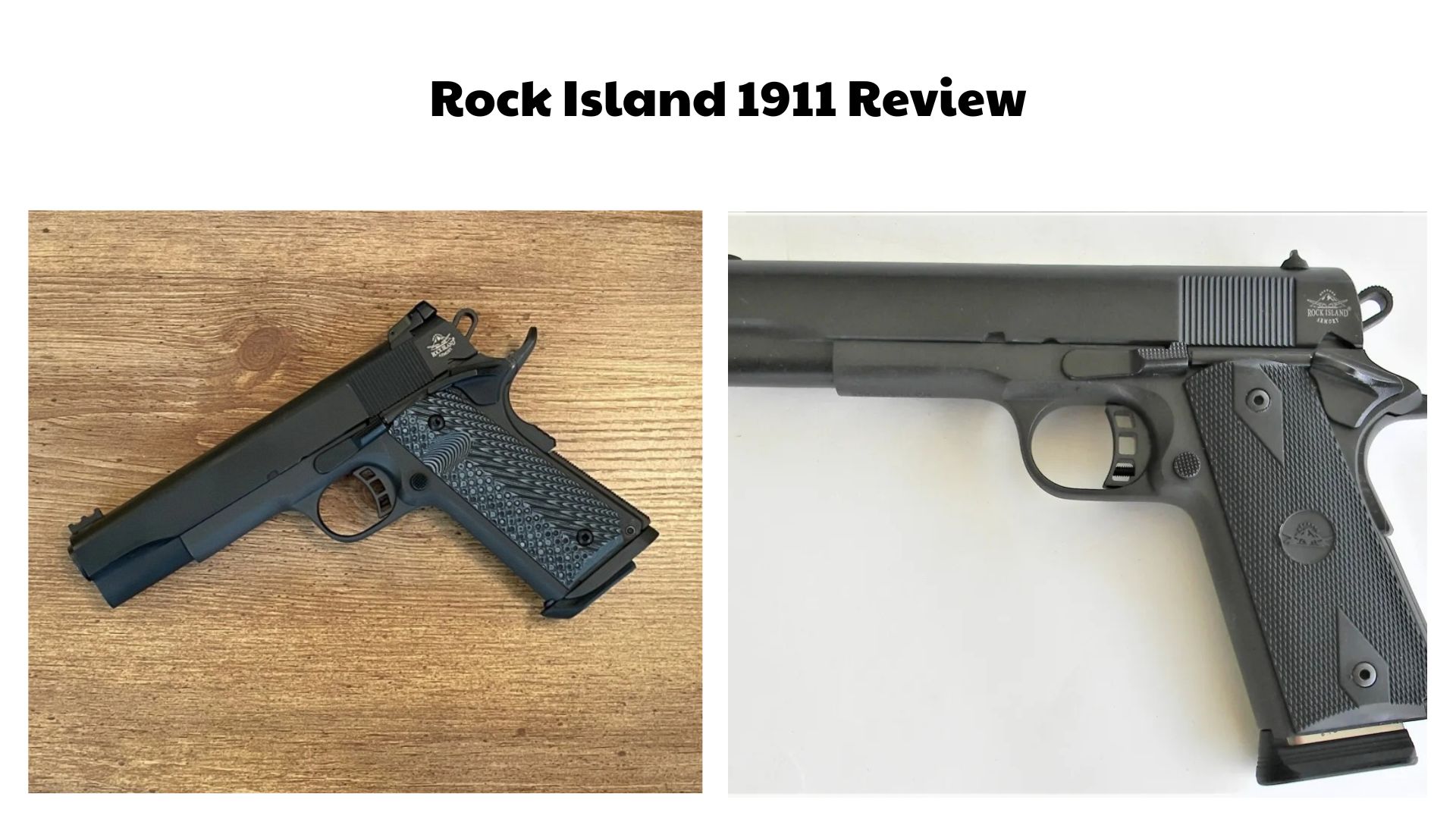

The Rock Island 1911 is one of the most recognizable budget-friendly interpretations of the classic M1911 platform. Manufactured by Armscor under the Rock Island Armory brand, this pistol aims to deliver the traditional 1911 shooting experience at a price that is accessible to a wide range of shooters. In this Rock Island 1911 Review, the focus is on understanding how this handgun performs in real-world use, what it offers for the money, and where it stands in today’s competitive handgun market.
Unlike many modern polymer striker-fired pistols, the Rock Island 1911 stays true to the original design principles created over a century ago. It uses a single-action trigger system, all-steel construction, and a manual safety setup that reflects its military heritage. While it may lack some of the modern refinements seen in higher-end 1911 models, it compensates with reliability, simplicity, and strong value.
Introduction to the Rock Island Armory 1911
The Rock Island Armory 1911 is designed as an entry-level gateway into the 1911 platform. It is often recommended for shooters who want to experience the classic feel of a 1911 without investing in premium brands like Colt or Kimber. Built in the Philippines by Armscor, it has earned a reputation for being functional, durable, and surprisingly consistent for its price range.
This pistol is not about luxury or advanced features. Instead, it focuses on delivering the essential 1911 experience: a crisp trigger, steel frame weight, and familiar handling characteristics. For many shooters, that is exactly what makes it appealing.
History of the M1911 Platform and Legacy
The M1911 platform was originally designed by John Browning and adopted by the U.S. military in 1911. It served as the standard-issue sidearm for decades and became one of the most iconic handgun designs in history. Its reputation was built on reliability, stopping power, and mechanical simplicity.
Even after being replaced by newer service pistols, the 1911 continues to maintain a strong presence in civilian markets. Many shooters still appreciate its single-action trigger, all-metal construction, and classic ergonomics. The Rock Island 1911 continues this legacy by offering a modern production version that stays faithful to the original concept.
While modern pistols often emphasize capacity and modularity, the 1911 platform remains popular for those who value shooting feel, craftsmanship, and historical significance.
Armscor and Rock Island Armory Background
Rock Island Armory is a brand owned by Armscor, a firearms manufacturer based in the Philippines. Armscor has been producing firearms for decades and is one of the largest producers of 1911-style pistols in the world.
The company’s approach focuses on producing affordable yet functional firearms that meet basic reliability standards without excessive cost. This manufacturing philosophy is reflected clearly in the Rock Island 1911 line.
Rather than competing with high-end custom 1911 manufacturers, Armscor positions Rock Island pistols as practical tools. This has helped the brand gain popularity among first-time 1911 owners, range shooters, and budget-conscious enthusiasts.
Who Is the Rock Island 1911 Designed For?
The Rock Island 1911 is designed for shooters who want a traditional handgun experience without a high price tag. It is particularly well-suited for beginners exploring the 1911 platform for the first time. The straightforward design makes it easy to learn, maintain, and operate.
It is also a strong option for recreational shooters who enjoy range time and appreciate the classic shooting feel of a steel-framed pistol. The weight and recoil characteristics of the 1911 platform offer a different experience compared to modern polymer pistols, and the Rock Island version delivers that experience at a lower cost.
However, it may not be ideal for users seeking high-capacity magazines, lightweight carry pistols, or advanced tactical features. Instead, it appeals to those who prioritize simplicity, durability, and traditional design over modern enhancements.
Key Specifications of the Rock Island 1911
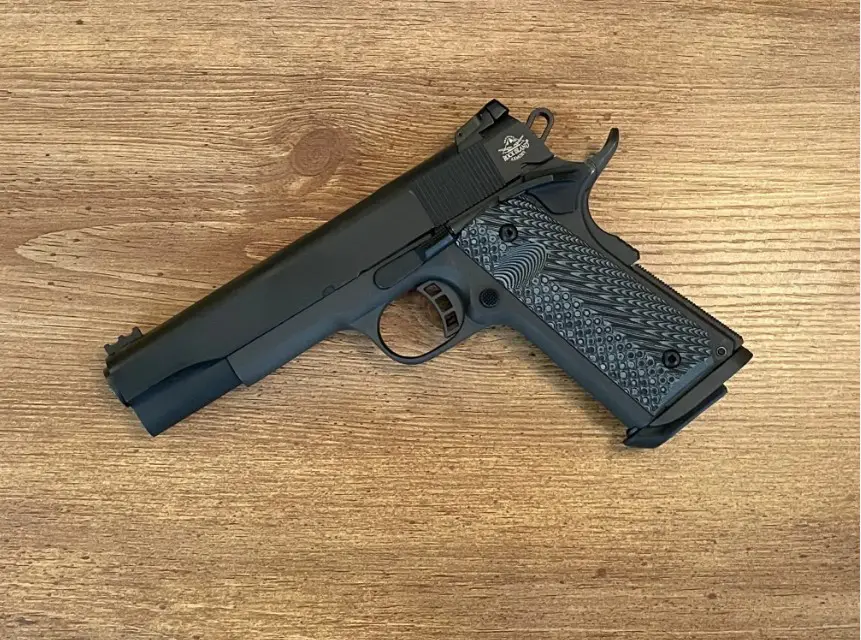
Understanding the specifications of the Rock Island 1911 is essential to evaluating its performance and suitability. While the platform is rooted in a century-old design, different configurations offer flexibility in caliber, size, and capacity. These variations allow users to choose a model that best fits their intended use, whether it is range shooting, home defense, or collection purposes.
Caliber Options (.45 ACP, 9mm Variants)
The Rock Island 1911 is most commonly chambered in .45 ACP, the original caliber associated with the M1911 platform. This round is known for its strong stopping power, heavy bullet weight, and classic recoil profile. For many enthusiasts, shooting a 1911 in .45 ACP is part of the traditional experience.
In addition to .45 ACP, Rock Island also offers 9mm variants. These models provide reduced recoil, higher magazine capacity, and lower ammunition costs. This makes them appealing to newer shooters or those who prefer easier handling during extended range sessions.
The availability of multiple calibers allows users to choose between tradition and practicality, depending on their shooting preferences.
Barrel Length (Full-Size vs Commander Models)
Rock Island 1911 pistols are available in different barrel lengths, with the most common being the full-size Government model and the shorter Commander version.
The full-size model typically features a 5-inch barrel, offering maximum sight radius and stability. This version is often preferred for range use and target shooting due to its smooth recoil impulse and consistent accuracy.
The Commander model usually features a 4.25-inch barrel, making it slightly more compact and easier to carry. While it sacrifices a small amount of sight radius and recoil control, it offers improved portability for users who want a balance between size and performance.
Capacity and Magazine Details
Magazine capacity varies depending on caliber and model. Standard .45 ACP Rock Island 1911 magazines typically hold 7 to 8 rounds, while 9mm versions may offer slightly higher capacity.
These capacities reflect the original single-stack design of the 1911 platform. While they are lower than modern double-stack pistols, they contribute to the slim profile and comfortable grip that the 1911 is known for.
Rock Island pistols are generally compatible with standard 1911 magazines, making replacements and upgrades widely accessible. This is an advantage for users who want to stock spare magazines or explore aftermarket options.
Weight, Dimensions, and Overall Size
The Rock Island 1911 is a full-metal firearm, which means it carries more weight than modern polymer pistols. A full-size model typically weighs around 2.4 to 2.5 pounds unloaded, depending on configuration.
This weight contributes to reduced felt recoil and improved shooting stability. Many shooters appreciate the balance and solid feel that comes with a steel frame.
In terms of dimensions, the full-size 1911 measures approximately 8.5 inches in overall length, with a height of around 5.5 inches. The slim single-stack design makes it comfortable to grip despite its weight.
While not ideal for all-day concealed carry, the size and weight make it excellent for range use and home defense applications.
Materials and Finish (Parkerized Steel Construction)
The Rock Island 1911 is constructed primarily from steel, giving it a robust and durable structure. One of the most common finishes used is parkerization, a matte protective coating that helps resist corrosion and wear.
This finish is functional rather than decorative. It is designed to reduce glare, protect the metal surface, and maintain durability under regular use. While it may not have the polished appearance of higher-end 1911 models, it performs well in practical conditions.
Some variants may also feature alternative finishes such as stainless steel or enhanced coatings, depending on the model line. However, the core philosophy remains the same: prioritize durability and affordability over cosmetic refinement.
Overall, the materials and construction of the Rock Island 1911 reflect its role as a dependable, no-frills firearm. It is built to function reliably without unnecessary complexity, staying true to the spirit of the original 1911 design.
Design and Build Quality
The Rock Island 1911 is widely known for staying close to the original military specification of the M1911 platform. In terms of design and build quality, it does not try to modernize the platform aggressively. Instead, it preserves the classic structure that has defined the 1911 for more than a century. This approach makes it especially appealing to shooters who appreciate traditional firearms with proven mechanical designs.
Classic GI-Style Design and Military Inspiration
The GI-style design is one of the most defining characteristics of the Rock Island 1911. It closely follows the original military-issued pistols used throughout the 20th century. This means simple lines, minimal external features, and a focus on function over aesthetics.
The slide profile, sights, and overall shape reflect a time when pistols were built primarily for reliability in harsh conditions. There are no unnecessary additions such as ambidextrous controls or optics cuts on standard models. Instead, everything is kept minimal and purposeful.
This military-inspired design appeals to shooters who enjoy historical firearms or want a “pure” 1911 experience. It is not a tactical pistol in the modern sense, but rather a faithful representation of a proven design philosophy.
Frame, Slide, and Steel Construction
The Rock Island 1911 is built with an all-steel frame and slide, which is one of its strongest physical advantages. This full-metal construction gives the pistol a solid, durable feel that immediately distinguishes it from polymer-framed handguns.
The steel frame helps absorb recoil, making shooting more controlled and stable. It also contributes to the pistol’s long-term durability, especially under repeated firing sessions. Many shooters find that the weight of the 1911 actually improves shooting accuracy due to reduced muzzle movement.
The slide is machined from steel and fitted to the frame using traditional methods. While it is not as tightly hand-fitted as premium custom 1911s, it is functional and reliable for its price category.
This robust construction is one of the key reasons the Rock Island 1911 remains popular among budget-conscious shooters who still want a true steel-frame handgun experience.
Parkerized Finish Durability and Appearance
Most entry-level Rock Island 1911 models use a parkerized finish, which is a matte protective coating applied to the steel surface. This finish is designed more for durability than aesthetics, which aligns with the overall philosophy of the firearm.
Parkerization helps protect the metal from corrosion, moisture, and general wear. It also reduces glare, which can be beneficial in outdoor shooting environments. While it may not be visually striking, it performs well under practical conditions.
Over time, the finish may show signs of wear on high-contact areas such as the slide edges and grip points. However, this is generally cosmetic and does not affect functionality.
Some users actually appreciate the worn-in look that develops over time, as it gives the pistol a more “working gun” character rather than a polished showpiece.
Fit and Finish (Machining Marks, Budget Trade-Offs)
One of the most commonly discussed aspects of the Rock Island 1911 is its fit and finish. Because it is positioned as a budget-friendly pistol, there are visible trade-offs in manufacturing refinement compared to higher-end 1911 brands.
Some models may display minor machining marks, uneven edges, or slightly rough surfaces in certain areas. These imperfections are mostly cosmetic and do not typically affect performance or reliability.
The slide-to-frame fit is generally serviceable but not extremely tight. This looser fit actually contributes to reliability in some cases, especially under less-than-ideal conditions or with varied ammunition types.
In this price range, these trade-offs are expected. The Rock Island 1911 prioritizes function over flawless aesthetics, which is a fair compromise for many shooters entering the 1911 platform.
Ergonomics and Handling
The 1911 platform is often praised for its ergonomics, and the Rock Island 1911 follows this tradition closely. Despite being a century-old design, it remains one of the most naturally comfortable pistols to hold and shoot. In this section of the Rock Island 1911 Review, we explore how it performs in real-world handling and comfort.
Traditional 1911 Grip Angle and Feel
One of the most iconic features of the 1911 is its grip angle, and the Rock Island version preserves this exactly. The steep grip angle naturally points toward the target, making it intuitive for many shooters.
This design contributes to excellent control during firing. The grip feels natural in the hand, and many users report that the pistol aligns with their line of sight without much adjustment. This “natural point of aim” is one of the reasons the 1911 remains popular despite its age.
The slim single-stack design also enhances grip comfort. Unlike bulkier double-stack pistols, the Rock Island 1911 fits comfortably in a wide range of hand sizes.
Comfort and Balance (Full-Size vs Mid-Size)
Comfort and balance vary depending on the model size. Full-size Rock Island 1911 pistols offer the best balance and recoil control. The added weight helps reduce muzzle rise, making follow-up shots smoother and more controlled.
Mid-size or Commander-style versions trade a bit of weight for improved portability. These models are easier to carry but may feel slightly snappier during recoil.
Overall, the steel construction ensures that even smaller variants remain stable during firing. The weight distribution is generally well-balanced, especially in full-size models designed for range use.
Grip Panels and Customization Options
The Rock Island 1911 typically comes with basic grip panels, often made from checkered polymer or wood depending on the model. While functional, these grips are one of the most common upgrade points for users.
The 1911 platform is known for its extensive customization potential, and grip panels are one of the easiest modifications. Users can replace factory grips with rubberized, textured, wood, or G10 materials to improve comfort and aesthetics.
This flexibility allows shooters to tailor the pistol to their personal preferences without modifying internal components.
Hammer Bite and Beavertail Considerations
One common consideration with GI-style 1911 pistols is the potential for hammer bite. This occurs when the hammer pinches the web of the hand during recoil, especially on models without an extended beavertail grip safety.
Some Rock Island 1911 models include a beavertail safety, which helps reduce or eliminate this issue. However, entry-level GI models may still use a more traditional design that can cause discomfort for some shooters.
For users sensitive to this issue, upgrading the grip safety is a common and relatively simple modification within the 1911 ecosystem.
Controls and Safety Features
The Rock Island 1911 follows the classic control layout of the M1911 platform. This means manual safeties, a single-action trigger system, and a straightforward operating design. While simple, these controls require proper training and familiarity, especially for new shooters.
Single-Action Trigger System
The 1911 is known for its single-action trigger, and the Rock Island version stays true to this design. In a single-action system, the trigger performs one job: releasing the pre-cocked hammer.
This results in a short, crisp trigger pull that is often lighter and more consistent than many modern striker-fired pistols. It contributes significantly to the 1911’s reputation for accuracy.
However, it also means the pistol must be carried with the hammer cocked and safety engaged, which requires proper training and safe handling habits.
Grip Safety and Manual Thumb Safety
The Rock Island 1911 includes both a grip safety and a manual thumb safety. The grip safety prevents the trigger from being pulled unless the pistol is held properly. This adds an additional layer of mechanical safety.
The manual thumb safety is located on the frame and must be disengaged before firing. This is a defining feature of the 1911 platform and one of its most recognizable safety mechanisms.
Together, these safeties create a secure system that prevents accidental discharge while still allowing fast operation when properly trained.
GI-Style Controls (Minimalist Approach)
The controls on the Rock Island 1911 are intentionally simple. Many entry-level models use GI-style components that avoid extended levers or oversized parts.
This minimalist approach reduces complexity and maintains the original military design intent. However, it may feel less ergonomic compared to modern tactical pistols with enhanced controls.
For users who prefer simplicity and tradition, this design is a positive feature. For those seeking modern ergonomics, upgrades may be necessary.
Ease of Operation for Beginners vs Experienced Users
For beginners, the Rock Island 1911 may require some learning due to its manual safety system and single-action operation. Proper training is essential to operate it safely and effectively.
Experienced shooters, especially those familiar with the 1911 platform, will find it intuitive and straightforward. The controls are predictable and consistent, making it a reliable platform once mastered.
Overall, it strikes a balance between simplicity and tradition, but it is best suited for users willing to learn its manual operating style.
Trigger Performance
The trigger is one of the most celebrated features of the 1911 platform, and the Rock Island 1911 continues this tradition. Even as a budget-friendly model, it delivers a trigger experience that is often superior to many modern pistols in its price range.
Trigger Pull Weight and Break (4–6 lbs Typical)
The trigger pull on the Rock Island 1911 typically ranges between 4 to 6 pounds. This is considered ideal for a defensive or range-focused pistol.
The break is generally clean and predictable, with minimal creep. While it may not match the refined feel of high-end custom 1911 triggers, it is consistent and reliable.
This consistency is one of the reasons shooters often appreciate the 1911 platform for accuracy-focused shooting.
Reset and Shooting Feel
The trigger reset on the Rock Island 1911 is short and tactile, allowing for controlled follow-up shots. This makes it suitable for both slow precision shooting and faster defensive drills.
The overall shooting feel is smooth, with a direct mechanical connection between the trigger and firing mechanism. Many shooters describe it as more “connected” compared to striker-fired systems.
This contributes to better shot control and improved accuracy over time.
Comparison with Higher-End 1911 Triggers
When compared to premium 1911 pistols, the Rock Island trigger is understandably less refined. High-end models often feature hand-tuned triggers with extremely smooth breaks and lighter pulls.
However, the difference is not dramatic in practical use for most shooters. The Rock Island 1911 still delivers a very respectable trigger experience, especially considering its price point.
For many users, it provides more than enough performance for range shooting, training, and even defensive applications with proper practice.
Sights and Aiming System
The Rock Island 1911 keeps things extremely traditional when it comes to sights. In most entry-level models, the aiming system reflects the original GI military configuration. This means simplicity over precision optics or modern enhancements. While this approach has historical value, it also comes with certain practical limitations that shooters should understand in this Rock Island 1911 Review.
GI-Style Fixed Sights (Minimalist Design)
The standard Rock Island 1911 is equipped with GI-style fixed sights. These sights are small, low-profile, and designed for durability rather than fast target acquisition. The front sight is typically a simple blade, while the rear sight is a basic notch cut into the slide.
This minimalist setup mirrors the original military-issued 1911 pistols. It is rugged, unlikely to snag on clothing or holsters, and very durable under harsh conditions. However, it is not optimized for modern speed shooting or precision target work.
For experienced shooters familiar with the platform, these sights are usable. For beginners, they may require more effort to align quickly under stress or low-light conditions.
Limitations of Small Sight Picture
One of the most common criticisms of GI-style sights is the small and less visible sight picture. The narrow rear notch and thin front blade can make quick target acquisition more difficult, especially in dynamic shooting situations.
At longer distances or in lower light, aligning the sights precisely becomes more challenging. This can slightly affect practical accuracy, not because of the barrel or platform, but due to the limitations of the sight design itself.
As noted in many user experiences, accuracy at typical defensive distances is still achievable, but the shooter must focus more on sight alignment compared to modern high-visibility systems.
Upgrade Potential (Night Sights, Fiber Optics)
One of the advantages of the 1911 platform is its strong aftermarket support, and sights are one of the easiest upgrades available. The Rock Island 1911 can be fitted with modern sight systems through standard dovetail cuts on many models.
Upgrades such as fiber optic sights improve visibility in daylight by providing a bright aiming reference. Night sights using tritium inserts enhance performance in low-light or no-light environments.
These upgrades significantly improve usability without changing the core characteristics of the firearm. For many users, replacing GI sights is one of the first modifications made to a Rock Island 1911.
Shooting Performance and Range Test
When evaluating a handgun, real-world shooting performance is where theory meets practice. The Rock Island 1911 is designed as a practical, no-frills firearm, and its performance reflects that philosophy. In this section, we examine accuracy, recoil behavior, reliability, and overall shooting impressions.
Accuracy at Defensive and Range Distances
The Rock Island 1911 is generally capable of solid accuracy within typical defensive ranges. At distances between 7 and 15 yards, it is capable of producing consistent and tight groupings when handled by a reasonably experienced shooter.
At longer distances, such as 25 yards, accuracy remains acceptable for a budget 1911, though it is influenced more by shooter skill and sight limitations than mechanical precision. The platform itself is inherently accurate due to its barrel lockup design, but the GI sights can limit practical precision.
Many shooters report that the pistol is “more accurate than they are” at defensive distances, which is often a good benchmark for this category.
Recoil Characteristics of .45 ACP
In .45 ACP configuration, the Rock Island 1911 delivers a distinct recoil profile. The recoil is described as a slow, rolling push rather than a sharp snap, largely due to the weight of the all-steel frame and the design of the 1911 platform.
This makes it easier to control during follow-up shots compared to lighter polymer pistols. The weight of the firearm helps absorb energy, reducing muzzle rise and improving shot-to-shot stability.
In 9mm versions, recoil is noticeably softer, making it even easier for new shooters or those sensitive to recoil to handle effectively.
Reliability and Break-In Period (50+ Rounds Typical)
Like many 1911-style pistols, the Rock Island 1911 typically benefits from a break-in period. While some users experience reliable performance out of the box, most recommend firing at least 200–250 rounds before judging long-term reliability.
During this period, minor feeding or cycling inconsistencies may occur, especially with certain types of hollow point ammunition. Once the pistol is properly broken in and lubricated, reliability tends to improve significantly.
Quality FMJ ammunition is often recommended during the initial break-in phase to ensure smooth cycling and consistent performance.
Real-World Shooting Impressions
In practical use, the Rock Island 1911 delivers a traditional shooting experience that many enthusiasts appreciate. The weight, trigger feel, and steel construction combine to create a stable and controlled platform.
Shooters often describe it as “pleasant to shoot” rather than overly technical or aggressive. It is not a high-speed tactical pistol, but a steady, predictable firearm designed for deliberate shooting.
Its simplicity also contributes to its reliability in real-world conditions, as there are fewer complex systems that can fail under stress.
Reliability and Durability
The Rock Island 1911 has earned a reputation as a reliable budget 1911 when properly maintained. While it does not carry the refinement of premium brands, its steel construction and straightforward design contribute to long-term durability and consistent performance.
Performance with Different Ammo Types (FMJ, Hollow Points)
In general, the Rock Island 1911 performs best with full metal jacket (FMJ) ammunition. FMJ rounds provide smooth feeding and consistent cycling, especially during the break-in period.
Hollow point performance can vary depending on the specific load and magazine used. Some users report excellent reliability with quality defensive ammunition, while others may need to test multiple brands to find the most compatible option.
This behavior is not unusual for entry-level 1911s, as tighter or looser tolerances and feed ramp geometry can influence ammunition sensitivity.
Long-Term Reliability After Break-In
Once properly broken in, the Rock Island 1911 tends to stabilize in performance. Many users report thousands of rounds fired with minimal malfunctions when proper maintenance is followed.
Routine cleaning, lubrication, and using quality magazines all contribute to long-term reliability. The platform’s mechanical simplicity also helps reduce potential failure points.
Durability of Steel Construction
The all-steel construction is one of the strongest aspects of the Rock Island 1911. Steel frames and slides are inherently durable and resistant to long-term wear under normal shooting conditions.
This construction also helps maintain consistent alignment and lockup over time. Unlike lightweight materials, steel is less prone to flexing or deformation under repeated stress.
For a budget firearm, this level of durability is a significant advantage and contributes to the pistol’s long service life.
Common Issues (Feeding, Hammer Bite, Sights Limitations)
Some commonly reported issues include occasional feeding problems with certain hollow point ammunition, especially before break-in. These issues often improve with use and proper lubrication.
Hammer bite can occur on models without a beavertail grip safety, particularly for shooters with larger hands. This is a known characteristic of traditional GI-style 1911 designs.
Additionally, the basic GI sights are often considered a limitation, as discussed earlier. Many users choose to upgrade them for improved visibility and faster target acquisition.
Pros and Cons of the Rock Island 1911
Key Advantages (Affordable, Reliable, Classic Design)
The Rock Island 1911 offers strong value for its price point. It is affordable compared to many other 1911 brands, making it accessible to a wide range of shooters.
Its reliability improves significantly after break-in, and the all-steel construction ensures long-term durability. The classic design also appeals to those who appreciate historical firearms and traditional shooting experiences.
Main Drawbacks (Basic Features, Finish, Sights)
The main drawbacks include its basic GI-style features, which may feel outdated to some users. The parkerized finish is functional but not highly refined in appearance.
The stock sights are also a limitation for modern shooting applications, and the pistol may require upgrades for users seeking enhanced performance or faster target acquisition.
Rock Island 1911 vs Competitors
Comparison with Colt 1911
Colt 1911 pistols are generally considered more refined, with better fit and finish and stronger brand heritage. However, they come at a significantly higher price point.
The Rock Island 1911 offers a more budget-friendly entry into the same platform, making it attractive for shooters who want function over prestige.
Comparison with Springfield Armory 1911
Springfield Armory 1911 models typically offer better out-of-the-box refinement, improved machining, and stronger quality control. They also tend to have better fit and finish.
However, Rock Island remains competitive in pricing, making it a more accessible option for budget-conscious buyers.
Comparison with Kimber 1911
Kimber 1911 pistols are often positioned as semi-premium models with tighter tolerances and more refined triggers. They generally offer better aesthetics and factory features.
Rock Island, on the other hand, prioritizes affordability and simplicity, making it a more practical entry-level choice.
Budget 1911 Market Position
In the budget 1911 market, Rock Island Armory is one of the strongest contenders. It consistently delivers functional reliability and steel-frame construction at a lower price than most competitors.
While it does not compete with high-end 1911s in refinement, it remains a top choice for shooters who want a dependable and affordable entry into the 1911 platform.
Aftermarket Support and Customization
One of the strongest long-term advantages of the 1911 platform is its massive aftermarket ecosystem, and the Rock Island 1911 benefits directly from this. Despite being a budget-friendly firearm, it is highly compatible with a wide range of upgrades and custom parts. This makes it appealing not only as an entry-level pistol but also as a platform for gradual improvement over time.
Upgrade Potential (Sights, Grip Safety, Trigger)
The Rock Island 1911 can be upgraded in several key areas depending on user preference and shooting needs. One of the most common upgrades is the sight system. While factory GI sights are functional, many users replace them with fiber optic or night sights for better visibility and faster target acquisition.
Grip safeties and thumb safeties can also be upgraded to more ergonomic or extended versions, improving comfort and control during shooting. Triggers are another popular modification area, with options for lighter pulls, smoother breaks, and reduced overtravel.
These upgrades allow the Rock Island 1911 to evolve from a basic entry-level pistol into a more refined defensive or range-ready firearm over time.
Compatibility with Standard 1911 Parts
One of the key strengths of the Rock Island 1911 is its general compatibility with standard 1911 parts. Because it follows the traditional GI-style design, many components are interchangeable with other 1911 models.
This includes magazines, grips, springs, triggers, and certain internal components. However, it is important to note that not all parts are truly “drop-in.” Some may require minor fitting due to manufacturing tolerances, which is common across the 1911 platform in general.
Magazines from reputable manufacturers are widely supported, and many shooters successfully use aftermarket options without reliability issues. This broad compatibility makes maintenance and customization more accessible and cost-effective.
Optics-Ready and Modern Variants Availability
While traditional Rock Island 1911 models do not come optics-ready, the manufacturer has introduced more modern variants in recent years. Some tactical or upgraded versions feature accessory rails, improved sights, and enhanced ergonomics.
However, optics-ready slides are still relatively rare in the Rock Island lineup compared to modern striker-fired pistols. Shooters who want red dot compatibility often need to choose specialized models or rely on aftermarket slide milling.
Despite this limitation, the platform remains highly adaptable for users who prefer traditional iron sights or are willing to invest in custom modifications.
Pricing and Value for Money
The Rock Island 1911 is widely recognized as one of the most affordable entry points into the 1911 platform. Its pricing strategy focuses on delivering a functional steel-frame pistol without the premium cost associated with high-end manufacturers.
Budget-Friendly Price Range ($400–$500 Typical)
In most markets, the Rock Island 1911 is priced between approximately $400 and $500 for new models, depending on configuration and retailer. Some variations may fall slightly above or below this range based on features such as barrel length, finish, or included accessories.
This pricing places it firmly in the budget 1911 category. According to market data, entry-level 1911 pistols like the Rock Island Armory models consistently remain among the most affordable ways to enter the platform. :contentReference[oaicite:0]{index=0}
Used models can often be found for even less, making it accessible to shooters who want a reliable handgun without a significant financial investment.
Features vs Price Comparison
When comparing features to price, the Rock Island 1911 delivers strong value. It offers an all-steel frame, a functional single-action trigger, and compatibility with the vast 1911 aftermarket ecosystem—all at a lower cost than most competitors.
However, the trade-offs are clear. Fit and finish are more utilitarian, sights are basic, and some models lack modern enhancements such as optics cuts or extended controls. These compromises are expected in this price segment and help keep costs low.
Overall, the Rock Island 1911 prioritizes function and reliability over refinement and premium features, which aligns well with its intended market position.
Is It the Best Budget 1911?
Whether the Rock Island 1911 is the “best” budget 1911 depends on what the shooter values most. In terms of pure affordability and baseline functionality, it is one of the strongest contenders in the category.
Its steel construction, solid reliability after break-in, and wide compatibility with aftermarket parts make it a practical choice for many users. However, other budget brands may offer slightly better finishes, upgraded sights, or factory features at a higher price point.
In summary, it remains one of the most balanced entry-level 1911 options, especially for shooters who want a traditional experience without overspending.
Who Should Buy the Rock Island 1911?
The Rock Island 1911 is not a one-size-fits-all firearm. Its strengths and limitations make it better suited for certain types of users. Understanding who benefits most from this platform is key to making the right purchase decision.
Ideal Users (First-Time 1911 Buyers, Budget Shooters)
This pistol is especially well-suited for first-time 1911 buyers. It provides a straightforward introduction to the platform without requiring a large financial commitment. The design is simple, mechanical, and easy to understand with basic training.
Budget-conscious shooters also benefit significantly. It offers the core 1911 experience—steel frame, single-action trigger, and classic handling—at a lower cost than most competitors.
It is also a good option for those who enjoy learning and gradually upgrading their firearm over time, as the platform supports extensive customization.
Best Use Cases (Range, Home Defense, Collection)
The Rock Island 1911 performs well in several roles. At the range, it delivers a satisfying shooting experience with manageable recoil and good inherent accuracy. Many owners choose it as a dedicated range gun for recreational shooting.
For home defense, it can serve effectively when paired with proper ammunition and training. However, users should be comfortable with its manual safety system and lower magazine capacity compared to modern pistols.
It also appeals to collectors or enthusiasts who appreciate classic firearm designs and want an affordable example of the iconic 1911 platform.
Who Should Consider Higher-End Alternatives?
Some users may find better value in higher-end alternatives. Shooters who prioritize premium fit and finish, enhanced triggers, or advanced factory features may prefer brands like Springfield Armory, Kimber, or other semi-custom manufacturers.
Additionally, those who want optics-ready platforms, higher capacity, or fully modern tactical features may find the Rock Island 1911 too traditional for their needs.
It is best viewed as a foundational 1911 rather than a fully modernized defensive platform.
Final Verdict
The Rock Island 1911 remains one of the most accessible and practical ways to experience the classic 1911 platform. It is not a luxury firearm, but it was never intended to be. Instead, it focuses on delivering the essential characteristics of the design at an affordable price point.
Overall Performance Summary
In terms of performance, the Rock Island 1911 is reliable after a proper break-in period, accurate within typical defensive ranges, and enjoyable to shoot due to its steel frame and classic trigger system. It performs best when used with quality ammunition and maintained regularly.
Strengths vs Weaknesses Recap
Strengths:
- Affordable entry into the 1911 platform
- Durable all-steel construction
- Strong aftermarket and parts compatibility
- Classic, proven design with good shooting feel
Weaknesses:
- Basic GI-style sights
- Rougher fit and finish compared to premium brands
- Limited modern features (no optics-ready standard models)
- May require break-in period for optimal reliability
Final Recommendation
The Rock Island 1911 is best recommended for shooters who want an affordable, traditional, and mechanically simple handgun with proven design heritage. It is an excellent entry point into the 1911 world and a solid range or recreational firearm.
However, if you are seeking modern features, enhanced ergonomics, or premium refinement, it may be worth considering higher-end alternatives. For its price range, though, it remains one of the most practical and widely respected budget 1911 options available.
Frequently Asked Questions (FAQ) – Rock Island 1911 Review
1. Is the Rock Island 1911 a good gun?
Yes, the Rock Island 1911 is widely considered a good budget-friendly handgun. It is not a premium custom 1911, but it delivers the essential features of the platform: steel construction, reliable cycling after break-in, and a crisp single-action trigger. For shooters who want an affordable entry into the 1911 world, it is one of the most practical options available.
2. Is Rock Island Armory a reliable brand?
Rock Island Armory, produced by Armscor, has built a strong reputation in the budget firearm market. While it may not match the refinement of American premium brands, its firearms are generally reliable, durable, and widely used for range shooting and defensive purposes. Many users report thousands of rounds fired with proper maintenance.
3. What caliber does the Rock Island 1911 use?
The most common caliber is .45 ACP, which is the original caliber of the 1911 platform. However, Rock Island also produces versions in 9mm and other calibers. The .45 ACP version offers more traditional recoil and stopping power, while the 9mm version provides lower recoil and higher magazine capacity.
4. Is the Rock Island 1911 good for beginners?
Yes, but with some learning required. Beginners can benefit from its simple mechanics and predictable trigger, but they must also learn how to properly use manual safeties and understand the single-action system. With basic training, it becomes a very manageable and educational firearm for new shooters.
5. How reliable is the Rock Island 1911?
Reliability is generally good after a proper break-in period. Most users recommend firing at least 200–300 rounds before expecting full consistency. After that, it tends to run reliably with quality ammunition and proper lubrication.
6. Does the Rock Island 1911 require a break-in period?
Yes, like most 1911-style pistols, it benefits from a break-in period. This helps smooth internal parts and improve feeding reliability. During early use, minor malfunctions can occur but typically decrease as the pistol wears in.
7. Is the Rock Island 1911 good for concealed carry?
It can be used for concealed carry, but it is not the most convenient option due to its weight and full-metal construction. Compact or Commander models are more suitable than full-size versions. Many users prefer it for range or home defense instead.
8. What is the magazine capacity?
Standard .45 ACP models typically hold 7 to 8 rounds in a single-stack magazine. 9mm versions may offer slightly higher capacity. While lower than modern pistols, this is standard for the 1911 platform.
9. Is the Rock Island 1911 accurate?
Yes, it is accurate within typical defensive and range distances. The 1911 platform is inherently accurate due to its barrel lockup design. The main limitation is the basic GI sights rather than the barrel itself.
10. What is the trigger like?
The trigger is one of the strongest features of the 1911 platform. It is single-action, usually between 4–6 pounds, with a clean break and short reset. Even in budget models like Rock Island, it feels better than many striker-fired pistols.
11. Does it have a safety?
Yes, it includes a manual thumb safety and a grip safety. The grip safety prevents firing unless the pistol is properly held, while the thumb safety must be disengaged before firing. This is a key feature of the 1911 design.
12. What is hammer bite?
Hammer bite occurs when the hammer pinches the web of the shooter’s hand during recoil. It is more common on GI-style 1911s without a beavertail safety. Some Rock Island models include a beavertail to reduce this issue.
13. Is the Rock Island 1911 durable?
Yes, it is very durable due to its all-steel construction. Steel frames and slides can withstand long-term use and high round counts with proper maintenance. It is designed as a long-lasting, serviceable firearm.
14. Does it rust easily?
The parkerized finish provides decent corrosion resistance, but it is not rust-proof. Regular cleaning and light oiling are recommended, especially in humid environments.
15. What type of finish does it have?
Most models feature a parkerized finish, which is a matte protective coating designed for durability rather than aesthetics. It helps reduce glare and resist wear.
16. Is it good for home defense?
Yes, it can be used for home defense effectively. It offers good stopping power, reliability after break-in, and a strong trigger. However, users should be comfortable with manual safeties and lower magazine capacity.
17. Is it better than Glock?
They are very different platforms. Glock pistols offer higher capacity, lighter weight, and simpler operation. The Rock Island 1911 offers a better trigger feel and steel-frame shooting experience. The choice depends on user preference.
18. How heavy is it?
A full-size Rock Island 1911 weighs around 2.4–2.5 pounds unloaded. This weight helps reduce recoil but makes it less ideal for all-day concealed carry.
19. Is it easy to maintain?
Yes, maintenance is straightforward. The 1911 design is simple to field strip and clean. With basic tools and lubrication, it can be maintained easily by most users.
20. Can it shoot +P ammo?
It can handle occasional +P ammunition, but it is generally recommended to use standard pressure ammo for regular use to reduce wear over time.
21. What is the break-in round count?
Most users recommend 200–300 rounds for proper break-in. This helps ensure smoother cycling and improved reliability across different ammunition types.
22. Is it good for competition shooting?
It can be used for entry-level competition, but it is not optimized for speed or advanced competition setups. Upgraded 1911 models are better suited for serious competition use.
23. Does it come with night sights?
Most entry-level models come with basic GI sights. However, some variants or aftermarket upgrades allow installation of night sights or fiber optics.
24. Can I upgrade the sights?
Yes, sights are one of the most common upgrades. The dovetail system allows installation of improved sight systems such as fiber optic or tritium night sights.
25. Is it good for left-handed shooters?
Standard models are not fully ambidextrous, but left-handed shooters can still use them effectively. Some upgraded versions offer ambidextrous safeties.
26. How does it compare to Colt 1911?
Colt offers higher fit and finish quality and stronger brand heritage. Rock Island offers similar functionality at a much lower price. Colt is premium; Rock Island is budget-focused.
27. How does it compare to Springfield 1911?
Springfield generally provides better refinement and factory features. Rock Island is more affordable but less polished in machining and finish.
28. Is it good for collecting?
Yes, especially for those interested in historical firearm designs. It represents an affordable entry into the classic 1911 platform.
29. What is the biggest weakness?
The biggest weaknesses are basic sights, rougher finish, and the need for a break-in period. It prioritizes function over refinement.
30. Is it worth buying in 2026?
Yes, if you want an affordable and reliable 1911 experience. However, buyers seeking modern features or optics-ready designs may prefer newer platforms.
31. Does it jam often?
Not after break-in. Early-stage jams may occur, especially with hollow points, but reliability improves significantly with use and proper maintenance.
32. What magazines does it use?
It uses standard 1911 single-stack magazines. These are widely available and compatible with many aftermarket brands.
33. Can it use aftermarket parts?
Yes, most 1911 parts are compatible. Some may require fitting, but grips, triggers, sights, and internal parts are widely supported.
34. Is it comfortable to shoot?
Yes, the steel frame helps reduce recoil, making it comfortable for extended range sessions.
35. Is it loud compared to other pistols?
Like all .45 ACP pistols, it produces a loud report, but this is standard for the caliber rather than specific to the firearm.
36. Does it have good resale value?
Resale value is moderate. It is affordable new, so it does not retain high resale prices compared to premium brands.
37. Is it good for women shooters?
Yes, but the weight and recoil may be a consideration. Many women shooters appreciate its stability and smooth trigger.
38. Does it come with a case?
Most new models include a basic hard plastic case and one or two magazines, depending on the package.
39. Can it be used for tactical training?
Yes, but it is more suited for traditional training than modern tactical drills due to its basic configuration.
40. Is it better than Taurus 1911?
Both are budget-friendly. Rock Island often has a stronger reputation for steel construction consistency, while Taurus may offer more modern features depending on the model.
41. How long does it last?
With proper maintenance, it can last tens of thousands of rounds. Steel construction ensures long-term durability.
42. Is it good for range shooting?
Yes, it is excellent for range shooting due to its recoil control and enjoyable shooting feel.
43. Does it have optics support?
Most standard models do not, but some modern variants offer optics-ready cuts or can be modified.
44. Is it easy to rack the slide?
Yes, the slide is reasonably easy to rack, though it may feel stiff on new units before break-in.
45. Does it require professional maintenance?
No, basic cleaning and lubrication are sufficient for most users. It is designed for simple maintenance.
46. Is it good for beginners learning firearms safety?
Yes, it helps beginners understand manual safeties and firearm mechanics, though supervision and training are recommended.
47. Does it have recoil issues?
No major issues. Recoil is manageable due to steel construction and the natural design of the 1911 platform.
48. What is the best ammo for it?
Quality FMJ ammo is best for practice, while reliable defensive hollow points should be tested for compatibility.
49. Is it a good investment?
It is not an investment firearm, but a practical tool. Its value lies in affordability and functionality rather than appreciation over time.
50. Final thought on the Rock Island 1911?
The Rock Island 1911 is a reliable, affordable, and classic handgun that delivers the core 1911 experience. It is not perfect, but it is one of the best entry points into the platform for budget-conscious shooters.
Read more: