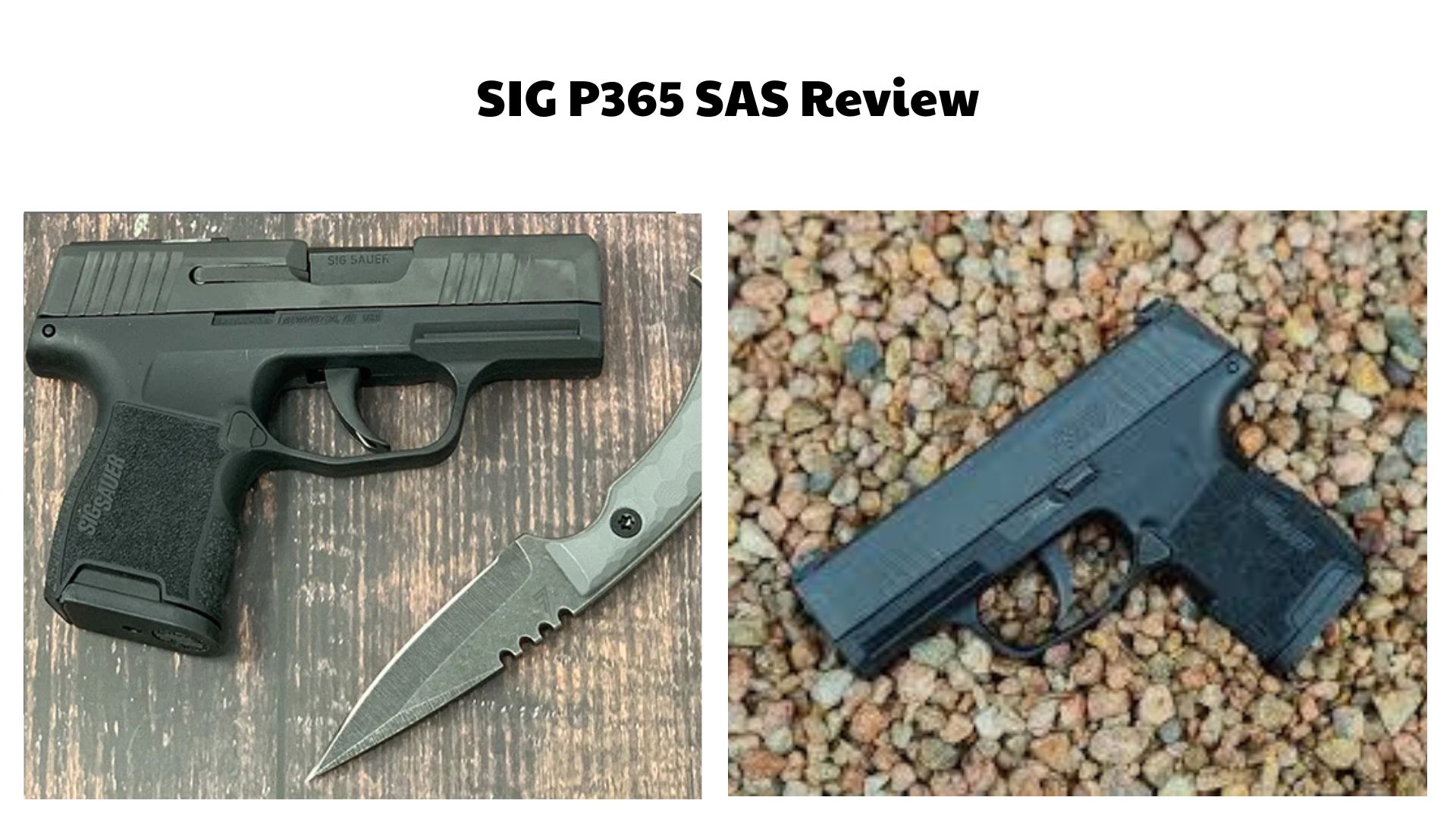

The SIG Sauer P365 SAS is a specialized version of one of the most successful micro-compact pistols in modern concealed carry history. Built on the proven P365 platform, the SAS model introduces a unique design philosophy focused entirely on smooth, snag-free carry and rapid deployment. In simple terms, it is designed to disappear inside clothing and draw cleanly without interference from sharp edges or protruding controls.
The “SAS” in its name stands for SIG Anti-Snag. This concept defines the entire pistol. Every external edge is softened, every control is flattened, and even the sight system is redesigned to sit flush with the slide. The goal is straightforward: reduce anything that could catch on a holster, pocket, or clothing during a defensive draw.
This makes the P365 SAS especially appealing for deep concealment users. It is not just a compact pistol—it is a purpose-built concealed carry tool designed for speed and smoothness under stress. However, this specialization also raises an important question for many shooters: Is the SAS version actually better than the standard P365 for everyday carry?
The answer depends heavily on user preference, training style, and how much value a shooter places on traditional sight systems versus ultra-smooth concealment performance.
2. SIG Sauer P365 SAS Background & Development
The SIG P365 SAS did not appear as a standalone design. Instead, it evolved directly from the highly successful SIG Sauer P365 platform, which itself reshaped the micro-compact concealed carry market. When the original P365 was released, it set a new benchmark by offering double-stack 10+1 capacity in a small, easily concealable frame.
As the concealed carry market matured, manufacturers noticed a growing demand for pistols that prioritized smooth draw characteristics over traditional features. Many users were carrying inside the waistband, appendix positions, or even pocket holsters where snagging could become a real concern during a defensive draw.
This demand led SIG Sauer to develop the SAS variant. The idea was not to improve firepower or expand versatility, but to refine concealment performance. The result was a pistol stripped of external protrusions and redesigned with a strong focus on dehorning—removing or rounding edges that could catch during movement.
The micro-compact pistol category itself has been evolving rapidly. Early designs prioritized size reduction at the expense of shootability and comfort. Later models, like the P365, shifted the balance by improving capacity and ergonomics. The SAS model represents a further step in specialization, focusing entirely on concealment efficiency.
One of the defining characteristics of this evolution is the anti-snag philosophy. This includes flush-mounted controls, a heavily smoothed slide profile, and a redesigned sight system that eliminates traditional iron sights altogether. Every design choice supports the same mission: a faster, cleaner draw from concealment.
Because of this specialization, SIG positions the P365 SAS less as a general-purpose handgun and more as a dedicated concealed carry tool. It is not designed for range versatility or competitive shooting. Instead, it is optimized for real-world defensive carry scenarios where speed and accessibility matter most.
Compared to the original P365, the SAS version removes some of the traditional shooting advantages in exchange for improved concealment performance. The standard P365 offers more familiar sights and slightly easier target acquisition, while the SAS prioritizes a smoother draw stroke and reduced snag risk.
This distinction is the core reason the SAS variant exists. It is not meant to replace the original but to serve shooters who want a more refined concealment-first option within the same trusted platform.
3. Key Specifications & Technical Overview
The SIG Sauer P365 SAS retains the compact engineering foundation of the original P365 while incorporating several modifications that support its anti-snag philosophy. Its specifications place it firmly in the micro-compact concealed carry category, but with design choices that emphasize smooth handling and streamlined carry.
Caliber: 9mm Luger
The P365 SAS is chambered in 9mm Luger, one of the most widely used defensive handgun calibers in the world. This caliber provides a strong balance between recoil control, capacity, and terminal performance. It is considered the standard for modern concealed carry pistols due to its versatility and effectiveness.
Barrel Length: ~3.1 inches
The barrel length of approximately 3.1 inches contributes to the pistol’s compact size. While shorter barrels typically reduce velocity compared to full-size handguns, the difference remains acceptable for defensive engagement distances, which are usually within 3 to 15 yards.
Overall Length: ~5.8 inches
The total length of the P365 SAS is approximately 5.8 inches, making it easy to conceal in a wide variety of carry positions. This compact footprint is one of the reasons it performs well in both pocket-adjacent and inside-the-waistband setups.
Weight: ~17.8 oz Unloaded
Weighing under 18 ounces unloaded, the P365 SAS is light enough for comfortable all-day carry. This weight allows it to remain stable in the hand during shooting while still being easy to conceal under light clothing.
Capacity: 10+1 Standard Magazines
One of the strongest advantages of the P365 platform is its magazine capacity. Despite its small size, the SAS model retains a 10+1 round capacity with standard magazines. Extended magazines can increase capacity further, depending on configuration.
Striker-Fired System
The pistol uses a striker-fired mechanism, which is common in modern concealed carry firearms. This system provides a consistent trigger pull from shot to shot and eliminates the need for an external hammer.
Double-Stack Magazine Design
Unlike older single-stack micro pistols, the P365 SAS uses a double-stack magazine design. This allows it to maintain higher capacity without significantly increasing grip size. It is one of the key innovations that made the original P365 platform so popular.
Stainless Steel Slide with Nitron Finish
The slide is constructed from stainless steel and finished with SIG’s Nitron coating. This finish enhances corrosion resistance and durability while maintaining a clean, matte appearance suitable for concealed carry use.
Polymer Grip Module
The grip module is made from polymer, which helps reduce overall weight while maintaining structural strength. The grip is designed to be compact but still functional, balancing concealability with control.
Flat, Dehorned Controls
A defining feature of the SAS model is its dehorned controls. The slide stop, takedown lever, and other external components are flattened and smoothed to reduce snag points. This supports the pistol’s primary goal of smooth draw and concealment efficiency.
Built-in Recoil Management & Compact Engineering
The P365 SAS incorporates engineering solutions designed to manage recoil within a compact frame. While small pistols naturally produce more felt recoil, the platform balances this through weight distribution, grip design, and internal mechanics.
Overall, the technical configuration of the P365 SAS reflects its purpose-driven design. It is not built for maximum customization or competition shooting. Instead, it is optimized for reliable concealed carry performance, smooth draw capability, and practical defensive use in real-world scenarios.
4. Design Philosophy: Anti-Snag Concept Explained
The SIG Sauer P365 SAS is built around a very specific design philosophy known as “Anti-Snag.” This concept is not just a marketing term—it directly influences how the pistol feels, behaves, and performs during concealed carry use. To understand the SAS model properly, you have to understand what SIG was trying to eliminate: anything on the firearm that could catch on clothing, holsters, or fabric during a defensive draw.
In real-world concealed carry situations, speed and smoothness matter as much as accuracy. A firearm that snags on a shirt hem or holster lip can delay the draw at the worst possible moment. The Anti-Snag design is SIG’s answer to this problem. Instead of focusing on modularity or external accessories, the SAS model focuses on streamlining every surface of the pistol.
What “Anti-Snag” Really Means in Real Use
At its core, Anti-Snag design means reducing friction points between the firearm and the environment around it. In practical terms, this translates to fewer sharp edges, fewer protruding controls, and a smoother overall profile. When the pistol is drawn from concealment, there is less chance of it catching on fabric or holster material.
This is especially important for inside-the-waistband (IWB) and appendix carry positions, where the firearm is tightly positioned against the body. Even a small protrusion can create resistance during the draw stroke. The SAS model addresses this by “dehorning” the pistol—rounding and smoothing every possible edge.
Flush Slide Stop, Takedown Lever, and Reduced External Protrusions
One of the most noticeable design changes on the P365 SAS is the treatment of its controls. The slide stop and takedown lever are intentionally flattened and smoothed. Instead of standing out from the frame like traditional controls, they sit almost flush with the surface of the pistol.
This reduces the risk of accidental engagement during carry and prevents the controls from catching on clothing. However, it also slightly changes how the pistol is manipulated during maintenance or reload drills. Users may need to adjust their muscle memory, especially if they are transitioning from a standard P365 or another striker-fired pistol.
Despite this adjustment period, the benefit is clear: smoother carry and reduced interference during draw and re-holstering.
Fully Smoothed Slide Profile for Pocket and Purse Draw
The slide of the P365 SAS is another major area of refinement. It features a heavily smoothed profile with minimal external interruption. Traditional serrations and sharp edges are reduced or eliminated where possible, contributing to a clean, almost continuous surface.
This design is particularly beneficial for pocket or purse carry users. In these environments, the firearm may come into contact with fabric, liners, or small objects inside the compartment. A smoother slide reduces the chance of snagging during the draw, allowing for a more consistent presentation.
While this smoothness enhances concealment performance, it does slightly reduce the tactile grip surface available for slide manipulation. This is one of the intentional tradeoffs in the SAS design philosophy.
Designed for Rapid Deployment from Concealment
The entire Anti-Snag concept is ultimately built around one goal: faster and cleaner deployment from concealment. In a defensive situation, the draw stroke is often the most critical part of firearm use. Any delay or hesitation can affect outcome.
The P365 SAS minimizes those delays by removing common snag points. The result is a firearm that moves more freely from holster to target position. This is especially valuable for users who carry in tight clothing or deep concealment positions where clearance is limited.
Tradeoff Between Smooth Exterior and Usability Under Stress
Like any specialized design, the Anti-Snag approach comes with tradeoffs. While the smoother exterior improves draw consistency, it can also make certain manipulations more challenging under stress or in adverse conditions.
For example, reduced slide serrations may make one-handed slide operation slightly more difficult. Similarly, flush controls may require more deliberate finger placement during reloads or administrative handling.
These tradeoffs are intentional. The SAS model prioritizes concealment and draw efficiency over tactical versatility. It is not designed as a training or competition pistol—it is designed for concealed carry users who value smooth deployment above all else.
Real-World Benefit: Reduced Holster and Clothing Interference
In everyday concealed carry use, the most noticeable benefit of the Anti-Snag design is reduced interference from holsters and clothing. Many users report smoother re-holstering and fewer instances of fabric catching during movement.
This becomes especially relevant in dynamic environments—getting in and out of vehicles, bending, or reaching. The smoother profile reduces the chances of the firearm becoming entangled or slowed during these common movements.
Overall, the Anti-Snag philosophy defines the P365 SAS as a purpose-built concealed carry tool. It is not about adding features—it is about removing obstacles.
5. Unique Sight System (Biggest Differentiator)
One of the most defining—and controversial—features of the SIG Sauer P365 SAS is its sight system. Unlike traditional pistols that use front and rear iron sights, the SAS model replaces them with a completely different aiming solution: the FT Bullseye fiber-tritium system. This design fundamentally changes how the shooter interacts with the firearm.
FT Bullseye Fiber-Tritium Flush-Mounted Sight System
The FT Bullseye sight is integrated directly into the slide, sitting completely flush with the surface. It combines fiber-optic and tritium elements to provide visibility in both daylight and low-light conditions. Instead of separate front and rear sights, the system uses a single circular sight window.
This window acts as both the aiming reference and alignment guide. When the pistol is properly aligned, the shooter sees a centered illuminated dot inside the circle. This design eliminates the traditional sight picture entirely.
No Traditional Front and Rear Iron Sights
One of the most radical changes in the SAS model is the complete removal of conventional iron sights. There is no rear notch and no front post. This design decision is directly tied to the Anti-Snag philosophy.
By removing raised sight elements, SIG reduces one of the most common snag points during draw. However, this also means shooters must adapt to a completely new sighting method that does not rely on familiar alignment techniques.
Tunnel or Peep-Style Sight Picture
The FT Bullseye system creates what many shooters describe as a “tunnel” or “peep-style” sight picture. Instead of aligning two points (front and rear sights), the shooter centers a glowing dot within a circular window.
This encourages a more instinctive form of aiming. Rather than focusing on precise sight alignment, the shooter focuses on target acquisition and centering the dot naturally on the threat or target area.
Designed for Instinctive Point Shooting at Close Range
The SAS sight system is optimized for defensive shooting distances. At typical engagement ranges—3 to 10 yards—the system allows for extremely fast target acquisition. The shooter does not need to carefully align traditional sights, which can save valuable time in a defensive scenario.
This makes the system particularly effective for close-quarters use, where speed is more important than precision. It supports a more instinctive shooting style that aligns with real-world defensive encounters.
Pros: Fast Target Acquisition and No Snag Risk
The advantages of the FT Bullseye system are closely tied to its design goals. First, it allows for very fast target acquisition at close range. Once the shooter is familiar with the system, it becomes natural to bring the dot onto the target quickly.
Second, because the system is completely flush, it eliminates any risk of snagging on clothing or holsters. This directly supports the SAS model’s primary design philosophy of smooth concealment and rapid draw.
Cons: Difficulty in Precision Shooting and Learning Curve
Despite its advantages, the sight system is not without drawbacks. One of the most common criticisms is reduced precision at longer distances. Without traditional sight alignment, it becomes more difficult to make fine adjustments for accurate shot placement beyond defensive ranges.
Additionally, experienced shooters who are accustomed to iron sights may face a learning curve. The transition from traditional aiming methods to a circular sight system requires adjustment and practice.
Low-Light Visibility Limitations for Some Users
While the FT Bullseye system includes tritium for low-light use, some users report that visibility can be less intuitive compared to high-contrast night sights. In certain lighting conditions, the circular alignment may be harder to interpret quickly.
This is not a universal issue, but it is an important consideration for users who prioritize low-light performance.
Comparison with Standard P365 X-Ray3 Sights
Compared to the standard P365 X-Ray3 sights, the difference is significant. The standard model uses a traditional three-dot sight system, which is familiar, precise, and widely used across the firearms industry.
The X-Ray3 system is easier for precision shooting and training applications. However, it introduces raised sight elements that can potentially snag during concealed carry draws.
The SAS system sacrifices that familiarity in exchange for smoother carry performance and faster close-range engagement. This makes the choice between the two largely dependent on user preference and intended use case.
In summary, the sight system is the most distinctive feature of the P365 SAS. It is innovative, purpose-driven, and highly specialized—designed for users who prioritize speed and concealment over traditional precision shooting methods.
6. Ergonomics & Handling Experience
The SIG Sauer P365 SAS offers a unique handling experience that reflects its concealed carry-focused design. While it shares its foundation with the standard P365 platform, several modifications significantly influence how it feels in the hand, how it carries, and how it performs during use.
Compact Grip Module with Double-Stack Magazine Design
The grip module of the P365 SAS maintains the double-stack magazine design that made the original P365 platform so popular. This allows the pistol to maintain a relatively high capacity while still keeping a compact overall grip size.
In practical terms, this means the shooter gets more rounds without needing a wider or bulkier grip. The design strikes a balance between concealability and firepower, which is one of the platform’s strongest advantages.
Slim Profile for Concealment Efficiency
The overall profile of the P365 SAS is intentionally slim to support deep concealment. This makes it easier to carry under light clothing without printing. The reduced width also improves comfort during extended carry periods, especially in inside-the-waistband configurations.
This slimness contributes directly to its role as a concealed carry-focused firearm rather than a range-oriented platform.
Texturing and Grip Control Balance
The grip features textured surfaces designed to provide control without being overly aggressive. This balance is important for concealed carry use, where the pistol may be in contact with skin or clothing for long periods.
The texture is sufficient to maintain a secure hold during firing, even under stress or in less-than-ideal conditions. At the same time, it avoids the discomfort that can come from overly sharp grip stippling.
Controls Feel Smoother Due to Flush Design
One of the noticeable differences in handling the SAS model is how the controls feel during manipulation. Because the slide stop and takedown lever are flattened, they do not protrude as much as on standard pistols.
This creates a smoother exterior surface, which is beneficial for carry but can slightly change the tactile feedback during use. Shooters may need to develop new muscle memory for certain manipulations.
Short Grip Challenges for Larger Hands
As with most micro-compact pistols, the P365 SAS presents some limitations for users with larger hands. The grip is short, and with standard magazines, the pinky finger may not rest fully on the grip.
This can slightly affect stability during rapid fire. Extended magazines help improve control, but the compact nature of the pistol remains a defining characteristic.
Excellent for Pocket Carry and Deep Concealment Holsters
The size and smooth profile of the P365 SAS make it particularly well-suited for pocket carry and deep concealment holsters. Its lack of protruding elements reduces the risk of snagging when drawing from tight spaces.
This makes it a strong choice for users who prioritize maximum concealability in their daily carry setup.
Balance Between Concealability and Shootability
Overall, the ergonomics of the P365 SAS reflect a careful balance between concealability and shootability. It is not designed to feel like a full-size handgun. Instead, it is optimized for discreet carry with sufficient control for defensive shooting.
This balance is what defines the SAS experience. It is compact, efficient, and purpose-built for real-world concealed carry scenarios where accessibility matters more than range comfort or modularity.
7. Trigger System & Shooting Feel
The SIG Sauer P365 SAS uses a striker-fired trigger system that closely mirrors the standard P365 platform. This means the pistol does not rely on an external hammer but instead uses an internal striker mechanism to ignite each shot. The result is a consistent trigger pull from shot to shot, which is a key advantage for defensive shooting applications.
In practical use, the trigger is smooth but slightly heavier than some premium or competition-focused pistols. The typical pull weight falls in the range of approximately 5.5 to 6 pounds. This weight is intentional. It provides a balance between shootability and safety, especially in a concealed carry context where accidental discharges must be minimized.
Smooth but Slightly Heavier Pull
The trigger has a generally smooth take-up phase, followed by a defined break point. While it is not overly heavy, some shooters notice that it feels slightly firmer compared to the standard P365. This is partly due to design tolerances and partly due to the SAS model’s emphasis on concealed carry safety rather than range refinement.
This heavier feel is not a flaw in performance. Instead, it reflects the pistol’s intended role as a defensive tool. It prioritizes control and safety over ultra-light trigger responsiveness.
Short Reset for Follow-Up Shots
One of the strengths of the P365 SAS trigger system is its short reset distance. After firing a shot, the trigger only needs to travel forward a small amount before it is ready to fire again. This allows for faster follow-up shots and more controlled rapid fire sequences.
For defensive scenarios, this short reset is particularly valuable. It helps the shooter maintain rhythm and consistency under stress, especially during close-range engagements.
Clean Break with Moderate Travel
The trigger break is clean and predictable, with moderate travel before the shot releases. This predictability is important in defensive firearms because it allows the shooter to anticipate when the shot will fire without being surprised by sudden or inconsistent break points.
While it is not a match-grade trigger, it is well-suited for its intended purpose. It provides enough feedback to support accurate shooting without requiring extensive training to master.
Some Users Report Heavier or Less Refined Feel
As with many compact striker-fired pistols, user opinions on the trigger can vary. Some shooters report that the SAS trigger feels slightly heavier or less refined compared to the standard P365. This perception may come from the SAS model’s unique sight system and overall design focus on concealment rather than shooting refinement.
However, this difference is generally subtle. For most users, the trigger remains reliable, consistent, and more than adequate for defensive use.
Overall Performance: Reliable but Not Competition-Grade
The P365 SAS trigger is best described as reliable and functional rather than highly refined. It is not designed for competition shooting or precision target work. Instead, it is built for repeatable performance in high-stress defensive situations.
This means the trigger prioritizes consistency and safety over ultra-light or ultra-crisp performance. Within that context, it performs exactly as intended.
Designed for Defensive Shooting, Not Precision Shooting
Ultimately, the trigger system reinforces the identity of the P365 SAS as a defensive firearm. It is not intended to compete with match-grade pistols or highly tuned competition triggers.
Instead, it is designed to perform reliably in real-world scenarios where speed, consistency, and simplicity matter more than fine tuning or long-range precision.
8. Recoil & Shootability
The SIG Sauer P365 SAS is chambered in 9mm, which is one of the most widely used defensive handgun calibers. However, due to its compact size and lightweight frame, recoil characteristics are an important consideration for shooters evaluating this platform.
In general, the recoil is manageable, but it reflects the nature of a micro-compact pistol. The shorter barrel and reduced mass contribute to a more noticeable recoil impulse compared to full-size handguns.
Recoil Characteristics of a Micro 9mm Platform
The P365 SAS delivers recoil typical of a micro 9mm pistol. It is not excessive, but it is more noticeable than larger handguns. The energy of each shot is transferred more directly to the shooter due to the compact frame and reduced weight.
This is a natural tradeoff in micro-compact design. Smaller size improves concealability, but it also reduces the mass available to absorb recoil energy.
Slightly Snappy Due to Short Barrel and Lightweight Frame
The short barrel contributes to a slightly snappy recoil impulse. Instead of a slow, rolling recoil movement, the pistol produces a quicker upward snap followed by recovery.
This behavior is common in compact pistols and becomes more noticeable during rapid fire. Shooters typically adapt quickly, but it does require proper grip technique to maintain control.
Porting in Some Variants Helps Reduce Muzzle Rise
Some versions of the P365 SAS platform include porting features designed to reduce muzzle rise. These ports redirect a portion of gas upward, counteracting the natural upward movement of the barrel during firing.
This helps keep the front sight—or in this case, the sight window—closer to target alignment between shots. It improves control during rapid strings of fire and enhances overall shootability.
Manageable for Experienced Shooters
For shooters with experience handling compact or defensive pistols, the recoil of the P365 SAS is generally easy to manage. Proper grip technique, stance, and recoil control fundamentals significantly reduce perceived recoil.
Once familiar with the platform, most users find it comfortable enough for regular training and defensive practice.
More Recoil Than Full-Size Pistols, But Controllable
It is important to set realistic expectations. The P365 SAS does produce more recoil than full-size or duty pistols. This is expected due to its reduced weight and shorter slide assembly.
However, the recoil remains controllable. It does not prevent accurate shooting or effective follow-up shots when the shooter maintains proper technique.
Learning Curve for New Shooters in Rapid Fire
New shooters may experience a short learning curve when transitioning to the P365 SAS, particularly during rapid fire drills. The combination of snappier recoil and compact grip requires adjustment in grip strength and trigger control.
With practice, most users quickly adapt and develop consistent shooting performance. Training is key to maximizing the pistol’s effectiveness in defensive scenarios.
9. Accuracy & Real-World Performance
The SIG Sauer P365 SAS is designed primarily as a defensive concealed carry pistol. Its accuracy characteristics reflect this purpose. It is not built for long-range precision shooting but instead optimized for close-quarters engagement where speed and reliability are more important than pinpoint accuracy.
Effective Range: 3 to 15 Yards (Defensive Engagement Distances)
The most practical effective range for the P365 SAS is between 3 and 15 yards. This range covers the majority of real-world defensive encounters. Within this distance, the pistol performs reliably and delivers consistent shot placement when used correctly.
At shorter distances, it allows for extremely fast target engagement. At the upper end of its effective range, it still maintains usable accuracy for defensive purposes.
Best Performance in Close-Quarters Shooting
The P365 SAS excels in close-quarters scenarios. Its compact size and point-shooting-oriented sight system make it particularly effective when speed is critical.
In these situations, the shooter benefits from quick presentation and immediate target acquisition rather than precise sight alignment. This makes it well-suited for defensive encounters in confined environments.
Sight System Limits Precision Shooting Capability
One of the main limiting factors in long-range accuracy is the SAS sight system. Because it does not use traditional front and rear sights, precise alignment becomes more difficult at extended distances.
This does not significantly affect defensive use, but it does reduce performance for target shooting or precision practice beyond typical engagement ranges.
Strong Point-Shooting Performance Advantage
The P365 SAS is particularly strong in point-shooting scenarios. The circular sight window allows the shooter to focus more on the target and less on traditional sight alignment.
This can result in faster engagement times and more intuitive shooting at close range. For many defensive users, this is a meaningful advantage.
Consistent Groupings When Properly Trained
With proper training, the P365 SAS is capable of producing consistent shot groupings within its intended range. While it may not match the precision of larger pistols with traditional sights, it performs reliably within defensive expectations.
Consistency improves significantly as the shooter becomes more familiar with the sight system and recoil characteristics.
Designed for Defensive Accuracy, Not Target Precision
Ultimately, the accuracy profile of the P365 SAS reflects its purpose. It is designed for defensive accuracy rather than target precision. This means it prioritizes fast, reliable hits on center mass targets rather than tight groupings at long distances.
In real-world terms, this makes it highly effective for personal defense situations where speed and reliability matter more than precision shooting performance.
10. Concealed Carry Performance
The SIG Sauer P365 SAS is widely recognized for its exceptional concealed carry performance, which is arguably its strongest category. While many compact pistols aim to balance concealability with versatility, the SAS model is specifically optimized for deep concealment and smooth deployment. This focus makes it particularly attractive for everyday carry users who prioritize discretion and accessibility over modularity or range versatility.
At its core, concealed carry performance is not just about size—it is about how the firearm behaves in real-life movement. Sitting, walking, bending, driving, and reaching all influence how a pistol carries throughout the day. The P365 SAS is designed to remain unobtrusive during all of these activities, and its engineering choices reflect that goal.
Extremely Smooth Draw Due to Anti-Snag Design
One of the most important advantages of the P365 SAS in concealed carry use is its extremely smooth draw stroke. The anti-snag design removes or flattens external features that typically interfere with holster presentation. This includes the flush slide stop, reduced takedown lever profile, and smoothed slide edges.
In practical terms, this means the firearm moves more freely from holster to shooting position. There is less risk of fabric, holster lips, or clothing interfering with the draw. For users who carry in tighter clothing or deeper concealment positions, this benefit becomes especially noticeable.
The draw stroke feels more linear and uninterrupted, which can improve consistency under stress. In defensive scenarios where fractions of a second matter, this smoother presentation can make a meaningful difference.
Ideal for Pocket Carry and Appendix Carry
The P365 SAS performs exceptionally well in both pocket carry and appendix inside-the-waistband (AIWB) setups. Its compact size and rounded profile allow it to fit comfortably in smaller holsters and tight carry positions without creating excessive bulk.
For pocket carry, the smooth exterior reduces the likelihood of snagging during the draw. It also helps the firearm sit more naturally inside the pocket, reducing printing and improving concealment. When paired with a proper pocket holster, the SAS remains secure yet accessible.
In appendix carry, the benefits are even more pronounced. The firearm sits close to the body, and any protruding controls can create discomfort or interference. The SAS eliminates many of these issues, making it more comfortable for all-day appendix carry compared to more angular pistols.
Excellent for Deep Concealment Scenarios
Deep concealment refers to carry methods where the firearm must remain completely unnoticed under a variety of clothing styles and movements. The P365 SAS is particularly well-suited for this role due to its slim profile and reduced external features.
Whether carried under light summer clothing or layered outfits, the pistol maintains a low visual signature. Its lack of sharp edges reduces the chance of clothing catching or outlining the firearm’s shape. This makes it a strong option for users who require maximum discretion.
In professional environments or social settings where printing must be minimized, the SAS offers a reliable balance between concealment and accessibility.
Lightweight and Comfortable for All-Day Carry
Comfort is a critical factor in concealed carry, especially for users who carry for extended periods. Weighing under 18 ounces unloaded, the P365 SAS is light enough to remain comfortable throughout the day without causing fatigue or strain.
The polymer grip module further reduces weight while maintaining structural integrity. Combined with its compact dimensions, this makes the pistol easy to carry in a variety of positions without becoming intrusive.
Even during extended movement—such as driving, walking, or working—the SAS remains relatively unobtrusive. This comfort factor is one of the reasons it has become a popular everyday carry choice.
Minimal Printing Under Clothing
Printing occurs when the outline of a concealed firearm becomes visible through clothing. The P365 SAS minimizes this issue through its smooth contours and reduced external protrusions.
Because the slide and controls are flattened, there are fewer points that press against fabric or create visible outlines. This is especially important when carrying under fitted clothing or lightweight fabrics.
The compact grip also helps reduce printing, although grip length remains a natural limiting factor in concealment. Overall, the SAS performs well in maintaining a discreet profile.
Popular Choice for Backup and Summer Carry
The P365 SAS has gained popularity as both a backup firearm and a summer carry option. As a backup gun, its compact size allows it to be carried discreetly alongside a primary firearm or in secondary locations such as ankle or pocket holsters.
For summer carry, when clothing is lighter and concealment becomes more challenging, the SAS offers a practical solution. Its small footprint and smooth exterior make it easier to conceal under T-shirts and light fabrics without compromising accessibility.
This versatility adds to its appeal among concealed carry users who need a dependable firearm in varying conditions throughout the year.
11. Reliability & Ammo Performance
Reliability is one of the most important factors in any defensive firearm, and the SIG Sauer P365 SAS generally maintains a strong reputation in this area. Built on the proven P365 platform, the SAS benefits from SIG’s established engineering and manufacturing standards. However, like many compact pistols, its performance can vary depending on ammunition selection and break-in procedures.
Generally Strong SIG Reliability Reputation
SIG Sauer has built a reputation for producing reliable defensive firearms, and the P365 SAS continues that tradition. In general use, the pistol performs consistently when properly maintained and paired with quality ammunition.
Most users report dependable feeding, firing, and extraction during standard operation. While no firearm is completely immune to issues, the SAS platform is considered reliable within its design category.
Performs Well with Quality 9mm Ammunition
The P365 SAS is optimized for standard 9mm Luger ammunition. It tends to perform best with reputable defensive and range-grade ammunition from established manufacturers.
High-quality ammunition contributes to smoother cycling and more consistent performance. In defensive use, this is particularly important, as reliability cannot be compromised.
Users are generally encouraged to test multiple ammunition types to determine which performs most consistently in their specific firearm.
Some Break-In Period May Be Required
Like many modern semi-automatic pistols, the P365 SAS may require a short break-in period. During the first few hundred rounds, minor inconsistencies in cycling or feeding may occasionally appear.
This is not unusual and often improves as internal components wear in and the action becomes smoother. After this initial period, performance typically stabilizes and becomes more consistent.
Occasional Reports of Minor Issues
While generally reliable, some users have reported minor issues under specific conditions. These reports are not widespread but are worth noting for a balanced evaluation.
Sight adjustment difficulties: Due to the unique FT Bullseye sight system, some users require time to adapt or fine-tune their aiming method.
Minor feeding inconsistencies: In rare cases, certain ammunition types may cause occasional feeding issues, particularly during early break-in stages.
These issues are typically resolved through ammunition testing, maintenance, or continued use of the firearm.
Better Performance After Several Hundred Rounds
Many users report improved performance after firing several hundred rounds through the P365 SAS. As the pistol settles into regular use, cycling becomes smoother and reliability increases.
This reinforces the importance of range time before relying on the firearm for defensive purposes. A proper break-in period helps ensure consistent performance when it matters most.
Recommended to Test Defensive Ammunition Before Carry Use
One of the most important best practices for any concealed carry firearm is ammunition testing. The P365 SAS is no exception. Users should test their chosen defensive ammunition thoroughly before carrying it for protection.
This ensures compatibility, reliability, and consistent feeding under realistic conditions. It also helps build confidence in the firearm’s performance.
12. SIG P365 SAS vs Standard SIG P365
One of the most important comparisons when evaluating the P365 SAS is how it stacks up against the standard SIG P365. While both pistols share the same core platform, they are designed with different priorities in mind. Understanding these differences is essential for choosing the right model for your needs.
Major Differences: Sight System
The most significant difference between the two models is the sight system. The standard P365 uses traditional X-Ray3 iron sights, featuring a front tritium dot and rear notch for alignment. This system is familiar to most shooters and provides precise aiming capability.
In contrast, the SAS model replaces traditional sights with the FT Bullseye system. This flush-mounted design eliminates raised sights entirely and uses a circular sight window for alignment. While innovative, it requires a different aiming approach and a learning curve for many users.
Controls: Flush vs Standard Ergonomics
Another key difference is the treatment of controls. The SAS model features flush and dehorned controls designed to minimize snagging during draw. The standard P365 retains more traditional control profiles, which are easier to manipulate during training, reloads, and maintenance.
This creates a clear distinction between concealment optimization (SAS) and general usability (standard P365).
Standard P365 Advantages: Easier Aiming and Familiarity
The standard P365 offers several advantages in terms of usability. Its traditional sight system is easier for most shooters to learn and use effectively. It also provides better precision at extended ranges compared to the SAS sight system.
Additionally, the standard controls feel more familiar for users accustomed to striker-fired pistols, making it easier to train with and adapt to different shooting scenarios.
SAS Advantages: Better Concealment and Faster Draw
The P365 SAS excels in concealment-focused performance. Its smooth exterior reduces snag risk and improves draw consistency from tight holsters or pockets. This makes it particularly effective for deep concealment carry.
The anti-snag design is the defining advantage of the SAS model, especially for users who prioritize speed and smooth deployment over traditional shooting ergonomics.
Decision Depends on Shooter Preference and Experience Level
Ultimately, choosing between the P365 SAS and the standard P365 comes down to personal preference and intended use. Shooters who value traditional sight systems, ease of training, and precision shooting will likely prefer the standard model.
On the other hand, users who prioritize maximum concealment, snag-free draw, and streamlined carry performance may find the SAS version more appealing.
Both pistols are built on the same reliable foundation, but they serve slightly different roles within the concealed carry ecosystem. Understanding those roles is key to making the right choice.
13. SIG P365 SAS vs Other Micro-Compact Pistols
The SIG Sauer P365 SAS sits in a highly competitive segment of the concealed carry market: the micro-compact 9mm category. This category includes well-known pistols such as the Glock 43 and Springfield Hellcat. Each of these firearms is designed to balance concealability with defensive firepower, but they approach the problem in slightly different ways.
The P365 SAS distinguishes itself not by being the most powerful or the most modular, but by being one of the most concealment-focused pistols in the category. Its anti-snag design and flush sight system create a unique identity that separates it from more traditional micro-compact designs.
Comparison with Micro 9mm Competitors (Glock 43, Hellcat, etc.)
The Glock 43 is one of the most established micro-compact pistols. It is a single-stack 9mm known for simplicity, reliability, and ultra-slim dimensions. However, it is limited in capacity, typically offering 6+1 rounds in its standard configuration. This makes it extremely easy to conceal but less competitive in terms of firepower compared to newer designs.
The Springfield Hellcat represents a more modern approach, offering higher capacity (11+1 or more) in a similarly compact footprint. It also features aggressive grip texturing and traditional sights, making it more familiar to shooters transitioning from larger pistols.
The P365 SAS competes by combining the capacity advantage of the P365 platform with a highly specialized concealment design. Unlike the Glock 43, it offers 10+1 capacity. Unlike the Hellcat, it prioritizes smoothness over aggressive ergonomics or tactical features.
In practical terms, the SAS model is not trying to win every category. Instead, it focuses on being the smoothest and most concealment-friendly option in its class.
Capacity Advantage of P365 Platform vs Older Designs
One of the strongest advantages of the P365 SAS comes from its platform foundation. The original P365 introduced a double-stack magazine design in a micro-compact frame, which significantly changed expectations in the concealed carry market.
Compared to older single-stack pistols like the Glock 43, the P365 SAS offers a clear capacity advantage without significantly increasing size. This 10+1 capacity gives users more defensive rounds in the same general footprint.
This shift in capacity-to-size ratio is one of the key reasons the P365 platform became so influential in modern concealed carry design.
SAS Tradeoff: Concealability vs Shootability
The SAS model introduces a deliberate tradeoff between concealability and shootability. By removing traditional sights and smoothing external controls, SIG enhances concealment performance but reduces some aspects of traditional shooting ease.
For example, shooters who prefer precise sight alignment may find the SAS less intuitive than competitors with standard iron sights. However, those who prioritize smooth draw and minimal snag risk often view this tradeoff as worthwhile.
This creates a clear divide in user preference. The SAS is not meant to outperform all competitors in shooting comfort—it is meant to excel in concealment efficiency and draw consistency.
Unique Niche: Ultra-Smooth Carry-Focused Pistol
The P365 SAS occupies a very specific niche in the market. It is not a general-purpose range pistol or a competition firearm. Instead, it is a dedicated carry-focused tool designed for users who prioritize discreet carry above all else.
Its ultra-smooth exterior, flush controls, and simplified sight system make it one of the most streamlined concealed carry pistols available. This design philosophy appeals strongly to users who carry daily and want minimal interference between the firearm and their environment.
Where It Stands in the Modern Concealed Carry Market
In today’s concealed carry market, the P365 SAS sits in a specialized position. Most modern micro-compact pistols aim to balance capacity, ergonomics, and modularity. The SAS model instead focuses heavily on concealment optimization.
While it may not be the most versatile option in the category, it remains highly relevant for users who prioritize deep concealment and snag-free deployment. It represents a refined tool for a specific defensive role rather than an all-around solution.
14. Advantages of the SIG P365 SAS
The SIG P365 SAS offers a range of advantages that make it appealing to concealed carry users, especially those who prioritize discretion and smooth handling. These strengths are closely tied to its anti-snag design philosophy and compact engineering.
Ultra-Smooth Snag-Free Design
The most defining advantage of the P365 SAS is its ultra-smooth exterior. The absence of protruding sights and the presence of flush controls reduce the likelihood of snagging during the draw. This makes it especially effective in tight concealment situations where every fraction of a second matters.
Excellent Concealability
The SAS model excels in concealability due to its compact dimensions and smoothed profile. It can be easily concealed under light clothing and performs well in both pocket and inside-the-waistband carry setups. Its low-profile design reduces printing and improves discretion.
Compact and Lightweight
Weighing under 18 ounces unloaded, the P365 SAS is easy to carry throughout the day without causing fatigue. Its compact frame makes it suitable for extended daily use, especially in environments where comfort and discretion are important.
Reliable SIG P365 Platform Foundation
The SAS model is built on the proven SIG P365 platform, which is widely regarded for its reliability and performance. This foundation ensures that the SAS benefits from years of refinement and real-world defensive use.
Low-Profile Carry System Ideal for Defensive Use
The pistol’s low-profile design makes it particularly effective as a defensive concealed carry tool. It remains unobtrusive during daily movement while still being readily accessible when needed.
Good Recoil Control for Its Size
Despite its compact dimensions, the P365 SAS offers manageable recoil. Its design allows shooters to maintain control during follow-up shots, especially with proper technique and training.
Strong Magazine Capacity for Micro Pistol Class
With a standard 10+1 capacity, the P365 SAS offers a strong advantage over older micro-compact pistols that typically hold fewer rounds. This provides added confidence in defensive scenarios without significantly increasing size.
15. Disadvantages & Limitations
While the SIG P365 SAS offers many advantages, it also comes with limitations that are important to understand before choosing it as a concealed carry firearm. These limitations are closely tied to its specialized design philosophy.
Difficult Learning Curve for SAS Sight System
The FT Bullseye sight system requires adaptation. Shooters accustomed to traditional iron sights may find the transition challenging. It takes time and training to become comfortable with its circular alignment method.
Less Intuitive Aiming Compared to Traditional Sights
Compared to standard front-and-rear sight systems, the SAS sight is less intuitive for precise aiming. While effective at close range, it is not ideal for shooters who prioritize traditional sight alignment techniques.
Slightly Higher Price Than Some Competitors
The P365 SAS is generally priced higher than many entry-level micro-compact pistols. This reflects its build quality and SIG branding, but it may be a consideration for budget-conscious buyers.
Not Ideal for Precision Shooting
The SAS is designed for defensive engagement distances rather than precision target shooting. Its sight system and compact nature limit its effectiveness for long-range or precision-focused applications.
Limited Aftermarket Upgrades for SAS-Specific Slide
Because of its unique sight system and slide design, aftermarket modification options are more limited compared to standard P365 models. Users seeking extensive customization may find fewer options available.
Some Users Prefer Standard P365 Ergonomics
Many shooters prefer the standard P365 due to its more traditional controls and sight system. The SAS model’s modifications, while beneficial for concealment, may not appeal to users who value conventional handling characteristics.
Overall, the SIG P365 SAS is best understood as a specialized concealed carry tool. Its strengths lie in smooth deployment and deep concealment, while its limitations reflect its focus on simplicity and anti-snag performance rather than versatility or precision shooting.
16. Ideal Users for the SIG P365 SAS
The SIG Sauer P365 SAS is not designed to be a universal handgun for every shooter. Instead, it serves a very specific role within the concealed carry ecosystem. Its design choices—especially the anti-snag profile and unique sight system—make it particularly suitable for certain types of users while being less ideal for others.
Understanding the ideal user profile is important before committing to this platform. The SAS is optimized for concealment, speed of deployment, and simplicity under real-world defensive conditions. It is less focused on range versatility, modularity, or traditional shooting familiarity.
Deep Concealment Carriers
The most obvious group of ideal users is deep concealment carriers. These are individuals who need to keep their firearm completely hidden under a variety of clothing styles and body positions. The P365 SAS excels in this role due to its slim profile, smooth edges, and minimal external protrusions.
Whether carried in an inside-the-waistband holster, pocket holster, or appendix position, the SAS remains discreet and easy to conceal. Its design reduces printing and helps maintain a low visual signature even under light or fitted clothing.
Users Prioritizing Snag-Free Draw
Another key group includes users who prioritize a snag-free draw stroke. In defensive scenarios, the ability to draw smoothly from concealment can be critical. The SAS model’s anti-snag design reduces friction points between the firearm, holster, and clothing.
This makes it especially appealing for users who carry in environments where rapid movement is required or where clothing layers might otherwise interfere with the draw process.
Experienced Shooters Comfortable with Unconventional Sights
The FT Bullseye sight system is one of the most distinctive features of the P365 SAS. However, it also requires adaptation. As a result, the pistol is best suited for experienced shooters who are comfortable learning and using non-traditional sighting systems.
Shooters who already have strong fundamentals in point shooting or instinctive aiming may adapt more quickly. Those accustomed to iron sights will need time and practice to fully adjust to the SAS system.
Backup Gun Carriers
The P365 SAS also works well as a backup firearm. Its compact size and lightweight design make it easy to carry in secondary positions such as ankle holsters or deep concealment pockets.
In this role, its simplicity and ease of access become valuable advantages. It provides a reliable defensive option without requiring significant space or weight investment.
Users Focused on Close-Range Defensive Scenarios
The SAS is optimized for close-range defensive use, typically within 3 to 15 yards. Users who understand and accept this engagement range will benefit most from its design.
At these distances, the pistol performs efficiently, offering quick target acquisition and manageable recoil. It is not intended for extended-range precision shooting or competitive applications.
Minimalist Concealed Carry Enthusiasts
Finally, the P365 SAS appeals to minimalist users who prefer simple, purpose-driven tools. These shooters often value concealment efficiency and reliability over customization or advanced features.
The SAS model fits this mindset by removing unnecessary external elements and focusing strictly on core defensive functionality. It is a streamlined tool designed for one primary purpose: concealed carry defense.
17. Final Verdict: Is the SIG P365 SAS Worth It?
The SIG Sauer P365 SAS stands out as a highly specialized concealed carry pistol that prioritizes smooth deployment and deep concealment over traditional shooting ergonomics. It is not designed to compete directly with all-purpose micro-compact pistols. Instead, it serves a specific niche within the defensive firearms market.
Strong Niche-Focused Concealed Carry Pistol
As a niche-focused platform, the P365 SAS performs very well within its intended role. Its anti-snag design, compact dimensions, and streamlined controls make it one of the more concealment-optimized pistols available today.
For users who prioritize discreet carry and rapid access, it delivers a refined and purpose-built solution.
Best Suited for Users Prioritizing Concealability Over Versatility
The SAS model is best suited for individuals who value concealability above all else. Its design choices favor smooth draw performance and low-profile carry, even if that means sacrificing some traditional usability features.
This makes it ideal for users who carry daily in environments where discretion is essential.
Not Ideal for Shooters Who Want Traditional Sight Systems
Shooters who prefer conventional iron sights or who rely heavily on precision aiming may find the SAS system less intuitive. The FT Bullseye sight requires adaptation and may not appeal to those who value familiar sight alignment methods.
In this sense, the SAS is not a direct replacement for standard P365 models but rather an alternative configuration for a different shooting style.
Excellent for Defensive Close-Range Use
In close-range defensive scenarios, the P365 SAS performs effectively. Its quick draw capability, manageable recoil, and compact form factor make it well-suited for real-world self-defense situations.
Within its intended engagement range, it delivers consistent and practical performance.
Recommendation Depends Heavily on Training Style and Carry Needs
Choosing the P365 SAS ultimately depends on the shooter’s training background and carry priorities. Users who train for instinctive shooting and prioritize concealment will likely find it highly effective.
On the other hand, those who prefer traditional sight systems, extensive customization, or range versatility may be better served by other variants in the P365 lineup.
Summary: Specialized Tool, Not Universal Solution
In summary, the SIG P365 SAS is best understood as a specialized concealed carry tool rather than a universal handgun solution. It excels in smooth deployment, deep concealment, and close-range defensive performance.
However, its design intentionally sacrifices some traditional features to achieve these strengths. For the right user, this tradeoff is worthwhile and even advantageous. For others, it may feel limiting compared to more conventional micro-compact pistols.
Ultimately, the P365 SAS succeeds by staying focused on its mission: providing a compact, snag-free, and highly concealable defensive firearm for everyday carry use.
Frequently Asked Questions (50+ FAQs) About the SIG Sauer P365 SAS
1. What is the SIG Sauer P365 SAS designed for?
The SIG Sauer P365 SAS is designed specifically for concealed carry and personal defense. Its primary goal is to provide a smooth, snag-free draw and deep concealability while maintaining the reliability and capacity of the standard P365 platform. It is not intended as a competition or range-focused pistol, but rather as a defensive tool for real-world carry situations where speed and discretion matter most.
2. What does “SAS” mean in P365 SAS?
“SAS” stands for SIG Anti-Snag. This refers to the pistol’s design philosophy, which removes or flattens external features that could catch on clothing or holsters during a draw. The result is a smoother, more streamlined firearm optimized for concealed carry use.
3. Is the P365 SAS good for everyday carry?
Yes, the P365 SAS is widely considered an excellent everyday carry (EDC) pistol. Its compact size, lightweight frame, and anti-snag design make it comfortable to carry for long periods. It is especially useful for users who prioritize deep concealment and consistent accessibility.
4. How does the P365 SAS differ from the standard P365?
The main differences are the sight system and external controls. The SAS uses a flush-mounted FT Bullseye sight instead of traditional iron sights, and it features smoothed, dehorned controls. The standard P365 has conventional sights and more traditional ergonomics, making it easier for precision shooting and general use.
5. Is the P365 SAS difficult to learn?
It can be more challenging for beginners compared to standard pistols due to its unique sight system. However, with practice, most shooters adapt to the FT Bullseye system. The learning curve mainly involves getting used to the circular sight alignment method instead of traditional front and rear sights.
6. What caliber is the P365 SAS?
The P365 SAS is chambered in 9mm Luger, one of the most popular defensive handgun calibers. It offers a strong balance between recoil control, capacity, and stopping power for concealed carry use.
7. What is the magazine capacity of the P365 SAS?
The standard magazine capacity is 10+1 rounds. Extended magazines are also available, offering higher capacity depending on configuration. This is a strong advantage compared to older micro-compact pistols with lower capacities.
8. Is the P365 SAS reliable?
Yes, the P365 SAS is generally considered reliable, especially after a short break-in period. It performs best with quality 9mm ammunition and regular maintenance. Like most compact pistols, it is recommended to test your chosen defensive ammo before relying on it.
9. Does the P365 SAS have a safety?
The P365 SAS does not typically include an external manual safety. Instead, it relies on internal safeties common to striker-fired pistols. This allows for a faster draw and simpler operation under stress.
10. What makes the SAS sight system unique?
The FT Bullseye sight system replaces traditional front and rear sights with a circular alignment window and illuminated dot. This allows for instinctive aiming and reduces snag risk, but it also requires adjustment compared to standard sight systems.
11. Is the SAS sight system accurate?
It is accurate for close-range defensive shooting, typically within 3 to 15 yards. However, it is less precise than traditional iron sights at longer distances or for target shooting.
12. Can you replace the SAS sight system?
No, the SAS sight is integrated into the slide and is not designed for easy replacement. This is part of its anti-snag design philosophy.
13. Is the P365 SAS good for beginners?
It can be used by beginners, but it is not the easiest starting point due to its unique sight system. Beginners who are willing to train and adapt can still use it effectively for defensive purposes.
14. How does recoil feel on the P365 SAS?
Recoil is noticeable but manageable. As a micro-compact 9mm pistol, it produces more snap than larger handguns, but its design helps keep it controllable during follow-up shots.
15. Is the P365 SAS good for small hands?
Yes, the compact grip and reduced size make it suitable for shooters with smaller hands. However, the grip may feel short for some users without extended magazines.
16. Is the P365 SAS good for large hands?
It can be used by shooters with larger hands, but the grip may feel compact. Many users with larger hands prefer extended magazines for better control and comfort.
17. What is the barrel length of the P365 SAS?
The barrel length is approximately 3.1 inches, which contributes to its compact size and concealability.
18. How heavy is the P365 SAS?
The pistol weighs around 17.8 ounces unloaded, making it lightweight enough for all-day concealed carry.
19. Is the P365 SAS good for pocket carry?
Yes, it can be used for pocket carry in appropriate holsters due to its compact size and smooth exterior design. However, proper holster selection is essential for safety and accessibility.
20. Does the P365 SAS print when concealed?
Printing is minimal when properly carried. Its slim profile and smooth edges help reduce visible outlines under clothing.
21. Is the P365 SAS good for appendix carry?
Yes, it is well-suited for appendix carry due to its small size and lack of sharp protrusions, which improves comfort in close-body positioning.
22. What is the trigger like on the P365 SAS?
The trigger is a striker-fired system with a smooth pull and moderate weight. It is consistent and reliable but not designed for competition-level precision.
23. What is the trigger pull weight?
The trigger pull is typically around 5.5 to 6 pounds, offering a balance between safety and shootability.
24. Does the P365 SAS have a good reset?
Yes, it has a relatively short reset, which helps with faster follow-up shots during defensive shooting.
25. Is the P365 SAS good for home defense?
It can be used for home defense, but it is primarily designed for concealed carry. Larger pistols are often preferred for home defense due to better control and sight systems.
26. How accurate is the P365 SAS?
It is accurate within typical defensive distances. It performs well at close range but is not intended for precision shooting at extended distances.
27. Does the P365 SAS require a break-in period?
Yes, like many semi-automatic pistols, it may require a short break-in period of a few hundred rounds for optimal reliability.
28. What ammo works best in the P365 SAS?
High-quality 9mm ammunition from reputable manufacturers is recommended. Defensive hollow point ammunition should always be tested before carry use.
29. Is the P365 SAS snappy?
Yes, it has a snappy recoil impulse due to its compact size, but it remains manageable with proper grip technique.
30. Is the P365 SAS worth it?
It is worth it for users who prioritize concealment and snag-free draw. However, users who prefer traditional sights or maximum versatility may prefer other models.
31. Does the P365 SAS have aftermarket support?
Aftermarket support exists but is more limited compared to standard P365 models, especially due to the unique slide and sight system.
32. Can you customize the P365 SAS?
Customization is limited compared to other pistols. Most upgrades are focused on holsters, grips, and magazines rather than internal modifications.
33. Is the P365 SAS good for concealed carry beginners?
It can be used by beginners, but it is better suited for those willing to train regularly due to its unconventional sight system.
34. How does it compare to Glock 43?
The P365 SAS offers higher capacity and a different concealment-focused design, while the Glock 43 is simpler and more traditional but has lower capacity.
35. How does it compare to Hellcat?
The Hellcat offers similar or higher capacity with traditional sights, while the SAS prioritizes concealment and smooth draw over shooting familiarity.
36. Is the P365 SAS good for women?
Yes, many female shooters appreciate its compact size, light weight, and concealability, though training is still important due to its unique sight system.
37. Is the P365 SAS good for summer carry?
Yes, it is excellent for summer carry due to its small size and ability to remain concealed under light clothing.
38. Can the P365 SAS be used as a backup gun?
Yes, its compact size makes it suitable as a backup firearm for law enforcement or civilian carry users.
39. Is the P365 SAS durable?
Yes, it is built with a stainless steel slide and polymer frame, offering good durability for regular use.
40. Does the P365 SAS rust easily?
No, it has a protective finish that resists corrosion, but regular maintenance is still recommended.
41. What holsters work best?
IWB, appendix, and pocket holsters designed specifically for the P365 series work best for concealed carry.
42. Is the P365 SAS loud?
Like most compact 9mm pistols, it produces standard handgun noise levels when fired.
43. Can you shoot it one-handed?
Yes, but due to its size and recoil, proper technique is important for stability.
44. Is it good for range training?
It can be used for training, but its primary purpose is concealed carry, not extended range sessions.
45. What is the main weakness of the P365 SAS?
The main weakness is its learning curve with the sight system and reduced precision compared to traditional sights.
46. What is the main strength?
The main strength is its ultra-smooth, snag-free concealed carry design.
47. Is the P365 SAS better than the standard P365?
It depends on user preference. The SAS is better for concealment, while the standard P365 is better for traditional shooting and ease of use.
48. Is it legal to carry the P365 SAS?
Yes, legality depends on local laws and concealed carry permits. It is a standard legal handgun in most jurisdictions where concealed carry is allowed.
49. Is the P365 SAS good for self-defense?
Yes, it is designed specifically for self-defense, especially at close range where quick deployment is critical.
50. Should I choose the P365 SAS over other pistols?
You should choose it if concealment and snag-free draw are your top priorities. If you want easier aiming or higher versatility, other pistols may be better suited.
Read more: