
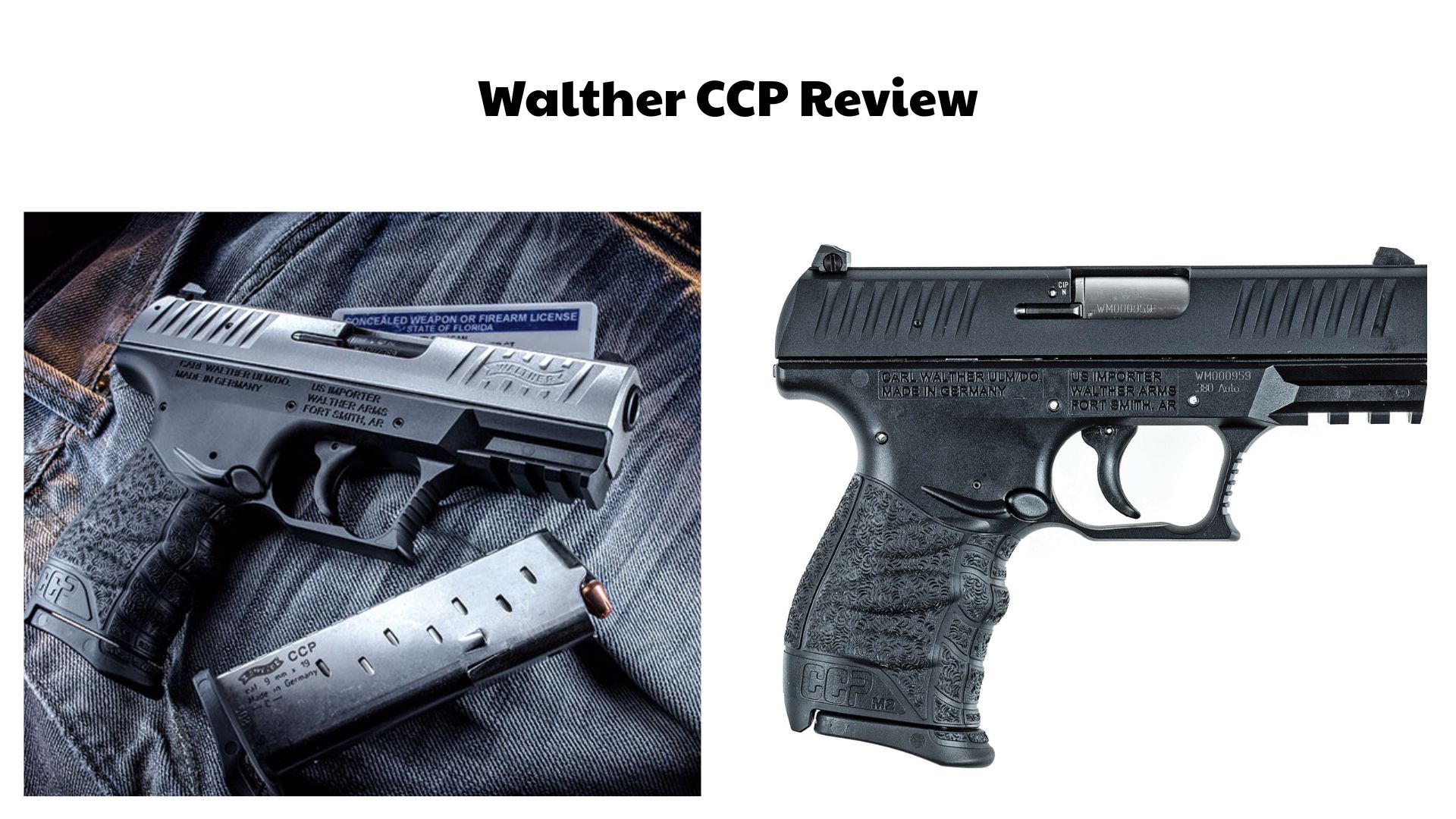

The Walther CCP is a slim, single-stack 9mm pistol designed specifically for concealed carry users who prioritize comfort, controllability, and ease of shooting. Unlike many traditional striker-fired handguns, the CCP focuses heavily on reducing perceived recoil and improving usability, making it especially appealing to shooters who want a softer shooting experience in a compact defensive firearm.
At the heart of the design is Walther’s gas-delayed blowback system, often referred to as SoftCoil technology. This system helps slow down the slide during firing, which reduces felt recoil and makes the pistol easier to control compared to many similarly sized 9mm handguns. It also contributes to the CCP’s reputation as one of the most comfortable-shooting pistols in its class.
The CCP was introduced as an alternative to popular concealed carry pistols like the Glock 43, Smith & Wesson Shield, and early micro-compact designs. While those pistols emphasize simplicity and capacity, the CCP takes a different approach by prioritizing shootability and user comfort over maximum ammunition count or ultra-lightweight construction.
Its core appeal lies in three main areas: soft recoil, easy slide manipulation, and ergonomic comfort. These features make it particularly attractive to newer shooters, individuals with reduced hand strength, or anyone seeking a more forgiving concealed carry platform.
This leads to an important question in today’s market: with modern micro-compacts offering higher capacity and more advanced features, is the Walther CCP or CCP M2 still a practical and viable everyday carry option?
2. Walther CCP Platform Background & Development
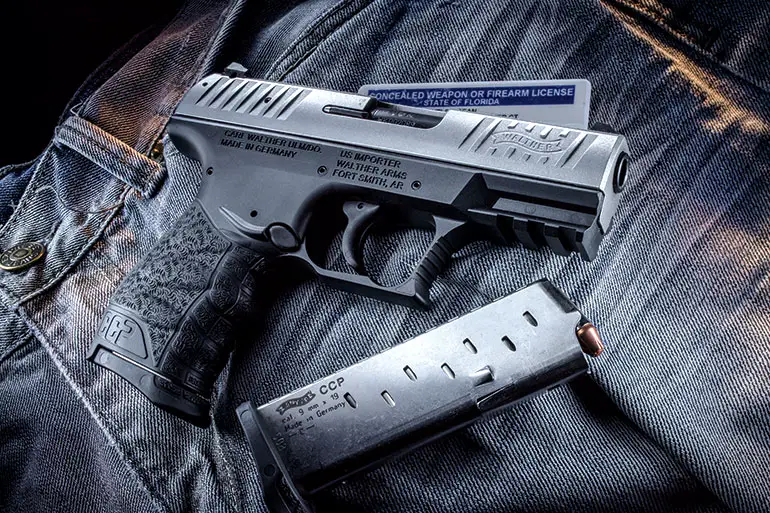
The Walther CCP was originally introduced as a purpose-built “Concealed Carry Pistol,” designed to offer a more comfortable shooting experience than traditional compact 9mm handguns. From the beginning, the focus was not on maximum capacity or modularity, but rather on making a defensive pistol that was easier to shoot and control.
One of the most defining aspects of the platform is its SoftCoil gas-delayed blowback system. Unlike standard short-recoil striker-fired designs, this system uses gas pressure to delay slide movement during firing. The result is noticeably reduced recoil impulse and a smoother shooting cycle, especially when compared to lighter micro-compact pistols.
The original CCP model gained attention for its unique engineering approach, but it also faced criticism for certain usability challenges. In response, Walther introduced the CCP M2, which improved takedown procedures, simplified maintenance, and enhanced overall user experience while maintaining the same core operating system.
The platform was clearly designed with a specific user in mind—shooters who may struggle with stiff slides or sharp recoil. This includes new gun owners, older shooters, or those with reduced hand strength. Instead of competing directly in the capacity-driven micro-compact race, the CCP carved out a niche focused on comfort and accessibility.
Historically, the CCP sits within the transition period of concealed carry handgun development. It represents the final generation of single-stack comfort-focused pistols before the rise of modern high-capacity micro-compacts like the SIG P365 and Springfield Hellcat changed the market landscape.
3. Key Specifications & Technical Overview
The Walther CCP is built around a compact, slim profile designed for everyday concealed carry while maintaining a strong focus on shooting comfort and recoil reduction.
It is chambered primarily in 9mm Luger, although some market variations have included .380 ACP versions aimed at even lower recoil applications. The 9mm configuration remains the most common and widely used for defensive purposes.
The barrel length is approximately 3.5 inches, placing it within the compact pistol category. This length provides a balance between concealability and practical accuracy for defensive distances, typically within 5 to 15 yards.
Capacity is limited to 8+1 rounds using single-stack magazines. While this is lower than modern micro-compact pistols, it aligns with the CCP’s design philosophy of slimness and comfort over maximum ammunition capacity.
Unloaded weight typically falls between 20 and 22 ounces, depending on configuration. This moderate weight helps stabilize the pistol during firing, contributing to its reduced recoil feel compared to ultra-light polymer pistols.
The frame width is approximately 1.18 inches, maintaining a slim profile suitable for deep concealment. This makes it comfortable for inside-the-waistband carry and reduces printing under clothing.
Mechanically, the CCP uses a gas-delayed blowback system (SoftCoil), which is the defining feature of the platform. This system slows slide movement and reduces recoil impulse, making the pistol easier to control during rapid fire.
The frame is constructed from polymer, paired with a steel slide for durability and strength. This combination keeps weight manageable while ensuring long-term structural integrity.
Finally, the fixed barrel design contributes to improved mechanical consistency and accuracy. Unlike tilting-barrel striker-fired pistols, the CCP’s barrel remains stable during cycling, which can enhance shot-to-shot precision at defensive ranges.
4. Design & Build Quality
The Walther CCP is built around a clear design philosophy: keep the pistol slim, simple, and comfortable to carry while improving shootability through internal engineering rather than external complexity. This approach is immediately visible in its clean, minimal-printing polymer frame design. Unlike many modern pistols that add accessory rails, modular frames, and aggressive tactical geometry, the CCP intentionally strips features down to what is necessary for concealed carry use.
German engineering plays a major role in the overall perception of the CCP’s build quality. Walther has long been associated with precision firearm manufacturing, and that reputation carries through into the CCP platform. Fit and finish are generally solid, with tight tolerances and a focus on functional durability rather than cosmetic enhancement. The result is a handgun that feels purpose-built rather than over-engineered.
One of the most important design elements is the SoftCoil gas-delayed system, which is integrated into the overall structure of the pistol. While not visible externally, this system significantly influences the shooting experience. By reducing slide velocity and smoothing the recoil cycle, it contributes to a softer shooting feel and reduces stress on the shooter’s hands. This is particularly valuable for users who prioritize comfort or have difficulty managing traditional recoil impulses.
Another notable design choice is the absence of an accessory rail. While this may be seen as a limitation for users who want lights or lasers, it is intentional. The CCP is optimized for deep concealment, and removing the rail helps maintain a slimmer profile and smoother draw from concealment. This reinforces its identity as a minimalist carry pistol rather than a modular tactical platform.
Overall, the design philosophy of the Walther CCP prioritizes simplicity and ease of use over tactical expansion. Compared to many modern compact pistols that emphasize modularity and accessory integration, the CCP feels more user-focused and comfort-oriented. It is less about customization and more about providing a consistent, easy-to-manage defensive tool.
When compared to modern compact pistols, the CCP is often described as less tactical but more approachable. It does not compete in terms of modular features or accessory options, but it stands out in how manageable and intuitive it feels for everyday users. This makes it especially appealing to those who value straightforward operation over customization potential.
5. Ergonomics & Handling Experience
Ergonomics is one of the strongest aspects of the Walther CCP platform. The grip design is shaped to provide a comfortable and natural hold, featuring subtle finger grooves that help guide hand placement without feeling overly restrictive. This contributes to a more controlled shooting experience, especially for users who may not have extensive firearms training.
The interchangeable backstrap system allows users to adjust the grip fit to better match their hand size. While the CCP is inherently slim due to its single-stack design, this adjustability helps improve usability across a wider range of shooters. The goal is not to transform the grip into a bulky platform but to fine-tune comfort within a compact footprint.
However, the slim profile comes with tradeoffs. While it significantly improves concealability, it also limits the available grip surface area. Shooters with larger hands may find that their support hand has less room to engage fully, especially during rapid fire or extended shooting sessions. This is a common characteristic of ultra-slim concealed carry pistols and not unique to the CCP.
One of the standout features in handling is the easy-rack slide. Thanks to the gas-delayed system, the slide requires less force to manipulate compared to many traditional striker-fired pistols. This makes the CCP particularly appealing for beginners, older shooters, or individuals with reduced hand strength. It removes one of the most common barriers to handgun ownership: slide racking difficulty.
In practical use, the CCP strikes a careful balance between comfort, control, and concealment. It is not designed to be a high-performance competition pistol or a duty-sized combat handgun. Instead, it focuses on making defensive shooting more accessible and less physically demanding.
This balance is what defines the handling experience. The CCP feels light and compact in carry, yet surprisingly stable when fired within its intended defensive range. It rewards proper grip technique and moderate training, making it a suitable option for users who prioritize usability over aggressive performance characteristics.
6. Trigger System & Shooting Characteristics
The Walther CCP uses a striker-fired trigger system designed for consistency and predictability in defensive scenarios. The trigger pull typically falls in the 5 to 6 pound range, which places it within the standard range for modern concealed carry pistols.
The trigger itself features a long but smooth take-up, followed by a clearly defined break. This design helps reduce accidental discharge risk while still allowing the shooter to maintain control during defensive use. It is intentionally structured to favor safety and predictability over short, competition-style trigger travel.
One of the notable characteristics of the CCP trigger system is its longer reset distance compared to more modern striker-fired pistols. This means follow-up shots may feel slightly slower for experienced shooters used to shorter resets. However, in defensive contexts, this longer reset can also contribute to more deliberate and controlled shooting under stress.
The trigger is not designed to compete with high-end performance pistols or aftermarket-tuned systems. Instead, it is functional and reliable, focusing on consistency rather than refinement. Shooters will not find a crisp, competition-grade break here, but they will find a predictable and repeatable trigger press suitable for defensive applications.
In terms of shooting characteristics, the trigger works in harmony with the CCP’s gas-delayed recoil system. The smoother recoil impulse helps keep the sight picture stable, while the trigger provides a steady and controlled firing process. This combination supports accurate shooting at typical defensive distances.
While it may not be considered a standout feature compared to modern performance pistols, the trigger system performs its intended role effectively. It reinforces the CCP’s identity as a user-friendly, defensive-oriented handgun rather than a competition-focused platform.
7. Recoil & Shootability
One of the defining advantages of the Walther CCP platform is its soft-shooting nature, which sets it apart from many other slim 9mm concealed carry pistols. This is primarily achieved through its gas-delayed blowback system, also known as SoftCoil technology. Instead of relying purely on a traditional short-recoil cycling method, the CCP uses gas pressure to slow and control slide movement during firing. The result is a noticeably smoother recoil impulse.
Compared to similar compact 9mm pistols, the CCP generally produces reduced felt recoil. This makes it particularly appealing to shooters who are sensitive to sharp recoil or who struggle with controlling lightweight handguns. The recoil is not eliminated, but it is softened in a way that improves confidence during shooting sessions.
During extended range use, some shooters may notice slight heat buildup in the slide area due to the gas system design. This is a known characteristic of the platform and does not typically affect function or reliability, but it is something users may observe during longer practice sessions.
In practical defensive use, the CCP performs very well. The recoil pattern is predictable and controlled, making it easier to maintain sight alignment during rapid fire. While it is not a competition pistol, it is highly effective within its intended defensive role.
The CCP is also an excellent choice for recoil-sensitive shooters, including newer gun owners, older individuals, or those transitioning from lower-recoil platforms such as .380 ACP pistols. The softer shooting experience helps build confidence and encourages more consistent practice, which is critical for defensive readiness.
Overall, the CCP prioritizes shootability over raw performance characteristics, making it one of the more comfortable compact 9mm pistols available in its category.
8. Accuracy & Range Performance
Accuracy in the Walther CCP is strongly influenced by its fixed barrel design, which enhances mechanical consistency. Unlike traditional tilting-barrel striker-fired pistols, the CCP’s barrel remains stable during cycling. This reduces variables in barrel movement and contributes to more consistent shot placement over time.
At typical defensive distances of 5 to 15 yards, the CCP demonstrates strong practical accuracy. Shooters can expect reliable grouping patterns suitable for self-defense scenarios, where speed and consistency matter more than precision shooting.
With proper training and familiarity, the CCP is also capable of acceptable performance out to 25 yards. While it is not designed for long-range precision shooting or competitive disciplines, it can still deliver consistent hits when used within its mechanical limitations.
The combination of reduced recoil and stable barrel design plays a significant role in maintaining shot-to-shot consistency. By minimizing muzzle disruption during firing, the CCP allows shooters to regain sight picture more quickly, which improves overall accuracy in defensive drills.
It is important to understand that the CCP is not intended as a competition pistol. Its design philosophy prioritizes ease of use, comfort, and defensive reliability rather than maximum precision or speed-based shooting performance. Within that context, it performs its role effectively.
Overall, the CCP delivers stable and repeatable accuracy in real-world concealed carry scenarios. It is especially effective when used within its intended range envelope, where most defensive handgun encounters are expected to occur.
9. Concealed Carry Performance (EDC Use)
The Walther CCP was specifically designed with concealed carry in mind, and its ultra-slim profile reflects that focus. With a width of just over one inch, it is well-suited for deep concealment and can be comfortably carried in a variety of everyday carry setups.
Inside-the-waistband (IWB) and appendix carry (AIWB) are among the most common carry methods for the CCP. Its slim frame reduces bulk against the body, making it easier to conceal under light or fitted clothing. This is particularly beneficial for users who prioritize discretion in their daily carry setup.
Weight distribution is another advantage. At approximately 20–22 ounces unloaded, the CCP is light enough for all-day carry without causing significant fatigue, yet heavy enough to maintain stability during firing. This balance contributes to its reputation as a comfortable everyday carry option.
In terms of concealment, the CCP produces minimal printing when paired with a properly fitted holster and appropriate clothing. Its slim profile allows it to sit closer to the body, reducing visible outlines that can reveal a concealed firearm.
The pistol also performs well in different seasonal clothing setups. In warmer weather, its slim design makes it easier to conceal under light garments. In colder conditions, it integrates well with layered clothing without becoming overly bulky.
While primarily intended as a primary concealed carry firearm, the CCP is also commonly used as a backup gun by some carriers. Its ease of concealment and comfortable carry characteristics make it suitable for secondary defensive roles as well.
Overall, the CCP excels in concealment-focused performance. It is not designed to maximize capacity or tactical features, but rather to provide a comfortable, discreet, and accessible defensive firearm for everyday carry users.
10. Reliability & Ammo Performance
The Walther CCP has built a generally positive reputation for reliability when used with quality ammunition. In most real-world defensive and range environments, it performs consistently with standard FMJ training loads as well as reputable defensive hollow-point ammunition. When properly maintained, the platform is capable of delivering dependable cycling suitable for concealed carry use.
Like many firearms, the CCP may benefit from a short break-in period. During the first several hundred rounds, some users report minor inconsistencies that typically smooth out as the pistol settles into regular use. This is not uncommon in tightly engineered systems, particularly those involving specialized operating mechanisms like gas-delayed blowback.
There have also been occasional reports of ammo sensitivity depending on specific loads. Lighter or lower-powered ammunition may not always cycle as smoothly as standard-pressure defensive rounds. For this reason, testing multiple ammunition types is recommended before committing the firearm to everyday carry.
One consideration unique to the CCP platform is maintenance. Because it uses a gas-delayed system, cleaning and inspection are slightly more involved compared to traditional striker-fired pistols. Carbon buildup in the gas system requires periodic attention to maintain optimal performance.
Despite these considerations, the CCP is widely regarded as solid and dependable for defensive use when properly maintained. It is not a high-maintenance competition firearm, but rather a specialized concealed carry tool that rewards consistent care and appropriate ammunition selection.
11. Variants & Model Options
The Walther CCP platform exists in a few key variants, each reflecting incremental improvements and design refinements over time. The original CCP (often referred to as the M1) introduced the core SoftCoil gas-delayed system and established the platform’s identity as a comfort-focused concealed carry pistol.
The CCP M2 represents the most notable evolution of the platform. It introduced significant usability improvements, particularly in the takedown and maintenance process. This version addressed one of the main criticisms of the original model by simplifying disassembly and making routine cleaning more user-friendly.
The CCP is available in multiple calibers depending on market and configuration. The most common is 9mm Luger, which offers the best balance of defensive performance and availability. Some versions have also been offered in .380 ACP, catering to users who prioritize even lower recoil and easier handling.
Sight options vary across models, including standard three-dot configurations, upgraded night sights, and aftermarket-compatible enhancements. While not as modular as modern optics-ready pistols, the CCP still offers practical sighting solutions for defensive use.
Another key difference between variants lies in takedown and usability improvements. The M2 version, in particular, focuses on simplifying field stripping and improving user experience for maintenance tasks. This makes it more practical for everyday owners who may not have extensive firearm maintenance experience.
Although the CCP is not as widely expanded as modern modular handgun systems, it continues to maintain a presence in the concealed carry niche. Its availability in both new and used markets ensures that it remains accessible to users seeking a comfort-oriented defensive pistol.
12. CCP vs Competitors (Glock, Shield, PPS, etc.)
When compared to the Glock 43, the Walther CCP offers a noticeably softer recoil experience due to its gas-delayed system. This makes it more comfortable to shoot, especially during extended range sessions. However, the Glock 43 typically offers higher simplicity in design and a more extensive aftermarket ecosystem, while also maintaining a slight edge in capacity efficiency depending on setup.
Against the Smith & Wesson Shield series, the comparison becomes more nuanced. The Shield generally reflects a more modern evolution of concealed carry pistols with improved capacity in newer models. The CCP, on the other hand, emphasizes comfort and recoil reduction over capacity, making it more appealing to users who prioritize shootability.
When compared to the Walther PPS, the differences are largely philosophical. The PPS is more duty-oriented and aligns closely with traditional striker-fired concealed carry designs. The CCP diverges by focusing heavily on comfort, ease of shooting, and reduced recoil. In essence, the PPS prioritizes conventional performance, while the CCP prioritizes user-friendly handling.
The primary strengths of the CCP platform lie in its recoil softness and ergonomic comfort. These features make it stand out among slim concealed carry pistols and give it a unique identity in the market.
However, its main weaknesses include lower magazine capacity compared to modern micro-compacts and the use of a more niche operating system. While effective, the gas-delayed mechanism is less common and may require more familiarity from the user compared to standard striker-fired systems.
Overall, the CCP occupies a distinct position in the concealed carry landscape. It is not designed to outperform competitors in capacity or modularity, but rather to provide a more comfortable and accessible shooting experience for a specific type of user.
13. Pros & Cons of Walther CCP
The Walther CCP stands out in the concealed carry market for its unique approach to recoil management and shooter comfort. However, like any specialized firearm, it comes with both clear advantages and inherent limitations that define its role in modern EDC use.
Pros:
- Soft recoil impulse thanks to gas-delayed blowback system, making it one of the most comfortable-shooting compact 9mm pistols
- Easy slide manipulation, ideal for shooters with reduced hand strength
- Excellent ergonomic design with a natural grip angle and user-friendly handling
- Fixed barrel design contributes to strong mechanical accuracy and consistency
One of the most significant strengths of the CCP is its shooting comfort. The gas-delayed system dramatically reduces felt recoil compared to many similarly sized pistols, making it highly accessible for a wide range of users. Combined with its ergonomic grip design and easy slide operation, it offers a very approachable shooting experience.
Cons:
- Low magazine capacity compared to modern micro-compact pistols
- More complex operating system due to gas-delayed mechanism
- Limited optics and accessory options compared to newer platforms
Despite its strengths, the CCP does have limitations that affect its competitiveness in today’s concealed carry market. Its lower capacity reflects its older single-stack design philosophy, and the gas-delayed system introduces additional complexity in both maintenance and mechanical design. Additionally, it lacks the broad optics-ready and modular ecosystem seen in newer pistols.
Strength summary: The Walther CCP is best suited for recoil-sensitive shooters and users who prioritize comfort and ease of shooting over capacity and modularity.
Weakness summary: It is outclassed in capacity, modularity, and modernization by newer micro-compact pistols that dominate today’s EDC market.
14. Ideal Users for the Walther CCP
The Walther CCP is not designed as a universal concealed carry solution. Instead, it serves a very specific group of users who prioritize comfort, controllability, and ease of use over maximum firepower or advanced modular features.
One of the primary user groups includes shooters with reduced hand strength or physical limitations such as arthritis. The CCP’s easy-rack slide and soft recoil system make it significantly more manageable than many traditional striker-fired pistols, reducing barriers to effective handgun use.
It is also an excellent option for beginners who need a soft-shooting training platform. The reduced recoil impulse helps new shooters build confidence and develop proper fundamentals without being overwhelmed by sharp or snappy recoil behavior.
For concealed carriers, the CCP appeals most to those who prioritize comfort over capacity. Its slim profile and smooth shooting characteristics make it well-suited for all-day carry, especially for users who find modern micro-compacts too sharp or uncomfortable to shoot.
The platform is also favored by users who prefer traditional single-stack slim pistols. Even though the market has shifted toward higher-capacity micro-compacts, there remains a segment of shooters who value simplicity and thin-profile concealment above all else.
Finally, the CCP can serve as a backup or occasional carry firearm. Its ease of use and comfortable shooting characteristics make it a practical secondary option, particularly for users who already carry a primary defensive handgun.
15. Final Verdict: Is the Walther CCP Still Worth It?
The Walther CCP remains a capable concealed carry pistol, but it occupies a very specific niche in today’s handgun market. While it may not compete directly with modern high-capacity micro-compacts in terms of features or performance versatility, it continues to deliver strong value in areas that matter most to its target users.
Its ergonomics and recoil reduction system remain standout features. The SoftCoil gas-delayed mechanism provides a shooting experience that is noticeably softer and more comfortable than many competing compact pistols. This alone keeps the CCP relevant for shooters who prioritize comfort and shootability.
However, in terms of modernization and capacity, the CCP is clearly outperformed by newer micro-compact designs. Pistols like the SIG P365 and Springfield Hellcat offer higher capacity, broader accessory ecosystems, and more advanced modular features, which reflect the current direction of the concealed carry market.
Because of this, the CCP is best suited for a specific audience: comfort-focused shooters and recoil-sensitive users who value ease of shooting over maximum firepower. It is not designed to be a high-capacity tactical platform, but rather a user-friendly defensive tool.
Final takeaway: The Walther CCP is a specialized concealed carry pistol that excels in comfort and recoil management, but it offers limited competitiveness in today’s modern, capacity-driven micro-compact market.
FAQ: Walther CCP / CCP M2 (50+ Questions & Answers)
1. What is the Walther CCP designed for?
The Walther CCP (Concealed Carry Pistol) is designed specifically for everyday concealed carry. Unlike many compact 9mm pistols that prioritize capacity or modularity, the CCP focuses on comfort, reduced recoil, and ease of shooting. It is built for users who want a defensive handgun that feels soft and manageable during firing.
2. What makes the Walther CCP different from other pistols?
The most unique feature is its gas-delayed blowback system (SoftCoil). This system reduces slide speed and recoil force, making it noticeably softer to shoot than most compact 9mm pistols. This engineering approach sets it apart from traditional striker-fired handguns.
3. Is the Walther CCP good for beginners?
Yes, it is often considered beginner-friendly due to its soft recoil and easy slide operation. It helps new shooters develop confidence without being overwhelmed by sharp recoil or difficult slide manipulation.
4. Is the CCP good for concealed carry?
Yes, the CCP is designed specifically for concealed carry. Its slim profile and moderate weight make it comfortable for IWB and appendix carry, especially for users who prioritize comfort over capacity.
5. What is the magazine capacity of the Walther CCP?
The standard capacity is 8+1 rounds in 9mm. While this is lower than modern micro-compacts, it reflects the CCP’s slim single-stack design philosophy focused on concealability and comfort.
6. Is the CCP reliable for self-defense?
Yes, when properly maintained and used with quality ammunition, the CCP is generally reliable for defensive use. Like all firearms, it performs best after a short break-in period and regular cleaning.
7. Does the CCP have a break-in period?
Yes, some users report a short break-in period where reliability improves after several hundred rounds. This is typical for many tightly engineered pistols, especially those with unique operating systems.
8. What is the SoftCoil system?
SoftCoil is Walther’s gas-delayed blowback system. It uses gas pressure to slow slide movement during firing, reducing recoil and making the pistol easier to control compared to standard striker-fired designs.
9. Is recoil really lower in the CCP?
Yes, recoil is noticeably softer compared to many similar compact 9mm pistols. It is one of the CCP’s strongest selling points, especially for recoil-sensitive shooters.
10. Is the CCP easy to rack?
Yes, the slide is easier to rack than many traditional pistols due to the gas-delayed system reducing required force. This makes it suitable for users with weaker hand strength.
11. Is the CCP accurate?
Yes, it is accurate within typical defensive ranges. The fixed barrel design improves consistency and helps maintain stable shot grouping at 5–15 yards.
12. Can the CCP be used for range training?
Yes, but it is primarily designed for defensive shooting. It performs well at the range but may heat up slightly during extended sessions.
13. Is the CCP good for small hands?
Yes, its slim grip profile often fits smaller hands well. However, grip surface area is limited compared to larger pistols.
14. Is the CCP good for large hands?
It can work, but users with larger hands may prefer extended magazines for better grip support and control.
15. Does the CCP have an accessory rail?
No, the CCP does not include an accessory rail. This is intentional to maintain a slim profile for concealed carry.
16. Can you mount a red dot on the CCP?
Most CCP models are not optics-ready. Unlike modern pistols, it has limited red dot compatibility.
17. How does CCP recoil compare to Glock 43?
The CCP generally has softer recoil due to its gas-delayed system, while the Glock 43 has a sharper recoil impulse.
18. How does CCP compare to the S&W Shield?
The Shield is more modern and higher capacity, while the CCP offers superior recoil comfort and easier shooting feel.
19. Is the CCP outdated?
In terms of capacity and modularity, yes, it is outpaced by modern micro-compacts. However, it remains relevant for comfort-focused users.
20. What type of ammo works best in the CCP?
Standard-pressure 9mm FMJ and quality defensive hollow points perform best. Users should test different loads for reliability.
21. Is the CCP ammo sensitive?
Some units may show sensitivity to lower-powered ammunition, but most standard defensive loads function reliably.
22. Is the CCP good for concealed carry in summer?
Yes, its slim profile makes it ideal for lightweight summer clothing and deep concealment setups.
23. Is the CCP good for winter carry?
Yes, it remains comfortable and even easier to conceal under layered clothing in colder seasons.
24. Can the CCP be pocket carried?
It is generally too large for true pocket carry, though minimal setups may allow limited use.
25. Is the CCP heavy?
No, it is moderately lightweight at around 20–22 ounces unloaded, making it comfortable for daily carry.
26. Is the CCP good for elderly shooters?
Yes, it is often recommended for older shooters due to its easy slide and reduced recoil.
27. Is the CCP good for women?
Yes, many users appreciate its slim profile, manageable recoil, and ease of use.
28. Is the CCP used by law enforcement?
It is not widely used as a duty pistol but may be used as a backup or off-duty concealed carry option.
29. What is the trigger like?
The trigger is smooth with a long take-up and moderate break. It is designed for consistency rather than competition performance.
30. Does the CCP have a good reset?
The reset is longer than modern pistols, which may feel slower but contributes to controlled defensive shooting.
31. Is the CCP good for fast shooting?
It is capable, but not optimized for speed. It prioritizes control and comfort over rapid-fire performance.
32. Is the CCP good for home defense?
Yes, it can be used for home defense, though many users prefer higher-capacity pistols for this role.
33. How durable is the CCP?
It is generally durable when properly maintained, with a solid build quality consistent with Walther standards.
34. Is maintenance difficult?
Maintenance is slightly more complex due to the gas system but manageable with basic firearm knowledge.
35. Is the CCP worth buying in 2026?
It depends on user needs. It is worth it for comfort-focused shooters but less competitive in capacity-driven markets.
36. What are the main disadvantages?
Lower capacity, limited modularity, and more complex operating system compared to modern pistols.
37. What are the main advantages?
Soft recoil, excellent ergonomics, easy slide operation, and strong defensive accuracy.
38. Is the CCP better than micro-compacts?
No in terms of capacity and modern features, but yes in terms of recoil softness and comfort.
39. Does the CCP overheat?
It can become warm during extended firing sessions due to gas system operation, but this is not dangerous.
40. Is the CCP loud?
It has typical 9mm noise levels, though gas operation may slightly affect perceived sound.
41. Is the CCP good for tactical use?
No, it is not designed as a tactical or duty pistol.
42. Is the CCP good for daily carry?
Yes, it is designed specifically for daily concealed carry use.
43. Does the CCP have recoil spring issues?
No widespread issues, but like all pistols, springs should be replaced over time.
44. Can the CCP handle +P ammo?
It is generally recommended to use standard pressure ammo; +P should be tested carefully.
45. Is the CCP good for defensive accuracy?
Yes, it performs well within typical self-defense distances.
46. Is the CCP easy to clean?
Moderately easy, though the gas system adds extra cleaning steps.
47. What is the biggest weakness of the CCP?
Its low capacity compared to modern micro-compact pistols.
48. What is its biggest strength?
Its extremely soft recoil and comfortable shooting experience.
49. Who should avoid the CCP?
Shooters prioritizing high capacity, modularity, or modern optics-ready systems may prefer newer platforms.
50. What is the final takeaway?
The Walther CCP is a niche concealed carry pistol that prioritizes comfort and shootability over modern tactical features, making it ideal for a specific type of user.
Read more: