
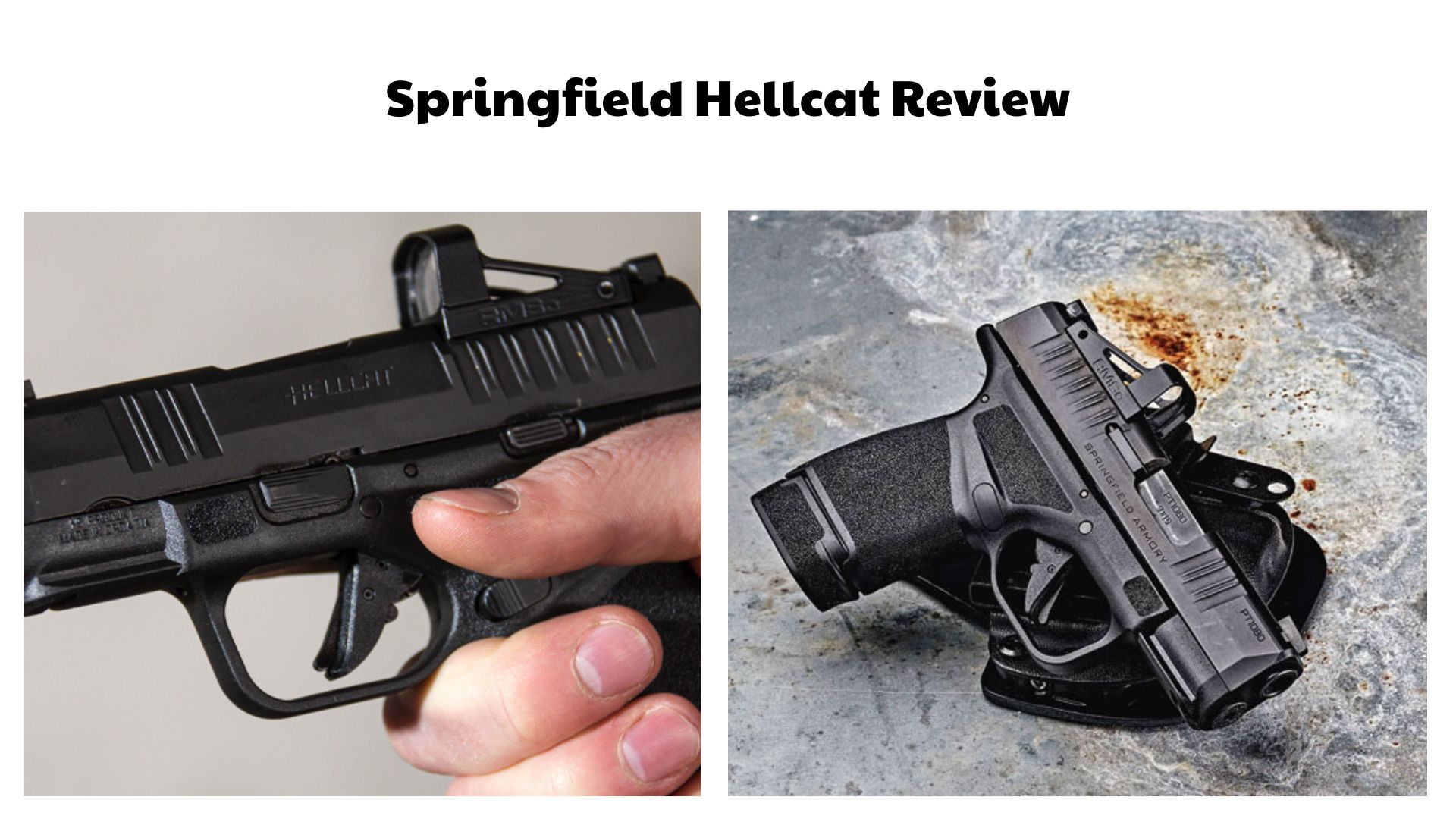

The Springfield Armory Hellcat changed the expectations of what a micro-compact 9mm pistol could be. Before its release, most concealed carry guns in this size class forced users to choose between capacity and concealability. The Hellcat challenged that compromise by offering high magazine capacity in a very small, easily concealable frame. This made it one of the first widely adopted “micro double-stack” pistols in the civilian concealed carry market.
In this discussion, the Hellcat is positioned as a direct competitor to popular platforms like the SIG P365 and Glock 43X. Its appeal comes from a combination of features: higher capacity than older single-stack pistols, aggressive grip texturing for control under recoil, and a design philosophy focused on defensive reliability rather than range novelty. Over time, Springfield expanded the lineup into multiple variants, including the standard Hellcat, optics-ready OSP version, longer-grip Hellcat Pro, and the compensated Pro Comp model.
The key question many shooters ask today is simple: does the Hellcat still hold its position as one of the best concealed carry pistols in 2026, or has newer competition overtaken it? To answer that, we need to break down its design, performance, and real-world carry behavior in detail.
2. Springfield Hellcat Background & Platform Development
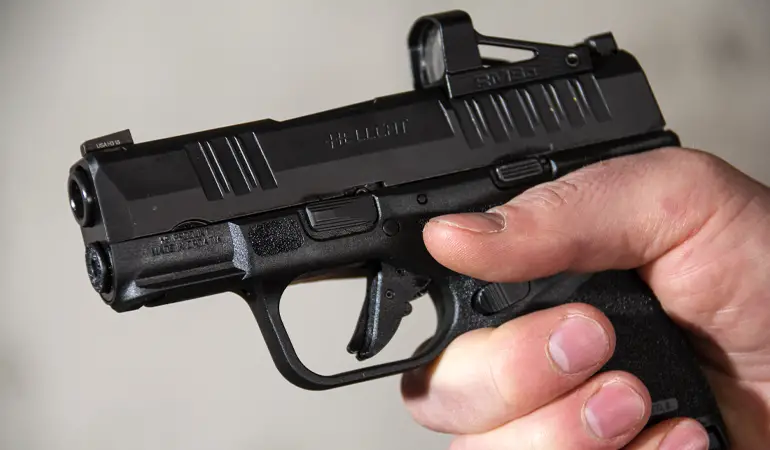
The Springfield Hellcat was officially introduced in 2019 as a response to a rapidly changing concealed carry market. At that time, shooters were shifting away from traditional single-stack compact pistols toward higher-capacity micro-compact designs. Springfield Armory partnered with HS Produkt in Croatia, a manufacturer already known for producing durable and innovative service pistols, to develop a new compact platform that could outperform existing options in capacity while remaining easy to conceal.
The result was a breakthrough design that delivered 11+1 capacity in a frame size similar to older 7–8 round pistols. This immediately positioned the Hellcat as one of the highest-capacity micro pistols available at launch. It also placed direct pressure on competing designs such as early SIG P365 models and compact Glock variants.
The Hellcat’s success led to rapid expansion of the lineup. Springfield recognized that concealed carry users were not a single group with identical needs. Instead, they needed multiple configurations tailored to different carry styles and shooting preferences.
The platform evolved into several key variants:
- Hellcat: The original micro-compact version designed for maximum concealability.
- Hellcat OSP: An optics-ready version allowing direct mounting of micro red dot sights.
- Hellcat Pro: A larger grip and longer barrel model that improves shootability while maintaining concealment.
- Hellcat Pro Comp: A performance-focused variant with an integrated compensator to reduce muzzle rise and improve control during rapid fire.
This evolution reflects a broader trend in modern concealed carry design. Manufacturers are no longer focused only on making pistols smaller. Instead, they are building modular systems that allow users to balance capacity, control, and concealability depending on their needs.
3. Key Specifications & Technical Overview
The Springfield Hellcat series is built around a striker-fired 9mm platform designed for defensive use. While each variant has slight differences, the core mechanical system remains consistent across the lineup.
Core Mechanical Design
- Caliber: 9mm Luger, the standard defensive handgun cartridge used worldwide.
- Action: Striker-fired semi-automatic system designed for simplicity and reliability.
The striker-fired system eliminates the need for an external hammer, allowing for a more compact slide profile and simpler manual of arms. This design is widely used in modern concealed carry pistols due to its balance of safety and ease of use.
Barrel Length & Dimensions
Barrel length plays an important role in both concealability and ballistic performance.
- Hellcat: Approximately 3.0-inch barrel, optimized for deep concealment.
- Hellcat Pro: Approximately 3.7-inch barrel, offering improved velocity and sight radius.
Overall length varies depending on model, typically ranging from about 6.0 inches for the compact version to around 6.6 inches for the Pro model. This size range keeps the pistol within the “easy concealment” category while still improving shootability in the larger variants.
Weight & Frame Construction
The Hellcat uses a high-strength polymer frame paired with a stainless steel slide finished in Melonite for corrosion resistance. Unloaded weight typically falls between 18 and 21 ounces depending on configuration.
This weight range is intentional. It is light enough for comfortable all-day carry, yet heavy enough to help manage recoil better than ultra-light pocket pistols.
Magazine Capacity
One of the defining features of the Hellcat platform is its magazine capacity. It was one of the first micro pistols to push beyond traditional limits.
- Standard Hellcat: 11+1 capacity
- Extended magazines: 13, 15, or even 17 rounds depending on configuration and model
This capacity advantage helped establish the Hellcat as a serious defensive option rather than just a backup or pocket pistol.
Optics & Recoil System
Many Hellcat models include an optics-ready (OSP) slide cut designed for Shield RMSc footprint red dot sights. This allows users to modernize their pistol setup without modifications.
The recoil system uses a dual recoil spring assembly. This helps manage slide velocity and reduces felt recoil during firing, especially in compact configurations where recoil can be sharper.
Compensated Performance Models
The Hellcat Pro Comp introduces an integrated compensator designed to reduce muzzle rise during rapid fire. By redirecting gas upward, it helps keep the muzzle flatter, improving follow-up shot speed and overall control.
This feature is particularly useful for shooters who prioritize performance during defensive training or range practice, especially in a compact platform where recoil control is more challenging.
4. Design Philosophy & Engineering Goals
The design philosophy behind the Springfield Hellcat is rooted in one clear objective: deliver maximum defensive capacity in the smallest practical footprint. This approach reflects a major shift in modern concealed carry thinking. Instead of simply shrinking existing compact pistols, Springfield engineered the Hellcat from the ground up as a purpose-built micro defensive platform.
At the core of this philosophy is the idea of a “high-capacity small frame” category. Traditional micro pistols often forced a tradeoff between size and firepower. The Hellcat challenges this by using a tightly optimized magazine design that stacks rounds efficiently while preserving a slim grip profile. This allows the pistol to carry 11+1 rounds in a form factor similar to older 7- or 8-round designs.
One of the most important engineering elements is the Adaptive Grip Texture system. Instead of using uniform grip stippling, Springfield designed a texture pattern that becomes more pronounced under pressure. In practice, this means the pistol feels comfortable during carry but becomes more secure when the shooter applies force during recoil. This subtle detail significantly improves control during rapid fire, especially in defensive scenarios where grip consistency matters.
Another key design goal is balancing concealability with shootability. This balance is often referred to by shooters as the “Goldilocks zone”—a firearm that is small enough to conceal easily but large enough to shoot effectively. The Hellcat sits firmly in this category, especially in its Pro variants. It avoids the extremes of ultra-pocket pistols, which are easy to conceal but difficult to control, and full-size pistols, which shoot well but are harder to conceal.
The slide design also plays a major role in the overall engineering approach. The Hellcat features a flat-profile slide with minimal protrusions. This improves holster compatibility and reduces the chances of snagging during a draw. In concealed carry situations, especially under stress, a clean draw stroke can be critical. The reduced external profile supports faster and more consistent presentation from concealment.
Anti-snag design elements extend beyond the slide. Controls are recessed or streamlined to minimize interference with clothing, holsters, or body movement. This reflects a shift in modern concealed carry engineering where smooth deployment is just as important as shooting performance.
Ultimately, the Hellcat represents a transition in philosophy. It is no longer just a “small pistol for backup use.” Instead, it is a fully capable defensive system designed to serve as a primary everyday carry firearm for a wide range of users.
5. Ergonomics & Handling Experience
Ergonomics play a critical role in how effectively a compact firearm performs under real-world conditions. The Springfield Hellcat was designed with a grip angle that sits between traditional Glock-style geometry and more vertical SIG-style designs. This intermediate angle helps promote a natural point of aim for a wide variety of shooters.
The grip itself is compact but carefully shaped to maximize control within limited space. On standard Hellcat models, the shorter grip can leave the pinky finger partially unsupported. This is a common characteristic in micro-compact pistols and is a necessary tradeoff for concealability. However, extended magazines significantly improve handling by providing full hand support and increased stability during firing.
In Hellcat Pro models, ergonomics are noticeably improved. The longer grip allows for a full three-finger hold, which enhances recoil control and shooting comfort. This makes the Pro version more suitable for extended range sessions and users with medium to larger hands.
Finger grooves on the frame assist in establishing consistent hand placement. During rapid fire, these grooves help maintain grip consistency, reducing the chance of shifting under recoil. While some modern pistols avoid finger grooves entirely, in the Hellcat they serve a functional purpose for controlling a small-frame defensive firearm.
The grip texture is another defining ergonomic feature. It is intentionally aggressive, providing strong purchase even under stress or when hands are wet or sweaty. This level of traction improves weapon retention but can feel abrasive during extended carry without proper holster protection. It is a deliberate design choice that prioritizes control over comfort in shooting scenarios.
Magazine handling is also improved in the Pro variants due to increased grip length. Reloads are faster and more intuitive compared to standard micro pistols, where short grips can slow down magazine insertion and seating. This becomes especially important in defensive training or high-stress reload situations.
Overall, the Hellcat’s ergonomics reflect its identity as a defensive tool. It is not designed for comfort-first recreational shooting but instead optimized for reliable handling under pressure. Compared to earlier micro pistols, it offers significantly improved stability and control, especially in its expanded configurations.
6. Trigger System & Shooting Characteristics
The Springfield Hellcat uses a striker-fired trigger system designed for simplicity, consistency, and defensive reliability. This system is one of the most important aspects of the pistol’s shooting behavior, as it directly influences accuracy, control, and user confidence.
The trigger pull typically ranges between 5.5 and 6.5 pounds depending on the specific model and production variation. This weight is carefully chosen to balance safety and usability. It is heavy enough to prevent unintentional discharge under stress but light enough to allow controlled, deliberate firing during defensive situations.
The trigger itself features a smooth take-up phase followed by a defined wall. This structure gives the shooter a clear sense of when the shot is about to break, which improves control during slow and rapid fire alike. The break is clean and predictable, which is essential for maintaining consistent shot placement in defensive scenarios.
One of the most notable characteristics of the Hellcat trigger is its short reset. After firing, the trigger returns to a reset point quickly, allowing for faster follow-up shots. This is particularly important in micro-compact pistols, where recoil management can be more challenging. A short reset helps compensate by enabling faster shot recovery.
Compared to early production Hellcat models, newer versions show noticeable improvements in trigger smoothness and refinement. While it is not a competition-grade trigger, it performs very well within its intended role as a defensive firearm. The focus is on repeatability and reliability rather than ultra-light or highly tuned trigger performance.
In practical shooting scenarios, the Hellcat trigger performs consistently under stress. It does not require specialized training to understand, which makes it accessible to a wide range of users. At the same time, experienced shooters can take advantage of its short reset and predictable break to achieve controlled rapid fire.
The overall shooting experience is defined by consistency. Each trigger pull behaves similarly, which is critical in defensive situations where predictability matters more than refinement. While there are smoother triggers available in larger or competition-oriented pistols, the Hellcat’s system is well-suited to its role as a compact defensive weapon.
In summary, the trigger system reinforces the Hellcat’s identity as a practical, no-nonsense concealed carry pistol. It prioritizes control, reliability, and repeatability over complexity or cosmetic refinement.
7. Recoil & Shootability
Recoil management is one of the most important factors in evaluating any micro-compact 9mm pistol, and the Springfield Hellcat delivers a performance profile that varies noticeably across its different variants. In the standard Hellcat configuration, recoil is described as “snappy,” which is expected for a lightweight firearm with a short barrel and compact grip. The energy from 9mm ammunition is concentrated in a smaller frame, which results in a quicker and sharper recoil impulse compared to larger compact or full-size pistols.
Despite this, the Hellcat remains controllable for most shooters with basic handgun experience. The grip texture and low bore axis help mitigate muzzle rise, allowing users to maintain sight alignment during follow-up shots. However, proper grip technique becomes critical. Shooters who fail to establish a firm, high grip will notice increased muzzle flip and slower recovery between shots.
The Hellcat Pro significantly improves shootability due to its extended grip and slightly heavier slide assembly. The additional weight helps absorb recoil energy, reducing the abruptness of each shot. The longer grip also allows for a more complete hand hold, which improves leverage and control during rapid fire. For many users, this alone makes the Pro version feel substantially more stable and comfortable to shoot.
One of the most effective improvements across the platform is the dual recoil spring system. This mechanism smooths out slide cycling and helps reduce perceived recoil by distributing energy more evenly during the firing cycle. The result is a more controlled shooting experience, especially during extended range sessions.
Compensated models, such as the Hellcat Pro Comp, take recoil management a step further. The integrated compensator redirects gas upward, which counteracts muzzle rise. This design feature is particularly beneficial during rapid-fire sequences, where maintaining sight alignment becomes more challenging. Shooters often notice a flatter shooting experience, allowing for faster target reacquisition.
In practical terms, recoil in the Hellcat platform is highly dependent on the model and the shooter’s skill level. Experienced shooters will find it very manageable, even during rapid fire drills. Beginners may require a short adjustment period, especially when transitioning from larger or heavier pistols.
Overall, shootability improves significantly as you move from the standard Hellcat to the Pro and Comp variants. This progression highlights Springfield’s intention to offer a scalable platform that can accommodate both deep concealment needs and performance-oriented shooting.
8. Accuracy & Range Performance
Accuracy in the Springfield Hellcat platform is best understood within the context of its intended purpose: defensive shooting at close to moderate distances. At typical engagement ranges of 5 to 15 yards, the Hellcat performs consistently well. Most shooters can achieve tight and repeatable groupings with proper fundamentals and trigger control.
The standard Hellcat is optimized for combat accuracy rather than precision shooting. Its short barrel and compact sight radius naturally limit long-range precision, but this is not a disadvantage in its intended role. The pistol is designed to deliver reliable hits in defensive scenarios where speed and consistency are more important than pinpoint accuracy.
The Hellcat Pro offers a noticeable improvement in accuracy potential. The longer barrel increases bullet velocity consistency and extends the sight radius, both of which contribute to improved shot placement. This makes the Pro version more forgiving for shooters who are still developing their fundamentals or who prefer a more stable shooting platform.
Optics-ready models further enhance accuracy and speed. The addition of a red dot sight allows for faster target acquisition and more precise aiming, especially under stress. Many shooters find that optics reduce the time needed to align sights, particularly in low-light or dynamic environments.
The Hellcat’s fixed barrel design also contributes to consistent shot grouping. A fixed barrel system reduces mechanical variability during firing, which helps maintain accuracy across different ammunition types. This consistency is particularly valuable in defensive pistols, where reliability is prioritized over fine tuning.
Compensated variants such as the Hellcat Pro Comp improve practical accuracy during rapid fire. By reducing muzzle rise, these models allow shooters to maintain sight alignment more effectively between shots. This results in faster and more controlled follow-up shots, which can indirectly improve overall group consistency in defensive drills.
It is important to emphasize that the Hellcat is not designed for precision shooting competitions. Instead, it excels in real-world defensive accuracy. Within its intended engagement range, it provides dependable performance that aligns with modern concealed carry expectations.
In summary, the Hellcat platform offers strong defensive accuracy across all variants, with improved performance as the platform scales from standard to Pro and Comp configurations.
9. Concealed Carry Performance
The Springfield Hellcat is widely recognized for its strong concealed carry performance, which is one of the primary reasons for its popularity in the civilian defensive handgun market. Its compact dimensions, slim profile, and high capacity make it an effective everyday carry option for a wide range of users.
The original Hellcat is designed as an ultra-compact concealed carry pistol. Its small footprint allows it to be carried discreetly in a variety of positions, including inside-the-waistband (IWB), appendix inside-the-waistband (AIWB), and even pocket carry when paired with a proper holster. This makes it especially suitable for deep concealment scenarios where minimal visibility is a priority.
Despite its small size, the Hellcat still offers 11+1 capacity in its standard configuration. This combination of size and firepower is a key reason it became so widely adopted. It allows users to carry a substantial amount of ammunition without increasing bulk or printing under clothing.
The Hellcat Pro shifts the balance slightly toward improved shootability while maintaining strong concealment capability. Its longer grip and slide make it more suitable as a primary everyday carry firearm. While it is slightly larger than the standard Hellcat, it remains slim enough for comfortable concealment under most clothing types.
One of the standout features of the platform is its slim width, typically around the 1-inch class. This narrow profile significantly reduces printing, making it easier to conceal even under lightweight clothing. For many users, this is a critical factor when selecting an everyday carry firearm.
Comfort during daily carry is another important consideration. The Hellcat is lightweight enough to be worn for extended periods without causing fatigue. When paired with a quality holster, it distributes weight evenly and remains stable during movement. This makes it suitable for both casual and professional environments.
The platform is also versatile across different carry seasons. In warmer months, the standard Hellcat excels due to its compact size and minimal bulk. In colder seasons, the Hellcat Pro becomes more practical, as heavier clothing naturally accommodates slightly larger firearms without compromising concealment.
Overall, concealed carry performance is one of the Hellcat’s strongest attributes. It successfully combines deep concealability with modern defensive capacity, giving users flexibility in how they choose to carry based on their lifestyle and environment.
10. Reliability & Ammo Performance
Reliability is one of the most critical factors in any concealed carry firearm, and the Springfield Hellcat platform has built a strong reputation in this area. Across its variants, the Hellcat is generally regarded as a duty-reliable micro-compact pistol when properly maintained and fed with quality ammunition.
In typical use, the Hellcat performs well with both FMJ training ammunition and modern defensive hollow-point loads. The feed geometry of the magazine and chamber has been engineered to support reliable cycling, even under rapid fire conditions. This consistency is a key reason the platform gained rapid acceptance in the concealed carry community.
Like many modern semi-automatic pistols, some Hellcat units may experience a short break-in period. During the first few hundred rounds, users may notice minor inconsistencies in cycling. These typically diminish as internal components settle and polish through use. After this period, reliability tends to stabilize at a high level.
Early production units of the Hellcat had a small number of reported issues, as is common with most new firearm platforms. However, these were generally limited and addressed through subsequent manufacturing refinements. Current production models are considered significantly more consistent.
Magazine quality plays an important role in overall reliability. The Hellcat’s high-capacity magazine design is tightly engineered, which means it performs best when paired with factory magazines in good condition. Worn or aftermarket magazines can introduce feeding inconsistencies, as is true with most micro-compact pistols.
Ammunition selection also influences performance. While the Hellcat is designed to handle a wide range of 9mm loads, some defensive hollow points may perform more smoothly than others depending on bullet shape and overall cartridge profile. This is why testing carry ammunition in your specific firearm is strongly recommended.
Long-term durability reports indicate that the Hellcat platform can withstand high round counts with proper maintenance. Users who regularly clean and lubricate their pistols report sustained reliability over extended training cycles. This reinforces its classification as a “duty-reliable micro pistol,” meaning it is suitable for serious defensive use rather than just casual range shooting.
11. Hellcat Variants Overview
The Springfield Hellcat family has expanded significantly since its introduction, offering multiple variants designed to meet different concealed carry needs. Each version retains the core platform identity while adjusting size, features, and performance characteristics.
The standard Hellcat is the smallest and most concealable version. It is designed for maximum portability and deep concealment. This model prioritizes minimal footprint and is often chosen by users who need a highly discreet carry option, such as pocket or minimalist inside-the-waistband setups.
The Hellcat OSP (Optical Sight Pistol) builds on the standard model by adding an optics-ready slide. This allows users to mount micro red dot sights, significantly improving target acquisition speed and accuracy potential. The OSP variant is particularly popular among shooters who want modern optic capability in a micro-compact frame.
The Hellcat Pro represents a shift toward improved shootability. It features a longer grip and extended slide, which enhance recoil control and accuracy. While slightly larger than the standard Hellcat, it remains highly concealable and is often considered the best balance between size and performance in the lineup.
The Hellcat Pro Comp adds an integrated compensator to reduce muzzle rise and improve rapid-fire control. This variant is designed for shooters who prioritize performance during fast follow-up shots. The compensator redirects gas upward, helping keep the muzzle flatter during firing sequences.
Across the lineup, key differences include slide length, grip size, magazine capacity, and sight configurations. These variations allow users to tailor the platform to specific needs, whether that is deep concealment, range performance, or recoil management.
Each variant serves a distinct role within the concealed carry ecosystem. The standard Hellcat focuses on discretion, the OSP adds optical capability, the Pro improves handling, and the Pro Comp enhances shooting control. Together, they form a flexible system rather than a single fixed design.
This modular approach has helped the Hellcat maintain relevance in a rapidly evolving market, where concealed carry users increasingly demand personalization and performance flexibility.
12. Hellcat vs Competitors (P365, Glock 43X, Shield Plus)
The Springfield Hellcat competes in one of the most crowded and competitive segments in the modern handgun market: micro-compact 9mm pistols. Its primary rivals include the SIG Sauer P365, Glock 43X, and Smith & Wesson Shield Plus. Each of these platforms has strengths, but they also reflect different design philosophies.
Compared to older single-stack pistols, the Hellcat offers a clear capacity advantage. Where earlier designs typically carried 6–8 rounds, the Hellcat introduced a new standard with 11+1 capacity in a similarly compact frame. This shift helped redefine expectations for concealed carry firearms.
Against the SIG P365, the Hellcat presents a closely matched competition. Both platforms pioneered high-capacity micro-compact design. The Hellcat is often favored for its more aggressive grip texture and slightly higher factory capacity in some configurations, while the P365 is known for its smooth shootability and broad aftermarket support.
The Glock 43X offers a simpler and more traditional approach. It features Glock’s well-known reliability and straightforward design philosophy. However, its grip texture and ergonomics are less aggressive compared to the Hellcat, and its standard capacity is lower without aftermarket magazine extensions. Many users choose the 43X for familiarity and simplicity rather than maximum performance density.
The Smith & Wesson Shield Plus competes closely with the Hellcat in terms of capacity and ergonomics. It offers a balanced shooting experience with a refined trigger system and comfortable grip design. However, the Hellcat often stands out due to its higher standard capacity and more aggressive grip texture, which improves control during rapid fire.
One of the Hellcat’s key advantages is its grip design and texturing, which enhances weapon retention under stress. This makes it particularly appealing for defensive use where control is critical. Additionally, its high-capacity magazine system helped establish the modern trend of “micro high-capacity” pistols.
In the broader concealed carry market, the Hellcat helped accelerate a shift toward compact pistols that do not compromise capacity for size. It remains a strong competitor in a category now defined by performance-oriented micro pistols.
Overall, while no single platform dominates every category, the Hellcat holds a solid position among top-tier concealed carry pistols, especially for users prioritizing capacity and aggressive control features.
13. Advantages of the Springfield Hellcat Series
The Springfield Hellcat series offers a combination of features that helped it stand out in the highly competitive micro-compact concealed carry market. One of its most significant advantages is its high capacity relative to its size. In a category where many pistols traditionally carried fewer than 10 rounds, the Hellcat introduced 11+1 capacity in a very compact frame, with extended options reaching even higher. This immediately positioned it as a serious defensive tool rather than a compromise firearm.
Reliability is another major strength of the platform. The Hellcat has developed a strong reputation for consistent performance with quality ammunition. When properly maintained and paired with factory magazines, it performs reliably across a wide range of defensive and training scenarios. This dependability is essential for concealed carry users who prioritize defensive readiness.
The aggressive grip texture is also a defining advantage. Unlike many smoother polymer pistols, the Hellcat’s grip is designed to lock into the hand under stress. This improves control during rapid fire and helps reduce the likelihood of slippage in adverse conditions such as sweat, rain, or high-pressure defensive situations.
Another key benefit is the variety of available models. The Hellcat lineup includes standard, OSP, Pro, and Pro Comp variants, allowing users to select a configuration that best matches their carry style and performance expectations. This flexibility makes the platform adaptable to both deep concealment and range-focused applications.
Optics-ready configurations further enhance its modern appeal. The ability to mount a micro red dot sight improves target acquisition speed and accuracy, aligning the platform with current trends in defensive handgun setups. This makes the Hellcat compatible with contemporary carry systems rather than being limited to traditional iron sights.
Overall, the Hellcat strikes a strong balance between concealability and performance. It is compact enough for everyday carry while still offering the capacity and control needed for defensive use. This balance is one of the primary reasons it gained widespread adoption in the concealed carry community.
14. Disadvantages & Limitations
Despite its strengths, the Springfield Hellcat series is not without limitations. One of the most commonly noted drawbacks is the snappy recoil of the standard Hellcat model. Due to its small size and lightweight construction, recoil impulse is more pronounced compared to larger compact pistols. While manageable for experienced shooters, beginners may require additional practice to become comfortable with it.
Grip size is another limitation, particularly on the standard Hellcat. Shooters with larger hands may find the shorter grip frame restrictive, often leaving the pinky finger unsupported unless extended magazines are used. While this is a common tradeoff in micro-compact designs, it can affect overall comfort and control.
The compensated models, such as the Hellcat Pro Comp, introduce additional considerations. While they improve recoil control, they also increase muzzle blast and noise. This can be noticeable during indoor shooting or enclosed range environments, which may not appeal to all users.
Trigger refinement is another area where the Hellcat, while functional, does not match premium or competition-grade pistols. The trigger is designed for defensive consistency rather than precision shooting performance. As a result, some shooters may find it less smooth or refined compared to higher-end alternatives.
Recoil characteristics are also slightly more aggressive than larger compact pistols. While this is expected in the micro-compact category, it is still a factor for users transitioning from full-size handguns. Proper grip technique and training are important to manage this effectively.
Another limitation is the reduced rail space on smaller variants. This can restrict accessory options such as lights or lasers, particularly on the standard Hellcat. Users who require extensive accessory mounting may prefer larger platforms.
In addition, while the Pro models improve performance, they are less suited for true pocket carry. Their slightly larger dimensions make them better suited for inside-the-waistband or appendix carry rather than deep concealment methods.
Finally, like many modern defensive pistols, the Hellcat requires a learning curve to maximize performance. Proper training is necessary to fully leverage its high-capacity design, aggressive grip texture, and recoil characteristics. Without practice, users may not experience its full potential.
15. Ideal Users for the Hellcat Series
The Springfield Hellcat series is designed for a wide range of concealed carry users, but it is particularly well-suited for those who prioritize capacity in a compact platform. Its high magazine capacity relative to size makes it an attractive choice for defensive-minded carriers who want more rounds without significantly increasing bulk.
It is also well-suited for shooters transitioning from compact or older micro-compact pistols. Users moving up from single-stack 9mm handguns often appreciate the increased capacity and improved ergonomics offered by the Hellcat platform. This makes it a natural upgrade in the concealed carry evolution.
The optics-ready variants appeal to users who want to integrate modern red dot sights into their everyday carry setup. This is especially beneficial for shooters focused on faster target acquisition and improved accuracy under stress. The Hellcat OSP and Pro models cater specifically to this demand.
Experienced shooters are another key user group. Those who are already comfortable managing snappy recoil will benefit most from the Hellcat’s compact design and performance-oriented features. These users can fully take advantage of its control characteristics and high-capacity magazines.
The platform is also ideal for individuals seeking lightweight daily carry options. Its relatively low weight makes it comfortable for all-day wear, whether carried in appendix, inside-the-waistband, or other concealed positions. This enhances its practicality for everyday use.
Users who want flexibility in configuration also benefit from the Hellcat ecosystem. With multiple variants available, shooters can choose between maximum concealability, improved shootability, or enhanced recoil control depending on their specific needs.
Backup gun carriers and primary concealed carry users both find value in the Hellcat series. Its compact size makes it suitable for deep concealment or secondary carry roles, while its capacity and performance allow it to function effectively as a primary defensive handgun.
Overall, the Hellcat series is best suited for users who want a modern balance between concealment and performance. It is not a one-size-fits-all solution, but rather a flexible platform designed to meet the needs of a wide range of concealed carry scenarios.
16. Final Verdict: Is the Springfield Hellcat Worth It?
The Springfield Hellcat stands as one of the most influential micro-compact 9mm pistols in the modern concealed carry landscape. Its introduction helped reshape expectations for what a small defensive handgun could deliver, particularly in terms of capacity and overall performance. By combining high magazine capacity with a compact frame, the Hellcat pushed the micro-9mm category into a new standard that many competitors were forced to match.
One of the strongest points in favor of the Hellcat series is its overall balance of capacity, reliability, and concealability. It is not just a small pistol for convenience; it is a purpose-built defensive tool designed to function under real-world conditions. This balance is what makes it appealing to a wide range of concealed carry users, from beginners to experienced shooters.
Within the lineup, the Hellcat Pro is often considered the most well-rounded option. It improves shootability through a longer grip and increased stability while still maintaining a slim profile suitable for everyday carry. For many users, it represents the best compromise between deep concealment and practical shooting performance.
The compensated models, such as the Hellcat Pro Comp, cater to shooters who prioritize performance during rapid fire. By reducing muzzle rise, these versions offer improved control and faster follow-up shots. This makes them particularly attractive for users who train regularly or want enhanced handling in defensive scenarios.
The standard Hellcat continues to serve a strong purpose as well. Its ultra-compact dimensions make it ideal for deep concealment, backup carry, or situations where minimal size is the top priority. While it is snappier than larger variants, it excels in discreet everyday carry roles.
In the broader market, the Hellcat competes directly with established platforms such as the SIG P365 and Glock 43X. Each of these pistols has its own strengths, but the Hellcat remains highly competitive due to its aggressive grip design, high capacity, and strong defensive focus. It played a major role in accelerating the industry shift toward high-capacity micro-compact pistols.
The final takeaway is clear: the Springfield Hellcat is a modern concealed carry platform that helped redefine expectations in the micro 9mm category. While it may not be perfect for every shooter, it offers a compelling combination of features that continues to make it a strong choice in today’s concealed carry market.
50+ Frequently Asked Questions (FAQ) About the Springfield Hellcat Series
1. Is the Springfield Hellcat a good concealed carry pistol?
Yes, the Springfield Hellcat is widely considered one of the best modern concealed carry pistols in the micro-compact 9mm category. It offers a strong balance of size, capacity, and reliability, which makes it suitable for everyday carry (EDC). Its slim profile allows for easy concealment, while its high magazine capacity provides more defensive rounds than many older compact designs. For users who prioritize a practical defensive firearm rather than a range-only pistol, the Hellcat is a solid choice.
2. What makes the Hellcat different from other micro-compact pistols?
The Hellcat stands out primarily due to its high capacity in a very small frame. When it was introduced, it offered 11+1 rounds in a size class where most competitors carried significantly less. It also features aggressive grip texturing, an optics-ready slide on many models, and a modern recoil system. These combined features make it more performance-focused compared to older micro pistols that prioritized size over shootability.
3. Is the Hellcat reliable for self-defense?
Yes, the Hellcat is generally considered reliable for self-defense when properly maintained and used with quality ammunition. It has a strong reputation within the concealed carry community. Like most semi-automatic pistols, it benefits from a short break-in period and should be tested with defensive ammo before being carried regularly. Once broken in, it performs consistently under defensive conditions.
4. How many rounds does the Hellcat hold?
The standard Hellcat holds 11+1 rounds with its flush magazine. Extended magazines increase capacity further depending on configuration. The Hellcat Pro typically holds 15+1 or more depending on magazine type. This high capacity is one of the defining advantages of the platform compared to older single-stack compact pistols.
5. Is the Hellcat easy to conceal?
Yes, the Hellcat is designed specifically for concealment. Its slim frame and compact dimensions make it easy to carry inside-the-waistband (IWB), appendix carry, or even pocket carry with proper holsters. The lack of sharp external protrusions also helps reduce printing under clothing, making it suitable for everyday concealed carry use.
6. Does the Hellcat have a lot of recoil?
The recoil is noticeable but manageable. The standard Hellcat is snappier due to its small size and lightweight frame. However, the grip texture and recoil system help control muzzle rise. The Hellcat Pro and Comp variants reduce recoil significantly by adding weight and, in some cases, a compensator. With proper technique, most shooters can control it effectively.
7. Is the Hellcat good for beginners?
Yes, but with some considerations. Beginners can use the Hellcat effectively, especially the Pro version, which offers better control. However, the smaller standard model may feel snappy for new shooters. Training is important to develop proper grip and recoil management skills. Once learned, it becomes a very capable defensive pistol for beginners.
8. What is the difference between Hellcat and Hellcat Pro?
The Hellcat is more compact and optimized for deep concealment, while the Hellcat Pro has a longer grip and slide. This makes the Pro easier to shoot, with better recoil control and improved accuracy. The standard Hellcat is better for minimal concealment, while the Pro is often chosen as a primary everyday carry pistol.
9. Is the Hellcat better than the SIG P365?
Both pistols are strong competitors. The Hellcat offers aggressive grip texture and slightly higher capacity in some configurations, while the SIG P365 is known for its smooth shootability and broad aftermarket support. The choice depends on user preference for ergonomics, trigger feel, and brand ecosystem rather than clear superiority.
10. Is the Hellcat better than Glock 43X?
The Hellcat generally offers higher capacity and more aggressive ergonomics, while the Glock 43X is known for simplicity and reliability. The 43X has a more traditional Glock feel and slightly softer recoil. The Hellcat is more modern and performance-focused, while the Glock 43X is more minimalist and straightforward.
11. Can you mount a red dot on the Hellcat?
Yes, many Hellcat models, especially the OSP and Pro variants, are optics-ready. They use a Shield RMSc footprint that supports micro red dot sights. This improves target acquisition speed and accuracy, particularly in defensive situations or low-light environments.
12. Is the Hellcat good for appendix carry?
Yes, the Hellcat is very popular for appendix inside-the-waistband (AIWB) carry due to its slim profile and compact size. The flat slide and reduced bulk make it comfortable for front carry positions. The Pro version is also commonly used for appendix carry when users want improved shootability.
13. What ammo works best in the Hellcat?
The Hellcat performs best with high-quality 9mm ammunition from reputable manufacturers. It runs well with both FMJ training rounds and defensive hollow points. It is recommended to test specific defensive ammunition before carrying to ensure reliable feeding and cycling in your individual firearm.
14. Does the Hellcat need a break-in period?
Yes, like many modern semi-automatic pistols, the Hellcat may benefit from a short break-in period. During the first few hundred rounds, minor inconsistencies may appear. After this period, the system typically becomes smoother and more reliable as components settle.
15. Is the Hellcat accurate?
Yes, the Hellcat is accurate for its size category. It performs very well at defensive distances of 5–15 yards. The Pro version improves accuracy due to a longer sight radius and better control. It is not designed for precision competition but excels in defensive shooting scenarios.
16. Is the Hellcat good for everyday carry (EDC)?
Yes, the Hellcat is specifically designed for everyday carry. It balances concealability, capacity, and reliability, making it suitable for daily defensive use. Many users carry it as a primary EDC pistol due to its compact size and modern features.
17. What is the Hellcat Pro Comp?
The Hellcat Pro Comp is a variant with an integrated compensator designed to reduce muzzle rise. This improves recoil control and allows for faster follow-up shots. It is ideal for users who prioritize shooting performance over maximum concealability.
18. Is the Hellcat suitable for small hands?
Yes, the standard Hellcat is suitable for small hands due to its compact grip. However, extended magazines or the Pro version may feel more comfortable for users who want additional grip support. The platform accommodates a wide range of hand sizes.
19. Does the Hellcat have a manual safety?
Some Hellcat models are available with a manual thumb safety, while others are not. This allows users to choose based on personal preference. Many concealed carriers prefer the no-safety version for simplicity and faster deployment.
20. Is the Hellcat good for home defense?
Yes, the Hellcat can be used for home defense. While it is compact, its high capacity and reliability make it effective in close-range defensive situations. However, many users prefer larger pistols or carbines for home defense due to improved control and sight radius.
21. How long does a Springfield Hellcat last?
With proper maintenance, the Hellcat is designed for long-term durability and can handle many thousands of rounds. Like most modern defensive pistols, longevity depends on cleaning, lubrication, and replacing wear items such as recoil springs over time. Owners who regularly maintain their firearm report consistent performance even after high round counts, making it suitable for long-term everyday carry use.
22. Is the Hellcat good for pocket carry?
The standard Hellcat can technically be carried in a pocket holster, but it is more commonly used for inside-the-waistband (IWB) or appendix carry. Its size is at the upper limit of true pocket pistols, so it may feel tight depending on clothing. It is better described as “deep concealment capable” rather than a dedicated pocket gun.
23. Does the Hellcat have a safety?
Some Hellcat models include a manual thumb safety, while others do not. This gives users flexibility based on preference and training style. Many concealed carriers choose the no-safety version for simplicity, while others prefer the added manual safety for extra confidence during carry.
24. Is the Hellcat good for left-handed shooters?
Yes, the Hellcat is generally left-hand friendly. The magazine release can be reversed on some models, and the controls are accessible for most users. Its ambidextrous-friendly design makes it suitable for both right- and left-handed shooters with minimal adjustment.
25. How difficult is it to shoot the Hellcat well?
The Hellcat is moderately easy to shoot but does require practice due to its small size and snappier recoil. Shooters with experience in compact pistols will adapt quickly, while beginners may need time to build grip strength and recoil control skills.
26. Is the Hellcat good for women’s concealed carry?
Yes, the Hellcat is popular among many female concealed carriers due to its compact size, light weight, and high capacity. It is especially effective when paired with proper holster selection and training, making it a practical everyday carry option.
27. Can you put a light on the Hellcat?
Some Hellcat variants include a small accessory rail for compact weapon lights, but space is limited. The Hellcat Pro offers slightly better compatibility. However, it is not as accessory-friendly as full-size pistols.
28. What is the best Hellcat model for beginners?
The Hellcat Pro is often recommended for beginners because it offers better recoil control, improved grip size, and easier handling. It provides a more forgiving shooting experience compared to the standard Hellcat.
29. Is the Hellcat better than the Hellcat Pro?
Neither is strictly better; they serve different purposes. The standard Hellcat is more concealable, while the Pro is easier to shoot and control. The choice depends on whether concealment or shootability is the priority.
30. Does the Hellcat jam easily?
No, the Hellcat does not jam easily when properly maintained and used with quality ammunition. Like all semi-automatic pistols, occasional malfunctions can occur, but they are rare in properly functioning units.
31. Is the Hellcat good for tactical training?
Yes, it is commonly used in defensive pistol training because it reflects real-world concealed carry conditions. Its recoil and size make it a good training tool for defensive scenarios.
32. How accurate is the Hellcat at 25 yards?
At 25 yards, the Hellcat is still capable of hitting targets consistently, but it is not optimized for precision at that distance. The Pro model performs better due to its longer barrel and improved stability.
33. Is the Hellcat better than a revolver for concealed carry?
It depends on user preference. The Hellcat offers higher capacity, faster reloads, and a slimmer profile. Revolvers offer mechanical simplicity. Most modern carriers prefer the Hellcat for capacity and concealability advantages.
34. Does the Hellcat have a good trigger?
Yes, the Hellcat has a functional and consistent striker-fired trigger. It is not a competition-grade trigger, but it is designed for reliable defensive use with a clean break and short reset.
35. Can you dry fire the Hellcat?
Yes, the Hellcat can be dry fired safely in moderation. Using snap caps is recommended for extended practice sessions to reduce wear on internal components.
36. Is the Hellcat good for law enforcement backup use?
Yes, the Hellcat is suitable as a backup or off-duty concealed carry firearm for law enforcement due to its compact size and high capacity.
37. How does the Hellcat perform in low light?
Models with night sights or optics perform well in low light. The standard sights are functional but benefit significantly from upgraded or illuminated sight systems.
38. Is the Hellcat hard to rack the slide?
No, the Hellcat has a relatively manageable slide tension compared to some compact pistols. Most users can rack it without difficulty after basic practice.
39. Does the Hellcat have a lot of muzzle flash?
Like most short-barreled 9mm pistols, it can produce noticeable muzzle flash, especially with defensive ammunition. Compensated models may increase visible blast slightly.
40. Is the Hellcat good for competition shooting?
It is not designed for competition shooting, but it can be used in defensive or tactical-style matches. Its size and trigger are optimized for carry, not precision competition.
41. What is the break-in period for the Hellcat?
Typically, 200–500 rounds are recommended for break-in. During this time, minor inconsistencies may occur before the pistol reaches full reliability.
42. Is the Hellcat better than a compact 9mm?
The Hellcat is smaller than compact pistols but sacrifices some shootability. Compacts are easier to control, while the Hellcat offers better concealability.
43. Can the Hellcat be used for duty carry?
While possible, it is primarily designed for concealed carry rather than full-duty use. Larger pistols are generally preferred for duty roles.
44. Is the Hellcat comfortable to carry all day?
Yes, its lightweight and slim profile make it comfortable for all-day concealed carry when paired with a quality holster.
45. Does the Hellcat rust easily?
No, the Hellcat uses corrosion-resistant finishes, but like all firearms, it benefits from regular maintenance and proper storage.
46. What is the best ammo for self-defense in the Hellcat?
Premium 9mm hollow-point ammunition from reputable manufacturers is recommended. Users should test multiple loads for reliability and accuracy in their specific firearm.
47. Is the Hellcat good for new gun owners?
Yes, but with training. It is compact and snappy, so new users should practice regularly to build confidence and control.
48. How does the Hellcat compare in size to the Glock 43X?
The Hellcat is slightly smaller in some dimensions but offers similar or higher capacity depending on configuration. The Glock 43X has a more traditional grip feel.
49. Is the Hellcat worth buying in 2026?
Yes, it remains competitive due to its capacity, concealability, and reliability. It continues to hold a strong position in the micro-compact market.
50. What is the biggest advantage of the Hellcat?
Its biggest advantage is combining high capacity with a very compact, easily concealable frame. This balance is what made it influential in the micro-compact category.
Read more: