
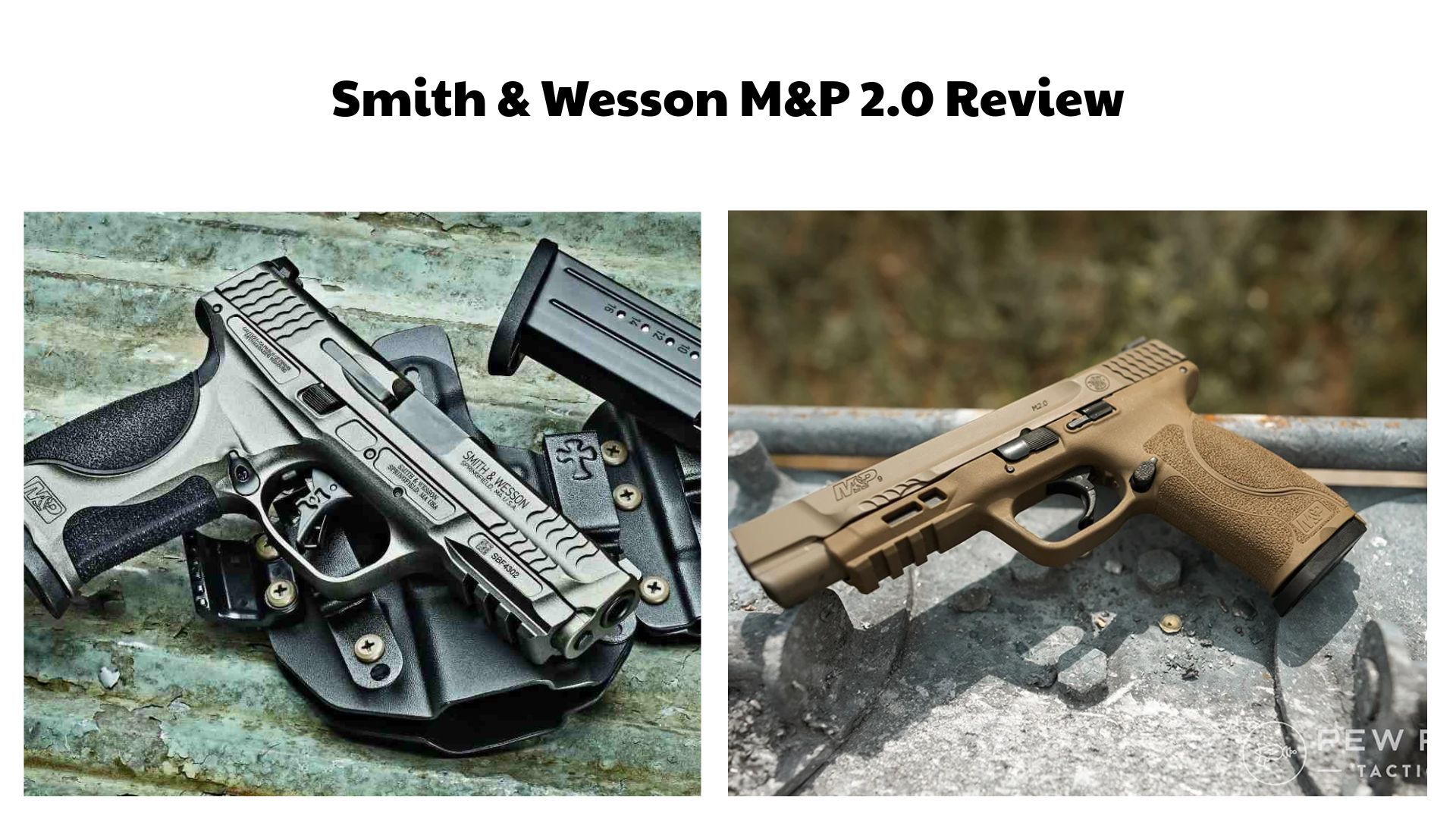

The Smith & Wesson M&P 2.0 is one of the most established modern striker-fired pistols in today’s defensive handgun market. Built as a refined evolution of the original M&P series, it represents Smith & Wesson’s effort to compete directly in a space dominated by Glock, SIG Sauer, and other major handgun manufacturers. The platform is widely used across concealed carry, home defense, and law enforcement applications, which speaks to its versatility and real-world reliability.
At its core, the M&P 2.0 is designed to improve on the weaknesses of the first-generation M&P while preserving its strengths. It introduces better ergonomics, a significantly improved trigger system, and an aggressive grip texture that enhances control under stress. These upgrades make the pistol more practical for both new shooters and experienced professionals who demand consistency in defensive situations.
The pistol competes directly with industry benchmarks such as the Glock 19, SIG P320, and similar modern 9mm platforms. In this category, performance is defined not just by accuracy, but also by reliability, shootability, and long-term durability. The M&P 2.0 positions itself as a balanced solution that does not overcomplicate its design while still offering meaningful performance improvements.
Its core appeal comes from a combination of factors: dependable reliability, a noticeably improved trigger system, aggressive grip texture for better control, and a competitive price point. These features make it accessible while still meeting duty-grade expectations.
The key question many shooters ask today is whether the M&P 2.0 still holds its position as one of the best all-around 9mm pistols in 2026. With newer competitors introducing modular frames, optics integration, and advanced ergonomics, the answer depends on what a shooter values most in a defensive firearm.
2. Smith & Wesson M&P Platform Background & Evolution
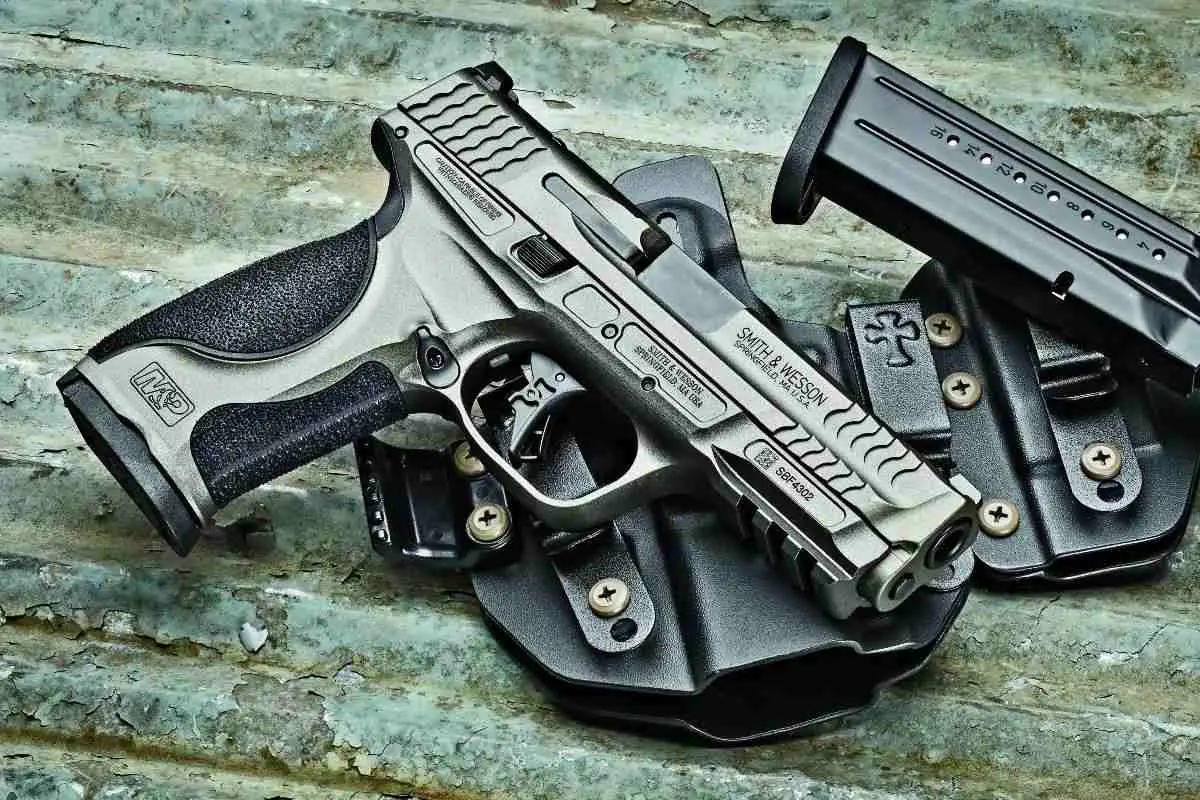
The Smith & Wesson M&P platform was originally introduced in 2005, targeting both law enforcement and military markets. It was designed to compete in the growing polymer striker-fired handgun segment, offering a reliable and modern alternative to traditional metal-framed pistols. The original M&P quickly gained popularity due to its durability, high capacity magazines, and simple operating system.
Despite its success, the first-generation M&P had several noticeable weaknesses. The most commonly cited issues were its trigger feel and relatively plain ergonomics compared to competing designs. While functional, the trigger lacked refinement, and some shooters found the grip geometry less intuitive than alternatives in the same category.
To address these concerns, Smith & Wesson released the M&P 2.0 in 2017. This was not a minor update but a significant redesign aimed at improving both performance and user experience. One of the most important upgrades was the introduction of a steel internal chassis, which increased rigidity and improved overall durability under stress.
The trigger system was also completely reworked, offering a cleaner break, better reset, and more consistent pull weight. In addition, the grip texture was made more aggressive, providing improved control during rapid fire and adverse conditions such as sweat or moisture exposure.
The platform also expanded into multiple configurations, including compact, full-size, and performance-oriented variants. This allowed users to choose a model tailored specifically to concealed carry, duty use, or range performance.
In the broader handgun market evolution, the M&P 2.0 positioned itself as a refined, duty-ready alternative in a segment increasingly defined by modularity and optics integration. It represents Smith & Wesson’s commitment to maintaining relevance in a highly competitive industry.
3. Key Specifications & Technical Overview
The Smith & Wesson M&P 2.0 is chambered primarily in 9mm Luger, though variants are also available in .40 S&W and .45 ACP. This flexibility allows users to select a caliber based on personal preference, recoil sensitivity, or duty requirements. The 9mm version remains the most popular due to its balance of capacity, recoil control, and ammunition availability.
It operates as a striker-fired, semi-automatic pistol, using a consistent trigger mechanism that is standard across modern defensive handguns. This system eliminates the need for an external hammer and provides a uniform trigger pull from shot to shot.
Barrel lengths vary depending on configuration. Compact models typically feature a barrel length of approximately 3.6 inches, while full-size versions range from 4.25 to 5 inches. This allows users to choose between concealability and improved ballistic performance or sight radius.
Weight typically falls between 20 and 25 ounces unloaded, depending on model size and material configuration. The polymer frame helps reduce overall weight while maintaining structural durability through an internal stainless steel chassis.
Magazine capacity ranges from 10 to 17+ rounds depending on the model and jurisdiction. Full-size versions naturally support higher capacity magazines, while compact variants prioritize concealability.
The frame is constructed from reinforced polymer with an internal stainless steel chassis. This design increases rigidity and reduces flex during firing, improving long-term durability and shot consistency.
The slide is made from stainless steel and finished with Armornite, a corrosion-resistant coating designed to withstand moisture, sweat, and harsh environmental conditions. This makes the pistol suitable for concealed carry and duty use in varying climates.
One of the most important upgrades in the M&P 2.0 is its enhanced flat-faced trigger system. This redesigned trigger provides a more consistent finger placement, smoother pull, and improved reset compared to the original generation.
Additionally, the platform includes optics-ready configurations, such as C.O.R.E. and Performance Center models. These allow users to mount red dot sights directly, reflecting the growing trend toward optics-equipped defensive handguns.
4. Design & Build Quality
The Smith & Wesson M&P 2.0 reflects a clear focus on duty-grade durability combined with modern ergonomic refinement. At its core, the pistol uses a reinforced polymer frame that has been engineered to improve rigidity compared to the original M&P generation. This structural enhancement reduces unwanted flex during firing, which contributes to better shot consistency and long-term mechanical stability.
One of the key internal upgrades is the extended stainless steel chassis. This chassis runs deeper into the frame and provides a more solid foundation for the slide assembly. The result is improved recoil management and a more stable shooting platform, especially during rapid fire or extended range sessions. This design choice places the M&P 2.0 closer to duty pistols used in law enforcement environments rather than entry-level polymer handguns.
Externally, the grip texture is one of the most noticeable improvements. Smith & Wesson implemented a more aggressive stippling pattern that covers a larger surface area of the grip. This texture significantly enhances control, particularly in wet, sweaty, or high-stress shooting conditions. It ensures that the pistol remains secure in the hand during recoil cycles without requiring excessive grip force.
The slide serrations have also been redesigned for better manipulation. They are deeper and more pronounced than those on earlier models, making press checks, chambering, and malfunction clearance easier under real-world conditions. These changes may seem small individually, but together they greatly improve overall usability.
The Armornite finish applied to the slide is another important durability feature. This corrosion-resistant coating protects the pistol from moisture, sweat, and environmental wear. For concealed carriers who carry daily against the body, this level of protection is essential for long-term reliability and appearance retention.
When compared to competitors, the M&P 2.0 occupies a balanced position. It is generally more ergonomic than early Glock designs, which were often criticized for their blocky feel and minimal grip contouring. It is also more refined than older-generation polymer pistols that lacked modern texture and chassis reinforcement.
However, it does not aim to deliver the “tactical premium” aesthetic found in pistols like the SIG P320 X-series. Instead, the M&P 2.0 prioritizes function over visual enhancement or modular styling. This reinforces its identity as a duty-first firearm designed for long-term use rather than cosmetic appeal.
Overall, the design and build quality of the M&P 2.0 reflect a clear philosophy: durability, control, and practical performance. It is built to withstand heavy use while maintaining consistent performance over time, making it suitable for both professional and civilian defensive roles.
5. Ergonomics & Handling Experience
One of the strongest aspects of the Smith & Wesson M&P 2.0 is its ergonomics. The pistol is designed with interchangeable backstraps, allowing users to customize the grip size and contour to better fit their hands. This modularity ensures that the firearm can accommodate a wide range of hand sizes, from medium to large, without compromising control or comfort.
The grip angle has also been carefully refined to promote a natural point-of-aim. When the pistol is brought up to eye level, it aligns more intuitively with the shooter’s line of sight, reducing the amount of correction needed during target acquisition. This improves speed and consistency, especially in defensive shooting scenarios where time is critical.
The aggressive grip texture plays a major role in handling performance. It provides a deep, secure hold that becomes even more effective under pressure. During rapid fire strings, the texture helps prevent slippage and allows the shooter to maintain consistent grip pressure without overexertion. This contributes directly to better recoil control and shot placement.
While the M&P 2.0 does have a relatively high bore axis compared to some competitors, its recoil control system and grip geometry help offset this characteristic. The result is a pistol that remains stable and predictable during firing, even during fast follow-up shots.
For users with medium to large hands, the ergonomics are widely considered excellent. The grip fills the hand comfortably without feeling overly bulky, and the backstrap system allows fine tuning of reach and trigger alignment. Compact versions of the pistol also improve concealability while maintaining ergonomic consistency.
The overall handling experience strikes a strong balance between control and concealment. It is not as ultra-compact as micro pistols, but it offers significantly better shootability. This makes it a popular choice for users who want a defensive pistol that performs well under both training and real-world conditions.
Across the industry, the M&P 2.0 is frequently praised as one of the most ergonomic striker-fired pistols available. It successfully bridges the gap between duty-size control and concealed carry practicality, which is a key reason for its long-term popularity.
6. Trigger System & Shooting Characteristics
The trigger system of the Smith & Wesson M&P 2.0 represents one of the most significant improvements over the original M&P platform. It features a flat-faced trigger design that promotes consistent finger placement. This helps shooters apply pressure more evenly, which improves accuracy and control during firing sequences.
The trigger pull weight typically falls in the 5 to 6-pound range, depending on the specific model and production variation. This weight is considered ideal for defensive use, offering a balance between safety and responsiveness. It is light enough to allow quick shooting but heavy enough to reduce the risk of accidental discharge under stress.
One of the most noticeable improvements is the cleaner break compared to the older hinged trigger system. The M&P 2.0 trigger provides a more defined wall before break, allowing shooters to better anticipate and control the shot. This results in improved shot consistency and tighter groupings over time.
The reset is both tactile and audible, which is an important feature for defensive shooting. A short, clear reset allows faster follow-up shots without the need for excessive trigger travel. This makes the pistol more efficient during rapid-fire drills or real-world defensive scenarios where speed matters.
While the trigger is not designed to compete with high-end aftermarket or competition-grade systems, it is highly functional for its intended purpose. It prioritizes reliability and predictability over ultra-light or finely tuned performance characteristics.
Another key strength is consistency. The trigger behaves predictably from shot to shot, which builds shooter confidence and reduces variability in performance. This is especially important in defensive firearms, where repeatable results are more valuable than performance extremes.
Overall, the M&P 2.0 trigger system is one of the most improved aspects of the platform. It transforms the shooting experience from merely functional to genuinely refined within the context of a duty-oriented striker-fired pistol.
7. Recoil & Shootability
The Smith & Wesson M&P 2.0 delivers a well-balanced shooting experience, with recoil characteristics that vary depending on model size and caliber. In 9mm configurations, recoil is generally considered moderate and manageable for most shooters, making it suitable for both new and experienced handgun users.
Full-size models offer the best recoil control in the lineup. Their longer barrels, increased weight, and extended grip provide a more stable shooting platform, which significantly reduces muzzle rise during rapid fire. This makes them particularly effective for duty use or extended range practice sessions where control and consistency matter.
Compact variants, while still highly controllable, produce slightly snappier recoil due to reduced weight and shorter slide length. However, the recoil impulse remains predictable and easy to manage with proper grip technique. This makes the compact models well-suited for concealed carry users who still want strong shooting performance.
One of the key factors contributing to recoil management is the relatively low bore axis design of the M&P 2.0. By keeping the barrel closer to the shooter’s hand position, muzzle rise is reduced, allowing faster follow-up shots and improved control during rapid strings of fire.
The aggressive grip texture also plays an important role. It enhances retention during firing, ensuring that the pistol remains firmly seated in the hand even under stress or sweaty conditions. This stability directly improves recoil control and shooting confidence.
Overall, the M&P 2.0 is well-suited for rapid-fire defensive drills. It allows shooters to maintain control while delivering multiple accurate shots in quick succession. Many users describe the platform as “flat shooting” within its class, especially when compared to older or less refined polymer pistols.
For extended range sessions, the recoil characteristics remain comfortable enough to prevent excessive fatigue. While not as soft-shooting as full-size competition pistols, it strikes a practical balance between carry size and shootability.
8. Accuracy & Range Performance
The Smith & Wesson M&P 2.0 is widely regarded for its strong accuracy within typical defensive engagement distances. At ranges between 5 and 15 yards, the pistol delivers consistent shot grouping, making it highly effective for concealed carry and home defense scenarios.
With proper training, the platform is also capable of maintaining accuracy out to 25 yards. While not designed for precision shooting at extended distances, it performs reliably within the practical limits of a defensive handgun. This level of performance is more than sufficient for real-world applications.
One of the contributing factors to its accuracy is the improved barrel fit and internal consistency of the M2.0 design. Combined with the enhanced trigger system, these refinements help reduce shooter-induced variability and improve overall shot placement.
Optics-ready models further enhance long-range usability. The addition of a red dot sight allows for faster target acquisition and improved precision, especially in dynamic shooting environments. This reflects the growing trend toward optic-equipped defensive pistols.
It is important to note that the M&P 2.0 is not designed as a competition-level precision firearm. Instead, it focuses on real-world defensive accuracy, where speed, reliability, and consistency are more important than extreme precision.
The platform is known for maintaining a reliable point-of-impact consistency across different shooting conditions and ammunition types. This predictability is a major advantage for defensive shooters who rely on consistent performance under stress.
Overall, the M&P 2.0 has earned a strong reputation among duty and concealed carry users for delivering dependable accuracy where it matters most: within typical defensive engagement distances.
9. Concealed Carry Performance
The Smith & Wesson M&P 2.0 is available in compact and subcompact configurations specifically designed for everyday concealed carry (EDC). These models provide a practical balance between size, capacity, and shootability, making them highly versatile for civilian and professional use.
Inside-the-waistband (IWB) and appendix inside-the-waistband (AIWB) carry are the most common methods used with this platform. Its ergonomic design and rounded edges allow for comfortable carry throughout the day when paired with a proper holster system.
Weight distribution is another strength of the M&P 2.0. Even during all-day carry, the pistol remains stable and does not create excessive discomfort when properly holstered. This makes it suitable for long-term everyday use in a variety of environments.
While the pistol is slightly thicker than ultra-slim single-stack designs, this added width contributes to improved recoil control and shootability. For many users, this tradeoff is worth it, as it results in a more controllable and accurate shooting experience.
With a quality holster, the M&P 2.0 produces minimal printing under clothing. This allows for effective concealment in both summer and winter clothing setups, depending on carry position and wardrobe choices.
The platform is also widely used by law enforcement officers as an off-duty carry option. Its reliability, familiar controls, and proven performance make it a trusted secondary firearm for professionals.
Overall, the M&P 2.0 offers a strong balance between concealability and shootability, making it one of the more practical choices in the modern concealed carry market.
10. Reliability & Ammo Performance
The Smith & Wesson M&P 2.0 has built a strong reputation as a duty-grade reliable striker-fired pistol. Across law enforcement agencies and civilian concealed carry users, it is widely regarded as a dependable platform capable of performing under demanding conditions.
In standard operation, the M&P 2.0 performs consistently with both full metal jacket (FMJ) training ammunition and modern defensive hollow-point loads. This versatility is important for users who rotate between practice and carry ammunition, as the platform does not typically require specialized or restricted ammo types to function reliably.
One of the key strengths of the M&P 2.0 is its ability to function in harsh environmental conditions. The platform has been tested in scenarios involving mud, dust, moisture, and temperature extremes. These conditions simulate real-world duty and defensive environments, and the pistol has consistently demonstrated strong operational reliability.
Early production models of the M&P line did experience occasional issues, particularly in the first generation. However, these concerns were largely addressed with the introduction of the M&P 2.0 series. Refinements in internal chassis design, trigger system improvements, and tighter manufacturing tolerances significantly improved overall reliability.
Like many modern striker-fired pistols, a short break-in period is often recommended. This allows internal components to settle and ensures smoother cycling with a variety of ammunition types. After this period, reliability tends to stabilize at a very high level.
Long-term durability is another strong point. The M&P 2.0 is capable of high round-count usage without significant performance degradation when properly maintained. This makes it suitable not only for casual range use but also for duty or professional environments where firearms are subjected to frequent firing.
Because of its consistent performance and proven track record, the platform is trusted by both law enforcement officers and civilian carriers. It has become a standard choice in many departments due to its balance of reliability, ergonomics, and cost efficiency.
11. Variants & Model Options
The Smith & Wesson M&P 2.0 is available in a wide range of configurations, allowing users to select a model that best fits their intended use case. This flexibility is one of the reasons the platform has remained popular across different shooting communities.
The Full Size M&P 2.0 is designed for duty and range use. It offers maximum control, higher magazine capacity, and improved recoil management due to its larger frame and longer barrel.
The Compact variant is one of the most popular choices for concealed carry. It reduces overall size while maintaining a balance between capacity and shootability, making it suitable for everyday defensive carry.
The M&P 2.0 Shield series focuses specifically on concealed carry. These models are slimmer and lighter, optimized for deep concealment and all-day comfort while still maintaining the core reliability of the platform.
Performance Center models offer enhanced features such as improved triggers, upgraded sights, and factory tuning for smoother operation. These versions are often chosen by users who want a more refined shooting experience out of the box.
Optics-ready C.O.R.E. variants reflect the growing trend toward red dot integration. These models allow users to mount modern optics directly to the slide, improving target acquisition speed and accuracy.
The platform is available in multiple calibers, including 9mm, .40 S&W, and .45 ACP. This allows shooters to select a configuration based on recoil preference, stopping power considerations, or department requirements.
Differences between models primarily include barrel length, grip size, and trigger refinement. Despite these variations, all versions share the same core design philosophy and reliability standards.
Overall, the M&P 2.0 ecosystem is highly adaptable, making it suitable for a wide range of users from concealed carriers to duty professionals.
12. M&P 2.0 vs Competitors (Glock, SIG, Springfield, etc.)
When compared to the Glock 19, the M&P 2.0 is often praised for superior ergonomics and grip comfort. Glock, however, maintains an advantage in simplicity and long-standing parts compatibility. Both platforms are highly reliable, but they appeal to slightly different user preferences.
Against the SIG P320, the comparison shifts toward modularity versus simplicity. The SIG platform offers extensive modular frame options, allowing users to change grip modules and configurations. The M&P 2.0, on the other hand, focuses on a more straightforward design with strong value and consistent performance.
When compared to the Glock 43X, the M&P 2.0 generally offers higher capacity and improved grip feel. This makes it more suitable for users who prioritize shootability and control over ultra-slim concealability.
Against the Springfield XD series, the M&P 2.0 is often considered more refined in terms of trigger feel and overall ergonomics. Both are reliable, but the M&P 2.0 tends to feel more modern in handling characteristics.
The main strengths of the M&P 2.0 include its ergonomic design, strong reliability record, and balanced pricing. It provides a combination of features that makes it competitive across both duty and concealed carry categories.
However, it does have some weaknesses. It is slightly heavier than some competitors and offers less modularity compared to systems like the SIG P320. Additionally, while improved, its trigger is still not as refined as some aftermarket or performance-focused systems.
Despite these tradeoffs, the M&P 2.0 maintains a strong position in both the duty and concealed carry markets. Its balance of performance, reliability, and ergonomics ensures that it remains a relevant and widely used platform even in a highly competitive handgun landscape.
13. Advantages of the M&P 2.0
The Smith & Wesson M&P 2.0 offers a strong combination of performance, reliability, and usability, which has made it one of the most respected striker-fired pistols in its category. One of its most noticeable advantages is its excellent ergonomics and grip design. The frame is shaped to naturally fit the hand, and the aggressive texture provides a secure hold under both dry and adverse conditions. This improves confidence during recoil control and rapid firing sequences.
Another major strength is its reliability across a wide range of conditions. The M&P 2.0 has been tested in environments involving dust, moisture, and temperature variations, and it consistently performs well. This reliability is one of the key reasons it is trusted by law enforcement agencies and civilian concealed carriers alike.
The trigger system is also a significant improvement over the previous generation. While not competition-grade, it provides a cleaner break, more consistent pull, and a better reset, all of which contribute to improved shooting performance in defensive scenarios. This upgrade alone has significantly elevated the platform’s reputation.
The wide selection of models is another advantage. Users can choose from full-size, compact, and Shield variants, as well as Performance Center and optics-ready configurations. This flexibility allows the platform to serve multiple roles, from concealed carry to duty use and home defense.
From a pricing standpoint, the M&P 2.0 is generally more affordable than many premium handgun platforms. Despite this, it still delivers duty-grade performance, making it an attractive option for users seeking value without sacrificing reliability.
The platform also benefits from strong aftermarket support. Accessories such as holsters, sights, triggers, and magazine extensions are widely available, allowing users to customize the pistol to their preferences.
Finally, its proven law enforcement track record adds to its credibility. The M&P line has been adopted by numerous agencies, reinforcing its reputation as a dependable service firearm.
14. Disadvantages & Limitations
Despite its many strengths, the M&P 2.0 does have certain limitations that should be considered. One of the most commonly mentioned drawbacks is that the trigger, while improved, is still not as refined as high-end aftermarket or tuned competition systems. Shooters who prioritize a crisp, light trigger pull may still choose to upgrade this component.
Another consideration is weight. Compared to some newer polymer-framed pistols, the M&P 2.0 can feel slightly heavier. While this added weight helps with recoil control, it may be less ideal for users prioritizing ultra-light concealed carry setups.
Factory-installed sights are another area where some users choose upgrades. While functional, many shooters prefer to replace them with night sights or fiber-optic options for improved visibility in low-light conditions.
In terms of modularity, the M&P 2.0 is less flexible than platforms like the SIG P320. It does not allow the same level of frame or caliber interchangeability, which may be a drawback for users who value customization and system flexibility.
Some configurations also lack optics readiness straight from the factory. Although newer models address this with C.O.R.E. and Performance Center options, not all variants include red dot compatibility without modification.
The grip texture, while highly effective for control, may feel overly aggressive for some users during extended training sessions or concealed carry against bare skin. This is a matter of personal preference but can influence comfort levels.
Finally, while it is well-balanced, the M&P 2.0 is not the lightest option in the concealed carry category. Users seeking extreme minimal weight may prefer more compact or single-stack alternatives.
15. Ideal Users for the M&P 2.0
The Smith & Wesson M&P 2.0 is best suited for concealed carry users who prioritize reliability, comfort, and real-world performance. It offers a practical balance that works well for everyday defensive carry without requiring extensive modification.
It is also an excellent choice for law enforcement officers and duty users who need a dependable service pistol capable of handling high round counts and demanding environments. Its track record in professional settings reinforces its suitability for this role.
For beginners, the M&P 2.0 provides a safe and manageable introduction to striker-fired pistols. Its predictable trigger, ergonomic design, and consistent performance make it easier to learn proper shooting fundamentals.
Shooters upgrading from older polymer pistols will also appreciate the improvements in grip texture, trigger quality, and overall handling. It represents a meaningful step forward without requiring a steep learning curve.
Users who prioritize ergonomics over modularity will find the M&P 2.0 particularly appealing. Its focus on natural handling and control makes it comfortable for a wide range of hand sizes and shooting styles.
The platform is also widely used for home defense applications, where reliability and ease of use are more important than compact size or modular features.
Finally, it is a strong option for budget-conscious buyers who still want duty-grade quality. The M&P 2.0 delivers a high level of performance without entering the premium pricing tier, making it a practical long-term investment.
16. Final Verdict: Is the M&P 2.0 Worth It?
The Smith & Wesson M&P 2.0 stands as one of the most balanced striker-fired pistols available in today’s handgun market. It does not try to win in a single extreme category like ultra-light carry, maximum capacity, or cutting-edge modularity. Instead, it focuses on doing everything well enough to serve a wide range of real-world defensive roles.
Its strongest advantage is the combination of reliability, ergonomics, and value. The platform has been refined over years of development, resulting in a pistol that feels stable under recoil, comfortable in the hand, and dependable across a variety of shooting conditions. These qualities make it equally suitable for new shooters, experienced carriers, and professional users.
In both concealed carry and duty environments, the M&P 2.0 continues to perform as a strong competitor. It may not always lead in the most modern feature sets, but it consistently delivers where it matters most: consistent function, controllable shooting, and long-term durability. That reliability is a major reason it remains widely adopted in law enforcement and civilian defensive use.
It is also important to understand what the M&P 2.0 is not. It is not the most technologically advanced handgun in its class, nor is it the most modular or the lightest option available. However, it compensates for these factors by focusing on practical performance and real-world usability rather than trend-driven features.
This makes it one of the most practical choices for users who want a straightforward, dependable 9mm pistol without unnecessary complexity. It is designed to be carried, trained with, and relied upon under stress without requiring constant modification or upgrades.
Final takeaway: the Smith & Wesson M&P 2.0 remains a proven, well-rounded 9mm pistol that continues to dominate its class through consistency, practicality, and trust earned over years of real-world use.
50+ Frequently Asked Questions (FAQ) About the Smith & Wesson M&P 2.0
1. Is the Smith & Wesson M&P 2.0 a good concealed carry pistol?
Yes, the M&P 2.0 is widely considered an excellent concealed carry pistol. It offers a strong balance between size, capacity, and shootability. Compact and subcompact models are designed specifically for everyday carry, with slim enough profiles for inside-the-waistband (IWB) or appendix carry. While it is not the smallest pistol available, it compensates with superior control, reliability, and ergonomics, making it a trusted option for defensive use.
2. How reliable is the M&P 2.0?
The M&P 2.0 has a strong reputation for reliability and is widely used by law enforcement agencies. It performs consistently with a variety of ammunition types, including FMJ training rounds and defensive hollow points. When properly maintained, it can handle high round counts without significant issues. Its internal steel chassis design contributes to long-term durability and consistent cycling under stress.
3. What makes the M&P 2.0 different from the original M&P?
The biggest improvements include a redesigned trigger system, more aggressive grip texture, and an internal steel chassis for added rigidity. The M&P 2.0 also features improved ergonomics and better overall shootability. These changes address many of the complaints about the original M&P, especially regarding trigger feel and grip control.
4. Is the M&P 2.0 better than Glock 19?
Both pistols are excellent, but they appeal to different preferences. The M&P 2.0 generally offers better ergonomics and grip texture, while the Glock 19 is known for simplicity, lighter weight, and a massive aftermarket ecosystem. Many shooters prefer the M&P 2.0 for comfort and handling, while others stick with Glock for its long-standing reputation and modular support.
5. How is the trigger on the M&P 2.0?
The M&P 2.0 trigger is significantly improved compared to the original M&P series. It features a flat-faced design with a clean break, improved reset, and a consistent pull weight of approximately 5–6 pounds. While not competition-grade, it is very effective for defensive shooting and provides better control and predictability under stress.
6. Is the M&P 2.0 good for beginners?
Yes, it is a strong choice for beginners due to its reliability, manageable recoil, and intuitive ergonomics. The trigger is predictable, and the grip design helps new shooters maintain control. It is often recommended as a first serious defensive handgun because it is easy to learn and forgiving during training.
7. Does the M&P 2.0 have good accuracy?
The M&P 2.0 is highly accurate within typical defensive distances, usually 5 to 15 yards. With practice, it can perform well out to 25 yards or more. Its consistent barrel fit and improved trigger system contribute to solid grouping, making it very capable for real-world defensive shooting scenarios.
8. Is the M&P 2.0 optics ready?
Yes, certain models such as the C.O.R.E. and Performance Center variants are optics-ready. These allow the installation of red dot sights, which significantly improve target acquisition speed and accuracy. Not all M&P 2.0 models include this feature, so buyers should check specific configurations.
9. What is the magazine capacity of the M&P 2.0?
Capacity varies by model. Compact versions typically hold between 10 and 15+ rounds depending on configuration, while full-size models can exceed 17 rounds. This flexibility allows users to choose between concealability and higher capacity depending on their needs.
10. Is the M&P 2.0 good for home defense?
Yes, it is a strong home defense option due to its reliability, ease of use, and capacity. Full-size models are especially well-suited because they offer better recoil control and higher magazine capacity. Its simple striker-fired system also makes it easy to operate under stress.
11. How does the M&P 2.0 handle recoil?
Recoil is generally moderate and well-controlled. The internal steel chassis and ergonomic grip design help reduce muzzle rise. Full-size models are very soft-shooting, while compact versions are slightly snappier but still manageable for most shooters with basic training.
12. Is the M&P 2.0 better than SIG P320?
The SIG P320 offers more modularity, allowing users to change grip modules and configurations. The M&P 2.0 focuses more on simplicity and ergonomics. Many shooters prefer the M&P for its grip feel and straightforward design, while others prefer the P320’s flexibility.
13. What calibers does the M&P 2.0 come in?
The platform is available in 9mm, .40 S&W, and .45 ACP. The 9mm version is the most popular due to its balance of recoil control, capacity, and ammunition cost. Each caliber option is designed for the same core reliability and performance standards.
14. Is the M&P 2.0 good for law enforcement?
Yes, it is widely used by law enforcement agencies. Its durability, reliability, and ergonomic design make it suitable for duty use. The platform is designed to handle high round counts and stressful environments, which is essential for professional applications.
15. Does the M&P 2.0 require upgrades?
It does not require upgrades to function effectively, but some users choose to upgrade sights, triggers, or add optics for improved performance. The base platform is already duty-ready out of the box, which is one of its strengths.
16. Is the M&P 2.0 better than Glock 43X?
The M&P 2.0 generally offers better ergonomics and higher capacity depending on configuration, while the Glock 43X is slimmer and easier to conceal. The choice depends on whether the user prioritizes shootability or ultra-slim concealment.
17. How durable is the M&P 2.0?
It is highly durable thanks to its polymer frame and internal steel chassis. It is designed to withstand heavy use, environmental stress, and high round counts. This durability is one of the reasons it is trusted in duty environments.
18. Is the M&P 2.0 good for appendix carry?
Yes, compact versions are commonly used for appendix inside-the-waistband carry. Proper holster selection is important for comfort and safety, but the slim profile and rounded edges make it suitable for this carry style.
19. What is the best version of the M&P 2.0?
The best version depends on use case. Compact models are ideal for concealed carry, full-size models for duty or home defense, and Performance Center or optics-ready models for enhanced performance and modern setups.
20. Is the M&P 2.0 good for beginners with no experience?
Yes, it is often recommended for beginners due to its predictable trigger, manageable recoil, and simple operation. It allows new shooters to build fundamentals without being overly complex or difficult to control.
21. How long does the M&P 2.0 last with heavy use?
The M&P 2.0 is designed for high round-count durability. With proper maintenance, it can last tens of thousands of rounds without major issues. Law enforcement and training reports show that the platform maintains reliability over extended use, with normal parts replacement (springs, recoil components) occurring as expected in any duty-grade handgun.
22. Does the M&P 2.0 need a break-in period?
A short break-in period is sometimes recommended, especially for new units. This typically involves firing a few hundred rounds to allow internal components to settle. After this, reliability and cycling smoothness generally improve and stabilize.
23. Is the M&P 2.0 good for concealed carry in hot climates?
Yes, compact models perform well in hot climates due to their polymer construction and corrosion-resistant Armornite finish. However, proper holster selection is important to minimize sweat contact and ensure comfort during all-day carry.
24. How does the grip texture feel during carry?
The aggressive grip texture improves control during shooting but can feel slightly abrasive against bare skin during concealed carry. Many users solve this by using an undershirt or adjusting carry position.
25. Can the M&P 2.0 be used for duty carry?
Yes, it is widely used in duty environments. Full-size models in particular are designed for law enforcement use, offering high capacity, durability, and consistent performance under stress.
26. Is the M&P 2.0 good for left-handed shooters?
Yes, most controls are reversible or ambidextrous-friendly. The platform is generally easy to adapt for left-handed use, especially with magazine release adjustments and holster availability.
27. What kind of holster is best for the M&P 2.0?
Inside-the-waistband (IWB) and appendix carry holsters are most common for concealed carry, while outside-the-waistband (OWB) holsters are often used for range or duty purposes. Quality retention and proper fit are essential for safety and comfort.
28. Is the M&P 2.0 good for home defense beginners?
Yes, it is a strong choice for beginners due to its simplicity, reliability, and ease of use. The striker-fired system eliminates manual safeties on most models, making it more straightforward under stress.
29. How accurate is the M&P 2.0 compared to Glock?
Accuracy is comparable to Glock pistols, though many shooters report slightly better grip ergonomics on the M&P 2.0, which can improve practical accuracy and control during rapid fire.
30. Does the M&P 2.0 have a rail for accessories?
Yes, most models include a Picatinny-style accessory rail for lights and lasers. However, compact variants may have limited rail space compared to full-size models.
31. Is the M&P 2.0 good for competition shooting?
While it can be used in competition, it is not specifically designed for that purpose. Competition shooters often prefer lighter triggers and more specialized platforms, but the M&P 2.0 can still perform well in defensive-style matches.
32. How does the M&P 2.0 compare to SIG P365?
The SIG P365 offers higher capacity in a smaller frame, while the M&P 2.0 typically provides better ergonomics and a more traditional duty-style feel. Both are excellent concealed carry options depending on priorities.
33. Is the M&P 2.0 drop safe?
Yes, it includes modern striker-fired safety systems designed to prevent accidental discharge if dropped. It meets industry safety standards for defensive firearms.
34. Can I carry the M&P 2.0 every day?
Yes, it is designed for everyday carry. Its balance of size, weight, and durability makes it suitable for daily defensive use with proper holster selection.
35. Does the M&P 2.0 rust easily?
No, the Armornite finish provides strong corrosion resistance. However, like any firearm, basic maintenance and cleaning are recommended, especially for concealed carry use where sweat exposure occurs.
36. Is the trigger upgradeable?
Yes, aftermarket trigger options are available. Many users choose to upgrade for a lighter or crisper feel, though the factory trigger is already suitable for defensive use.
37. What is the best ammo for M&P 2.0?
Quality defensive hollow-point ammunition is recommended for carry, while FMJ rounds are ideal for training. Users should always test specific ammo for reliability in their own firearm.
38. Is the M&P 2.0 good for small hands?
Yes, the interchangeable backstrap system allows adjustment for smaller hands, improving reach and grip comfort.
39. Is it better than a revolver for self-defense?
In most modern contexts, yes. The M&P 2.0 offers higher capacity, faster reloads, and easier training compared to traditional revolvers.
40. Does the M&P 2.0 have a safety?
Some models include a manual thumb safety, while others rely solely on internal striker-fired safeties. This allows users to choose based on preference.
41. Is the M&P 2.0 good for tactical training?
Yes, it is widely used in training environments due to its reliability and realistic defensive handling characteristics.
42. How does it perform in cold weather?
It performs very well in cold conditions due to its polymer frame and corrosion-resistant finish. Lubrication adjustments may be required in extreme temperatures.
43. Is the M&P 2.0 beginner-friendly?
Yes, it is considered one of the more beginner-friendly striker-fired pistols due to its predictable handling and simple operation.
44. Does it come optics ready?
Some variants are optics-ready, particularly C.O.R.E. and Performance Center models. Standard models may require aftermarket slide milling.
45. Is the M&P 2.0 good for range training?
Yes, it is excellent for training due to its consistency, durability, and comfortable ergonomics during extended shooting sessions.
46. What is the recoil like for beginners?
Recoil is moderate and manageable. Compact models may feel slightly snappier, but overall it is beginner-friendly with proper grip technique.
47. Can it handle +P ammunition?
Yes, the M&P 2.0 is generally rated to handle +P ammunition, though users should confirm manufacturer guidelines and avoid excessive use for longevity.
48. Is it good for concealed carry training classes?
Yes, it is commonly used in defensive handgun courses due to its reliability and realistic handling characteristics.
49. What holster position is best?
Appendix carry and strong-side IWB are the most popular and practical options depending on body type and comfort.
50. Why do professionals choose the M&P 2.0?
Professionals choose it for its balance of reliability, ergonomics, and durability. It performs consistently under stress and is easy to maintain, making it suitable for duty and defensive use.
Read more: