
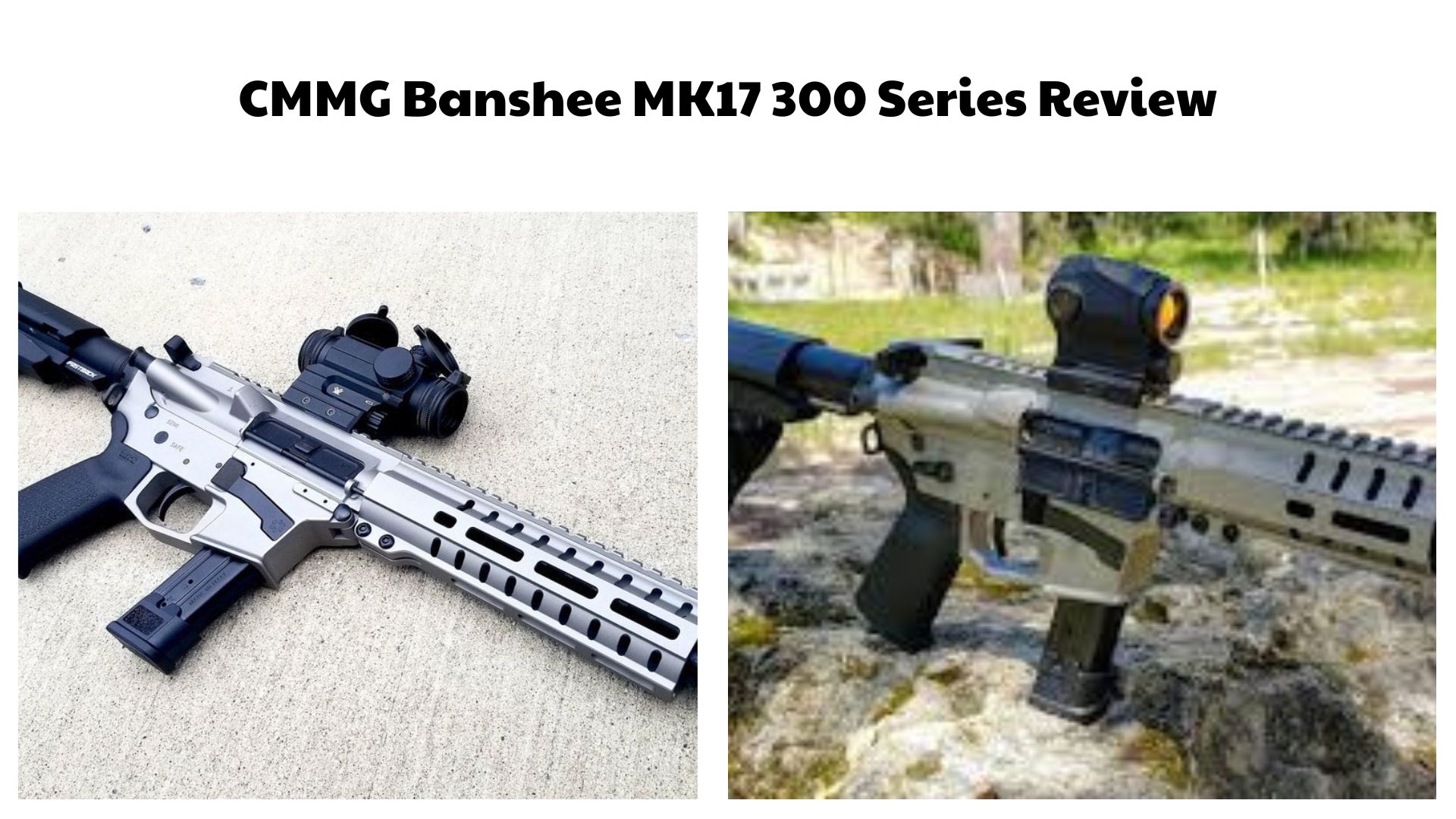

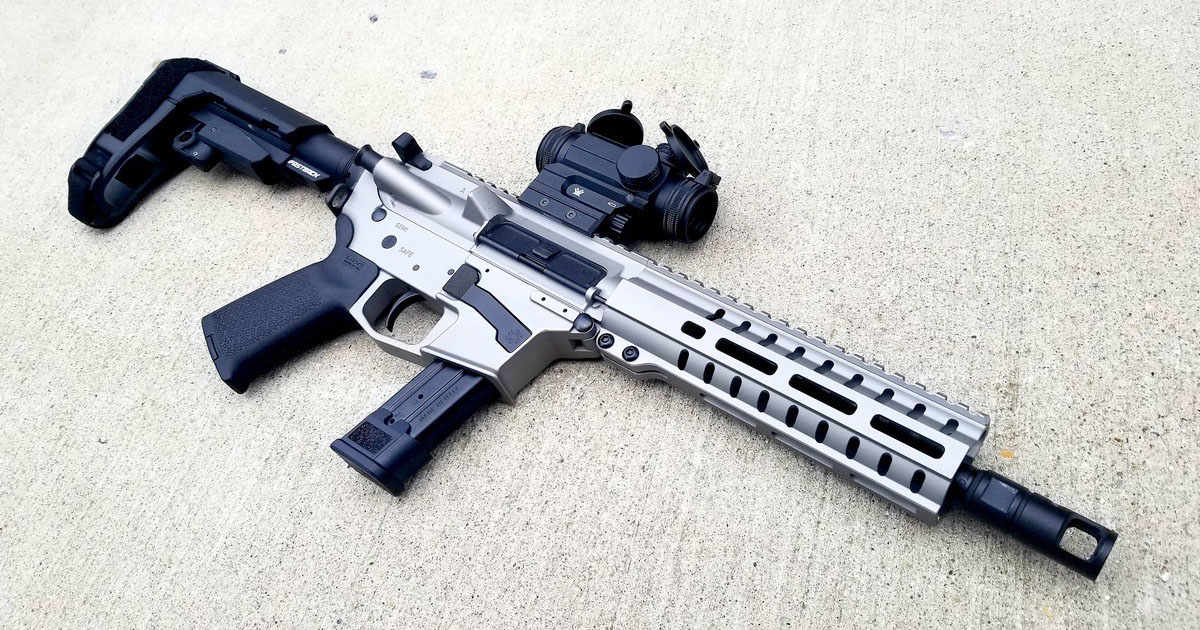
The CMMG Banshee MK17 300 Series is a modern, compact pistol-caliber carbine (PCC) built on an AR-style platform and engineered for users who want maximum maneuverability in a highly controllable defensive firearm. As part of CMMG’s well-known Banshee lineup, the MK17 represents one of the more specialized configurations, combining ultra-compact dimensions with advanced recoil management technology.
Unlike traditional PCCs that often rely on simple blowback operation, the MK17 is designed around performance-oriented engineering that focuses on reducing recoil, improving handling speed, and maintaining consistent reliability across a wide range of shooting conditions. This makes it particularly attractive for home defense, tactical training, and compact range setups where fast handling and ease of use are critical.
A defining feature of the MK17 variant is its compatibility with SIG P320 / M17 magazines. This integration ties the platform directly into one of the most widely adopted handgun ecosystems in modern defensive firearms. By leveraging this magazine standard, the MK17 benefits from readily available high-capacity magazines that are already trusted in military and law enforcement environments.
Within the broader Banshee 300 Series lineup, the MK17 is positioned as a premium-tier configuration. It features upgraded engineering elements, refined ergonomics, and enhanced performance characteristics compared to entry-level PCC platforms. The “300 Series” designation typically reflects CMMG’s higher-end build quality, where attention to detail, materials, and recoil system design are prioritized for demanding users.
What truly sets the Banshee MK17 apart in the crowded PCC market is its combination of compact PDW-style design and CMMG’s proprietary radial delayed blowback system. This pairing results in a firearm that is significantly more controllable than traditional blowback PCCs while maintaining an extremely short overall length. For shooters seeking a balance between portability, speed, and shootability, the MK17 occupies a unique and highly competitive position.
Key Design Philosophy and Development
Ultra-Compact PDW Concept
The design philosophy behind the CMMG Banshee MK17 is rooted in the concept of a Personal Defense Weapon (PDW), where compact size and rapid deployment take priority over long-range capability. The MK17 is engineered specifically for close-quarters environments such as home defense scenarios, vehicle storage applications, and tight indoor spaces where a full-length rifle may be impractical.
This PDW-style approach results in an extremely short barrel and reduced overall length, allowing the firearm to be easily maneuvered in confined areas. The compact configuration also makes it easier to store discreetly in a vehicle or home defense setup, while still maintaining the ergonomics of a full AR-style control system.
Portability is one of the most important aspects of the MK17’s design. By minimizing size without sacrificing control layout or usability, CMMG created a platform that can be rapidly deployed while still offering the familiarity of AR-style handling. This combination of compactness and usability is a defining feature of the Banshee PDW concept.
Radial Delayed Blowback System
At the core of the MK17’s performance is CMMG’s proprietary radial delayed blowback operating system. Unlike traditional straight blowback PCCs, which rely heavily on bolt mass to control recoil, the radial delayed system uses a rotating bolt mechanism to slow the rearward movement of the bolt carrier group during firing.
This mechanical delay significantly reduces bolt speed and softens the recoil impulse experienced by the shooter. The result is a smoother, more controlled shooting experience that feels closer to a lightweight rifle than a typical blowback pistol-caliber platform.
One of the key advantages of this system is improved controllability during rapid fire. Shooters experience reduced muzzle rise and more predictable follow-up shot placement, which is especially important in defensive or tactical scenarios where speed and accuracy must be balanced.
Compared to traditional blowback designs, the radial delayed system also contributes to reduced felt recoil fatigue over extended shooting sessions. This makes the MK17 more comfortable to shoot repeatedly, especially during training drills or extended range use.
300 Series Premium Configuration Philosophy
The Banshee MK17 belongs to CMMG’s 300 Series, which represents a premium tier within the Banshee lineup. This classification is not just cosmetic; it reflects a higher level of component refinement, machining precision, and ergonomic enhancement compared to more basic configurations.
The 300 Series philosophy focuses on delivering a more complete, performance-ready firearm straight from the factory. This includes upgraded controls, improved furniture, and tighter manufacturing tolerances that contribute to overall consistency and reliability.
From an ergonomic standpoint, the MK17 is designed for performance-focused users who demand intuitive handling under stress. Controls are optimized for fast manipulation, and the platform is engineered to support rapid target transitions and efficient weapon handling in dynamic environments.
Action, Operating System, and Core Engineering
AR-15-Based Platform Architecture
The CMMG Banshee MK17 is built on a familiar AR-style upper and lower receiver architecture, making it highly accessible to shooters already experienced with the AR-15 platform. This design choice ensures that manual of arms, control layout, and handling characteristics remain intuitive and consistent.
Because it follows the AR pattern, the MK17 benefits from widespread compatibility with optics, mounts, lights, and other accessories. The full-length Picatinny rail allows for flexible optic placement, while the M-LOK handguard system supports modern accessory integration for mission-specific setups.
This AR-based foundation also simplifies training transitions. Shooters familiar with standard AR platforms can adapt quickly to the MK17 without a steep learning curve, making it an effective option for both experienced users and those expanding into PCC platforms.
Bolt Carrier Group Design
The bolt carrier group in the Banshee MK17 is engineered specifically for use with the radial delayed blowback system. It is lighter than traditional blowback PCC bolt assemblies and designed to work in harmony with the rotating bolt mechanism that defines the system’s operation.
This optimized design reduces overall recoil impulse while maintaining reliable cycling performance. By controlling the timing and speed of the bolt movement, the system ensures smoother operation and improved shot-to-shot stability.
Reliability is a key focus in this design. The reduced stress on components compared to direct blowback systems contributes to consistent performance over extended use, making the MK17 suitable for both training and defensive applications where dependability is critical.
Feed System and Magazine Integration
The MK17 variant is distinguished by its use of SIG P320 / M17 magazine compatibility. This allows the platform to leverage one of the most widely adopted 9mm magazine ecosystems currently in use across military, law enforcement, and civilian markets.
These magazines typically offer high-capacity options of 21 rounds or more, depending on configuration and jurisdiction. This provides a significant advantage in both defensive and range scenarios where reduced reload frequency enhances efficiency.
Feed reliability is another key benefit of this system. The MK17 is designed to function reliably with a variety of 9mm ammunition types, including hollow point defensive loads and standard full metal jacket rounds. This versatility ensures consistent performance across different use cases, from training to defensive readiness.
Build Quality and Materials
Receiver Construction
The CMMG Banshee MK17 is built around high-strength 7075-T6 aluminum receivers, which are widely regarded as a premium-grade material choice in modern AR-style firearms. This alloy offers an excellent balance of strength, weight reduction, and long-term durability, making it ideal for a compact PDW platform that must withstand repeated use under dynamic conditions.
Both the upper and lower receivers are finished with a Type III hard coat anodizing process. This surface treatment significantly increases resistance to wear, corrosion, and abrasion, ensuring the firearm maintains its structural integrity and appearance even after extensive handling and environmental exposure.
In addition to material selection, CMMG emphasizes tight machining tolerances throughout the receiver assembly. These precise tolerances contribute to improved consistency in fitment between components, reducing mechanical play and enhancing overall reliability during cycling and firing.
Barrel and Muzzle System
The MK17 typically features a short 5-inch barrel configuration, which is optimized for compact PDW-style performance rather than extended-range accuracy. This barrel length prioritizes maneuverability and rapid deployment in close-quarters environments where size and speed are more important than long-distance ballistic performance.
The barrel is threaded at the muzzle, allowing users to install a wide range of muzzle devices such as suppressors or compensators. This modular compatibility is especially valuable for shooters who want to tailor recoil management or sound signature depending on their intended use case.
Overall, the barrel system is engineered to complement the radial delayed blowback operating system, ensuring reliable function while maintaining compact dimensions and practical performance for defensive applications.
Handguard and Furniture
The MK17 features a modern M-LOK compatible handguard system, allowing users to attach a wide variety of accessories including lights, grips, lasers, and other tactical enhancements. This modularity is a key advantage for users who want to customize their setup for specific roles or environments.
The handguard is designed to remain lightweight while still providing rigidity and heat resistance during extended use. This balance ensures the firearm remains easy to handle without sacrificing durability or accessory support.
In terms of furniture, the MK17 typically includes an AR-style pistol grip and an adjustable stabilizing brace system. This setup enhances control and stability while maintaining the compact nature of the platform, making it suitable for both static shooting and dynamic movement scenarios.
Size, Weight, and Handling Characteristics
Ultra-Compact Form Factor
One of the defining features of the CMMG Banshee MK17 is its ultra-compact PDW-style form factor. In many configurations, the overall length of the firearm can be reduced to under 20 inches when fully collapsed, making it exceptionally small compared to traditional carbines and PCCs.
This extremely compact footprint is specifically designed for environments where space is limited, such as vehicle storage, home defense scenarios, or close-quarters tactical environments. The reduced size allows for quick deployment and easy maneuvering in confined areas.
The PDW-style design also makes the MK17 highly portable, allowing users to store and transport it discreetly without sacrificing AR-style ergonomics or control familiarity.
Lightweight Construction
The MK17 is engineered to be extremely lightweight, with many configurations weighing under 5 pounds unloaded. This reduced weight significantly improves handling speed and reduces fatigue during extended use or rapid movement scenarios.
The lightweight nature of the platform also allows for easier one-handed manipulation when necessary, which can be advantageous in tight environments or during transitional movements.
While the reduced weight enhances mobility, it also contributes to the firearm’s classification as a close-quarters platform rather than a long-range precision system, reinforcing its role as a PDW-style defensive firearm.
Ergonomics in Real Use
In practical use, the MK17 benefits from fully ambidextrous controls that improve accessibility for both left- and right-handed shooters. This includes safety selectors, magazine release placement, and charging handle design that are optimized for intuitive operation under stress.
The compact balance of the firearm is designed to favor fast transitions between targets, making it highly effective in dynamic shooting scenarios where speed is critical. The shortened profile allows for quick target acquisition and responsive handling in close quarters.
However, the lightweight and compact design does introduce a trade-off in terms of stability. Compared to longer and heavier PCC platforms, the MK17 may feel less stable during slow, precision-oriented shooting, especially at extended PCC distances.
Accuracy and Real-World Performance
PCC-Level Accuracy Expectations
The CMMG Banshee MK17 delivers accuracy consistent with high-quality pistol-caliber carbines, particularly within the 25 to 100-yard range envelope. Within this distance, it is capable of producing tight and repeatable groupings suitable for defensive and training applications.
However, like all PCC platforms, its performance is ultimately constrained by the ballistic limitations of 9mm ammunition. While highly effective at close to medium range, it is not designed for long-range precision shooting beyond typical PCC engagement distances.
Despite these limitations, the MK17’s accuracy is more than sufficient for its intended role as a compact defensive firearm and training platform.
Radial Delayed Recoil Advantage
One of the most significant performance advantages of the MK17 is its noticeably reduced recoil impulse, made possible by CMMG’s radial delayed blowback system. This mechanism slows the rearward movement of the bolt, resulting in a softer and more controlled shooting experience.
Compared to traditional straight blowback PCCs, the MK17 produces significantly less muzzle rise and allows for faster recovery between shots. This improved control directly enhances shooter performance in rapid-fire scenarios.
The reduced recoil also contributes to improved overall comfort during extended shooting sessions, making the platform easier to shoot accurately over time.
Range Performance Behavior
In practical range use, the MK17 demonstrates consistent feeding reliability across a wide range of 9mm ammunition types, including both standard FMJ and defensive hollow point loads. This versatility is important for users who rely on the firearm for both training and defensive purposes.
The radial delayed system contributes to reliable cycling even during extended shooting sessions, maintaining consistent performance without excessive fouling or mechanical stress compared to traditional blowback systems.
Additionally, the MK17 performs particularly well in fast-paced shooting drills where rapid target transitions and controlled recoil management are essential. Its design supports high-speed engagement while maintaining predictable shot placement.
Trigger, Controls, and Ergonomics
Trigger System
The MK17 is typically equipped with a mil-spec style trigger system, although configurations may vary depending on the specific model or upgrade package. This trigger provides a straightforward and reliable break suitable for defensive and tactical applications.
The trigger pull is generally clean and predictable, offering enough consistency for accurate shot placement in close to medium-range engagements. While not a match-grade trigger by default, it performs reliably under a wide range of conditions.
For users seeking enhanced performance, the AR-style platform allows for easy aftermarket upgrades, enabling installation of high-performance triggers tailored to specific shooting preferences.
Ambidextrous Controls
The Banshee MK17 incorporates ambidextrous design elements to accommodate a wide range of shooters. This includes enhanced safety selectors, optimized magazine release positioning, and control layouts designed for intuitive operation regardless of dominant hand.
These ambidextrous features improve usability in high-stress environments where rapid manipulation of controls is required. They also enhance the platform’s versatility for training environments where multiple shooters may use the same firearm.
Charging Handle Design
The charging handle on the MK17 is designed with an enlarged, easy-grip profile that supports fast and reliable manipulation. This ambidextrous-friendly design allows users to operate the action efficiently from either side of the firearm.
In stress-driven scenarios, the improved ergonomics of the charging handle help ensure quick malfunction clearance and efficient chambering of rounds. This contributes to the overall reliability and user-friendliness of the platform in defensive situations.
Suppression, Muzzle Devices, and Modularity
Suppressor Compatibility
The CMMG Banshee MK17 is designed with a threaded barrel, allowing direct compatibility with a wide range of suppressors and muzzle devices. This feature is especially important for users who want to reduce noise signature and muzzle blast in defensive or training environments.
One of the key advantages of the MK17’s radial delayed blowback system is its improved behavior when suppressed. Unlike traditional direct blowback PCCs, which often experience increased bolt speed and excessive gas blowback when suppressed, the MK17 maintains a more controlled cycling pattern.
This results in noticeably reduced gas blowback toward the shooter, improving comfort and reducing irritation during extended suppressed shooting sessions. The system also helps maintain smoother recoil characteristics even when a suppressor is attached.
Overall, the combination of a threaded barrel and radial delayed system makes the MK17 a strong candidate for suppressed PCC setups, particularly for users prioritizing reduced noise and improved shootability.
Accessory Mounting
The MK17 is built with full modularity in mind, featuring a full-length Picatinny rail that allows for easy installation of optics, red dot sights, magnifiers, and other aiming solutions. This ensures shooters can fully customize their sighting system based on their intended use case.
In addition to the top rail, the firearm includes an M-LOK compatible handguard system that supports a wide range of accessories such as weapon lights, foregrips, lasers, and sling attachments. This modular design allows users to tailor the platform for home defense, tactical training, or range use.
As part of the broader AR ecosystem, the MK17 benefits from extensive aftermarket support, making it easy to configure and upgrade with widely available accessories. This flexibility is one of the key strengths of the platform.
Pros and Cons of the CMMG Banshee MK17
Pros
The CMMG Banshee MK17 offers several standout advantages that make it one of the most advanced compact PCC platforms available today. Its ultra-compact PDW-style design allows for exceptional maneuverability in tight environments, making it ideal for home defense and vehicle storage applications.
The radial delayed blowback system significantly reduces felt recoil compared to traditional blowback PCCs, resulting in a smoother and more controllable shooting experience. This makes it easier to maintain accuracy during rapid fire sequences.
Reliability with defensive ammunition is another key strength, as the MK17 is engineered to cycle a wide range of 9mm loads consistently, including hollow point and +P defensive rounds.
Ergonomics and control layout are also highly refined, with ambidextrous features that improve usability for a wide range of shooters. Additionally, the platform delivers strong accuracy performance within typical PCC engagement distances.
Cons
Despite its strengths, the MK17 does come with some drawbacks. One of the most notable is its premium price point, which places it above many competing PCC platforms in the market.
The use of proprietary SIG P320/M17 magazines can also increase long-term ownership costs, as these magazines tend to be more expensive compared to standard Glock-pattern PCC magazines.
Another limitation is its inherent restriction to pistol-caliber performance, meaning it is not suitable for long-range shooting applications beyond typical PCC distances.
Finally, due to its extremely lightweight and compact design, some shooters may find the platform slightly “snappy” during rapid fire, especially when compared to heavier and more stable carbines.
Ideal Use Cases
The CMMG Banshee MK17 is primarily designed for home defense and close-quarters protection, where its compact size and rapid handling characteristics provide a significant advantage. Its ability to be deployed quickly in confined spaces makes it particularly well-suited for defensive scenarios.
It is also an excellent choice as a truck gun or vehicle storage firearm, thanks to its compact PDW-style footprint and lightweight construction. This makes it easy to store discreetly while remaining readily accessible when needed.
In addition, the MK17 performs well in tactical training environments and range drills, where its low recoil and fast cycling system support efficient skill development and rapid-fire practice.
For PCC enthusiasts, the platform offers a premium compact build that stands out in terms of engineering and performance. It is also highly effective in suppressed defensive firearm setups, where reduced noise and recoil are beneficial.
Comparison with Competing PCC Platforms
Banshee MK17 vs Direct Blowback PCCs
Compared to traditional direct blowback PCCs, the MK17’s radial delayed blowback system offers a significant improvement in recoil management. While blowback systems rely on heavy bolt mass to control cycling, the MK17 uses mechanical delay to achieve smoother operation.
This results in reduced felt recoil, less muzzle rise, and improved shootability during rapid fire. The MK17 is generally easier to control and more comfortable to shoot over extended sessions than standard blowback PCC designs.
Banshee vs Other AR-9 Platforms
When compared to AR-9 PCC platforms, the MK17 stands out primarily due to its magazine ecosystem and operating system design. While many AR-9 rifles use Glock magazines, the MK17 utilizes SIG P320/M17 magazines, offering a different compatibility ecosystem.
In terms of size and weight, the MK17 is typically more compact and lighter than many traditional AR-9 builds, giving it a strong advantage in portability and maneuverability.
However, this performance advantage comes at a higher cost, making the MK17 more of a premium option compared to budget-friendly AR-9 platforms.
Banshee vs MP5-Style Platforms
When compared to MP5-style roller-delayed PCCs, the MK17 offers modern AR-style ergonomics and a significantly larger aftermarket ecosystem. This makes customization and accessory integration far more flexible than traditional MP5 platforms.
Maintenance is also generally simpler on the MK17 due to its AR-style architecture, which allows for easier disassembly and parts replacement compared to more complex roller-delayed systems.
However, MP5-style platforms are often praised for their proven historical reliability and extremely smooth recoil impulse, which remains a benchmark in PCC performance.
Maintenance and Durability
Cleaning and Reliability
The MK17 follows standard AR-style maintenance procedures, making it relatively easy to clean and service. Field stripping is straightforward, allowing users to quickly access key components for routine maintenance.
Compared to direct blowback PCCs, the radial delayed system tends to produce lower levels of fouling in certain areas, contributing to more consistent long-term reliability under regular use.
This ease of maintenance makes the MK17 practical for both experienced shooters and those who want a low-maintenance defensive firearm platform.
Long-Term Durability
The use of 7075-T6 aluminum receivers provides excellent structural strength and resistance to wear over time. This material choice ensures the firearm can withstand high round counts while maintaining dimensional stability and performance consistency.
With proper maintenance, the barrel and bolt system are designed for long service life, even under frequent training use. However, like all compact PCC platforms, long-term durability is influenced by shooting volume and maintenance habits.
Overall, the MK17 is engineered to deliver reliable long-term performance within its intended use case of defensive and tactical shooting applications.
Parts and Wear Considerations
One consideration for prospective owners is the use of proprietary components, particularly magazines and elements of the radial delayed system. While these components enhance performance, they can also increase replacement costs compared to more standardized PCC platforms.
Replacement part availability is generally supported through CMMG’s ecosystem, but users should be aware that some components are not interchangeable with standard AR-9 parts.
For optimal performance and longevity, a regular maintenance cycle is recommended, including routine cleaning, lubrication, and inspection of wear-prone components.
Final Verdict
The CMMG Banshee MK17 stands out as a premium compact PCC that combines advanced engineering with practical defensive performance. Its radial delayed blowback system, ultra-compact PDW design, and AR-style ergonomics make it one of the most refined pistol-caliber platforms available today.
It is best suited for users who prioritize compact size, low recoil, and high shootability in close-quarters environments. Whether used for home defense, tactical training, or suppressed configurations, the MK17 delivers strong and consistent performance.
While its premium pricing and proprietary magazine system may not appeal to budget-conscious buyers, the engineering quality and performance advantages help justify its position in the higher end of the PCC market.
Ultimately, the MK17 is not designed to replace traditional rifles or long-range platforms, but rather to excel as a highly capable, modern PDW-style PCC for users who value compact efficiency and controllable firepower.
Frequently Asked Questions About the CMMG Banshee MK17 300 Series
1. What is the CMMG Banshee MK17 300 Series?
The CMMG Banshee MK17 300 Series is a compact pistol-caliber carbine (PCC) built on an AR-style platform that uses SIG P320/M17 magazines and CMMG’s radial delayed blowback system. It is designed for close-quarters defensive use, offering a balance of compact size, reduced recoil, and modern modularity.
2. What does “MK17” mean in this model?
The “MK17” designation refers specifically to the magazine compatibility and configuration of the platform. In this case, it indicates that the firearm is designed to run SIG P320/M17 magazines, differentiating it from other Banshee variants that may use Glock or other magazine systems.
3. Is the Banshee MK17 a pistol or a rifle?
The MK17 is generally classified as a pistol in its standard configuration because it uses a stabilizing brace instead of a rifle stock. However, classification can vary depending on jurisdiction and configuration changes made by the end user.
4. What caliber does the MK17 use?
The MK17 is chambered in 9mm, which is the most common pistol caliber used in PCC platforms. This allows it to leverage widely available ammunition suitable for training, competition, and defensive applications.
5. Why does the MK17 use SIG P320/M17 magazines?
CMMG designed the MK17 to integrate with SIG P320/M17 magazines to provide users with a high-capacity, widely adopted magazine ecosystem. These magazines are already used by military and law enforcement, offering reliability and availability advantages.
6. How many rounds does the magazine hold?
Magazine capacity typically depends on the specific magazine model and legal restrictions. Standard SIG P320/M17 magazines commonly hold 21 rounds or more in extended configurations, giving the MK17 strong firepower capacity for its size.
7. What is the overall length of the MK17?
The MK17 is extremely compact, often measuring under 20 inches in total length when fully collapsed. This makes it one of the most portable AR-style PCC platforms available on the market today.
8. How much does the Banshee MK17 weigh?
Depending on configuration, the MK17 can weigh under 5 pounds unloaded. This lightweight construction improves handling speed and reduces fatigue during extended use or movement-based scenarios.
9. What barrel length does the MK17 have?
The MK17 typically features a very short 5-inch barrel designed for PDW-style performance. This barrel length prioritizes compactness and maneuverability over long-range ballistic performance.
10. What is radial delayed blowback?
Radial delayed blowback is CMMG’s proprietary operating system that uses a rotating bolt to delay rearward movement during firing. This reduces recoil impulse and bolt speed compared to traditional straight blowback systems.
11. How does radial delayed blowback reduce recoil?
The system spreads the force of firing over a longer mechanical cycle, slowing bolt movement and reducing sudden rearward force. This results in smoother recoil and less muzzle rise.
12. Is the MK17 better than direct blowback PCCs?
In terms of recoil control and shootability, yes. The MK17 is generally smoother and easier to control than direct blowback PCCs, especially during rapid fire.
13. Is the MK17 good for home defense?
Yes, the MK17 is widely considered suitable for home defense due to its compact size, low recoil, and fast handling characteristics in close-quarters environments.
14. Can it reliably use hollow point ammunition?
Yes, the MK17 is designed to feed a variety of 9mm ammunition types, including hollow points commonly used for defensive purposes.
15. Can the MK17 be suppressed?
Yes, the threaded barrel allows suppressor attachment. The radial delayed system also improves suppressed performance by reducing gas blowback compared to blowback PCCs.
16. Does suppression affect reliability?
Generally, suppression does not negatively affect reliability in the MK17. In many cases, it may actually improve shooting comfort and maintain consistent cycling behavior.
17. What makes the 300 Series different?
The 300 Series represents a premium configuration within the Banshee lineup, featuring upgraded components, refined ergonomics, and higher-end manufacturing tolerances compared to entry-level models.
18. Is the MK17 compatible with AR-15 parts?
Yes, many external components such as triggers, grips, optics, and accessories are compatible with AR-15 standards, although the operating system and magazine system are specialized.
19. What material is used in the receivers?
The MK17 uses 7075-T6 aluminum for both upper and lower receivers, providing excellent strength, durability, and corrosion resistance.
20. Is the MK17 ambidextrous?
Yes, the platform includes ambidextrous controls such as safety selectors and charging handle enhancements, making it suitable for both left- and right-handed users.
21. Does it come with a brace?
Most pistol configurations include a stabilizing brace designed to improve control during one-handed shooting, though configurations may vary.
22. Can a stock be installed?
Installing a stock depends on legal classification and jurisdiction. In some regions, it may require additional regulatory compliance.
23. What optics work best?
Red dot sights and low-power optics are ideal for the MK17 due to its close-quarters engagement range and fast target acquisition requirements.
24. Does it include iron sights?
Many configurations do not include iron sights by default, relying instead on optic-ready Picatinny rail systems.
25. How accurate is the MK17?
The MK17 is highly accurate within typical PCC distances of 25–100 yards, with excellent consistency for defensive and training applications.
26. What is its effective range?
The effective range is generally within 100 yards for practical accuracy, though it is primarily designed for close-quarters engagement.
27. Is it good for competition shooting?
It can be used in PCC competitions, especially where speed and maneuverability are important, but it is not primarily a competition-focused platform.
28. How does recoil compare to other PCCs?
The MK17 has noticeably reduced recoil compared to blowback PCCs due to its radial delayed system, making it easier to control in rapid fire.
29. Is maintenance difficult?
No, maintenance is straightforward and follows standard AR-style cleaning and lubrication procedures.
30. What trigger does it use?
It typically comes with a mil-spec style trigger, which provides reliable but basic performance suitable for defensive use.
31. Can the trigger be upgraded?
Yes, AR-compatible aftermarket triggers can be installed for improved performance and lighter pull weights.
32. Does it use standard AR triggers?
Yes, most standard AR-15 triggers are compatible with the platform.
33. Is it beginner-friendly?
Yes, but beginners should understand its premium nature and learn proper handling of compact PCC platforms.
34. What are the advantages of radial delay?
It reduces recoil, improves controllability, and enhances shooting comfort compared to traditional blowback systems.
35. What are the disadvantages?
The system is more complex and can increase cost compared to simple blowback designs.
36. How durable is it?
It is highly durable due to its aluminum construction and engineered operating system designed for long-term use.
37. Does it run well in harsh environments?
Yes, it is designed to function reliably in a wide range of environmental conditions when properly maintained.
38. What handguard system does it use?
It uses an M-LOK compatible handguard for modular accessory attachment.
39. Is it good for vehicle storage?
Yes, its compact PDW size makes it ideal for discreet vehicle or truck storage setups.
40. Why is it expensive?
The cost reflects advanced engineering, proprietary systems, premium materials, and compact PDW design features.
41. Are magazines expensive?
Yes, SIG P320/M17 magazines are typically more expensive than standard AR-9 Glock magazines.
42. Can it use Glock magazines?
No, the MK17 is specifically designed for SIG P320/M17 magazine compatibility.
43. What is the difference between MK17 and MKGs?
The MK17 uses SIG magazines, while MKGs variants typically use Glock magazines, making them part of different ecosystem systems.
44. Is it good for tactical training?
Yes, it performs well in training environments due to its low recoil and AR-style ergonomics.
45. How does it compare to MP5 platforms?
It offers more modern ergonomics and modularity, while MP5s are known for roller-delayed smoothness and proven reliability.
46. How does it compare to AR-9 PCCs?
It is generally more advanced in recoil management but more expensive than standard AR-9 blowback platforms.
47. Is it good for rapid fire?
Yes, the radial delayed system improves control during rapid fire sequences.
48. Does it have last-round bolt hold open?
Yes, it includes last-round bolt hold open functionality depending on magazine compatibility and configuration.
49. What maintenance schedule is recommended?
Regular cleaning after use, lubrication of moving parts, and periodic inspection of wear components is recommended for optimal performance.
50. Is it good for suppressed subsonic ammo?
Yes, it performs well with subsonic ammunition, especially when paired with a suppressor.
51. What is recoil like overall?
Recoil is mild and controllable, significantly reduced compared to traditional PCC blowback systems.
52. Does it require special lubrication?
No special lubricants are required; standard firearm oils and CLP products are sufficient.
53. What are common issues?
Common concerns include cost of magazines and proprietary system dependence, though reliability is generally strong.
54. Is it worth buying?
It is considered worth it for users who prioritize compactness, performance, and advanced recoil control.
55. Who should buy the MK17?
The MK17 is best suited for users seeking a premium compact PCC for home defense, tactical use, or suppressed shooting applications.
Read more: