
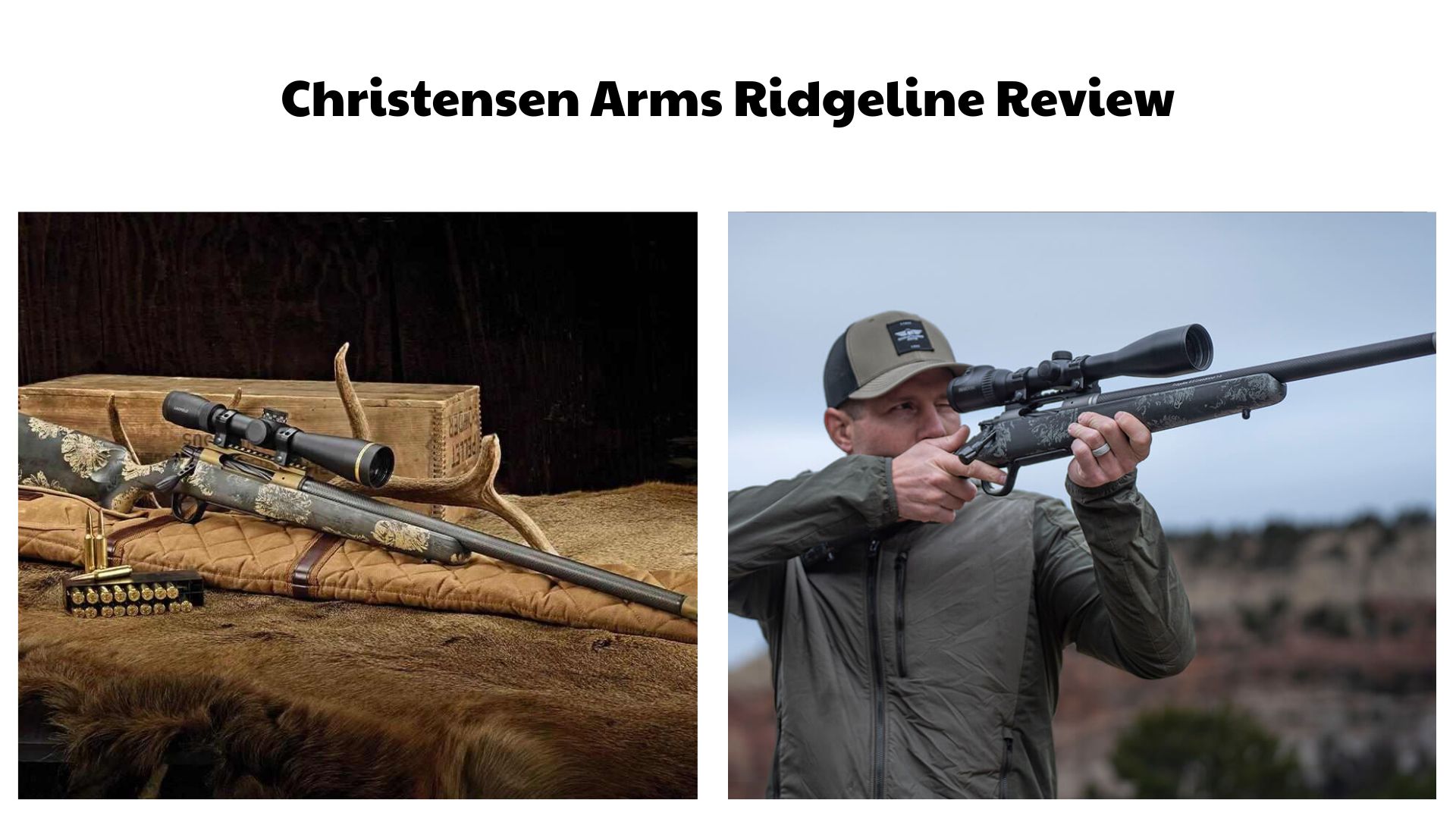

The Christensen Arms Ridgeline is widely recognized as one of the brand’s flagship lightweight hunting rifles, built for shooters who demand high performance in demanding field environments. Christensen Arms has established itself as a premium rifle manufacturer specializing in advanced materials such as carbon fiber barrels and composite stocks, combining aerospace-inspired engineering with modern bolt-action precision rifle design.
As a company, Christensen Arms focuses heavily on innovation, particularly in reducing rifle weight without compromising accuracy or structural integrity. This philosophy has positioned the brand as a leading choice among mountain hunters and long-range enthusiasts who prioritize portability and first-shot precision in real-world hunting conditions.
The Ridgeline serves as a lightweight bolt-action platform designed specifically for backcountry hunting, long-range shooting, and precision performance in rugged environments. It is engineered to deliver sub-MOA accuracy potential while remaining light enough to carry over long distances in mountainous terrain. This makes it especially popular among hunters who need to travel far while maintaining a capable precision rifle setup.
One of the key advantages of the Ridgeline is its compatibility with the Remington 700 footprint. This widely adopted standard allows for a strong aftermarket ecosystem, including triggers, bases, rings, and other components. As a result, shooters can customize and upgrade their Ridgeline rifles with a high degree of flexibility, even though the platform is already factory-optimized for performance.
Within Christensen Arms’ lineup, the Ridgeline sits as a premium lightweight hunting rifle, positioned above entry-level models like the Mesa but distinct from more specialized chassis systems like the MPR (Modern Precision Rifle). While the Mesa focuses on traditional hunting performance at a lower price point, and the MPR leans toward tactical precision shooting, the Ridgeline strikes a balance between ultra-light field use and long-range accuracy, making it one of the most versatile offerings in the Christensen catalog.
Key Design Philosophy and Development
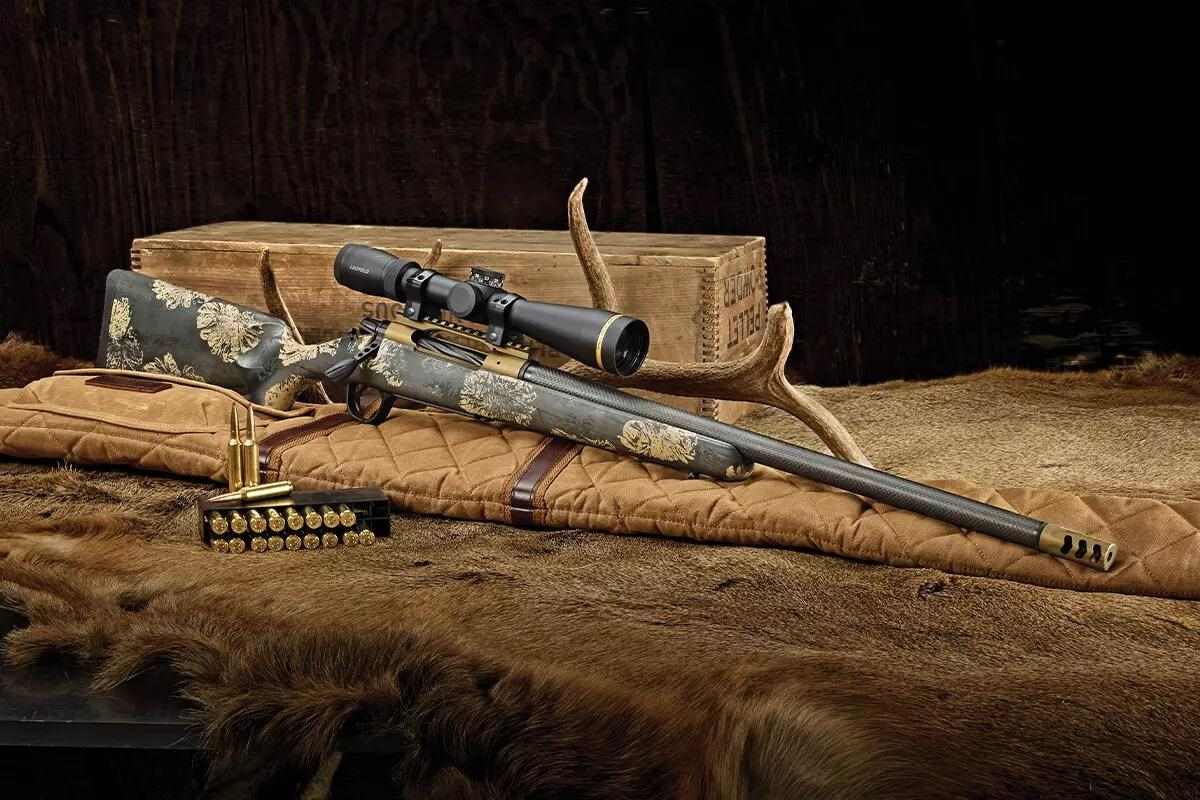
Lightweight Hunting Precision Concept
The core design philosophy behind the Christensen Arms Ridgeline is centered on extreme weight reduction without sacrificing precision. Every component, from the carbon fiber barrel to the lightweight bolt assembly and composite stock, is optimized to minimize carry weight while maintaining structural strength and repeatable accuracy.
This design approach is particularly important for hunters operating in challenging terrain such as mountains, forests, or remote backcountry regions. In these environments, every pound matters, and a lightweight rifle significantly reduces fatigue during long hikes and steep climbs. At the same time, the Ridgeline is engineered to maintain consistent long-range accuracy, ensuring that portability does not come at the cost of ethical shot placement.
The balance between portability and performance is one of the defining characteristics of the Ridgeline. Unlike heavier precision rifles designed for bench shooting or competition, the Ridgeline prioritizes field usability while still delivering the ballistic consistency required for long-range hunting engagements.
Carbon Fiber Innovation
A major technological highlight of the Ridgeline is its use of carbon fiber components, most notably the carbon fiber wrapped barrel system. This design incorporates a stainless steel barrel liner that is wrapped in high-strength carbon fiber, significantly reducing weight compared to traditional all-steel barrels.
The carbon fiber barrel construction also improves heat dissipation characteristics. While the steel liner handles pressure and rifling integrity, the carbon fiber wrap helps distribute heat more efficiently, reducing localized thermal buildup during firing. This contributes to more stable performance over moderate shot strings in hunting scenarios.
In addition to the barrel, the Ridgeline also utilizes a carbon composite stock. This stock design enhances stiffness while minimizing weight, providing a rigid shooting platform that resists flex under recoil or environmental stress. The result is a rifle that feels light in hand but remains structurally solid when shouldered and fired.
The combined use of carbon fiber in both the barrel and stock allows the Ridgeline to achieve a unique performance profile that blends lightweight handling with long-range precision capabilities, making it highly effective for demanding field use.
FFT (Flash Forged Technology) in Ridgeline FFT Models
In select models, Christensen Arms incorporates Flash Forged Technology (FFT), an advanced manufacturing process used in the Ridgeline FFT variant. This process involves precise carbon fiber orientation and molding techniques that improve overall material efficiency and structural integrity.
FFT stock construction is designed to optimize fiber alignment, resulting in improved rigidity while further reducing unnecessary weight. Compared to traditional composite stocks, FFT stocks are lighter, stronger, and more consistent in their structural performance.
One of the key benefits of FFT technology is improved recoil management. The enhanced structural rigidity helps distribute recoil forces more evenly across the stock, reducing felt recoil and improving shooter stability during follow-up shots.
Additionally, FFT models typically weigh less than standard Ridgeline configurations, making them even more suitable for extended backcountry hunts where every ounce matters. This makes the FFT variant a top choice for hunters who prioritize ultra-light performance without sacrificing durability or precision capability.
Action, Barrel, and Core Engineering
Remington 700-Pattern Action
The Christensen Arms Ridgeline is built around a Remington 700-pattern bolt-action system, one of the most widely used and respected action designs in the firearms industry. This two-lug bolt system is known for its reliability, simplicity, and strong aftermarket support.
The action is precision-machined to tighter tolerances than many traditional factory rifles, which helps improve consistency in lockup and cycling performance. This contributes directly to improved shot-to-shot repeatability, especially in long-range shooting scenarios where consistency is critical.
Another advantage of the Remington 700 footprint is compatibility with a wide range of aftermarket components. Shooters can upgrade triggers, scope mounts, and other accessories, making the Ridgeline a flexible platform despite its factory-optimized configuration.
Bolt System and Lock Time
The Ridgeline features a lightweight bolt design, often incorporating fluting to reduce mass while maintaining structural strength. This reduced bolt weight contributes to faster cycling and smoother operation when chambering rounds.
A key performance feature is the use of a heavy firing pin spring, which helps reduce lock time. Lock time refers to the interval between trigger pull and primer ignition. A shorter lock time improves shooting precision by minimizing the window for shooter movement after trigger break.
By combining a lightweight bolt assembly with a fast ignition system, the Ridgeline achieves improved consistency and accuracy potential, especially in field conditions where shooting positions may not be perfectly stable.
Carbon Fiber Barrel System
One of the most defining features of the Christensen Arms Ridgeline is its carbon fiber wrapped barrel. This system uses a stainless steel inner liner that is encased in a carbon fiber composite wrap, creating a barrel that is significantly lighter than traditional steel barrels while maintaining strength and durability.
The carbon fiber construction offers improved heat dissipation characteristics compared to solid steel barrels. While it does not eliminate heat buildup entirely, it helps distribute thermal energy more evenly, reducing localized hot spots that can affect barrel performance.
From a practical standpoint, this means the Ridgeline can maintain consistent accuracy over moderate shot strings typical of hunting applications. However, like most lightweight hunting rifles, extended rapid-fire use may still result in point-of-impact shift as the barrel heats.
The carbon fiber barrel system is primarily designed for field efficiency rather than sustained high-volume shooting. It provides an excellent balance between weight savings, rigidity, and accuracy, making it ideal for hunters who value mobility and first-shot precision over extended range sessions.
Build Quality and Materials
Stainless Steel Action Construction
The Christensen Arms Ridgeline is built around a precision-machined stainless steel action, which serves as the foundation for the rifle’s strength, reliability, and long-term durability. Stainless steel is widely chosen for high-end bolt-action rifles due to its excellent resistance to corrosion, especially in harsh outdoor environments where moisture, humidity, and temperature changes are common.
In addition to corrosion resistance, the action is manufactured with tight tolerances to ensure consistent bolt lockup and smooth cycling. Precision machining reduces play between moving components, which directly contributes to improved shot-to-shot consistency and overall mechanical reliability.
This level of manufacturing precision is particularly important for a lightweight hunting rifle like the Ridgeline, where structural integrity must be maintained without adding unnecessary weight. The stainless steel action ensures the rifle remains strong enough for repeated use in demanding field conditions while still supporting long-range accuracy expectations.
Carbon Fiber Stock Design
The Ridgeline features a carbon fiber composite stock that plays a major role in reducing overall rifle weight while maintaining structural rigidity. Unlike traditional wood or polymer stocks, carbon fiber construction offers a high strength-to-weight ratio, making it ideal for backcountry hunting rifles where portability is critical.
Despite its lightweight design, the stock incorporates pillar bedding to enhance stability and improve the interface between the action and stock. Pillar bedding helps maintain consistent torque and alignment when the action is secured, which contributes to improved accuracy and repeatable performance over time.
The stock is also ergonomically designed with a hunting-focused geometry. This includes a comfortable cheek weld, a natural point of aim, and a geometry that supports offhand shooting as well as supported positions such as prone or shooting sticks. The design prioritizes field usability, ensuring the rifle remains comfortable during long hunting trips while still providing stable shot placement.
Cerakote Finish Protection
The Christensen Arms Ridgeline is finished with a Cerakote coating that enhances durability and environmental resistance. Cerakote is a ceramic-based finish widely used in modern firearms for its ability to withstand abrasion, corrosion, and chemical exposure.
This protective coating helps shield the rifle from harsh weather conditions such as rain, snow, and humidity. It also provides resistance against scratches and general wear that can occur during field use, particularly when navigating rough terrain or dense vegetation.
By combining stainless steel construction with Cerakote finishing, the Ridgeline is designed to withstand long-term outdoor exposure while maintaining both functional performance and aesthetic quality.
Weight, Dimensions, and Handling
Ultra-Lightweight Design
One of the most defining characteristics of the Christensen Arms Ridgeline is its ultra-lightweight construction. Depending on configuration, caliber, and barrel length, the rifle typically weighs between approximately 5.5 and 7 pounds, placing it among the lightest bolt-action hunting rifles in its category.
This significant weight reduction is achieved through the use of carbon fiber components, a lightweight bolt system, and carefully engineered material selection throughout the rifle. The goal is to create a firearm that is easy to carry over long distances without compromising structural integrity or accuracy potential.
The Ridgeline’s weight advantage becomes especially noticeable during extended backcountry hunts, where hunters may cover steep terrain for hours or even days. In such environments, reducing carried weight can significantly reduce fatigue and improve overall shooting performance when a shot opportunity arises.
Field Handling Characteristics
In practical field use, the Ridgeline is highly regarded for its excellent handling characteristics in mountain and backcountry hunting environments. Its lightweight design allows for quick shouldering and fast target acquisition, which is crucial when game appears unexpectedly at varying distances.
The rifle’s balance is carefully engineered to support natural pointability, making it easier for shooters to transition between targets or adjust aim in uneven terrain. This responsiveness is one of the reasons the Ridgeline is favored by hunters who prioritize mobility and speed.
However, the lightweight design does introduce certain trade-offs. Compared to heavier precision rifles, the Ridgeline may exhibit slightly reduced stability when shooting from unsupported positions or during extended firing sequences. Recoil can also feel more pronounced due to the reduced mass of the system.
Despite these trade-offs, the Ridgeline remains highly effective for hunting applications where the primary focus is on delivering a precise first shot rather than sustained rapid fire.
Accuracy and Real-World Performance
Sub-MOA Accuracy Potential
The Christensen Arms Ridgeline is designed with sub-MOA (Minute of Angle) accuracy potential when used with appropriate factory or handloaded ammunition. This means that, under ideal conditions, the rifle is capable of producing tight shot groups at extended distances.
However, real-world accuracy performance depends on several factors, including ammunition quality, environmental conditions, barrel condition, and shooter consistency. While the rifle is engineered for precision, achieving optimal results requires proper setup and disciplined shooting fundamentals.
The combination of a precision-machined action, carbon fiber barrel, and quality trigger system contributes significantly to the rifle’s inherent accuracy capability. These components work together to ensure consistent lockup, stable barrel harmonics, and clean trigger breaks.
Barrel Heat Behavior
The carbon fiber wrapped barrel on the Ridgeline provides improved thermal management compared to traditional all-steel barrels. The composite structure helps distribute heat more evenly along the barrel surface, which can reduce localized hot spots during firing.
In practical terms, this allows the barrel to cool more quickly between shots in typical hunting scenarios. However, like most lightweight hunting rifles, the Ridgeline is not designed for sustained rapid-fire use, and extended shooting strings may still result in changes in point of impact as the barrel heats up.
Shooters should be aware that thermal expansion and barrel harmonics can affect long-range accuracy if the rifle is fired repeatedly without adequate cooling intervals. For best results, the Ridgeline performs optimally in controlled shot sequences typical of hunting applications.
Hunting Performance
In real-world hunting scenarios, the Ridgeline excels as a first-shot precision rifle. Its lightweight design, combined with its inherent accuracy potential, makes it particularly effective for ethical long-range hunting shots where a single, well-placed round is critical.
The rifle’s portability allows hunters to reach remote locations with less fatigue, increasing the likelihood of successful field positioning. Once in position, the Ridgeline delivers consistent performance suitable for medium to large game hunting depending on caliber selection.
Overall, the Ridgeline is optimized for hunting efficiency rather than high-volume shooting, making it an ideal choice for hunters who value precision, mobility, and reliability in demanding environments.
Trigger, Bolt, and Controls
TriggerTech Trigger System
The Christensen Arms Ridgeline is equipped with a TriggerTech trigger system, which is known for its crisp break and consistent pull characteristics. This trigger design typically offers an adjustable pull weight range of approximately 2 to 5 pounds, allowing shooters to fine-tune the trigger to their personal preference.
One of the key advantages of the TriggerTech system is its frictionless release technology, which reduces creep and provides a clean, predictable break. This contributes significantly to shooting precision, especially in long-range hunting situations where trigger control is critical.
Bolt Operation
The Ridgeline features a fluted bolt design that reduces overall weight while maintaining structural strength. Fluting also helps reduce surface contact inside the action, contributing to smoother cycling during operation.
The bolt lift is engineered to require controlled effort, providing a balance between smooth operation and secure lockup. This allows shooters to cycle the action efficiently while maintaining a consistent shooting rhythm in field conditions.
Overall, the bolt system is designed for reliability, smoothness, and efficiency, ensuring dependable performance even in challenging outdoor environments.
Safety and Ejection System
The Ridgeline incorporates a reliable extractor and controlled ejection system designed to ensure consistent spent case removal. This helps prevent malfunctions such as stovepipes or extraction failures, particularly under field conditions where dirt or debris may be present.
The safety system is designed for intuitive operation, allowing shooters to engage or disengage the safety quickly while maintaining proper firearm handling discipline. Combined with the rifle’s mechanical consistency, these features contribute to overall operational confidence in hunting scenarios.
Proper ejection and extraction performance is essential for maintaining smooth cycling, and the Ridgeline’s system is engineered to support dependable function across a wide range of environmental conditions.
Models and Variants of Ridgeline
Standard Ridgeline
The standard Christensen Arms Ridgeline is the core configuration of the lineup and represents the original design philosophy of the platform. It features a carbon fiber wrapped stainless steel barrel paired with a lightweight carbon composite stock, delivering a strong balance between weight reduction and field durability.
This version is designed for hunters who want a proven lightweight bolt-action rifle without moving into the more specialized FFT configurations. It maintains the same accuracy expectations and Remington 700 footprint compatibility while focusing on simplicity, reliability, and consistent field performance.
The standard Ridgeline is widely regarded as the most versatile option in the series, offering excellent performance for general hunting applications across a variety of calibers and environments.
Ridgeline FFT
The Ridgeline FFT (Flash Forged Technology) variant represents an advanced evolution of the platform, incorporating a more refined carbon fiber stock construction process. FFT technology focuses on optimizing carbon fiber layering and orientation to reduce unnecessary material weight while increasing overall structural rigidity.
This results in a lighter rifle compared to the standard Ridgeline, making it particularly attractive for hunters who prioritize extreme backcountry mobility where every ounce matters. Despite the reduced weight, the FFT stock maintains excellent stiffness and durability under field conditions.
In addition to weight savings, the FFT design enhances recoil distribution and improves stock stability during firing. This allows for better shot control and potentially faster follow-up shots in real hunting scenarios.
Caliber Options
The Christensen Arms Ridgeline is available in a wide range of calibers to accommodate different hunting applications and ballistic preferences. Common chamberings include popular mid-range and long-range hunting cartridges such as .308 Winchester, 6.5 Creedmoor, and 6.5 PRC.
For hunters pursuing larger game or requiring extended effective range, the platform is also offered in more powerful calibers such as .300 Winchester Magnum, 7mm PRC, and .28 Nosler. These options expand the rifle’s versatility across different hunting environments and game sizes.
The variety of caliber choices ensures that shooters can select a configuration tailored to their specific needs, whether focused on lightweight deer hunting setups or high-energy long-range big game applications.
Pros and Cons of Christensen Arms Ridgeline
Pros
One of the most significant advantages of the Christensen Arms Ridgeline is its extremely lightweight design, which makes it highly suitable for long-distance backcountry hunting where portability is essential. The reduced weight helps minimize fatigue during extended treks in rugged terrain.
The rifle also offers excellent out-of-the-box accuracy potential, with many users reporting sub-MOA performance when paired with quality ammunition. This makes it a strong option for hunters who want reliable precision without requiring extensive customization.
Its premium carbon fiber construction, including both the barrel and stock, contributes to a high-end feel and advanced performance characteristics that are uncommon in traditional hunting rifles. This construction also improves corrosion resistance and durability in harsh environments.
The Ridgeline’s compatibility with the Remington 700 footprint provides strong aftermarket support, allowing users to upgrade triggers, optics mounting systems, and other components as needed. Additionally, the inclusion of a high-quality TriggerTech trigger system enhances shooting consistency and precision.
Cons
Despite its advantages, the Ridgeline is positioned at a higher price point compared to many competing bolt-action hunting rifles, which may be a limiting factor for some buyers. The use of advanced materials and manufacturing processes contributes to this premium cost.
The lightweight design, while beneficial for portability, can reduce shooting stability when compared to heavier rifles. This may result in increased felt recoil and slightly more challenging shot control in unsupported shooting positions.
Some users and reviewers have also noted that carbon fiber barrel performance can be debated during extended shooting strings, as lightweight barrels may experience point-of-impact shifts when heated.
Additionally, there have been occasional concerns regarding quality consistency in some production batches, although experiences can vary depending on individual rifles and configurations.
Ideal Use Cases
The Christensen Arms Ridgeline is best suited for mountain and backcountry hunting, where weight savings and portability are critical factors. Its lightweight design makes it ideal for hunters navigating steep terrain or covering long distances on foot.
It is also highly effective for long-range hunting scenarios where precise shot placement is required at extended distances. The rifle’s inherent accuracy potential supports ethical hunting practices in open terrain environments.
For shooters seeking a lightweight precision field rifle setup, the Ridgeline provides a strong balance of portability and performance, making it suitable for western big game hunting such as deer, elk, and similar species.
Additionally, the rifle is a practical choice for travel and expedition-style hunting builds, where compact weight and reliability are key considerations for transportation and field use.
Comparison with Competing Rifles
Ridgeline vs Tikka T3x
When comparing the Ridgeline to the Tikka T3x, one of the key differences lies in the trade-off between weight and consistency. The Ridgeline prioritizes ultra-light construction using carbon fiber materials, while the Tikka T3x is known for its mechanical consistency and slightly heavier but stable platform.
From an aftermarket perspective, the Ridgeline benefits from the Remington 700 footprint, offering broader customization options. In contrast, the Tikka T3x emphasizes factory simplicity and out-of-the-box reliability with fewer modifications required.
Ridgeline vs Bergara HMR
Comparing the Ridgeline to the Bergara HMR highlights the difference between a lightweight hunting rifle and a chassis-based precision rifle. The Ridgeline is designed for portability and field use, while the Bergara HMR focuses on stability and precision shooting from supported positions.
The Ridgeline excels in mobility and reduced carry weight, whereas the Bergara HMR offers greater stability due to its heavier chassis design, making it more suitable for bench or competition-style shooting.
Ridgeline vs Custom Bolt Actions
When compared to custom bolt-action rifles, the Ridgeline offers factory-built convenience with premium materials already integrated into its design. Custom rifles, on the other hand, allow for full tuning and component selection tailored to specific shooter preferences.
The Ridgeline provides a strong balance between performance and accessibility, while custom builds typically offer higher levels of precision optimization at significantly increased cost and complexity.
Maintenance and Durability
Carbon Fiber Barrel Care
The carbon fiber barrel system on the Ridgeline requires standard cleaning procedures but should be maintained with care to preserve its long-term performance. Regular cleaning of the bore helps prevent excessive carbon and copper fouling buildup.
Shooters should also avoid excessive heat buildup from sustained rapid fire, as lightweight carbon-wrapped barrels are designed primarily for hunting applications rather than high-volume shooting sessions. Allowing the barrel to cool between strings helps maintain consistent accuracy.
Weather Resistance
The Ridgeline benefits from a combination of Cerakote finish and carbon composite construction, providing strong resistance to environmental conditions such as rain, snow, and humidity. These materials help protect the rifle from corrosion and surface wear during extended field use.
This weather-resistant design makes the rifle highly suitable for outdoor hunting environments where exposure to harsh conditions is common. Proper maintenance further enhances long-term reliability.
Long-Term Wear
The stainless steel action is engineered for long-term durability and consistent performance under repeated use. Its robust construction ensures reliable bolt operation even after extended field exposure.
The carbon fiber stock is also designed to withstand impact and environmental stress, maintaining structural integrity in rugged terrain. While lightweight, it remains strong enough for demanding hunting applications when properly cared for.
Overall, the Ridgeline is built for durability in real-world hunting environments, with materials selected to balance weight reduction and long-term structural reliability.
Final Verdict
The Christensen Arms Ridgeline stands as a premium lightweight hunting rifle platform designed for modern backcountry and long-range hunters who prioritize mobility and precision. Its advanced use of carbon fiber materials, stainless steel action, and refined engineering make it one of the most capable lightweight bolt-action rifles in its category.
It is best suited for hunters who value portability and first-shot accuracy over sustained high-volume shooting performance. The rifle delivers a strong balance of innovation, accuracy potential, and field practicality.
However, it is not ideal for heavy precision shooting applications or extended range sessions where heavier, more stable platforms may perform better. Instead, the Ridgeline excels in real hunting environments where weight savings, reliability, and quick shot execution are the top priorities.
Frequently Asked Questions About Christensen Arms Ridgeline
1. What is the Christensen Arms Ridgeline?
The Christensen Arms Ridgeline is a premium lightweight bolt-action hunting rifle designed for backcountry and long-range hunting applications. It combines a stainless steel action, carbon fiber wrapped barrel, and composite stock to deliver a balance of reduced weight and precision performance. It is widely used by hunters who prioritize mobility without sacrificing sub-MOA accuracy potential.
2. Who makes the Christensen Arms Ridgeline?
The Ridgeline is manufactured by Christensen Arms, an American firearms company known for pioneering the use of carbon fiber barrels in production rifles. The company focuses on lightweight, high-performance hunting and precision rifles built with advanced materials and modern engineering techniques.
3. Is the Ridgeline a hunting rifle or a tactical rifle?
The Ridgeline is primarily a hunting rifle. It is optimized for field use, particularly in mountain, backcountry, and long-range hunting environments. While it shares some precision features with tactical rifles, its lightweight design and ergonomic stock make it best suited for hunting applications rather than heavy tactical or competition use.
4. How much does the Christensen Arms Ridgeline weigh?
The weight of the Ridgeline typically ranges from approximately 5.5 to 7 pounds depending on caliber, barrel length, and specific configuration. This ultra-lightweight design is one of its defining characteristics and makes it significantly easier to carry over long distances in rugged terrain.
5. Why is the Ridgeline so lightweight?
The Ridgeline achieves its lightweight profile through the use of carbon fiber materials, including a carbon fiber wrapped barrel and composite stock. These materials provide high strength while significantly reducing overall mass compared to traditional steel and wood or synthetic components.
6. Is the Ridgeline sub-MOA accurate?
Yes, the Ridgeline is designed to deliver sub-MOA accuracy potential under ideal conditions with quality ammunition. However, real-world results depend on shooter skill, environmental conditions, and ammunition consistency. Many users report excellent hunting-level precision performance.
7. What calibers are available in the Ridgeline?
The Ridgeline is offered in a variety of calibers including .308 Winchester, 6.5 Creedmoor, 6.5 PRC, .300 Winchester Magnum, 7mm PRC, and .28 Nosler. These options allow the rifle to be used across a wide range of hunting scenarios and game sizes.
8. Is the Ridgeline good for long-range shooting?
Yes, the Ridgeline performs well in long-range hunting scenarios due to its inherent accuracy and quality barrel system. However, it is optimized for field precision rather than high-volume precision shooting or competition use.
9. What is the effective range of the Ridgeline?
The effective range depends on caliber, shooter ability, and environmental conditions. In general, the Ridgeline is capable of ethical hunting shots at extended ranges, often beyond 500 yards in appropriate calibers and conditions, provided the shooter has the necessary skill and ballistic knowledge.
10. Does the Ridgeline use a Remington 700 action?
Yes, the Ridgeline is built on a Remington 700-pattern action. This widely used design provides strong aftermarket support and ensures compatibility with many triggers, bases, and accessories commonly used in the rifle industry.
11. What makes the carbon fiber barrel special?
The carbon fiber barrel consists of a stainless steel liner wrapped in carbon fiber. This design significantly reduces weight while maintaining structural integrity. It also helps with heat dissipation compared to traditional all-steel barrels, improving handling in hunting scenarios.
12. Does carbon fiber improve accuracy?
Carbon fiber itself does not directly increase accuracy, but it helps reduce barrel weight and manage heat more efficiently. This can contribute to more consistent performance in hunting scenarios, especially during moderate shot strings.
13. Does the Ridgeline have recoil issues due to its weight?
Because the Ridgeline is lightweight, it can produce more felt recoil compared to heavier rifles. However, recoil levels vary depending on caliber choice and can be managed with proper shooting technique and optional muzzle devices.
14. What is FFT technology in the Ridgeline FFT?
FFT stands for Flash Forged Technology, a manufacturing process used in certain Ridgeline models. It improves carbon fiber stock construction by optimizing fiber orientation, resulting in reduced weight and improved structural strength and recoil management.
15. How does the Ridgeline compare to the Tikka T3x?
The Ridgeline is generally lighter due to its carbon fiber components, while the Tikka T3x is known for mechanical consistency and smoother out-of-box accuracy. The Ridgeline offers more advanced materials, while the Tikka emphasizes simplicity and reliability.
16. How does the Ridgeline compare to Bergara HMR?
The Ridgeline is a lightweight hunting rifle, while the Bergara HMR is a heavier chassis-based precision rifle. The Ridgeline is better for mobility, while the HMR offers greater stability for bench or precision shooting.
17. Is the Ridgeline suitable for beginners?
The Ridgeline can be used by beginners, but its premium price and lightweight recoil characteristics may be better suited for experienced hunters who understand long-range shooting fundamentals.
18. Does the Ridgeline come with a good trigger?
Yes, the Ridgeline is equipped with a TriggerTech trigger system known for its crisp break and adjustability. It provides consistent performance and contributes significantly to the rifle’s accuracy potential.
19. Can the Ridgeline handle harsh weather conditions?
Yes, the Ridgeline is designed for harsh environments. Its Cerakote finish, stainless steel action, and carbon composite stock provide strong resistance to corrosion, moisture, and temperature changes.
20. Is the carbon fiber stock durable?
Yes, the carbon fiber stock is highly durable and resistant to environmental stress. It is designed to withstand field impacts while maintaining rigidity and lightweight performance.
21. Does the Ridgeline require special maintenance?
No special maintenance is required beyond standard rifle care. Regular cleaning of the barrel, lubrication of moving parts, and inspection of wear components are sufficient to maintain performance.
22. Can the Ridgeline be used for competition shooting?
While it can be used for some precision shooting disciplines, it is not primarily designed for competition. Heavier rifles or chassis systems are generally preferred for sustained competitive shooting.
23. How does barrel heat affect performance?
As the barrel heats up during repeated firing, point-of-impact shifts may occur. This is common in lightweight hunting rifles and is why the Ridgeline is best suited for controlled shot strings rather than rapid fire.
24. Is the Ridgeline good for elk hunting?
Yes, depending on caliber selection, the Ridgeline is widely used for elk hunting. Calibers such as 7mm PRC and .300 Win Mag provide sufficient energy and range for ethical elk shots.
25. What is the best caliber for the Ridgeline?
The best caliber depends on intended use. 6.5 Creedmoor is popular for moderate recoil and long-range accuracy, while .300 Win Mag and 7mm PRC are better suited for larger game and extended distances.
26. Does the Ridgeline have a detachable magazine?
Yes, most Ridgeline configurations use a detachable magazine system, allowing for quick reloads and improved field usability.
27. Is the Ridgeline worth the price?
The Ridgeline is considered a premium rifle, and its value depends on user priorities. For hunters who value lightweight performance and carbon fiber construction, it is often considered worth the investment.
28. How accurate is the Ridgeline out of the box?
Most Ridgeline rifles are capable of sub-MOA accuracy with quality ammunition. However, real-world performance depends on shooter skill and environmental conditions.
29. Does Christensen Arms have quality control issues?
Some users have reported variability in quality between rifles, but overall Christensen Arms maintains a strong reputation in the premium hunting rifle market.
30. Can the Ridgeline be customized?
Yes, thanks to its Remington 700 footprint, the Ridgeline supports aftermarket upgrades such as triggers, mounts, and accessories.
31. Is the Ridgeline good for mountain hunting?
Yes, it is one of the most popular choices for mountain hunting due to its ultra-lightweight design and portability.
32. Does the Ridgeline have a muzzle brake?
Some configurations include a muzzle brake, especially in larger calibers, to help reduce felt recoil.
33. How does the bolt action feel?
The bolt action is smooth and lightweight, with fluting that reduces mass and improves cycling efficiency.
34. Is the Ridgeline good for beginners in long-range shooting?
It can be, but beginners may need time to adapt to its lightweight recoil characteristics compared to heavier rifles.
35. What makes the Ridgeline different from standard rifles?
The combination of carbon fiber barrel, composite stock, and stainless steel action sets it apart from traditional steel-and-wood or polymer rifles.
36. Does the Ridgeline maintain accuracy after heating?
It maintains good performance for hunting use, but like all lightweight barrels, extended heat buildup can affect point of impact.
37. How long does a Ridgeline barrel last?
Barrel life depends on caliber and usage. With proper maintenance, it can last thousands of rounds, though high-pressure magnum calibers may wear faster.
38. Can the Ridgeline be used in wet environments?
Yes, its corrosion-resistant materials make it suitable for wet and humid conditions when properly maintained.
39. Is the Ridgeline loud to shoot?
Noise level depends on caliber and muzzle device. Like most hunting rifles, it produces significant sound without suppressors or brakes.
40. Does the Ridgeline come with a scope?
No, the Ridgeline is typically sold as a rifle only, allowing users to choose optics based on personal preference.
41. What optics work best with the Ridgeline?
Lightweight hunting scopes with long-range capability are ideal, especially those designed for variable magnification.
42. Is the Ridgeline good for travel hunting?
Yes, its lightweight design makes it excellent for airline travel, backpack hunts, and expedition-style hunting trips.
43. Does carbon fiber wear out over time?
Carbon fiber is highly durable and does not wear in the same way as traditional materials, though it should be protected from extreme abuse.
44. Can the Ridgeline handle heavy use?
It is designed for hunting use rather than high-volume shooting, so heavy range use may accelerate wear on lightweight components.
45. What is the main disadvantage of the Ridgeline?
The main disadvantage is its lightweight design, which can reduce stability and increase recoil compared to heavier rifles.
46. Is the Ridgeline a good investment?
For serious hunters, it can be a strong investment due to its performance, weight savings, and premium construction.
47. How does the stock perform in cold weather?
The carbon composite stock performs well in cold conditions and does not warp or absorb moisture like traditional wood stocks.
48. Does the Ridgeline rust easily?
No, the stainless steel action and Cerakote finish provide strong resistance to rust and corrosion.
49. What makes the Ridgeline popular among hunters?
Its combination of lightweight design, accuracy potential, and premium materials makes it highly attractive for backcountry hunting.
50. Is the Ridgeline better than a custom rifle?
Custom rifles may offer higher precision tuning, but the Ridgeline provides excellent factory-built performance without the complexity and cost of full custom builds.
51. How should the Ridgeline be stored?
It should be stored in a dry, controlled environment with light lubrication applied to prevent corrosion.
52. Does the Ridgeline require break-in?
Some shooters perform barrel break-in procedures, but modern factory barrels often perform well without extensive break-in routines.
53. Can the Ridgeline be used in competition hunting matches?
Yes, but its lightweight design may be less stable compared to heavier competition-oriented rifles.
54. Is recoil manageable on the Ridgeline?
Recoil is manageable with proper technique, though lighter rifles naturally produce more felt recoil than heavier platforms.
55. Who should buy the Christensen Arms Ridgeline?
The Ridgeline is best suited for hunters who prioritize lightweight carry, backcountry mobility, and high-quality long-range hunting performance.
Read more: