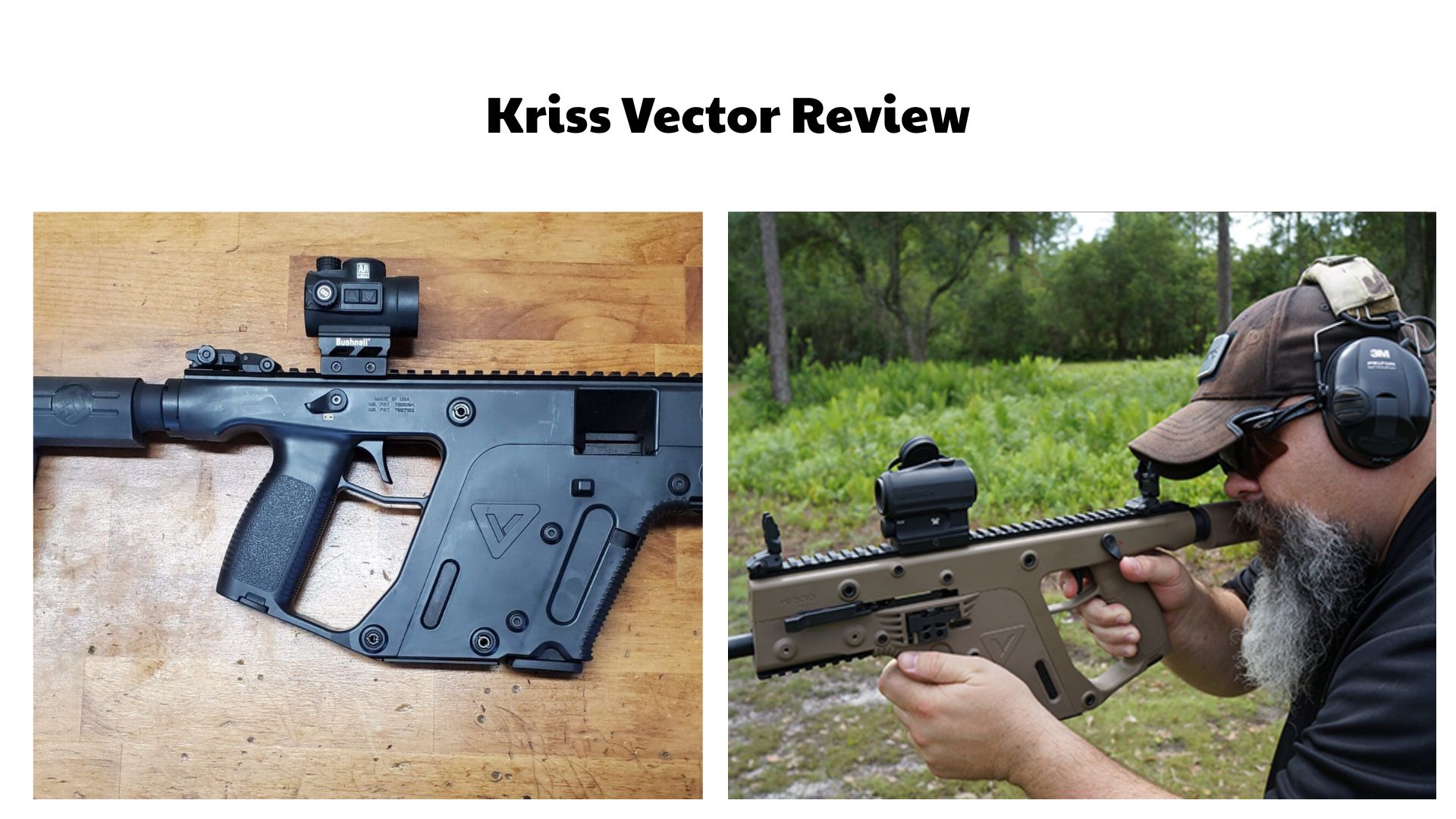

The Kriss Vector is offered in several pistol calibers, giving shooters flexibility depending on their intended use. The most common options include 9mm, .45 ACP, 10mm Auto, and .40 S&W. Each caliber brings a different balance of recoil, cost, and terminal performance.
The 9mm variant is the most popular due to its low recoil, affordable ammunition, and high magazine capacity. It is widely used for home defense, PCC competitions, and recreational shooting.
The .45 ACP version is historically significant as it was the original caliber for the Vector platform. It highlights the effectiveness of the Super V recoil system, especially when firing heavier subsonic rounds. Many shooters also appreciate its suppressor-friendly performance.
The 10mm Auto variant offers significantly more power and velocity, making it suitable for outdoor defense or hunting scenarios, though it comes with increased recoil and ammunition cost.
The .40 S&W version sits between 9mm and .45 ACP in performance but is less common in modern production due to declining market demand for the caliber.
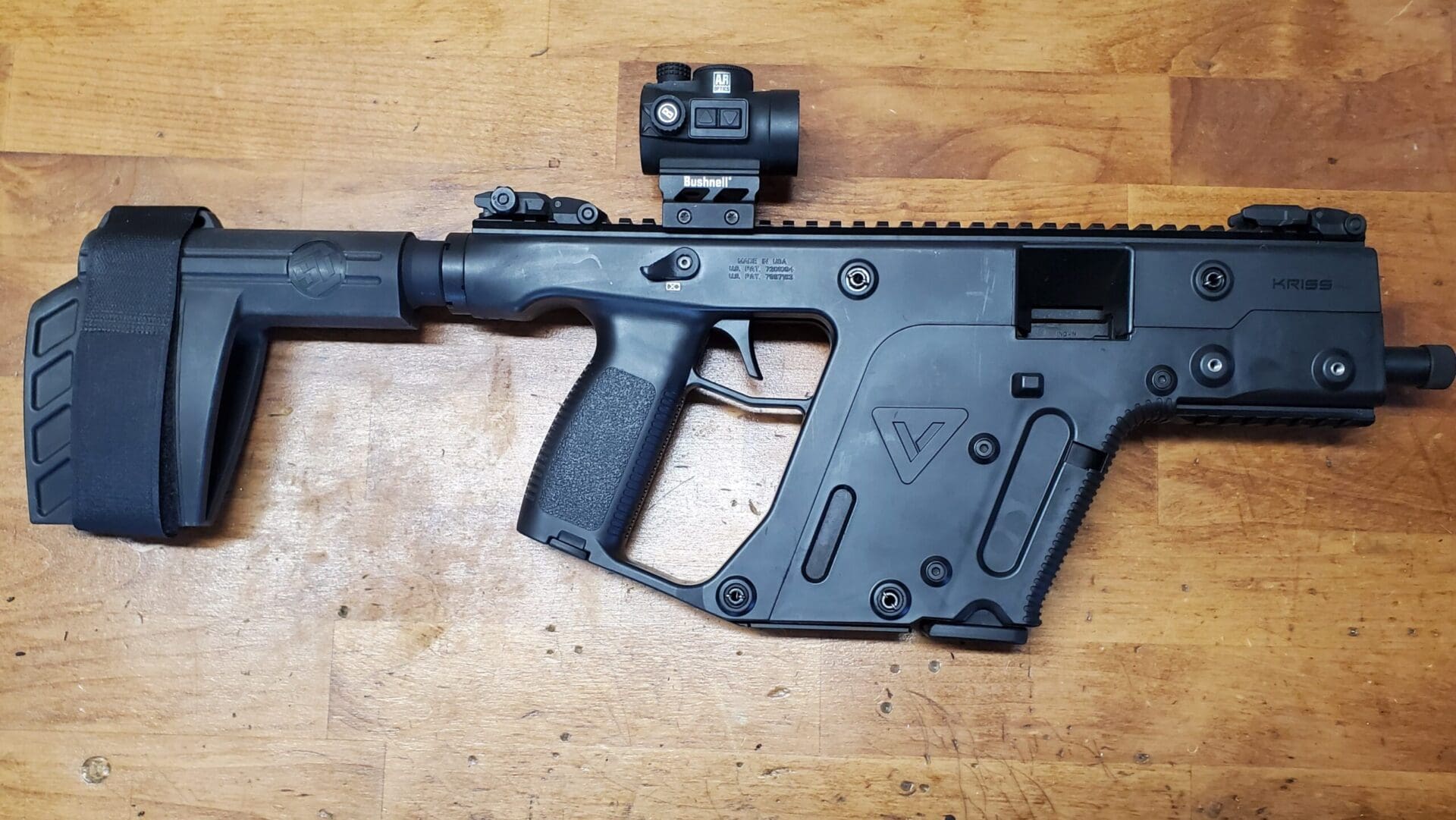
Barrel Length Variants and Configurations
Kriss Vector models come in multiple barrel lengths and configurations depending on legal classification and intended use. Compact pistol versions feature short barrels designed for close-quarters handling and maximum maneuverability.
Carbine variants typically include 16-inch barrels to comply with civilian rifle regulations in many regions. These models offer improved ballistic performance at the cost of increased overall length.
Short-barreled rifle (SBR) configurations provide the most compact and balanced shooting experience, combining maneuverability with enhanced control, but they require legal registration in applicable jurisdictions.
Semi-Auto Civilian Models vs SMG Origins
The Kriss Vector was originally developed as a submachine gun platform intended for military and law enforcement use. Early designs focused on full-auto controllability and recoil reduction.
Civilian models are semi-automatic only and are adapted to comply with firearm regulations in various countries. Despite these changes, they retain the core Super V recoil system and overall design philosophy.
Modern civilian Vectors closely mirror their military-inspired counterparts in ergonomics and performance, while being legally accessible to the general public.
Weight and Overall Dimensions
The Kriss Vector has a distinctive compact and forward-heavy design due to its unique recoil system. Weight varies depending on caliber, barrel length, and accessories installed.
Pistol variants are generally lighter and more compact, making them ideal for maneuverability and close-range use. Carbine models are heavier but offer improved stability during rapid fire.
Overall, the Vector’s weight distribution is intentionally engineered to help counteract muzzle rise and improve control during fast shooting sequences.
Magazine Compatibility (Glock Magazine Compatibility)
One of the Vector’s major practical advantages is its widespread compatibility with Glock-style magazines in most configurations. This allows users to benefit from widely available, reliable, and affordable magazine options.
Magazine capacities vary depending on local laws and magazine design, with options ranging from standard capacity to extended magazines for competition or training use.
This compatibility also makes logistics simpler for users who already own Glock pistols, as they can share magazines between platforms.
Trigger System and Fire Controls
The Kriss Vector features a semi-automatic trigger system designed for tactical responsiveness rather than precision match-grade break characteristics. While not a competition-grade trigger, it is functional and reliable for defensive and training applications.
Fire controls are typically ambidextrous, including safety selectors and magazine release systems designed for fast manipulation under stress.
Later generations of the Vector have improved ergonomics and control placement, making the platform easier to operate for both left- and right-handed shooters.
Folding Stock, Brace, and Carbine Options
Depending on configuration, the Kriss Vector may feature a folding stock, stabilizing brace, or fixed carbine-style stock. These options allow the platform to adapt to different legal classifications and shooting preferences.
Folding stocks significantly enhance compactness, making the Vector easier to store and transport. Brace-equipped pistol versions are popular for civilian defensive use where SBR registration is not desired.
Carbine versions with fixed stocks offer increased stability for longer-range shooting and training applications.
Reliability and Operating Performance
Reliability with Different Ammunition Types
The Kriss Vector generally demonstrates strong reliability across a wide range of commercially available ammunition, especially in its 9mm configuration. Standard full metal jacket (FMJ) rounds tend to cycle most consistently, making them ideal for training and high-volume shooting.
Hollow point ammunition used for defensive purposes is also widely supported, though some users may need to test specific loads to ensure optimal feeding depending on magazine type and generation of the platform.
Heavier grain loads, particularly in .45 ACP and 10mm variants, benefit from the Vector’s recoil mitigation system, helping maintain consistent cycling even under higher energy impulse conditions.
Feeding Performance with Glock Magazines
One of the strongest reliability advantages of the Kriss Vector is its compatibility with Glock-pattern magazines. These magazines are known for their durability and widespread availability, which enhances the platform’s practicality.
Feeding performance is generally smooth when using quality OEM Glock magazines, with minimal issues reported in properly maintained firearms. Aftermarket magazines can also work well, though reliability may vary depending on manufacturer quality control.
The straight-forward feed geometry of pistol-caliber cartridges contributes to consistent chambering and reduced malfunction rates under normal operating conditions.
Suppressed vs Unsuppressed Reliability
The Kriss Vector performs well both suppressed and unsuppressed, but suppression introduces additional backpressure that can affect cycling in some configurations. In 9mm models, suppressed operation is generally very smooth due to the low-pressure nature of the cartridge.
In .45 ACP and 10mm variants, suppressor use may require tuning or specific ammunition selection to maintain optimal reliability, particularly with subsonic loads.
Overall, the Super V recoil system helps mitigate the added stress of suppression by redirecting recoil forces, contributing to stable operation.
High Round Count Durability Testing
High round count testing of the Kriss Vector indicates solid durability, particularly in civilian semi-automatic use cases. The platform is engineered with robust internal components designed to withstand repeated firing cycles without significant degradation in performance.
Most users report thousands of rounds fired with minimal malfunctions when proper maintenance is performed. Wear patterns are generally consistent with other high-quality PCC platforms.
The recoil system’s unique design does introduce additional moving parts compared to traditional blowback systems, but this has not significantly impacted long-term durability in practical use.
Common User Issues and Troubleshooting
Some commonly reported issues include magazine-related feeding problems, typically linked to non-OEM magazines or worn feed lips. Using high-quality Glock magazines resolves most of these concerns.
Occasional failures to eject can occur with underpowered ammunition or excessive fouling, particularly in suppressed configurations. Regular cleaning and appropriate ammo selection usually eliminate these issues.
Users also note that proper lubrication is important due to the complexity of the Super V system, which has more internal interaction points than standard PCC designs.
Maintenance Requirements for the Vector Platform
The Kriss Vector requires routine maintenance similar to other modern PCC platforms, with particular attention to its recoil mitigation system. Regular cleaning of the bolt, carrier components, and internal rails is recommended.
Lubrication is essential for maintaining smooth operation, especially in high-round-count or suppressed shooting environments where fouling accumulates more rapidly.
Despite its more complex internal design, field stripping is relatively straightforward, allowing users to maintain the firearm without specialized tools.
Accuracy and Effective Range
Practical Accuracy Expectations in PCC Platforms
The Kriss Vector delivers practical accuracy consistent with other high-quality pistol caliber carbines. It is not designed as a precision rifle platform, but rather as a fast-handling close to mid-range firearm.
Typical groupings at 25 to 50 yards are more than adequate for defensive, training, and competition scenarios, especially when paired with a quality red dot or optic.
Effective Range for 9mm and .45 ACP Variants
The effective range of the Vector largely depends on caliber. In 9mm, the practical engagement distance is typically within 100 to 150 yards, with optimal performance under 75 yards.
The .45 ACP version has a slightly shorter effective range due to its heavier, slower projectile, making it most effective within 50 to 100 yards for consistent accuracy and energy delivery.
Barrel Quality and Real-World Precision
The Kriss Vector features quality barrels designed for durability and consistent performance rather than match-grade precision. Manufacturing standards ensure reliable shot-to-shot consistency in typical PCC engagement distances.
While not intended for long-range precision shooting, the barrel system provides sufficient accuracy for defensive and tactical applications.
Red Dot and Optic Performance
The Vector performs exceptionally well with red dot optics, which complement its fast-target-acquisition design. The platform’s low recoil impulse allows shooters to maintain sight picture easily during rapid fire.
LPVOs and prism optics can also be used, but red dots remain the most popular choice due to the firearm’s intended engagement distances.
Accuracy During Rapid Fire Strings
One of the standout characteristics of the Kriss Vector is its stability during rapid fire. The Super V system significantly reduces muzzle climb, allowing shooters to maintain tighter shot groupings during fast strings.
This makes the platform especially effective in competitive PCC shooting and defensive scenarios requiring controlled rapid engagement.
Ammunition Influence on Grouping Consistency
Ammunition selection plays a noticeable role in the Vector’s grouping consistency. High-quality factory ammunition tends to produce more consistent results compared to budget or inconsistent loads.
Heavier grain defensive ammunition may shift point of impact slightly but often benefits from improved stability in suppressed configurations.
Suppressor Compatibility and Performance
Threaded Barrel and Suppressor Mounting
The Kriss Vector is widely offered with threaded barrel configurations, making it suppressor-ready out of the box in most modern variants. This allows users to attach a wide range of 9mm and .45 ACP suppressors depending on the caliber model.
Threading quality is generally consistent, and most platforms support standard thread pitches such as 1/2×28 for 9mm variants. This ensures compatibility with a large ecosystem of commercially available suppressors and muzzle devices.
Suppressed Shooting Characteristics
When suppressed, the Kriss Vector delivers a noticeably softer and more controlled shooting experience, especially in 9mm models. The Super V recoil system further enhances this by reducing muzzle climb and redirecting recoil forces downward.
This combination makes the platform particularly enjoyable for extended shooting sessions, offering reduced noise and improved shot-to-shot stability.
Gas Blowback and Backpressure Behavior
Like most semi-automatic PCCs, the Vector experiences increased backpressure when suppressed. However, its delayed blowback-style Super V system helps manage recoil impulse and maintain stability.
Users may still notice some gas blowback depending on suppressor design and ammunition choice, but it is generally manageable compared to traditional direct blowback PCC platforms.
Subsonic Ammunition Performance
Subsonic ammunition performs especially well in the Kriss Vector, particularly in .45 ACP and 9mm configurations. When paired with a suppressor, subsonic loads significantly reduce overall noise signature.
The platform cycles reliably with quality subsonic ammunition, though tuning may be required in some setups to achieve optimal performance, especially in lighter configurations.
Best Suppressor Setups for the Vector
The best suppressor setups for the Kriss Vector typically include lightweight, low-backpressure 9mm suppressors for compact models and larger, high-efficiency suppressors for .45 ACP variants.
Direct-thread or quick-detach systems are both commonly used depending on user preference, with many shooters prioritizing compact suppressors to preserve the Vector’s maneuverability.
Noise Reduction Compared to Other PCC Platforms
Compared to traditional blowback PCC platforms, the Kriss Vector often feels subjectively quieter and smoother due to its recoil mitigation system reducing mechanical noise and perceived recoil impulse.
While actual decibel reduction depends primarily on the suppressor itself, the overall shooting experience is often perceived as more controlled and refined.
Kriss Vector vs Other PCC Platforms
Kriss Vector vs CZ Scorpion EVO 3
The CZ Scorpion EVO 3 is widely regarded as a highly reliable and cost-effective PCC, but it uses a traditional blowback system that produces more muzzle rise compared to the Vector.
The Kriss Vector offers superior recoil control thanks to the Super V system, but it comes at a significantly higher price point.
Kriss Vector vs SIG MPX
The SIG MPX uses a short-stroke gas piston system, giving it very smooth recoil characteristics and excellent suppressor performance.
While the MPX is often praised for its refined feel and modularity, the Vector stands out for its unique recoil redirection system and futuristic design.
Kriss Vector vs AR-9 Platforms
AR-9 platforms are highly customizable and often more affordable, but most rely on direct blowback operation, which increases felt recoil.
The Vector provides a more specialized shooting experience with reduced muzzle rise, but AR-9 systems generally win in terms of aftermarket support and modularity.
Kriss Vector vs B&T APC9
The B&T APC9 is a premium-grade PCC used by law enforcement and military units, offering excellent reliability and smooth operation.
Compared to the APC9, the Vector is more visually distinctive and recoil-focused, while the B&T platform emphasizes refined engineering and professional-grade balance.
Kriss Vector vs H&K SP5
The H&K SP5 is a civilian semi-auto version of the MP5, known for its roller-delayed blowback system and exceptional smoothness.
While the SP5 offers legendary reliability and smooth recoil, the Vector provides a more modern design and stronger recoil mitigation in rapid fire scenarios.
Price-to-Performance Comparison
In terms of value, the Kriss Vector is positioned in the premium segment of PCCs. It is more expensive than AR-9 and Scorpion platforms but offers unique recoil technology that is not found in most competitors.
Its value proposition is strongest for shooters who prioritize innovation, recoil control, and distinctive design over cost efficiency.
Home Defense and Tactical Applications
Suitability for Home Defense Use
The Kriss Vector is often considered suitable for home defense due to its compact size, controllability, and use of common pistol calibers like 9mm and .45 ACP.
Its reduced muzzle rise and fast follow-up shot capability make it effective in close-quarters defensive scenarios.
Close-Quarters Engagement Advantages
The platform excels in close-quarters environments where fast target transitions and recoil control are critical. Its compact design allows for easier movement in confined spaces.
The downward recoil vectoring system provides a distinct advantage when firing multiple rapid shots under stress.
Weapon Light and Optic Setup Recommendations
Most defensive setups include a weapon-mounted light and a red dot optic to maximize low-light performance and target acquisition speed.
The Vector’s rail system supports a wide range of accessories, allowing users to configure it according to tactical needs.
Capacity and Reload Efficiency
Magazine capacity depends on local regulations, but Glock-compatible magazines allow for high-capacity options in many regions.
Reload efficiency is improved by ambidextrous controls and intuitive magazine release placement, making the platform practical under stress.
Tactical Training and Defensive Drills
The Kriss Vector is commonly used in tactical training due to its controllable recoil and predictable handling characteristics.
It allows shooters to focus on movement, transitions, and accuracy without excessive recoil management distractions.
Reliability Under Defensive Conditions
When properly maintained and paired with quality ammunition, the Vector demonstrates reliable performance suitable for defensive use.
Its design prioritizes consistency and controllability, both of which are important in high-stress environments.
Competition and Recreational Shooting
PCC Competition Potential
The Kriss Vector is used in some PCC competition environments due to its fast follow-up shot capability and minimal muzzle rise.
However, its weight and trigger characteristics may place it at a disadvantage compared to lighter, competition-tuned AR-9 platforms.
Speed Shooting and Transition Performance
The Vector performs well in speed shooting drills due to its recoil mitigation system, allowing rapid target transitions with minimal disruption to sight picture.
Recreational Shooting Enjoyment Factor
Many users value the Kriss Vector as a recreational firearm because of its unique design and enjoyable shooting dynamics.
The combination of futuristic aesthetics and soft recoil makes it particularly appealing on the range.
Range Toy vs Practical Defensive Tool Debate
Some debate whether the Vector is primarily a recreational “range toy” or a practical defensive firearm. In reality, it functions as both, depending on configuration and user intent.
Ammunition Cost and High-Volume Training
Using 9mm ammunition makes high-volume training more affordable compared to rifle calibers, encouraging more frequent practice sessions.
User Experience for Enthusiast Shooters
Enthusiast shooters often appreciate the Vector for its novelty, engineering innovation, and distinctive shooting characteristics.
Customizing and Upgrades
Optics and Red Dot Mounting Options
The Kriss Vector features full-length rail sections that support a wide variety of optics, with red dot sights being the most common choice.
Hand Stops, Grips, and Rail Accessories
Users can install hand stops, foregrips, and rail accessories to improve control and ergonomics during rapid firing.
Trigger Upgrades and Internal Improvements
While trigger upgrade options exist, the Vector’s internal design is more specialized than AR platforms, limiting aftermarket trigger customization.
Folding Stock and Brace Configurations
Folding stocks and stabilizing braces enhance compactness and adaptability, depending on legal classification and user preference.
Sling Systems and Tactical Setup Options
Sling attachments allow for improved weapon retention and carrying comfort, especially during extended use or training scenarios.
Aftermarket Support for the Vector Platform
Aftermarket support exists but is more limited compared to AR-based platforms, focusing primarily on accessories rather than internal components.
Maintenance and Durability
Cleaning Requirements for the Super V System
The Kriss Vector requires regular cleaning to maintain optimal performance, particularly in the Super V recoil system where fouling can accumulate.
Bolt Assembly Maintenance and Lubrication
Proper lubrication of the bolt assembly is essential for smooth cycling and long-term reliability, especially under high round counts.
Long-Term Wear Areas and Inspection Points
Key wear areas include the recoil assembly, bolt components, and contact surfaces within the receiver. Regular inspection helps ensure continued reliability.
Corrosion Resistance and Finish Durability
Modern Vector models feature durable finishes designed to resist corrosion and wear under normal environmental conditions.
Ease of Field Stripping and Reassembly
Despite its unique internal system, the Vector is relatively easy to field strip for cleaning and maintenance without specialized tools.
Long-Term Reliability Expectations
With proper maintenance, the Kriss Vector is capable of long-term reliable performance suitable for both recreational and defensive use cases.
Pros and Cons of the Kriss Vector
Major Advantages of the Platform
Key advantages include extremely low muzzle rise, fast follow-up shots, Glock magazine compatibility, and a highly distinctive modern design.
Drawbacks and Limitations of the Design
Drawbacks include higher cost, heavier weight compared to some PCCs, and a more complex internal system that limits aftermarket customization.
Cost vs Innovation Analysis
The Vector’s price reflects its innovative recoil system and unique engineering, making it more of a premium specialty platform than a budget PCC.
Best Use Cases for the Kriss Vector
It is best suited for tactical shooting, home defense, recreational range use, and PCC competition where recoil control is a priority.
Who Should Buy the Kriss Vector?
Tactical Shooters Seeking Reduced Recoil
Shooters who prioritize recoil reduction and fast follow-up shots will benefit most from the Vector’s Super V system.
PCC Enthusiasts and Collectors
Enthusiasts and collectors appreciate the Vector’s unique design and engineering innovation within the PCC category.
Home Defense Users Wanting Compact Firepower
Its compact size and controllability make it a strong candidate for home defense applications when properly configured.
Gamers and Pop Culture Fans Interested in the Platform
The Vector’s iconic appearance has made it popular in video games and media, attracting users who value its futuristic aesthetic.
Competitive PCC Shooters
Competitive shooters may benefit from its fast target transitions, though platform weight and trigger feel may require adaptation.
Not Ideal for Budget-Conscious Buyers
Due to its premium pricing, the Vector is not the best option for shooters seeking a budget-friendly PCC solution.
Final Verdict on Kriss Vector Review
The Kriss Vector stands out as one of the most innovative PCC platforms available, combining futuristic styling with the patented Super V recoil mitigation system for exceptional control and rapid-fire performance.
It excels in recoil management, tactical handling, suppressor compatibility, and recreational shooting enjoyment, making it highly appealing to enthusiasts and tactical users alike.
However, its higher price, heavier design, and more complex operating system place it in a niche category compared to traditional PCC platforms that prioritize simplicity and affordability.
Kriss Vector FAQ (55 Detailed Questions and Answers)
1. What is the Kriss Vector designed for?
The Kriss Vector is designed as a modern pistol-caliber firearm optimized for close-quarters shooting, fast target transitions, and recoil control. It was originally developed for military and law enforcement applications but has since become popular in civilian PCC (pistol caliber carbine) markets. Its defining purpose is to allow shooters to fire rapidly with significantly reduced muzzle rise compared to traditional blowback firearms.
2. How does the Super V recoil system work?
The Super V system redirects recoil energy downward into a weighted mechanism located below the bore axis. Instead of pushing straight back into the shooter’s shoulder, the energy is channeled vertically, counteracting muzzle rise. This results in a flatter shooting experience and faster follow-up shots compared to standard PCC platforms.
3. Is the Kriss Vector good for beginners?
Yes, many beginners find the Kriss Vector easy to control due to its extremely low recoil and stable shooting behavior. However, its unconventional design and higher price point may make it less ideal as a first firearm compared to simpler PCCs like AR-9 platforms or Ruger PCC carbines.
4. What calibers does the Kriss Vector come in?
The Kriss Vector is available in several calibers, including 9mm, .45 ACP, 10mm Auto, and .40 S&W (less common). The 9mm version is the most popular due to its affordability, low recoil, and widespread magazine availability.
5. Can the Kriss Vector use Glock magazines?
Yes, most Kriss Vector models are designed to accept Glock-pattern magazines. This makes the platform highly convenient because Glock magazines are widely available, reliable, and come in a variety of capacities for training, competition, or defensive use.
6. Is the Kriss Vector reliable?
The Kriss Vector is generally considered reliable when properly maintained and used with quality ammunition and magazines. Most reliability issues reported by users are related to aftermarket magazines or underpowered ammunition rather than the platform itself.
7. Is the Kriss Vector suitable for home defense?
Yes, the Vector can be suitable for home defense due to its compact size, controllability, and use of pistol calibers. Its reduced recoil allows for fast follow-up shots, which can be beneficial in high-stress defensive scenarios.
8. What is the effective range of the Kriss Vector?
The effective range depends on caliber, but most Kriss Vector models are designed for close to mid-range use. In 9mm, the practical range is typically up to 100–150 yards, while .45 ACP performs best within 50–100 yards.
9. Does the Kriss Vector have a lot of recoil?
No, the Kriss Vector is known for having extremely low perceived recoil due to its Super V system. Even in .45 ACP or 10mm, recoil feels more manageable compared to traditional blowback PCCs.
10. Can the Kriss Vector be suppressed?
Yes, most Kriss Vector models feature threaded barrels and are compatible with suppressors. Suppressed shooting is very effective, especially in 9mm, where subsonic ammunition can significantly reduce noise levels.
11. What is the difference between Gen 1, Gen 2, and Gen 3?
Each generation of the Kriss Vector improves ergonomics, modularity, and accessory compatibility. Gen 3 models feature updated rail systems, improved controls, and better overall refinement compared to earlier generations.
12. Is the Kriss Vector accurate?
The Kriss Vector is accurate enough for its intended role as a PCC. It is not a precision rifle, but it performs very well within 50–100 yards, especially when equipped with a red dot optic.
13. What makes the Kriss Vector unique?
The most unique feature is the Super V recoil mitigation system, which dramatically reduces muzzle rise. Its futuristic design and angled receiver also distinguish it visually and mechanically from traditional firearms.
14. Is the Kriss Vector expensive?
Yes, the Kriss Vector is considered a premium PCC. It is more expensive than AR-9 or CZ Scorpion platforms due to its proprietary recoil system and unique engineering design.
15. Can you use the Kriss Vector for competition shooting?
Yes, the Vector is used in PCC competitions, where its low recoil and fast target transitions are advantageous. However, its weight and trigger characteristics may not be as competitive as lighter, purpose-built race guns.
16. How heavy is the Kriss Vector?
Weight varies depending on configuration, but the Vector is generally heavier than many PCCs due to its recoil system. This added weight contributes to stability during rapid fire.
17. Is the Kriss Vector good for concealed carry?
No, the Kriss Vector is not designed for concealed carry. It is a full-sized PCC or SBR-style firearm intended for tactical or range use, not personal carry.
18. What type of trigger does it use?
The Kriss Vector uses a standard semi-automatic trigger system that prioritizes reliability over match-grade performance. Some aftermarket upgrades are available, but customization is more limited than AR platforms.
19. Does the Kriss Vector have full-auto capability?
Civilian versions are semi-automatic only. Full-auto versions exist for military and law enforcement use but are not available to civilian buyers in most jurisdictions.
20. Is the Kriss Vector good for tactical training?
Yes, its controllability and ergonomics make it useful for tactical training, especially drills involving rapid fire, movement, and target transitions.
21. What magazines does the Kriss Vector use?
Most versions use Glock-compatible magazines, which increases convenience and availability. Some older or specialty models may use different magazine systems depending on configuration.
22. Is the Kriss Vector legal everywhere?
No, legality depends on local firearm laws. Some regions restrict magazine capacity, SBR configurations, or specific firearm features, so compliance varies by jurisdiction.
23. Can you hunt with a Kriss Vector?
In some areas, yes, especially for small game or short-range hunting. However, it is not typically optimized for hunting due to its pistol-caliber limitations.
24. How does it compare to an AR-9?
The Kriss Vector offers superior recoil control, but AR-9 platforms are more affordable and highly customizable. AR-9s also have a larger aftermarket ecosystem.
25. Is maintenance difficult?
Maintenance is moderately more complex than standard blowback PCCs due to the Super V system, but it is still manageable with basic firearm cleaning knowledge.
26. Does it require special ammunition?
No special ammunition is required, but quality factory ammo is recommended for best reliability and performance consistency.
27. Is the Kriss Vector good for left-handed shooters?
Yes, many controls are ambidextrous or easily adaptable, making it suitable for left-handed users.
28. What is the best optic for a Kriss Vector?
Red dot sights are the most popular choice due to fast target acquisition and the platform’s close-range strengths.
29. Can you upgrade the Kriss Vector?
Yes, but upgrades are somewhat limited compared to AR platforms. Common upgrades include optics, grips, lights, and stocks.
30. Is the Kriss Vector worth the price?
It depends on priorities. If recoil control and unique engineering matter, it is worth it. If budget or customization is the priority, other PCCs may be better choices.
31. How does it perform suppressed?
It performs very well suppressed, especially in 9mm. The recoil system helps maintain stability and reduces perceived recoil further.
32. What is the barrel life of a Kriss Vector?
Barrel life is generally high under normal PCC usage, often lasting tens of thousands of rounds depending on ammunition quality and maintenance.
33. Is the Kriss Vector good for CQB?
Yes, its compact design and low recoil make it highly effective for close-quarters battle scenarios.
34. Does it have a lot of muzzle rise?
No, muzzle rise is significantly reduced due to the Super V recoil system, which is one of its defining features.
35. Can it use aftermarket parts?
Some aftermarket parts exist, but the ecosystem is more limited than AR-style platforms.
36. Is it better than a CZ Scorpion?
It depends on preference. The Vector has better recoil control, while the Scorpion is more affordable and easier to customize.
37. Is the Kriss Vector loud?
Like all PCCs, it produces significant noise when unsuppressed, but subsonic ammunition and suppressors reduce sound levels dramatically.
38. What is the best caliber for the Vector?
9mm is the most popular due to cost and recoil control, though .45 ACP offers strong subsonic suppressor performance.
39. Is it good for rapid fire?
Yes, it is one of the best PCC platforms for rapid fire due to minimal muzzle climb and stable handling.
40. Does it have a folding stock?
Many configurations include folding stocks or braces, depending on model and legal classification.
41. How reliable is Glock magazine compatibility?
Very reliable when using OEM magazines. Aftermarket reliability depends on manufacturer quality.
42. Is it good for long-range shooting?
No, it is not designed for long-range use. It is optimized for close to mid-range engagements.
43. Does it overheat quickly?
It can heat up during sustained fire like any PCC, but it is designed for high-volume shooting scenarios.
44. Is it good for law enforcement use?
Yes, it was originally designed with law enforcement and military applications in mind.
45. What makes it different from SMGs?
Civilian versions are semi-auto only but retain SMG-like ergonomics and handling characteristics.
46. Can it be used for training new shooters?
Yes, its low recoil makes it excellent for introducing new shooters to firearm handling.
47. Does it require break-in?
Some users report a short break-in period where reliability improves after initial use and cleaning.
48. How durable is it?
It is highly durable and designed for extended use under demanding conditions.
49. Is it good for suppressor training?
Yes, it is one of the more enjoyable PCCs for suppressed shooting practice.
50. Does it have good resale value?
Yes, due to its popularity and unique design, it generally maintains strong resale value.
51. Can it be used in competitions?
Yes, it is legal in many PCC competitions and performs well in speed-based stages.
52. Is it better than AR-15 for home defense?
It depends on preference; AR-15s offer more power, while the Vector offers better recoil control in PCC calibers.
53. Is the trigger upgrade necessary?
Not necessary for most users, but some competitive shooters may prefer aftermarket improvements.
54. What is the biggest drawback?
The main drawbacks are its high price and limited aftermarket customization compared to AR platforms.
55. Who should avoid buying it?
Budget-conscious buyers or users wanting extensive customization options may find better value in other PCC platforms.
Read more: