
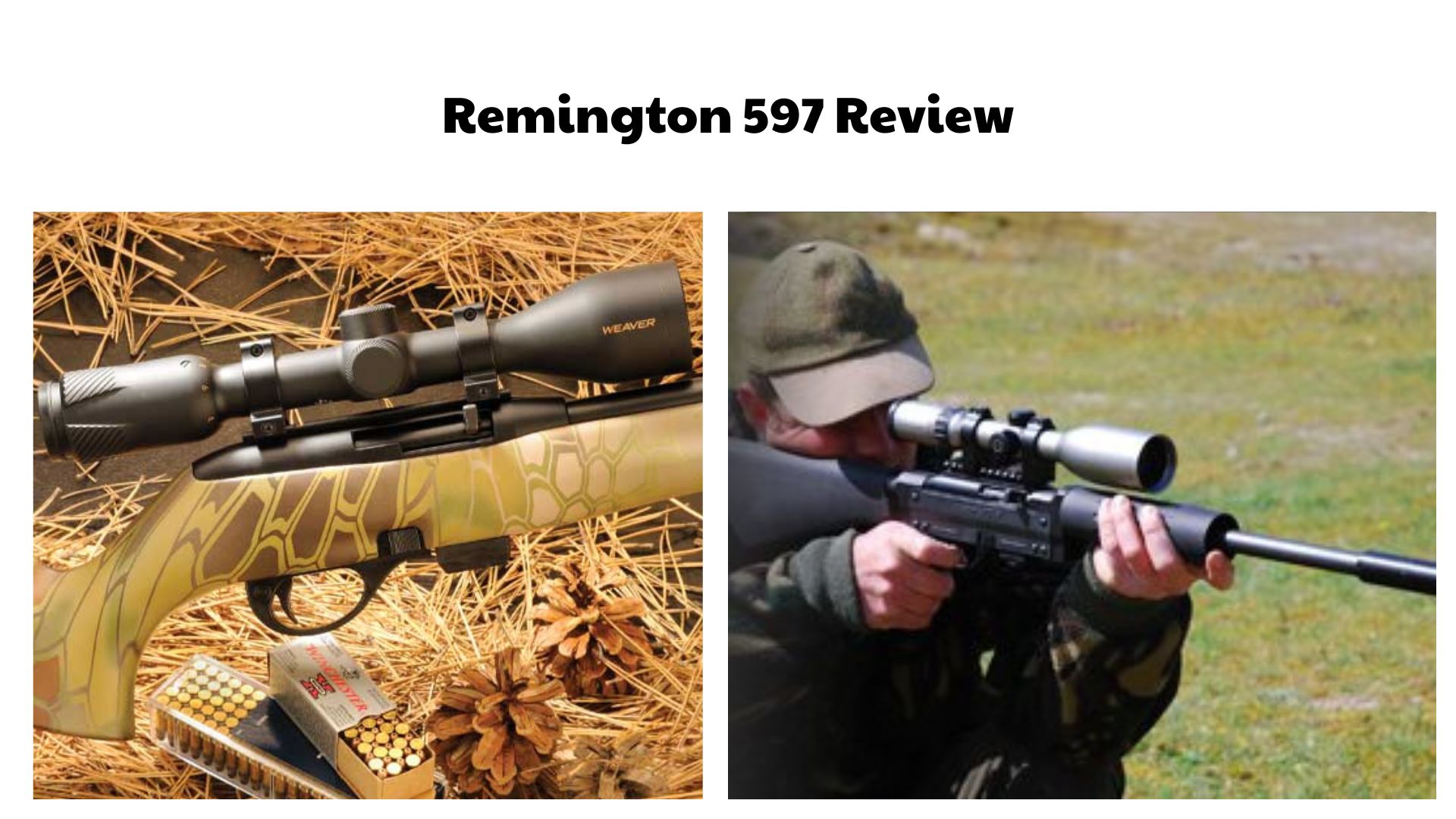

The Remington 597 is a semi-automatic .22 LR rimfire rifle designed for affordable plinking, small game hunting, and entry-level target shooting. It was introduced as Remington’s competitor to the Ruger 10/22, offering a different internal design and a focus on accuracy potential.
One of its most notable features is the dual guide rod system, which helps stabilize bolt movement during cycling. While the rifle is often praised for its inherent accuracy, it has a mixed reputation for reliability depending on ammunition choice and maintenance practices.
What Is the Remington 597?
Overview of the Remington 597 Rimfire Platform
The Remington 597 is a .22 LR semi-automatic rifle that operates on a blowback system. It was designed to provide a balance between affordability, accuracy, and ease of use for recreational and hunting purposes.
Purpose of the Rifle in the .22 LR Market
The rifle was intended for casual shooting, training, and small game hunting. It aims to deliver better-than-average accuracy in the semi-auto rimfire category while keeping production costs low.
Position Compared to Ruger 10/22 and Other Rimfire Rifles
The Remington 597 directly competes with the Ruger 10/22. While the 10/22 dominates the aftermarket ecosystem, the 597 is often considered slightly more accurate out of the box but less supported in aftermarket customization.
Who the Remington 597 Is Designed For
The rifle is best suited for budget-conscious shooters, beginners, and small game hunters who want an affordable semi-auto .22 LR with decent accuracy potential.
Design and Build Quality
Overall Construction and Receiver Design
The Remington 597 features a lightweight receiver designed for semi-automatic operation. It is built with cost efficiency in mind while maintaining acceptable durability for recreational use.
Synthetic vs Hardwood Stock Variants
The rifle has been offered in both synthetic and hardwood stock configurations. Synthetic stocks provide better weather resistance, while wood stocks offer a more traditional appearance and feel.
Weight, Balance, and Handling Characteristics
The 597 is lightweight and easy to handle, making it suitable for extended shooting sessions. Its balance is slightly forward depending on barrel configuration, which can help stabilize aiming.
Fit and Finish Quality Overview
Fit and finish are generally acceptable for its price category. While not premium-grade, most rifles are functional and reliable when properly maintained.
Unique Action and Operating System
Semi-Automatic Blowback Action Explained
The Remington 597 uses a simple blowback system where the bolt cycles rearward using gas pressure from firing. This design is cost-effective but can be sensitive to ammunition variation.
Dual Guide Rod System Design
A defining feature of the 597 is its dual guide rod system, which stabilizes bolt movement and reduces wobble during cycling, improving consistency and potential accuracy.
How the 597 Differs from Traditional Rimfire Actions
Unlike rotary bolt systems such as the Ruger 10/22, the 597 uses a guided linear bolt system. This improves alignment but requires tighter tolerances and cleaner operation.
Impact of Design on Reliability and Cycling
The design can enhance accuracy but may also increase sensitivity to fouling and ammunition quality, which can affect long-term reliability if not properly maintained.
Accuracy Performance
Out-of-the-Box Accuracy Expectations
The Remington 597 is generally capable of solid out-of-the-box accuracy, often performing well for its price range compared to other semi-auto .22 rifles.
Barrel Quality and Rifling Characteristics
The barrel typically features standard .22 LR rifling with consistent performance suitable for casual and intermediate precision shooting applications.
Best Performing .22 LR Ammunition Types
High-quality and consistent .22 LR ammunition tends to perform best. Many shooters report that the rifle prefers specific brands, making ammo testing important.
Grouping Performance at 25, 50, and 100 Yards
At 25 yards, accuracy is typically very tight. At 50 yards, the rifle can produce consistent groupings with good ammunition. At 100 yards, results depend heavily on ammo quality and shooter skill.
Consistency vs Competition Rimfire Rifles
While accurate, the 597 does not match the consistency of dedicated competition rifles or high-end bolt-action rimfire platforms.
Reliability and Feeding Issues
Common Reliability Complaints and Causes
Some users report feeding or cycling issues, usually linked to ammunition choice, magazine wear, or insufficient cleaning.
Magazine Design and Feeding Geometry
Magazine alignment and feed angle play a critical role in reliability. Poorly seated or worn magazines can lead to misfeeds or failures to eject.
Importance of Ammunition Selection
The rifle performs best with consistent, high-quality ammunition. Low-grade bulk ammo is more likely to cause cycling issues.
Cleaning and Maintenance Impact on Reliability
Regular cleaning is important, as the blowback system accumulates fouling quickly, which can impact cycling reliability over time.
Improvements in Later Production Models
Later production models saw improvements in machining tolerances and feeding consistency, helping reduce some early reliability concerns.
Magazine System
Factory Magazine Design and Capacity Options
The Remington 597 uses detachable box magazines typically available in 10-round and extended-capacity formats, designed for ease of loading and use.
Aftermarket Magazine Compatibility
Aftermarket magazines are available, but quality varies and reliability may differ depending on manufacturer and build standards.
Feeding Consistency and Known Issues
Feeding consistency is a known variable with the 597, with performance often depending heavily on magazine condition and ammo type.
Comparison to Ruger 10/22 Magazine System
The Ruger 10/22 rotary magazine system is generally considered more reliable and widely supported, giving it a significant aftermarket advantage over the 597.
Trigger Performance
Factory Trigger Characteristics
The factory trigger on the Remington 597 is generally functional but not exceptional. It is designed for budget-friendly production, meaning it prioritizes safety and reliability over a crisp match-grade feel. Most users describe it as serviceable for plinking and casual shooting rather than precision competition.
Trigger Pull Weight and Break Feel
The trigger pull weight is typically in the medium range for a .22 LR semi-auto rifle. The break can feel slightly gritty or inconsistent on some units, though this varies depending on manufacturing tolerances and usage wear. It is adequate for recreational shooting but not ideal for fine precision work without upgrades.
Aftermarket Trigger Upgrade Options
Aftermarket support for the Remington 597 trigger system is limited compared to platforms like the Ruger 10/22. However, some tuning kits and gunsmithing options exist to improve pull weight, reduce creep, and enhance overall smoothness.
Suitability for Precision Shooting
While usable for basic target shooting, the factory trigger is not ideal for precision applications. Shooters seeking tighter groupings or competition-level performance often consider trigger polishing or upgrades to improve consistency.
Recoil and Shooting Experience
Minimal Recoil Characteristics of .22 LR Platform
As with all .22 LR rifles, the Remington 597 produces extremely low recoil. This makes it comfortable for shooters of all experience levels, including beginners and younger shooters.
Cycling Feel and Bolt Operation Smoothness
The semi-automatic blowback system cycles quickly, producing a light and predictable shooting rhythm. However, cycling smoothness can vary depending on ammunition quality and cleanliness of the action.
Shooting Comfort During Extended Sessions
The lightweight design and low recoil make the 597 comfortable for extended shooting sessions. It is commonly used for plinking or training sessions where high round counts are expected.
Noise and Suppressor Compatibility
The rifle is relatively quiet compared to centerfire firearms, and it performs well with suppressors when using subsonic ammunition. Suppressor use can further enhance shooting comfort and reduce noise significantly.
Maintenance and Durability
Cleaning Requirements for Semi-Auto Rimfire
The Remington 597 requires regular cleaning due to carbon buildup typical in semi-automatic .22 LR rifles. Keeping the bolt, chamber, and guide rods clean helps maintain reliable cycling.
Sensitivity to Dirt and Fouling
The rifle can be somewhat sensitive to fouling, especially in the bolt and guide rod assembly. Excess debris can lead to cycling issues or inconsistent feeding if not addressed.
Long-Term Durability of Receiver and Barrel
Overall durability is acceptable for a budget rimfire rifle. With proper maintenance, the receiver and barrel can last for many thousands of rounds without significant performance degradation.
Common Wear Points Over Time
Common wear areas include the bolt assembly, guide rods, and magazine interface points. Regular inspection and maintenance can help extend the service life of these components.
Remington 597 vs Ruger 10/22
Accuracy Comparison
The Remington 597 is often considered slightly more accurate out of the box than a standard Ruger 10/22. However, the 10/22 can surpass it significantly once upgraded due to its vast aftermarket support.
Reliability Comparison
The Ruger 10/22 generally has better long-term reliability and consistency across different ammunition types. The 597 can be reliable but is more sensitive to ammo selection and maintenance.
Aftermarket Support and Upgrades
The Ruger 10/22 dominates in aftermarket support, offering extensive options for triggers, barrels, stocks, and internals. The Remington 597 has far fewer upgrade options available.
Value and Cost Comparison
The Remington 597 is often more affordable on the used market, offering good entry-level value. The 10/22, while slightly more expensive, provides better long-term upgrade potential.
Which Rifle Is Better Overall?
Overall, the Ruger 10/22 is considered the more versatile and reliable platform. However, the Remington 597 can be a good choice for shooters seeking decent accuracy at a lower cost.
Remington 597 vs Other .22 LR Rifles
Comparison with Marlin Model 795
The Marlin Model 795 is another lightweight semi-auto .22 LR rifle that competes closely with the 597. The 795 is often praised for simplicity and reliability, while the 597 offers a slightly more complex but potentially more precise design.
Comparison with Mossberg 702 Plinkster
The Mossberg 702 Plinkster is a budget-friendly alternative known for simplicity and ease of use. Compared to the 597, it is generally less refined but often more forgiving with ammunition.
Performance and Reliability Differences
In terms of performance, all three rifles serve similar roles, but the 597 tends to sit between budget simplicity and moderate precision, while reliability varies depending on maintenance and ammo choice.
Upgrade Ecosystem Comparison
The Ruger 10/22 clearly leads in upgrade options, while both the Remington 597 and Mossberg 702 have limited aftermarket ecosystems. This makes the 10/22 more appealing for long-term customization.
Customization and Upgrades
Barrel Upgrades and Match Options
Barrel upgrades for the Remington 597 are available but more limited compared to highly supported platforms like the Ruger 10/22. Some aftermarket match-grade barrels exist and can significantly improve accuracy potential, especially for shooters focused on precision target work. However, availability depends heavily on market supply and manufacturer support.
Trigger Improvements and Aftermarket Parts
Trigger upgrades are possible through tuning kits, polishing, or aftermarket components, though options remain relatively limited. Many shooters improve performance by smoothing internal contact points, reducing creep, and adjusting spring tension to achieve a cleaner break.
Stocks, Rails, and Ergonomic Upgrades
The Remington 597 supports a range of aftermarket stocks, particularly synthetic replacements that improve durability and ergonomics. Rail systems and accessory mounts are also available, allowing users to add bipods, foregrips, or other accessories to enhance shooting stability.
Optics and Scope Mounting Options
Most 597 rifles include scope mounting bases or receiver rails, making it easy to install optics. Lightweight rimfire scopes or red dot sights are commonly used, depending on whether the shooter prioritizes precision or fast target acquisition.
Pros and Cons of Remington 597
Key Advantages of the Platform
The Remington 597 offers solid out-of-the-box accuracy, a unique dual guide rod system, lightweight handling, and affordable entry pricing. For many shooters, it delivers good performance for casual shooting and small game hunting at a lower cost than competing rifles.
Major Drawbacks and Limitations
The main drawbacks include inconsistent reliability depending on ammunition, limited aftermarket support, and sensitivity to fouling. These factors can make long-term ownership more maintenance-intensive compared to other rimfire platforms.
Overall Value in Today’s Market
In today’s market, the Remington 597 is often viewed as a budget-friendly alternative rather than a top-tier choice. It offers good value for shooters who prioritize accuracy and affordability, but it lacks the ecosystem and refinement of more popular platforms.
Who Should Buy the Remington 597?
Budget Shooters and Beginners
The rifle is suitable for beginners and budget-conscious shooters who want an affordable entry into semi-automatic .22 LR shooting. It provides a simple and accessible platform for learning basic shooting skills.
Small Game Hunters
Hunters targeting small game such as rabbits and squirrels may find the 597 useful due to its lightweight design and adequate accuracy at typical hunting distances.
Casual Plinking Enthusiasts
For casual range use and plinking, the rifle performs well, offering low recoil and inexpensive shooting, making it ideal for high-volume recreational shooting sessions.
Shooters Willing to Tune and Maintain Their Rifle
The Remington 597 is best suited for shooters who are comfortable tuning their rifle, testing different ammunition types, and performing regular maintenance to ensure consistent performance.
Final Verdict on Remington 597 Review
The Remington 597 remains an interesting and capable semi-automatic .22 LR rifle with strong accuracy potential and a unique internal design. Its dual guide rod system and smooth cycling characteristics give it an edge in precision over some entry-level competitors when properly tuned.
However, its mixed reputation for reliability and limited aftermarket support prevent it from reaching the popularity of the Ruger 10/22. Shooters must also pay close attention to ammunition selection and maintenance to achieve optimal performance.
Overall, the Remington 597 stands as a budget-friendly alternative in the rimfire market—offering good accuracy and solid performance, but with trade-offs in consistency and customization potential.
Remington 597 Review – FAQ (Detailed Answers)
1. What is the Remington 597?
The Remington 597 is a semi-automatic .22 LR rimfire rifle designed for plinking, training, and small game hunting. It uses a blowback operating system and was created as a competitor to the Ruger 10/22, offering a different internal design focused on accuracy potential and controlled bolt movement.
2. Is the Remington 597 still in production?
The Remington 597 is no longer in active production after Remington’s restructuring, but it is widely available on the used market. Many shooters still buy it due to its affordability and decent accuracy potential.
3. What makes the Remington 597 different from the Ruger 10/22?
The biggest difference is the internal design. The 597 uses a dual guide rod system for bolt stability, while the 10/22 uses a rotary bolt system and has a much larger aftermarket ecosystem. The 10/22 is more customizable, but the 597 can be slightly more accurate in factory form.
4. Is the Remington 597 accurate?
Yes, the Remington 597 is generally considered accurate for a semi-auto .22 LR rifle. Many users report tight groupings at 25–50 yards, especially with quality ammunition. However, consistency depends heavily on ammo choice and maintenance.
5. What ammo works best in the Remington 597?
High-quality .22 LR ammunition tends to perform best, including brands like CCI, Federal AutoMatch, and Eley. The rifle often shows sensitivity to ammunition variation, so testing multiple loads is recommended.
6. Why is ammo testing important for the 597?
Because of its semi-auto blowback system and tight tolerances, different ammunition types can significantly affect cycling reliability and accuracy. Some loads may cycle perfectly while others may cause feeding issues.
7. Is the Remington 597 good for beginners?
Yes, it is suitable for beginners due to its low recoil, simple operation, and affordable shooting cost. However, beginners should be aware that it may require more maintenance than simpler rimfire rifles.
8. Does the Remington 597 have recoil?
No, recoil is extremely minimal due to the .22 LR cartridge. Most shooters describe it as nearly recoil-free, making it ideal for training and extended shooting sessions.
9. Is the Remington 597 reliable?
Reliability is mixed. Some rifles run very well with the right ammunition and maintenance, while others may experience feeding or cycling issues. It is more ammo-sensitive than rifles like the Ruger 10/22.
10. What causes reliability issues in the 597?
Common causes include dirty guide rods, poor-quality ammunition, worn magazines, and lack of regular cleaning. The rifle’s design requires relatively clean operation for best performance.
11. What is the dual guide rod system?
The dual guide rod system stabilizes the bolt during cycling, reducing wobble and improving alignment. This design aims to enhance accuracy but also increases sensitivity to fouling.
12. Does the guide rod system improve accuracy?
Yes, it can improve consistency in bolt movement, which helps accuracy. However, the benefit depends on proper maintenance and clean operation.
13. Does the Remington 597 jam often?
It can jam if using low-quality ammunition or dirty magazines. With proper ammo and maintenance, jams are significantly reduced.
14. Is the Remington 597 better than the Ruger 10/22?
It depends on priorities. The 597 may offer slightly better factory accuracy, but the Ruger 10/22 is far superior in reliability, aftermarket support, and long-term customization.
15. Can the 597 be used for hunting?
Yes, it is suitable for small game hunting such as rabbits and squirrels. Its accuracy and lightweight design make it effective within typical .22 LR ranges.
16. What is the effective range of the Remington 597?
The effective range is typically 50–100 yards for small game and target shooting. Beyond that, .22 LR performance becomes less consistent.
17. Is the Remington 597 good for plinking?
Yes, it is very good for recreational plinking due to its low recoil and low ammunition cost.
18. What type of magazine does it use?
It uses detachable box magazines, typically available in 10-round capacity. Aftermarket options exist but vary in reliability.
19. Are Remington 597 magazines reliable?
Factory magazines tend to be more reliable than aftermarket versions, though both require proper maintenance to function well.
20. Can you upgrade Remington 597 magazines?
Yes, but options are limited compared to the Ruger 10/22. Some aftermarket magazines are available but not as widely supported.
21. Is the trigger good on the 597?
The factory trigger is average, suitable for casual shooting but not ideal for precision work without modification or tuning.
22. Can the trigger be upgraded?
Yes, but aftermarket options are limited. Some shooters improve performance through polishing and spring adjustments.
23. Is the 597 good for precision shooting?
It can be accurate enough for casual precision shooting, but it is not a dedicated competition rifle.
24. How does it perform at 50 yards?
At 50 yards, the 597 can produce tight groups with good ammunition, often performing well for recreational accuracy shooting.
25. How does it perform at 100 yards?
At 100 yards, performance becomes more dependent on ammunition and environmental conditions, with increased group size compared to shorter distances.
26. Is the barrel good quality?
The barrel is decent quality for its price range, offering acceptable accuracy for plinking and hunting use.
27. Is the barrel free-floating?
No, the barrel is not typically free-floating in a precision sense, which can limit ultimate accuracy potential.
28. Does cleaning improve performance?
Yes, regular cleaning improves reliability and cycling consistency, especially in the bolt and guide rod areas.
29. How often should it be cleaned?
Cleaning every few hundred rounds is recommended, depending on ammunition type and shooting conditions.
30. Is it sensitive to dirt?
Yes, the semi-auto system can be sensitive to fouling, especially in the guide rod and bolt assembly.
31. Can it shoot bulk ammo?
It can shoot bulk ammo, but reliability may decrease compared to higher-quality ammunition.
32. What is the main weakness of the 597?
Its main weakness is inconsistent reliability compared to competing platforms like the Ruger 10/22.
33. What is the biggest strength?
Its biggest strength is good potential accuracy at a low price point.
34. Is the rifle heavy?
No, it is relatively lightweight, making it easy to carry and shoot for long periods.
35. Is it good for kids or youth shooters?
Yes, it is suitable due to low recoil, but supervision is important due to its semi-auto operation.
36. Does it support optics?
Yes, it supports scope mounting and is commonly used with rimfire scopes or red dot optics.
37. What optics work best?
Lightweight rimfire scopes with variable magnification or simple red dot sights work best depending on shooting style.
38. Is it suppressor-ready?
Some models can be used with suppressors if threaded barrels are available or modified.
39. Is it loud?
It is relatively quiet with .22 LR ammunition, and even quieter with subsonic ammo and a suppressor.
40. Does it overheat?
It can heat up during extended firing sessions, but this is typical for semi-auto .22 rifles.
41. Is it durable?
It is moderately durable and suitable for recreational long-term use if properly maintained.
42. What parts wear out first?
Magazines, guide rods, and bolt components are common wear points over time.
43. Is aftermarket support good?
No, aftermarket support is limited compared to the Ruger 10/22 platform.
44. Can it be customized heavily?
Not extensively. It allows some upgrades, but customization options are limited.
45. Is it better than Marlin 795?
Both are similar, but the 597 offers semi-auto performance with slightly more complexity, while the Marlin 795 is often seen as simpler and more reliable.
46. Is it better than Mossberg 702?
The 597 is often considered more refined, while the Mossberg 702 is more budget-oriented and simpler in design.
47. Is it good for competition?
No, it is not commonly used in serious competition shooting due to reliability and aftermarket limitations.
48. Is it worth buying today?
It can be worth buying on the used market if priced well and if the shooter understands its limitations.
49. Does it need special maintenance?
No special maintenance, but it requires consistent cleaning for best performance.
50. Is it beginner-friendly for maintenance?
Yes, basic cleaning is straightforward, though more frequent maintenance may be needed than some rifles.
51. Can it handle high round counts?
Yes, with proper maintenance it can handle thousands of rounds, but wear must be monitored.
52. Is it good for survival use?
It can serve as a lightweight survival rifle but reliability concerns make it less ideal than more proven platforms.
53. What is the resale value like?
Resale value is generally lower than Ruger 10/22 rifles due to lower demand and aftermarket support.
54. What is the main reason people buy it?
Most buyers choose it for affordability and decent accuracy in a semi-auto .22 LR platform.
Read more: