
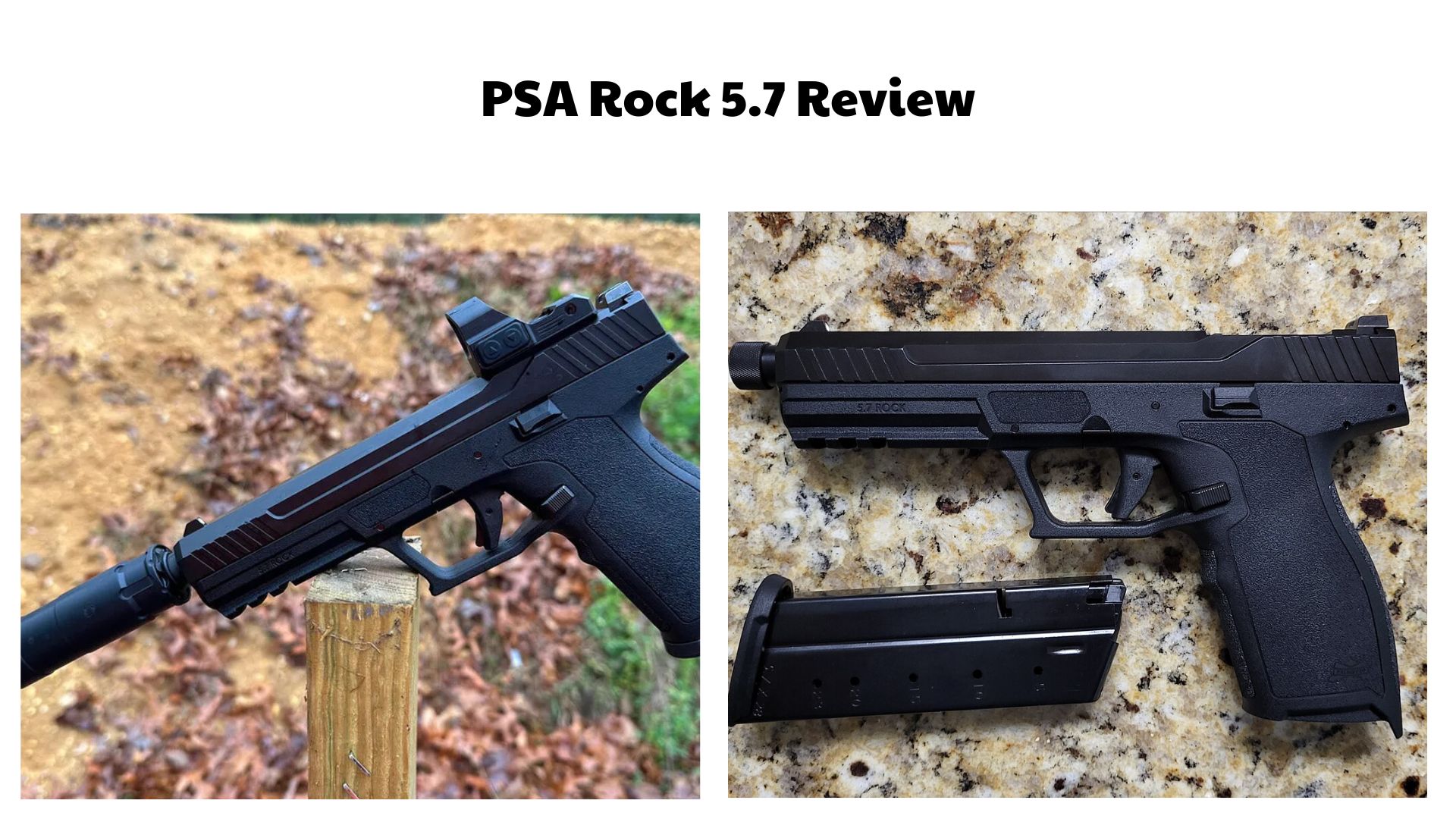

The PSA Rock 5.7 is Palmetto State Armory’s entry into the growing 5.7x28mm handgun market. Designed as a modern striker-fired pistol with high capacity and optics-ready capability, the Rock was developed to provide shooters with a more affordable alternative to premium 5.7 platforms such as the FN Five-seveN.
Before the release of the PSA Rock, the 5.7 pistol market was relatively limited and dominated by more expensive handgun options. Palmetto State Armory recognized the increasing demand for lightweight, low-recoil, high-capacity firearms and introduced the Rock to make the 5.7 cartridge more accessible to average shooters.
The primary goal of the PSA Rock is to deliver an affordable yet feature-rich 5.7x28mm pistol capable of serving multiple purposes. The platform is commonly used for recreational range shooting, home defense, backpack or trail carry, and general recreational firearm use.
One of the reasons the PSA Rock became popular so quickly is its value-oriented pricing. Compared to other 5.7 pistols on the market, the Rock offers optics-ready capability, large magazine capacity, and modern ergonomics at a significantly lower cost.
The popularity of the PSA Rock also reflects the overall growth of the 5.7x28mm cartridge market. As more manufacturers adopt the caliber and ammunition availability improves, interest in lightweight, low-recoil defensive platforms continues to increase among civilian shooters.
Understanding the 5.7x28mm Cartridge
Origins of the 5.7 Cartridge
The 5.7x28mm cartridge was originally developed by FN Herstal during the late 1980s for Personal Defense Weapon (PDW) applications. The cartridge was designed to provide high velocity, low recoil, and improved armor penetration capabilities compared to traditional pistol calibers.
This lightweight, high-velocity projectile concept became closely associated with FN’s P90 PDW platform and later the FN Five-seveN pistol, both of which helped establish the cartridge’s reputation for flat shooting performance and controllability.
Over time, the 5.7 cartridge expanded beyond military and law enforcement applications into the civilian firearms market, leading to increased interest from recreational shooters and defensive handgun owners.
Advantages of 5.7x28mm
One of the biggest advantages of the 5.7x28mm cartridge is its extremely low recoil impulse. This allows shooters to fire rapidly while maintaining good sight alignment and control during follow-up shots.
The cartridge also offers a relatively flat shooting trajectory compared to many traditional handgun calibers, improving accuracy potential at extended pistol distances.
Another major advantage is magazine capacity. Due to the small cartridge dimensions, firearms chambered in 5.7x28mm can often hold significantly more rounds than similarly sized 9mm pistols.
In addition, the ammunition itself is lightweight, allowing shooters to carry more rounds comfortably during training sessions, outdoor activities, or defensive use.
Limitations of the Cartridge
Despite its advantages, the 5.7x28mm cartridge does have several limitations. Ammunition cost remains noticeably higher than common handgun calibers such as 9mm, making regular training more expensive for some users.
Availability can also vary depending on location and market demand. While the cartridge has become more common in recent years, it is still less widely available than traditional handgun ammunition.
There is also ongoing debate regarding the defensive effectiveness of the 5.7 cartridge. While some shooters appreciate its low recoil and penetration characteristics, others question its terminal performance compared to larger handgun calibers.
Design and Build Quality
Polymer Frame and Ergonomics
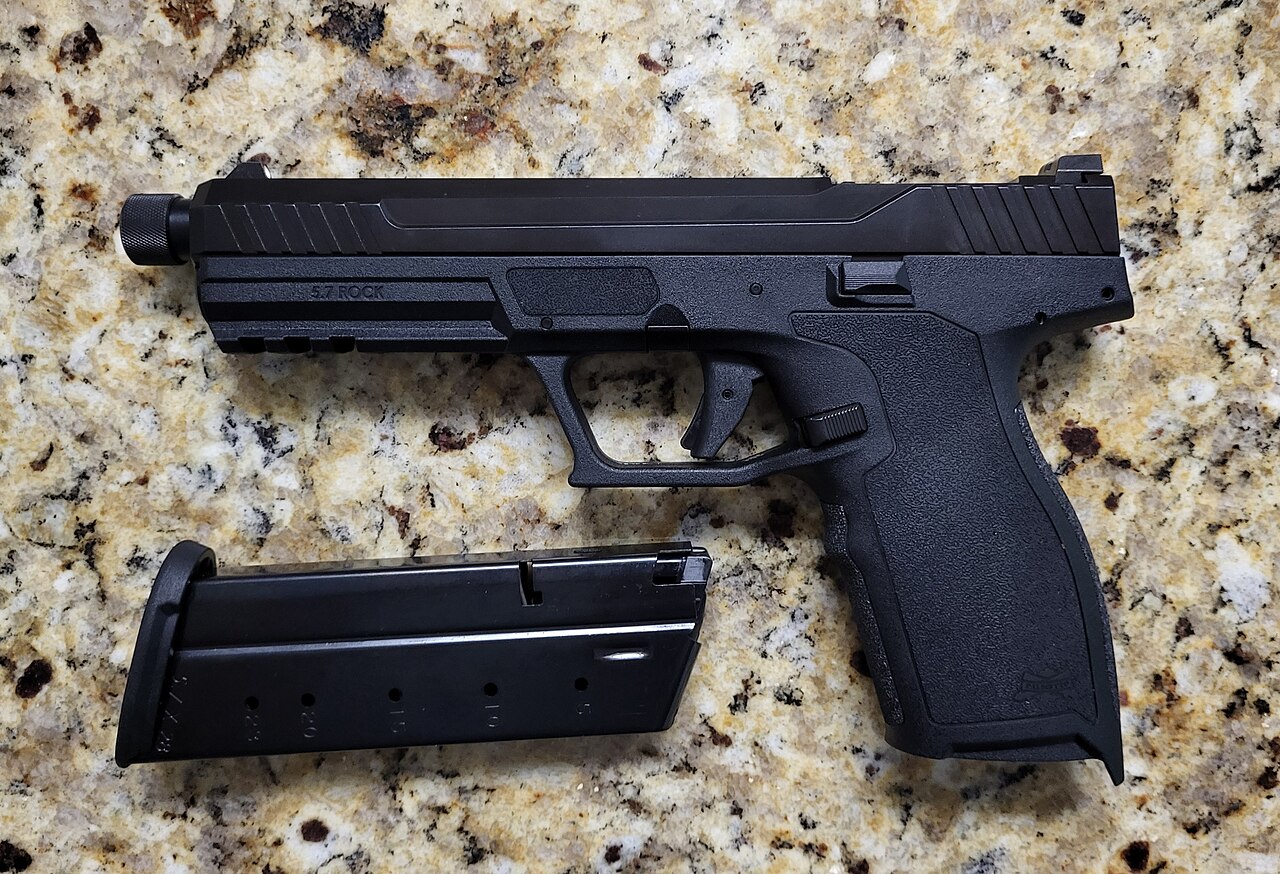
The PSA Rock uses a lightweight polymer frame designed to reduce overall carry weight while maintaining durability for extended shooting use.
Its grip angle and texture are engineered to provide comfortable handling and improved recoil control despite the pistol’s large 23-round magazine capacity.
Compared to competitors such as the FN Five-seveN and Ruger-57, the PSA Rock offers modern ergonomics that many shooters find natural and comfortable during extended range sessions.
The pistol features full-size frame dimensions, giving shooters a stable grip surface and additional controllability during rapid-fire shooting.
Slide and Barrel Construction
The PSA Rock features a steel slide designed for durability and optics-ready compatibility. This allows users to mount miniature red dot optics directly to the pistol for faster target acquisition and improved shooting performance.
The pistol utilizes a 4.7-inch barrel that helps maximize the velocity potential of the 5.7x28mm cartridge while maintaining good overall balance and handling.
Certain variants are also available with threaded barrels, allowing users to install suppressors or muzzle devices depending on their shooting preferences.
These suppressor-ready configurations have become especially popular among enthusiasts looking to take advantage of the cartridge’s low recoil and unique shooting characteristics.
Controls and User Interface
The PSA Rock incorporates ambidextrous safety controls, making the pistol more accessible for both right-handed and left-handed shooters.
Extended slide serrations improve grip and manipulation during reloads, malfunction clearances, and administrative handling tasks.
Magazine insertion and release are designed to be intuitive and user-friendly, helping shooters maintain smooth reloads during defensive or recreational shooting sessions.
Overall, the control layout follows modern handgun design trends, making the PSA Rock approachable for both experienced shooters and newcomers interested in the 5.7 platform.
PSA Rock 5.7 Specifications
The PSA Rock 5.7 combines modern handgun features with the lightweight, high-capacity characteristics associated with the 5.7x28mm cartridge.
Core Specifications
Caliber: 5.7x28mm
Capacity: 23+1 rounds
Barrel length: 4.7 inches
Polymer frame construction
Optics-ready slide configuration
Threaded barrel options available
Accessory rail support for lights and lasers
Full-size handgun dimensions designed for control and stability
These specifications position the PSA Rock as one of the most feature-rich and affordable 5.7 pistols currently available on the commercial market.
Trigger Performance
Striker-Fired Trigger System
One of the defining features of the PSA Rock 5.7 is its striker-fired operating system. Unlike some competing 5.7 pistols that use alternative trigger systems, the Rock follows a modern striker-fired handgun design that feels familiar to many shooters already experienced with polymer defensive pistols.
The trigger pull is generally considered smooth and predictable for a handgun in this price category. It offers moderate take-up followed by a reasonably defined wall before the break.
The trigger break itself is relatively clean, while the reset remains short enough to support controlled rapid-fire shooting and quick follow-up shots during training or defensive drills.
Trigger Feel in Real-World Use
In practical shooting scenarios, the PSA Rock trigger performs better than many shooters initially expect from a budget-oriented handgun platform.
The trigger system is suitable for fast shooting and allows users to maintain a consistent firing rhythm during rapid-fire drills and recreational range sessions.
Many shooters also report that the trigger remains consistent throughout extended firing sessions, helping improve accuracy and controllability despite the pistol’s lightweight design.
Overall, the PSA Rock delivers strong trigger value considering its affordable price point and feature set.
Comparison to Other 5.7 Pistols
Compared to the FN Five-seveN, the PSA Rock trigger is generally viewed as less refined but surprisingly competitive considering the large price difference between the two pistols.
The Ruger-57 trigger offers a somewhat different feel, with some shooters preferring Ruger’s lighter characteristics while others appreciate the PSA Rock’s more predictable break and reset.
When evaluating overall value for the price, the PSA Rock’s trigger system performs impressively well within the growing 5.7 handgun category.
Ergonomics and Handling
Grip Comfort
Despite its large 23-round magazine capacity, the PSA Rock maintains a relatively slim grip profile compared to many high-capacity handguns.
The grip texture is designed to provide secure handling without being overly aggressive, helping shooters maintain recoil control during rapid-fire shooting.
Its overall grip angle and frame shape contribute to natural pointability, making the pistol feel intuitive during target transitions and defensive drills.
Recoil and Shooting Characteristics
One of the most noticeable characteristics of the PSA Rock is its extremely low recoil impulse. The lightweight 5.7x28mm cartridge produces significantly less felt recoil than traditional handgun calibers such as 9mm, .40 S&W, or 10mm Auto.
The pistol’s flat shooting behavior allows shooters to keep sights on target more easily during rapid-fire strings and controlled pairs.
This controllability translates into faster follow-up shots and a smoother overall shooting experience, especially for newer shooters or users sensitive to recoil.
Weight and Balance
The PSA Rock benefits from a lightweight overall design thanks to its polymer frame construction and lightweight cartridge dimensions.
Some configurations may feel slightly front-heavy, particularly when optics, suppressors, or weapon-mounted accessories are installed.
Even so, the pistol remains easy to handle during long range sessions and extended shooting periods, reducing shooter fatigue compared to heavier handgun platforms.
Reliability and Durability
Range Testing Results
The PSA Rock has undergone numerous range evaluations involving 500 to well over 1,000 rounds fired under varying shooting conditions.
Most testing results indicate strong reliability when quality factory ammunition is used, especially after the pistol completes its initial break-in period.
Several torture test evaluations have also demonstrated that the platform can continue functioning under demanding conditions including high round counts, rapid-fire use, and exposure to dirt or carbon buildup.
Common Reliability Issues
Although the PSA Rock generally performs well overall, some users have reported isolated reliability concerns during early ownership.
One of the more commonly mentioned issues involves occasional light primer strikes, particularly with certain ammunition brands or during the initial break-in phase.
Some shooters have also experienced minor feeding inconsistencies while the pistol components wear in during the first few hundred rounds.
In addition, weaker or lower-powered ammunition may occasionally produce ejection inconsistencies depending on the specific configuration and maintenance condition of the firearm.
Durability Features
The PSA Rock uses durable steel magazines designed to withstand repeated loading cycles and prolonged range use.
Its reinforced polymer frame helps reduce overall weight while maintaining sufficient structural strength for long-term shooting durability.
The optics-ready slide is engineered to support mounted red dot optics while handling the repeated recoil forces generated during extended firing sessions.
Long-term wear observations from many users suggest that the PSA Rock maintains solid structural integrity and functional reliability when properly maintained and used with quality ammunition.
Accuracy and Range Performance
Accuracy Results
The PSA Rock 5.7 delivers strong accuracy for a budget-oriented pistol, especially considering its role in the growing 5.7x28mm handgun category. The combination of a long sight radius, stable barrel design, and lightweight recoil impulse helps shooters achieve consistent grouping at typical defensive and recreational distances.
At extended handgun ranges, the PSA Rock benefits from the inherently flat trajectory of the 5.7x28mm cartridge. This allows shooters to maintain point-of-aim consistency with less bullet drop compared to many traditional pistol calibers.
Overall, accuracy performance is more than adequate for defensive use, range training, and casual target shooting, making it a competitive option within its price segment.
Rapid-Fire Shooting
One of the standout characteristics of the PSA Rock is its performance during rapid-fire shooting. The extremely low recoil of the 5.7x28mm cartridge results in minimal muzzle rise, allowing shooters to keep sights on target more easily between shots.
This controllability translates into excellent performance during controlled pairs and high-speed drills, where fast sight recovery is essential.
Combined with its high 23+1 magazine capacity, the PSA Rock provides a significant advantage in sustained shooting drills, reducing the need for frequent reloads.
Suppressed Shooting Experience
For models equipped with a threaded barrel, the PSA Rock can be configured for suppressed shooting applications. This setup is increasingly popular among enthusiasts interested in reducing noise and recoil signature.
When paired with a suppressor, the already low recoil characteristics of the 5.7x28mm cartridge become even more manageable, resulting in a very smooth and controlled shooting experience.
These suppressor-ready configurations are often favored for recreational shooting and specialized training environments where reduced report and improved recoil control are desired.
Optics and Accessories Compatibility
Optics-Ready Slide
The PSA Rock comes with an optics-ready slide designed to support modern red dot sights. It commonly features an RMR-style footprint, allowing compatibility with a wide range of popular micro red dot optics.
Shooters can choose from multiple red dot mounting options depending on their preferred optic system, making it easy to customize the pistol for faster target acquisition and improved accuracy.
In some configurations, the setup may also allow for co-witness capability with backup iron sights, depending on optic height and sight configuration.
Accessory Rail Support
An integrated accessory rail allows the PSA Rock to support a variety of weapon-mounted lights and laser aiming devices. This makes it a practical option for home-defense or low-light shooting setups.
The platform is commonly configured with compact tactical lights for defensive use, improving visibility and target identification in dark environments.
Its modular rail system also supports broader tactical configurations for users who want to customize the pistol for specific operational or training needs.
Aftermarket Support
The PSA Rock benefits from a growing aftermarket ecosystem as the 5.7x28mm platform continues to gain popularity among civilian shooters.
Available aftermarket components include holsters, upgraded triggers, optics plates, threaded barrels, and various accessory enhancements.
In addition, a strong community-driven customization culture has emerged, with users sharing modifications, upgrades, and performance improvements as the platform matures.
Pros and Cons of the PSA Rock 5.7
Pros
The PSA Rock offers an affordable entry point into the 5.7x28mm handgun market, making it accessible to a wider range of shooters compared to more expensive alternatives.
Its standout feature is the high 23+1 round capacity, which provides significant firepower for both defensive and recreational use.
The extremely low recoil impulse makes it one of the easiest shooting centerfire pistols available, especially for new or recoil-sensitive shooters.
Being optics-ready from the factory adds modern versatility, allowing users to easily mount red dot sights without additional modifications.
The pistol is also lightweight and easy to handle, with ergonomics that perform well above expectations for its price category.
Overall, it offers strong value for shooters looking to explore the 5.7 platform without a premium investment.
Cons
One of the primary drawbacks of the PSA Rock is the relatively high cost of 5.7x28mm ammunition compared to more common calibers like 9mm.
Some users have also reported minor reliability issues during the break-in period, including feeding or ignition inconsistencies depending on ammunition type.
Compared to platforms like Glock, the aftermarket ecosystem is still limited, though it is steadily growing as the pistol gains popularity.
The overall size of the pistol may also make it less suitable for concealed carry, especially for users prioritizing compact dimensions.
Finally, there is ongoing debate within the firearms community regarding the terminal effectiveness of the 5.7x28mm cartridge for defensive applications, which may influence buyer preference.
PSA Rock 5.7 vs Competitors
PSA Rock vs FN Five-seveN
The FN Five-seveN is widely regarded as the original premium 5.7x28mm pistol, offering a long-standing reputation for reliability, refinement, and military-grade heritage. It typically features a more polished fit-and-finish and a proven service history.
In contrast, the PSA Rock delivers a dramatically lower price point while still offering modern features such as optics readiness and high-capacity magazines. Although it does not match FN’s premium build refinement, it brings the 5.7 platform to a much more accessible price range.
Both pistols share similar advantages, including lightweight construction, low recoil, and high-capacity shooting characteristics, making them comparable in practical shooting performance despite their price differences.
PSA Rock vs Ruger-57
The Ruger-57 is known for its strong reliability record and the backing of Ruger’s established reputation for durable firearms. It offers a straightforward design with a focus on simplicity and dependable performance.
The PSA Rock, on the other hand, provides better value in terms of included features such as optics-ready capability and higher magazine capacity at a lower entry price.
Ergonomically, both platforms offer comfortable shooting experiences, though some shooters prefer the Ruger-57’s feel while others favor the PSA Rock’s modern grip design and feature set.
PSA Rock vs Smith & Wesson M&P 5.7
The Smith & Wesson M&P 5.7 uses a unique gas-operated system that differs significantly from traditional striker-fired designs, contributing to its very soft recoil impulse and smooth cycling characteristics.
The PSA Rock utilizes a more conventional striker-fired system, which is familiar to most handgun users and typically easier to maintain and understand.
These design differences also influence trigger feel and recoil behavior, with the M&P 5.7 often feeling exceptionally soft-shooting, while the PSA Rock emphasizes simplicity and affordability.
Best Uses for the PSA Rock 5.7
The PSA Rock 5.7 is a versatile platform suited for a variety of shooting applications depending on user needs and configuration.
It performs well in recreational range shooting thanks to its low recoil and high-capacity magazine system, making extended shooting sessions enjoyable and manageable.
Many users also consider it a practical backpack or trail gun due to its lightweight design and flat-shooting cartridge characteristics.
In home defense setups, the optics-ready slide and accessory rail allow for effective customization with lights and red dot sights.
It is also used for tactical training and drills, offering controllable recoil and fast follow-up shot capability.
Additionally, some shooters use the PSA Rock as a predator or varmint sidearm in outdoor environments where lightweight carry and accuracy are important.
Threaded barrel variants further expand its use as a suppressor host platform for specialized shooting applications.
Who Should Buy the PSA Rock 5.7?
The PSA Rock is best suited for shooters who want an affordable entry point into the 5.7x28mm handgun platform without investing in premium-priced alternatives.
It appeals strongly to fans of lightweight, low-recoil pistols who prioritize ease of shooting and high-capacity performance.
Red dot users looking for a factory optics-ready platform will also benefit from its modern slide design and mounting compatibility.
Recreational shooters who want something unique and different from standard 9mm pistols often find the PSA Rock especially appealing.
It is also a strong option for users interested in high-capacity handgun platforms that prioritize fun, control, and modern features.
Who May Want Another Platform?
Shooters who prioritize the lowest possible ammunition cost may prefer traditional 9mm platforms, as 5.7x28mm ammunition is typically more expensive.
Users seeking compact concealed carry pistols may find the PSA Rock too large for comfortable everyday carry.
Buyers who require proven duty-grade reliability with long-established service records may prefer more mature platforms such as Glock or SIG Sauer.
Additionally, individuals who are unwilling to deal with potential break-in periods or minor early reliability tuning may prefer more established handgun systems.
Expert Verdict – Is the PSA Rock Worth It?
The PSA Rock represents excellent value within the expanding 5.7x28mm handgun market, delivering a feature-rich platform at a highly competitive price point.
As one of the most affordable 5.7 pistols currently available, it significantly lowers the barrier to entry for shooters interested in this unique cartridge.
Its strong feature set, including optics readiness, high capacity, and modern ergonomics, makes it an attractive option for recreational and defensive-minded shooters alike.
While early reliability concerns and break-in behavior have been noted, the platform continues to improve as it matures in the market.
Overall, the PSA Rock is best described as a fun, flat-shooting, and highly capable modern 5.7 pistol that delivers strong value for its price segment.
Conclusion
The PSA Rock 5.7 combines affordability, modern features, and unique cartridge performance into a single accessible handgun platform.
Its key strengths include low recoil, high magazine capacity, optics-ready design, and strong overall usability for a wide range of shooting applications.
However, it also presents some limitations such as higher ammunition cost, potential early reliability considerations, and a smaller aftermarket ecosystem compared to more established platforms.
Despite these trade-offs, the PSA Rock has successfully disrupted the 5.7 handgun market by offering a budget-friendly alternative that still delivers modern performance and features.
Overall, it stands as a practical and value-driven option for shooters interested in exploring the 5.7x28mm platform without the premium price tag.
50+ FAQs About the PSA Rock 5.7
1. What is the PSA Rock 5.7?
The PSA Rock 5.7 is a striker-fired semi-automatic pistol chambered in 5.7x28mm, produced by Palmetto State Armory. It is designed to provide an affordable entry into the 5.7 handgun market while offering modern features such as high capacity, optics-ready capability, and lightweight construction.
2. Why did PSA create the Rock 5.7?
Palmetto State Armory created the Rock to make the 5.7x28mm platform more accessible to civilian shooters. Previously, 5.7 pistols were expensive and limited to premium brands. The Rock was designed to reduce cost barriers while maintaining practical performance and modern features.
3. What caliber does the PSA Rock use?
The PSA Rock is chambered in 5.7x28mm, a high-velocity cartridge originally developed for military and PDW use. It is known for low recoil, flat trajectory, and high magazine capacity potential.
4. Is the PSA Rock good for beginners?
Yes, many beginners find it easy to shoot due to its extremely low recoil and mild shooting characteristics. However, its size, ammunition cost, and performance-oriented design may be more than what a basic first handgun user needs.
5. How many rounds does the PSA Rock hold?
The standard magazine capacity is 23+1 rounds, which is significantly higher than most traditional handgun platforms, making it attractive for defensive and range use.
6. Is the PSA Rock optics-ready?
Yes, the PSA Rock comes with an optics-ready slide designed for red dot sights. It supports RMR-style footprints and similar mounting systems depending on the included plate.
7. What optics fit the PSA Rock?
The pistol is compatible with several popular red dot optics such as Trijicon RMR, Holosun micro dots, and other optics that match the mounting footprint system used on the slide.
8. How is the trigger on the PSA Rock?
The trigger is a striker-fired system that offers a moderate pull weight, a defined break, and a short reset. While not premium-grade, it performs well for its price category and supports fast shooting.
9. Is the PSA Rock reliable?
The PSA Rock is generally reliable when using quality ammunition. Some early production or break-in units may experience minor issues, but overall reliability improves after initial use and proper maintenance.
10. Does the PSA Rock require a break-in period?
Yes, many users report a short break-in period of a few hundred rounds during which minor feeding or cycling inconsistencies may occur before the pistol smooths out.
11. What are common PSA Rock issues?
Commonly reported issues include occasional light primer strikes, minor feeding issues during early use, and occasional ejection inconsistencies with weaker ammunition.
12. Is the PSA Rock good for home defense?
Yes, it can be used for home defense due to its high capacity, low recoil, and optics-ready design. However, ammunition cost and size should be considered when selecting it for defensive use.
13. Is the PSA Rock good for concealed carry?
It is generally not ideal for concealed carry due to its full-size dimensions. Compact 9mm pistols are usually better suited for everyday concealed carry.
14. How does the recoil feel?
Recoil is extremely light due to the 5.7x28mm cartridge. Most shooters describe it as soft, flat, and easy to control even during rapid fire.
15. Is the PSA Rock accurate?
Yes, it is considered accurate for a budget pistol. The flat trajectory of the cartridge and stable platform contribute to strong practical accuracy.
16. Can the PSA Rock be used for competition shooting?
While not specifically a competition pistol, it can be used in recreational or entry-level competition settings due to its low recoil and high capacity.
17. Does the PSA Rock support suppressors?
Threaded barrel variants support suppressor use, making it suitable for users interested in suppressed shooting setups.
18. Is 5.7x28mm expensive to shoot?
Yes, 5.7 ammunition is typically more expensive than 9mm, which can increase long-term training costs.
19. Is 5.7x28mm effective for self-defense?
The effectiveness of 5.7 for self-defense is debated. It offers high velocity and penetration, but terminal performance varies depending on ammunition type and user preference.
20. What makes the PSA Rock unique?
Its combination of affordability, high capacity, optics-ready design, and 5.7x28mm chambering makes it one of the most accessible pistols in its category.
21. How does it compare to FN Five-seveN?
The FN Five-seveN offers premium build quality and proven service history, while the PSA Rock delivers similar capacity and performance at a much lower price.
22. How does it compare to Ruger-57?
The Ruger-57 is known for reliability and simplicity, while the PSA Rock offers better optics integration and higher magazine capacity for the price.
23. Is the PSA Rock good for range shooting?
Yes, it is excellent for range use due to its low recoil, high capacity, and enjoyable shooting characteristics.
24. How heavy is the PSA Rock?
It is relatively lightweight due to its polymer frame, making it easier to handle during extended shooting sessions.
25. Does the PSA Rock have a rail?
Yes, it includes an accessory rail for mounting lights or lasers.
26. Is the PSA Rock durable?
It uses a reinforced polymer frame and steel slide, providing solid durability for regular shooting use.
27. What magazines does it use?
It uses proprietary steel magazines designed for 5.7x28mm cartridges with 23-round capacity.
28. Is aftermarket support good?
Aftermarket support is growing but still smaller compared to platforms like Glock.
29. Are holsters available?
Yes, holster options exist but are more limited compared to mainstream pistol platforms.
30. Is the PSA Rock good for training?
Yes, it is suitable for training due to its controllability and low recoil characteristics.
31. Does it have ambidextrous controls?
Yes, it includes ambidextrous safety features for user flexibility.
32. Is the slide easy to rack?
Yes, slide serrations make manipulation relatively easy even under stress.
33. Can it handle high round counts?
Yes, it has been tested in 500–1,000+ round sessions with generally good durability.
34. Does it overheat easily?
Like most polymer pistols, it handles normal firing conditions well without overheating issues.
35. Is it good for varmint hunting?
Some users use it as a varmint or predator defense sidearm due to its flat shooting nature.
36. Does it have night sights?
Most models come with basic sights, but aftermarket night sights can be installed.
37. Is it better than 9mm pistols?
It depends on use case. It offers lower recoil and higher capacity, but 9mm is cheaper and more widely available.
38. Is it suitable for law enforcement?
It is not widely adopted in law enforcement but could serve niche roles depending on agency requirements.
39. Can beginners maintain it easily?
Yes, field stripping and maintenance are relatively simple and straightforward.
40. Does it have safety features?
Yes, it includes internal safeties and external controls depending on configuration.
41. Is it good for suppressor training?
Yes, threaded barrel models are ideal for suppressed training environments.
42. Does it come with accessories?
It typically includes magazines and basic accessories, but optics and lights are separate purchases.
43. Is it good for left-handed shooters?
Yes, ambidextrous controls make it suitable for left-handed use.
44. How does it handle dirt and debris?
It performs well under normal conditions, though extreme environments may require more frequent cleaning.
45. Is it worth the price?
Many shooters consider it a strong value due to its feature set and affordability in the 5.7 category.
46. What are its biggest strengths?
High capacity, low recoil, optics readiness, and affordability are its main strengths.
47. What are its biggest weaknesses?
Ammo cost, limited aftermarket, and occasional early reliability quirks are its main drawbacks.
48. Is it a duty-grade pistol?
It is not widely used as a duty pistol but offers some duty-like features.
49. Why is it popular?
It is popular because it makes the 5.7 platform more affordable and accessible to everyday shooters.
50. Will PSA improve the Rock over time?
Yes, like many PSA platforms, improvements in production and reliability are expected as the design matures.
51. is the PSA Rock worth buying?
For shooters interested in the 5.7x28mm platform at a lower cost, the PSA Rock is widely considered a worthwhile option that balances performance, features, and affordability.
Read more: