
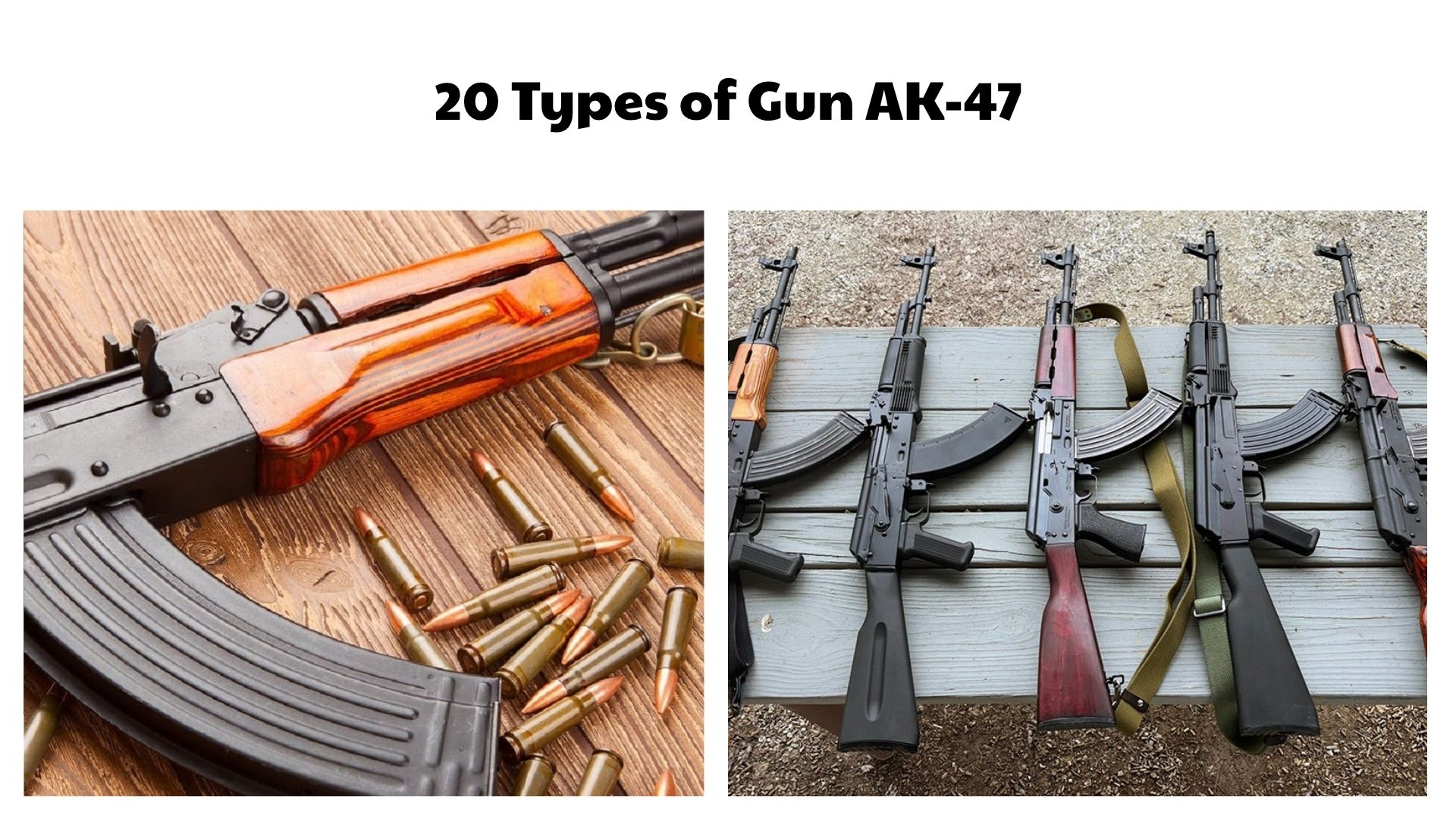

The types of gun AK-47 refer to one of the most influential firearm families in modern military history. Originally designed by Mikhail Kalashnikov, the AK platform evolved far beyond a single rifle into a global ecosystem of variants used by military forces, police units, and civilian shooters worldwide. Each version improves or modifies the original concept, focusing on reliability, ease of use, and battlefield durability. This guide explains the most important AK variants in a structured, expert-style breakdown. We will start with five foundational and modernized models that define the evolution of the AK platform.
Although the AK-47 is an assault rifle system, comparisons are often made with the best handgun platforms when discussing versatility, recoil control, and close-range effectiveness. Handguns prioritize portability, while AK rifles prioritize sustained firepower and battlefield reliability. Understanding both categories helps clarify why the AK platform dominates intermediate combat roles.
Top 20 Types of Gun AK-47 (Expert Breakdown)
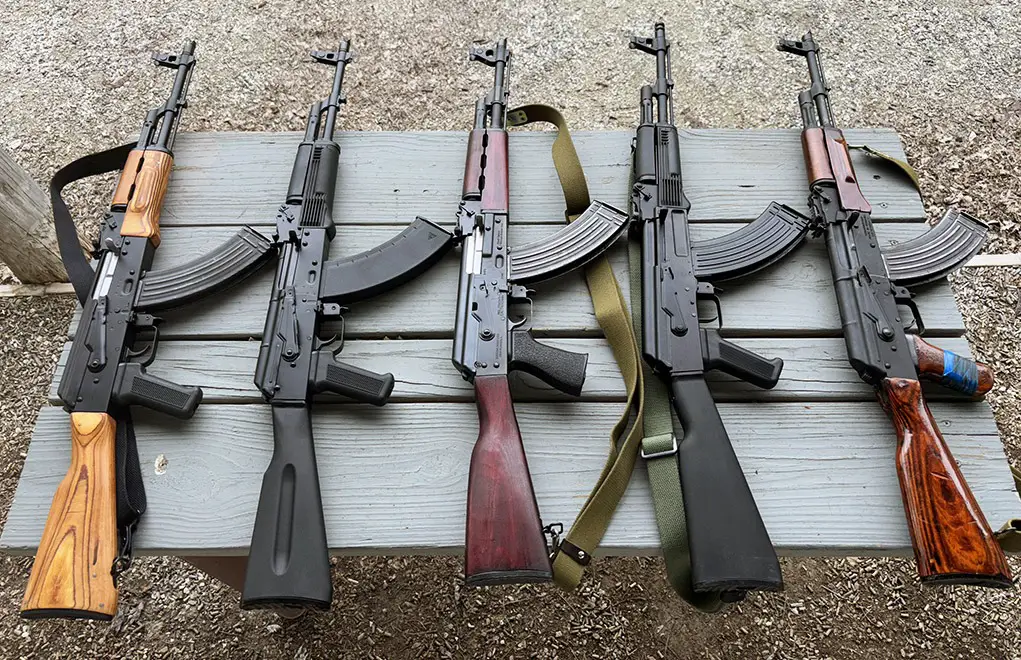
1. AK-47 Type 1 (Stamped Receiver Original Model)
The AK-47 Type 1 is the earliest production version of the Kalashnikov rifle system. It uses a stamped steel receiver, which was intended to simplify mass production and reduce manufacturing costs. However, early stamping technology at the time was not fully refined, which resulted in durability issues under prolonged combat stress.
Despite its limitations, the Type 1 represents the foundational design philosophy of the AK platform: simplicity, reliability, and ease of maintenance in harsh environments. It introduced the core gas-operated, rotating bolt system that would define all future AK variants. Soldiers valued it for its ability to function even in mud, sand, and extreme weather conditions where other rifles often failed.
Today, the Type 1 is considered a historical collector’s firearm rather than a modern combat weapon, but its influence on global small arms design remains unmatched.
2. AKM (Modernized Kalashnikov Rifle)
The AKM is one of the most widely produced and recognized rifles in the world. It was introduced as an improvement over the original AK-47, featuring a refined stamped receiver that significantly reduced weight while maintaining structural integrity. This made the weapon easier to handle during extended combat operations.
One of the key upgrades in the AKM is the addition of a slanted muzzle compensator, which helps reduce recoil and muzzle climb during automatic fire. This improves accuracy during sustained bursts, making it more effective in real combat scenarios. The AKM also simplified production further, allowing it to be manufactured in massive quantities across different countries.
Because of its balance between performance and cost-efficiency, the AKM became the backbone of many armed forces worldwide and remains in active service even today.
3. AK-74 (5.45×39mm Transition Rifle)
The AK-74 represents a major shift in Kalashnikov design philosophy, moving from the traditional 7.62×39mm round to the smaller 5.45×39mm cartridge. This change was made to improve accuracy, reduce recoil, and increase soldier ammunition capacity.
The reduced recoil allows for much better control during automatic fire, making the rifle more effective in modern infantry combat. The AK-74 also introduced a distinctive muzzle brake that significantly reduces recoil impulse, making it easier to maintain target alignment during rapid firing sequences.
This model marked the Soviet transition toward lighter, faster, and more controllable infantry weapons while maintaining the legendary reliability of the AK platform.
4. AKS-74U (Compact Carbine Variant)
The AKS-74U is a shortened carbine version of the AK-74 designed for close-quarters combat and vehicle crews. Its compact size allows it to be easily carried in confined spaces, making it ideal for urban environments and special operations units.
Despite its smaller barrel, the AKS-74U retains the same gas-operated mechanism and high reliability as its full-size counterpart. However, the reduced barrel length results in lower effective range and increased muzzle flash, especially during automatic fire.
This weapon is often referred to as a “mini AK” due to its size, but it still delivers substantial firepower in short-range engagements.
5. AK-103 (Modern Export 7.62×39 Platform)
The AK-103 is part of the modern AK-100 series, designed as an upgraded export version of the classic 7.62×39mm Kalashnikov system. It combines traditional stopping power with modern materials such as polymer furniture and improved manufacturing tolerances.
Unlike earlier models, the AK-103 is designed for international compatibility, making it suitable for a wide range of military forces. It retains the original cartridge’s strong ballistic performance while improving ergonomics and weight distribution.
This rifle represents the balance between old-school AK power and modern firearm engineering, making it one of the most versatile variants in the entire family.
6. AK-104 (Compact 7.62×39 Carbine)
The AK-104 is a shortened version of the AK-103, built for users who want the stopping power of the 7.62×39 cartridge in a more compact platform. It is designed for close to mid-range engagements, where mobility and fast target acquisition are more important than long-range precision. This makes it especially suitable for urban combat environments and mechanized infantry roles.
Despite its reduced barrel length, the AK-104 retains the core Kalashnikov gas-operated system, ensuring high reliability even in harsh conditions. The weapon is also equipped with modern polymer components that reduce weight and improve handling comfort during extended use. However, the shorter barrel does increase muzzle flash and slightly reduces ballistic efficiency compared to full-length rifles.
Overall, the AK-104 is a practical compromise between compact design and traditional AK firepower, making it a versatile option in the AK family.
7. AK-105 (5.45×39 Compact Carbine)
The AK-105 is a compact carbine derived from the AK-74M platform, chambered in 5.45×39mm. It was developed to provide a lightweight and highly controllable rifle for troops operating in confined spaces such as vehicles, urban areas, and airborne operations.
Its shorter barrel improves maneuverability but reduces effective range slightly compared to full-sized rifles. However, the low-recoil nature of the 5.45×39 cartridge compensates by maintaining excellent controllability during rapid fire. The AK-105 also features modernized furniture, including folding stocks and accessory rails for tactical attachments.
This model is widely appreciated for its balance of compact size, controllability, and operational versatility.
8. AK-74M (Modern Standard Service Rifle)
The AK-74M is the modernized standard service rifle of the AK-74 family. It incorporates a black polymer stock and handguards, replacing older wood or bakelite materials. This reduces weight while increasing durability in extreme environmental conditions.
The rifle maintains the 5.45×39 cartridge, offering low recoil and improved accuracy compared to earlier AK-47 models. It is widely used due to its simplicity, ease of maintenance, and high reliability under combat stress. The folding stock design also improves portability for airborne and mechanized troops.
The AK-74M represents the most refined and widely adopted version of the 5.45 AK platform in modern service.
9. AK-12 (Next Generation Kalashnikov Platform)
The AK-12 is the most modern evolution of the Kalashnikov system, designed to meet contemporary battlefield requirements. It features a fully redesigned receiver with integrated Picatinny rails for optics, grips, and tactical accessories.
One of its key improvements is enhanced ergonomics, including adjustable stocks and improved fire selector placement for faster manipulation. The AK-12 also offers better accuracy due to improved manufacturing tolerances and upgraded barrel construction.
This rifle represents a major shift from traditional AK design toward a more modular and accessory-friendly platform suitable for modern combat environments.
10. AK-200 Series (Modern Export Family)
The AK-200 series is a modernization package designed primarily for export markets. It builds on the AK-74M platform while introducing ergonomic improvements, modular rail systems, and enhanced polymer construction.
These rifles are designed to be adaptable across different military standards and operational requirements. The AK-200 series maintains the classic reliability of the AK system while offering improved handling and customization options.
It is widely used by international forces seeking a cost-effective yet modernized assault rifle system.
11. Type 56 (Chinese AK-47 Variant)
The Type 56 is one of the most widely recognized AK-47 derivatives in the world, produced by China as a licensed and later independently developed version of the Soviet AK platform. It closely follows the original AK-47 design philosophy, focusing on simplicity, durability, and ease of mass production. However, the Type 56 also introduces several distinctive manufacturing and structural differences that set it apart from its Soviet counterpart.
One of the most noticeable features of the Type 56 is its integrated folding spike bayonet on many versions. This design choice was intended to provide infantry units with a permanently attached close-combat tool without requiring additional equipment. Mechanically, the rifle retains the gas-operated, rotating bolt system that defines the AK family, ensuring reliable cycling even under harsh environmental conditions such as dust, mud, and extreme cold.
The Type 56 was widely exported and used across Asia, Africa, and the Middle East, often becoming one of the most common AK-style rifles in conflict zones. Its widespread adoption is largely due to its low production cost and high functional reliability. Even though it is based on an older design, it remains effective in modern low-intensity conflict environments where simplicity and durability are more important than advanced modular features.
From a technical perspective, the Type 56 maintains the 7.62×39mm cartridge standard, giving it strong stopping power and good penetration capability at short to medium ranges. While it lacks modern accessory rails or ergonomic upgrades found in newer rifles, its rugged construction continues to make it a dependable weapon in austere conditions. It represents one of the most historically significant global adaptations of the AK-47 platform.
12. Type 56-2 (Folding Stock Variant)
The Type 56-2 is an evolution of the standard Type 56, designed to improve mobility and compact handling for military units that require easier transport and deployment in confined environments. The most significant modification is the addition of a side-folding metal stock, which allows the rifle to be reduced in length for airborne operations, armored vehicle crews, and urban combat scenarios.
Despite its folding stock design, the Type 56-2 retains the same internal mechanics as the base Type 56, including the reliable gas piston system and rotating bolt. This ensures that performance remains consistent even under stressful conditions. The folding mechanism is engineered to be durable and resistant to repeated deployment, making it suitable for long-term field use.
In terms of combat performance, the Type 56-2 maintains the same 7.62×39mm cartridge, offering strong stopping power and reliable penetration. However, the addition of the folding stock slightly improves maneuverability in tight spaces, allowing soldiers to transition between combat environments more efficiently.
This variant reflects a practical evolution rather than a complete redesign. It demonstrates how the AK platform can be adapted to meet specific operational needs without sacrificing its core reliability. The Type 56-2 remains widely recognized as a functional and cost-effective solution for modernizing older infantry arsenals.
13. Type 81 Rifle (AK-Inspired Hybrid Design)
The Type 81 rifle is a Chinese firearm that blends elements of the AK platform with design influences from the SKS rifle. While it is often grouped with AK variants due to its operational similarities, it is technically a hybrid system that incorporates both traditional Kalashnikov gas operation and unique internal refinements.
One of the key improvements in the Type 81 is its enhanced accuracy compared to standard AK-style rifles. This is achieved through tighter manufacturing tolerances and a modified gas system that reduces mechanical vibration during firing. As a result, the Type 81 offers better shot consistency, especially during semi-automatic fire.
The rifle continues to use the 7.62×39mm cartridge, maintaining compatibility with existing ammunition supplies. However, its improved barrel quality and refined internal components allow for more stable projectile trajectories at medium range. This makes it more suitable for designated marksman roles compared to traditional AK rifles.
The Type 81 represents a transitional step in Chinese small arms development, bridging older Soviet-inspired designs with more modern infantry requirements. While it does not fully abandon the AK system, it introduces meaningful enhancements that improve accuracy and control, making it a unique entry in the broader AK family classification.
14. Zastava M70 (Yugoslav Heavy-Duty AK Variant)
The Zastava M70 is a Yugoslavian adaptation of the AK-47 platform, known for its reinforced construction and improved durability. Unlike many standard AK variants, the M70 was designed with a thicker receiver and enhanced structural components to withstand prolonged automatic fire and harsh battlefield conditions.
One of its distinguishing characteristics is the reinforced trunnion and barrel assembly, which increases the overall lifespan of the weapon under sustained use. The M70 also includes grenade-launching capability in some versions, requiring a reinforced gas system to handle increased pressure levels during operation.
In terms of ergonomics, the M70 typically features wooden furniture, though later variants introduced synthetic materials. The rifle maintains the standard 7.62×39mm cartridge, ensuring strong ballistic performance and compatibility with other AK platforms.
The Zastava M70 is widely regarded as one of the most robust AK derivatives ever produced. Its heavier build contributes to increased recoil control during automatic fire, although it also makes the weapon less lightweight compared to other AK variants. This trade-off favors durability and sustained combat reliability over mobility.
15. Zastava M70AB2 (Folding Stock Combat Variant)
The Zastava M70AB2 is a folding-stock version of the M70 designed for improved mobility in mechanized and airborne infantry units. It retains the heavy-duty construction of the standard M70 but adds a side-folding metal stock for compact storage and easier transport in confined environments.
This variant maintains the reinforced receiver and grenade-launch capability, making it one of the more versatile AK-based systems in terms of battlefield functionality. The folding stock mechanism is designed for durability, ensuring it remains stable during firing while still allowing quick deployment when needed.
The M70AB2 continues to use the 7.62×39mm cartridge, providing strong stopping power suitable for a wide range of combat scenarios. Its added weight contributes to recoil reduction, improving controllability during automatic fire sequences.
Overall, the M70AB2 represents a balance between heavy-duty construction and field adaptability. It is widely respected for its rugged reliability and remains a notable example of how AK-based systems can be engineered for specialized operational roles without sacrificing core performance characteristics.
16. Romanian PM md. 63 (AKM Family Variant)
The Romanian PM md. 63 is one of the most recognizable AKM-derived rifles produced outside the Soviet Union. It is built on the standard AKM platform but includes several distinctive national design choices that make it stand out visually and functionally. One of its most famous features is the vertical foregrip integrated into the wooden handguard, often called the “dong grip,” which improves weapon control during sustained automatic fire.
Mechanically, the PM md. 63 retains the same gas-operated, rotating bolt system found in the AKM, ensuring high reliability under harsh conditions. It uses the 7.62×39mm cartridge, which provides strong stopping power and consistent performance at short to medium ranges. The rifle was designed for mass military use, meaning it prioritizes durability and simplicity over advanced modular features.
The PM md. 63 became widely distributed during the Cold War, with many units exported to allied nations. Its rugged build and simple maintenance requirements made it especially effective in environments where logistics support was limited. Even today, it remains in use in some regions due to its reliability and ease of repair.
17. Romanian PM md. 65 (Folding Stock Variant)
The PM md. 65 is a tactical evolution of the md. 63, designed to improve mobility for airborne and mechanized infantry units. Its most important modification is the addition of a side-folding metal stock, which significantly reduces the weapon’s overall length when stored or transported.
This folding stock design allows soldiers to carry the rifle more efficiently in tight environments such as armored vehicles or urban combat zones. Despite the structural change, the md. 65 maintains the same internal AKM-based mechanism, ensuring reliability and consistent performance under stress.
The rifle still uses the 7.62×39mm cartridge, giving it strong ballistic performance. The vertical foregrip from the md. 63 is also present in many versions, improving stability during automatic fire. This combination of features makes it a practical balance between compact design and battlefield effectiveness.
Overall, the PM md. 65 is a functional adaptation of the AKM system that emphasizes mobility without sacrificing the platform’s core reliability.
18. East German MPi-KM (AKM Precision Variant)
The MPi-KM is East Germany’s licensed version of the Soviet AKM, produced with higher manufacturing precision compared to many other AKM derivatives. It is often considered one of the most refined Cold War-era AK variants due to its tight tolerances and consistent build quality.
Although it follows the standard AKM operating system, the MPi-KM benefits from improved machining processes that enhance reliability and part consistency. This results in smoother operation and slightly improved accuracy compared to lower-cost AKM clones.
The rifle uses the standard 7.62×39mm cartridge and maintains full compatibility with AKM magazines and accessories. Its furniture is typically made of wood or laminated materials, depending on production period. The design focuses on battlefield durability while maintaining a higher standard of fit and finish.
The MPi-KM reflects East Germany’s industrial emphasis on precision engineering, making it one of the more respected AKM variants among collectors and historians.
19. Egyptian Maadi ARM (AKM Clone Platform)
The Egyptian Maadi ARM is a direct AKM clone produced under license, closely replicating Soviet specifications. It was manufactured to equip Egyptian armed forces while also being exported to various international markets. The design is nearly identical to the AKM, maintaining full operational compatibility.
One of the key characteristics of the Maadi ARM is its adherence to original AKM dimensions and internal components. This makes it highly interchangeable with other AKM-based systems, allowing for easy maintenance and logistics integration in multi-source weapon environments.
The rifle uses the 7.62×39mm cartridge and retains the classic AKM gas system, ensuring high reliability in desert and arid conditions where dust resistance is critical. Its wooden furniture gives it a traditional appearance consistent with early AK designs.
The Maadi ARM is often valued for its authenticity as a near-perfect AKM reproduction, making it a notable example of Soviet-era firearm export influence.
20. Finnish RK 62 (High-Precision AK Derivative)
The Finnish RK 62 is one of the most refined adaptations of the AK platform, designed with a strong emphasis on accuracy and build quality. Unlike many mass-produced AK variants, the RK 62 features tighter manufacturing tolerances and higher-grade materials, resulting in improved precision and consistency.
While it retains the core gas-operated system of the AK family, the RK 62 incorporates several structural refinements, including a more rigid receiver and high-quality barrel construction. These enhancements significantly improve shot grouping and long-range stability compared to standard AK rifles.
The rifle continues to use the 7.62×39mm cartridge, but its superior manufacturing allows for better ballistic consistency. It is widely regarded as one of the most accurate AK-based rifles ever produced, often used as a benchmark for AK precision upgrades.
The RK 62 demonstrates how the AK platform can be transformed from a rugged mass-production rifle into a high-precision infantry weapon without losing its foundational reliability.
Conclusion – The Global Evolution of the AK-47 Family
The types of gun AK-47 platform is more than just a single rifle design—it is a global engineering ecosystem that has evolved across decades and continents. From early Soviet models like the AK-47 Type 1 to modern systems such as the AK-12, and from licensed clones like the Type 56 to precision-focused adaptations like the Finnish RK 62, each variant reflects a different approach to the same core idea: reliable automatic fire in harsh environments.
What makes the AK family unique is not just its simplicity, but its adaptability. Countries have modified it to match their own industrial capabilities, combat doctrines, and environmental conditions. Some focused on mass production and cost efficiency, while others improved ergonomics, accuracy, or modularity. Despite these differences, all variants maintain the same foundational gas-operated system that made the original design legendary.
In practical terms, the AK platform has proven itself in nearly every climate and conflict zone on Earth. Its reputation for reliability under extreme conditions is the reason it remains in service even after more modern rifle systems have been introduced. Whether in its original form or in a heavily modified national variant, the AK continues to represent durability and battlefield practicality.
Ultimately, studying the AK-47 family is not just about firearms—it is about understanding how a single design can evolve into dozens of globally adapted systems while still maintaining its core identity. This balance between consistency and flexibility is what keeps the AK platform relevant in modern times.
50+ FAQ – Types of Gun AK-47 (AK Family Guide)
1. What is an AK-47?
The AK-47 is a Soviet-designed assault rifle created by Mikhail Kalashnikov, known for its durability, simplicity, and reliability in harsh conditions.
2. Why are there so many AK-47 types?
Different countries modified the original design for cost, manufacturing methods, combat roles, and local military requirements, leading to many variants.
3. What does AK stand for?
AK stands for “Avtomat Kalashnikova,” meaning Kalashnikov’s automatic rifle.
4. Is the AK-47 still used today?
Yes, many military forces, militias, and security units still use AK variants worldwide.
5. What is the difference between AK-47 and AKM?
The AKM is a modernized version of the AK-47 with a lighter stamped receiver and improved manufacturing efficiency.
6. What caliber does the AK-47 use?
It typically uses the 7.62×39mm cartridge, known for strong stopping power.
7. What is the AK-74?
The AK-74 is a Soviet upgrade that uses the smaller 5.45×39mm cartridge for reduced recoil and improved accuracy.
8. What is the AK-12?
The AK-12 is the modern Russian military rifle with modular rails and improved ergonomics.
9. What is a Type 56 rifle?
The Type 56 is a Chinese AK-47 variant widely used and exported globally.
10. Is the AK platform accurate?
It is moderately accurate, designed more for reliability and battlefield durability than precision shooting.
11. What is the most common AK variant?
The AKM is the most widely produced and distributed AK variant globally.
12. What is the AKS-74U?
A compact carbine version of the AK-74 designed for close-quarters combat.
13. What countries use AK-47 variants?
Many countries in Asia, Africa, Eastern Europe, and the Middle East use AK-based rifles.
14. Are AK rifles easy to maintain?
Yes, they are designed for simple field maintenance and minimal cleaning requirements.
15. What is the difference between stamped and milled AK receivers?
Milled receivers are carved from solid steel, while stamped receivers are lighter and cheaper to produce.
16. What is the AK-103?
A modern Russian AK variant chambered in 7.62×39mm with polymer furniture.
17. What is the AK-104?
A compact version of the AK-103 designed for close-quarters use.
18. What is the AK-105?
A short carbine version of the AK-74 platform.
19. What is the RPK?
The RPK is a light machine gun based on the AK platform with a longer barrel and higher capacity magazine.
20. Is the AK good for beginners?
It is simple to operate, but recoil and weight may vary depending on the model.
21. What makes AK rifles so reliable?
The loose tolerances and gas piston system allow them to function in dirty or harsh environments.
22. What is the AK-200 series?
A modern export family with rails and improved ergonomics.
23. What is the AK-74M?
The modern standard service rifle of Russia’s AK-74 platform.
24. What is the difference between AK and AR rifles?
AK rifles prioritize durability, while AR platforms focus more on modularity and precision.
25. What is the Type 81 rifle?
A Chinese hybrid rifle influenced by both AK and SKS designs.
26. What is the Zastava M70?
A Yugoslav AK variant with reinforced construction and grenade-launch capability.
27. What is the AK-9?
A suppressed special operations AK variant designed for stealth use.
28. Are AK rifles still being improved?
Yes, modern versions continue to evolve with new materials and modular systems.
29. What is the RK 62?
A Finnish high-precision AK variant known for excellent build quality.
30. Why is the AK so popular worldwide?
Because it is cheap, durable, easy to use, and effective in many combat environments.
31. What is the Maadi ARM?
An Egyptian AKM clone based on Soviet design standards.
32. What is the MPi-KM?
An East German AKM variant known for precise manufacturing.
33. Are all AK variants compatible?
Most share similar design principles, but parts compatibility can vary by model.
34. What is the AKS-47?
A folding-stock version of the original AK-47.
35. What is the main weakness of AK rifles?
They are generally heavier and less precise than modern western rifles.
36. Can AK rifles be customized?
Yes, modern variants support optics, grips, and accessory rails.
37. What is the AK family tree?
It is the evolutionary classification of all rifles derived from the original AK-47 design.
38. Are AK rifles used in civilian markets?
Yes, semi-automatic versions exist in many countries.
39. What is the most advanced AK?
The AK-12 is currently considered the most modern standard version.
40. What is the difference between AK-47 and AK-12?
The AK-12 includes rails, better ergonomics, and modern materials.
41. What is the Type 56-2?
A folding-stock version of the Chinese Type 56 rifle.
42. Why is the AK used in wars so often?
Because it is cheap, durable, and widely available globally.
43. What is the AK recoil like?
It varies by model but is generally stronger than smaller-caliber rifles.
44. What is the AK gas system?
A long-stroke gas piston system that improves reliability.
45. Are AK rifles waterproof?
They are highly resistant to moisture but not fully waterproof.
46. What is the AK magazine capacity?
Typically 30 rounds, though extended magazines exist.
47. What is the difference between AKM and AK-74?
The AKM uses 7.62×39mm, while the AK-74 uses 5.45×39mm.
48. What is the AK’s effective range?
Generally between 300–500 meters depending on variant.
49. Are AK rifles still relevant today?
Yes, they remain widely used in modern conflicts.
50. What defines an AK variant?
Any rifle derived from the Kalashnikov operating system and design philosophy.
51. What is the biggest advantage of AK rifles?
Their unmatched reliability in extreme conditions.
52. Will AK rifles be replaced?
Some militaries are transitioning, but AK variants remain widely used globally.
Read more: