
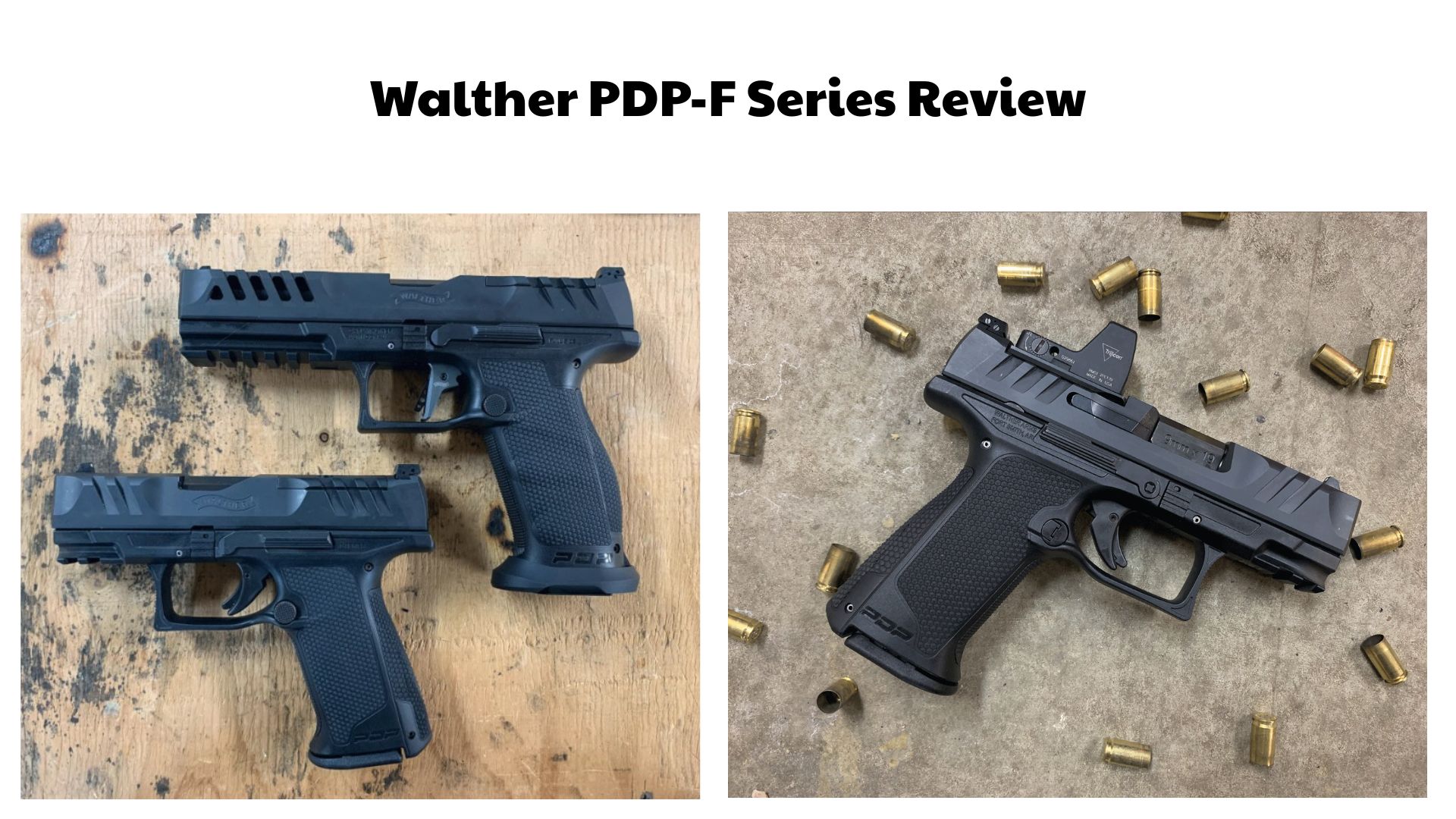

The Walther PDP-F Series is a refined evolution of Walther’s Performance Duty Pistol (PDP) platform, designed to improve ergonomics and accessibility without sacrificing duty-grade performance. It builds on the success of the standard PDP while introducing a more shooter-friendly frame geometry.
The PDP lineup is known for combining modern striker-fired reliability with advanced ergonomics and optics-ready capability. The PDP-F variant specifically focuses on improving usability for shooters who require a reduced trigger reach and more comfortable grip profile.
Purpose of the PDP-F: Optimized Ergonomics and Reduced Trigger Reach
The main purpose of the PDP-F Series is to enhance shooter accessibility. Walther redesigned the frame and trigger system to reduce trigger reach, making it easier for users with smaller or medium-sized hands to achieve proper trigger placement and control.
This improvement leads to better trigger consistency, reduced fatigue during extended shooting sessions, and improved confidence in defensive or duty scenarios.
Target Users: Who the PDP-F Is Designed For
The PDP-F is designed for a wide range of shooters, including those who prioritize ergonomics and controllability in a full-size defensive handgun.
Key user groups include shooters with smaller hands, law enforcement or duty users seeking improved ergonomics, concealed carriers who want a balance of size and performance, and new shooters who benefit from easier handling and improved control.
Design Philosophy: “Performance, Duty, and Ergonomics (TEQ)”
Walther’s TEQ philosophy—Trigger, Ergonomics, and Quality—serves as the foundation of the PDP platform. The PDP-F continues this philosophy by maintaining high performance while improving human-centered design.
This means the pistol is engineered not only for mechanical excellence but also for real-world usability under stress, making it suitable for both professional and civilian defensive use.
Design & Ergonomics of the Walther PDP-F Series
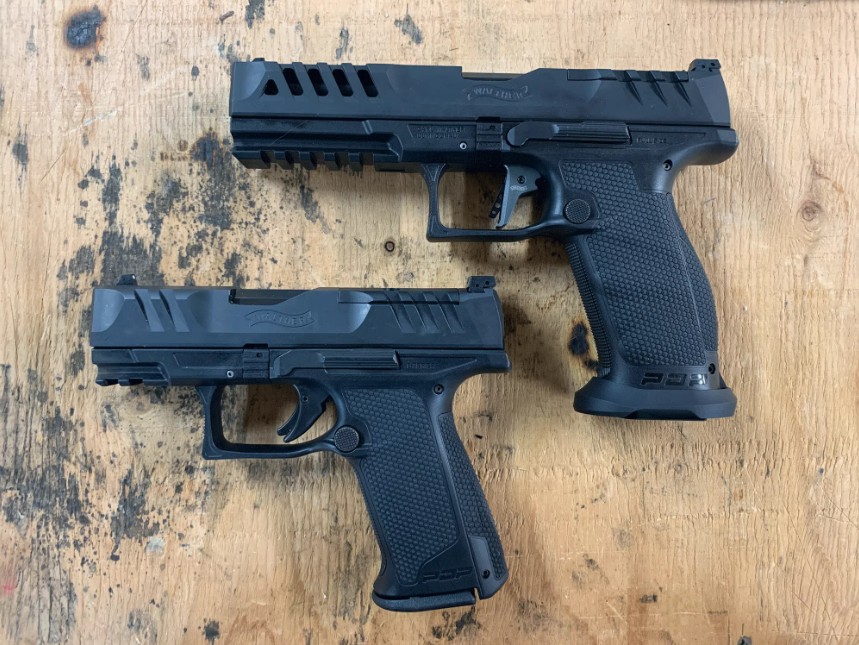
The PDP-F Series introduces significant ergonomic refinements that distinguish it from the standard PDP. These changes are focused on improving grip comfort, control, and overall handling efficiency.
Grip Reduction and Hand Fit
One of the most noticeable changes in the PDP-F is the reduced grip circumference. Compared to the standard PDP, the frame feels slimmer and more natural in the hand, particularly for shooters with smaller hand sizes.
The reduced palm swell allows for a more secure grip and improved trigger alignment, while the high-grip design positions the hand closer to the bore axis for better recoil control and faster follow-up shots.
Reduced Trigger Reach System
The PDP-F features a shortened trigger reach system that significantly improves accessibility and comfort. This allows shooters to engage the trigger without overextending their finger or compromising grip stability.
As a result, trigger control becomes more consistent, especially during rapid fire or defensive shooting situations where grip retention is critical.
Slide Manipulation Improvements
Walther also improved slide handling by reducing the force required to rack the slide. This makes the pistol easier to operate for users with limited hand strength while maintaining reliability standards.
Aggressive front and rear slide serrations provide a secure gripping surface, improving manipulation speed during press checks, reloads, and malfunction clearing.
PDP-F vs Standard PDP Differences
While the PDP-F shares the same core platform as the standard PDP, several key differences affect ergonomics, handling, and overall user experience.
Frame Geometry Changes
The PDP-F features a modified frame with a slimmer grip profile and reduced trigger reach. This makes it more comfortable for a broader range of hand sizes compared to the standard PDP.
Trigger Reach and Ergonomics Comparison
The standard PDP offers a longer trigger reach suitable for larger hands, while the PDP-F shortens this distance, improving accessibility and trigger control for smaller-handed shooters.
Slide Feel and Recoil Management Differences
The PDP-F benefits from improved grip positioning, which enhances recoil management. The standard PDP may feel slightly more neutral, but the PDP-F provides better control for many users.
Capacity and Magazine Compatibility
Both models maintain similar magazine compatibility and duty-level capacity. The PDP-F does not sacrifice firepower despite its ergonomic redesign.
Real-World Usability Differences
In practical use, the PDP-F is often preferred for defensive carry and training due to its improved ergonomics, while the standard PDP may appeal more to shooters with larger hands or competition-focused setups.
Trigger Performance & Shooting Experience
The trigger system is one of the strongest aspects of the Walther PDP platform, and the PDP-F continues this reputation with a consistent and reliable trigger pull.
Standard PDP-F Trigger Characteristics
The standard PDP-F trigger features a flat-faced design that promotes consistent finger placement and control. The trigger break is clean and predictable, with a short reset that supports fast follow-up shots.
The pull weight is tuned for duty use, balancing safety with performance and making it suitable for both defensive and training environments.
PDP-F Pro Dynamic Performance Trigger
The PDP-F Pro Series upgrades the trigger system with Walther’s Dynamic Performance Trigger, enhancing both responsiveness and shooting speed.
This upgraded system provides a crisper break, reduced pull weight, and faster reset, resulting in improved shooting cadence and more precise control during rapid fire sequences.
Overall, the Pro trigger system brings the PDP-F closer to competition-level performance while maintaining its defensive reliability foundation.
Accuracy & Range Performance
The Walther PDP-F Series delivers strong real-world accuracy performance that aligns with its duty-oriented design. Across multiple shooting conditions, the pistol demonstrates consistent precision and predictable shot placement, especially at typical defensive engagement distances.
Grouping and Precision Results
In controlled testing scenarios, the PDP-F produces tight and repeatable groupings at close to mid-range distances. Most shooters report consistent accuracy within standard defensive ranges (7–15 yards), where the pistol excels in fast, controlled fire.
The platform tends to perform particularly well with heavier 9mm loads, which help stabilize recoil impulse and improve shot-to-shot consistency. This makes it a reliable choice for defensive ammunition setups.
When comparing benchrest shooting versus dynamic shooting, the PDP-F maintains excellent mechanical accuracy from a fixed position, while also proving highly capable in rapid target transitions and movement-based drills. Its ergonomics help preserve accuracy even under stress.
Recoil Management
Despite being a polymer-framed 9mm handgun, the PDP-F exhibits relatively low perceived recoil. The design focuses on controlling muzzle rise through grip geometry and bore alignment rather than adding excessive weight.
The high-grip frame position helps reduce muzzle flip, allowing shooters to maintain a flatter shooting platform during rapid strings of fire. This contributes to faster follow-up shots and improved overall control.
The balance between slide weight, frame geometry, and ergonomics results in a handgun that feels stable in the hand without becoming sluggish or overly heavy.
PDP-F Pro Series Upgrades
The PDP-F Pro Series introduces several enhancements that elevate performance beyond the standard model, positioning it closer to competition-ready configurations while retaining duty reliability.
Enhanced Trigger System
A key upgrade in the Pro Series is the introduction of Walther’s Dynamic Performance Trigger system. This refined trigger setup improves responsiveness and shooting efficiency.
It features a cleaner break, reduced pull weight, and a noticeably improved reset, allowing shooters to maintain faster and more consistent shooting rhythms.
These enhancements are particularly beneficial in competitive or high-speed defensive shooting environments where trigger control directly impacts performance.
Magazine Well & Capacity Upgrade
The PDP-F Pro Series also includes a flared aluminum magazine well designed to improve reload speed and consistency under pressure.
This magwell helps guide magazines into the grip more efficiently, reducing reload errors during high-stress situations or timed drills.
Extended base pads further improve reload ergonomics and may increase overall capacity depending on configuration, with some setups reaching up to 18 rounds.
Optics-Ready Platform
The PDP-F Pro continues Walther’s commitment to modern optics integration with a factory optics-ready slide system.
This allows users to mount a wide range of modern red dot sights using interchangeable mounting plates, improving target acquisition speed and precision.
The optics-ready design makes the PDP-F Pro suitable for both duty use and competitive shooting, where red dot optics are increasingly standard.
Concealed Carry & Duty Use Evaluation
The Walther PDP-F Series is designed with a balance between duty capability and practical carry considerations, making it versatile across multiple roles.
Size and Carry Considerations
The PDP-F features a slimmer grip profile compared to the standard PDP, improving comfort during carry and handling. However, it remains a full-duty-sized handgun rather than a compact or micro-compact design.
This means it offers excellent shootability but requires more thoughtful carry setup compared to smaller concealed carry pistols.
Users often weigh the trade-off between improved ergonomics and reduced concealability when selecting this platform for everyday carry.
Real-World Carry Feedback
In practical use, the PDP-F performs well in both inside-the-waistband (IWB) and outside-the-waistband (OWB) carry configurations. It is particularly comfortable for concealed carry in cooler weather when additional clothing helps reduce printing.
Because of its full-size frame, printing can become more noticeable under lightweight clothing, requiring careful holster selection and positioning.
One advantage is its growing compatibility with modern holster systems, making it easier to find secure and stable carry options across different setups.
Reliability & Durability Testing
Reliability is a core strength of the PDP-F Series, reflecting Walther’s focus on duty-grade construction and long-term performance.
Across multiple ammunition types and extended firing sessions, the PDP-F demonstrates consistent reliability with minimal malfunctions when properly maintained and used with quality ammunition.
The pistol maintains stable performance under high round counts, with reliable feeding, extraction, and ejection patterns observed during extended range testing.
Slide lock and ejection behavior remain consistent, contributing to predictable cycling and smooth operation even under rapid-fire conditions.
Long-term durability impressions indicate that the PDP-F is built to withstand rigorous training schedules and defensive use without significant wear issues when properly maintained.
Pros and Cons of the PDP-F Series
The Walther PDP-F Series delivers a refined balance of duty-grade performance and improved ergonomics, but like any handgun platform, it comes with both strengths and limitations depending on user needs.
Key Advantages
The PDP-F stands out primarily for its ergonomics and shootability. It is designed to accommodate a wider range of hand sizes while maintaining full performance capability.
One of its most notable advantages is its excellent ergonomics for small and medium hands, allowing for a more natural grip and improved trigger control. The reduced trigger reach significantly enhances usability and consistency in shooting performance.
Magazine capacity is another strong point, with most configurations offering 15 to 18 rounds depending on the model and magazine setup. This places it firmly in the high-capacity duty pistol category.
The recoil impulse is smooth and manageable due to its grip geometry and balanced design, helping shooters maintain control during rapid fire. Additionally, the optics-ready platform supports modern red dot sights, making it highly adaptable for both defensive and performance shooting applications.
Main Drawbacks
Despite its strengths, the PDP-F is not without compromises. One of the most commonly mentioned drawbacks is its relatively thick frame, which can make concealed carry more challenging compared to slimmer compact pistols.
It is also not as lightweight or compact as micro-compact alternatives, which limits its appeal for deep concealment or ultra-light carry setups.
Some users may experience minor discomfort during slide ejection due to the aggressive ejection pattern typical of high-performance striker-fired pistols.
Finally, while growing, aftermarket support is still more limited compared to more established ecosystems like Glock, which may affect customization options for some users.
Walther PDP-F vs PDP-F Pro Series Comparison
The PDP-F Pro Series builds upon the standard PDP-F with performance-focused upgrades that enhance speed, handling, and overall shooting efficiency.
Trigger Performance Differences
The standard PDP-F offers a consistent duty-grade trigger, while the Pro Series introduces the Dynamic Performance Trigger, delivering a crisper break, reduced pull weight, and faster reset for improved shooting speed.
Reload Speed Improvements
The Pro model includes enhancements such as a flared magazine well and improved base pads, which significantly increase reload speed and consistency under pressure compared to the standard PDP-F.
Capacity Upgrade Impact
While both versions maintain high-capacity magazine compatibility, the Pro Series often benefits from extended magazine setups that can increase capacity up to approximately 18 rounds, improving sustained fire capability.
Price vs Performance Trade-Offs
The standard PDP-F offers excellent value as a duty-ready ergonomic pistol, while the Pro Series commands a higher price due to its upgraded trigger system and performance enhancements. The decision often depends on whether the user prioritizes cost efficiency or competitive-level performance.
Best Use Cases for Each Model
The standard PDP-F is best suited for defensive carry, duty use, and general training, while the PDP-F Pro is more aligned with competition shooting, advanced training, and users seeking maximum performance optimization.
Who Should Buy the Walther PDP-F?
The PDP-F Series is designed for shooters who value ergonomics, control, and modern defensive handgun performance.
It is particularly well-suited for shooters with smaller hands who benefit from the reduced trigger reach and improved grip geometry. Defensive handgun users who prioritize controllability and consistency will also find it highly effective.
Range shooters seeking accuracy, stability, and smooth recoil management will appreciate its performance-oriented design. However, it is not ideal for users seeking ultra-light or deep-concealment micro-compact pistols.
Expert Verdict on the PDP-F Series
From an expert standpoint, the Walther PDP-F Series represents a well-executed refinement of an already strong platform. It successfully addresses ergonomic limitations without compromising duty-grade performance.
The balance between innovation and practicality is one of its strongest attributes, offering meaningful improvements in grip comfort, trigger accessibility, and overall shootability.
In real-world use, the PDP-F proves itself as a reliable, accurate, and user-friendly handgun that fits a wide range of defensive and training applications, making it one of the more thoughtfully engineered pistols in its category.
Final Thoughts
The Walther PDP-F Series stands out as a purpose-driven evolution of the PDP platform, focusing on ergonomic refinement while maintaining full performance capability.
Its strengths lie in its improved grip design, reduced trigger reach, smooth recoil behavior, and modern optics-ready configuration, making it highly adaptable for both defensive and professional use.
Within Walther’s lineup, the PDP-F distinguishes itself as the most user-accessible full-size defensive pistol, bridging the gap between performance and comfort.
For users considering an upgrade, the PDP-F Pro offers meaningful performance enhancements, particularly in trigger response and reload efficiency, making it a worthwhile option for those seeking a more advanced shooting experience.
FAQ – Walther PDP-F Series (50+ Questions with Detailed Answers)
1. What is the Walther PDP-F Series?
The Walther PDP-F Series is a specialized version of Walther’s Performance Duty Pistol platform designed with improved ergonomics, especially a reduced trigger reach and slimmer grip profile. It is built for shooters who want full-size performance with enhanced comfort and control.
2. What does “PDP-F” stand for?
PDP-F stands for “Performance Duty Pistol – Female/Forward Ergonomics (commonly interpreted as F-Series ergonomics).” It is not gender-exclusive but rather refers to the redesigned frame geometry that accommodates a wider range of hand sizes.
3. How is the PDP-F different from the standard PDP?
The PDP-F has a reduced trigger reach, slimmer grip circumference, and improved ergonomics. While the standard PDP is slightly larger in grip feel, the PDP-F is optimized for better accessibility and control without sacrificing capacity or performance.
4. Is the Walther PDP-F good for beginners?
Yes, the PDP-F is very beginner-friendly due to its ergonomic design, manageable recoil, and consistent trigger. The reduced trigger reach helps new shooters maintain better control and develop proper shooting fundamentals more easily.
5. Is the PDP-F suitable for concealed carry?
Yes, but with some limitations. While it is slimmer than the standard PDP, it is still a full-size handgun. It works best for IWB or OWB carry with proper clothing but is not as discreet as micro-compacts.
6. What caliber does the PDP-F use?
The PDP-F is chambered in 9mm, which is widely used for defensive, duty, and training purposes due to its balance of recoil control, capacity, and effectiveness.
7. How many rounds does the PDP-F hold?
Depending on the magazine configuration, the PDP-F typically holds between 15 and 18 rounds. This makes it competitive with other full-size duty pistols in terms of capacity.
8. Is the PDP-F reliable?
Yes, the PDP-F is known for strong reliability. It performs well with various 9mm ammunition types and maintains consistent cycling under extended firing conditions when properly maintained.
9. Does the PDP-F have a good trigger?
Yes, Walther is known for excellent triggers, and the PDP-F continues this tradition. It features a flat-faced trigger with a clean break, short reset, and consistent pull weight suitable for duty and defensive use.
10. What is the PDP-F Pro Series?
The PDP-F Pro Series is an upgraded version that includes a Dynamic Performance Trigger, magazine well enhancements, and improved reload efficiency. It is designed for higher performance shooting.
11. Is the PDP-F Pro trigger better?
Yes, the Pro trigger is lighter, crisper, and has a faster reset compared to the standard PDP-F trigger, making it more suitable for competitive or advanced shooting applications.
12. Can I mount a red dot on the PDP-F?
Yes, the PDP-F is optics-ready and supports a variety of red dot sights through mounting plates, making it compatible with modern defensive and competition optics.
13. What optics fit the PDP-F?
Common optics include Trijicon RMR, Holosun 407C/507C, and other compact pistol red dots, depending on the mounting plate used.
14. Is the PDP-F good for duty use?
Yes, it is designed as a duty-capable handgun with durability, reliability, and ergonomics suitable for law enforcement and security professionals.
15. How is recoil on the PDP-F?
Recoil is very manageable due to the grip design and high bore axis control. It feels smooth and controlled compared to many polymer 9mm pistols.
16. Is the PDP-F better than Glock?
It depends on preference. The PDP-F offers better ergonomics and trigger feel for many users, while Glock offers a wider aftermarket ecosystem and proven simplicity.
17. Is the PDP-F accurate?
Yes, it is highly accurate for a duty pistol. It delivers consistent grouping at defensive distances and performs well in both slow and rapid fire scenarios.
18. What makes the PDP-F ergonomic?
Its reduced grip circumference, shortened trigger reach, and improved high-grip geometry make it more comfortable and controllable than many standard duty pistols.
19. Is the PDP-F good for small hands?
Yes, this is one of its main design advantages. The reduced trigger reach and slimmer grip make it significantly easier to handle for small-handed shooters.
20. Does the PDP-F have a safety?
The PDP-F does not typically include a manual external safety. It relies on internal safeties and a striker-fired system for safe operation.
21. Is the PDP-F striker-fired?
Yes, it uses a striker-fired mechanism, which provides a consistent trigger pull and faster reset compared to traditional hammer-fired systems.
22. How durable is the PDP-F?
The PDP-F is built for high-round-count durability, capable of handling extensive training use and duty conditions with proper maintenance.
23. What holster fits the PDP-F?
Many PDP-compatible holsters fit the PDP-F due to shared platform dimensions, but always verify optics compatibility if using a red dot.
24. Is the PDP-F heavy?
It is moderately weighted for a duty pistol. It is not lightweight like a micro-compact but remains manageable for recoil control and stability.
25. Can the PDP-F be used for competition?
Yes, especially the Pro Series, which includes trigger and reload enhancements suitable for competitive shooting environments.
26. Does the PDP-F have a good grip texture?
Yes, Walther uses aggressive yet comfortable grip texturing that enhances control without being overly abrasive.
27. What is the slide like on the PDP-F?
The slide has deep serrations for improved handling and requires moderate force to manipulate, though the PDP-F improves usability compared to older designs.
28. Is the PDP-F good for home defense?
Yes, it is an excellent home defense option due to its reliability, capacity, and ease of use under stress.
29. Does the PDP-F have recoil reduction features?
While it does not use mechanical recoil systems, its ergonomic grip design and bore axis alignment significantly reduce felt recoil.
30. What is the barrel length of the PDP-F?
Depending on the model, barrel lengths typically fall within the 4-inch range, balancing accuracy and maneuverability.
31. Is the PDP-F expensive?
It is mid-to-premium priced, reflecting its duty-grade construction and advanced ergonomic design.
32. Is the PDP-F worth it?
For shooters who value ergonomics, trigger performance, and modern features, it is widely considered worth the investment.
33. How does it compare to SIG P320?
The PDP-F often offers better out-of-box trigger feel, while the P320 provides modularity and military adoption advantages.
34. Does the PDP-F rust easily?
No, it uses corrosion-resistant finishes designed for duty and environmental durability.
35. Can the PDP-F be customized?
Yes, though aftermarket support is more limited than Glock, it still supports optics, holsters, and some internal upgrades.
36. Is the PDP-F good for women shooters?
It is often preferred by shooters with smaller hands due to its ergonomic design, but it is not limited to any specific group.
37. Does the PDP-F have a good reset?
Yes, the trigger reset is short and tactile, enabling fast follow-up shots.
38. What is the magazine release like?
The magazine release is ambidextrous and designed for fast, intuitive operation.
39. Is the PDP-F ambidextrous?
Yes, it supports ambidextrous controls for magazine release and general usability.
40. What ammo works best in PDP-F?
Most quality 9mm FMJ and defensive hollow points perform well, with slightly better recoil control seen in heavier loads.
41. Is the PDP-F snappy?
No, it is considered smooth-shooting for its class due to its grip geometry and balance.
42. Can the PDP-F handle +P ammo?
Yes, it is rated to handle +P ammunition, though regular use of standard pressure ammo is recommended for longevity.
43. How does it perform in rapid fire?
Very well, thanks to its fast reset trigger and recoil management system.
44. Is the PDP-F good for training?
Yes, it is excellent for training due to its consistency, ergonomics, and reliability.
45. What is the slide finish?
The slide features a durable corrosion-resistant finish designed for long-term use and harsh environments.
46. Does the PDP-F come in different sizes?
Yes, variations exist within the PDP lineup, but the PDP-F focuses mainly on ergonomic full-size configurations.
47. Is the PDP-F easy to disassemble?
Yes, it follows a simple striker-fired field-stripping process similar to other modern pistols.
48. What is the main selling point of PDP-F?
Its main selling point is improved ergonomics combined with duty-grade performance and modern optics compatibility.
49. Is PDP-F better than compact pistols?
It depends on use. It offers better shootability, but compact pistols win in concealability.
50. Who should avoid the PDP-F?
Users seeking ultra-light or deep concealment pistols may find it too large for their needs.
51. What is the expert opinion on PDP-F?
Experts generally view it as one of the best ergonomic improvements in modern striker-fired pistols while maintaining duty reliability.
52. Is the PDP-F Pro worth upgrading to?
Yes, if you want improved trigger performance, faster reloads, and more competition-oriented features, the Pro version is a meaningful upgrade over the standard PDP-F.
Read more: