
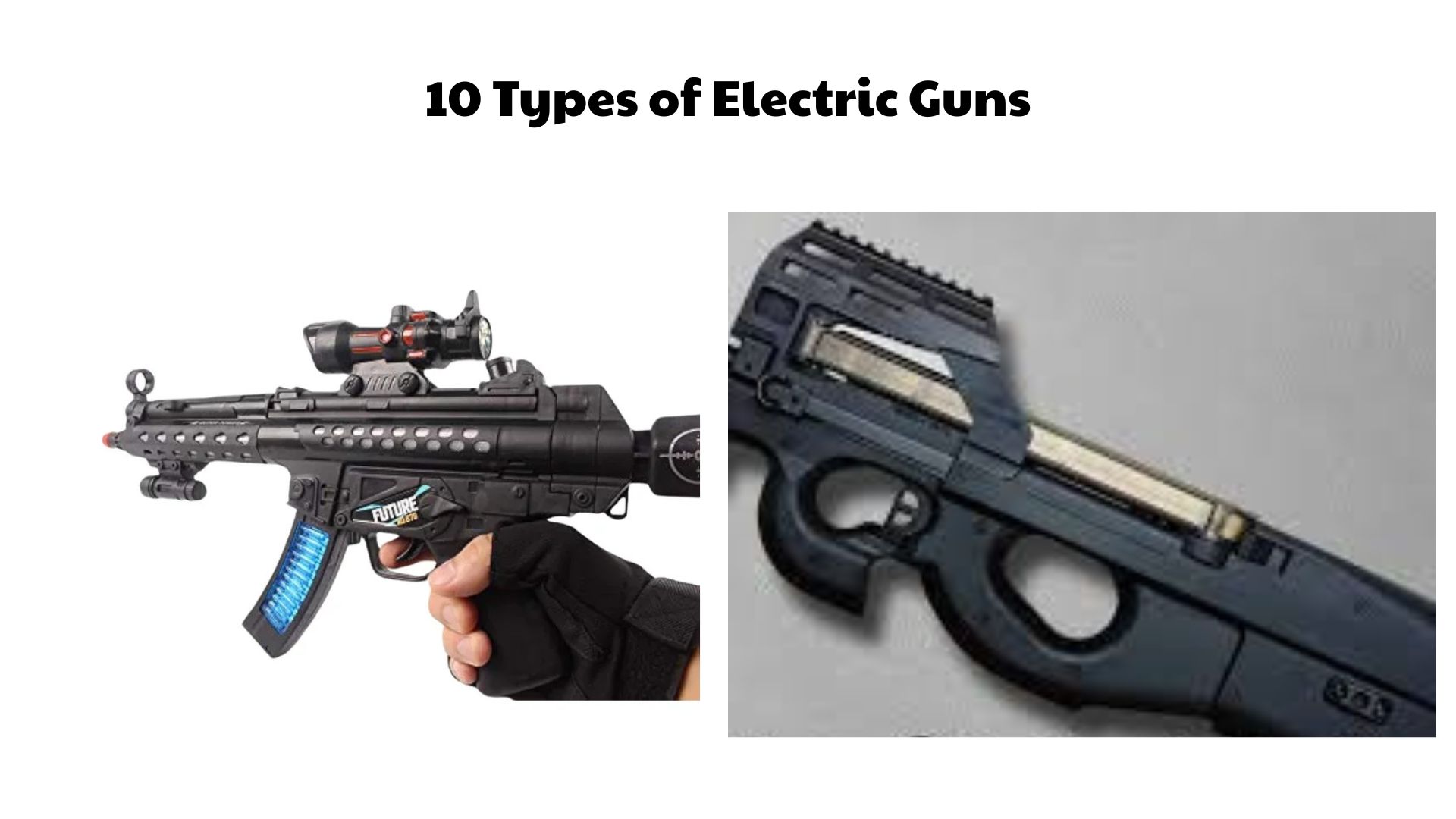

The category of types of electric guns refers to weapon systems that rely on electrical energy to power their firing or activation mechanisms. In modern use, the term mainly includes electric airsoft guns (AEGs) used in recreational shooting sports, as well as electroshock devices used for non-lethal defense. These systems differ greatly in purpose, but they share a common principle: electricity is used to generate controlled mechanical or electrical output. Electric guns are widely valued for consistency, controllability, and ease of operation compared to purely mechanical or gas-based systems. This guide breaks down 10 key types in a clear, structured way.
10 Types of Electric Guns
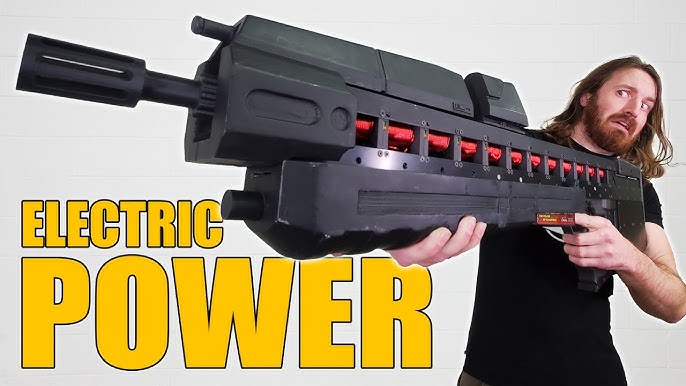
1. Automatic Electric Gun (AEG)
The Automatic Electric Gun, commonly known as AEG, is the most widely used electric gun platform in airsoft sports. It operates using a rechargeable battery that powers an internal electric motor, which drives a gearbox system. This gearbox compresses air inside a cylinder, propelling plastic BB projectiles through the barrel. AEG systems can fire in both semi-automatic and fully automatic modes, making them highly versatile for different gameplay scenarios.
Among all types of electric guns, AEGs are considered the foundation of modern airsoft technology. Their popularity comes from their balance of reliability, performance, and ease of maintenance. The internal gearbox design allows consistent cycling, which results in stable firing rates and predictable shot behavior. Most AEG platforms are modeled after real steel firearms such as AR-15, AK-47, and MP5 rifles, giving users a realistic handling experience.
Another important advantage of AEG systems is their adaptability. Users can upgrade internal components such as gears, motors, and springs to adjust performance levels. This modularity makes AEGs suitable for both beginners and advanced players. Despite their complexity, they are generally easy to operate in the field, requiring only charged batteries and loaded magazines.
Overall, the AEG remains the most dominant electric gun system due to its versatility and strong performance consistency across different environments.
2. Semi-Automatic Electric Gun
Semi-automatic electric guns are designed to fire one shot per trigger pull, even though they are powered by an electric system similar to AEGs. The internal mechanism is controlled electronically or mechanically to prevent continuous firing, prioritizing accuracy and controlled shot placement over volume of fire.
Within the broader category of types of electric guns, semi-automatic systems are often chosen for training-style scenarios or precision-focused gameplay. These guns still use battery-powered motors and gearbox systems, but their firing cycle is restricted to single-shot operation. This allows users to focus more on aiming and tactical positioning rather than suppressive fire.
Semi-automatic electric guns are also more energy-efficient because they do not continuously cycle the gearbox. This results in reduced wear on internal components and improved battery life during extended sessions. Many users appreciate this balance of realism and efficiency.
In practical use, these systems are ideal for players who prefer controlled engagement rather than high-volume shooting, making them a stable option in the electric gun ecosystem.
3. Burst-Fire Electric Gun
Burst-fire electric guns introduce a programmed firing system that releases a fixed number of shots per trigger pull, typically two or three rounds. This firing mode is controlled electronically or through programmable gearbox components that regulate cycle output.
Among types of electric guns, burst-fire systems are designed to simulate tactical firing patterns commonly used in real-world combat training. Instead of continuous automatic fire, the gun delivers controlled bursts that improve accuracy while maintaining moderate fire rate.
The burst system provides a balance between precision and fire volume. It reduces ammunition waste while still offering rapid target engagement capability. Internally, these guns rely on modified AEG gearboxes with electronic control units that manage firing cycles.
Burst-fire electric guns are often favored in competitive environments where controlled shooting discipline is important. They offer a structured firing rhythm that encourages tactical gameplay rather than indiscriminate firing.
4. Electric Submachine Gun (AEG SMG)
Electric submachine guns are compact AEG systems designed for close-quarters environments. They replicate real-world SMG platforms such as MP5, UMP, or P90-style designs. These guns prioritize mobility, fast handling, and quick target transitions.
In the landscape of types of electric guns, SMG platforms are essential for indoor or tight-space scenarios. Their smaller size allows users to move efficiently through confined environments while maintaining rapid firing capability. Despite their reduced dimensions, they still use full AEG internal systems.
The shortened barrel and compact receiver design make SMGs lighter and easier to maneuver. However, this also slightly reduces effective range compared to full-sized rifles. To compensate, many models use high-capacity magazines and optimized gear ratios for faster cycling speeds.
Electric SMGs are widely used in fast-paced gameplay environments where speed and reaction time are more important than long-range accuracy.
5. Electric Assault Rifle
Electric assault rifles are full-sized AEG platforms modeled after modern military rifles. They represent the most common and recognizable category in airsoft electric gun systems. These rifles are designed to balance range, accuracy, and firepower.
Within types of electric guns, assault rifles are considered the standard platform for general use. They typically feature adjustable hop-up systems, modular rail systems, and compatibility with a wide range of accessories such as optics, grips, and suppressor-style attachments.
The internal mechanism is based on a gearbox driven by an electric motor powered by rechargeable batteries. This system allows semi-automatic and fully automatic firing modes, giving users flexibility in different tactical situations.
Electric assault rifles are widely chosen because they provide a balanced performance profile suitable for most environments. They are the backbone of electric gun usage in recreational shooting sports due to their adaptability and consistent performance.
Types of Electric Guns – Overview (6–10)
6. Electric Machine Gun (Support AEG)
Electric machine guns, often called support AEGs, are high-capacity electric weapon systems designed to deliver sustained suppressive fire. These models are built on reinforced gearbox platforms and typically use large magazines or drum-style feeding systems. The internal motor continuously drives the gearbox to maintain a high rate of fire over extended periods.
Within the broader category of types of electric guns, support machine guns are specialized tools rather than general-purpose platforms. They are designed to control space on the field by maintaining continuous fire pressure rather than precision shooting. This makes them essential in team-based tactical scenarios where covering fire is needed.
These systems often replicate real-world light machine guns such as M249 or RPK-style platforms. Due to their heavier internal components and larger battery requirements, they are typically bulkier than standard electric rifles. However, they compensate with sustained firing capability and high ammunition capacity.
Electric machine guns are valued for their ability to dominate lanes of engagement, making them a key role-specific category in electric gun systems.
7. Electric Sniper Rifle
Electric sniper rifles are specialized AEG-based systems designed for long-range precision shooting. Unlike traditional bolt-action sniper replicas, these rifles use modified electric gearboxes that prioritize consistency and accuracy rather than rapid firing.
In the classification of types of electric guns, sniper rifles occupy a precision-focused niche. They often feature upgraded internal components such as reinforced gears, precision barrels, and enhanced hop-up systems that improve long-distance shot stability.
Most electric sniper rifles operate in semi-automatic mode or low-cycle configurations to maintain accuracy. The electric system ensures consistent air compression, which contributes to predictable shot trajectories. This is especially important in long-range engagements where consistency matters more than volume of fire.
These platforms are typically used by players who prefer patient, precision-based gameplay rather than aggressive movement.
8. Electric Shotgun
Electric shotguns are airsoft platforms designed to simulate shotgun-style spread firing using electric power systems. Instead of firing a single projectile, many models release multiple BBs per trigger pull, often in a controlled spread pattern.
Among types of electric guns, electric shotguns are unique because they replicate close-range impact behavior rather than long-range accuracy. Internally, they may use multiple cylinder systems or rotating barrel mechanisms powered by electric motors.
These guns are especially effective in close-quarters environments where spread firing increases hit probability. They are commonly used in indoor arenas or confined tactical scenarios where quick target engagement is critical.
Electric shotguns offer a balance between realism and gameplay effectiveness, making them a specialized but popular choice in airsoft systems.
9. Stun Gun (Contact Electric Weapon)
A stun gun is a non-lethal electroshock device designed for close-range personal defense. It operates by delivering a high-voltage, low-current electrical discharge when placed in direct contact with a target. This discharge disrupts the neuromuscular system temporarily, causing loss of muscle control.
In the broader context of types of electric guns, stun guns represent the defensive application of electric energy rather than projectile firing. Unlike airsoft systems, they do not launch physical ammunition. Instead, they rely entirely on electrical output to achieve incapacitation.
Stun guns are commonly used for personal protection and law enforcement support. Their effectiveness depends on direct contact, meaning they require close proximity to the target. They are designed to be non-lethal but still provide immediate deterrent effect.
Their simplicity and portability make them one of the most accessible forms of electric-based defense tools.
10. Taser-Style Electric Projectile Weapon
Taser-style electric projectile weapons are advanced non-lethal systems that fire small dart-like electrodes connected to conductive wires. Once the darts attach to a target, the device delivers a controlled electrical pulse that disrupts voluntary muscle control.
Within types of electric guns, these systems are the most technologically advanced electroshock devices. Unlike stun guns, they do not require direct contact, allowing engagement at short distances. The electrical current is transmitted through wires that remain connected between the device and the target.
These weapons are commonly used in law enforcement situations where non-lethal force is required. Their design allows for temporary incapacitation without permanent injury when used correctly. The system is powered by internal batteries that generate and regulate high-voltage pulses.
Taser-style devices represent a bridge between electrical engineering and tactical enforcement tools, showing how electric energy can be applied in controlled, non-lethal applications.
Final Overview
The full range of types of electric guns demonstrates how electrical energy is applied in both recreational and defensive systems. On one side, electric airsoft guns (AEGs) provide realistic shooting simulations for training and sport. On the other side, electroshock devices like stun guns and tasers serve defensive and law enforcement purposes.
Despite their differences, all electric gun systems rely on controlled energy transfer, whether to propel projectiles or deliver electrical impulses. This shared foundation highlights the flexibility of electric power in modern weapon system design.
As technology continues to evolve, electric systems are likely to become even more efficient, modular, and specialized, expanding their role in both simulation environments and non-lethal defense applications.
Conclusion – Understanding Types of Electric Guns
The world of types of electric guns is diverse, covering both recreational airsoft platforms and non-lethal electroshock devices. Even though these systems serve very different purposes, they all rely on electrical energy as their core operating force. This shared foundation makes them efficient, controllable, and adaptable across multiple applications.
In airsoft systems such as AEGs, electric power is used to drive internal gearboxes that simulate firearm behavior with consistent cycling and reliable performance. These platforms—ranging from assault rifles and SMGs to sniper rifles and machine guns—are designed to replicate real-world weapon handling in a safe, controlled environment. Their popularity comes from their balance of realism, upgrade potential, and ease of use.
On the other side, electroshock devices like stun guns and taser-style weapons use electrical energy for defensive purposes rather than projectile firing. These tools are designed for close-range or short-distance incapacitation, focusing on control and non-lethal protection. While fundamentally different from airsoft systems, they demonstrate how electric energy can be applied in multiple practical ways.
Overall, electric gun technology reflects a combination of engineering precision and functional versatility. Whether used for sport, training, or defense, these systems highlight how electrical mechanisms can replace or enhance traditional mechanical designs. As technology continues to evolve, electric platforms will likely become even more refined, efficient, and widely adopted across different fields.
50+ FAQ About Types of Electric Guns
1. What are electric guns?
Electric guns are devices that use electrical energy to operate a mechanical or electroshock system. In airsoft, they power gearboxes to fire BB projectiles, while in self-defense devices they generate electrical pulses for deterrence. The core idea is controlled energy conversion through electricity.
2. What does AEG mean?
AEG stands for Automatic Electric Gun. It is the most common type of airsoft electric gun and uses a battery-powered motor to drive a gearbox that compresses air and fires projectiles.
3. How do electric airsoft guns work?
They use rechargeable batteries to power an electric motor. The motor drives gears inside a gearbox, which compresses air in a cylinder and launches BBs through a barrel.
4. What is the difference between electric guns and gas guns?
Electric guns rely on motors and batteries, while gas guns use compressed gas like CO₂ or green gas to propel projectiles. Electric systems are generally more consistent and easier to maintain.
5. What is the most common type of electric gun?
The most common type is the Automatic Electric Gun (AEG), widely used in airsoft rifles and SMG platforms due to reliability and versatility.
6. Are electric guns powerful?
Electric airsoft guns are designed for sport and training simulation, so their power is limited compared to real firearms. Their purpose is controlled, safe projectile firing.
7. What is a semi-automatic electric gun?
It is an electric gun that fires one shot per trigger pull, focusing on accuracy and controlled shooting rather than continuous fire.
8. What is burst-fire in electric guns?
Burst-fire systems release a fixed number of shots per trigger pull, usually 2–3 rounds, offering a balance between accuracy and fire rate.
9. What is an electric SMG?
An electric submachine gun is a compact AEG designed for close-quarters combat with high mobility and fast handling.
10. What is an electric assault rifle?
It is a full-size AEG modeled after military rifles like AR-15 or AK platforms, offering balanced performance for most scenarios.
11. What is an electric sniper rifle?
It is a modified AEG designed for long-range precision shooting with upgraded barrels and hop-up systems.
12. What is an electric machine gun?
It is a high-capacity AEG designed for sustained suppressive fire using large magazines or drum systems.
13. What is an electric shotgun?
It is an airsoft platform that fires multiple BBs per shot using electric mechanisms to simulate spread firing.
14. What is a stun gun?
A stun gun is a non-lethal device that delivers high-voltage electrical pulses through direct contact to temporarily disrupt muscle control.
15. What is a taser-style weapon?
It is an electroshock device that fires wired probes to deliver an electrical charge at short range without direct contact.
16. Are electric guns safe?
Electric airsoft guns are generally safe when used with proper protective gear. Electroshock devices are designed for controlled non-lethal use.
17. What powers electric guns?
Most airsoft electric guns are powered by rechargeable batteries such as LiPo or NiMH packs.
18. How long do electric gun batteries last?
Battery life depends on usage and capacity, but typically lasts several hundred to a few thousand shots per charge.
19. Can electric guns jam?
Yes, jams can occur due to poor maintenance, low-quality BBs, or gearbox wear, though AEG systems are generally reliable.
20. Are electric guns good for beginners?
Yes, AEG platforms are often recommended for beginners because they are easy to operate and require minimal manual cycling.
21. What is a gearbox in an electric gun?
The gearbox is the internal mechanical system that uses gears and a motor to compress air and fire projectiles.
22. What is hop-up in electric guns?
Hop-up is a system that adds backspin to BBs to improve range and accuracy by stabilizing flight.
23. Are electric guns accurate?
They can be accurate within airsoft ranges, especially when equipped with quality barrels and hop-up systems.
24. What is an electric trigger system?
It is a trigger mechanism that activates electrical circuits to control firing instead of purely mechanical action.
25. What is a high-capacity magazine?
It is a magazine that stores a large number of BBs and is commonly used in AEG platforms.
26. Can electric guns be upgraded?
Yes, many components such as motors, gears, barrels, and springs can be upgraded for better performance.
27. What is a LiPo battery?
A Lithium Polymer (LiPo) battery is a high-performance rechargeable battery commonly used in advanced electric airsoft guns.
28. What is rate of fire?
Rate of fire refers to how many shots an electric gun can fire per second or minute.
29. What affects electric gun performance?
Performance is affected by battery strength, gearbox quality, barrel design, and hop-up adjustment.
30. Are electric guns loud?
They are generally quieter than gas or real firearms, producing mainly mechanical gearbox noise.
31. What is an SMG electric gun best for?
It is best for close-range environments where speed and maneuverability are more important than long-range accuracy.
32. What is an assault rifle AEG best for?
It is best for balanced gameplay across short, medium, and moderate long-range engagements.
33. What is an electric sniper used for?
It is used for precision targeting at longer airsoft engagement distances.
34. Why are electric machine guns heavy?
They require reinforced internals, large batteries, and high-capacity magazines, which increase weight.
35. What is an electric shotgun used for?
It is used in close-range scenarios where spread firing increases hit probability.
36. What is the lifespan of an electric gun?
With proper maintenance, AEG systems can last many years depending on usage intensity.
37. What maintenance do electric guns need?
Regular cleaning, lubrication of gearbox parts, and battery care are essential for long-term performance.
38. What is an MOSFET in electric guns?
It is an electronic component that improves trigger response and protects wiring systems in AEGs.
39. What is trigger response?
It is the speed at which the gun fires after the trigger is pulled.
40. Can electric guns overheat?
Yes, extended use without cooling or maintenance can cause motor or gearbox overheating.
41. What is a gearbox upgrade?
It involves replacing internal gears or motors to improve durability and performance.
42. Are electric guns legal?
Legality depends on local laws and regulations, which vary widely between countries.
43. What is the most powerful electric gun type?
Support AEG machine guns are typically the most powerful in terms of sustained fire capability.
44. What is the most accurate electric gun type?
Electric sniper rifles are generally the most accurate due to upgraded precision components.
45. What is the smallest electric gun type?
Electric SMGs are the smallest mainstream AEG platforms.
46. What is the difference between SMG and assault rifle AEG?
SMGs are smaller and designed for close-range, while assault rifles are balanced for multiple engagement distances.
47. Do electric guns use recoil?
Most AEGs do not have real recoil unless they include specialized recoil simulation systems.
48. What is an electric recoil system?
It is a mechanism that simulates firearm recoil using moving internal weights or blowback systems.
49. Why choose electric guns over gas guns?
Electric guns offer more consistent performance, easier maintenance, and better reliability in different weather conditions.
50. What is the main advantage of electric guns?
Their main advantage is stable, battery-powered operation that delivers consistent performance with minimal manual effort.
51. What is the future of electric gun technology?
Future developments focus on improved battery efficiency, faster electronic triggers, and more realistic firing simulation systems.
Read more: