
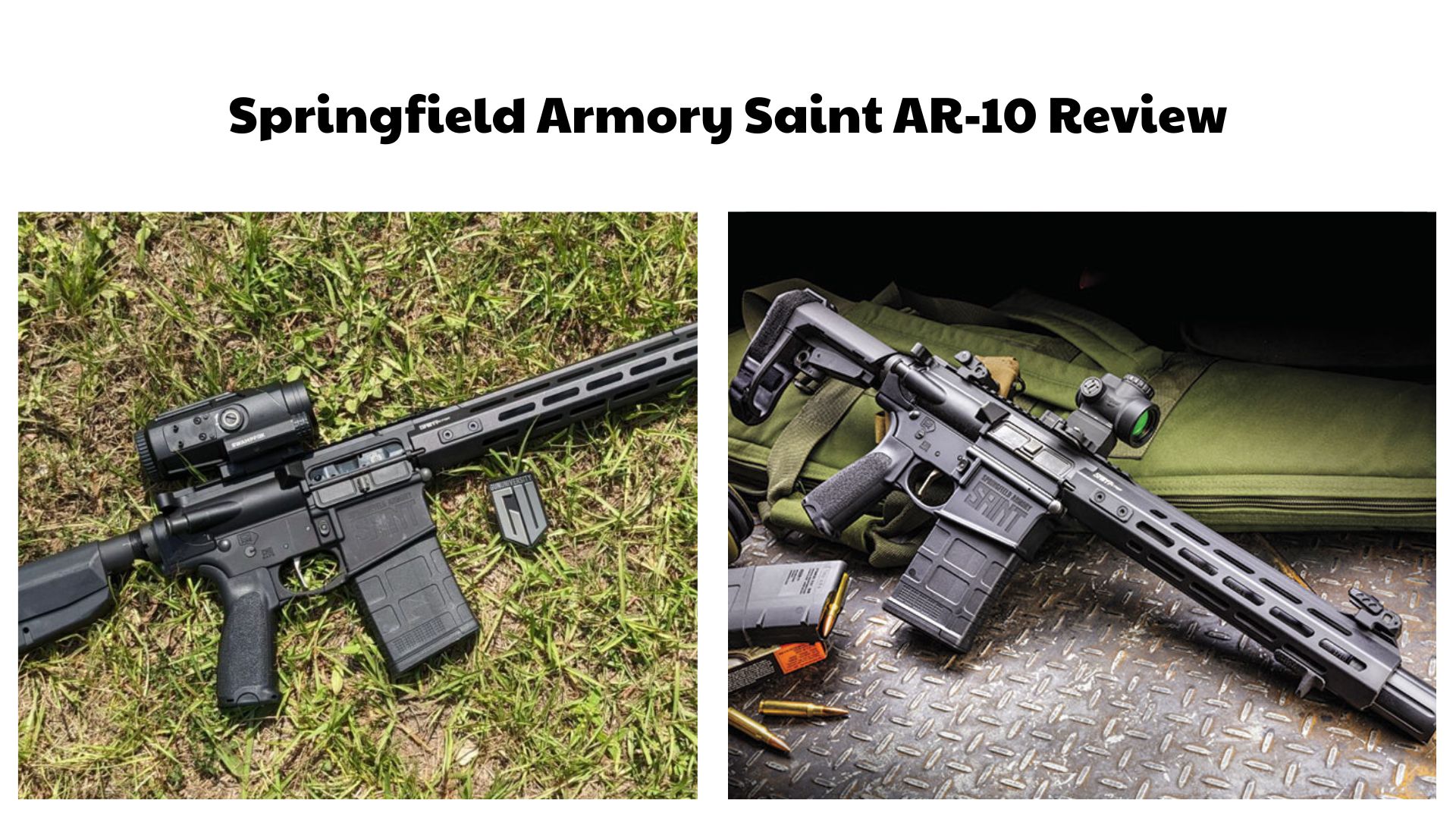

The Springfield Armory Saint Victor AR-10 chambered in .308 Winchester / 7.62 NATO is a modern factory-built large-frame AR platform designed to deliver a balanced combination of reliability, accuracy, and practical field performance straight out of the box without requiring extensive aftermarket upgrades. Positioned in the mid-tier AR-10 market, it bridges the gap between budget-friendly builds that often require tuning and high-end precision rifles that come with significantly higher price tags, making it an appealing option for shooters who want dependable performance for hunting, tactical applications, and long-range shooting. Over time, the Saint Victor AR-10 has developed a reputation as one of the more refined factory AR-10 offerings, largely due to its consistent manufacturing quality, thoughtful component selection, and overall out-of-the-box usability compared to entry-level alternatives.
What Is the Springfield Armory Saint AR-10?
Overview of the Saint Victor AR-10 Platform
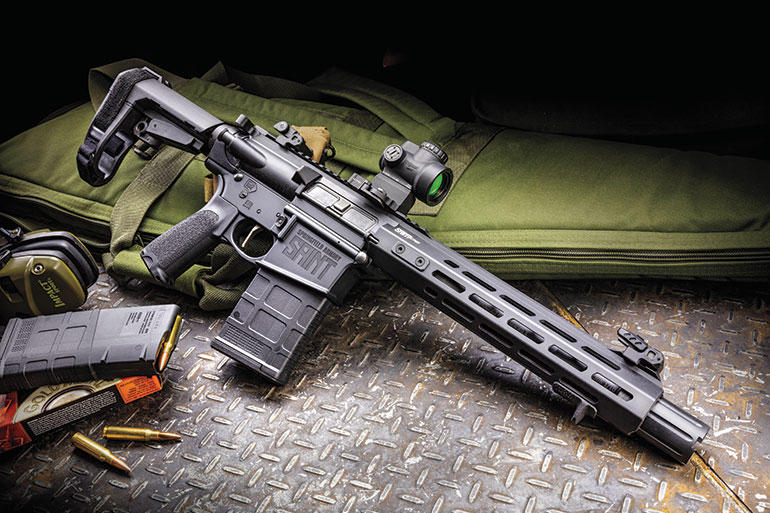
The Springfield Armory Saint Victor AR-10 is a semi-automatic rifle built on the large-frame AR architecture, designed specifically to handle the more powerful .308 Winchester and 7.62 NATO cartridges while maintaining familiar AR-15-style ergonomics and controls. It is engineered as a complete factory rifle rather than a parts-built configuration, which ensures consistency in fitment, cycling behavior, and overall performance reliability across different units.
.308 Winchester / 7.62 NATO Chambering Explained
The rifle is chambered in .308 Winchester / 7.62 NATO, two closely related cartridges that offer strong ballistic performance suitable for medium to long-range engagements, hunting applications, and precision shooting scenarios. This caliber is known for delivering significantly more energy and effective range than intermediate cartridges like 5.56 NATO, while still remaining manageable in a semi-automatic platform with proper recoil mitigation systems.
Springfield Armory’s AR-10 Philosophy and Design Goals
Springfield Armory’s design philosophy for the Saint Victor AR-10 focuses on producing a reliable, duty-capable rifle that does not require immediate aftermarket upgrades to function effectively, emphasizing factory quality control, durable components, and practical usability. The goal is to provide shooters with a ready-to-use platform that performs consistently across a wide range of real-world scenarios, including hunting environments, defensive applications, and extended range sessions.
Design and Build Quality
Forged Receiver Construction and Durability
The Saint AR-10 utilizes forged upper and lower receivers, which provide a strong and durable foundation capable of withstanding the increased pressures and mechanical stresses associated with .308-class cartridges. This construction method enhances long-term durability while maintaining structural integrity during repeated firing cycles and harsh handling conditions.
Free-Float M-LOK Handguard System
A key feature of the platform is its free-float M-LOK handguard system, which isolates the barrel from external pressure and allows for more consistent accuracy potential by minimizing interference during firing. This also provides extensive modularity for mounting accessories such as bipods, lights, grips, and optics support systems.
Fit, Finish, and Factory Quality Control
One of the strengths frequently associated with the Saint Victor AR-10 is its consistent factory fit and finish, where components are assembled with relatively tight tolerances that reduce the likelihood of mechanical inconsistencies. This attention to manufacturing quality contributes to smoother cycling, improved reliability, and a more refined overall shooting experience compared to many budget AR-10 builds.
Weight Distribution and Overall Handling Feel
Despite being a full-power .308 rifle, the Saint AR-10 is designed with a balanced weight distribution that helps reduce front-end heaviness, making it more manageable during extended shooting sessions or field use. While it is still heavier than AR-15 platforms due to its larger components and caliber requirements, its handling characteristics remain predictable and stable.
Key Specifications of the Saint AR-10
Barrel Length Options (16”, 18”, and Pistol Variants)
The Saint AR-10 is commonly offered in multiple barrel configurations, including 16-inch models optimized for maneuverability, 18-inch variants that provide improved velocity and long-range consistency, and occasional pistol-format configurations designed for compact setups. Each barrel length affects ballistic performance, recoil impulse, and intended application, giving shooters flexibility based on their specific needs.
Gas System (Mid-Length / Adjustable Gas Block Features)
Depending on configuration, the rifle may feature a mid-length gas system and in some models an adjustable gas block, which allows shooters to fine-tune cycling behavior for different ammunition types or suppressor use. This adjustability helps reduce recoil impulse and improve reliability across varying load conditions.
Bolt Carrier Group and Heavy-Duty Components
The bolt carrier group in the Saint AR-10 is designed to handle the higher pressures of .308 cartridges, incorporating durable materials and coatings that enhance wear resistance and ensure consistent cycling under sustained use. These heavy-duty internal components are critical for maintaining reliability in large-frame AR platforms.
Trigger System and Factory Pull Weight
The factory trigger in the Saint AR-10 is generally tuned for a balance between safety and usability, offering a moderate pull weight that supports both defensive and precision shooting roles. While not a match-grade trigger out of the box, it provides a consistent break suitable for most practical applications.
Magazine Compatibility (SR-25 / DPMS Pattern Magazines)
The rifle is compatible with SR-25 / DPMS pattern magazines, which have become the standard for modern AR-10 platforms, ensuring broad availability and compatibility across multiple manufacturers. This standardization simplifies logistics for users who want to maintain multiple magazines or upgrade to higher-capacity or polymer options.
Reliability and Performance
Performance with Brass and Steel-Cased .308 Ammo
The Saint AR-10 generally performs well with brass-cased .308 ammunition, which provides consistent pressure curves and reliable cycling, while steel-cased ammunition may vary depending on load quality and gas system tuning. Overall reliability is strongly influenced by ammunition selection and proper maintenance practices.
Cycling Consistency in Semi-Auto Operation
The semi-automatic cycling behavior of the rifle is designed to remain consistent across different firing conditions, ensuring dependable extraction, feeding, and ejection patterns during both slow and rapid fire sequences. This consistency is a key factor in its reputation as a reliable factory AR-10 platform.
Reliability Under Extended Range Sessions
During extended range use, the Saint AR-10 maintains stable performance when properly lubricated and fed with quality ammunition, with minimal occurrences of malfunctions under normal operating conditions. Heat buildup is managed effectively through its gas system and barrel design, allowing sustained firing without significant degradation in function.
Cold, Heat, and Environmental Stress Testing
The platform is designed to withstand a wide range of environmental conditions, including cold-weather operation, high-temperature exposure, and dusty or humid environments, making it suitable for field use where environmental variables can significantly affect firearm performance.
Accuracy and Long-Range Capability
Typical 100–300 Yard Accuracy Performance (1.5–2.5 MOA Range)
In practical shooting conditions, the Saint AR-10 typically delivers accuracy in the range of approximately 1.5 to 2.5 MOA at distances between 100 and 300 yards, depending on ammunition quality and shooter skill. This level of precision makes it suitable for hunting medium to large game as well as general-purpose long-range shooting.
Barrel Quality and Free-Float Accuracy Benefits
The free-float barrel system contributes significantly to accuracy consistency by eliminating external pressure points that could otherwise affect barrel harmonics during firing. Combined with factory-quality barrel manufacturing, this enhances repeatable shot placement.
Ammunition Sensitivity and Match-Grade Performance
While the rifle performs adequately with standard ammunition, it shows improved accuracy with match-grade .308 loads, which provide more consistent velocity and tighter manufacturing tolerances, resulting in more predictable shot groupings.
Comparison with Bolt-Action .308 Rifles
Compared to bolt-action .308 rifles, the Saint AR-10 sacrifices some degree of ultimate precision in exchange for semi-automatic capability, although it still delivers sufficient accuracy for most field and tactical applications where rapid follow-up shots are important.
Recoil and Shooting Experience
Felt Recoil Compared to AR-15 and Other AR-10s
The Springfield Armory Saint AR-10 produces a noticeably stronger recoil impulse compared to standard AR-15 platforms chambered in 5.56 NATO due to the significantly increased energy of the .308 Winchester / 7.62 NATO cartridge, yet it remains relatively controlled within the AR-10 category thanks to its factory-tuned gas system and balanced weight distribution. When compared to other AR-10 rifles, the recoil feel of the Saint is generally described as moderate and predictable, avoiding the sharp or overly aggressive impulse sometimes found in lightweight or overgassed large-frame AR builds.
Role of Muzzle Devices and Gas Tuning
Muzzle devices such as compensators and muzzle brakes play a significant role in reducing both recoil and muzzle rise on the Saint AR-10, allowing shooters to maintain better sight picture stability during rapid fire sequences, while gas system tuning—especially in models equipped with adjustable gas blocks—further refines the recoil impulse by regulating the amount of gas used to cycle the action. This combination of mechanical tuning and muzzle mitigation makes the platform significantly more controllable than many traditional .308 semi-automatic rifles.
Shootability During Rapid Follow-Up Shots
Despite being a full-power rifle, the Saint AR-10 remains highly shootable during rapid follow-up shots due to its relatively smooth recoil impulse and ergonomic AR-style layout, which allows shooters to maintain a stable firing position and quickly reacquire targets after each shot. The consistent cycling of the action also contributes to predictable timing between shots, which is particularly beneficial in dynamic shooting scenarios or field environments where multiple target engagements may be required.
Shooter Fatigue During Extended Sessions
During extended shooting sessions, shooter fatigue becomes more noticeable compared to lighter calibers, primarily due to the increased recoil energy, heavier overall rifle weight, and greater ammunition consumption cost, although the Saint AR-10 mitigates this effect through balanced ergonomics and efficient recoil management. Over time, experienced shooters often adapt to the platform’s characteristics, allowing for sustained use without significant degradation in performance or control.
Gas System and Tuning
Adjustable Gas Block Advantages (If Equipped)
On configurations equipped with an adjustable gas block, the Saint AR-10 offers enhanced tuning capability that allows shooters to fine-tune the gas flow to match specific ammunition types or suppressor use, resulting in smoother cycling, reduced recoil, and improved overall system efficiency. This feature is particularly valuable for shooters who switch between different loads or operate in varying environmental conditions where gas pressure consistency may fluctuate.
Overgassing vs Under-gassing Behavior
Like many AR-10 platforms, the Saint can exhibit different performance characteristics depending on gas system tuning, where an overgassed configuration may result in increased recoil impulse and accelerated wear on internal components, while an under-gassed setup may lead to cycling failures or inconsistent ejection patterns. Proper factory tuning typically minimizes these issues, but understanding this balance is important for long-term optimization.
Suppressor Compatibility and Gas Blowback
When used with a suppressor, the Saint AR-10 may experience increased gas blowback due to the higher backpressure created by suppressor attachment, although adjustable gas systems can help mitigate this effect by reducing excess gas flow into the action. This makes the platform reasonably suppressor-capable, provided that users make appropriate tuning adjustments and select compatible ammunition loads.
Importance of Proper Buffer System Setup
The buffer system plays a critical role in controlling bolt velocity and recoil impulse in the AR-10 platform, and the Saint AR-10 benefits from a properly matched buffer weight and spring setup that ensures smooth cycling and reduces excessive wear on internal components. A correctly tuned buffer system contributes significantly to long-term reliability and shooting comfort.
Ergonomics and Handling
AR-15 Style Controls in a Larger Caliber Platform
One of the key advantages of the Saint AR-10 is its retention of AR-15-style controls, including familiar safety selector placement, magazine release operation, and trigger ergonomics, which allows shooters already experienced with AR platforms to transition seamlessly to the larger .308 format without a steep learning curve.
Charging Handle and Bolt Operation Feel
The charging handle and bolt operation in the Saint AR-10 are designed to handle the increased force requirements of the .308 cartridge, resulting in a slightly heavier but still smooth manipulation feel that reflects the robust nature of the large-frame AR system while maintaining functional ease of use under normal operating conditions.
Magazine Changes and Reload Speed
Magazine changes in the Saint AR-10 are relatively efficient due to the standardized SR-25 / DPMS pattern magazines and AR-style magazine release system, although reload speed is naturally slower compared to smaller caliber rifles due to heavier magazine weight and increased insertion effort required by the larger cartridges.
Overall Balance and Maneuverability
Overall balance in the Saint AR-10 is well-managed for a .308 rifle, with careful distribution of weight across the receiver and handguard helping to maintain maneuverability in both static and dynamic shooting positions, although it remains inherently less agile than lighter AR-15 platforms due to the physical characteristics of the cartridge and components.
Magazine System and Compatibility
SR-25 / DPMS Pattern Magazine Standard
The Saint AR-10 utilizes the widely adopted SR-25 / DPMS magazine pattern, which has become the modern standard for large-frame AR platforms, ensuring compatibility across multiple manufacturers and providing users with a wide range of magazine options in both polymer and steel constructions.
Polymer vs Steel Magazine Performance
Polymer magazines are generally favored for their lightweight design and ease of handling, while steel magazines are valued for their extreme durability under harsh conditions, and both types function reliably in the Saint AR-10 when manufactured to proper specifications and maintained appropriately.
Feeding Reliability and Common Issues
Feeding reliability in the Saint AR-10 is generally strong, although occasional issues can arise from low-quality magazines or inconsistent ammunition, making magazine selection an important factor in ensuring optimal long-term performance and reliability.
Magazine Availability and Cost Considerations
Magazine availability is relatively strong due to the widespread adoption of the SR-25 / DPMS standard, although pricing can vary depending on material quality and brand, with polymer magazines typically offering a more cost-effective solution for high-volume shooters.
Saint AR-10 vs Other AR-10 Rifles
Comparison with Budget AR-10 Builds
Compared to budget AR-10 builds, the Saint AR-10 generally offers superior out-of-the-box reliability, better factory tuning, and more consistent quality control, reducing the need for aftermarket adjustments or troubleshooting that is often required in lower-cost assembled platforms.
Comparison with Premium Brands (Daniel Defense, LWRC, etc.)
When compared to premium AR-10 manufacturers such as Daniel Defense or LWRC, the Saint AR-10 typically provides slightly less refinement in materials and proprietary engineering features, but it still delivers competitive performance at a significantly lower price point, making it a strong mid-tier alternative.
Value-for-Money Analysis
From a value perspective, the Saint AR-10 occupies a strong position in the market by offering factory reliability and solid performance without reaching the premium pricing tier, making it particularly attractive to shooters seeking a balance between cost and capability.
Reliability vs Custom-Built AR-10 Platforms
Compared to custom-built AR-10 rifles, the Saint AR-10 offers the advantage of factory consistency and reduced variability between individual units, whereas custom builds may achieve higher performance ceilings but often require more tuning and component matching to achieve similar reliability.
Saint AR-10 vs AR-15 in .308 Context
Power and Ballistics Difference
The .308 Winchester cartridge used in the Saint AR-10 provides significantly greater energy, range, and terminal performance compared to AR-15 platforms chambered in 5.56 NATO, making it more suitable for medium to large game hunting and long-range shooting applications.
Recoil Management Comparison
Recoil management in the AR-10 is inherently more demanding due to the increased cartridge power, but the Saint AR-10 mitigates this through its gas system design and weight distribution, resulting in a controllable but noticeably stronger recoil compared to AR-15 rifles.
Use Case Differences (Hunting, Tactical, Long Range)
The AR-10 platform is generally preferred for hunting larger game, designated marksman roles, and extended-range shooting scenarios, while the AR-15 remains more suited for high-volume training, close-to-mid-range engagements, and lightweight field use.
Cost of Ownership and Ammunition Expense
The overall cost of ownership for a .308 AR-10 is significantly higher than an AR-15 due primarily to the increased cost of ammunition, which is one of the most important considerations for shooters planning high-volume use of the platform.
Customization and Upgrade Potential
Optics and Long-Range Scopes
The Springfield Armory Saint AR-10 offers strong compatibility with a wide range of optics, making it highly adaptable for both mid-range tactical use and dedicated long-range precision shooting. Most users equip the platform with variable power scopes in the 1-6x, 2-10x, or 3-18x range depending on intended application, with higher magnification optics becoming more common for shooters focusing on extended-distance accuracy. The flat-top receiver and Picatinny rail system provide a stable mounting platform, which is essential for maintaining zero consistency under recoil.
Handguards, Stocks, and Ergonomic Upgrades
One of the key strengths of the AR-10 ecosystem is its modularity, and the Saint AR-10 benefits from this through compatibility with a wide variety of aftermarket handguards, adjustable stocks, and ergonomic accessories. Free-float M-LOK handguards can be upgraded to lighter or more rigid configurations, while adjustable stocks allow shooters to fine-tune length of pull and cheek weld for improved comfort and shooting consistency. These upgrades are especially valuable for users who transition between hunting and bench shooting roles.
Trigger Upgrades for Precision Shooting
While the factory trigger is serviceable for general use, many shooters choose to upgrade the trigger system to enhance precision and improve shooting consistency. Aftermarket AR-10 triggers can significantly reduce pull weight, shorten reset distance, and provide a cleaner break, all of which contribute to improved accuracy during slow, deliberate fire. This upgrade is particularly popular among long-range shooters who want to maximize the rifle’s inherent accuracy potential.
Suppressor and Muzzle Device Compatibility
The Saint AR-10 is generally suppressor-ready when paired with appropriate muzzle devices, such as threaded barrels that support flash hiders, compensators, or suppressor mounts. When suppressed, the rifle benefits from reduced muzzle blast and recoil, although gas system tuning becomes more important to manage increased backpressure. Proper configuration ensures reliable cycling while minimizing gas blowback to the shooter.
Common Issues and Limitations
Weight Compared to Smaller Caliber Rifles
One of the most commonly noted limitations of the Saint AR-10 is its weight, which is inherently higher than AR-15 platforms due to the larger receiver dimensions, heavier barrel profile, and reinforced components required to handle .308 Winchester pressures. While this added weight contributes to stability during firing, it can become noticeable during extended carry or field use.
Ammo Cost and Availability Challenges
Another practical limitation is the cost of .308 Winchester ammunition, which is significantly higher than intermediate cartridges like 5.56 NATO, making high-volume training more expensive for shooters. Although ammunition availability is generally good, market fluctuations can impact pricing and accessibility, especially for match-grade loads.
Gas System Sensitivity in Some Loads
Like many AR-10 platforms, the Saint may exhibit varying performance depending on ammunition pressure and load characteristics, with some lighter or lower-pressure loads potentially affecting cycling reliability if the gas system is not properly tuned. This is typically manageable through ammunition selection or adjustable gas settings where available.
Limited Factory Customization Options
While the Saint AR-10 offers strong baseline performance, factory customization options are somewhat limited compared to fully modular or premium-tier AR platforms, meaning users often rely on aftermarket upgrades to achieve highly specialized configurations for competition or advanced precision shooting roles.
Who Should Buy the Springfield Saint AR-10?
Hunters Using .308 Winchester Platforms
The Saint AR-10 is an excellent choice for hunters who rely on .308 Winchester for medium to large game, offering sufficient power, range, and semi-automatic follow-up capability for ethical and effective hunting scenarios. Its balance of accuracy and reliability makes it particularly well-suited for field conditions.
Long-Range Precision Shooters
For long-range shooters, the platform provides a solid foundation for engaging targets at extended distances, especially when paired with quality optics and match-grade ammunition. While not a dedicated precision bolt gun, it offers semi-automatic flexibility with respectable accuracy performance.
Tactical and Defense-Oriented Users
Users seeking a defensive or tactical rifle platform benefit from the Saint AR-10’s semi-automatic capability, robust construction, and AR-style ergonomics, which allow for fast target transitions and reliable operation in high-stress environments.
Not Ideal for Budget High-Volume Shooters
Due to the cost of .308 ammunition, the Saint AR-10 is less suitable for shooters who prioritize extremely high-volume training on a budget, as operational costs can become significantly higher compared to smaller caliber AR platforms.
Pros and Cons of Springfield Armory Saint AR-10
Advantages (Factory Reliability, Accuracy, Build Quality)
The Saint AR-10 offers strong factory reliability, consistent accuracy for its class, and high-quality manufacturing standards that reduce the need for immediate aftermarket upgrades. Its balanced performance makes it a dependable all-around .308 AR platform.
Disadvantages (Weight, Ammo Cost, Limited Modular Variants)
The primary drawbacks include its relatively heavy weight, the higher cost of .308 ammunition compared to smaller calibers, and fewer factory customization options compared to some competing platforms in the AR-10 market.
Overall Value in the AR-10 Market
Overall, the Saint AR-10 delivers strong value in the mid-tier AR-10 segment by offering a reliable, factory-assembled rifle that performs well across hunting, tactical, and long-range applications without requiring extensive modifications.
Final Verdict on Springfield Armory Saint AR-10 Review
The Springfield Armory Saint AR-10 stands out as a well-balanced and dependable .308 semi-automatic rifle that successfully combines factory reliability, solid accuracy potential, and practical real-world usability in a mid-tier package. While it does involve trade-offs in weight and ammunition cost compared to AR-15 platforms, it compensates with significantly greater ballistic performance, strong build quality, and consistent out-of-the-box functionality. Overall, it remains a highly capable choice for hunters, long-range shooters, and tactical users who want a proven AR-10 platform without stepping into the premium price category.
Springfield Armory Saint AR-10 FAQ (50+ Questions)
1. What is the Springfield Saint AR-10?
The Springfield Saint AR-10 is a large-frame semi-automatic rifle chambered in .308 Winchester / 7.62 NATO, designed as a factory-built AR platform intended for hunting, tactical use, and long-range shooting. It is known for offering reliable out-of-the-box performance without requiring extensive upgrades.
2. Is the Saint AR-10 considered a true AR-10?
Yes, it follows the AR-10 pattern in terms of large-frame AR architecture, though like many modern AR-10-style rifles, it may use DPMS/SR-25 magazine compatibility rather than the original Armalite standard.
3. What caliber does the Saint AR-10 use?
The rifle is chambered in .308 Winchester and 7.62 NATO, which are interchangeable in most modern rifles and provide strong ballistic performance for medium to long-range shooting applications.
4. Is .308 Winchester the same as 7.62 NATO?
They are very similar but not identical; .308 Winchester is generally loaded to slightly higher pressure, while 7.62 NATO is a military specification cartridge. Most modern AR-10 rifles can safely use both.
5. Is the Saint AR-10 good for hunting?
Yes, it is widely used for hunting medium to large game due to its effective range, strong stopping power, and semi-automatic follow-up shot capability, making it especially useful in dynamic hunting environments.
6. What game can it hunt?
The .308 cartridge is commonly used for deer, wild hogs, elk at moderate distances, and other medium-to-large game depending on local regulations and ammunition type.
7. How accurate is the Saint AR-10?
Most users can expect around 1.5 to 2.5 MOA accuracy at 100–300 yards, depending on ammunition quality, optics, and shooter skill.
8. Is it a precision rifle?
It is not a dedicated precision rifle, but it can achieve practical precision suitable for hunting and tactical engagements with quality ammunition and optics.
9. Can it shoot sub-MOA groups?
Some rifles may achieve sub-MOA performance with match-grade ammunition and optimal conditions, but this is not guaranteed across all units.
10. Is it reliable?
Yes, the Saint AR-10 is widely regarded as reliable due to its factory assembly, quality control, and proven AR-style gas system design.
11. Does it run steel-case .308 ammo?
It can run some steel-case ammunition, but performance is generally more consistent with brass-cased ammunition due to pressure and consistency differences.
12. Is steel-case ammo bad for AR-10 rifles?
Not inherently, but it may increase wear over time and can sometimes lead to inconsistent cycling depending on load quality and gas system tuning.
13. What magazines does it use?
It uses SR-25 / DPMS pattern magazines, which are the modern standard for most AR-10 platforms.
14. Are AR-10 magazines expensive?
They are generally more expensive than AR-15 magazines due to larger size and stronger construction requirements, but polymer options help reduce cost.
15. Is recoil strong?
Yes, recoil is noticeably stronger than AR-15 rifles, but the Saint AR-10 manages it well through its gas system and weight distribution.
16. Is it beginner-friendly?
It can be used by beginners, but the recoil and weight may require some adaptation compared to lighter AR platforms.
17. How heavy is the rifle?
It is heavier than AR-15 platforms due to its larger receiver and barrel, typically making it better suited for supported shooting or field carry rather than ultra-light use.
18. Why is it heavier than AR-15?
The .308 cartridge requires stronger components, including a larger bolt carrier group, reinforced receivers, and heavier barrels to handle increased pressure.
19. Can it be used for home defense?
It can be used, but .308 has significant penetration and overpenetration concerns, making it less ideal than smaller caliber defensive rifles in indoor environments.
20. Is it good for long-range shooting?
Yes, it performs well for mid-to-long range shooting, especially out to 600 yards or more with proper optics and ammunition.
21. What is the effective range?
Practical effective range is typically around 500–800 yards depending on shooter skill, optics, and environmental conditions.
22. Does it have an adjustable gas block?
Some configurations include adjustable gas blocks, which help tune cycling and reduce recoil or suppressor blowback.
23. Why is an adjustable gas block useful?
It allows shooters to optimize performance for different ammunition types and suppressor use, improving reliability and recoil control.
24. Can it be suppressed?
Yes, it is suppressor-compatible when paired with the correct muzzle device and gas tuning adjustments.
25. Does suppressing it increase recoil?
Suppressors often increase backpressure, which can change cycling behavior, but they usually reduce perceived recoil impulse and muzzle blast.
26. What optics are best for it?
Variable power scopes such as 1-6x, 2-10x, or 3-18x are commonly used depending on whether the shooter prioritizes close-range flexibility or long-range precision.
27. Is it good for tactical use?
Yes, it is suitable for tactical applications where stopping power and mid-range engagement capability are required.
28. How does it compare to AR-15?
It offers significantly more power and range than AR-15 rifles but sacrifices weight, recoil control, and ammo affordability.
29. Is .308 better than 5.56?
.308 offers more energy and range, while 5.56 is lighter, cheaper, and easier to control in rapid fire.
30. What is the main advantage of AR-10 platform?
The main advantage is increased ballistic performance for long-range shooting and hunting larger game.
31. What is the biggest disadvantage?
The biggest disadvantage is increased ammunition cost and heavier rifle weight compared to AR-15 platforms.
32. Is it customizable?
Yes, it is highly modular and supports a wide range of AR-10 compatible upgrades and accessories.
33. Can I change the stock?
Yes, it supports adjustable AR-style stocks for improved comfort and length-of-pull customization.
34. Can I upgrade the trigger?
Yes, aftermarket triggers are widely available and can significantly improve precision shooting performance.
35. Is the factory trigger good?
It is functional and safe but not typically considered match-grade, making upgrades popular among precision shooters.
36. What is the barrel length?
Common barrel lengths include 16-inch and 18-inch options, each offering different balances between maneuverability and velocity.
37. Does barrel length affect accuracy?
Barrel length mainly affects velocity and effective range rather than intrinsic accuracy.
38. Is it good for competition?
It can be used in some rifle competitions, but it is not specifically optimized for competitive shooting disciplines.
39. How does it perform in cold weather?
It performs reliably in cold environments due to its gas-operated system and robust construction.
40. How does it perform in heat?
It handles heat well, although sustained firing will naturally increase barrel temperature like any semi-automatic rifle.
41. Does it require break-in?
Some shooters recommend a short break-in period, but it generally performs reliably out of the box.
42. Is it good for beginners transitioning from AR-15?
Yes, the familiar controls make it easier to transition, though recoil management requires adjustment.
43. What maintenance does it need?
Regular cleaning and lubrication are sufficient, similar to most AR-platform rifles.
44. Is it easy to clean?
Yes, it breaks down similarly to AR-15 rifles, making maintenance straightforward.
45. Are spare parts easy to find?
Yes, AR-10 components are widely available, though compatibility varies slightly by pattern.
46. Is it worth the price?
It is considered good value in the mid-tier AR-10 category due to its factory reliability and build quality.
47. Is it better than budget AR-10 builds?
Yes, it generally offers better out-of-the-box reliability and consistency than many budget builds.
48. Is it better than premium AR-10 rifles?
Premium rifles may offer better refinement and materials, but the Saint AR-10 competes strongly in performance per dollar.
49. Who should avoid it?
Shooters who prioritize ultra-lightweight rifles or extremely high-volume inexpensive training may prefer AR-15 platforms instead.
50. What is the final takeaway?
The Springfield Saint AR-10 is a well-balanced .308 platform offering strong reliability, solid accuracy, and versatile performance, making it a dependable choice for hunting, tactical use, and long-range shooting despite higher recoil and ammunition costs.
Read more: