
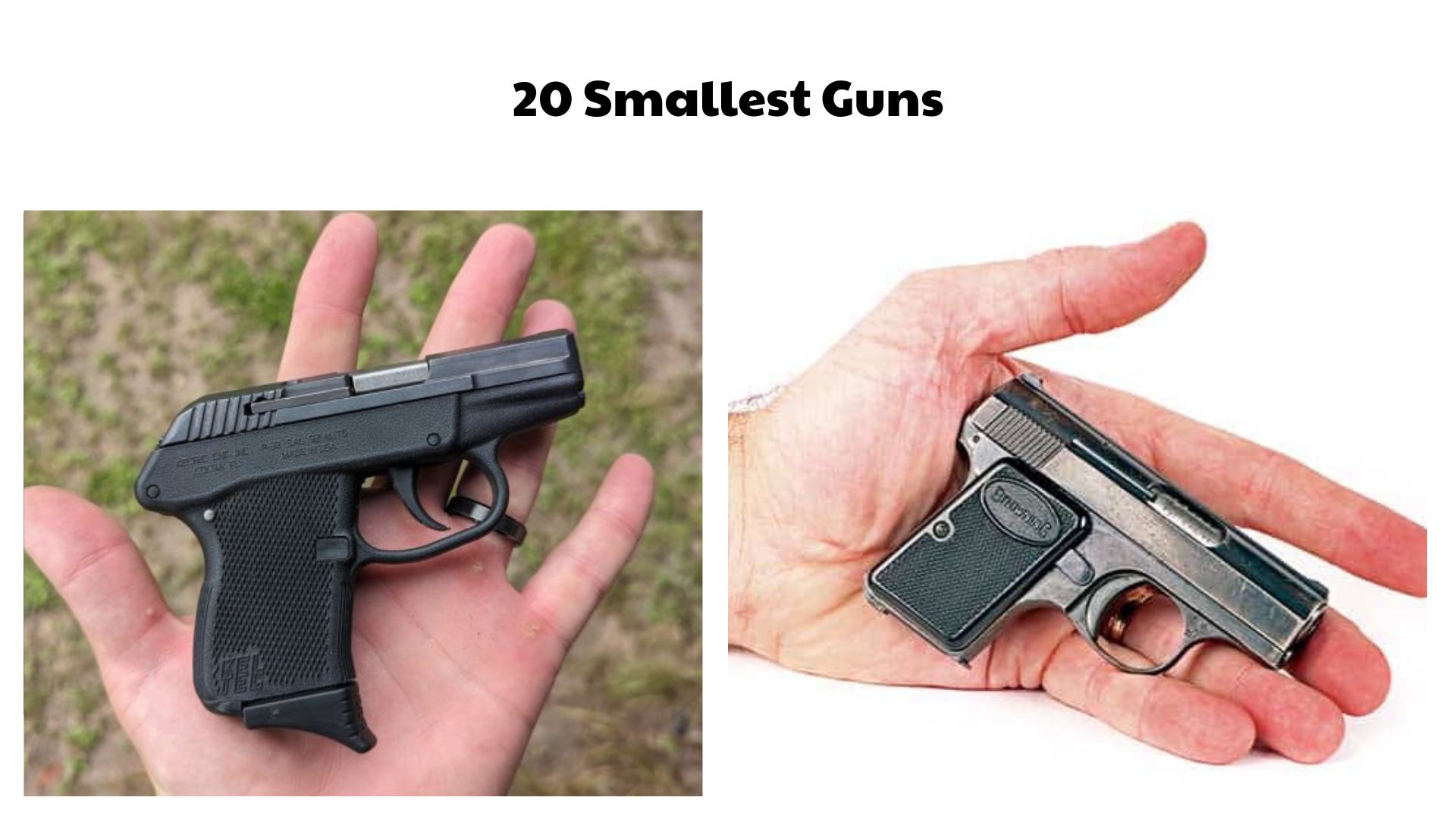

The world of Smallest guns has evolved significantly over the past decades, driven by the demand for deep concealment, lightweight carry, and practical self-defense tools. Unlike full-size handguns designed for duty or combat, these compact firearms prioritize portability, minimal weight, and discreet usage. They are often engineered to fit inside a pocket, small holster, or even specialized folding frames. This guide explores the most notable ultra-compact pistols and revolvers recognized for their extremely small dimensions and real-world usability. Each model is selected based on size efficiency, design innovation, and popularity in concealed carry communities.
Smallest Guns (Compact Concealed Carry Category Overview)
Although completely different from historical battlefield weapons like those found in types of guns used in ww2, modern micro firearms represent a shift toward personal defense and mobility rather than military-scale firepower. These guns are designed for individuals who prioritize concealment and fast accessibility in everyday environments.
1. North American Arms Mini Revolver .22 Short
The North American Arms Mini Revolver is one of the smallest functional revolvers ever produced, built specifically for maximum concealability. Chambered in .22 Short or .22 LR depending on variant, this firearm is designed to fit in the palm of the hand, making it a true pocket-sized defensive tool. Its stainless-steel construction ensures durability despite its extremely compact frame. The cylinder holds only five rounds, but its purpose is not sustained firefight capability—it is strictly a last-resort defensive option.
From a design perspective, this revolver uses a single-action mechanism, meaning the hammer must be manually cocked before each shot. While this reduces firing speed, it also contributes to mechanical simplicity and reliability. Users often carry it in specialized folding holsters or pocket cases, emphasizing its role as a discreet backup weapon rather than a primary firearm.
In real-world use, the Mini Revolver is valued for deep concealment scenarios. It is commonly carried in environments where larger firearms would be impractical or legally restricted. Its extremely small size makes it one of the defining examples of ultra-compact defensive guns.
2. Trailblazer LifeCard Folding Pistol
The Trailblazer LifeCard stands out as one of the most unusual designs in modern firearm engineering. When folded, it resembles a small rectangular object similar to a credit card case or compact tool rather than a traditional gun. Chambered in .22 LR, it is designed for ultimate portability and concealment.
The most distinctive feature is its folding frame, which opens to reveal a single-shot firing mechanism. This means the weapon holds only one round at a time, requiring manual reloading after each shot. While this limits its combat application, it dramatically increases concealability, allowing it to be stored in extremely tight spaces such as wallets or small compartments.
The LifeCard is not intended for tactical engagement but rather emergency self-defense. Its innovation lies in redefining what a firearm can physically look like while still maintaining functional lethality in a minimal form factor.
3. Ruger LCP II (.22 LR Micro Pistol)
The Ruger LCP II is a highly popular micro-compact pistol designed for everyday concealed carry. Chambered in .22 LR, it balances low recoil with manageable control, making it suitable for a wide range of users. Despite its small size, it offers a surprisingly ergonomic grip for improved handling.
This pistol operates on a lightweight polymer frame, which significantly reduces overall weight while maintaining structural integrity. Its simple blowback operation ensures reliability and ease of maintenance. The LCP II is often chosen as an entry-level concealed carry firearm due to its minimal recoil and compact profile.
In practical use, the LCP II is ideal for pocket carry or inside-the-waistband holsters. It is designed for close-range defensive scenarios where quick draw and discretion are more important than long-range accuracy.
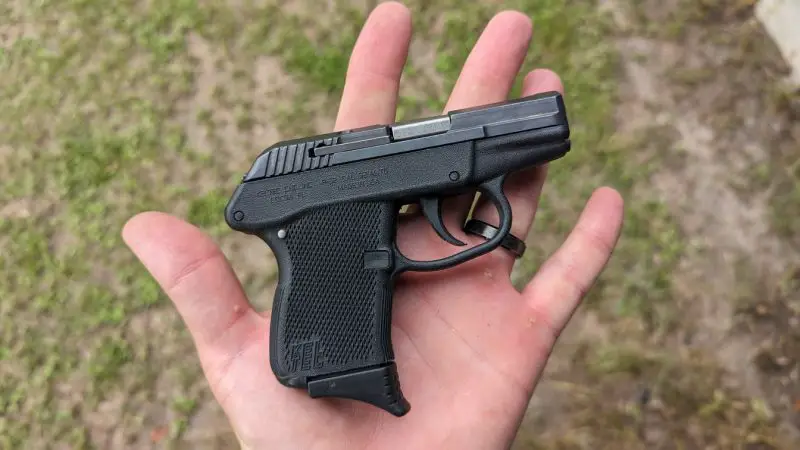
4. KelTec P32 Compact .32 ACP
The KelTec P32 is one of the lightest semi-automatic pistols ever produced, chambered in .32 ACP. Its primary design goal is extreme portability combined with functional semi-automatic fire capability. The pistol weighs significantly less than most standard handguns, making it ideal for all-day concealed carry.
Its polymer construction and simplified internal mechanism contribute to its ultra-light design. The recoil is mild, allowing for controlled follow-up shots despite its small frame. The magazine capacity typically ranges around 7 rounds, which is relatively high for such a compact firearm.
The P32 is often selected by users who prioritize weight reduction above all else. It is a practical example of engineering focused entirely on concealment efficiency rather than tactical versatility.
5. SIG Sauer P365 Micro Compact 9mm
The SIG Sauer P365 is one of the most influential modern micro-compact 9mm pistols, combining small size with surprisingly high capacity. Despite its compact frame, it offers double-digit magazine capacity, making it stand out in the category of Smallest guns with strong defensive capability.
The pistol uses a striker-fired system, providing consistent trigger pull and reliable performance. Its ergonomic grip design allows for better control than many older pocket pistols, improving accuracy despite its reduced dimensions. It is widely considered a benchmark for modern concealed carry handguns.
In real-world usage, the P365 bridges the gap between micro pistols and full defensive firearms. It demonstrates that compact size does not necessarily mean reduced effectiveness, making it one of the most important developments in modern handgun design.
6. Diamondback DB9 Gen 4 (Ultra-Thin 9mm)
The Diamondback DB9 Gen 4 is one of the thinnest 9mm pistols ever produced, designed specifically for ultra-discreet concealed carry. Its slim profile allows it to disappear easily inside waistband holsters or even tight clothing pockets, making it a strong contender in the Smallest guns category. Despite its size, it still fires the widely used 9mm cartridge, giving it meaningful defensive capability.
The pistol uses a simple striker-fired system with a polymer frame to reduce weight. Its internal design is highly compact, but this also means recoil can feel sharper compared to larger handguns. The magazine typically holds 6 rounds, which is standard for ultra-compact pistols of this class.
In real-world use, the DB9 is favored by users who prioritize absolute thinness above all else. It is not designed for extended shooting sessions but rather for emergency defensive situations where concealment is the primary advantage.
7. Smith & Wesson Bodyguard 2.0 (.380 ACP)
The Smith & Wesson Bodyguard 2.0 is a refined micro-compact pistol chambered in .380 ACP, designed for smooth concealed carry and ease of use. It improves on earlier generations by offering better ergonomics, a more comfortable grip, and improved trigger performance. Within the Smallest guns category, it stands out as a balanced option between size and usability.
Its lightweight polymer frame makes it easy to carry all day without discomfort. The recoil is manageable, making it suitable for newer shooters or those sensitive to heavier calibers. The pistol typically features a small magazine capacity, but it compensates with reliability and ease of handling.
This firearm is often chosen as a reliable everyday carry option due to its predictable performance and simple operation. It is especially effective for short-range defensive use in urban environments.
8. Beretta Pico .380 ACP Micro Handgun
The Beretta Pico is one of the most modular micro pistols in its class, designed with interchangeable components that allow users to customize grip size and controls. Chambered in .380 ACP, it is built for deep concealment and lightweight carry, fitting comfortably in pocket holsters or small concealed rigs.
Its stainless steel slide and polymer frame create a balance between durability and weight reduction. The recoil is mild, and the overall design emphasizes smooth draw and compact storage. The Pico is also known for its rounded edges, which reduce printing when carried under clothing.
In practice, this pistol is ideal for users who want a discreet firearm with modern design flexibility. It represents a thoughtful approach to micro pistol engineering focused on adaptability and concealment efficiency.
9. Kahr PM9 Slim 9mm Pistol
The Kahr PM9 is a slim-profile 9mm pistol designed for deep concealment without sacrificing stopping power. It is widely respected for its smooth trigger system and consistent performance in compact form. Among Smallest guns in the 9mm category, it is considered one of the more refined designs.
The pistol uses a double-action-only trigger system, which provides a consistent pull from shot to shot. Its stainless steel slide and polymer frame contribute to durability while keeping weight low. The magazine capacity is modest, but its primary advantage lies in concealability and reliability.
The PM9 is often selected by experienced concealed carriers who want a balance between power and discreet carry capability. It performs well in close-range defensive scenarios where quick response is essential.
10. Walther PPK/S Compact Pistol
The Walther PPK/S is one of the most iconic compact pistols in firearm history, known for its classic design and long-standing reputation. Chambered in .380 ACP, it has been widely used in concealed carry roles for decades. Its compact steel frame gives it a solid feel despite its relatively small size.
The pistol features a traditional double-action/single-action trigger system, allowing flexibility in firing modes. It is heavier than modern polymer micro pistols, but this added weight helps reduce recoil and improve shooting stability.
In practical terms, the PPK/S is valued for its historical significance and reliable performance. It remains a popular choice for users who prefer a classic, all-metal concealed carry firearm with proven durability.
11. SCCY CPX-2 Micro Compact 9mm
The SCCY CPX-2 is a budget-friendly micro-compact 9mm pistol designed for concealed carry users who want affordability without sacrificing essential defensive capability. Its compact polymer frame reduces weight while maintaining structural durability, making it a practical option in the Smallest guns category.
This pistol uses a double-action-only trigger system, which provides a consistent pull for every shot. While the trigger is heavier than some premium micro pistols, it enhances safety for concealed carry use. The magazine typically holds 10 rounds, which is relatively generous for a compact firearm in this size class.
In real-world usage, the CPX-2 is valued for its simplicity and cost-effectiveness. It is often recommended for first-time concealed carriers or as a backup handgun due to its predictable operation and manageable recoil in 9mm caliber.
12. KelTec P32 Ultra-Light .32 ACP
The KelTec P32 is one of the lightest semi-automatic pistols ever produced, chambered in .32 ACP. Its primary design goal is extreme portability, making it almost unnoticeable when carried in a pocket holster. Within the Smallest guns category, it is recognized for its exceptionally low weight and minimal footprint.
The pistol uses a simple blowback operation and a polymer frame, contributing to its ultra-light construction. Its recoil is very mild, allowing for easy control even for inexperienced shooters. The magazine capacity is modest, but its purpose is strictly defensive rather than sustained engagement.
In practical use, the P32 excels as a deep concealment backup firearm. It is ideal for situations where carrying a larger pistol would be impractical or uncomfortable for extended periods.
13. Ruger LCP Max (.380 ACP Micro Carry)
The Ruger LCP Max is a modern evolution of the popular LCP series, designed to maximize magazine capacity while maintaining a compact frame. Chambered in .380 ACP, it offers improved defensive capability compared to earlier micro pistols without significantly increasing size.
Its lightweight polymer frame and improved ergonomics make it more comfortable to shoot than earlier pocket pistols. The extended magazine capacity is one of its strongest features, allowing users to carry more rounds in a minimal footprint.
The LCP Max is widely regarded as one of the most practical modern entries in the Smallest guns category, combining concealability, capacity, and improved shootability in a single platform.
14. Springfield Armory Hellcat OSP
The Springfield Hellcat OSP is a high-capacity micro-compact 9mm pistol designed for concealed carry with modern tactical features. Despite its small size, it offers one of the highest magazine capacities in its class, making it highly competitive in the Smallest guns segment.
The pistol features an optics-ready slide, allowing users to mount micro red-dot sights for improved accuracy. Its ergonomic grip texture enhances control during rapid firing, and the striker-fired system ensures consistent trigger performance.
In real-world application, the Hellcat is often chosen by users who want maximum firepower in a minimal frame. It is particularly effective in urban self-defense scenarios where quick target acquisition is important.
15. Glock 43 Single Stack 9mm
The Glock 43 is one of the most popular single-stack 9mm pistols designed for concealed carry. It maintains Glock’s reputation for reliability while significantly reducing size for discreet carry. Within the Smallest guns category, it is known for its balance of simplicity and performance.
Its polymer frame keeps weight low, while the striker-fired system ensures consistent operation. The slim profile allows for easy concealment in waistband holsters or under lightweight clothing. Although it has a smaller magazine capacity compared to double-stack models, it compensates with reliability and ease of use.
The Glock 43 is widely adopted by concealed carry users due to its predictable handling and proven durability across various environments.
16. Bond Arms Backup Derringer Series
The Bond Arms Backup Derringer is a compact double-barrel handgun designed for deep concealment and emergency self-defense. Its stainless-steel construction gives it surprising durability despite its small size. Chambered in calibers ranging from .22 LR to .45 ACP depending on configuration, it provides versatility in a very compact form factor.
This firearm operates on a break-action system, meaning the barrels pivot open for manual loading and unloading. While it only holds two rounds, its strength lies in simplicity and reliability. There are no complex feeding systems, which reduces the likelihood of mechanical failure in critical situations.
In practical use, the Derringer is often carried as a backup weapon rather than a primary firearm. It is ideal for situations where extreme concealment is required, such as ankle carry or pocket holsters in restrictive environments.
17. Phoenix Arms HP22A Micro Pistol
The Phoenix Arms HP22A is a lightweight semi-automatic pistol chambered in .22 LR, designed for budget-friendly concealed carry and recreational shooting. Despite its low cost, it offers a functional and compact design suitable for basic defensive use.
The pistol uses a simple blowback system and features a relatively larger grip compared to other micro pistols, improving control during firing. Its safety mechanisms are more prominent than many modern designs, reflecting a focus on user caution and controlled operation.
In real-world usage, the HP22A is often selected as an entry-level concealed carry option or a lightweight backup firearm. Its low recoil makes it easy to handle, though it is generally considered more suitable for close-range defensive scenarios.
18. Seecamp LWS .380 Pocket Pistol
The Seecamp LWS .380 is one of the most compact double-action-only pistols ever produced. It is specifically engineered for deep concealment, with no external sights or protruding controls, allowing it to be drawn smoothly from tight spaces.
Chambered in .380 ACP, it delivers moderate defensive capability in an extremely small frame. The design eliminates unnecessary external features to ensure the pistol remains snag-free during pocket or concealed holster carry.
In practical use, the Seecamp is highly regarded for its reliability and discreet profile. It is often carried in environments where even slightly larger firearms would be difficult to conceal effectively.
19. Ruger LCR Lightweight Revolver (.38 Special)
The Ruger LCR is a modern lightweight revolver designed for concealed carry, chambered in .38 Special. Its polymer and aluminum construction significantly reduces weight while maintaining structural strength, making it comfortable for all-day carry.
The revolver uses a double-action-only trigger system that is smooth and consistent, improving control during rapid firing. Its simplicity makes it highly reliable, especially in environments where maintenance may be limited.
The LCR is often chosen for its balance between stopping power and simplicity. It is particularly popular among users who prefer revolvers over semi-automatic pistols for personal defense.
20. Charter Arms Undercover Lite Snub Nose Revolver
The Charter Arms Undercover Lite is an ultra-lightweight snub-nose revolver chambered in .38 Special. It is designed specifically for concealed carry users who want a simple, dependable firearm with minimal mechanical complexity.
Its aluminum frame keeps weight extremely low, making it one of the easiest revolvers to carry discreetly. The short barrel enhances concealability but limits long-range accuracy, reinforcing its role as a close-range defensive weapon.
In real-world scenarios, this revolver is valued for its straightforward operation and dependable performance. It requires minimal training compared to more complex semi-automatic pistols, making it accessible for a wide range of users.
Conclusion: Smallest Guns and Their Role in Modern Concealed Carry
The study of Smallest guns highlights a clear direction in modern firearm design: maximum concealability without fully sacrificing practical defensive performance. Across pocket pistols, micro-compact 9mm handguns, and ultra-light revolvers, manufacturers have continuously refined size, weight, and ergonomics to meet the needs of everyday concealed carry users. These firearms are not built for battlefield dominance, but for accessibility, discretion, and fast response in personal defense situations.
Compared to historical military weapons such as those in types of guns used in ww2, modern compact firearms show a major shift in purpose. Where WW2-era guns focused on firepower, durability, and sustained combat, today’s smallest pistols prioritize ease of carry and immediate usability in civilian environments. This reflects how firearm development has adapted to changing social, legal, and practical conditions over time.
Ultimately, Smallest guns are not about replacing larger firearms but about providing a reliable last line of defense that can be carried comfortably every day. Their evolution continues to push engineering boundaries, making them more efficient, more controllable, and more user-friendly with each generation. For many users, they represent a practical balance between safety, convenience, and modern defensive capability.
Frequently Asked Questions (50+ FAQs) About Smallest Guns
1. What are Smallest guns?
Smallest guns refer to ultra-compact firearms designed for maximum concealability and lightweight carry. These typically include pocket pistols, micro-compact handguns, and small revolvers. They are engineered to be easily carried in pockets, ankle holsters, or inside-the-waistband holsters without printing through clothing. Their main purpose is personal self-defense rather than long-range or tactical combat.
2. Why are Smallest guns popular?
They are popular because they allow users to carry a firearm discreetly every day. Many people prefer them for comfort, convenience, and legal concealed carry compliance. Their small size makes them easier to carry in various environments, especially where larger firearms would be impractical or uncomfortable.
3. Are Smallest guns effective for self-defense?
Yes, they can be effective in close-range self-defense situations. Most encounters occur at short distances, where accuracy differences between compact and full-size guns are less significant. However, they typically have lower magazine capacity and more recoil, so training is important.
4. What is the smallest handgun in the world?
One of the smallest functional handguns is the North American Arms Mini Revolver. It is extremely compact, often fitting in the palm of a hand. It is designed for emergency defensive use rather than sustained firing.
5. Are pocket pistols reliable?
Modern pocket pistols are generally reliable if properly maintained. However, their small size can make them more sensitive to grip, ammunition quality, and handling technique compared to larger firearms.
6. What calibers are common in Smallest guns?
Common calibers include .22 LR, .25 ACP, .32 ACP, .380 ACP, and compact 9mm. These calibers balance manageable recoil with defensive effectiveness in small platforms.
7. Are Smallest guns harder to shoot?
Yes, they can be more challenging due to increased recoil and smaller grip surfaces. This can affect stability and accuracy, especially for beginners.
8. What is a micro-compact pistol?
A micro-compact pistol is a small semi-automatic handgun designed for concealed carry. It usually features a slim frame, short barrel, and limited magazine capacity, optimized for discreet everyday use.
9. What is the difference between compact and micro guns?
Compact guns are slightly larger with better capacity and control, while micro guns are even smaller and more focused on concealment. Micro guns trade capacity and comfort for size reduction.
10. Are Smallest guns legal?
In most countries and U.S. states, they are legal if the owner meets licensing and permit requirements. Laws vary widely, so legal compliance depends on local regulations.
11. What is the best Smallest gun for beginners?
Caliber-reduced pistols like .22 LR or .380 ACP models are often recommended for beginners due to lower recoil and easier handling.
12. What is deep concealment?
Deep concealment refers to carrying a firearm in a way that makes it completely hidden and difficult to detect, often using very small guns designed for pocket or ankle carry.
13. Are revolvers good Smallest guns?
Yes, small revolvers are popular because of their mechanical simplicity and reliability. They are less likely to jam compared to semi-automatic pistols.
14. What is a snub-nose revolver?
A snub-nose revolver is a compact revolver with a short barrel, typically 2 inches or less, designed for concealed carry and close-range defense.
15. Do Smallest guns have high recoil?
Yes, due to their lightweight design, recoil can feel sharper compared to larger pistols. Proper grip and training help manage it effectively.
16. What is the safest way to carry a Smallest gun?
The safest method is using a proper holster that covers the trigger guard and prevents accidental discharge while allowing quick access.
17. Can Smallest guns be used for home defense?
Yes, but they are not the most ideal choice. Larger handguns or shotguns are typically preferred for home defense due to better capacity and control.
18. What is the magazine capacity of Smallest guns?
Most micro pistols hold between 5 and 12 rounds depending on design and caliber.
19. Are Smallest guns accurate?
They are accurate at short ranges, which is typical for self-defense distances. However, their small size makes precision shooting more challenging.
20. What is the lightest handgun ever made?
Some ultra-light pistols like the KelTec P32 and similar polymer-frame models are among the lightest production handguns available.
21. Do Smallest guns require special ammo?
No, they use standard ammunition for their caliber, but high-quality defensive ammo is often recommended for reliability.
22. What is a derringer?
A derringer is a very small handgun, typically single-shot or double-barrel, designed for close-range emergency defense.
23. Are Smallest guns easy to conceal?
Yes, concealability is their main advantage. They are designed to be hidden in pockets or small holsters without detection.
24. What is printing in concealed carry?
Printing refers to the outline of a concealed firearm being visible through clothing, which Smallest guns help minimize.
25. Can Smallest guns stop a threat?
Yes, they can stop threats at close range when used effectively, but shot placement is very important due to lower ballistic power.
26. What is the safest caliber for Smallest guns?
.22 LR and .380 ACP are often considered manageable calibers for small firearms due to lower recoil.
27. Are Smallest guns good for women?
They are often chosen for ease of carry, lighter weight, and smaller grip sizes, but suitability depends on individual preference and training.
28. Do Smallest guns jam more often?
Some models may be more sensitive to grip and ammunition, but modern designs are generally reliable if properly maintained.
29. What is the role of ergonomics in Smallest guns?
Ergonomics helps improve grip comfort, recoil control, and shooting accuracy despite limited size.
30. Are polymer frames good for Smallest guns?
Yes, polymer frames reduce weight while maintaining durability, making them ideal for micro pistols.
31. What is a striker-fired system?
A striker-fired system uses an internal striker instead of a hammer, simplifying design and improving consistency in trigger pull.
32. What is a double-action trigger?
A double-action trigger both cocks and releases the firing mechanism in one pull, often used in revolvers and some compact pistols.
33. Are Smallest guns good for travel?
They are often chosen for travel due to compact size, but legal restrictions must always be checked before transporting firearms.
34. What is the lifespan of a Smallest gun?
With proper maintenance, many compact firearms can last for thousands of rounds over many years.
35. Are Smallest guns expensive?
Prices vary widely. Some models are budget-friendly, while advanced micro pistols with premium features can be more expensive.
36. What is a pocket holster?
A pocket holster is a small holster designed to safely carry compact guns inside a pocket while covering the trigger.
37. Can Smallest guns be modified?
Some models allow limited upgrades such as sights or grips, but modifications are usually minimal due to size constraints.
38. What is the best grip technique for Smallest guns?
A firm, high grip with both hands when possible helps control recoil and improve accuracy.
39. Do Smallest guns have safeties?
Some do, while others rely on internal safety mechanisms such as trigger safeties or heavy trigger pulls.
40. Are revolvers or pistols better for concealment?
Both can be effective, but pistols often offer higher capacity while revolvers offer simplicity and reliability.
41. What is a backup gun?
A backup gun is a secondary firearm carried in addition to a primary weapon for emergency situations.
42. Why do people choose .380 ACP Smallest guns?
.380 ACP offers a balance between manageable recoil and better stopping power compared to smaller calibers.
43. What is a single-stack magazine?
A single-stack magazine holds bullets in a single column, making the firearm thinner and easier to conceal.
44. What is a double-stack magazine?
A double-stack magazine holds rounds in two staggered columns, increasing capacity but making the gun wider.
45. Are Smallest guns suitable for law enforcement backup?
Yes, many officers use compact pistols as backup weapons due to their size and portability.
46. What is recoil management?
Recoil management refers to controlling the upward movement of the gun after firing for faster follow-up shots.
47. Are laser sights useful on Smallest guns?
Yes, laser sights can improve aiming in low-light or high-stress situations where traditional sights are harder to use.
48. What is the biggest limitation of Smallest guns?
The main limitations are lower magazine capacity, reduced grip size, and increased recoil compared to larger firearms.
49. Can Smallest guns be used in competitions?
They are not commonly used in competitive shooting due to their defensive design focus rather than performance shooting.
50. What is the future of Smallest guns?
The future includes better capacity, improved ergonomics, and advanced materials that reduce size while improving performance.
51. Why are Smallest guns still important today?
They remain important because they provide practical everyday self-defense options for people who prioritize concealment, comfort, and accessibility over firepower.
Read more: