
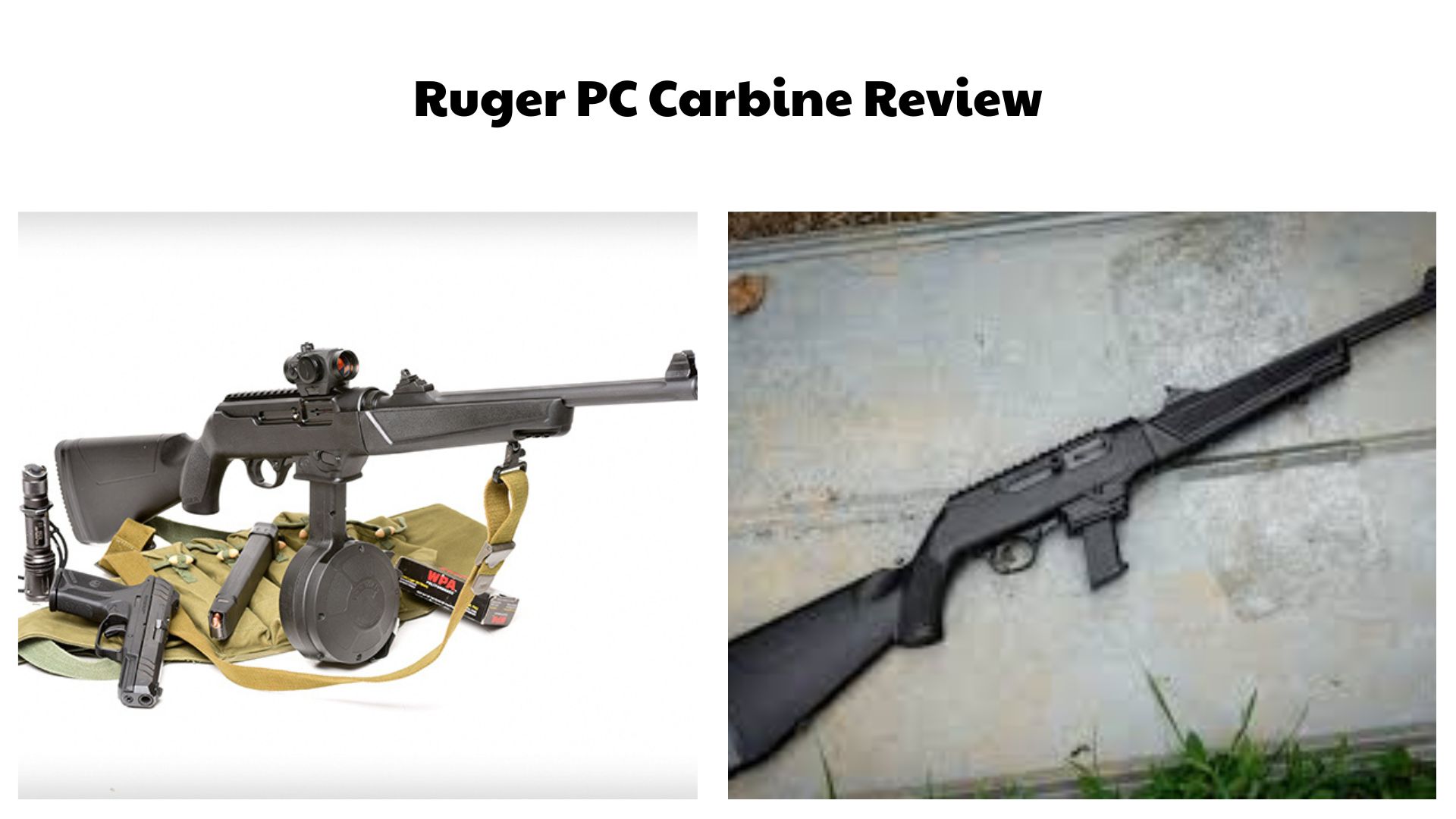

The Ruger PC Carbine is a modern, American-made pistol-caliber carbine that has built a strong reputation among civilian shooters for combining reliability, versatility, and practical defensive performance in a straightforward and durable platform. Designed around a simple straight-blowback operating system, it prioritizes mechanical consistency and ease of use over complexity, making it one of the most approachable and dependable PCC options currently available on the market.
One of the defining strengths of the Ruger PC Carbine is its robust build quality, which reflects Ruger’s long-standing engineering philosophy focused on ruggedness and long service life under real-world conditions. The rifle is also widely appreciated for its excellent magazine compatibility, with certain configurations supporting Glock-pattern magazines while others are designed around Ruger SR-series magazines, giving users flexibility based on existing handgun setups and personal preference.
Another major performance advantage comes from its 16-inch barrel, which provides a noticeable increase in 9mm velocity compared to standard handgun barrels, resulting in improved ballistic performance, flatter trajectories, and better terminal effectiveness at extended pistol-caliber ranges. Combined with its takedown design, which allows the rifle to be quickly separated into two compact halves for storage or transport, the platform becomes especially appealing for users who value portability without sacrificing full rifle-length performance.
While the Ruger PC Carbine is widely praised for its reliability, ease of maintenance, and intuitive handling, it is not without criticism, as some users point to its relatively heavy weight compared to other PCCs and its limited caliber selection. Despite these drawbacks, it remains one of the most trusted and widely recommended pistol-caliber carbines for defensive use, training, and recreational shooting.
Ruger PC Carbine Overview
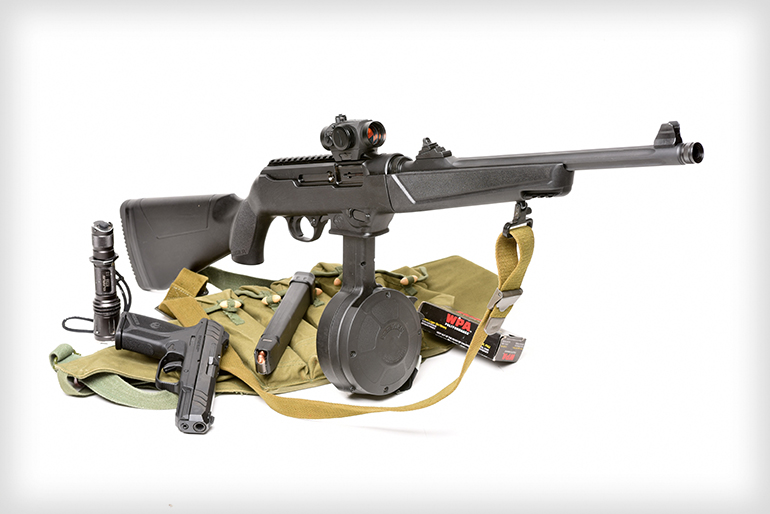
What is the Ruger PC Carbine?
The Ruger PC Carbine is a pistol-caliber carbine (PCC), which is a shoulder-fired firearm designed to use handgun ammunition while offering the improved stability, accuracy, and control of a rifle platform. By combining a 16-inch barrel with pistol cartridges such as 9mm, it provides shooters with a practical middle ground between handguns and full-power rifles, offering better control and sight radius without the recoil or cost associated with rifle calibers.
Its primary purpose is to serve as a defensive, training, and recreational firearm that can deliver consistent performance in a variety of real-world scenarios, including home defense, range practice, and competitive PCC shooting disciplines. Because it uses common pistol ammunition, it also reduces training costs and simplifies logistics for users who already own compatible handguns.
In essence, the Ruger PC Carbine bridges the gap between handgun portability and rifle stability, making it an effective platform for shooters who want increased accuracy and control without moving into more complex or higher-recoil rifle systems.
Ruger PC Carbine Design Philosophy
The design philosophy behind the Ruger PC Carbine is centered on simplicity, reliability, and long-term durability, with an emphasis on creating a firearm that functions consistently under a wide range of conditions without requiring specialized knowledge or extensive maintenance. The straight-blowback operating system reflects this philosophy, as it uses a minimal number of moving parts to ensure dependable cycling.
The platform is built specifically for real-world defensive and range applications, meaning it is engineered to perform reliably in high-stress environments where mechanical failure is not an option. This includes considerations such as ease of manual operation, straightforward field stripping, and compatibility with widely available ammunition and magazines.
Overall, the Ruger PC Carbine is designed to be a user-friendly firearm that prioritizes function over complexity, making it suitable for both new and experienced shooters who value predictable performance.
Intended Users
The Ruger PC Carbine is designed for a broad range of users, starting with home defense shooters who want a stable and controllable firearm that offers more accuracy and magazine capacity than a handgun. Its low recoil and simple operation make it particularly effective in defensive scenarios where ease of handling and quick follow-up shots are important.
It is also widely used by PCC competition participants who value its consistent performance and reliability in timed shooting environments, even though it may not be as modular or lightweight as some AR-based competitors. In addition, recreational range shooters appreciate its smooth shooting characteristics and affordability in terms of ammunition costs.
Finally, preparedness and survival-focused users often select the Ruger PC Carbine because of its takedown capability, durable construction, and ability to share ammunition with commonly carried handguns, making it a practical choice for emergency or field-use scenarios.
Ruger Company Background
Ruger is one of the most established firearms manufacturers in the United States, known for producing rugged, reliable, and practical firearms that are widely used by civilians, law enforcement, and competitive shooters. The company has built its reputation on engineering firearms that are designed to function reliably under heavy use while maintaining straightforward operation and long service life.
American manufacturing and engineering standards play a significant role in Ruger’s identity, with a strong emphasis on quality control, durability testing, and consistent production processes that ensure dependable performance across large production volumes.
Within the modern PCC and rifle market, Ruger occupies a strong position as a manufacturer that prioritizes practical performance and reliability over experimental design, making the PC Carbine a trusted option among shooters who value proven functionality.
Evolution of the Ruger PC Carbine
Since its introduction, the Ruger PC Carbine has undergone a series of refinements that have improved its versatility, user experience, and compatibility with modern shooting platforms. Early versions of the rifle were well received for their reliability and straightforward design, quickly establishing the platform as a serious contender in the PCC market.
One of the most important developments was the introduction of the takedown system, which significantly enhanced portability by allowing the rifle to be quickly separated into two compact components for storage or transport without tools. This feature greatly increased its appeal for users with limited storage space or mobile use cases.
Mag compatibility upgrades further expanded the platform’s flexibility, with newer configurations allowing users to choose between Glock-pattern magazines or Ruger SR-series magazines depending on model selection, making it easier to integrate with existing handgun ecosystems.
Over time, Ruger has continued to release model variations and refinements that improve ergonomics, accessory compatibility, and overall user experience, ensuring that the PC Carbine remains competitive in a rapidly evolving PCC market.
Design and Construction
Takedown System Explained
The Ruger PC Carbine features a takedown system that allows the firearm to be separated into two compact sections, typically by unlocking a central mechanism that detaches the barrel assembly from the receiver and stock. This design enables users to quickly break down the rifle without tools, making it significantly easier to store or transport in confined spaces.
From a practical standpoint, this storage and transport capability is one of the platform’s most valuable features, especially for users who need to keep a defensive firearm in a vehicle, backpack, or compact storage case. Once reassembled, the takedown mechanism is designed to maintain consistent alignment and repeatable zero, ensuring that performance is not compromised.
The locking mechanism is engineered for reliability and repeatability, meaning that repeated takedown and reassembly cycles do not significantly affect point-of-impact consistency when optics are properly mounted.
Barrel and Receiver Design
The Ruger PC Carbine is equipped with a 16-inch cold hammer-forged barrel, which provides excellent durability, extended service life, and improved ballistic performance compared to shorter handgun barrels. This barrel length allows 9mm ammunition to achieve higher velocities, which can enhance both accuracy and terminal effectiveness at moderate distances.
The steel receiver construction adds to the overall durability of the platform, ensuring structural integrity under repeated firing cycles and extended use. This contributes to the rifle’s reputation for long-term reliability and resistance to wear under demanding conditions.
The blowback operation system used in the PC Carbine is mechanically simple, relying on the mass of the bolt and recoil spring to cycle the action rather than a gas system, which reduces complexity and enhances reliability while maintaining consistent performance with standard-pressure ammunition.
Weight and Balance
The Ruger PC Carbine is often described as heavier than many other pistol-caliber carbines, which can initially surprise users expecting a lightweight platform. However, this added weight contributes positively to recoil mitigation and shooting stability, making the rifle easier to control during rapid fire and follow-up shots.
This weight also helps absorb the straight-back impulse generated by the blowback system, resulting in a smoother and more predictable shooting experience compared to lighter PCC designs.
The trade-off between portability and stability is an important consideration, as the PC Carbine prioritizes shooting performance and durability over ultra-lightweight construction, meaning it is less compact than folding PCC alternatives but more stable during firing.
Controls and Ergonomics
Ambidextrous Controls
The Ruger PC Carbine features ambidextrous-friendly controls, including a reversible charging handle and a reversible magazine release, which allow both left- and right-handed shooters to configure the rifle for comfortable and intuitive operation. This flexibility enhances usability across a wide range of users without requiring specialized versions of the firearm.
These design elements make the platform more accessible and practical in defensive or training environments where multiple users may operate the same firearm under different conditions.
Charging System and Handling
The charging system of the Ruger PC Carbine is influenced by AR-style ergonomics, making it familiar to users who already have experience with modern sporting rifles. This contributes to a smooth and intuitive manual of arms that reduces the learning curve for new users.
The overall handling of the platform is straightforward and efficient, allowing users to chamber, clear, and manipulate the firearm with minimal complexity, which is especially important in high-stress defensive scenarios where simplicity is critical.
Trigger Performance
The factory trigger on the Ruger PC Carbine is generally considered serviceable and reliable, offering a consistent pull that is suitable for defensive and recreational shooting, although it is not typically described as match-grade or highly refined.
The break quality and reset behavior are predictable, which supports consistent shooting performance, but many users choose to upgrade or modify the trigger system to achieve a lighter pull weight or crisper break for improved shooting precision.
Stock and Grip Ergonomics
The Ruger PC Carbine offers adjustable stock options that allow users to modify length of pull and shooting position, improving comfort and adaptability for different body types and shooting styles. This adjustability enhances overall usability in both defensive and range environments.
Some configurations include compatibility with Magpul components, further expanding customization options for grips and stocks that can enhance ergonomics and user preference alignment.
Overall shooting comfort and stance stability are strong points of the platform, as the combination of weight distribution, stock adjustability, and recoil characteristics creates a stable and controlled shooting experience suitable for extended use.
Magazine Compatibility
Multi-Mag Platform Design
One of the most practical aspects of the Ruger PC Carbine is its multi-magazine platform design, which allows the rifle to be configured around different magazine ecosystems depending on the specific model purchased, giving users a high level of flexibility when integrating the carbine into an existing handgun setup. This design choice makes the platform especially appealing to shooters who already own compatible pistols and want to streamline their ammunition and magazine logistics across multiple firearms.
Certain configurations of the PC Carbine support Glock-pattern magazines, which are among the most widely used and readily available handgun magazines in the world, making them a popular choice for users seeking maximum aftermarket availability and standardization. Other variants are built around Ruger SR-series magazines, which provide an equally reliable but more proprietary ecosystem that still offers consistent feeding performance and solid factory integration.
This flexibility depending on configuration allows buyers to select a version of the PC Carbine that best matches their existing gear, which significantly enhances its practical usability in both defensive and recreational contexts where ammunition and magazine commonality can simplify logistics and reduce training complexity.
Magazine Reliability and Feeding
Magazine reliability plays a critical role in the overall performance of the Ruger PC Carbine, as even a well-engineered firearm can experience feeding issues if paired with low-quality or worn magazines that fail to maintain proper cartridge alignment and spring tension. In general, OEM magazines tend to offer the most consistent performance, as they are manufactured to tighter tolerances and tested specifically for compatibility with the platform.
Aftermarket magazine performance can vary significantly depending on manufacturer quality, with some performing nearly identically to factory magazines and others introducing inconsistencies that may lead to feeding disruptions or increased wear on the feed ramp and bolt face. Because of this, feeding consistency is often directly tied to the quality and maintenance condition of the magazines being used rather than inherent flaws in the firearm itself.
Common magazine-related malfunctions can include failures to feed, double feeds, or failure of the bolt to fully chamber a round, all of which are typically resolved by switching to higher-quality magazines or ensuring proper maintenance and inspection of existing ones.
Accuracy and Ballistics Performance
Real-World Accuracy
In real-world shooting conditions, the Ruger PC Carbine is capable of producing consistent and practical accuracy that aligns well with expectations for a pistol-caliber carbine, typically delivering solid grouping performance at distances between 50 and 100 yards depending on shooter skill, ammunition quality, and optic setup. While it is not designed as a precision rifle, it offers more than sufficient accuracy for defensive and recreational applications within its intended range envelope.
As with most PCC platforms, its accuracy expectations are defined by practical performance rather than match-grade precision, meaning that its primary role is to provide fast, repeatable hits on target rather than extreme long-range grouping consistency. The 16-inch barrel contributes positively to stability and velocity consistency, helping maintain predictable shot placement within typical engagement distances.
9mm Ballistic Advantages in PC Carbine
One of the key advantages of the Ruger PC Carbine is its ability to significantly improve the ballistic performance of 9mm ammunition compared to standard handgun barrels, as the longer 16-inch barrel allows for more complete powder burn and higher projectile velocity. This velocity increase can translate into improved energy delivery and flatter trajectory, making the cartridge more effective at extended ranges.
The energy gain from the longer barrel also enhances terminal performance, which can be particularly relevant in defensive scenarios where consistent penetration and expansion characteristics are important. This makes the PC Carbine a more capable platform than a handgun when using the same ammunition, while still maintaining the benefits of low recoil and manageable shooting characteristics.
Barrel Heating and Sustained Fire
During sustained firing sessions, barrel heating becomes an important factor that can influence the consistency of shot placement, as increased temperatures can gradually affect barrel harmonics and lead to minor shifts in point of impact over time. While this is a common characteristic of many firearm platforms, it becomes more noticeable during rapid or extended firing sequences.
Performance during rapid fire remains generally stable within practical limits, but like most PCCs, the Ruger PC Carbine is best suited for controlled semi-automatic fire rather than continuous high-volume shooting. This ensures that accuracy and reliability remain consistent within realistic defensive or training scenarios.
Recoil and Shooting Experience
The recoil experience of the Ruger PC Carbine is generally described as soft and manageable, largely due to the combination of its relatively heavy construction and straight-blowback operating system that distributes recoil in a linear and predictable manner. This results in a shooting experience that is comfortable even for newer shooters or extended range sessions.
The straight-back blowback feel is simple and consistent, allowing shooters to maintain sight alignment and target focus with minimal disruption between shots. This contributes to excellent control during rapid follow-up shots, making the platform highly effective for defensive applications where fast and accurate shot strings are required.
Reliability and Common Issues
Break-In Period Behavior
Like many new firearms, the Ruger PC Carbine may exhibit a short break-in period during its initial use, where internal components such as the bolt, recoil spring, and feed ramp gradually smooth out through normal cycling. During this phase, some users may notice slight stiffness in operation or minor inconsistencies that typically resolve as round count increases.
Improvement after the early round count is common, especially when the firearm is properly lubricated and paired with quality ammunition, as this helps reduce friction and allows mechanical components to settle into more consistent operation. In most cases, reliability increases noticeably after the first few hundred rounds.
Cycling and Feeding Issues
Occasional cycling and feeding issues can occur in the Ruger PC Carbine, though these are typically infrequent and often related to external factors such as ammunition quality, magazine condition, or maintenance practices rather than inherent design flaws. When issues do arise, they usually manifest as failures to feed or failures to eject during cycling.
The role of extractor performance and bolt cleanliness is particularly important in maintaining smooth operation, as debris buildup or insufficient lubrication can interfere with consistent cycling. Regular cleaning and inspection of the bolt assembly help ensure reliable function over extended use.
Long-Term Reliability
The Ruger PC Carbine has developed a strong reputation for long-term durability, with many users reporting consistent performance across thousands of rounds without significant mechanical failure. This reliability is one of the key reasons the platform is widely recommended for defensive and training applications.
Real-world user feedback generally supports the conclusion that the platform remains dependable over time, provided it is properly maintained and used with quality ammunition and magazines, reinforcing its reputation as a robust and workhorse PCC option.
Quality Control and Variability
While overall reliability is strong, there can be minor unit-to-unit differences due to factory tolerances, which may result in slight variations in smoothness, break-in behavior, or initial cycling performance. These differences are generally not severe but can influence early user experience depending on the specific rifle.
In most cases, factory tolerances and initial break-in behavior explain the majority of performance variability rather than structural or design flaws, and many perceived issues are resolved through proper maintenance, lubrication, and ammunition selection. This contributes to the platform’s reputation as generally reliable but occasionally requiring minor user adjustment during early use.
Suppressor Compatibility
Blowback System and Suppression Effects
When the Ruger PC Carbine is used with a suppressor, its straight-blowback operating system plays a significant role in how the firearm behaves under increased back pressure, as there is no gas regulation system to actively control or redirect expanding gases. This means that when a suppressor is attached, more gas and particulate matter can be directed back toward the shooter, especially during rapid or sustained fire.
One of the most noticeable effects of running suppressed is increased gas blowback to the shooter’s face, which can lead to a slightly less comfortable shooting experience over long sessions, particularly when using higher-pressure ammunition or shorter intervals between shots. Additionally, because the system lacks adjustable gas regulation, the shooter has limited ability to fine-tune cycling behavior beyond ammunition selection and suppressor choice.
Another practical consideration is that cleaning frequency typically increases when the rifle is run suppressed, since additional carbon buildup accumulates more quickly within the bolt and receiver area, requiring more regular maintenance to ensure consistent cycling and long-term reliability.
Suppressed Shooting Performance
Despite the limitations of a blowback system, the Ruger PC Carbine still performs effectively with a suppressor, offering a noticeable reduction in sound signature that makes shooting more comfortable and reduces noise pollution in training or range environments. While it will not achieve bolt-action or subsonic specialty levels of suppression, it still provides meaningful acoustic benefits in practical use.
One of the positive side effects of suppression is a slightly smoother perceived recoil impulse, as the suppressor adds forward weight and helps dampen the sharpness of the blowback cycle. This can make follow-up shots feel more controlled and reduce muzzle movement during rapid fire sequences.
For best performance, users often rely on subsonic or standard-pressure ammunition combined with quality suppressors, while also accepting that tuning options are limited compared to gas-operated platforms. Proper lubrication and consistent maintenance become especially important when shooting suppressed to maintain reliability.
Advantages and Disadvantages
Key Advantages
The Ruger PC Carbine offers several major advantages that contribute to its strong reputation among PCC users, starting with its extremely reliable operating system, which is built around a simple straight-blowback design that prioritizes mechanical consistency and ease of maintenance. This simplicity reduces the likelihood of complex mechanical failures and makes the platform highly dependable under a wide range of conditions.
Another major advantage is its strong ballistic performance compared to pistols, as the 16-inch barrel significantly increases 9mm velocity, improving both effective range and terminal energy delivery. This makes the PC Carbine a more capable defensive option than a handgun using the same ammunition.
Excellent magazine compatibility options further enhance its practicality, allowing users to choose between Glock-pattern and Ruger SR-series magazine configurations depending on model, which improves logistical efficiency and simplifies ammunition management for shooters who already own compatible pistols.
Finally, the platform’s durable, long-lasting construction ensures that it can withstand extended use over thousands of rounds while maintaining consistent performance, reinforcing its reputation as a rugged and dependable firearm.
Key Disadvantages
Despite its strengths, the Ruger PC Carbine does have several notable disadvantages, starting with its relatively heavier weight compared to many modern PCC competitors, which can make it less appealing for users seeking ultra-lightweight or highly portable platforms.
The factory trigger is another commonly cited limitation, as it tends to feel basic and utilitarian rather than refined, lacking the crisp break and short reset found in higher-end or competition-focused firearms.
In addition, the platform is generally limited in caliber options, with most configurations centered around 9mm, which restricts flexibility for users who may want broader cartridge versatility.
Finally, the Ruger PC Carbine is less modular than AR-style PCC platforms, meaning it offers fewer customization options and accessory configurations compared to systems built around the AR architecture.
Ruger PC Carbine vs Competing PCCs
Ruger PC Carbine vs Kel-Tec SUB 2000
When compared to the Kel-Tec SUB 2000, the Ruger PC Carbine is generally considered more refined, stable, and ergonomically balanced, offering a more traditional rifle-like shooting experience. In contrast, the SUB 2000 excels in extreme portability due to its folding design, making it significantly more compact for storage and transport.
Ruger PC Carbine vs S&W M&P FPC
Against the Smith & Wesson M&P FPC, the Ruger PC Carbine competes closely in reliability, but the FPC often provides a more modern ergonomic feel and lighter handling characteristics, while the Ruger platform maintains an advantage in ruggedness and long-term durability.
Ruger PC Carbine vs AR-9 Platforms
When compared to AR-9 platforms, the Ruger PC Carbine offers greater simplicity and reliability out of the box, while AR-based PCCs typically provide superior modularity, customization, and ergonomic familiarity for users already experienced with AR rifles.
Takedown vs Folding Systems
The Ruger PC Carbine uses a takedown system that separates the firearm into two compact sections, while many competing PCCs use folding mechanisms that collapse the rifle into a single folded unit. The takedown system generally provides a more rigid shooting platform once assembled, while folding systems tend to offer faster deployment and more compact folded dimensions.
From a storage efficiency standpoint, folding carbines often achieve smaller overall dimensions when packed, but takedown systems like the Ruger PC Carbine offer better balance between portability and structural stability when reassembled for use.
Ergonomics Comparison
In terms of ergonomics, AR-style PCC platforms maintain a clear advantage due to their familiar control layouts, intuitive handling, and widespread user familiarity. However, the Ruger PC Carbine offers strong balance and stability during firing, which contributes to a smooth and controlled shooting experience despite its more traditional layout.
Reliability and Maintenance Comparison
The Ruger PC Carbine benefits from Ruger’s established reputation for mechanical consistency and long-term durability, often requiring less tuning and adjustment compared to AR-9 platforms, which may demand more careful configuration depending on parts compatibility.
In contrast, AR-9 systems often require more tuning and maintenance attention to achieve optimal reliability, whereas the Ruger platform prioritizes simplicity and consistent factory performance, making it more user-friendly for shooters who prefer minimal maintenance complexity.
Best Use Cases for the Ruger PC Carbine
Home Defense Applications
The Ruger PC Carbine is well-suited for home defense due to its controllable recoil, improved accuracy over handguns, and compatibility with common pistol ammunition, making it an effective and accessible defensive tool for a wide range of users.
PCC Competition Shooting
In PCC competition shooting, the Ruger PC Carbine is valued for its reliability and consistent performance, although it may not be as competitive in terms of speed or modularity compared to specialized AR-style competition builds.
Range Training and Plinking
For range training and recreational shooting, the platform offers a highly enjoyable experience due to its low recoil, affordable ammunition use, and straightforward operation, making it ideal for extended practice sessions.
Vehicle or Bug-Out Setup
The takedown design makes the Ruger PC Carbine an excellent candidate for vehicle storage or bug-out kits, as it can be broken down into a more compact form factor while still providing full rifle-length performance when assembled.
Final Verdict
The Ruger PC Carbine stands out as one of the most balanced and dependable pistol-caliber carbines on the market, combining strong reliability, practical accuracy, and flexible magazine compatibility with a rugged design built for long-term use. Its strengths lie in its simplicity, durability, and real-world performance, especially in defensive and training scenarios where consistency matters more than modular customization.
However, it is not without compromises, as its heavier weight, basic trigger feel, and limited caliber options place it behind more modern AR-style PCC platforms in terms of ergonomics and customization potential. Despite these trade-offs, it remains one of the most trusted and widely recommended PCCs for shooters who value function, reliability, and proven performance over tactical complexity.
Frequently Asked Questions (FAQ) – Ruger PC Carbine Review
1. What is the Ruger PC Carbine?
The Ruger PC Carbine is a pistol-caliber carbine (PCC) designed to fire handgun ammunition, most commonly 9mm, from a 16-inch rifle-length barrel. It is built for reliability, ease of use, and practical applications such as home defense, range training, and recreational shooting, offering rifle-like stability while using widely available pistol cartridges.
2. Why is it called a PCC?
It is called a PCC because “Pistol-Caliber Carbine” refers to a shoulder-fired firearm that uses handgun ammunition instead of traditional rifle cartridges, combining low recoil with improved accuracy and control.
3. Is the Ruger PC Carbine a rifle or pistol?
It is legally classified as a rifle because it has a shoulder stock and a barrel length of 16 inches, even though it uses pistol ammunition rather than rifle cartridges.
4. What is the main purpose of the Ruger PC Carbine?
Its main purpose is to provide a reliable, easy-to-use firearm for defensive, training, and recreational shooting scenarios, offering better control and accuracy than a handgun while maintaining manageable recoil and cost-effective ammunition usage.
5. What calibers does the Ruger PC Carbine come in?
The most common caliber is 9mm, although Ruger has offered variations and limited configurations in other calibers depending on production runs and market demand, with 9mm remaining the dominant and most widely supported option.
6. How accurate is the Ruger PC Carbine?
The Ruger PC Carbine is generally accurate enough for defensive and practical shooting, consistently delivering solid groupings at 50 to 100 yards, especially when paired with quality ammunition and a stable shooting position.
7. Is it good for home defense?
Yes, it is widely considered a strong home defense option due to its controllable recoil, increased accuracy compared to pistols, and the ability to use high-capacity magazines depending on configuration.
8. Is the Ruger PC Carbine better than a handgun?
In most practical defensive scenarios, it offers better stability, accuracy, and recoil control than a handgun, although it is less compact and slower to deploy in extremely tight environments.
9. What magazines does it use?
Depending on the model, it uses either Glock-pattern magazines or Ruger SR-series magazines, allowing users to choose a configuration that best matches their existing handgun ecosystem.
10. Is Glock magazine compatibility reliable?
Yes, Glock magazine-compatible versions are generally very reliable when using quality OEM magazines, although performance can vary with lower-quality aftermarket magazines.
11. Can it use aftermarket magazines?
It can use aftermarket magazines, but reliability is most consistent with factory magazines, as tolerances and spring quality can vary significantly in third-party options.
12. What is the effective range of the Ruger PC Carbine?
Its effective practical range is typically within 100 yards for most users, although experienced shooters can achieve usable accuracy beyond that distance depending on conditions and setup.
13. Does the 16-inch barrel improve performance?
Yes, the 16-inch barrel increases 9mm velocity compared to handgun barrels, resulting in better energy transfer, flatter trajectory, and improved overall ballistic performance.
14. How much recoil does it have?
Recoil is very mild due to the 9mm cartridge and the weight of the rifle, making it highly controllable even for new shooters or rapid-fire scenarios.
15. Is recoil stronger than expected?
Most users find recoil lighter than expected, although the straight-blowback system produces a slightly “sharp” impulse compared to gas-operated rifles.
16. Is the Ruger PC Carbine heavy?
It is heavier than many PCCs, but this weight contributes positively to recoil control and shooting stability, especially during rapid fire.
17. Does weight improve shooting performance?
Yes, the added weight helps reduce muzzle rise and smooths recoil impulse, making follow-up shots faster and more controlled.
18. What is the takedown system?
The takedown system allows the rifle to be separated into two main sections, making it easier to store and transport in compact spaces like vehicles or backpacks.
19. Is the takedown system reliable?
Yes, it is designed to maintain consistent alignment and does not significantly affect accuracy when properly reassembled.
20. Can it hold zero after takedown?
Yes, in most cases the rifle maintains point-of-impact consistency after reassembly, especially with properly mounted optics.
21. Is it good for truck gun use?
Yes, its takedown design makes it a popular choice for vehicle storage due to its compact breakdown size and quick deployment.
22. Can it be used for PCC competition?
Yes, it can be used in PCC competitions, though more specialized AR-style PCCs may offer faster ergonomics and customization options.
23. How reliable is the Ruger PC Carbine?
It has a strong reputation for reliability, especially when using quality ammunition and magazines and performing regular maintenance.
24. Does it require a break-in period?
Some units may require a short break-in period where internal parts smooth out, after which reliability typically improves.
25. What are common malfunctions?
Common issues include failure to feed or eject, often caused by magazine quality, dirty internals, or ammunition inconsistencies rather than design flaws.
26. Is it sensitive to ammo?
It can be somewhat sensitive to low-quality or inconsistent ammunition, particularly in blowback systems that rely heavily on cartridge pressure.
27. How easy is it to clean?
It is relatively easy to clean, with a straightforward takedown process that allows access to the bolt and receiver components.
28. How often should it be cleaned?
Cleaning frequency depends on usage, but regular maintenance is recommended to ensure long-term reliability and smooth cycling.
29. Can it be suppressed?
Yes, it can be used with a suppressor, although blowback systems tend to produce more gas blowback compared to gas-regulated rifles.
30. Is suppressed shooting comfortable?
It is moderately comfortable, but increased gas and residue may affect long shooting sessions compared to other operating systems.
31. Does it increase blowback when suppressed?
Yes, suppressors increase back pressure, which can direct more gas toward the shooter’s face during firing.
32. What is the trigger like?
The factory trigger is functional but basic, with a heavier pull and less refinement than competition or upgraded systems.
33. Can the trigger be upgraded?
Yes, aftermarket trigger upgrades and polishing options are available to improve smoothness and reduce pull weight.
34. Does it have ambidextrous controls?
Yes, it features reversible controls such as the charging handle and magazine release for left- or right-handed use.
35. Is it beginner-friendly?
Yes, it is generally beginner-friendly due to its simple operation and low recoil, although its weight and manual of arms may require some adjustment.
36. What are its biggest weaknesses?
The main weaknesses are its weight, basic trigger feel, and limited caliber variety compared to more modular PCC platforms.
37. How does it compare to AR-9 platforms?
It is more reliable and simpler out of the box, while AR-9 platforms offer better modularity and ergonomic familiarity.
38. How does it compare to Kel-Tec SUB 2000?
The Ruger PC Carbine is more stable and ergonomic, while the SUB 2000 is more compact and portable due to its folding design.
39. How does it compare to S&W M&P FPC?
The M&P FPC is lighter and more modern in ergonomics, while the Ruger is generally more robust and stable.
40. Is it good for long-term use?
Yes, it is designed for long-term durability and can handle high round counts with proper maintenance.
41. Does it wear out quickly?
No, it is built for durability, and wear is generally slow when properly maintained.
42. Is it good for range training?
Yes, it is excellent for range training due to its low recoil, affordability of 9mm ammunition, and ease of use.
43. Can it be used for defensive training?
Yes, it is commonly used for defensive training due to its realistic handling and controllable recoil.
44. Is it good for beginners learning PCC shooting?
Yes, it is a solid entry-level PCC platform due to its simplicity and predictable performance.
45. What are the best upgrades?
Common upgrades include improved optics, trigger enhancements, and ergonomic stock or grip modifications.
46. Does it support optics well?
Yes, it supports optics well with a stable mounting system suitable for red dots and low-power scopes.
47. Is it worth the price?
It is generally considered good value for users prioritizing reliability and durability over modular customization.
48. Who should buy it?
It is ideal for users who want a dependable, simple PCC for defense, training, or recreational use.
49. Who should avoid it?
Users seeking lightweight, highly modular, or competition-focused AR-style platforms may prefer other options.
50. What is the biggest advantage of the Ruger PC Carbine?
Its biggest advantage is its combination of reliability, simplicity, and improved ballistic performance from a 16-inch barrel.
51. What is its biggest disadvantage?
Its biggest disadvantage is its heavier weight and less refined ergonomics compared to modern AR-style PCC platforms.
52. Is it still relevant today?
Yes, it remains highly relevant due to its dependable performance and strong reputation in the PCC market.
53. Why do people choose it over AR-9s?
Many users choose it because it requires less tuning, offers strong factory reliability, and works well straight out of the box.
54. Is it good for survival use?
Yes, its durability, takedown design, and ammunition compatibility make it a practical option for survival-oriented setups.
55. What is the overall reputation of the Ruger PC Carbine?
Its overall reputation is very strong, with most users viewing it as one of the most reliable and practical PCCs available, especially for defensive and general-purpose use.
Read more: