
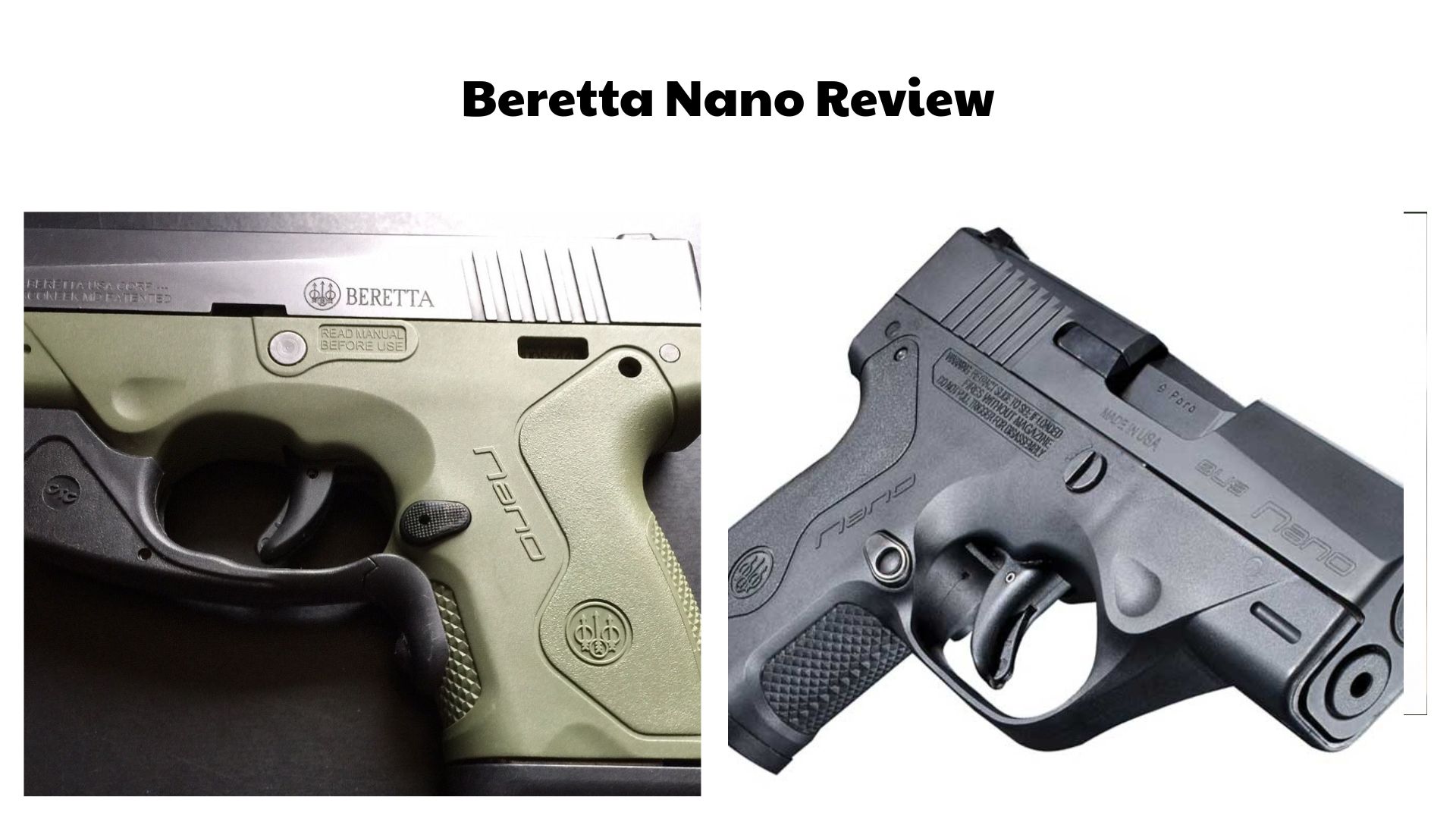

The Beretta Nano is an ultra-compact, striker-fired pistol designed specifically for concealed carry. Built with a focus on simplicity and deep concealment, it represents Beretta’s entry into the subcompact concealed carry (CCW) market during the early 2010s.
Unlike many competing pistols, the Nano was engineered with a snag-free design philosophy, featuring smooth edges and minimal external controls. This allows for a clean, reliable draw from pockets, holsters, or concealed positions without catching on clothing.
The pistol emphasizes durability, reliability, and ease of use, making it a practical choice for everyday carry users who prefer a minimalist approach. Its reduced number of external controls contributes to a streamlined profile and simple manual of operation.
The Nano competes directly with other compact concealed carry pistols such as the Glock 43, Ruger LC9s, and Smith & Wesson Shield. While it has earned a reputation for solid reliability, it is also often discussed in terms of its heavier trigger pull and basic ergonomics compared to more modern designs.
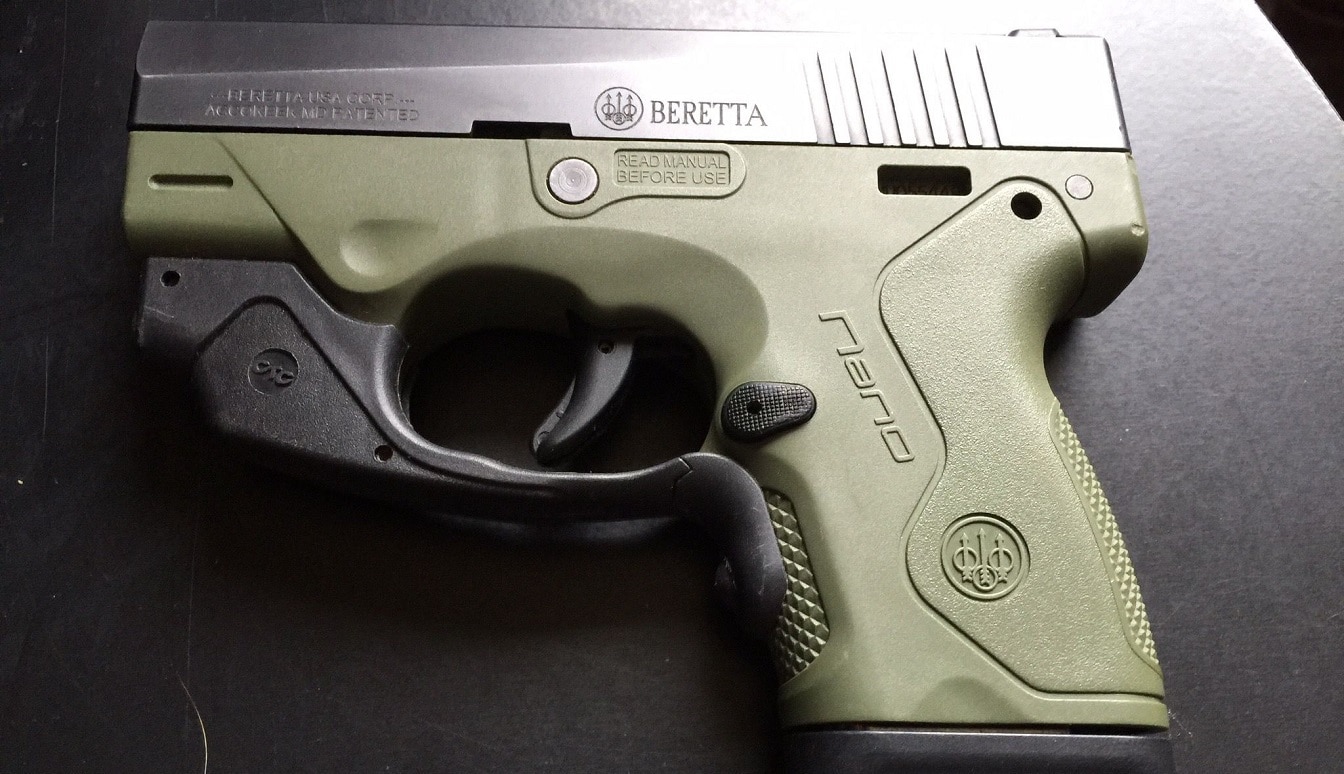
Key Specifications
- Caliber: 9mm
- Action: Striker-fired, semi-automatic
- Barrel Length: Approximately 3.07 inches
- Overall Length: Approximately 5.63 inches
- Width: Approximately 0.9 inches (slim profile)
- Weight: Approximately 19.8 ounces unloaded
- Capacity: 6+1 flush-fit magazine (extended magazine options available)
- Frame: Polymer frame with serialized internal chassis system
- Slide: Stainless steel with corrosion-resistant finish
- Sights: Low-profile, user-replaceable sights
- Safety: Internal safety systems (no external manual safety)
These specifications highlight the Beretta Nano’s role as a compact, highly concealable defensive pistol. Its lightweight construction, slim dimensions, and minimalist design make it especially suitable for deep concealed carry applications.
Design & Build Quality
Snag-Free, Minimalist Design
The Beretta Nano is built around a snag-free, minimalist design philosophy. Its smooth, rounded edges reduce the risk of catching on clothing during the draw, making it especially effective for concealed carry.
Unlike many compact pistols, the Nano features very few external controls, with no traditional external slide stop lever and minimal protrusions. This streamlined layout enhances reliability during draw and reholstering.
Its extremely compact footprint makes it well-suited for pocket carry, appendix carry, and deep concealment applications, where discretion and ease of carry are top priorities.
Ergonomics and Grip
The Nano uses a simple, no-frills grip design with light texturing to provide basic control without adding bulk. This helps maintain its slim profile but may feel minimal compared to more aggressively textured modern pistols.
Due to its compact size, the grip can feel short for users with larger hands. However, optional extended magazines are available, providing additional grip length and improved handling.
The pistol features a relatively straight grip angle, which supports a natural point of aim and intuitive handling during defensive shooting.
Modular Chassis System
One of the standout design features of the Beretta Nano is its serialized internal chassis system. This allows the polymer frame to be replaced while retaining the serialized core component.
This design was an early example of modular handgun architecture, offering benefits in maintenance, customization, and long-term durability. It also simplifies replacement of worn or damaged frame components without replacing the entire firearm.
Materials and Durability
The Nano is built with durable materials intended for long-term concealed carry use. The stainless steel slide provides strong resistance to corrosion and wear, making it suitable for daily carry in varying environments.
The reinforced polymer frame keeps the pistol lightweight while maintaining structural strength. This balance contributes to both comfort and durability.
Overall, the Beretta Nano is engineered as a rugged, low-maintenance defensive pistol, capable of withstanding the demands of everyday carry and extended use.
Magazine Capacity & Concealability
The Beretta Nano is designed with deep concealment as its primary focus, and its magazine system reflects that purpose.
- Standard 6-round magazine: Optimized for maximum concealability with a flush-fit design that minimizes printing.
- Extended magazines: Available for users who want improved grip length and slightly increased capacity.
This setup highlights a clear trade-off between compact size and ammunition capacity. While it offers fewer rounds than modern micro-compacts, the Nano excels in discreet carry situations.
Its slim profile and small footprint make it particularly well-suited for pocket carry and deep concealment scenarios, where minimizing size is more important than maximizing firepower.
Trigger Performance
Double-Action-Only (DAO)-Like Trigger Feel
The Beretta Nano features a striker-fired trigger system that closely resembles a double-action-only (DAO) trigger feel.
- Long, heavy trigger pull: Heavier than many competing striker-fired pistols, contributing to safer concealed carry.
- Consistent pull: Each trigger press feels the same, which can aid in predictability with practice.
- Safety-focused design: The longer pull reduces the likelihood of accidental discharge under stress.
Shooting Feel
The trigger has a longer reset compared to more modern striker-fired designs, which can affect follow-up shot speed.
Overall, the trigger is considered less refined than newer pistols, requiring more deliberate control. With consistent training, however, users can achieve solid defensive performance.
Shooting Performance & Accuracy
Recoil Management
Due to its small size and lightweight construction, the Beretta Nano produces noticeable recoil. The limited grip surface can make it more challenging to control, especially during rapid fire.
However, with proper grip technique and practice, recoil remains manageable for most shooters in defensive situations.
Accuracy
The Nano is designed for close-range defensive use, performing best at distances of approximately 5 to 10 yards.
While it is not intended for precision shooting, it delivers adequate accuracy for self-defense scenarios, where quick target acquisition and reliability are more important than tight grouping.
Reliability
Reliability is one of the Nano’s stronger attributes. It is known to function consistently with a wide range of ammunition types, including both training and defensive loads.
Although early production models received mixed feedback, later versions showed significant improvements in performance and consistency.
Overall, the Beretta Nano performs reliably as a defensive concealed carry pistol, making it a dependable option for everyday carry.
Controls & Features
The Beretta Nano is built with a minimalist control layout that prioritizes simplicity and snag-free operation during concealed carry.
- Minimal external controls: Designed to reduce snag points and ensure a smooth draw from concealment.
- No external slide release lever: The slide locks back internally, requiring manual manipulation rather than a traditional external control.
- Reversible magazine release: Allows left- or right-handed users to configure the pistol for their preferred shooting style.
- Low-profile sights: Designed to minimize snagging while still providing adequate sight alignment for defensive use.
- Simple takedown process: Easy disassembly for cleaning and maintenance without complex procedures.
Pros and Cons
Pros
- Extremely compact size makes it easy to conceal in various carry positions
- Smooth, snag-free design ideal for pocket and deep concealment
- Reliable performance with a wide range of defensive ammunition
- Durable construction with corrosion-resistant stainless steel slide
- Simple operation with minimal controls reduces user complexity
Cons
- Heavy and long trigger pull compared to modern striker-fired pistols
- Limited magazine capacity (6 rounds) compared to newer micro-compacts
- Small grip may not be comfortable for users with larger hands
- Sharper recoil due to lightweight and compact frame
- Considered outdated compared to newer, higher-capacity designs
Comparison with Competitors
Beretta Nano vs Glock 43
The Glock 43 is widely regarded as one of the most popular slim concealed carry pistols, offering a more refined trigger and a massive aftermarket ecosystem.
In comparison, the Beretta Nano stands out for its streamlined, snag-free design, with fewer external controls and smoother contours that enhance deep concealment and draw reliability.
While the Glock 43 is generally considered more modern in terms of trigger feel and support options, the Nano appeals to users who prioritize simplicity and minimalism in a defensive handgun.
Beretta Nano vs Ruger LC9s
The Ruger LC9s is known for its lighter and crisper trigger, making it easier to shoot accurately for many users, especially beginners.
The Beretta Nano, on the other hand, offers a more solid and durable build feel, with its robust construction and internal chassis system contributing to long-term reliability.
Both pistols are similar in size and concealability, making them suitable for discreet carry, but the decision often comes down to trigger preference and handling characteristics.
Beretta Nano vs S&W Shield
The Smith & Wesson Shield provides higher magazine capacity and improved ergonomics, making it more comfortable to shoot and more versatile across different roles.
The Beretta Nano, however, is smaller and more compact, giving it an advantage in deep concealment scenarios where minimizing size is critical.
Overall, the Shield is the more versatile option, while the Nano excels as a dedicated deep concealment pistol.
Best Use Cases
- Deep Concealment Everyday Carry (EDC): Ideal for situations where maximum discretion is required.
- Pocket Carry: Compact dimensions make it suitable for pocket holsters in appropriate clothing.
- Backup Firearm: Commonly used as a secondary weapon by law enforcement or armed professionals.
- Minimalist Carry Setups: Perfect for users who prefer a simple, lightweight defensive handgun.
- Maximum Concealability Scenarios: Excellent choice when size and low profile are more important than capacity.
Aftermarket Support & Accessories
The Beretta Nano has a modest but functional aftermarket ecosystem, focused primarily on concealed carry essentials rather than extensive customization.
- Holster availability: Wide selection of pocket, IWB (inside-the-waistband), and appendix carry holsters designed for deep concealment.
- Limited aftermarket: Compared to newer platforms, upgrade options are more restricted, reflecting its older design.
- Extended magazines and grip extensions: Available to improve capacity and handling without significantly increasing size.
- Replacement sights and upgrades: Basic sight upgrades and minor performance enhancements are available for customization.
Who Should Buy the Beretta Nano?
- Users who need an ultra-compact concealed carry pistol
- Minimalist shooters who prefer simple, no-frills handgun design
- Individuals prioritizing concealability over magazine capacity
- Those looking for a backup firearm for professional or personal defense
Who Should Avoid It?
- Users who prefer high-capacity micro-compact pistols
- Shooters who want a light, crisp trigger for improved shooting performance
- Beginners who are sensitive to recoil from small, lightweight pistols
- Those seeking modern features such as optics-ready slides or modular systems
Final Verdict
The Beretta Nano is a purpose-built concealed carry pistol that excels in one key area: deep concealment. Its compact size, smooth profile, and simple operation make it a reliable choice for discreet everyday carry.
While it delivers solid reliability and durability, it shows its age when compared to newer micro-compact pistols that offer higher capacity, improved ergonomics, and modern features like optics-ready slides.
The Nano is best suited for users who value minimalism, simplicity, and maximum concealability over capacity and advanced features.
Final recommendation: A strong niche option for deep concealment carry, but largely overshadowed by newer, more versatile micro-compact pistols in today’s market.
Frequently Asked Questions (FAQ) – Beretta Nano
1. What is the Beretta Nano designed for?
The Beretta Nano is designed specifically for deep concealed carry. Its ultra-compact size, smooth edges, and minimal controls make it ideal for discreet everyday carry, especially in situations where minimizing printing is critical.
2. Is the Beretta Nano still relevant today?
While newer micro-compact pistols offer higher capacity and modern features, the Nano remains relevant for users who prioritize simplicity and concealability over capacity and advanced technology.
3. How reliable is the Beretta Nano?
The Nano is generally considered reliable, especially in later production models. It performs well with both training and defensive ammunition when properly maintained.
4. What is the magazine capacity?
The standard magazine holds 6 rounds, with extended magazines available for slightly increased capacity and improved grip control.
5. Is the Nano good for beginners?
It can be used by beginners, but its heavier trigger and snappier recoil may make it less forgiving than larger pistols.
6. Why is the trigger so heavy?
The Nano uses a DAO-like trigger designed for safety during concealed carry. The longer, heavier pull reduces the risk of accidental discharge.
7. Is it better than Glock 43?
The Glock 43 offers a better trigger and more aftermarket support, while the Nano is more streamlined and better suited for deep concealment.
8. Can the Nano handle hollow point ammo?
Yes, it is designed to function reliably with modern defensive hollow point ammunition.
9. What is the recoil like?
Recoil is noticeable due to its small size and light weight, but it remains manageable with proper grip technique.
10. Is it good for pocket carry?
Yes, its slim profile and snag-free design make it suitable for pocket carry with an appropriate holster.
11. Does it have a manual safety?
No, the Nano relies on internal safety mechanisms rather than an external manual safety.
12. What safety features does it include?
It includes internal safeties such as a firing pin block and trigger safety system to prevent accidental discharge.
13. Is the grip comfortable?
The grip is minimal and may feel short for users with large hands, but extended magazines can improve comfort.
14. Can I upgrade the grip?
The modular chassis system allows frame replacement, though aftermarket grip options are limited.
15. How accurate is the Nano?
It is accurate enough for defensive use at close ranges (5–10 yards), but not designed for precision shooting.
16. Does it have an accessory rail?
No, the Nano does not include an accessory rail for lights or lasers.
17. What holsters work best?
IWB, appendix, and pocket holsters are the most common and effective options for the Nano.
18. Is it comfortable for all-day carry?
Yes, its lightweight and slim profile make it very comfortable for extended carry periods.
19. How durable is it?
The Nano is built with a stainless steel slide and reinforced polymer frame, making it durable for long-term use.
20. Does it rust easily?
No, the corrosion-resistant finish helps protect against rust during daily carry.
21. What is the trigger pull weight?
The trigger pull is typically heavier than modern striker-fired pistols, contributing to its safety-focused design.
22. Is it optics-ready?
No, the Nano does not support optics mounting out of the box.
23. Can it shoot +P ammo?
Yes, it can handle +P ammunition, though frequent use may increase wear over time.
24. Is it good for home defense?
It can be used for home defense, but it is optimized for concealed carry rather than primary defensive roles.
25. Can it be used as a backup gun?
Yes, it is commonly used as a backup firearm due to its compact size and reliability.
26. Is the Nano easy to clean?
Yes, it features a straightforward takedown process for routine maintenance.
27. Does it require a break-in period?
Some users report improved performance after a short break-in period, though many function well immediately.
28. Is it good for small hands?
Yes, its compact grip can work well for smaller hands, though extended magazines may help improve control.
29. How does it compare to Ruger LC9s?
The LC9s has a lighter trigger, while the Nano offers a more robust build feel and simpler design.
30. Is it suitable for summer carry?
Yes, its slim design makes it ideal for lightweight clothing and hot weather conditions.
31. Does it print under clothing?
Minimal printing is one of its key advantages due to its compact dimensions.
32. Is it heavy?
No, it is lightweight at under 20 ounces unloaded.
33. Can it be customized?
Customization options exist but are limited compared to more modern pistols.
34. Is it better than S&W Shield?
The Shield offers more capacity and better ergonomics, while the Nano is smaller and easier to conceal deeply.
35. Is the trigger reset short?
No, the Nano has a longer reset compared to many modern striker-fired pistols.
36. Is it good for range shooting?
It can be used at the range, but its small size makes it less comfortable for extended sessions.
37. Can it be used for competition?
No, it is not designed for competitive shooting.
38. Is it left-handed friendly?
The reversible magazine release allows some adaptability for left-handed users.
39. What is the biggest advantage?
Its extreme concealability and snag-free design.
40. What is the biggest disadvantage?
Its low capacity and heavy trigger compared to modern designs.
41. Is it outdated?
It is somewhat outdated compared to newer micro-compacts, but still functional for its intended role.
42. Can it be carried appendix?
Yes, it works well for appendix carry due to its slim profile.
43. Is it easy to draw?
Yes, its smooth edges and lack of protrusions make it easy to draw cleanly.
44. Does it support lasers?
Aftermarket laser options exist, but there is no built-in rail.
45. Is it suitable for daily carry?
Yes, it is specifically designed for everyday carry use.
46. How does it handle rapid fire?
It can handle rapid fire, but recoil control requires practice due to its small size.
47. Is it worth buying today?
It is worth considering if deep concealment is your top priority, though newer options may offer better features.
48. Does it have good resale value?
Resale value is moderate, influenced by demand for concealed carry pistols.
49. Is it easy to maintain?
Yes, its simple design makes maintenance straightforward.
50. What is the final verdict?
The Beretta Nano is a reliable, ultra-compact concealed carry pistol that excels in concealability but falls behind newer designs in capacity and modern features.
Read more: