
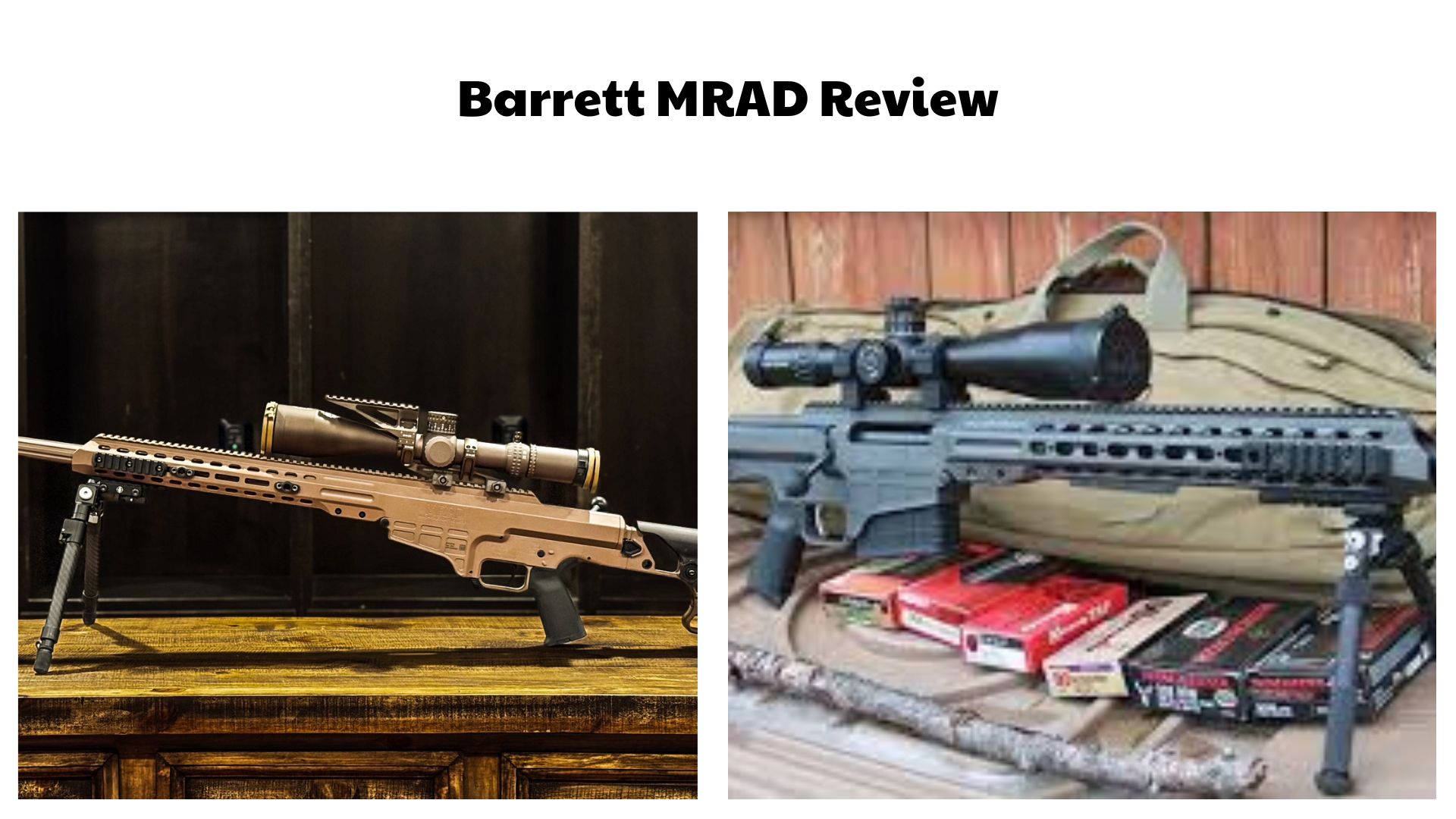

The Barrett MRAD (Multi-Role Adaptive Design) is a high-end precision bolt-action rifle developed by Barrett Firearms Manufacturing, a premier American company known for producing military-grade long-range weapon systems. The MRAD represents one of the most advanced evolutions in modern sniper rifle design.
Originally engineered to meet stringent U.S. SOCOM requirements, the MRAD was designed from the ground up as a multi-caliber, modular precision rifle system capable of adapting to different mission profiles without compromising accuracy or reliability.
Its proven performance and adaptability ultimately led to its adoption as the Mk 22 Advanced Sniper Rifle by U.S. Special Operations Forces, further solidifying its reputation as a battlefield-proven platform.
Today, the MRAD is widely regarded as one of the most sophisticated bolt-action sniper systems available, offering a rare combination of modularity, durability, and extreme long-range performance.
Key Features of the Barrett MRAD
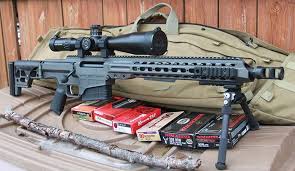
Multi-Caliber Modular System
One of the defining characteristics of the MRAD is its true multi-caliber capability. The rifle features a quick-change barrel system that allows users to switch calibers at the operator level without requiring a gunsmith.
Barrel swaps are performed using a simple tool-assisted system secured by Torx bolts, enabling fast and repeatable conversions between calibers such as .308 Winchester, .300 Norma Magnum, and .338 Norma Magnum.
This modularity makes the MRAD highly adaptable for different operational roles, from medium-range precision engagements to extreme long-range sniper applications.
Action and Receiver Design
The MRAD uses a bolt-action system integrated into an AR-style upper receiver chassis, creating a modern hybrid design that enhances both rigidity and ergonomics.
The bolt cycles smoothly within a fully enclosed receiver structure, providing excellent protection against dust, dirt, and environmental debris.
This precision-engineered design prioritizes consistency and durability, making it suitable for demanding long-range shooting environments.
Barrel System and Performance
The MRAD features an interchangeable barrel system with factory pre-headspaced barrels, ensuring reliable performance after caliber changes.
It uses heavy-profile, match-grade barrels designed for thermal stability and consistent shot-to-shot accuracy, even under sustained fire conditions.
The system supports multiple barrel lengths depending on caliber, allowing optimization for velocity, recoil management, and effective range.
Overall, the barrel system is engineered to maintain sub-MOA precision potential across configurations when paired with quality ammunition.
Stock and Ergonomics
The MRAD is equipped with a fully adjustable folding stock designed for transport efficiency and user adaptability in the field.
Shooters can adjust both the cheek riser and length of pull, ensuring proper alignment with optics and a customized shooting fit.
The rifle also supports AR-style pistol grips, allowing users to tailor ergonomics based on preference or mission requirements.
This modular ergonomic system makes the MRAD one of the most adaptable sniper platforms available today.
Magazine System
The MRAD uses detachable polymer magazines designed for reliability in harsh environments. These magazines are caliber-specific to ensure proper feeding and ballistic consistency.
Depending on configuration, the system typically supports 10-round magazine capacity, balancing firepower and compactness.
The feeding system is engineered for reliability under extreme conditions, including sand, mud, and cold-weather environments.
Accuracy and Long-Range Performance
The Barrett MRAD is capable of achieving sub-MOA to half-MOA accuracy depending on ammunition selection, environmental conditions, and shooter proficiency.
It is designed for extreme long-range engagements, with consistent performance extending beyond 1,500 meters in military and civilian applications.
The rifle’s heavy chassis construction enhances stability, significantly reducing recoil and improving shot-to-shot control.
Extensive testing in both military and civilian environments has demonstrated consistent grouping performance, reinforcing its reputation as a top-tier precision platform.
Unlike lightweight hunting rifles, the MRAD prioritizes precision, stability, and repeatability over mobility, making it ideal for long-range dominance rather than field portability.
Build Quality and Materials
The Barrett MRAD is engineered with a strong emphasis on durability and battlefield-grade construction, reflecting its origins as a military sniper platform. The rifle is built around an aerospace-grade aluminum chassis, providing exceptional rigidity while maintaining structural consistency under stress.
Its barrel system is constructed from high-strength steel, designed to withstand prolonged firing cycles while maintaining precision and thermal stability. This ensures consistent accuracy even under demanding operational conditions.
The rifle also features a folding stock system with a reinforced locking mechanism, allowing for compact transport without compromising stability when deployed.
Overall, the MRAD is built to meet extreme military durability standards, making it suitable for harsh combat environments and extended field use.
It is highly resistant to environmental stressors such as dust, moisture, mud, and temperature fluctuations, ensuring reliable performance in nearly any operational setting.
Recoil Management and Shooting Control
The MRAD’s heavy chassis design plays a major role in recoil mitigation, effectively absorbing energy generated from firing, especially in high-powered calibers.
The platform is also compatible with advanced muzzle brake systems, further reducing felt recoil and improving shooter control during extended firing sessions.
This recoil reduction is particularly noticeable in magnum calibers such as .300 Norma Magnum and .338 Norma Magnum, where control and stability are critical.
Its stable chassis design also makes it easier for shooters to maintain visual contact with the target, allowing for effective impact spotting and rapid follow-up shots.
The rifle is optimized primarily for prone and bench shooting positions, where maximum stability can be achieved.
Reliability and Field Performance
The Barrett MRAD has been extensively validated through its deployment in the U.S. SOCOM Mk 22 Advanced Sniper Rifle program, confirming its performance in real-world military environments.
It demonstrates a high level of reliability under harsh operational conditions, including exposure to dust, sand, moisture, and extreme weather variations.
The rifle is engineered to maintain consistent performance even in severe temperature extremes, making it suitable for global deployment scenarios.
Designed for long-term sustained use, the MRAD is capable of maintaining accuracy and mechanical reliability over extended service life when properly maintained.
Across military and civilian usage, it is known for minimal malfunction rates, reinforcing its reputation as a dependable precision weapon system.
Pros and Cons of the Barrett MRAD
Advantages
The Barrett MRAD offers a range of significant advantages that make it one of the most advanced bolt-action platforms available today.
Its extreme modular multi-caliber capability allows users to quickly adapt the rifle for different mission requirements without specialized tools or gunsmithing.
It is also known for military-proven reliability and durability, having been tested and adopted in real combat environments.
The rifle delivers exceptional long-range accuracy potential, making it suitable for extreme distance engagements.
Its folding chassis system enhances transport efficiency without compromising shooting stability.
Additionally, the highly adjustable ergonomic system allows shooters to tailor the platform to individual preferences and mission requirements.
Disadvantages
Despite its strengths, the MRAD has several limitations that may affect certain users.
Its most notable drawback is its very heavy weight compared to traditional bolt-action rifles, which limits mobility in dynamic environments.
The platform is also expensive, both in initial cost and accessory ecosystem, making it a significant investment.
Due to its complexity, it may not be ideal for casual shooters or those new to precision rifle systems.
It is also not well-suited for mobile hunting applications where lightweight portability is required.
Finally, the aftermarket barrel ecosystem is more limited compared to platforms like the Remington 700, which may restrict customization options for some users.
Ideal Use Cases
The Barrett MRAD is designed for highly specialized roles where extreme long-range accuracy, modularity, and reliability are critical. Its feature set makes it most suitable for professional and advanced users rather than general-purpose shooting.
It is widely used in military and law enforcement sniper roles, where consistency, durability, and adaptability across mission profiles are essential.
The platform also excels in extreme long-range precision shooting (ELR), where engagements extend well beyond standard rifle distances and require maximum ballistic performance.
In competitive environments, the MRAD is used in ELR competitions, where shooters engage targets at extreme distances and demand the highest levels of precision and repeatability.
It can also be applied in static hunting setups for large game, particularly in situations where shooters operate from fixed positions at long distances.
Additionally, it performs well in benchrest-style long-range target shooting, where stability and precision are prioritized over mobility.
However, the MRAD is not suitable for ultralight backcountry hunting due to its weight and system complexity.
Barrett MRAD vs Other Precision Rifles (Context Overview)
When compared to the Remington 700, the MRAD is significantly more advanced, offering a modern chassis design, integrated modularity, and multi-caliber capability that the traditional platform lacks.
Against the Accuracy International AX series, the MRAD sits in a similar tactical performance tier, with both platforms being widely respected for military-grade precision and reliability.
Compared to the Bergara HMR, the MRAD is more advanced, heavier, and clearly oriented toward military and professional applications rather than civilian hunting or entry-level precision shooting.
One of its strongest advantages is its multi-caliber adaptability, allowing operators to configure the rifle for different mission requirements quickly and efficiently.
Overall, the MRAD is often considered a top-tier battle-proven precision system, built for serious operational use rather than recreational shooting.
Final Verdict on Barrett MRAD
The Barrett MRAD stands as one of the most advanced bolt-action sniper systems currently available on the market, combining cutting-edge engineering with battlefield-proven performance.
It delivers an exceptional blend of modularity, long-range accuracy, and rugged durability, making it one of the most versatile precision rifle systems ever developed.
Purpose-built for professional military-grade performance, it is engineered to meet the demands of elite operators and long-range specialists.
The MRAD is best suited for serious long-range shooters, including military users, law enforcement, and experienced ELR competitors.
While it may be overkill for casual hunting or recreational shooting, it remains unmatched in capability, adaptability, and overall system performance in its category.
FAQ – Barrett MRAD (55 Questions)
1. What is the Barrett MRAD designed for?
The Barrett MRAD is designed as a modular, multi-role precision sniper rifle system intended for military, law enforcement, and extreme long-range civilian applications. Its core purpose is to deliver consistent accuracy, adaptability, and durability across multiple mission profiles.
2. What does MRAD stand for?
MRAD stands for Multi-Role Adaptive Design, reflecting the rifle’s ability to adapt to different roles and calibers through its modular architecture.
3. Is the Barrett MRAD a military rifle?
Yes, the MRAD was originally developed for military use and has been adopted by U.S. Special Operations Command in the Mk 22 Advanced Sniper Rifle program.
4. What military units use the MRAD?
The MRAD is used by U.S. SOCOM units and has been selected as part of the Mk 22 program, though specific deployment details vary across classified and operational units.
5. What is the Mk 22 version of the MRAD?
The Mk 22 is the U.S. military designation for the Barrett MRAD configured under the Advanced Sniper Rifle program, featuring multi-caliber capability and enhanced mission adaptability.
6. Is the MRAD used by SOCOM?
Yes, the MRAD has been officially adopted by U.S. SOCOM as part of its advanced sniper rifle program due to its modularity and precision performance.
7. What calibers does the MRAD support?
The MRAD supports multiple calibers including .308 Winchester, 6.5 Creedmoor, .300 Norma Magnum, and .338 Norma Magnum, depending on configuration and barrel setup.
8. How does the MRAD barrel change system work?
The MRAD uses a tool-assisted quick-change barrel system secured by Torx fasteners. This allows operators to swap barrels and calibers in the field while maintaining pre-headspaced accuracy.
9. Is the MRAD truly multi-caliber?
Yes, the MRAD is a true multi-caliber platform designed to switch between cartridges with compatible barrel and bolt face configurations, making it highly versatile.
10. How accurate is the Barrett MRAD?
The MRAD is capable of sub-MOA to half-MOA accuracy depending on ammunition quality, environmental conditions, and shooter skill, making it highly competitive in precision shooting.
11. Can the MRAD shoot sub-MOA groups?
Yes, with match-grade ammunition and proper setup, the MRAD consistently achieves sub-MOA performance and can approach half-MOA in optimal conditions.
12. What is the effective range of the MRAD?
The MRAD is effective beyond 1,500 meters depending on caliber, with magnum configurations extending even further in extreme long-range applications.
13. Is the MRAD good for ELR shooting?
Yes, the MRAD is widely used in ELR (Extreme Long Range) shooting due to its stability, modularity, and ability to handle high-energy magnum cartridges.
14. What action type does the MRAD use?
The MRAD uses a bolt-action system integrated into a modern chassis with an AR-style upper receiver design for rigidity and modularity.
15. How smooth is the MRAD bolt?
The MRAD bolt cycles smoothly within its chassis, designed for consistent operation even under harsh environmental conditions such as dust, sand, or cold weather.
16. Is the MRAD bolt action similar to AR-style rifles?
While it is a bolt-action rifle, its receiver layout is influenced by AR-style modular construction, improving ergonomics and maintenance efficiency.
17. What is unique about the MRAD receiver design?
The MRAD features a fully enclosed, modular upper receiver system that enhances rigidity, protects internal components, and improves long-term durability.
18. Does the MRAD have a free-floating barrel?
Yes, the MRAD uses a free-floating barrel design to eliminate external pressure points and improve shot consistency and accuracy.
19. What barrel lengths are available?
Barrel lengths vary depending on caliber, typically ranging from mid-length precision barrels to long heavy-profile barrels optimized for magnum cartridges.
20. Is the MRAD barrel pre-headspaced?
Yes, MRAD barrels are pre-headspaced, allowing users to change calibers without requiring gunsmith adjustments.
21. How long does it take to change barrels?
With proper tools, barrel changes can be completed relatively quickly in the field, often within minutes by trained users.
22. Does the MRAD require gunsmithing for caliber swaps?
No, caliber swaps are designed to be user-level operations without the need for professional gunsmithing.
23. What magazines does the MRAD use?
The MRAD uses detachable polymer magazines specifically designed for each caliber to ensure reliable feeding and ballistic consistency.
24. How many rounds does the MRAD magazine hold?
Magazine capacity is typically around 10 rounds, depending on caliber and configuration.
25. Are MRAD magazines caliber specific?
Yes, magazines are caliber-specific to ensure reliable feeding and proper cartridge alignment.
26. Is the MRAD stock adjustable?
Yes, the MRAD stock is fully adjustable, including cheek riser and length of pull adjustments for shooter customization.
27. Does the MRAD stock fold?
Yes, the MRAD features a folding stock to improve portability and storage efficiency without sacrificing stability when deployed.
28. How does the MRAD recoil compare to other rifles?
The MRAD has reduced felt recoil due to its heavy chassis design, especially when paired with magnum calibers and muzzle brakes.
29. Is the MRAD heavy?
Yes, the MRAD is significantly heavier than traditional bolt-action rifles due to its chassis system and modular components.
30. What is the weight of a fully equipped MRAD?
Fully configured MRAD rifles typically weigh well over 10 pounds without optics, depending on barrel and caliber setup.
31. Is the MRAD good for hunting?
The MRAD is generally not ideal for traditional hunting due to its weight, but it can be used for static long-range hunting setups.
32. Why is the MRAD not ideal for hiking hunts?
Its heavy chassis design prioritizes stability and modularity over portability, making it unsuitable for long-distance carry hunts.
33. Is the MRAD good for bench shooting?
Yes, the MRAD excels in bench and prone shooting due to its stability and recoil control characteristics.
34. What optics work best with the MRAD?
High-magnification precision scopes with long-range reticles are ideal for maximizing the MRAD’s extreme distance capabilities.
35. Does the MRAD come with a rail system?
Yes, it includes integrated top rails for mounting optics and accessories securely.
36. Is the MRAD chassis aluminum or polymer?
The MRAD uses a high-strength aerospace-grade aluminum chassis for maximum rigidity and durability.
37. How durable is the MRAD in harsh environments?
The MRAD is designed for extreme durability and performs reliably in dust, mud, cold, and wet conditions.
38. Does the MRAD perform well in extreme cold?
Yes, it is engineered to maintain reliability and accuracy even in extreme cold-weather environments.
39. Is the MRAD reliable in combat conditions?
Yes, it has been proven in military environments and is considered highly reliable under combat conditions.
40. Have there been reliability issues with the MRAD?
Reported reliability issues are rare and typically associated with maintenance or ammunition rather than the platform itself.
41. What is the difference between MRAD and MK22?
The MK22 is the military designation for the MRAD platform configured for SOCOM requirements under the Advanced Sniper Rifle program.
42. Can civilians buy the Barrett MRAD?
Yes, civilian versions of the MRAD are available for purchase in many regions where regulations permit.
43. Is the MRAD worth the price?
The MRAD is considered worth its price for users who require military-grade modularity, accuracy, and durability.
44. Why is the MRAD so expensive?
Its cost reflects advanced engineering, military-grade materials, modular design, and precision manufacturing standards.
45. Is the MRAD good for beginners?
No, it is generally better suited for experienced shooters due to its complexity and specialized purpose.
46. Can the MRAD be used in competitions?
Yes, it is used in ELR and precision shooting competitions, especially where long-range capability is required.
47. What is the best caliber for MRAD accuracy?
Calibers like .300 Norma Magnum and .338 Norma Magnum are popular for extreme long-range accuracy and performance.
48. What are common MRAD upgrades?
Common upgrades include optics, muzzle devices, bipods, and mission-specific accessories.
49. Does MRAD support suppressors?
Yes, the MRAD is compatible with suppressors when using threaded barrel configurations.
50. What is the biggest drawback of the MRAD?
The biggest drawback is its heavy weight and high cost, which limit its accessibility for casual users.
51. Why do militaries choose the MRAD?
Military forces choose the MRAD for its modularity, reliability, and ability to adapt to multiple mission requirements.
52. Is the MRAD better than bolt-action hunting rifles?
It is superior in precision and modularity but less practical for hunting due to its weight and complexity.
53. How does MRAD compare to AI AX rifles?
Both are elite-tier sniper systems with similar performance, though MRAD offers stronger multi-caliber flexibility.
54. Is MRAD a long-term investment rifle?
Yes, it is considered a long-term investment due to its durability, modularity, and military-grade construction.
55. Who should buy the Barrett MRAD?
The MRAD is best suited for professional shooters, military/law enforcement users, and serious long-range precision enthusiasts.
Read more: